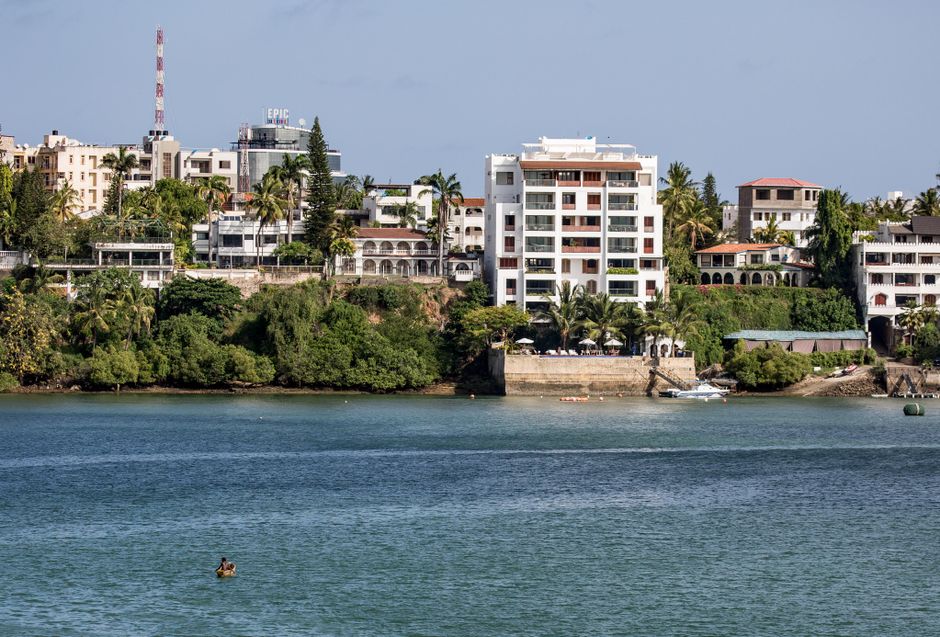
Mombasa, Kenya’s second city and its oldest port, sits on a coral island on the Indian Ocean coast, joined to the mainland by bridges, a causeway and the Likoni ferry. For more than a thousand years, dhows sailed here on the monsoon winds from Arabia, Persia and India, and the city’s Old Town still has narrow lanes, carved wooden doors, mosques and balconies that tell the story of the Swahili coast. Above the harbor stands Fort Jesus, the Portuguese fortress begun in 1593 and now a UNESCO World Heritage Site. Mombasa is also the gateway to Kenya’s beaches: the resort strip of Nyali, Bamburi and Shanzu begins just north of the island, and Diani Beach is about an hour to the south. The Madaraka Express train links the city with Nairobi in about six hours, and Tsavo East National Park is close enough for a one- or two-day safari. Expect heat and humidity all year, Swahili food, spice markets, coral reefs in the Mombasa Marine National Park, and a relaxed, mostly Muslim coastal culture. Most visitors stay on the north coast beaches and come into town for a day; a night or two in the Old Town lets you see it at its best, early and late.
Right now in Mombasa
- Wed24–29°C75–84°F2 mm rain
- Thu24–30°C76–85°F6 mm rain
- Fri24–25°C75–77°F43 mm rain
- Sat 10 Oct Mazingira Day
Top tours in Mombasa
See all tours for Mombasa →
From local operators, with prices and reviews; you check availability and book on Viator, our partner. We may earn a commission at no extra cost to you. How we earn money
Mombasa at a glance
- Best for: Fort Jesus and the Old Town, Swahili culture and food, beaches, snorkeling and a coast-plus-safari trip.
- How long: 1–2 days for the city; a week with beaches and a Tsavo safari.
- Best time: December to March and July to October; April to June is the main rainy season.
- Getting there: Moi International Airport (MBA), the Madaraka Express from Nairobi, or by road.
- Getting around: tuk-tuks, ride-hailing apps and taxis; the Likoni ferry to the south coast.
- Good to know: dress modestly in the Old Town, carry small notes, and avoid walking alone after dark.
- Before you go: the eTA, money and general safety are in our Kenya travel guide.
Mombasa’s areas and where to stay
The city center and Old Town are on Mombasa Island. The north coast beaches are reached by the Nyali Bridge, the south coast by the Likoni ferry or the longer road around Port Reitz, and the airport and the Madaraka Express terminus at Miritini are on the mainland to the west.
The Old Town and the island
The Old Town, around Fort Jesus and the Old Port, is the historic heart, with a handful of guesthouses in restored Swahili houses. The modern center, along Moi Avenue and Digo Road, has markets, banks and business hotels, and Mama Ngina Drive on the island’s southern tip is a popular seafront promenade at sunset.
Nyali
Just north of the island across Tudor Creek, Nyali has a long beach, large resort hotels, malls, restaurants and quiet residential streets. It’s close to town but feels like a resort.
Bamburi, Shanzu and the north coast
Further north, Bamburi and Shanzu have all-inclusive resorts, beach clubs and apartments on a beach protected by a coral reef, plus Haller Park and the ruins of Jumba la Mtwana. Beyond them, the coast continues to Kilifi, Watamu and Malindi.
The south coast
Across the Likoni ferry, the road runs south to Tiwi and Diani Beach, Kenya’s best-known beach resort, about 35 km (22 miles) from Mombasa.
Where to stay in Mombasa
- Old Town: atmospheric guesthouses for culture lovers.
- City center: business hotels close to the station and markets.
- Nyali: beach resorts close to town.
- Bamburi and Shanzu: all-inclusive beach holidays.
Top things to see in Mombasa
Fort Jesus
Built by the Portuguese between 1593 and 1596 to guard the harbor, Fort Jesus was fought over by the Portuguese, the Omani Arabs and the British for three centuries and is one of the finest examples of 16th-century Portuguese military architecture. UNESCO inscribed it on the World Heritage List in 2011. Inside its thick coral walls are a museum of finds from shipwrecks and coastal sites, Omani houses with old graffiti, and bastions with views over the harbor entrance. The fort is run by the National Museums of Kenya; allow about two hours, and come early before the heat. A sound-and-light show is held some evenings.
The Old Town
Wander the lanes north of the fort to see carved Swahili doors, overhanging balconies, small mosques and the Old Port, where dhows still unload. Look for the Mandhry Mosque, among the oldest in Mombasa, the old customs house and the spice shops along Biashara Street. A local guide brings the history to life and helps you find your way. Dress modestly, covering shoulders and knees, and ask before photographing people.
A short history of the Swahili coast
Mombasa grew as one of a chain of trading city-states along the East African coast, from Somalia to Mozambique, where African, Arab, Persian and later Indian traders mixed for centuries. The Swahili language and culture were born here, and gold, ivory and spices left for Arabia and Asia in exchange for cloth, porcelain and beads. Vasco da Gama passed in 1498, the Portuguese controlled the coast for about a century, and the Omani Arabs, ruling from Zanzibar, took Fort Jesus in 1698. The British arrived in the late 19th century and began the railway inland to Uganda from Mombasa in 1896, which led to the founding of Nairobi. Today the port is the busiest in East Africa.
Mama Ngina Drive
The seafront road along the island’s southern tip, overlooking the entrance to Kilindini Harbour, is where Mombasa families come in the late afternoon to walk, watch the ships and buy cassava crisps with chili and lime, grilled corn and coconut water from vendors under the baobabs.
The Mombasa Tusks
The arching aluminum tusks over Moi Avenue were built for Queen Elizabeth II’s visit in 1952 and are the city’s best-known landmark.
Mombasa Marine National Park
Off the north coast beaches, the Mombasa Marine National Park and Reserve protects coral gardens, seagrass and fish, with snorkeling and glass-bottom boat trips at low tide from Nyali and Bamburi. Kenya Wildlife Service’s 2025 fee for marine protected areas is US$25 for non-resident adults and US$15 for children. See our snorkeling guide.
Haller Park
Created from an old limestone quarry in Bamburi, Haller Park is a nature park with giraffes, hippos, tortoises, crocodiles and birds, and a classic family outing.
Jumba la Mtwana
The ruins of this 14th-century Swahili town, with mosques, houses and tombs among baobabs by the sea, lie north of Mtwapa and are managed by the National Museums of Kenya.
Other things to do in Mombasa
Beaches
The north coast beaches at Nyali, Bamburi and Shanzu are long and sandy, with warm water inside the reef. The tide range is large, so at low tide you can walk out to rock pools, and at high tide the water reaches the beach. See our beaches guide.
Dhow cruises
Sunset dhow trips sail around the island and up Tudor Creek, often with a Swahili dinner, and some evening cruises pass under the walls of Fort Jesus. See our boat trips guide.
Diving and snorkeling
Dive centers on the north and south coast visit reefs and wrecks off Mombasa; the best visibility is usually from October to March. See our diving guide.
Food and drink
Mombasa is the capital of Swahili cooking, which blends African, Arab and Indian flavors with coconut, tamarind and spices. Try biryani and pilau, fish in coconut curry, mahamri (cardamom doughnuts) with tea for breakfast, viazi karai (spiced potato fritters), grilled mishkaki skewers and mandazi from street stalls in the evening, and sweet madafu (coconut water) and sugarcane juice. Kongowea market, the city’s largest, is busy and colorful. Many restaurants in the Old Town don’t serve alcohol, but bars and resort hotels do.
Day trips from Mombasa
- Tsavo East National Park: the Bachuma Gate is about 110 km (68 miles) and the Voi Gate about 156 km (97 miles) from Mombasa, according to Kenya Wildlife Service, or take the Madaraka Express to Voi or Miasenyi; one- and two-day safaris are popular. See our Tsavo East National Park guide.
- Diani Beach and Shimba Hills: cross on the Likoni ferry to Diani’s white sand; Shimba Hills National Reserve, with sable antelope and forest walks, costs US$50 for non-resident adults (KWS).
- Wasini Island and Kisite-Mpunguti: a full-day dhow trip from Shimoni, near the Tanzanian border, for snorkeling and dolphins in Kisite Marine National Park (US$25, KWS).
- Kilifi, Watamu and Malindi: north along the coast to creeks, the Gede Ruins, Watamu’s marine park and Malindi’s Vasco da Gama Pillar. See our Malindi guide.
Nearby destinations
- Diani Beach32 km
- Malindi105 km
- Tsavo East National Park173 km
- zanzibar241 km
- Kilimanjaro National Park278 km
Getting there and getting around
By air
Moi International Airport (MBA), on the mainland about 10 km (6 miles) west of the city center, has domestic flights from Nairobi in about an hour and some international and seasonal charter flights. Taxis and ride-hailing apps reach the center in 20–40 minutes, and Nyali or Bamburi in 45 minutes to over an hour, depending on traffic.
By train
The Madaraka Express runs from Mombasa Terminus at Miritini, near the airport, to Nairobi. According to Kenya Railways, trains leave both terminals at 8 a.m. (the Inter-County train, arriving at about 2 p.m.), 3 p.m. (an express stopping at Voi) and 10 p.m. (a night train). One-way fares to Nairobi are KES 1,500 in economy, KES 4,500 in first class and KES 12,000 in premium class; to Voi, for Tsavo East, KES 440 in economy and KES 1,320 in first class. Buy tickets on metickets.krc.co.ke or by M-Pesa, and bring your passport. The terminus is about 30–60 minutes from the beaches by road.
By road
The Mombasa–Nairobi highway (about 480 km, or 300 miles) is busy with trucks; the train is a better choice. Buses run to Malindi, Lamu and Dar es Salaam in Tanzania.
Getting around
Tuk-tuks and boda-bodas (motorbike taxis) are everywhere; agree the fare first, and wear a helmet on a boda-boda. Ride-hailing apps work well. To reach the south coast, the Likoni ferry carries vehicles and foot passengers across the harbor entrance; it’s busy at rush hour, so allow extra time and watch your belongings in the crowds. Matatus run along the main roads.
When to go and how long to stay
Mombasa is hot and humid all year, with highs of about 28–33 °C (82–91 °F) and warm nights. December to March is hot, dry and sunny, the main beach season. The long rains from April to June bring heavy showers, especially in May, and many resorts offer low-season prices. July to October is a little cooler and breezier, with some showers, and combines well with safaris in Tsavo or the Mara. The short rains in November are lighter. The table uses Kenya Meteorological Department (KMD) climate averages for Mombasa, as published by the World Meteorological Organization (WMO): average daily highs and lows, total rainfall and days with at least 1 mm of rain.
| Month | Average high / low | Rain (days with 1 mm or more) | What to expect |
|---|---|---|---|
| January | 32 °C (90 °F) / 23 °C (74 °F) | 33 mm (1.3 in), 4 days | Hot, sunny and dry; peak beach season |
| February | 32 °C (90 °F) / 24 °C (74 °F) | 15 mm (0.6 in), 2 days | Hottest, driest month; calm seas |
| March | 33 °C (91 °F) / 24 °C (76 °F) | 56 mm (2.2 in), 5 days | Very hot and humid; rains may start late |
| April | 31 °C (88 °F) / 24 °C (75 °F) | 163 mm (6.4 in), 10 days | Long rains; humid and stormy |
| May | 29 °C (85 °F) / 23 °C (73 °F) | 240 mm (9.4 in), 14 days | Wettest month; low season |
| June | 28 °C (83 °F) / 21 °C (70 °F) | 80 mm (3.1 in), 10 days | Showers easing; cooler, breezy |
| July | 28 °C (82 °F) / 20 °C (69 °F) | 70 mm (2.8 in), 11 days | Coolest month; occasional showers |
| August | 28 °C (82 °F) / 20 °C (69 °F) | 66 mm (2.6 in), 9 days | Breezy and pleasant; safari season |
| September | 29 °C (84 °F) / 21 °C (69 °F) | 72 mm (2.8 in), 9 days | Warm and mostly dry |
| October | 30 °C (85 °F) / 22 °C (72 °F) | 97 mm (3.8 in), 10 days | Warm; good diving begins |
| November | 31 °C (87 °F) / 23 °C (74 °F) | 92 mm (3.6 in), 9 days | Short rains; brief showers |
| December | 32 °C (89 °F) / 23 °C (74 °F) | 75 mm (3.0 in), 7 days | Hot and sunny; busy holidays |
Two days in Mombasa
On day one, explore Fort Jesus early, walk the Old Town with a guide, have a Swahili lunch, and end at Mama Ngina Drive for sunset snacks. On day two, snorkel in the Marine National Park at low tide, visit Haller Park, and take a sunset dhow cruise. Add a night in Tsavo East or a few days in Diani or Watamu.
What a trip to Mombasa costs
Prices are approximate, for October 2026, converted at about KES 129.8 to the US dollar (Central Bank of Kenya). Park and train prices are the official rates.
| Item | Typical cost |
|---|---|
| Madaraka Express to Nairobi, economy / first class | KES 1,500 / 4,500 (about US$12 / 35) |
| Madaraka Express to Voi, economy | KES 440 (about US$3.4) |
| Mombasa Marine National Park, non-resident adult | US$25 (about KES 3,240) |
| Fort Jesus entry, non-resident adult | about KES 1,200–1,500 (about US$9.2–12) |
| Tuk-tuk across town | KES 150–400 (about US$1.2–3.1) |
| Swahili lunch (biryani, juice) | KES 400–900 (about US$3.1–6.9) |
| Sunset dhow cruise with dinner | about US$50–100 |
| Mid-range beach hotel double, per night | about US$80–200 |
Practical tips for Mombasa
- Visit early: the Old Town and Fort Jesus are hot by late morning.
- Respect local customs: cover shoulders and knees in town, and avoid eating and drinking in the street during Ramadan.
- Plan around the tides: snorkeling and reef walks are best at low tide.
- Book the train early: first-class and weekend seats sell out; booking opens 60 days ahead.
- Carry small notes and M-Pesa: for tuk-tuks, markets and tips.
- Say no to beach boys politely: sellers and would-be guides on the beaches can be persistent; buy excursions from reputable operators.
Safety
Mombasa is generally relaxed, but take city precautions. Pickpocketing and bag snatching happen in crowded places, especially in the Old Town lanes, around markets and on and around the Likoni ferry; carry little, keep phones out of sight and avoid walking alone at night, using a taxi or app instead. Crime tends to rise around Christmas and New Year. The coast is mainly Muslim, so dress conservatively away from the beach. At the beach, swim inside the reef where locals do, watch for strong currents at channels in the reef and for sea urchins, and wear water shoes on coral; there are few lifeguards. Use sunscreen and drink plenty of water in the heat. Malaria is present on the coast, so ask a travel-health professional about antimalarials and use repellent and nets; dengue fever also occurs, so cover up during the day too. Road traffic is chaotic, and boda-boda riders are involved in many accidents. In an emergency, call 999 or 112.
What to pack for Mombasa
Light, loose cotton or linen clothes that cover shoulders and knees for town, swimwear and a cover-up for the beach, a wide-brimmed hat, sunglasses, reef-safe sunscreen, strong insect repellent, sandals and water shoes for coral and urchins, a light rain jacket from April to June, and a power adapter for Kenya’s 240 V type G sockets. See our travel adapters guide.
Mombasa travel FAQ
Is Fort Jesus worth visiting?
Yes. It’s a UNESCO World Heritage Site and the best introduction to the coast’s Portuguese, Omani and Swahili history; allow about two hours.
How do I get from Nairobi to Mombasa?
Take the Madaraka Express in about 5½–6 hours, or fly in about an hour. Kenya Railways lists departures at 8 a.m., 3 p.m. and 10 p.m.
How much is the Mombasa train ticket?
KES 1,500 in economy, KES 4,500 in first class and KES 12,000 in premium class one way between Nairobi and Mombasa, according to Kenya Railways.
Where should I stay in Mombasa?
On the north coast at Nyali or Bamburi for a beach holiday, or in the Old Town for history and atmosphere.
Is Mombasa good for beaches?
The north coast beaches are long and pleasant, but many visitors prefer Diani to the south or Watamu to the north for whiter sand and quieter seas.
How do I get from Mombasa to Diani?
Cross the Likoni ferry and drive south, about an hour depending on the ferry queues and traffic.
Can I do a safari from Mombasa?
Yes. Tsavo East is about two to three hours by road, or by train to Voi, and one- or two-day safaris are easy to arrange.
When is the rainy season in Mombasa?
The long rains fall from April to June, heaviest in May, and the short rains in November.
Is there malaria in Mombasa?
Yes, malaria is present on the coast. Ask a travel-health professional about antimalarials and protect yourself from mosquitoes.
What should I wear in Mombasa’s Old Town?
Cover your shoulders and knees, as the Old Town is a conservative, mostly Muslim community; swimwear is for the beach and hotel pools.
Plan your trip
Partner links: TravelerCenter may earn a commission if you book, at no extra cost to you.
🇹🇿 Useful Swahili phrases for Mombasa
All 38 Swahili phrases: restaurant, hotel, emergencies, romance (printable) →
Sources · last reviewed 5 October 2026
Researched and last reviewed on 5 October 2026. Madaraka Express times, stations, booking window and fares: Kenya Railways; Mombasa Marine National Park, Kisite, Shimba Hills fees, Tsavo East gate distances and the SGR stations for Tsavo: Kenya Wildlife Service; Fort Jesus’s UNESCO listing: the World Heritage List entry as recorded on Wikidata; the plastic bag ban: Kenya’s National Environment Management Authority; crime precautions, dress, the Likoni ferry and emergency numbers: the UK government’s factual entry and safety pages, used for practical facts only; malaria and dengue: the US CDC; climate averages: the Kenya Meteorological Department via the World Meteorological Organization; the exchange rate: the Central Bank of Kenya. The Fort Jesus ticket price, Old Town sights, Haller Park, Jumba la Mtwana, dhow cruises, transfer times and typical prices are general references or estimates, flagged for checking. Prices and rules change, so check locally before you go. For the eTA, money and general safety, see our Kenya travel guide.
Data: Weather: MET Norway (CC BY 4.0) · Sea temperature: NOAA CoastWatch · Rates: ECB · Holidays: Nager.Date · Costs: World Bank ICP and price levels · Wikidata (CC0)