Short answer: The ten most-visited US national parks are the Great Smoky Mountains, Zion, Yellowstone, Grand Canyon, Yosemite, Rocky Mountain, Acadia, Grand Teton, Olympic and Glacier. For most of them, late spring and early fall give you open roads with fewer people than July and August. Only two of the ten required an advance entry booking in 2026 (Rocky Mountain’s timed entry and Acadia’s Cadillac Summit Road), and as of November 10, 2026, no park on this list has announced its 2027 entry system yet.
This list is the National Park Service’s own ranking of the national parks with the most recreation visits in 2025. That popularity is why timing matters: the same park can feel calm in May and packed in August.
Every rule and fee below comes from the park’s own page on nps.gov, with the season it applies to. Rules change from year to year, so check the official page before you book.
Rules that apply to most of these parks
- Standard entrance fee: most parks on this list charge $35 per private vehicle for seven days, or $20 per person on foot or by bike. The exceptions are noted below.
- Visitors from abroad: at 11 parks, non-US residents aged 16 and older pay an extra $100 per person on top of the entrance fee, unless they enter with an annual or America the Beautiful pass. Eight parks on this list are among the 11: Zion, Yellowstone, Grand Canyon, Yosemite, Rocky Mountain, Acadia, Grand Teton and Glacier.
- America the Beautiful pass: $80 a year for US residents and $250 for non-residents. It covers one private vehicle, or four people where the park charges per person.
- Free entrance days: since 2026 these are for US citizens and residents only. The 2027 dates were not yet listed on nps.gov when we checked.
1. Great Smoky Mountains National Park
Why it is on the list: it is by far the most-visited national park in the country, with about 11.5 million visits in 2025, more than twice any other park. It straddles the Tennessee and North Carolina border.
When to go: spring and fall. The park itself calls October one of its most popular months, so for fall color with fewer cars, arrive before 8 a.m. or after 4 p.m. Kuwohi Road (formerly Clingmans Dome Road) is seasonal; in 2026 it was open from April 1 to November 29.
Best things to do: drive or cycle the Cades Cove Loop Road, which is open sunrise to sunset all year and closed to cars on Wednesdays, typically May through September, so walkers and cyclists have it to themselves. Then drive up to Kuwohi.
Entry rules and fees: there is no entrance fee, but any vehicle parked for more than 15 minutes needs a parking tag: $5 a day, $15 a week or $40 a year. America the Beautiful passes, including Senior and Access passes, are not accepted in place of a tag. Laurel Falls Trail is closed for rehabilitation, and the park expects to reopen it sometime in 2027. See our Great Smoky Mountains travel guide and Gatlinburg travel guide.
2. Zion National Park
Why it is on the list: about 5 million visits in 2025, the second most of any national park, packed into one narrow canyon in southern Utah.
When to go: the park says it can be very busy from early February to late November. For the quietest visit, go in winter, but when parking runs out in December, January or February, the Scenic Drive can close to cars for the rest of the day.
Best things to do: hike to Scout Lookout (no permit needed), and if you win a permit, continue up the chains to Angels Landing.
Entry rules and fees: during shuttle season the Scenic Drive is closed to private cars, so you ride the free shuttle. Shuttles do not run from November 29 to December 25, 2026, then run again from December 26 to January 2. The 2027 shuttle schedule had not been published when we checked. Angels Landing needs a permit all year: $6 per application plus $3 per person, by seasonal lottery or a day-before lottery. The park’s schedule lists January 1 to 20 as the application window for March to May hikes; confirm the 2027 dates on Recreation.gov. Entry is $35 per vehicle or $20 per person, plus the $100 non-resident fee. See our Zion National Park travel guide.
3. Yellowstone National Park
Why it is on the list: geysers, hot springs and big wildlife across the corner of Wyoming, Montana and Idaho, with about 4.8 million visits in 2025.
When to go: late May to September for the full road loop. Most park roads close to regular cars from early November to late April. The only road open to regular vehicles all year runs from the North Entrance at Gardiner, Montana, to the Northeast Entrance. Projected 2027 openings: West Entrance to Old Faithful April 16, East Entrance May 7, South Entrance May 14, and Dunraven Pass and the Beartooth Highway May 28. Most roads are projected to close October 31, 2027. Snowmobile and snowcoach season is projected from December 15, 2026, to mid-March 2027. All dates depend on weather.
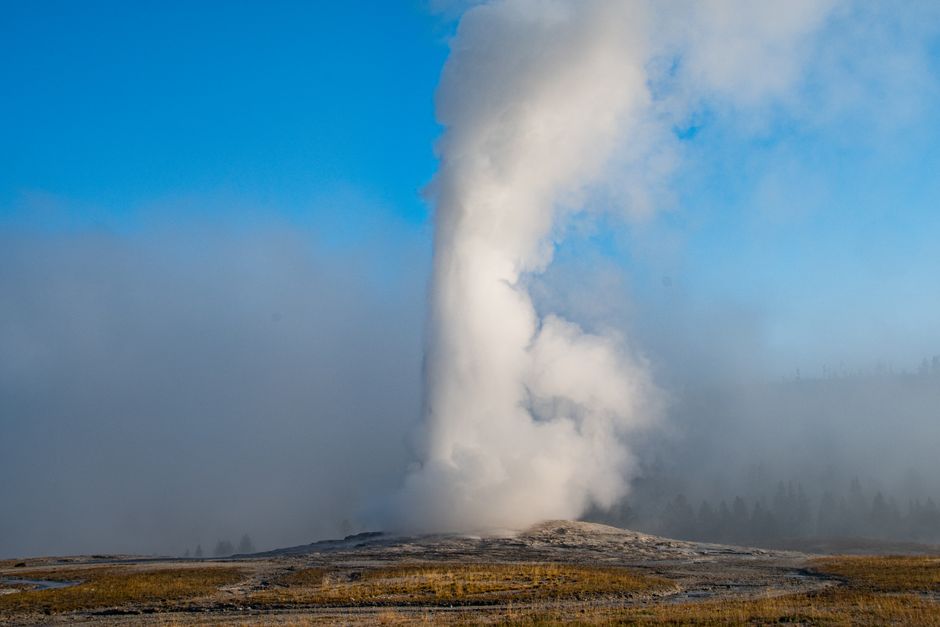
Best things to do: watch an eruption at Old Faithful, then drive the loop past the thermal basins, stopping on the boardwalks.
Entry rules and fees: no vehicle reservations are required. Entry is $35 per vehicle for seven days or $20 per person, plus the $100 non-resident fee. Grand Teton charges its own separate fee, so if you visit both, an America the Beautiful pass usually works out cheaper. See our Yellowstone National Park travel guide.
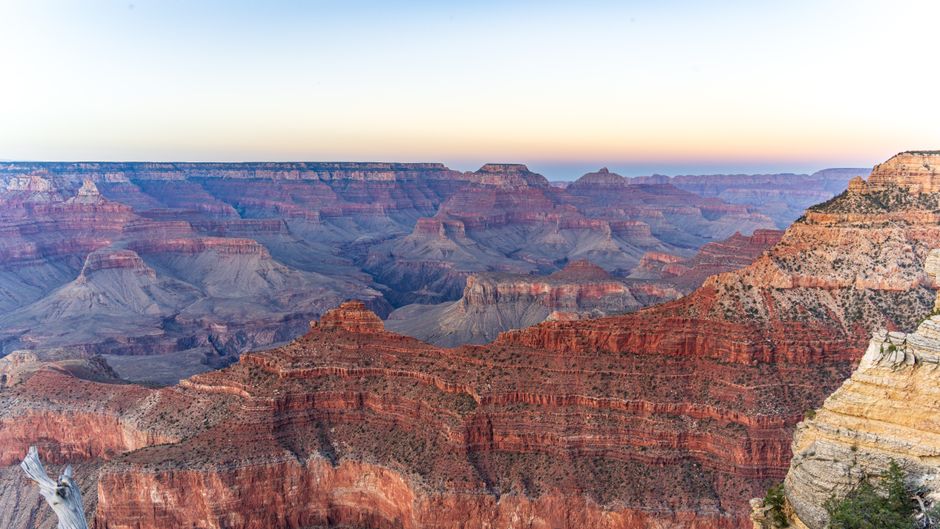
4. Grand Canyon National Park
Why it is on the list: about 4.4 million visits in 2025.
When to go: spring and fall are the most comfortable months for walking the rim. Check what is open first: after flash floods took the park’s main water line out of service, all in-park hotels stopped taking overnight guests on August 31, 2026, with no reopening date announced. Hotels in Tusayan, just outside, are not affected, and the South Rim stays open for day visits.
Best things to do: walk the Rim Trail between viewpoints, then hike a short way down the Bright Angel or South Kaibab Trail. Phantom Ranch and the whole North Kaibab Trail remain closed, and the water at the trail resthouses is off for the winter, so carry your own.
Entry rules and fees: no reservation or timed entry. The entrance stations are cashless: $35 per vehicle or $20 per person, plus the $100 non-resident fee. North Rim campground dates for 2027 have not been finalized. See our Grand Canyon travel guide.
5. Yosemite National Park
Why it is on the list: granite walls, giant sequoias and famous waterfalls, with about 4.3 million visits in 2025.
When to go: May and June for the waterfalls. The park says peak runoff usually comes in May or June, and Yosemite Falls is often a trickle or dry by August. For the high country, Tioga Road is usually open from late May or June until sometime in November, and Glacier Point Road from sometime in May until sometime in November.
Best things to do: spend a day in Yosemite Valley under El Capitan and Half Dome, then drive up to Glacier Point for the view over the valley when the road is open.
Entry rules and fees: Yosemite dropped its timed reservation system for 2026. It has not announced plans for 2027 yet, so check the official reservations page before you travel. Entry is cashless: $35 per vehicle or $20 per person, plus the $100 non-resident fee. See our Yosemite travel guide.
6. Rocky Mountain National Park
Why it is on the list: high mountain lakes, alpine tundra and wildlife in northern Colorado, with about 4.2 million visits in 2025.
When to go: summer and early fall, when Trail Ridge Road over the high country is open. If you can, avoid the timed-entry hours below by entering early or late.
Best things to do: drive Trail Ridge Road, then hike from the Bear Lake area to the lakes above it.
Entry rules and fees: in 2026, a timed-entry reservation was required to enter between 9 a.m. and 2 p.m. from May 22 to October 12. A separate reservation that includes Bear Lake Road was required from 5 a.m. to 6 p.m., May 22 to October 18. The park has not announced its 2027 system yet; the 2026 one was announced on February 18, 2026, so check the official timed-entry page in early 2027. Entry is $30 per vehicle for one day or $35 for seven days, plus the $100 non-resident fee. The park is cashless. See our Rocky Mountain National Park travel guide.
7. Acadia National Park
Why it is on the list: rocky Atlantic coast, granite summits and carriage roads on Maine’s Mount Desert Island, with about 4.1 million visits in 2025.
When to go: June and September to mid-October for mild weather and fall color. The Park Loop Road and other paved park roads are open from April 15 to December 1.
Best things to do: watch sunrise from Cadillac Mountain, then walk or cycle the carriage roads.
Entry rules and fees: in 2026, driving up Cadillac Summit Road required a $6 vehicle reservation from May 20 to October 25. On Recreation.gov, 30% are released 90 days ahead and 70% two days ahead. The 2027 season has not been announced yet; check the official vehicle reservations page. Entry is $35 per vehicle or $20 per person, plus the $100 non-resident fee. See our Acadia National Park travel guide.
8. Grand Teton National Park
Why it is on the list: the jagged Teton Range above lakes and sagebrush flats, just south of Yellowstone and next to Jackson Hole, with about 3.8 million visits in 2025.
When to go: June to September, combined with Yellowstone. In winter, the Teton Park Road between Taggart Lake Trailhead and Signal Mountain Lodge closes to cars from November 1 to April 30 and is groomed for skiing from mid-December to mid-March.
Best things to do: walk around Jenny Lake, then catch the light on the peaks at sunrise from the valley floor.
Entry rules and fees: the park says no reservations are needed to enter. Entry is cashless: $35 per vehicle or $20 per person for seven days, plus the $100 non-resident fee. See our Grand Teton National Park travel guide and Jackson Hole travel guide.
9. Olympic National Park
Why it is on the list: three parks in one, with mountains, temperate rainforest and wild Pacific beaches on Washington’s Olympic Peninsula, and about 3.6 million visits in 2025.
When to go: summer. On the rainy west side of the park, July and August are the driest months, with about 2 to 3 inches of rain each, against 17 to 19 inches in each month from November to January. The park says Hurricane Ridge and the Hoh Rain Forest are most crowded in June, July and August and on holiday weekends. At the Hoh, the parking lot can fill by 10 a.m. from mid-to-late June, and entrance waits can reach one to two hours. Arrive before 10 a.m. or after 5 p.m.
Best things to do: walk the Hall of Mosses in the Hoh Rain Forest, then drive up to Hurricane Ridge for the mountain views.
Entry rules and fees: no entry reservation. Entry is $30 per vehicle or $15 per person for seven days. The park is cashless and is not one of the parks with the $100 non-resident fee. In winter 2026–27, Hurricane Ridge Road opens from November 28, weather permitting, usually Friday to Sunday from 9 a.m. to 4 p.m., and every vehicle must carry tire chains. See our Olympic National Park travel guide and Seattle travel guide.
10. Glacier National Park
Why it is on the list: Going-to-the-Sun Road and glacier-carved valleys in northern Montana, with about 3.1 million visits in 2025.
When to go: July to mid-September. Going-to-the-Sun Road is usually fully open by early July, though there is no set date, and it typically stays fully open until the third Monday of October, weather permitting. The park says May to September is its busiest season, and the parking at Logan Pass and Avalanche Creek starts filling before sunrise.
Best things to do: drive Going-to-the-Sun Road over Logan Pass, then hike one of the trails from the pass.
Entry rules and fees: in 2026, no vehicle reservations were required anywhere in the park. Instead, from July 1 to September 7, 2026, the park ran a ticketed Logan Pass shuttle (booked on Recreation.gov, with a $1 processing fee per ticket) and a three-hour parking limit at Logan Pass. The park has not announced its 2027 plan yet; check the official vehicle reservations page. Entry is $35 per vehicle in summer and $25 from November 1 to April 30, plus the $100 non-resident fee. The park does not accept cash. See our Glacier National Park travel guide.
How to beat the crowds
- Go early or late in the day. At almost every park on this list, the official advice is the same: popular parking lots fill by mid-morning, so arrive before about 8 a.m. or come back in the late afternoon.
- Watch the 2027 announcements. Rocky Mountain, Yosemite and Glacier all announced their 2026 summer systems on February 18, 2026, so watch for 2027 news around then.
Plan your national parks trip
Our free trip planner builds a day-by-day plan from our park guides for your dates and travelers. To see what the weather is usually like on your dates, or the real forecast once you are close to the trip, open the destination weather tool, and use the packing list tool to pack for mountain weather. Our hiking guide has more trail ideas.
Frequently asked questions
Which national parks need a reservation in 2027?
As of November 10, 2026, none of these ten parks has announced a 2027 entry reservation system. In 2026, Rocky Mountain required timed entry from May 22 to October 12 (to October 18 for Bear Lake Road), and Acadia required a reservation for Cadillac Summit Road from May 20 to October 25. Yosemite and Glacier did not require entry reservations in 2026.
What is the most visited national park in the US?
The Great Smoky Mountains, with about 11.5 million recreation visits in 2025, according to the National Park Service.
Do foreign visitors pay more at US national parks?
Yes, at 11 parks. Non-US residents aged 16 and older pay an extra $100 per person on top of the entrance fee at Acadia, Bryce Canyon, Everglades, Glacier, Grand Canyon, Grand Teton, Rocky Mountain, Sequoia and Kings Canyon, Yellowstone, Yosemite and Zion, unless they enter with an annual or America the Beautiful pass.
Is the America the Beautiful pass worth it?
For a US resident visiting three or more parks that charge $35 per vehicle, the $80 pass already pays for itself. For visitors from abroad, the $250 non-resident pass also replaces the $100-per-person extra fee at the 11 parks that charge it, so for three adults traveling together it pays off after a single visit to one of those parks. It does not cover the Smokies parking tag.
Travel guides in this post
Keep reading
Before you go: guidebooks and travel gear
Affiliate links: we may earn a commission at no extra cost to you. As an Amazon Associate we earn from qualifying purchases. We pick items for the place, not for the commission. How we earn money