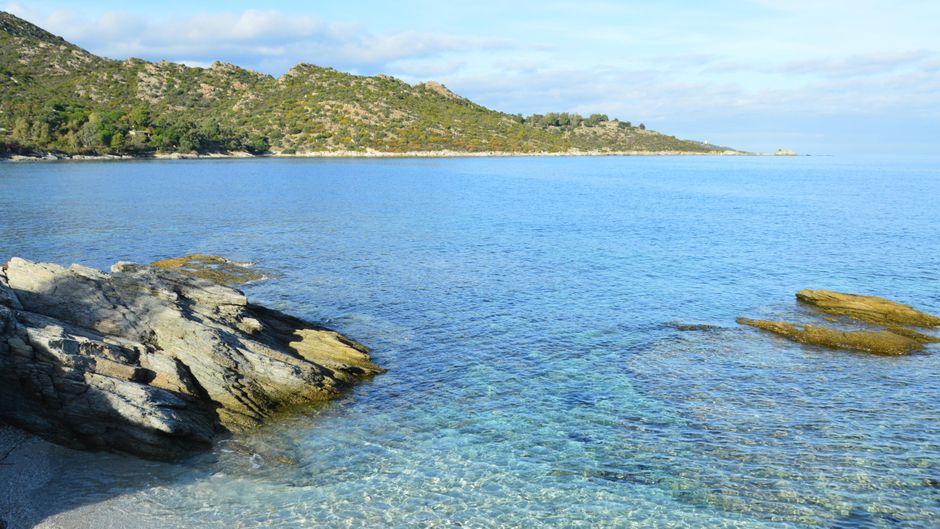
Corsica is France’s wildest island: a mountain range rising straight out of the Mediterranean, ringed with white-sand beaches, red granite cliffs and old Genoese citadels. Napoleon’s birthplace, Ajaccio, Bonifacio on its limestone cliffs and Calvi under its fortress are the classic stops, and the GR20 across the mountains is one of Europe’s toughest treks. Corsica has its own language, food and strong identity, and much of it is a regional nature park. The best months are June and September, warm sea without the August crowds. Give it at least a week, with a car.
Right now in Corsica (Ajaccio)
- Wed19–26°C66–80°F24 mm rain
- Thu19–21°C66–70°F43 mm rain
- Fri18–22°C64–71°FClear
Top tours in Corsica
See all tours for Corsica →
From local operators, with prices and reviews; you check availability and book on Viator, our partner. We may earn a commission at no extra cost to you. How we earn money
Corsica at a glance
- Best months: June and September; May and October for hiking. On the coast, average highs run from about 22 °C in May to 29 °C in August, with only 1–3 rainy days a month in summer (Météo-France normals 1991–2020, Ajaccio). The sea is warmest in August and September.
- Days needed: 7–10 to tour the island by car; 15–16 for the full GR20 on foot.
- Getting there: ferries from Marseille, Toulon and Nice (5–13 hours), or flights to four airports: Ajaccio, Bastia, Calvi and Figari.
- Getting around: a hire car is almost essential; roads are slow and winding. A small railway links Ajaccio, Corte, Bastia and Calvi.
- Budget level: expensive in July and August, with ferries, cars and rooms all in high demand; much better value in June and September. A tourist tax is added per person per night. See our France guide for money, entry rules and daily costs.
- Summer rule to know: from 15 June to 30 September, fires and smoking are banned in all natural areas, and some massifs close on high-risk days.
Corsica’s areas and who each one suits
- Ajaccio and the Gulf: the island’s capital, with Napoleon’s birthplace, a lively old town and market, city beaches and the Sanguinaires islands at sunset. Easy to reach and a good start for the west coast.
- The far south (Bonifacio and Porto-Vecchio): the island’s most famous beaches (Palombaggia, Santa Giulia, Rondinara), Bonifacio’s cliff-top citadel and boat trips to the Lavezzi islands. Busy and pricey in August; perfect for beach holidays.
- Calvi and the Balagne: a citadel on a headland over a long sandy bay, hill villages of craftspeople inland and L’Île-Rousse nearby. Good for families and for combining beach and villages.
- The west coast (Porto, Piana and Scandola): red granite cliffs, the Calanques de Piana and the Scandola nature reserve, best seen by boat. Dramatic, quieter and remote.
- Bastia and Cap Corse: a lived-in port city with an old harbour and Baroque churches, and the wild finger of Cap Corse to the north, with fishing villages and watchtowers. Handy for ferries from Nice and Italy.
- Corte and the mountains: the old capital of independent Corsica, a university town under a rocky citadel, at the mouth of the Restonica and Tavignano valleys. For hikers and river swimmers.
Top things to see in Corsica
Prices and hours below come from the official websites, as of October 2026. Many sights are outdoors and free; the big costs are boat trips and parking at popular beaches.
Bonifacio
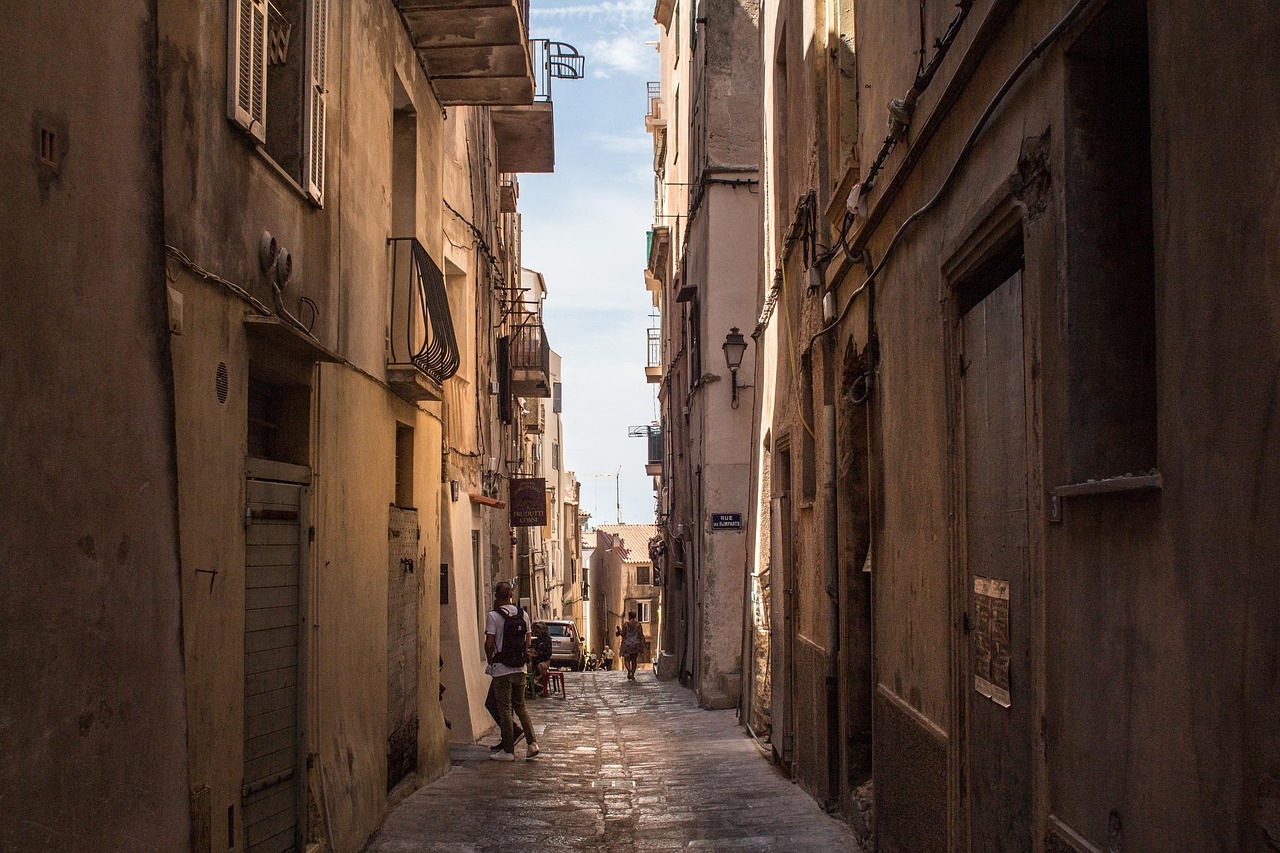
Bonifacio’s old town sits on a narrow limestone ridge, its houses hanging over white cliffs 70 m above the sea, and the Strait of Bonifacio separates it from Sardinia. Walk the citadel lanes and the cliff path to the Pertusato lighthouse, then take a boat round the cliffs and sea caves. The Escalier du Roi d’Aragon, a staircase of 189 steps cut down the cliff to the sea, is open from April to mid-November (in 2026, 9:00–19:30 in June and 9:00–19:15 in July and August); closed shoes with flat soles are required and dogs are not allowed. Book through the Bonifacio tourist office. Boats also run to the Lavezzi islands, a nature reserve with granite boulders and clear water.
Ajaccio
Napoleon Bonaparte was born here in 1769, and the Maison Bonaparte, his family home, is now a national museum. The Palais Fesch has one of France’s biggest collections of Italian paintings outside the Louvre. Wander the old town and the morning market near the port, then drive the Route des Sanguinaires to the Parata point at sunset, facing the red Sanguinaires islands.
Calvi
Calvi’s Genoese citadel stands on a granite headland above the harbour, with a 6 km sandy beach backed by pine woods curving away from it. Walk the ramparts, eat on the quay, and take the little Balagne train along the coast to the beaches between Calvi and L’Île-Rousse.
Scandola, Girolata and the Calanques de Piana
The Gulf of Porto, with the Calanques de Piana, the Gulf of Girolata and the Scandola nature reserve, is a UNESCO World Heritage Site: red porphyry cliffs, rock columns and sea caves, home to ospreys. Scandola is protected on land and sea, so landing, fishing and diving are not allowed inside the reserve; you see it from a boat. Tours leave from Porto (the shortest), Calvi, Cargèse and Ajaccio, and most stop at Girolata, a tiny fishing village reached only by boat or on foot. Drive the Piana road (D81) slowly for the cliffs, and walk one of the short trails among the rocks.
Corte and the Restonica valley
Corte was the capital of Pasquale Paoli’s independent Corsica in the 18th century, and its citadel houses the Museum of Corsica. From town, the narrow road up the Restonica valley leads to clear pools for swimming and a trail to the mountain lakes of Melo and Capitello. In summer the narrow road gets congested and traffic may be regulated, so check with the Corte tourist office before you drive up.
Cap Corse
The island’s northern peninsula is 40 km of wild coast, with Genoese watchtowers, the black-sand beach of Nonza below its village on a rock, and little harbours such as Centuri and Erbalunga. Drive the coast road in a full-day loop from Bastia, or stop at the wine town of Patrimonio on the way back.
Peaks and mountains
- Monte Cinto
- Monte Incudine
- Mount Rotondo
Museums
- Maison Bonaparte
Monuments
- Ajaccio Cathedral
Archaeological sites
- Filitosa
Protected areas
- Scandola Nature Reserve
Beaches and coves
Corsica has around 1,000 km of coastline and some of the clearest water in the Mediterranean. In summer, arrive early at the famous beaches, as car parks fill and charge; and bring water and shade, as many beaches have little of either. See our beaches guide.
- Palombaggia and Santa Giulia (near Porto-Vecchio): fine white sand, turquoise shallows and umbrella pines; the island’s most photographed beaches, and crowded in August.
- Rondinara (between Bonifacio and Porto-Vecchio): an almost circular bay with calm, shallow water, ideal for children.
- Saleccia and Loto (Agriates): long, empty beaches in a roadless desert of scrub, reached by boat from Saint-Florent or on foot along the coastal path. Bring everything you need.
- Arone (near Piana): a wide sandy bay under the mountains on the west coast, quiet even in summer.
- Ostriconi and Lozari (between Calvi and Bastia): a wild river-mouth beach and a family beach near L’Île-Rousse.
- Calvi: a long, gently shelving town beach, easy with children and close to restaurants.
Hiking in Corsica and the GR20
Two-thirds of Corsica is mountainous, and the Regional Nature Park of Corsica runs a network of marked trails, from easy village-to-village walks to the GR20. Spring and autumn are ideal for low-level walks; the high mountains are for June to early October. See our hiking guide.
The GR20
The GR20 crosses the island’s mountains from Calenzana in the north to Conca in the south, in 16 stages, usually walked in 15–16 days. It is often called the toughest long-distance trail in Europe: steep, rocky, with chains on some sections, big daily climbs and long stretches without water. The northern half is the more technical. Only start if you are fit, experienced and carrying a light pack.
Booking refuges and bivouacs
Overnight stays in the park’s refuges and bivouac areas must be booked in advance on the official platform, pnr-resa.corsica; wild camping on the route is forbidden. In 2026 the refuges were staffed from 16 May to 4 October. Prices were €20 per person per night for a bunk, €12 for a bivouac pitch, and €27 for one person or €39 for two in a hired tent with the pitch included. Meals and supplies at the refuges are extra, and budget about €50 a day for food. Book as soon as bookings open for July and August. Dogs are not allowed in refuges or hired tents.
Fire and heat rules on the trail
For fire safety, the park does not allow hikers to set off on the first stage from Calenzana after 11:00. Smoking and fires are banned from 15 June to 30 September. Thunderstorms build quickly in the afternoon; start each stage early.
Easier walks
- Mare e Monti and Mare a Mare: multi-day routes between the sea and the mountains, staying in village gîtes, with easier gradients than the GR20.
- Bavella: the needles of Bavella in the south have short walks to viewpoints and the natural pools of the Piscia di Gallu waterfall.
- Capu Rossu and the Calanques de Piana: half-day coastal walks among red rocks above the sea.
- Sentier des Douaniers (Cap Corse): a coastal path between Macinaggio and Barcaggio past watchtowers and empty coves.
Activities and best months
- Beaches and swimmingMore than 1,000 km of coastline with clear water, long fine-sand beaches, small coves and granite cliffs, including protected areas such as the Agriates and Cap Corse.
- Boat tripsAprMayJunJulAugSepOctNovThe Scandola nature reserve can only be reached by sea: boats combining it with Girolata and the Calanche de Piana leave Calvi, Ajaccio, Porto and other ports from April to November. Trips to the Lavezzi islands from Bonifacio run all year, to the Sanguinaires islands from April to October.
- HikingJunJulAugSepOctThe GR20 crosses the island for 180 km from north to south in about 16 days, past Monte Cinto (2,710 m); it is one of Europe's hardest mountain trails, for fit and experienced hikers, with a season from June to mid-October. Gentler routes include Mare a Mare and Mare e Monti.
- Scuba divingThe island tourism agency's 10 must-do dives include the B17 bomber wreck off Calvi (27 m), the grouper site at the Lavezzi islands (20-32 m), Les Cathédrales in the Gulf of Propriano and Punta Muchillina at the edge of Scandola.
- SnorkelingScandola's red volcanic rocks and the Saint-Florent barrier reef (protected since 1998) are highlights for snorkellers; the beaches of Palombaggia suit families, with seagrass meadows full of fish among pink granite boulders.
Other things to do in Corsica
Boat trips, snorkelling and diving
Boats are the best way to see Scandola, the Bonifacio cliffs, the Lavezzi islands and the Agriates beaches. The water is exceptionally clear: snorkel around the Lavezzi or the rocky coves of the south, and dive the wrecks and reefs near Calvi, Bonifacio and Porto-Vecchio (but not inside Scandola). See our boat trips guide, our snorkelling guide and our diving guide.
Taste Corsican food and wine
Try charcuterie from free-range pigs (lonzu, coppa and figatellu in winter), brocciu (a fresh sheep’s or goat’s cheese), chestnut flour cakes, fiadone cheesecake and wild boar stew. Corsica has its own wine appellations, including Patrimonio, Ajaccio and Calvi, with local grape varieties such as nielluccio and vermentinu. See our wine tasting guide.
Hill villages and music
Drive inland to Balagne villages such as Pigna and Sant’Antonino, or to the Castagniccia’s chestnut forests. Listen for polyphonic singing (paghjella), a UNESCO-listed tradition, at summer festivals and in village churches.
Nearby destinations
- Corsica0 km
- Elba120 km
- Costa Smeralda122 km
- Pisa205 km
- San Gimignano217 km
- Lucca222 km
- Monte Carlo222 km
- Siena225 km
Getting there and getting around
Ferries from mainland France
- From Marseille: Corsica Linea and La Méridionale share the public-service routes to Ajaccio, Bastia, L’Île-Rousse, Propriano and Porto-Vecchio, mostly overnight crossings of about 10–13 hours with cabins. They leave from the Joliette terminal.
- From Toulon and Nice: Corsica Ferries sails to Ajaccio, Bastia, Calvi and L’Île-Rousse, with day and night crossings of about 5–10 hours; some routes run only in season.
- From Italy: Corsica Ferries and Moby link Bastia with Livorno and Savona, and ferries cross from Santa Teresa in Sardinia to Bonifacio.
Book early for July and August, especially with a car, and compare the ports: the shortest crossing is not always the closest to where you are staying.
Flights
Corsica has four airports: Ajaccio, Bastia, Calvi and Figari (for Bonifacio and Porto-Vecchio). Air Corsica and Air France fly year-round from Paris and the big southern cities, and many low-cost and European flights are added from spring to autumn. Pick up your hire car at the airport.
Driving in Corsica
Roads are narrow, twisting and often without barriers, with cows, pigs and goats wandering onto them. Plan on averaging 40–50 km/h away from the main east-coast road, so a trip that looks short on the map can take hours. Hoot before blind bends on mountain roads, use low gear on long descents, keep the tank topped up in the interior and avoid driving mountain roads after dark. Book a small car early for summer.
Trains and buses
The Chemins de fer de la Corse runs a scenic narrow-gauge railway from Ajaccio through the mountains to Corte and Bastia (about 4 hours end to end), with a branch to L’Île-Rousse and Calvi, and the coastal Balagne tramway in summer. Regional buses link the main towns, but services are sparse, especially outside summer.
When to go and how long to stay
Corsica’s coast has hot, dry summers and mild, wet winters, while the mountains, rising to 2,706 m at Monte Cinto, keep snow into late spring. In Ajaccio, average highs reach 29 °C in August, and it rains on just one or two days a month in July and August. Autumn brings the heaviest rain, often in storms. The sea is warm enough for most swimmers from June to October.
| Season | Average high / low | Rainy days a month | What it’s like |
|---|---|---|---|
| Spring (Mar–May) | 16–22 °C / 6–12 °C | 5–7 | Green and flowering, ideal for walks; the sea is still cool and snow lingers on high peaks. |
| Summer (Jun–Aug) | 26–29 °C / 15–18 °C | 1–3 | Hot, dry and busy, with the GR20 season, full ferries and fire-risk rules in the hills. |
| Autumn (Sep–Nov) | 18–26 °C / 9–15 °C | 5–9 | September is the sweet spot for beach and hiking; storms grow more common from October. |
| Winter (Dec–Feb) | 14–15 °C / 4–6 °C | 7–9 | Mild on the coast, snowy in the mountains; many hotels and restaurants close. |
Figures are Météo-France’s 1991–2020 normals for Ajaccio (rainy day = at least 1 mm of rain). Ajaccio averages about 2,800 hours of sunshine a year.
7 days in Corsica
Fly into Ajaccio or Figari. Spend two days in Ajaccio, drive the west coast to Piana and Porto for a Scandola boat trip, cross the mountains to Corte, then finish with three days in the far south: Bonifacio, the Lavezzi and the beaches around Porto-Vecchio.
10–14 days
Add Calvi and the Balagne villages, an Agriates beach day from Saint-Florent and the Cap Corse loop from Bastia, or a few days of walking at Bavella or in the Restonica.
The GR20
Allow 15–16 days for the whole route, or walk the northern or southern half (about a week each), with a rest day in Vizzavona, where the railway crosses the trail.
Where to stay in Corsica
- Beach holiday: Porto-Vecchio or Bonifacio in the south, or Calvi in the north-west.
- Touring without changing hotels too often: two or three bases, such as Ajaccio, Porto-Vecchio and Calvi or Corte.
- Mountains and rivers: Corte or a village gîte in the interior.
- Budget: campsites are everywhere along the coast and in the valleys, often with bungalows; book ahead for August.
- Quiet and character: guesthouses in the Balagne villages or on Cap Corse.
A tourist tax (taxe de séjour) is added per person per night, set by each commune and star rating; under-18s are exempt.
Practical tips for Corsica
- Fire rules: from 15 June to 30 September, lighting fires and smoking are banned in forests, scrub and massifs. In summer, check the map on risque-prevention-incendie.fr/corse, updated at 18:00 for the next day: yellow means take care, orange means limit your visit and leave before 11:00, red means do not go, and black means access is forbidden.
- Closed massifs: on high-risk days in 2026, the prefects closed tracks and trails in massifs such as the Fango, Bonifato, the western Agriates and Bavella. Plan a backup beach day.
- Book ahead for summer: ferries, hire cars, GR20 refuges and the best campsites sell out for July and August.
- Cash and fuel: carry some cash for small villages, refuges and parking, and fill up before crossing the interior.
- Respect the island: Corsican is spoken alongside French, and road signs are often in both; take your rubbish home from beaches and trails.
- Emergencies: call 112.
Weather month by month
What to pack for Corsica
For the beaches, bring a swimsuit, a quick-dry towel, sunscreen, a hat and sunglasses, plus water shoes for the rocky coves and a mask for snorkelling; the sun is strong and shade is scarce. For hiking, pack broken-in boots with good grip, a daypack, at least two litres of water each, a light rain jacket and a warm layer: even in summer, the mountains can be cold and stormy. GR20 walkers need a light pack, a sleeping bag liner for refuges and printed booking confirmations. Bring motion-sickness tablets if you get carsick on winding roads or boats.
What to pack
- Day packs and anti-theft bagsCarries water, towel and sunscreen down the long stairways to Algarve coves.
- Dry bags and phone pouchesProtects phones and cameras from sand and spray on beaches reached by ferry or steep paths.
- Fleeces and warm layersIt is cooler at sea than on land, especially on morning whale-watching trips.
- HeadlampsLevada routes such as PR1 and PR9 pass through long, dark, wet tunnels.
- Hiking shoes and bootsMadeira's levadas and the Azores' crater rims are wet, rocky and slippery, so grippy shoes matter more than anywhere else in Portugal.
- Quick-dry beach towelsA sand-shedding quick-dry towel packs small for beach days and lido visits.
- Rain jacketsA windproof, waterproof shell keeps you warm on open boats, where wind and spray cool you quickly.
- Reef-friendly sunscreenSummer UV is strong on Portuguese beaches and there is little shade below the cliffs.
- Snorkel masks and finsYour own mask fits better than a rental and makes clear-water coves and lava pools more fun.
- Trekking polesLong stone staircases and steep descents on Madeira's peaks and the Azores' crater rims are easier on the knees with poles.
- Water bottles and hydration packsAlgarve and Alentejo trails are hot and exposed with few refill points.
- Water shoesRocky coves, lava pools and weever fish in shallow sand make water shoes useful.
- WetsuitsOn the west and north coasts the sea stays around 16–18 °C even in summer, so a thin suit helps for long swims.
Corsica travel FAQ
How many days do you need in Corsica?
At least a week to see the south and west coasts by car; ten days to two weeks to add Calvi, Cap Corse and the mountains. The full GR20 takes 15–16 days.
What is the best time to visit Corsica?
June and September: warm sea, long days and fewer crowds than July and August. May and October suit hiking.
How do I get to Corsica by ferry?
From Marseille with Corsica Linea or La Méridionale, mostly overnight, or from Toulon and Nice with Corsica Ferries in about 5–10 hours. Ferries also run from Italy and Sardinia.
Can I fly to Corsica?
Yes, to Ajaccio, Bastia, Calvi or Figari. Flights run year-round from Paris and the big southern cities, with many more in summer.
Do I need a car in Corsica?
Almost certainly. Buses are sparse and the train only links a few towns; a car lets you reach the beaches, villages and trailheads.
Do I need to book refuges on the GR20?
Yes. Bunk and bivouac nights must be booked on pnr-resa.corsica, and wild camping is forbidden. In 2026 a bunk cost €20 and a bivouac pitch €12 per night, with refuges staffed from 16 May to 4 October.
When is the GR20 season?
From mid-June to late September, when the snow has melted and the refuges are staffed (in 2026, from 16 May to 4 October). Early June can still have snow on high passes.
Can you visit the Scandola nature reserve?
Only by boat: landing, fishing and diving are forbidden inside the reserve. Tours leave from Porto, Calvi, Cargèse and Ajaccio, and most stop at Girolata.
What are the best beaches in Corsica?
Palombaggia, Santa Giulia and Rondinara in the south, Saleccia and Loto in the Agriates, and Arone on the west coast.
What are the fire rules in Corsica in summer?
Fires and smoking are banned in natural areas from 15 June to 30 September. A daily map, updated at 18:00, shows which massifs to avoid or are closed for the next day.
Is driving in Corsica difficult?
It is slow rather than difficult: narrow, winding roads, animals on the road and few straight stretches. Allow plenty of time and avoid mountain roads at night.
Is Corsica expensive?
In July and August, yes: ferries, cars and rooms all cost more. June and September are noticeably cheaper, and campsites and gîtes keep costs down.
Plan your trip
Partner links: TravelerCenter may earn a commission if you book, at no extra cost to you.
🇫🇷 Useful French phrases for Corsica
All 38 French phrases: restaurant, hotel, emergencies, romance (printable) →
Sources · last reviewed 3 October 2026
Researched and last reviewed on 3 October 2026. GR20 booking rules and prices come from the Regional Nature Park of Corsica; fire rules from the State’s fire-risk map for Corsica and the regional environment directorate; the Escalier du Roi d’Aragon hours from the Bonifacio tourist office; and climate figures from Météo-France’s 1991–2020 normals for Ajaccio. Ferry routes were checked against the operators’ and ferry booking sites. Prices, timetables, routes and access rules change, so check the official sites before you travel.
Also: visit-corsica.com · Météo-France normals 1991–2020, Ajaccio (airport) (climate)
Data: Weather: MET Norway (CC BY 4.0) · Sea temperature: NOAA CoastWatch · Rates: ECB · Costs: World Bank ICP and price levels · © OpenStreetMap contributors (ODBL) · Wikidata (CC0)