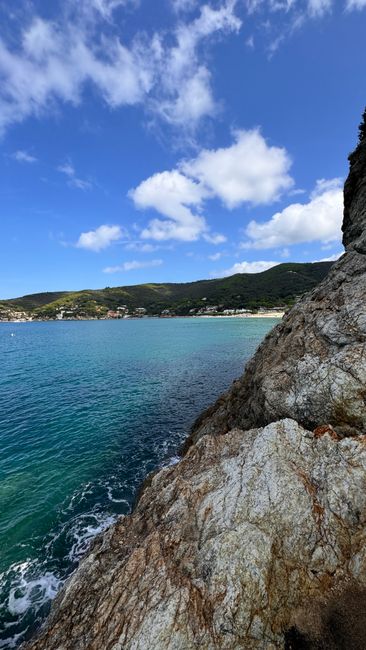
Elba is the largest island of the Tuscan Archipelago, a green, mountainous island about 10 km off the coast of Tuscany and an hour by ferry from Piombino. It packs a lot into 224 square kilometres: more than 100 beaches of white sand, pink pebbles and dark rock, clear water for snorkeling and diving, granite peaks crossed by hiking trails, old mining villages, vineyards and the fortified port of Portoferraio, where Napoleon spent ten months in exile in 1814–15. Much of the island and the sea around it belong to the Tuscan Archipelago National Park. Italians and Germans love it as a relaxed family beach island, and it feels very different from the glamour of Capri or Sardinia: campsites, simple hotels and holiday flats outnumber the luxury resorts. The best months are June and September, with May and early October lovely for walking.
Right now in Elba (Portoferraio)
- Wed 19–23°C 65–74°F 1 mm Partly cloudy
- Thu 19–24°C 67–75°F 4 mm Partly cloudy
- Fri 18–21°C 65–69°F 2 mm Clear
Weather: MET Norway (CC BY 4.0) · Sea temperature: NOAA CoastWatch · Rates: ECB
Top tours in Elba
See all tours for Elba →
From local operators, with prices and reviews; you check availability and book on Viator, our partner. We may earn a commission at no extra cost to you. How we earn money
Elba at a glance
- Best for: beach holidays with children, snorkeling and diving, hiking and mountain biking, Napoleon’s residences and a slow pace of life.
- How long: a long weekend for one area and a few beaches; a week to explore the whole coast.
- Best time: June and September for swimming without the August crowds; May and October for walking. Many hotels and campsites close from November to Easter.
- Book ahead: ferries with a car and accommodation for July and August, ideally months in advance.
- Getting in: ferries from Piombino to Portoferraio take about 1 hour (40 minutes by hydrofoil), with shorter crossings to Cavo and Rio Marina. A landing fee is added to your ticket.
- Before you go: entry rules, money, trains and general safety are on our Italy travel guide.
Elba’s towns and who each one suits
The island is about 27 km long and 18 km wide, and its seven municipalities each have a different character. The east is mineral-rich and wild, the centre is the busiest, and the west is dominated by Monte Capanne, at 1,019 m the island’s highest peak.
Portoferraio
The capital and main port, where most ferries dock. Its old town climbs from a horseshoe-shaped harbour, the Darsena, up to the Medici forts of Falcone and Stella and Napoleon’s town residence. It has the best shops and restaurants open all year, and lovely white-pebble beaches such as Capo Bianco, Le Ghiaie, Sansone and Padulella a short drive away. A practical base without a car.
Marina di Campo and the south coast
Elba’s biggest sandy beach curves around the bay of Marina di Campo, a lively resort with a promenade, bars and the island’s small airport. Further west, the beaches of Cavoli and Fetovaia, with fine sand and turquoise water, are among Elba’s most photographed. Great for families who want sand and easy swimming.
Capoliveri and Porto Azzurro
In the south-east, the hill village of Capoliveri has narrow lanes, piazzas with views and a busy summer evening scene, with beaches such as Innamorata, Morcone and Pareti below. Porto Azzurro, on a sheltered bay, has a pretty waterfront and the Spanish fort that dominates it. Both suit couples and anyone who wants evenings out.
Marciana, Marciana Marina and the west
The western end is the wildest and greenest. Marciana Marina is a pleasant small harbour town with a pebble beach and a seafront promenade; above it, the medieval hill villages of Marciana and Poggio cling to the slopes of Monte Capanne, with chestnut woods and hiking trails. Sant’Andrea and the little coves of the west coast are good for snorkeling. Best for walkers and those who want quiet.
Rio and the east coast
The old iron-mining towns of Rio Marina and Rio nell’Elba, now merged into the municipality of Rio, have red earth, mining museums and quieter beaches. Cavo, at the north-eastern tip, is the closest point to the mainland.
Top things to see on Elba
Prices and hours were checked on the official sites in October 2026, unless we say otherwise; check again before you go.
Napoleon’s residences
Napoleon arrived on Elba on 4 May 1814 after his abdication and left on 26 February 1815 for the Hundred Days. The state museums run by the Ministry of Culture keep both his homes. The Palazzina dei Mulini, his town residence above the sea in Portoferraio, keeps period furniture, mementoes and part of his library. Villa San Martino, his summer country house a few kilometres inland, has painted rooms such as the Egyptian Room and the neoclassical gallery added later by Prince Anatoly Demidoff. According to the Tuscan state museums’ site, each costs €5 (€2 reduced). Since 20 June 2026 the Palazzina dei Mulini opens Monday and Thursday 14:00–18:30 and Wednesday, Friday, weekends and holidays 9:00–13:30, closed Tuesdays; Villa San Martino opens Tuesday, Thursday, weekends and holidays 9:00–13:30 and Wednesday and Friday 14:00–18:30, closed Mondays. Last entry is 30 minutes before closing, and the villa’s park is temporarily closed for restoration.
Portoferraio’s old town and forts
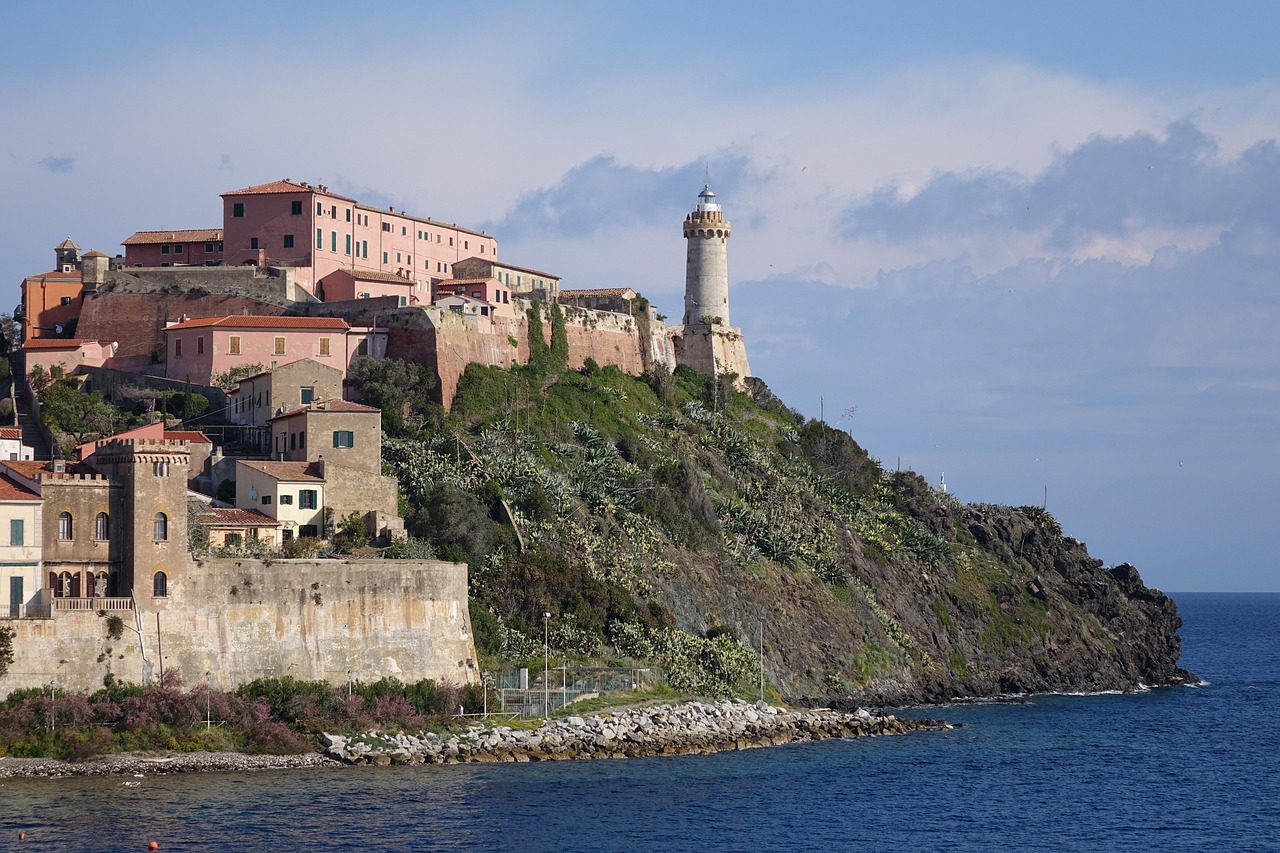
Walk up from the Darsena through the Porta a Mare to the stepped lanes of the old town, built by Cosimo I de’ Medici in the 16th century as Cosmopoli. The star-shaped defences, with Forte Falcone and Forte Stella, its lighthouse and sea views, wrap around the headland. By the harbour, the Linguella tower and the archaeological museum tell the story of Elba’s Etruscan and Roman iron trade.
The beaches
Elba’s coast changes every few kilometres. Sansone and Padulella, near Portoferraio, have white pebbles against white cliffs. Fetovaia and Cavoli, in the south-west, have fine golden sand and very clear water. Marina di Campo and Lacona are long sandy bays for families, Biodola is a sheltered sandy bay on the north coast, and the Innamorata beach at Capoliveri hosts a costumed legend festival in July. Many beaches have paid car parks in summer and some limit numbers; arrive early in August. See our beaches guide.
Monte Capanne
The island’s highest peak, 1,019 m, gives views across the whole archipelago to Corsica and, on clear days, the Tuscan mainland. A small cable car of open, standing-room baskets climbs from Marciana in about 15 minutes in season; local reports give its 2026 adult return fare as about €20, but it opens later and closes earlier than the beach season (in 2026 it opened on 11 July), so check locally before you plan around it. Fit walkers can hike up from Marciana or Poggio in about two hours.
More to see
- Marciana and Poggio: medieval hill villages with stone lanes, a Pisan fortress in Marciana and chestnut woods.
- Capoliveri: a hilltop village of lanes and terraces with views over three gulfs.
- Porto Azzurro: a colourful harbour under the 17th-century Forte di San Giacomo.
- Elba’s mining museums: at Rio Marina and Capoliveri, about the island’s iron and mineral heritage, and guided visits to old open-cast mines.
- Madonna del Monte: a hermitage above Marciana with a semicircular fountain and huge views.
Other things to do on Elba
Snorkeling and diving
The sea around Elba is part of a national park, and the granite and rocky shores are full of life. Snorkel at Sant’Andrea, Fetovaia, Pomonte, where a cargo ship lies in shallow water off the shore, or the Ghiaie beach in Portoferraio, a protected area. Dive centres at Marciana Marina, Marina di Campo, Capoliveri and Porto Azzurro run trips to walls, wrecks and the islet of Scoglio della Triglia. See our snorkeling and diving guides.
Hiking and cycling
Elba has a dense network of marked paths. The Grande Traversata Elbana (GTE) crosses the island from east to west along the ridges in about three to four days, and shorter loops link the hill villages of the west with Monte Capanne. The island is also a top mountain-biking destination, with steep tracks around Capoliveri and Monte Calamita. Walk in spring or autumn: summer middays are hot and many trails have little shade. See our hiking and cycling guides.
Boat trips and kayaking
Boat tours from Portoferraio, Marina di Campo and Porto Azzurro circle parts of the island with swimming stops, and glass-bottom boats run in summer. Sea kayaks and rubber boats for hire are the best way to reach the coves of the west and east coasts. See our boat trips guide.
Wine and food
Elba makes good wine: crisp whites from Ansonica and Vermentino grapes and the sweet red Aleatico, a DOCG passito. Many vineyards around Capoliveri, Portoferraio and Marciana offer tastings; see our wine tasting guide. Try gurguglione (a vegetable stew), stuffed squid, cacciucco fish soup and schiaccia briaca, a dark, boozy fruit-and-nut cake.
Day trips and onward travel
Pianosa and the other islands
Flat Pianosa, a former prison island now inside the national park, can be visited with Toremar’s ferries from Piombino and Rio Marina or seasonal excursion boats from Marina di Campo; visitor numbers are limited, so book ahead and land only with authorised services.
The Tuscan mainland
Back on the mainland, Populonia’s Etruscan tombs and the beach of Baratti are a short drive from Piombino. Pisa is about 1 hour 45 minutes by car from Piombino, and Florence about 2 hours 30 minutes, so Elba fits neatly at the end of a Tuscan tour.
Nearby destinations
Getting there and getting around
Ferries from Piombino
Piombino, on the Tuscan coast, is the gateway. According to Toremar, the regional ferry company, car ferries to Portoferraio take about 1 hour and hydrofoils about 40 minutes, the crossing to Rio Marina about 45 minutes, and the fast passenger service to Cavo about 20 minutes. Moby and other private companies also sail Piombino–Portoferraio, with frequent departures in summer and fewer in winter. A landing fee (contributo di sbarco) for non-residents is added to your ticket; local reports give it as €5 from March to December 2026 (€2.50 for children up to 12) and €1.50 in January and February. Book early for July and August if you are bringing a car, and buy a return with the same company.
Trains and flights
By train, take a regional service along the coast to Campiglia Marittima and change for Piombino Marittima, the station by the ferry port. Pisa airport is the most convenient large airport; see our Pisa guide. Elba’s own airport at Marina di Campo has seasonal flights by small aircraft, mainly from June to September, according to the airport’s 2026 summer timetable.
Buses, cars and bikes
Island buses link Portoferraio with the main towns and beaches, with good summer services but thin ones out of season; the main bus station is near the ferry port in Portoferraio. A car or scooter makes it much easier to reach the beaches of the south and west, which are on winding roads. You can bring your car on the ferry or rent one in Portoferraio. Traffic and parking are difficult around the busiest beaches and Portoferraio in August, and some old centres, such as Capoliveri, limit traffic in summer; park outside and walk in.
When to go and how long to stay
Elba has a mild Mediterranean climate: hot, dry summers and mild, damp winters, with sea breezes that keep the coast more comfortable than the mainland in July. The table uses the WMO 1991–2020 climate normals of the Italian Air Force station at Monte Calamita, on Elba’s south-eastern headland at 396 m: average daily highs and lows, and days with at least 1 mm of rain. Because of its height, the beaches are usually 2–3 °C warmer than these figures.
| Season | Average high / low (Monte Calamita) | Rainy days per month | What it’s like | Good for |
|---|---|---|---|---|
| Winter (Dec–Feb) | 10–11 °C / 5–7 °C | 6–8 | Mild but often windy; most hotels and campsites closed | Quiet walks, Portoferraio, low prices |
| Spring (Mar–May) | 13–20 °C / 7–13 °C | 5–6 | Wildflowers and green hills; the season opens from Easter | Hiking, cycling, Napoleon sites |
| Summer (Jun–Aug) | 24–28 °C / 17–20 °C | 1–3 | Hot, sunny and busy, especially in August | Swimming, snorkeling, boat trips |
| Autumn (Sep–Nov) | 24 °C falling to 14 °C / 17 °C falling to 10 °C | 5 in September, 8 in November | Warm sea in September, rainier from October | Swimming, wine harvest, hiking |
The sea is warm enough for most swimmers from June to early October. August is the busiest and most expensive month, with Italian families on holiday around Ferragosto (15 August).
Events worth planning around
- 5 May: Portoferraio remembers Napoleon’s death with a mass in the Chiesa della Misericordia, which keeps a bronze cast of his death mask.
- July: the Leggenda dell’Innamorata at Capoliveri, a costumed procession and boat race recalling a tragic island love story.
- Summer: outdoor concerts, village festivals (sagre) and markets in every municipality; check the island’s official tourism calendar.
- October: chestnut festivals in the villages of the Monte Capanne slopes, such as Poggio and Marciana.
How long to stay: 3, 5 and 7 days
3 days: Portoferraio’s old town, forts and the Palazzina dei Mulini, an afternoon at Sansone or Capo Bianco, a day for the south-west beaches of Fetovaia and Cavoli, and an evening in Capoliveri.
5 days: add Villa San Martino, Monte Capanne by cable car or on foot, and a boat or kayak day. 7 days: add Marciana and Poggio, the mining museums of the east, a wine tasting, a snorkeling or diving trip, and a visit to Pianosa.
Where to stay on Elba and the tourist tax
- Portoferraio: the most practical base without a car, open all year, close to the ferries and the north-coast beaches.
- Marina di Campo: a lively resort on a long sandy beach; good for families and close to the south-west coves.
- Capoliveri and Porto Azzurro: charming villages with good restaurants and beaches nearby.
- Marciana Marina and the west: quiet, green and best for walkers and divers.
- Campsites and holiday flats: plentiful across the island and popular with families.
In July and August many places ask for weekly stays from Saturday to Saturday. Elba’s municipalities charge a tourist tax (imposta di soggiorno) per person per night, mainly in the season, collected by your hotel or campsite; rates vary by municipality and type of accommodation, so ask when you book. The ferry landing fee is separate.
Practical tips for Elba
- Book the ferry early: car spaces on summer Saturdays sell out; foot passengers can usually travel on the day.
- Keep a margin: crossings are rarely cancelled, but strong winds can delay hydrofoils.
- Bring cash and cards: most places take cards, but small beach bars and markets may not.
- Respect the park: some coves and sea areas are protected; follow the signs and do not take stones or shells.
- Go early to the beach: car parks at Fetovaia, Cavoli and Sansone fill quickly in August.
- Emergencies: call 112.
What to pack for Elba
Pack for the beach and the hills. Bring swimsuits, a quick-dry towel, a snorkel mask and water shoes for the pebble beaches and rocks, plus a sun hat, sunglasses and high-factor sunscreen. For walking, take proper trail shoes with good grip, a light rain jacket in spring and autumn, and a refillable bottle, as springs are few on the ridges. A warm layer helps on Monte Capanne and on the ferry deck, and if you plan to cycle, padded shorts and gloves make the climbs kinder.
Elba travel FAQ
How do I get to Elba?
By ferry from Piombino on the Tuscan coast: about 1 hour to Portoferraio by car ferry or 40 minutes by hydrofoil, according to Toremar, with shorter crossings to Cavo and Rio Marina. There are also seasonal flights by small aircraft to Marina di Campo.
Is there a landing fee for Elba?
Yes. Non-residents pay a contributo di sbarco added to the ferry ticket; local reports give €5 per person from March to December 2026, €2.50 for children up to 12 and €1.50 in January and February. Check the amount when you book.
Do I need a car on Elba?
It helps a lot, especially for the beaches of the south and west. Without one, stay in Portoferraio or Marina di Campo and use the island buses, which are frequent in summer, plus a rented scooter or e-bike.
Which part of Elba is best to stay in?
Portoferraio for convenience, Marina di Campo for families and a sandy beach, Capoliveri and Porto Azzurro for village charm, and the west around Marciana Marina for walking and quiet.
What are the best beaches on Elba?
Fetovaia and Cavoli for fine sand and clear water, Sansone and Padulella for white pebbles, Marina di Campo and Lacona for long family beaches, and Biodola for a sheltered sandy bay.
Can I visit Napoleon’s house on Elba?
Yes, both of them: the Palazzina dei Mulini in Portoferraio and Villa San Martino inland. Each costs €5 (€2 reduced), with half-day opening that varies by weekday; the Palazzina closes on Tuesdays and the villa on Mondays.
Can I do Elba as a day trip?
It is possible from Piombino with an early ferry, staying around Portoferraio and its beaches, but the island deserves at least three days.
When is the best time to visit Elba?
June and September for swimming without the crowds, May and October for hiking. August is hot, busy and expensive.
Is Elba good for families?
Very. Calm sandy bays such as Marina di Campo, Lacona and Biodola, campsites by the sea, short crossings and a relaxed pace make it one of Italy’s most family-friendly islands.
Is there a cable car on Elba?
Yes, the Monte Capanne cable car from Marciana, with small open baskets for two standing passengers. It runs only in season, with hours that depend on the weather, so check locally before you go.
Sources and last review
Researched and last reviewed on 4 October 2026. Napoleon’s residences prices and hours: the Tuscan state museums (Ministry of Culture); ferry routes and crossing times: Toremar; flights: Elba airport’s 2026 summer timetable; climate: WMO 1991–2020 normals for Monte Calamita, Elba (Italian Air Force station, archived by NOAA). The landing fee amounts, the cable car fare and season, bus services, traffic limits, tourist tax and event dates come from local and secondary sources and are flagged for checking. Prices, timetables and rules change, so check the official sites before you go. For entry rules, money and general safety, see our Italy travel guide.
Plan your trip
Partner links: TravelerCenter may earn a commission if you book, at no extra cost to you.
🇮🇹 Useful Italian phrases for Elba
All 38 Italian phrases: restaurant, hotel, emergencies, romance (printable) →