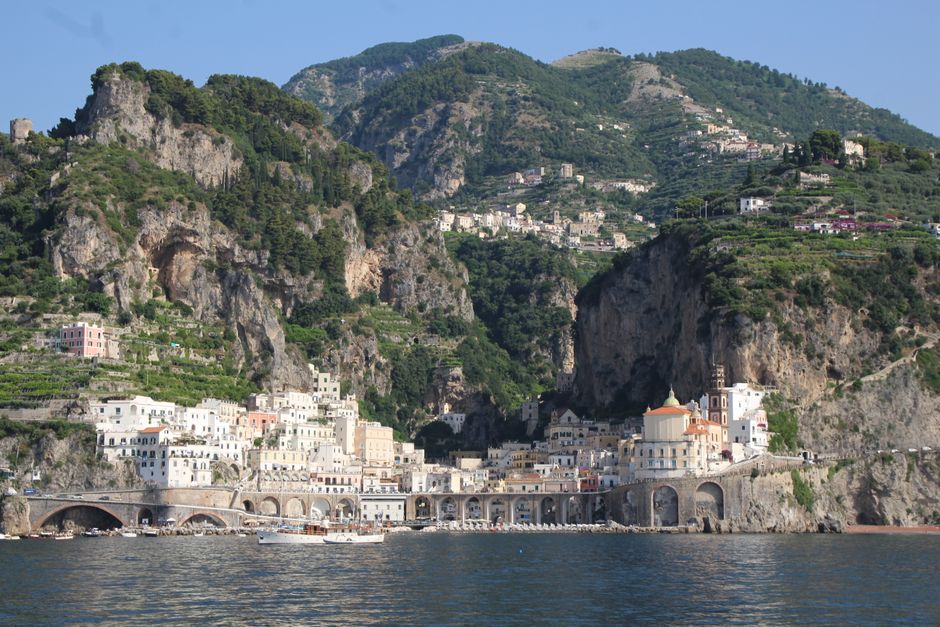
The Amalfi Coast is the stretch of the Sorrento peninsula, south of Naples, where pastel villages cling to cliffs above a deep blue sea: Positano tumbling down to its beach, Amalfi with its cathedral and paper mills, Ravello’s gardens floating high above the water. It is a UNESCO World Heritage Site, linked by one spectacular, twisting road, by ferries and by old mule paths such as the Path of the Gods. It is also small, steep and very popular, so how you get around matters as much as where you stay. The best months are May, June, September and early October. Give it at least three nights, ideally five to seven with Capri.
Right now in Amalfi Coast (Amalfi)
- Wed17–23°C63–73°F21 mm rain
- Thu19–23°C67–73°F11 mm rain
- Fri19–22°C66–71°F11 mm rain
Top tours in Amalfi Coast
See all tours for Amalfi Coast →
From local operators, with prices and reviews; you check availability and book on Viator, our partner. We may earn a commission at no extra cost to you. How we earn money
The Amalfi Coast at a glance
- Best months: May–June and September–early October: warm sea, long days and fewer crowds than July and August. Average highs run from about 24 °C in May to 32 °C in August (WMO normals 1991–2020, Capri station). Many hotels and boats close from November to March.
- Days needed: 3–4 for Positano, Amalfi and Ravello; 5–7 with the Path of the Gods, Capri and a boat day.
- Getting there: fly into Naples (NAP), then bus, train plus bus, ferry or private transfer; or take the train to Salerno and a ferry from there. Salerno’s small airport also has some flights.
- Getting around: SITA buses, Travelmar and other ferries, and your own feet. Driving is possible but stressful, and in busy periods the main road has alternating number-plate rules.
- Budget level: expensive, especially in Positano and in summer; cheaper in Minori, Maiori, Praiano, Atrani or Sorrento. A tourist tax is added per person per night. See our Italy guide for money, entry rules and daily costs.
The towns and who each one suits
- Positano: the postcard: a vertical village of pink, yellow and white houses above the Spiaggia Grande, with boutiques, beach clubs and countless steps. Romantic and glamorous, the most expensive and the most crowded.
- Amalfi: once a powerful sea republic, now the busy hub of the coast, with the cathedral, a lively piazza, lemon shops and the main bus and ferry terminals. The most practical base without a car.
- Ravello: up in the hills above Amalfi, quiet, elegant and famous for the gardens of Villa Rufolo and Villa Cimbrone and its summer music festival. Best for couples and views; you will need the bus to reach the sea.
- Praiano and Furore: between Positano and Amalfi, quieter and a little cheaper, with sunset views and the tiny fjord of Furore below the road.
- Atrani, Minori and Maiori: east of Amalfi; Atrani is a tiny, authentic village next door to Amalfi, Minori is known for its pastry shops, and Maiori has the coast’s longest sandy beach. Good for families and value.
- Sorrento: not on the Amalfi Coast itself but on the other side of the peninsula, facing Naples. A bigger, flatter town with a train to Naples, Pompeii and Herculaneum, ferries to Capri and buses to Positano. The easiest and often cheapest base.
Top things to see on the Amalfi Coast
Rules and timetables below come from the official websites, as of October 2026.
Positano
Arrive by boat if you can: the view of the village piled up the slope from the sea is the classic image of the coast. Walk down through the lanes to the church of Santa Maria Assunta, with its majolica-tiled dome, and the Spiaggia Grande, then follow the cliff path to the quieter Fornillo beach. Positano is built almost entirely of stairs; the one main road loops through the top of the village, served by the SITA buses and a local shuttle. Sunset drinks on a terrace above the bay are a must.
Amalfi and Atrani
The steep staircase of Amalfi’s Cathedral of Sant’Andrea rises above Piazza Duomo, with a striped Arab-Norman façade, a bell tower of green and yellow tiles and the Cloister of Paradise next door. Behind it, the town climbs the narrow Valle dei Mulini, where water-powered mills once made Amalfi’s famous handmade paper: visit the paper museum or a working paper shop. Then walk through the tunnel or along the coast road to Atrani, five minutes away, for a quieter piazza and a swim on its little beach.
Ravello: Villa Rufolo and Villa Cimbrone
Ravello sits about 350 m above the sea, 25 minutes by bus from Amalfi. The gardens of Villa Rufolo, with their medieval tower and flower terraces, inspired Wagner, and host the concerts of the Ravello Festival every summer on a stage hanging over the sea. A short walk away, the gardens of Villa Cimbrone end at the Terrace of Infinity, a balcony of marble busts with one of the most famous views in Italy. Both charge an entry fee; come early or late in the day for the best light.
The Fjord of Furore and the Emerald Grotto
Between Praiano and Amalfi, the road crosses a high bridge over the Fiordo di Furore, a narrow gorge with a tiny beach and fishermen’s houses at the bottom, reached by a long staircase. A little further east, the Grotta dello Smeraldo is a sea cave lit with green light, visited by rowing boat from a lift down from the road or by boat from Amalfi.
Lemons, limoncello and food
The coast’s terraced groves grow the large, fragrant sfusato amalfitano lemon, used in limoncello, granita, cakes and the famous delizia al limone. Several farms near Amalfi, Minori and Maiori open for lemon tours and tastings. Eat fresh fish, scialatielli ai frutti di mare, anchovies from Cetara and its colatura, an ancient fish sauce, and leave room for pastries in Minori. Local white wines from Furore, Ravello and Tramonti are excellent with seafood. See our wine tasting guide.
Museums
- Amalfi Paper Museum
- Diocesan Museum of Amalfi
Churches and cathedrals
- Amalfi Cathedral
Other sights
- Roman Villa of Minori
- Villa Cimbrone
Parks and gardens
- Villa Rufolo
Castles and forts
- Castello di San Nicola de Thoro-Plano
Hiking the Path of the Gods
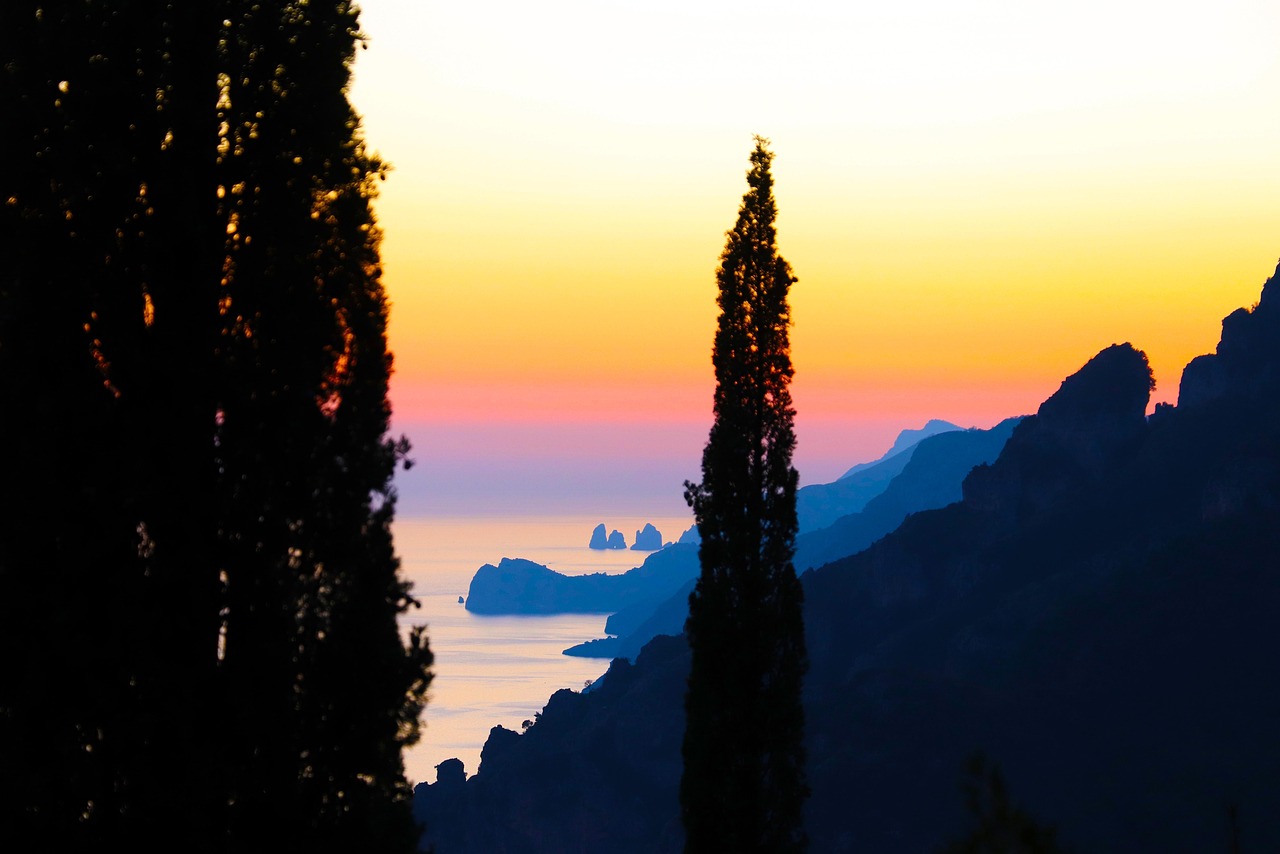
The Sentiero degli Dei is one of the most beautiful walks in Italy: an old mule track high along the cliffs from Bomerano, a village of Agerola, to Nocelle, above Positano, with the whole coast and Capri in view. It is trail 327 of the local CAI network: about 5.3 km, around two hours, mostly gently downhill (about 180 m up and 360 m down). It is free and needs no booking.
- Getting to the start: take the SITA bus from Amalfi to Agerola and get off at Bomerano. The trail starts near the main square.
- Getting down: from Nocelle, take the local bus down to Positano, or walk down about 1,500–1,700 steps to the coast road at Arienzo, hard on the knees.
- Which way: walk from Bomerano to Nocelle for the views ahead of you and less climbing.
- Safety: the path is rocky, narrow in places and exposed to the sun. Wear hiking shoes, carry water, start early in summer and do not walk it in heavy rain. It may be closed after landslides or fires.
Other good walks include the Valle delle Ferriere nature reserve above Amalfi, with waterfalls and rare ferns, and the old stepped path between Ravello and Minori. See our hiking guide.
Beaches and boat days
The beaches are mostly small and pebbly, split between paid beach clubs with sunbeds and free public sections. The main ones are Positano’s Spiaggia Grande and Fornillo, Amalfi’s Marina Grande, Atrani, and the long sandy beach of Maiori. Many smaller coves, such as Laurito near Positano or Santa Croce near Amalfi, are reached by the restaurants’ own small boats from the main pier. The best way to see the coast is from the water: rent a small boat with or without a skipper (no licence is needed for low-powered boats), or join a shared boat trip, and stop to swim in coves and grottoes you cannot reach by road. See our boat trips guide, our beaches guide and our snorkeling guide.
A day trip to Capri
Capri is a short boat ride from Positano, Amalfi and Sorrento. Ferries run mostly from spring to autumn from the Amalfi Coast, and all year from Sorrento, about 20–25 minutes by fast ferry. On the island, take the funicular up to the Piazzetta, walk to the Gardens of Augustus and the views of the Faraglioni, ride the chairlift up Monte Solaro in Anacapri, and visit the Blue Grotto if the sea is calm. A landing fee for day visitors is added to the ferry ticket. A private or shared boat tour around the island is the best way to see the grottoes and the Faraglioni up close. Take the first boat out and one of the last back to see it at its calmest. See our Naples guide for Ischia and Procida.
Sorrento as a base
Sorrento sits on cliffs facing the Bay of Naples, with Vesuvius across the water. It has more hotels at every price, flat streets, a lively evening passeggiata and the end of the Circumvesuviana railway, with trains to Pompeii (about 30 minutes), Herculaneum and Naples. From Sorrento, SITA buses reach Positano in about 40–50 minutes and Amalfi in about 1 h 40, and ferries run to Capri, Naples and, in season, Positano and Amalfi. It is the best base for a first trip without a car, if you don’t mind a daily bus ride to the Amalfi side.
Activities and best months
- Beaches and swimmingAmalfi's Marina Grande, Duoglio (400 steps) and Santa Croce (by boat), plus Positano's Marina Grande and pebbly Fornillo.
- Boat tripsSmall boats from Amalfi to sea-only beaches and the Emerald Grotto, gozzo boats from Positano to the Li Galli islands, and year-round Travelmar ferries along the coast to Salerno.
- HikingMarAprMaySepOctNovThe Path of the Gods: about 8 km, Agerola to Nocelle (Positano) in about 4.5 h, best in spring and autumn, not for people with vertigo; plus the easy Valle delle Ferriere walk from Amalfi.
- SnorkelingPositano's Fornillo beach, within walking distance, is an excellent snorkelling spot.
Nearby destinations
Getting there and getting around
Arriving
- From Naples airport (NAP): direct buses run to Sorrento in season; otherwise take the Alibus to Napoli Centrale and the Circumvesuviana to Sorrento, then a SITA bus. A private transfer to Positano takes about 1 h 15 without traffic.
- By train via Salerno: high-speed trains reach Salerno from Rome and Naples; from the port near the station, ferries run to Amalfi and Positano, and SITA buses climb along the coast.
- Salerno airport (QSR): the small Salerno Costa d’Amalfi airport reopened to passenger flights in 2024 and is the closest to the eastern side of the coast; check which routes operate in your season.
- By ferry from Naples: in season, fast ferries from Molo Beverello reach Sorrento, Positano and Amalfi.
SITA buses
Blue SITA Sud buses run along the Amalfi Coast road (SS163) from Sorrento to Positano and Amalfi, and from Amalfi to Ravello, Agerola and Salerno. They are cheap and frequent, but in summer they fill up and may pass full stops, and the ride is slow and winding: take travel-sickness tablets if you need them. Buy tickets before boarding at tobacconists, newsstands and bars, or in the official app; tickets are priced by distance, and a 24-hour pass covers the whole network. Validate it when you board. Amalfi to Positano takes about 40–50 minutes; Amalfi to Ravello about 25 minutes. Positano also has a local bus between the main road and the upper village and Nocelle.
Ferries
Boats are faster, cooler and far more scenic than the road. Travelmar runs the main fast ferries along the coast, linking Salerno, Vietri, Cetara, Maiori, Minori, Amalfi and Positano: Salerno–Amalfi takes about 35 minutes and Amalfi–Positano about 25 minutes. Other companies link Positano and Amalfi with Capri and Sorrento in season. Services are frequent from about April to October and much reduced or suspended in winter, and they are cancelled in rough seas. Buy tickets at the kiosks on the piers or online, and keep your luggage to one bag if you can.
Driving and the alternating plates rule
The SS163 “Amalfitana” is about 40 km of hairpin bends, narrow enough that buses and cars often have to reverse to pass. Parking in the towns is scarce and costly. To cut summer traffic, ANAS, the national roads agency, applies an alternating number-plate rule on the SS163 between Positano and Vietri sul Mare in busy periods:
- How it works: from 10:00 to 18:00, on odd-numbered dates cars whose number plate ends in an odd digit may not use the road, and on even-numbered dates those ending in an even digit may not. Outside those hours anyone may drive.
- When, in 2026: every day from 30 March to 6 April and from 24 April to 2 May; weekends and public holidays in June and July; every day in August and September; and weekends and holidays in October.
- Who is exempt: residents of the coast’s towns, motorcycles and scooters, taxis and hire cars with driver, vehicles with a disabled badge with the holder on board, and hotel guests on their arrival and departure days with proof of the booking. Check the latest ANAS ordinance and your town hall’s notice before driving.
Unless you are a confident driver, leave the car in Sorrento or Salerno and use buses and boats. Scooters are a popular alternative for experienced riders.
When to go and how long to stay
The coast has a mild, sunny Mediterranean climate. Summer is hot and dry, with warm sea and very busy towns, roads and beaches in July and August. May, June and September are the sweet spot: warm enough to swim, with everything open and fewer people. October is quieter, with the sea still warm early in the month. From November to March the coast is peaceful and beautiful, but many hotels, restaurants and boat services close, and the rain falls mostly in autumn and winter.
| Season | Average high / low | Rainy days a month | What it’s like |
|---|---|---|---|
| Spring (Mar–May) | 17–24 °C / 10–16 °C | 4–7 | Lemons and flowers; good hiking; the season opens around Easter. |
| Summer (Jun–Aug) | 29–32 °C / 20–23 °C | 1–2 | Hot, sunny, crowded; best for swimming and boats; book months ahead. |
| Autumn (Sep–Nov) | 18–28 °C / 13–20 °C | 6–9 | Warm sea in September; quieter in October; storms and closures from November. |
| Winter (Dec–Feb) | 14–15 °C / 8–10 °C | 7–9 | Mild and very quiet; many hotels closed; few ferries. |
Figures are the WMO 1991–2020 climate normals for the Capri station, at the western tip of the peninsula (rainy day = at least 1 mm of rain). The coast receives most of its rain from October to January.
3 days on the Amalfi Coast
Base yourself in Amalfi or Positano. Day 1: Positano and its beaches. Day 2: the Path of the Gods in the morning, down to Positano. Day 3: Amalfi, Atrani and Ravello’s gardens.
5 days
Add a day on Capri and a boat day along the coast, with swims in the coves and lunch at a beach restaurant.
7 days or more
Split your stay between Sorrento and Amalfi, Ravello or Praiano, and add Pompeii and Herculaneum, or two nights in Naples. Continue south to Sicily by ferry or train, or north to Rome.
Where to stay on the Amalfi Coast
- Without a car, first visit: Amalfi, the bus and ferry hub, or Sorrento for trains and Capri.
- Romance and views: Positano or Ravello; check how many steps lie between the road and your room.
- Value and families: Minori, Maiori or Atrani, close to Amalfi and with easier beaches.
- Quiet and sunsets: Praiano or Furore, with a bus to both Positano and Amalfi.
- Hikers: Agerola, at the top of the Path of the Gods, cooler and cheaper.
A tourist tax (imposta di soggiorno) is added per person per night, set by each town. Book July and August months ahead, and ask your hotel about luggage porters and parking before you arrive.
Practical tips for the Amalfi Coast
- Pack light: you will carry your bags up and down stairs and on and off crowded buses and boats. Many hotels arrange porters for a fee.
- Buy bus tickets in advance: SITA tickets are not always sold on board, and the tobacconists close at night and on Sunday afternoons.
- Use the boats: in summer the ferry is usually quicker than the bus, and never stuck in traffic.
- Check the plates calendar: if you drive, look up the alternating-plate days before you go, and remember that self-drive hire cars are not on the list of exemptions.
- Beach costs: sunbeds and umbrellas at the beach clubs are pricey in high season; free public sections fill up early.
- Emergencies: call 112.
Weather month by month
What to pack for the Amalfi Coast
Bring a light suitcase or a backpack rather than a big case, and comfortable shoes with grip for the endless stairs. Add hiking shoes or trail runners for the Path of the Gods, plus a day pack, a refillable water bottle, a sun hat and high-factor sunscreen. The beaches are pebbly, so water shoes help, along with a quick-dry towel, a swimsuit and a cover-up for walking through town. A snorkel mask is worth it for the clear coves on boat days. Pack a light jacket for ferry decks and spring and autumn evenings, and travel-sickness tablets if winding roads bother you.
What to pack
- Day packs and anti-theft bagsCarries water, towel and sunscreen down the long stairways to Algarve coves.
- Dry bags and phone pouchesProtects phones and cameras from sand and spray on beaches reached by ferry or steep paths.
- Fleeces and warm layersIt is cooler at sea than on land, especially on morning whale-watching trips.
- HeadlampsLevada routes such as PR1 and PR9 pass through long, dark, wet tunnels.
- Hiking shoes and bootsMadeira's levadas and the Azores' crater rims are wet, rocky and slippery, so grippy shoes matter more than anywhere else in Portugal.
- Quick-dry beach towelsA sand-shedding quick-dry towel packs small for beach days and lido visits.
- Rain jacketsA windproof, waterproof shell keeps you warm on open boats, where wind and spray cool you quickly.
- Reef-friendly sunscreenSummer UV is strong on Portuguese beaches and there is little shade below the cliffs.
- Snorkel masks and finsYour own mask fits better than a rental and makes clear-water coves and lava pools more fun.
- Trekking polesLong stone staircases and steep descents on Madeira's peaks and the Azores' crater rims are easier on the knees with poles.
- Water bottles and hydration packsAlgarve and Alentejo trails are hot and exposed with few refill points.
- Water shoesRocky coves, lava pools and weever fish in shallow sand make water shoes useful.
- WetsuitsOn the west and north coasts the sea stays around 16–18 °C even in summer, so a thin suit helps for long swims.
Amalfi Coast travel FAQ
What is the best town to stay in on the Amalfi Coast?
Amalfi is the most practical, with buses and ferries in every direction; Positano is the most glamorous; Ravello the most peaceful. Sorrento, just off the coast, is the easiest base for trains and Capri.
How many days do you need on the Amalfi Coast?
At least three nights for Positano, Amalfi, Ravello and the Path of the Gods, and five to seven to add Capri, a boat day and Pompeii.
Do I need a car on the Amalfi Coast?
No. Buses and ferries reach every town, and parking is scarce and expensive. A car is only useful for exploring the hills, and in busy periods the alternating-plates rule may keep it off the main road during the day.
How does the alternating plates rule work?
On the SS163 from Positano to Vietri sul Mare, from 10:00 to 18:00 on the days it applies, cars with plates ending in an odd digit cannot drive on odd dates, and even ones on even dates. In 2026 it applied every day in August and September and on weekends and holidays in June, July and October, plus Easter and late April. Residents, motorbikes, taxis and hotel guests on arrival and departure days are exempt.
How long is the Path of the Gods?
About 5.3 km from Bomerano to Nocelle, around two hours, plus the bus or stairs down to Positano. It is free and needs no booking.
Is the Path of the Gods difficult?
It is a moderate walk for anyone reasonably fit, mostly downhill from Bomerano, but rocky and exposed in places. Wear proper shoes, carry water and avoid the midday heat in summer.
How do I get from Positano to Amalfi?
By ferry in about 25 minutes in season, or by SITA bus in about 40–50 minutes. Buy bus tickets before you board.
How do I get from Naples to the Amalfi Coast?
Take the Circumvesuviana to Sorrento and a SITA bus to Positano and Amalfi, the train to Salerno and a ferry, a seasonal ferry from Naples, or a private transfer.
Can you visit Capri from the Amalfi Coast?
Yes. In season ferries and boat tours run from Positano and Amalfi, and ferries run all year from Sorrento, about 20–25 minutes away.
When is the best time to visit the Amalfi Coast?
May, June, September and early October, when the sea is warm and the crowds are thinner than in July and August. Many places close from November to March.
Are there sandy beaches on the Amalfi Coast?
Most beaches are pebbly or coarse sand. Maiori has the longest sandy beach; Positano, Amalfi and Atrani have grey sand and pebbles. Bring water shoes.
Plan your trip
Partner links: TravelerCenter may earn a commission if you book, at no extra cost to you.
🇮🇹 Useful Italian phrases for Amalfi Coast
All 38 Italian phrases: restaurant, hotel, emergencies, romance (printable) →
Traveler centers in Amalfi Coast
Tourist information offices, visitor centers and travel agencies in Amalfi Coast, from OpenStreetMap.
- Travel agency
Curreri Viaggi
Sources · last reviewed 3 October 2026
Researched and last reviewed on 3 October 2026. The alternating-plates rules come from the ANAS ordinance as published by the City of Amalfi, the Path of the Gods data from the CAI Monti Lattari trail register, and ferry information from Travelmar. Climate figures are the WMO 1991–2020 normals for the Capri station. Bus and ferry timetables and fares change every season, so check the official sites of SITA Sud, Travelmar, EAV and the ferry companies, and your town hall’s notices, before you travel.
Also: italia.it · Aeronautica Militare normals 1991–2020, Capri (climate)
Data: Weather: MET Norway (CC BY 4.0) · Sea temperature: NOAA CoastWatch · Air quality: OpenAQ · Rates: ECB · Costs: World Bank ICP and price levels · © OpenStreetMap contributors (ODBL) · Wikidata (CC0)