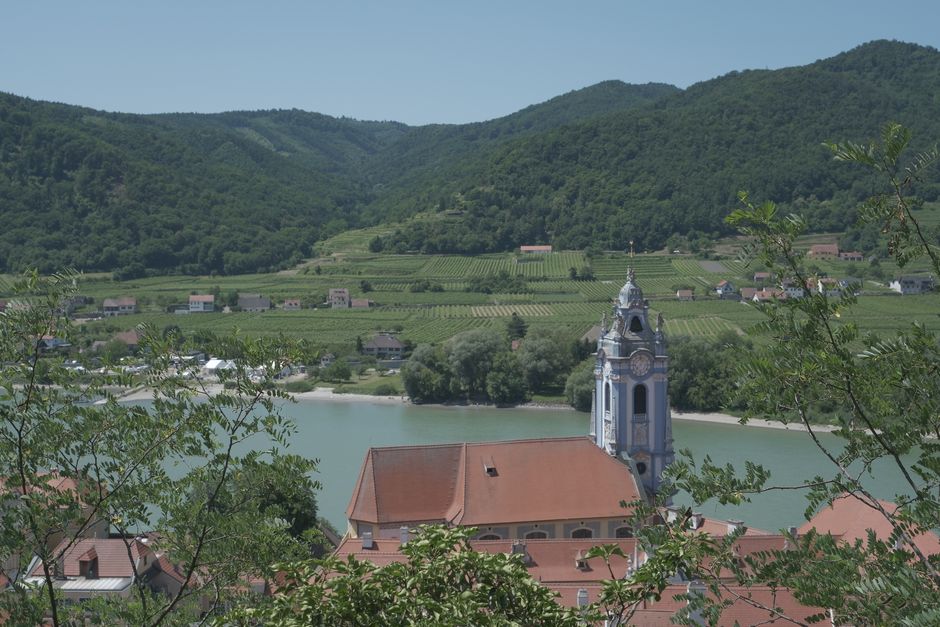
The Wachau is the Danube at its most beautiful: a 36 km stretch of river between Melk and Krems where terraced vineyards, apricot orchards and castle ruins climb steep, rocky slopes, and baroque church towers rise above wine villages on both banks. It is a UNESCO World Heritage landscape, about an hour from Vienna, and one of the great white-wine regions of Europe. You come to see Melk Abbey’s golden library, climb to the ruined castle where Richard the Lionheart was held prisoner above Dürnstein, cruise or cycle along the river, and drink Grüner Veltliner and Riesling at the winemakers’ own taverns. In spring the valley is white with apricot blossom; in autumn the vines turn gold. Give it a day trip from Vienna, or two or three days to slow down.
Right now in Wachau (Dürnstein)
- Wed10–23°C50–74°FMostly clear
- Thu11–23°C52–74°F5 mm rain
- Fri10–16°C49–61°FPartly cloudy
Top tours in Wachau
See all tours for Wachau →
From local operators, with prices and reviews; you check availability and book on Viator, our partner. We may earn a commission at no extra cost to you. How we earn money
The Wachau at a glance
- Best for: river scenery, baroque abbeys, castle ruins, wine and apricots, easy cycling and a gentle escape from Vienna.
- How long: a full day for Melk, a boat and Dürnstein; 2–3 days to cycle, taste wine and stay in a village.
- Best time: late March to April for apricot blossom; May to June and September to October for cycling, boats and the wine harvest.
- Getting in: trains from Vienna reach Krems or Melk in about an hour; the Wachaubahn, boats and buses link the villages.
- Getting around: by bike, boat, bus or car. As of October 2026, Melk Abbey costs €16 for adults (€20 with a guided tour).
- Before you go: entry rules, money and transport in Austria are in our Austria travel guide.
The Wachau, village by village
The Danube flows east through the Wachau from Melk to Krems. Most of the famous villages are on the north (left) bank, which faces south and gets the most sun, so that is where the best vineyards are; the south (right) bank is quieter and greener, with orchards and woods. Three small cable ferries cross between the banks.
- Melk: the western gateway, a small town below its vast golden-yellow abbey.
- Spitz: a wine village around the Tausendeimerberg, a vineyard hill said to yield “a thousand buckets” of wine in a good year, with a shipping museum.
- Weissenkirchen: the largest wine village of the Wachau, with a fortified church and arcaded courtyards.
- Dürnstein: the picture-postcard village, with its blue-and-white abbey tower and the castle ruin above.
- Krems and Stein: the eastern gateway, a lively old town with a university, museums and wine bars.
- The south bank: Aggsbach, Arnsdorf and Rossatz, with apricot orchards, cycle paths and the Aggstein castle ruin high on a crag.
Top things to see in the Wachau
Prices and hours below were checked on the official sites in October 2026. They change, so check before you go.
Melk Abbey
Rebuilt between 1702 and 1736 on a rock above the Danube, the Benedictine abbey of Melk is one of the great baroque buildings of Europe, and monks still live and teach here. The visit takes you through the imperial corridor and the abbey museum, the Marble Hall with its painted ceiling, the terrace with views up and down the river, the library, with about 100,000 books and a ceiling fresco by Paul Troger, and finally the gold and marble abbey church. The gardens include a baroque pavilion with exotic frescoes.
Tickets. As of October 2026, entry costs €16 for adults, €20 with a guided tour (offered in English), €8 for students up to 27 and €32 for families; the park alone costs €5.50. From 1 April to 31 October the abbey opens daily 9:00–17:30 (last entry 17:00). From November to March hours are shorter, and in parts of the winter weekday visits are only possible on guided tours at set times, so check stiftmelk.at before going. Arrive at opening or late in the afternoon to avoid the river-cruise groups.
Dürnstein and the castle ruin
Dürnstein’s single main street is lined with old houses, wine shops and cafés, and its abbey church, with a blue-and-white baroque tower on the riverbank, is the symbol of the Wachau. Above the village, a steep path climbs in about 20 to 30 minutes to the ruins of Kuenringer castle, where, according to tradition, King Richard the Lionheart of England was imprisoned in 1192–93 on his way home from the Crusades, until a huge ransom was paid. The ruin is free and open at all times, and the view of the river bend is the best in the Wachau. Dürnstein gets crowded at midday in summer; stay overnight to see it quiet.
Krems and Göttweig Abbey
Krems, one of Austria’s oldest towns, has a well-kept medieval centre, the Steiner Tor gate and a “Kunstmeile” (art mile) in the neighbouring district of Stein, with the Lower Austria State Gallery in a striking twisted building, the Kunsthalle and a caricature museum. Across the river, Göttweig Abbey crowns a hill with views over the whole eastern Wachau, an imperial staircase and a terrace restaurant.
Aggstein, Spitz and Willendorf
On the south bank, the ruined Aggstein castle sits 300 m above the river, a former robber-baron stronghold with a medieval tavern. In Spitz, climb to the Hinterhaus ruin for the view. At Willendorf, a monument marks where the Venus of Willendorf, a small limestone figure about 25,000 years old, was found in 1908; the original is in the Natural History Museum in Vienna.
Monuments
- Aggstein Castle
- Dürnstein Castle ruins
- Göttweig Abbey
Peaks and mountains
- Jauerling
Monasteries and convents
- Aggsbach Charterhouse
- Melk Abbey
Palaces
- Schönbühel Castle
Danube boats in the Wachau
A boat trip between Melk and Krems is the classic way to see the valley, passing castle ruins, vineyards and villages in about 1 hour 45 minutes downstream (longer upstream, against the current). As of October 2026, the main operator is DDSG Blue Danube, whose Wachau line stops at Melk, Emmersdorf, Spitz, Weissenkirchen, Dürnstein and Krems, with fares from €25; bikes can be taken for €3 (space is limited and booked on board). The scheduled season normally runs from spring to late October, so check the timetable on ddsg-blue-danube.at.
- Brandner no longer runs scheduled boats: the long-running Wachau operator Brandner Schiffahrt stopped its scheduled sailings after 28 years, so older guides and timetables are out of date.
- Low water: in early October 2026, DDSG warned that very low water on the Danube meant not all scheduled sailings could run, and low water can also change the ferry timetables. Check before you travel.
- The best plan: take the train to Melk, see the abbey in the morning, and float downstream to Dürnstein or Krems in the afternoon.
See our boat trips guide.
Wine and apricots
The Wachau’s dry white wines, mostly Grüner Veltliner and Riesling from steep stone terraces, are among the best in Austria. The winemakers’ association Vinea Wachau classifies them in three styles, all dry and unoaked:
- Steinfeder: light and fresh, up to 11.5% alcohol, named after a feathery grass that grows among the vineyards.
- Federspiel: medium-bodied, up to 12.5%, named after a lure used in falconry.
- Smaragd: rich and powerful, over 12.5%, named after the emerald-green lizards that sun themselves on the terrace walls.
Taste them at a Heuriger, a winemaker’s tavern open only a few weeks at a time (look for the bunch of pine branches over the door and the local opening calendar), or at the Domäne Wachau cooperative’s wine shop in Dürnstein, open Monday to Friday 10:00–17:00 and on Saturdays 10:00–14:00 from April to October. See our wine tasting guide.
The Wachau apricot (Wachauer Marille) has EU protected designation of origin. The trees usually blossom in late March or April, turning the valley white and pink, and the fruit is picked in July; the 2026 harvest was over by early August. Out of season, buy apricot jam, liqueur and schnapps, and try Marillenknödel, apricot dumplings rolled in buttery breadcrumbs.
Cycling the Danube Cycle Path
The Danube Cycle Path (Donauradweg), part of the EuroVelo 6 route across Europe, follows the river from Passau to Vienna and beyond, and the Wachau is its most scenic section: about 35 km from Melk to Krems, flat and well signed, with paths on both banks. Cycle down one side and back up the other, using the cable ferries (Spitz–Arnsdorf, Weissenkirchen–St Lorenz and Dürnstein–Rossatzbach) to cross, and stop for wine and apricot cake along the way. Bikes and e-bikes can be hired in Melk, Krems and the villages, and the Wachaubahn and the boats carry bikes. See our cycling guide.
Activities and best months
- Boat tripsSeveral shipping companies run regular Danube services, most between Krems and Melk in the Wachau; there are also historic 'Wachowia' boat trips, Zille (wooden boat) rides and many small ferries. DDSG Blue Danube sails Wachau sightseeing cruises and a day trip from Vienna to Dürnstein; in early October 2026 low water meant not all scheduled Wachau cruises could run, and Brandner currently offers no scheduled trips.
- CyclingThe Danube Cycle Path (part of EuroVelo 6) runs from Passau through the Wachau to Vienna and on to Hainburg; the national tourist office says it is about 90% traffic-free and practically flat or slightly downhill. In Lower Austria the stages follow the north or south bank, with Bed+Bike hosts and family-friendly tours.
- HikingThe Wachau World Heritage Trail (Welterbesteig) is a 180 km long-distance route through all 14 municipalities of the UNESCO Wachau on both banks of the Danube, in stages through terraced vineyards and forests past castles and palaces with river views; packages with luggage transport are available.
- Wine tastingThe Wachau and Kremstal are among Europe's great white-wine regions, known for Grüner Veltliner and Riesling from steep stone terraces. Wachau wines come in three Vinea Wachau grades (light Steinfeder, dry Federspiel and rich Smaragd) and are served in Heurigen and Buschenschanken, wine shops and cellar lanes; the Wine Spring and Wine Autumn festivals open the cellars, and an online calendar lists tavern dates.
Getting there and around
From Vienna by train. Trains from Vienna’s Franz-Josefs-Bahnhof or Heiligenstadt reach Krems in about an hour, and trains from Wien Hauptbahnhof or Westbahnhof reach Melk in about an hour, usually changing at St Pölten. That makes an easy loop: train to Melk, boat or bike down the river, train back from Krems.
The Wachaubahn. A historic railway runs along the north bank from Krems to Emmersdorf, opposite Melk, through Dürnstein, Weissenkirchen and Spitz. In 2026 it ran daily from 24 April to 1 November and on Fridays, weekends and holidays from 13 March to 15 November; bikes travel free.
By bus and car. Regional buses run along both banks. By car, the B3 follows the north bank and the B33 the south bank; the villages have paid car parks, which fill on summer weekends.
Nearby destinations
- Vienna72 km
- Český Krumlov96 km
- Brno126 km
- Bratislava126 km
- Graz144 km
- Hallstatt161 km
- Salzburg188 km
- Prague205 km
When to go and how long to stay
The Wachau has one of the driest and sunniest climates in Austria, with warm summers, cold winters and big differences between day and night that suit the vines. The table uses GeoSphere Austria’s 1991–2020 climate normals for Krems, at the eastern end of the valley.
| Season | Average temperature | Rain per month | Sunshine per month | What it’s like |
|---|---|---|---|---|
| Winter (Dec–Feb) | 0.4–1.9 °C | 16–23 mm | 46–89 hours | Cold and quiet; many taverns and boats closed, Melk on winter hours |
| Spring (Mar–May) | 6.1 °C rising to 15.4 °C | 29–68 mm | 139–224 hours | Apricot blossom in late March or April; boats and the Wachaubahn restart |
| Summer (Jun–Aug) | 19.2–21.0 °C | 77–81 mm | 234–244 hours | Warm to hot; apricot harvest in July, busy at weekends |
| Autumn (Sep–Nov) | 15.7 °C falling to 5.3 °C | 49 falling to 29 mm | 169 falling to 52 hours | Wine harvest and golden vineyards in September and October |
Krems gets only about 535 mm of rain a year and about 1,800 hours of sunshine, with an average temperature of 10.7 °C.
The Wachau in 1 day from Vienna
Early train to Melk and the abbey at opening; boat downstream to Dürnstein after lunch; climb to the castle ruin; wine in the village; then a bus or the Wachaubahn to Krems and the train back to Vienna.
The Wachau in 3 days
Day 1: Melk Abbey and a ride along the south bank to Aggstein. Day 2: cycle from Spitz to Dürnstein via Weissenkirchen, with Heuriger stops. Day 3: Krems’s old town and art mile, and Göttweig Abbey.
Weather month by month
Where to stay in the Wachau
- Dürnstein: romantic historic hotels; peaceful once the day visitors leave.
- Weissenkirchen and Spitz: wine-estate guesthouses in the heart of the vineyards.
- Krems: the most choice, with train links and restaurants.
- Melk: convenient for the abbey and the train.
Practical tips for the Wachau
- Check boats and ferries: low water and the end of the season can cancel sailings; Brandner no longer runs scheduled boats.
- Time Melk well: visit at opening or late afternoon to avoid cruise-ship groups.
- Bring cash: many Heurigen and farm stalls don’t take cards.
- Plan for Sundays: shops close, but taverns, boats and the abbey open.
What to pack for the Wachau
Comfortable shoes for the climb to the castle ruins, a hat, sunglasses and sun cream in summer (there is little shade on the cycle path), a light jacket for the boat deck, and a padded cycling seat cover if you plan to ride. Leave room in your bag for a bottle of Grüner Veltliner and a jar of apricot jam.
What to pack
- City walking shoesQuinta visits and harvest days mean steep terraces, gravel and cellar floors.
- Day packs and anti-theft bagsA 20–30 litre pack carries layers, water, a head torch and snacks on full-day levada walks.
- Dry bags and phone pouchesSpray soaks phones and cameras on open boats to the Algarve caves and on whale-watching trips.
- Fleeces and warm layersIt is cooler at sea than on land, especially on morning whale-watching trips.
- HeadlampsLevada routes such as PR1 and PR9 pass through long, dark, wet tunnels.
- Hiking shoes and bootsMadeira's levadas and the Azores' crater rims are wet, rocky and slippery, so grippy shoes matter more than anywhere else in Portugal.
- Rain jacketsA windproof, waterproof shell keeps you warm on open boats, where wind and spray cool you quickly.
- Reef-friendly sunscreenSun reflects off the water on cruises and cave tours.
- Trekking polesLong stone staircases and steep descents on Madeira's peaks and the Azores' crater rims are easier on the knees with poles.
- Water bottles and hydration packsRiding in the Algarve and Alentejo heat needs more water than you expect.
- Water shoesKayak and small-boat trips to the Algarve grottoes land on rock and wet sand.
- Wine bottle travel protectorsPort and Douro wines bought at the quintas travel home safely in checked luggage with padded bottle protectors.
Wachau travel FAQ
How much does Melk Abbey cost?
As of October 2026, €16 for adults, €20 with a guided tour, €8 for students up to 27 and €32 for families. It opens daily 9:00–17:30 from April to October, with shorter hours and more guided-tour-only visits in winter.
Is the Wachau a good day trip from Vienna?
Yes. Trains reach Melk or Krems in about an hour, and you can see Melk Abbey, take a boat downstream and visit Dürnstein in one day.
Which boats run on the Danube in the Wachau?
DDSG Blue Danube runs the scheduled Wachau line between Melk and Krems, from €25, normally from spring to late October. Brandner no longer offers scheduled sailings. Low water can cancel trips, so check before you go.
How long is the Danube Cycle Path through the Wachau?
About 35 km from Melk to Krems on either bank. It is flat and easy, and cable ferries let you switch sides.
When is apricot blossom in the Wachau?
Usually in late March or early April, depending on the weather. The apricots are harvested in July.
What is the difference between Steinfeder, Federspiel and Smaragd?
They are the Vinea Wachau styles of dry white wine: Steinfeder is light (up to 11.5% alcohol), Federspiel medium (up to 12.5%) and Smaragd full-bodied (over 12.5%).
Can you visit Dürnstein castle?
Yes. The ruin, where Richard the Lionheart is said to have been held in 1192–93, is free and always open; the steep path up from the village takes 20 to 30 minutes.
Is the Wachau worth visiting in winter?
It is quiet and atmospheric, with Advent markets in Krems and at some abbeys, but the scheduled boats, the Wachaubahn and most Heurigen stop for the season, and Melk Abbey runs shorter hours with more guided-tour-only visits. Go between April and October for the full experience.
Where is the best place to stay in the Wachau?
Dürnstein or Weissenkirchen for romance and vineyards, Krems for choice, restaurants and trains, and Melk if you want to see the abbey first thing in the morning.
Plan your trip
Partner links: TravelerCenter may earn a commission if you book, at no extra cost to you.
🇩🇪 Useful German phrases for Wachau
All 38 German phrases: restaurant, hotel, emergencies, romance (printable) →
Sources · last reviewed 4 October 2026
Researched and last reviewed on 4 October 2026. Melk Abbey prices and hours: Stift Melk; boats: DDSG Blue Danube and Brandner Schiffahrt; wine styles: Vinea Wachau; the Domäne Wachau shop: domaene-wachau.at; apricots: Wachauer Marille association and Donau Niederösterreich (donau.com); the Wachaubahn: wachaubahn.at; climate: GeoSphere Austria 1991–2020 normals for Krems. The UNESCO listing, Richard the Lionheart’s imprisonment, the Willendorf Venus, ferries, cycle path distances, boat travel times and train times come from secondary sources or general knowledge and are flagged for checking; Dürnstein Abbey and Göttweig opening times could not be checked. Prices, timetables and rules change, so check the official links before you go. For Austria-wide entry rules, money and transport, see our Austria travel guide, and for a base in the capital, our Vienna guide.
Also: donau.com · GeoSphere Austria normals 1991–2020, Wien Hohe Warte (climate)
Data: Weather: MET Norway (CC BY 4.0) · Air quality: OpenAQ · Rates: ECB · Costs: World Bank ICP and price levels · © OpenStreetMap contributors (ODBL) · Wikidata (CC0)