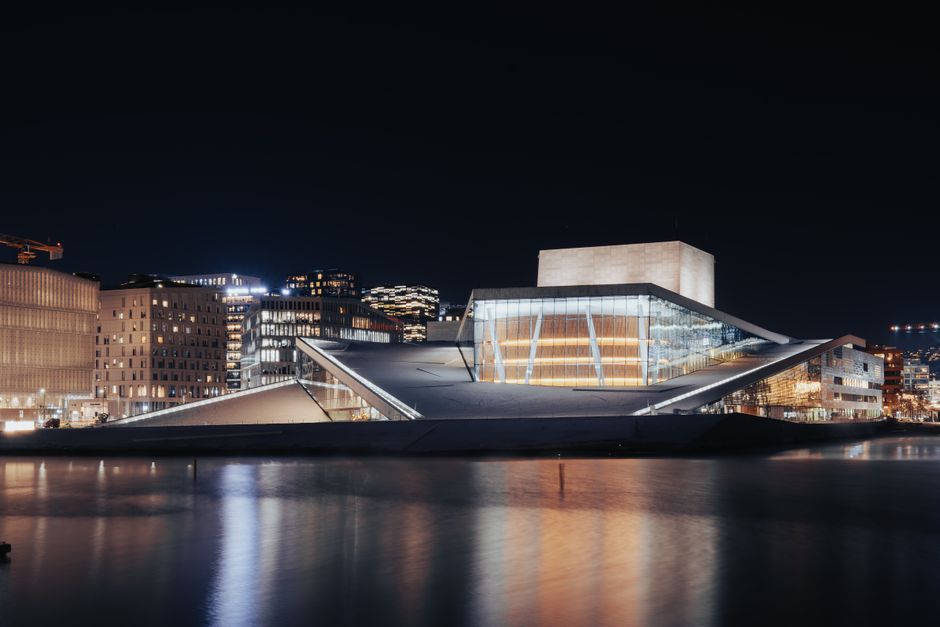
Norway is a long, narrow country of fjords, mountains and islands that stretches from the North Sea to the Arctic Ocean. In the south-west, the Fjord Norway region has the Geirangerfjord and Nærøyfjord, the Bergen Railway and the Flåm Railway, and clifftop hikes such as Preikestolen. Oslo has world-class museums and architecture on the waterfront. In the far north you can see the Northern Lights from late August to late March, and in summer the midnight sun over the jagged peaks of the Lofoten Islands. Travel is easy, safe and well organised, but expensive, and most of the country is set up for cards rather than cash. June to August is the main season for the fjords, and October to March is the time for winter light and the aurora. Give it a week for Oslo and the fjords and two weeks to add the Arctic north.
Right now in Norway
- Wed 4–14°C 40–57°F Partly cloudy
- Thu 7–10°C 45–50°F 12 mm Cloudy
- Fri 4–8°C 38–46°F 5 mm Cloudy
Weather: MET Norway (CC BY 4.0) · Air quality: OpenAQ · Rates: ECB
Key facts
| Currency | Norwegian krone (NOK, kr), not the euro; cards and phone payment almost everywhereSource: visitnorway.com · Last reviewed 4 Oct 2026 |
|---|---|
| Languages | Norwegian (Bokmål and Nynorsk); Sámi languages have equal standing in the Sámi areas of the north; English is widely spokenSource: lovdata.no · Last reviewed 4 Oct 2026 |
| Plugs and voltage | Type C and F · 230 V, 50 HzSource: visitnorway.com · Last reviewed 4 Oct 2026 |
| Emergency number | 113 ambulance, 112 police, 110 fire, 120 emergencies at seaSource: visitnorway.com · Last reviewed 4 Oct 2026 |
| Driving side | On the right; headlights on all day; 50 in towns, 80 outside, up to 110 on some motorways; alcohol limit 0.2 per mille; automatic road tollsSource: visitnorway.com · Last reviewed 4 Oct 2026 |
| Tap water | Safe to drink everywhereSource: visitnorway.com · Last reviewed 4 Oct 2026 |
| Tipping | Not expected; 5-15% in bars and restaurants if you are pleased with the serviceSource: visitnorway.com · Last reviewed 4 Oct 2026 |
| Calling code | +47 (dial 00 for international calls)Source: wikidata.org · Last reviewed 4 Oct 2026 |
| Time zones | CET (UTC+1), summer time CEST (UTC+2) from the last Sunday in March to the last Sunday in OctoberSource: visitnorway.com · Last reviewed 4 Oct 2026 |
| Entry summary | Schengen but not EU. Most visitors from outside the EU/EEA stay visa-free for up to 90 days in 180 (Schengen-wide) and register in the EU Entry/Exit System at the border; ETIAS is not yet in operation. Checks at ferry ports until 11 November 2026.Source: home-affairs.ec.europa.eu · Last reviewed 4 Oct 2026 |
Multi-day tours of Norway
Multi-day tours from local operators. You check dates and book on Viator, our partner; we may earn a commission at no extra cost to you. How we earn money
Norway at a glance: fjords, mountains and the Arctic
Norway covers about 324,000 km² on the mainland, plus the Arctic archipelago of Svalbard. It is about 1,750 km in a straight line from the southern tip at Lindesnes to North Cape, but the coastline, with all its fjords and islands, is many times longer. It borders Sweden, Finland and Russia. According to Statistics Norway (SSB), 5,627,400 people lived in Norway on 1 January 2026, so outside the cities the country feels very empty. The country is divided into 15 counties (fylker). Norway is not a member of the European Union, but it is part of the European Economic Area (EEA) and the Schengen area, so EU citizens move freely and Schengen border rules apply.
Norwegian is the national language, written in two standard forms (Bokmål and Nynorsk), and the Sámi languages are official in parts of the north. Almost everyone under 60 speaks excellent English, and signs, menus and transport apps are usually bilingual.
Time zone: Norway, including Svalbard, runs on Central European Time (UTC+1) in winter and Central European Summer Time (UTC+2) from the last Sunday in March to the last Sunday in October, the same as Germany and Sweden and one hour ahead of the UK.
Norway’s regions
- Oslo and Eastern Norway: the capital on the Oslofjord; the southern coast of white wooden towns around Kristiansand; Lillehammer and the Gudbrandsdalen valley; and the mountain plateaus of Jotunheimen, Rondane and Hardangervidda.
- Fjord Norway (the west): Bergen; the Sognefjord with Flåm and the Nærøyfjord; Hardanger’s orchards and waterfalls; Stavanger and the Lysefjord; and Ålesund, Geiranger and Trollstigen. The Geirangerfjord and Nærøyfjord form the West Norwegian Fjords UNESCO World Heritage Site.
- Trøndelag (central Norway): Trondheim and Nidaros Cathedral, the UNESCO-listed mining town of Røros, and the end of the St Olav pilgrim routes.
- Northern Norway: the land beyond the Arctic Circle, with the Lofoten and Vesterålen islands, Senja, Tromsø and the Lyngen Alps, Alta’s rock carvings, the Sámi heartland of Karasjok and Kautokeino, and North Cape. Midnight sun in summer, Northern Lights in winter.
- Svalbard: a remote Arctic archipelago reached by plane from Oslo or Tromsø, with glaciers, polar bears and walruses around Longyearbyen. It is outside Schengen, and outside the settlements you go only with a guide (see the safety section below).
Regions
- Agder
- Akershus
- Buskerud
- Finnmark
- Geirangerfjord
- Innlandet
- Lofoten
- Møre og Romsdal
- Nordland
- Rogaland
- Telemark
- Troms
- Trøndelag
- Vestfold
- Vestland
- Østfold
Where to go: cities, fjords and the Arctic
The classic first trip links Oslo and Bergen by the Bergen Railway, with a detour down the Flåm Railway and a boat on the Nærøyfjord. With more time, add Stavanger and Preikestolen, Ålesund and Geiranger, or fly north to Tromsø or Lofoten. Distances are big, so choose two or three areas.
Oslo
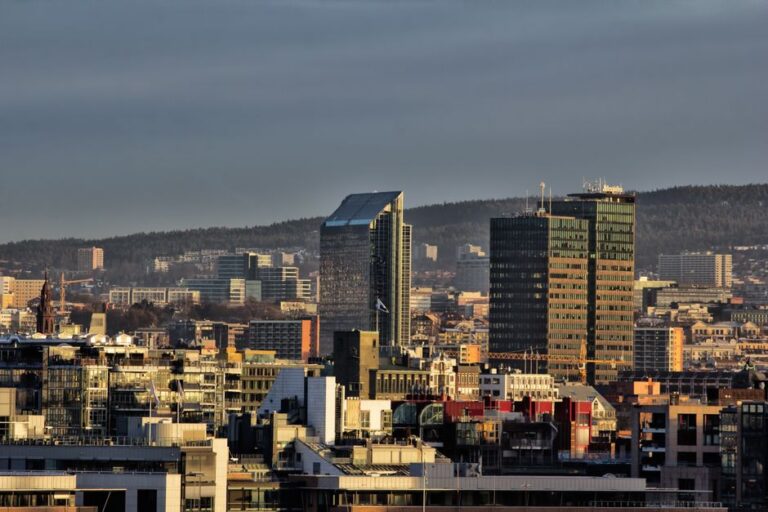
Norway’s capital is small, green and walkable, built around the head of the Oslofjord. Walk on the sloping marble roof of the Opera House, see Edvard Munch’s The Scream at the MUNCH museum and the National Museum, and stroll among the sculptures of Vigeland Park. Add Akershus Fortress, the museums on the Bygdøy peninsula, the Holmenkollen ski jump, island ferries and harbour saunas. The new Museum of the Viking Age at Bygdøy, home of the Viking ships, is still being built, so check whether it has opened before planning around it.
Bergen
Bergen is the gateway to the fjords and Norway’s second city. The colourful wooden merchant houses of Bryggen, the old Hanseatic wharf, are a UNESCO World Heritage Site. From there you can walk to the fish market, ride the Fløibanen funicular up Mount Fløyen or take the cable car to Ulriken for views over the seven mountains that ring the city. Bergen is also one of Europe’s rainiest cities, with about 2,500 mm of rain a year and rain on around 200 days, so bring a proper jacket and enjoy the bright days when they come. Fjord cruises, the Norway in a Nutshell route and the coastal ships all start here.
Flåm, the Nærøyfjord and the Sognefjord
The village of Flåm sits at the end of the Aurlandsfjord, an arm of the Sognefjord. The Flåm Railway (Flåmsbana) climbs about 20 km and 865 m from here to Myrdal on the Bergen Railway, passing waterfalls and through 20 tunnels on one of the world’s steepest standard-gauge lines. Quiet, electric sightseeing boats sail from Flåm through the UNESCO-listed Nærøyfjord, which narrows to a few hundred metres between 1,000-metre walls, to Gudvangen. Nearby are the Stegastein viewpoint above Aurland, the tiny village of Undredal and, further along the Sognefjord, the Urnes stave church and the Jostedalsbreen glacier. Flåm gets very busy on summer days when cruise ships are in port, so stay overnight to enjoy it in the morning and evening.
Geiranger and Ålesund
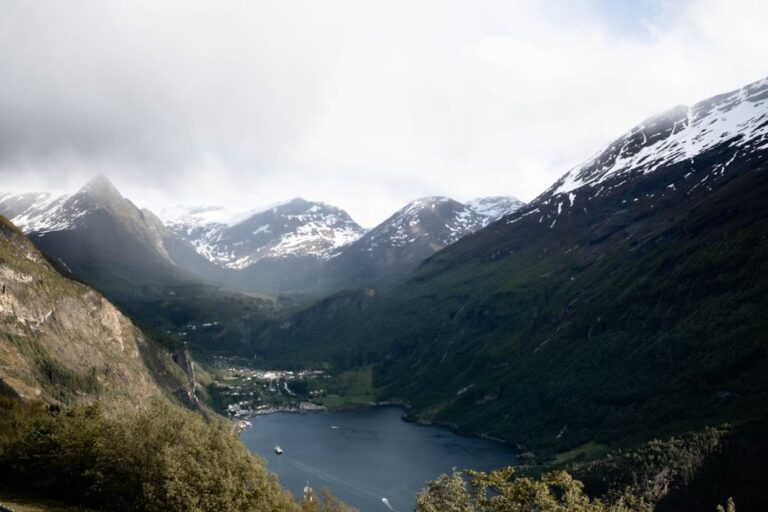
The Geirangerfjord is the postcard fjord: a deep S-shaped fjord with the Seven Sisters and Suitor waterfalls opposite each other. Ride the ferry between Hellesylt and Geiranger, drive the hairpins of the Eagle Road (Ørnesvingen) or up to Dalsnibba viewpoint at about 1,500 m, and continue over the mountains to the famous Trollstigen road. These high roads usually open only from about late May or June to October. Ålesund, on the coast, was rebuilt in Art Nouveau style after a fire in 1904. It is a lovely base for Geiranger and the steep Hjørundfjord, and the 418 steps up to the Aksla viewpoint are worth the climb.
Stavanger, Preikestolen and the Lysefjord
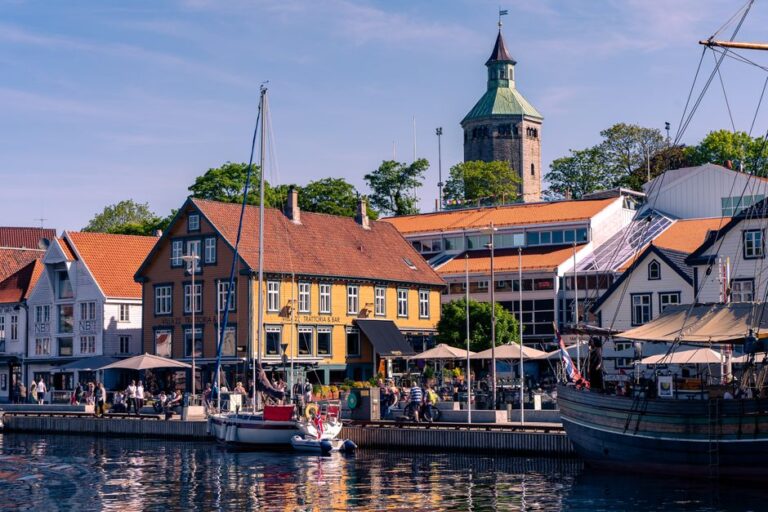
Stavanger is a lively oil town with the white wooden houses of Old Stavanger (Gamle Stavanger), the Norwegian Petroleum Museum and good food. It is the base for the Lysefjord and Preikestolen (Pulpit Rock), a flat-topped cliff 604 m above the fjord. The hike there and back is about 8 km and usually takes about four hours. Kjerag, with its boulder wedged between two cliffs, is a longer and tougher hike at the far end of the fjord. Sightseeing boats from Stavanger sail up the Lysefjord below both of them.
Trondheim
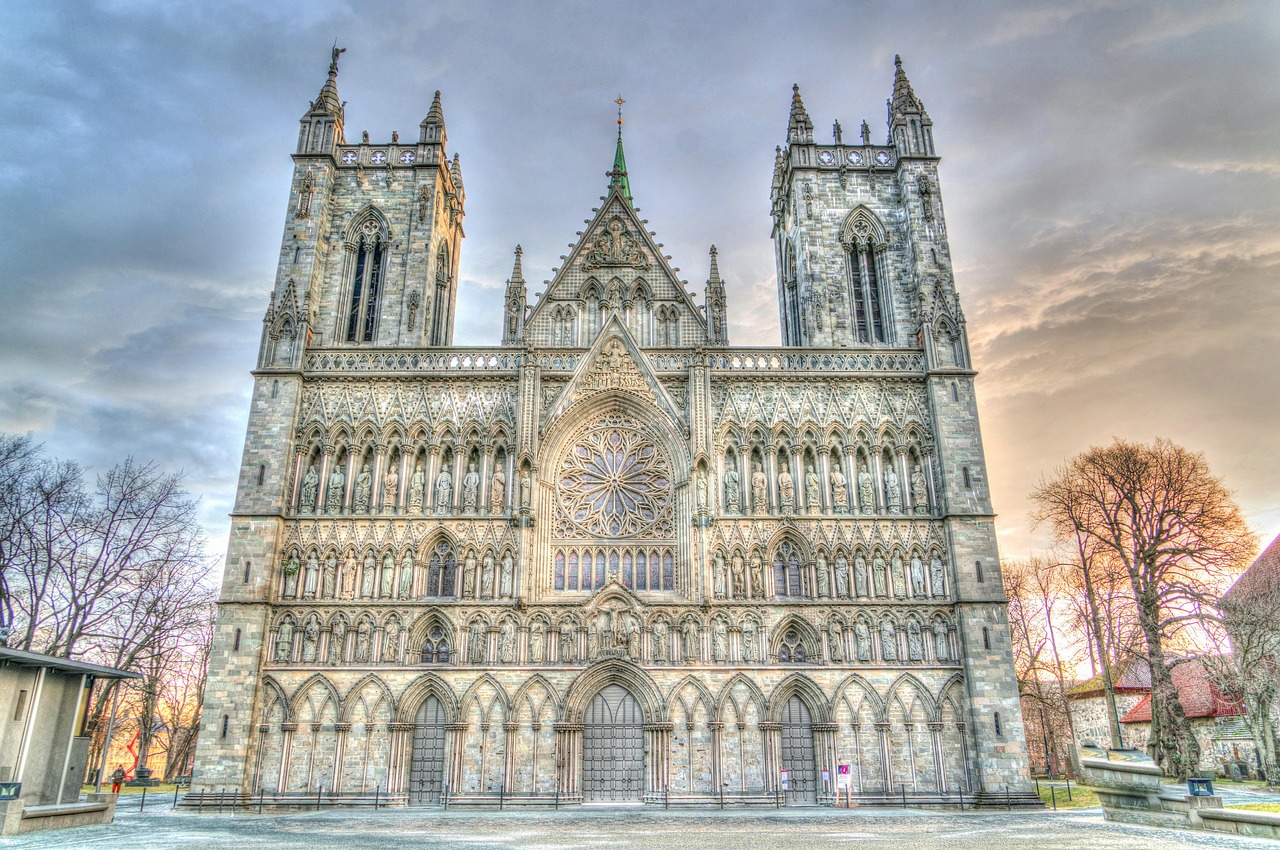
Trondheim was Norway’s capital in the Viking Age. Its Nidaros Cathedral, Scandinavia’s largest medieval building, has been a pilgrimage site since the Middle Ages. The cathedral, the colourful wharf houses on the Nidelva river and the cafés of Bakklandet are all walkable, and the city has a big student population. Trondheim is a natural stop between Oslo and the north: the train continues to Bodø, and the coastal ships call here every day.
Tromsø and the Lyngen Alps
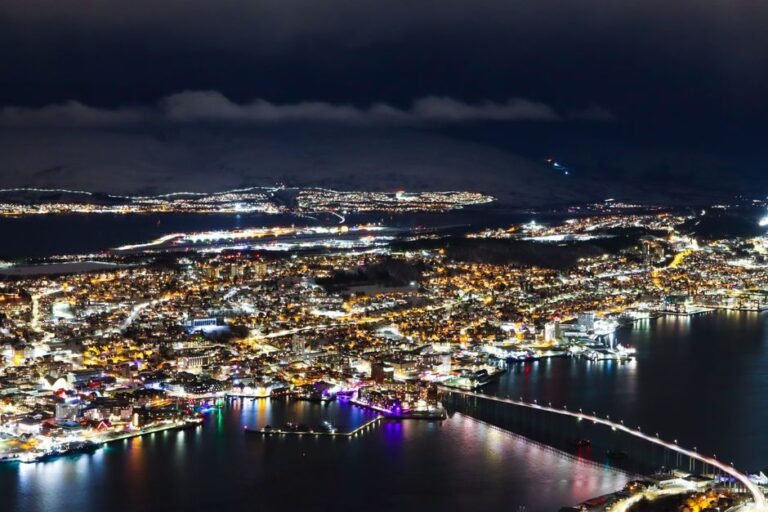
Tromsø, about 350 km north of the Arctic Circle, is the capital of Arctic Norway and the main base for Northern Lights tours. Winter brings husky and reindeer sledding, snowshoe walks, fjord cruises and Sámi culture camps; in town, see the Arctic Cathedral, the Fjellheisen cable car view and the Polaria aquarium. Summer brings the midnight sun, hiking and kayaking around the islands of Kvaløya and Sommarøy and in the Lyngen Alps to the east.
The Lofoten Islands
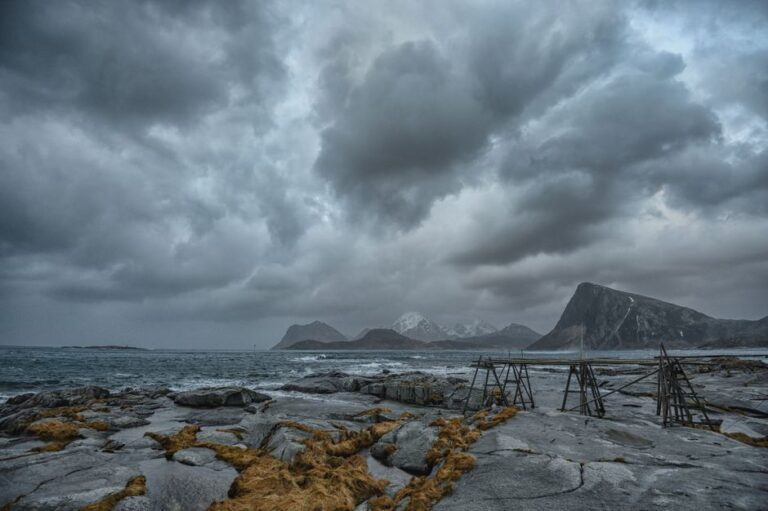
The Lofoten Islands are a chain of granite peaks rising straight out of the sea, with red and yellow fishing cabins (rorbuer) on stilts in villages such as Reine, Hamnøy, Nusfjord and Henningsvær, and white-sand beaches at Haukland and Uttakleiv. Summer brings hiking (Reinebringen, Ryten above Kvalvika beach), midnight sun and cycling; winter brings the cod fishery, stockfish drying racks and the Northern Lights, and the surfing at Unstad runs all year. Fly to Svolvær or Leknes, take the car ferry from Bodø to Moskenes or arrive by coastal ship, and use a car or bike to get around.
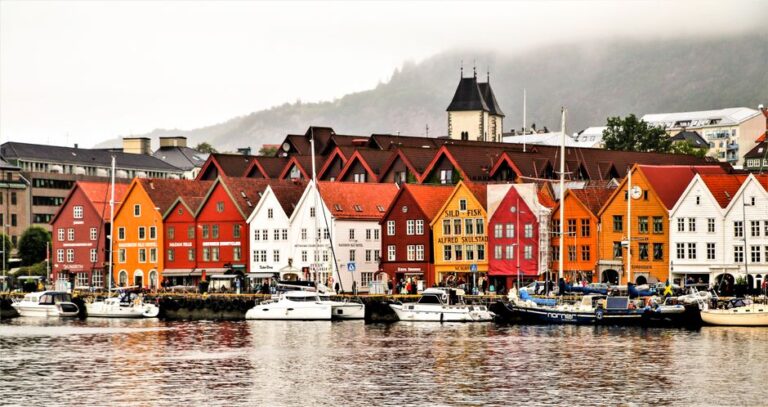
Bergen Travel Guide
Plan a trip to Bergen: the UNESCO Bryggen wharf, the Fish Market, Fløibanen funicular and Ulriken cable car fares for 2026, KODE, Troldhaugen and…
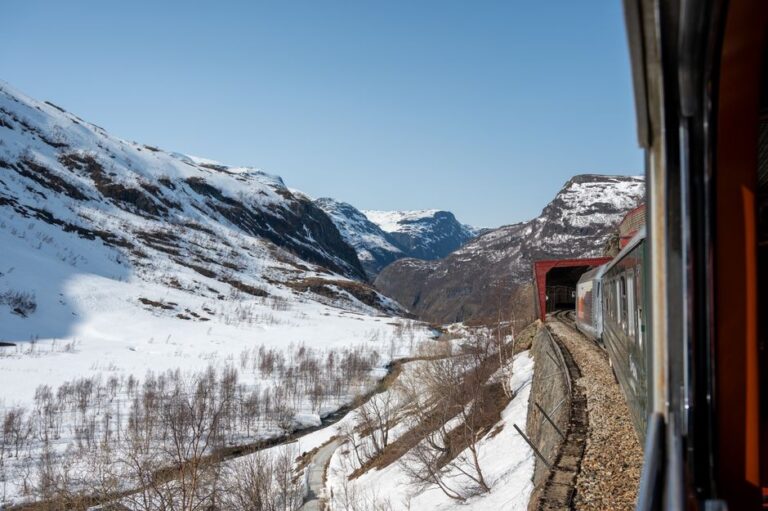
Flåm Travel Guide
Plan a visit to Flåm: Flåm Railway fares, seasons, journey time and the Kjosfossen stop, electric Nærøyfjord cruises to Gudvangen, Norway in a Nutshell…
Geiranger Travel Guide
Plan a trip to Geiranger and the Geirangerfjord: the Seven Sisters and Suitor waterfalls, 2026 fjord cruise prices from Geiranger and Ålesund, kayaks and…
Lofoten Islands Travel Guide
Plan a trip to the Lofoten Islands: Reine, Hamnøy and Å, Nusfjord, Henningsvær and Svolvær, the beaches of Haukland and Kvalvika, the Reinebringen stairs,…
Oslo Travel Guide
Plan a trip to Oslo: the Opera House roof, MUNCH and the National Museum, Akershus Fortress, Vigeland Park and Holmenkollen, the Fram, Kon-Tiki and…
Stavanger Travel Guide
Plan a trip to Stavanger: Old Stavanger and Fargegaten, the cathedral, the Petroleum Museum and the MUST museums with 2026 prices and hours, Sverd…
Tromsø Travel Guide
Plan a trip to Tromsø: the Northern Lights season (late August to early April) and how to chase the aurora, polar night (27 November–15…
Best time to visit Norway, region by region
Norway is warmer than its latitude suggests, because the Gulf Stream keeps the coast largely free of ice. The west coast is mild, wet and windy all year. The east around Oslo is drier, with warmer summers and colder, snowier winters. The far north is cool in summer and dark and snowy in winter, but the coast is far less cold than inland Lapland. The table shows rounded average daily highs at one weather station per region, from the official 1991–2020 climate normals that MET Norway, the Norwegian Meteorological Institute, submitted to the World Meteorological Organization, plus the average rainfall a year and the number of days with at least 1 mm of rain.
| Region (MET Norway station) | Spring highs (Mar–May) | Summer highs (Jun–Aug) | Autumn highs (Sep–Nov) | Winter highs (Dec–Feb) | Rain a year (rainy days) |
|---|---|---|---|---|---|
| Oslo and the east (Oslo-Blindern) | 5–17 °C | 20–23 °C | 16 °C falling to 4 °C | 0–1 °C | about 840 mm (115) |
| Bergen (Bergen-Florida) | 7–15 °C | 18–20 °C | 16 °C falling to 8 °C | 5 °C | about 2,500 mm (200) |
| Stavanger (Sola) | 7–14 °C | 16–19 °C | 16 °C falling to 8 °C | 5–6 °C | about 1,260 mm (165) |
| Ålesund and the north-west coast (Vigra) | 6–12 °C | 14–17 °C | 15 °C falling to 8 °C | 5–6 °C | about 1,440 mm (190) |
| Trondheim (Værnes) | 5–14 °C | 17–20 °C | 15 °C falling to 5 °C | 2 °C | about 820 mm (149) |
| Nordland coast (Bodø) | 3–10 °C | 14–17 °C | 13 °C falling to 5 °C | 1–3 °C | about 1,120 mm (164) |
| Tromsø | 1–9 °C | 13–16 °C | 11 °C falling to 2 °C | −1 to 0 °C | about 1,090 mm (160) |
| Finnmark (Alta) | 0–9 °C | 14–18 °C | 12 °C falling to 0 °C | −4 to −2 °C | about 440 mm (139) |
Winter nights are colder than the highs suggest: average January lows are about −5 °C in Oslo and Tromsø and about −10 °C in Alta, while Bergen and Stavanger stay around freezing. In Lofoten, the average temperature at Svolvær is about 0 °C in January and 13 °C in July. Weather changes fast on the coast and in the mountains, and the warmest summers now bring spells of 25–30 °C to Oslo and even the north. Long-range averages hide this variety, so check the forecast on yr.no, the official MET Norway app, before every hike.
Northern Lights, midnight sun and polar night
- Northern Lights: Visit Norway gives the aurora season as late August to late March. Activity is often highest in September–October and March, and the best viewing is usually between about 23:00 and 02:00 on clear nights away from town lights. Tromsø, Alta, Senja, Lofoten, Vesterålen and Svalbard are the classic places. Cloud is the main problem, so give yourself three or four nights.
- Midnight sun: the sun stays above the horizon all night from about 4 June to 8 July in Bodø, 28 May to 14 July in Lofoten, 20 May to 22 July in Tromsø, 14 May to 29 July at North Cape and 20 April to 22 August in Longyearbyen on Svalbard (dates from Visit Norway). Even in Oslo, June nights are only dim twilight.
- Polar night: in Tromsø the sun stays below the horizon from about 27 November to 15 January. The middle of the day still has a few hours of soft blue and pink twilight, and the city celebrates the sun’s return in late January. Bodø and Lofoten get only a few hours of low sun around the winter solstice. In Oslo, the shortest days in December have about six hours of daylight.
Crowds and prices through the year
- June to August: high season for the fjords, Lofoten and North Cape, with long days, open mountain roads and every boat running. Flåm, Geiranger and Bergen are busiest when cruise ships are in port. Book trains, the Lofoten ferry, hire cars and rooms early. July is the Norwegian holiday month.
- May and September: the best balance for many people: waterfalls at their fullest in late May and June, autumn colours in September, lower prices. Some mountain roads open only in late May or June, and some summer boats stop from mid-September.
- October to March: Northern Lights season in the north, with dog sledding and winter whale-watching; Tromsø is busy from late November to March. In the fjords many services close and mountain roads are shut, but the Bergen Railway, Flåm Railway and Norway in a Nutshell run all year.
- Ski season (December to April): cross-country skiing around Oslo and Lillehammer and resorts such as Trysil, Hemsedal and Geilo. Cabins and trains fill up during the February and March winter breaks and at Easter (Maundy Thursday to Easter Monday is 25–29 March 2027).
Festivals and events through the year
- January and February: the Tromsø International Film Festival and the Polar Night Half Marathon in January; Sámi National Day on 6 February; and Tromsø’s Northern Lights Festival (Nordlysfestivalen), a classical and jazz music festival, from 11 to 20 February 2027.
- March and April: the Holmenkollen Ski Festival in Oslo (World Cup ski jumping and cross-country races), and Sámi Easter festivals in Kautokeino and Karasjok.
- May and June: Constitution Day on 17 May, Norway’s national day, with children’s parades, flags and national costumes (bunad) everywhere; the Bergen International Festival, the 75th edition, from 26 May to 12 June 2027; and Midsummer Eve (Sankthansaften) on 23 June, with bonfires along the shore.
- July and August: Molde Jazz, the Sámi festival Riddu Riđđu, Olavsfest in Trondheim around St Olav’s Day (29 July), and Øya Festival and the Oslo Jazz Festival in August.
- November and December: Christmas markets in Oslo and other cities, Bergen’s gingerbread town (Pepperkakebyen), the Nobel Peace Prize ceremony in Oslo on 10 December, and candles in every window.
Weather month by month
Averages from MET Norway normals 1991–2020, Oslo – Blindern · Last reviewed 4 Oct 2026
How long to stay: sample itineraries
Norway is long and its fjords cut across the roads, so travel takes time. Combine trains, boats and the occasional domestic flight, and hire a car for the fjord villages, Lofoten or the Arctic coast.
5 days: Oslo and Norway in a Nutshell
Two days in Oslo for the Opera House, MUNCH, the National Museum and the fjord. Then take the classic Norway in a Nutshell route: Bergen Railway to Myrdal, Flåm Railway down to Flåm (stay the night), boat through the Nærøyfjord to Gudvangen, bus to Voss and train to Bergen. Spend the last day in Bergen and fly home from there.
7 days: Oslo, the fjords and Bergen
Oslo (two days), then the Bergen Railway and Flåm Railway to Flåm for one or two nights, with the Nærøyfjord boat and the Stegastein viewpoint. Continue to Bergen for two days. Use the last day for a day trip into the Hardangerfjord, or take the express boat or a short flight south to Stavanger for Preikestolen.
10 days: the fjords from Stavanger to Geiranger
Start in Stavanger with Preikestolen and the Lysefjord, then head north to Bergen by express boat or bus. Next come Flåm and the Nærøyfjord, and on to the Sognefjord and the Jostedalsbreen glacier by car or by bus and boat. Finish with Geiranger, Trollstigen and Ålesund before flying home from Ålesund or via Oslo. In summer, a car makes this route much easier. Short on time? Swap the drive north for the coastal ship from Bergen to Ålesund, which takes about one night.
14 days: fjords and the Arctic
Follow the 7-day route from Oslo to Bergen. Then fly north to Bodø and take the ferry to Lofoten for three or four days. Continue by coastal ship from Svolvær to Tromsø, a scenic day and night passing the narrow Trollfjord in summer, and spend two or three days in Tromsø before flying home. In winter, swap the fjord part for more time in the north: four nights in Tromsø for the Northern Lights and dog sledding, plus Lofoten or Alta. Norway combines easily with its neighbours: trains run from Oslo to Stockholm and Gothenburg, and ferries sail to Copenhagen and to Kiel in Germany. For a wider northern trip, pair Norway with the Scottish Highlands, which have similar landscapes on a smaller scale.
Entry, money and costs
Entry: Schengen, EES and ETIAS (last reviewed October 2026)
Norway is part of the Schengen area, so the usual Schengen rules apply. EU, EEA and Swiss citizens only need a valid passport or national ID card. Many other nationalities, including UK, US, Canadian and Australian citizens, can visit without a visa for up to 90 days in any 180-day period, counted across all Schengen countries together.
- Entry/Exit System (EES): the EU’s digital border system has been fully running at all Schengen external borders, including Norway’s airports and ports, since 10 April 2026. The first time you enter, non-EU visitors register fingerprints and a facial photo instead of getting a passport stamp; children under 12 are not fingerprinted. Registration is free. Allow extra time at passport control, especially when you arrive or leave on flights from outside Schengen, such as from the UK or the US.
- ETIAS: the EU’s planned online travel authorisation (fee €20), which Norway will also use, is not in operation as of October 2026, and no start date has been officially announced. You don’t need one yet. Ignore websites selling “ETIAS applications”.
- Passport validity: non-EU passports must have been issued within the last 10 years and be valid for at least three months after the day you plan to leave the Schengen area.
- Svalbard: Svalbard is not part of Schengen. Flights between Longyearbyen and Oslo or Tromsø go through passport control, so carry your passport. If you need a Schengen visa, make sure it allows more than one entry.
- Customs: because Norway is outside the EU, there are customs checks on arrival, with strict limits on alcohol, tobacco and meat. Visit Norway gives the general duty-free allowance as NOK 6,000 of goods, and you must declare cash over NOK 25,000.
Money: the Norwegian krone, cards and cash
The currency is the Norwegian krone (NOK, written kr). On 2 October 2026, €1 was worth about NOK 10.8, US$1 about NOK 9.6 and £1 about NOK 12.7 (Norges Bank). Norway is one of the most cashless countries in the world: contactless cards and Apple Pay or Google Pay work almost everywhere, from buses and parking machines to farm stalls. Locals pay each other with the Vipps app, which needs a Norwegian bank account. Since 1 October 2024, staffed shops that sell to consumers must by law accept cash up to NOK 20,000, with fines for refusing since May 2025, according to Norges Bank; machines and unstaffed shops are exempt. You can do a whole trip without banknotes, but a little cash is a sensible backup. Carry two cards and always choose to pay in NOK, not your home currency.
Tipping
Service is included and wages are high, so tipping is not expected. At a sit-down restaurant, rounding up or adding 5–10% for good service is appreciated, usually entered on the card terminal. There is no need to tip at counters, in bars or in taxis.
Alcohol rules: supermarkets and the Vinmonopolet
Alcohol is heavily taxed and tightly controlled, and a glass of wine or a large beer in a restaurant typically costs NOK 120–160 or more. Supermarkets sell beer and cider with up to 4.7% alcohol, but only until 20:00 on weekdays and 18:00 on Saturdays. Nothing is sold on Sundays or public holidays, and some towns set earlier times. Wine, spirits and strong beer are sold only in the state-owned Vinmonopolet shops, which usually close by 18:00 on weekdays and earlier on Saturdays and are closed on Sundays. You must be 18 to buy beer and wine and 20 for spirits, and staff check ID. Drinking in public places such as parks and streets is generally not allowed. If you want a drink with dinner in your cabin, buy it on the way in, and use your duty-free allowance when you fly in.
Tax-free shopping and the tourist tax
Norway’s VAT is 25% on most goods (15% on food). Visitors living outside the Nordic countries can claim part of it back on purchases of at least NOK 315 in one shop on one day (NOK 290 for food), taken out of Norway within a month. Ask for a Global Blue tax-free form and claim the refund (roughly 11–19% of the price) at the airport, border or cruise terminal. A 2025 law lets municipalities under heavy tourist pressure add a tourist tax of up to 3% on overnight stays; the Lofoten municipalities were first in line, so it may appear on your bill there.
Typical travel costs
Norway is one of the most expensive countries in Europe, especially for eating out, alcohol and hotels in high season. Public transport is good value if you book early, and supermarkets, bakeries and hot-dog stands at petrol stations help keep costs down. These estimates per person per day are a planning guide as of October 2026:
| Style | Estimated cost per day | What that looks like |
|---|---|---|
| Budget | about NOK 1,000–1,400 (€95–130) | Hostel bed, campsite cabin or DNT mountain hut, supermarket breakfasts and picnics, one cheap hot meal, early-booked Minipris train tickets and buses |
| Mid-range | about NOK 2,200–3,500 (€200–320) | Double room in a 3- or 4-star hotel shared by two (breakfast usually included), lunch at a café and dinner out, a paid sight or boat trip, regular train fares |
| High-end | about NOK 5,500+ (€500+) | Fjord hotel or design lodge, tasting menus, Norway in a Nutshell with premium seats, guided Northern Lights and glacier tours, car hire, coastal ship cabin |
Sample prices as of October 2026: the Flytoget airport express from Oslo Airport to Oslo Central Station costs NOK 276 for an adult. Norway in a Nutshell starts from NOK 2,698, and a coastal ship round trip from Bergen to Kirkenes and back costs from about US$2,000–2,200 a person in an inside cabin.
Getting there and getting around
Arrival airports, ferries and trains
- Oslo Airport, Gardermoen (OSL): the main international airport, about 50 km north of the city. The Flytoget airport express reaches Oslo Central Station in about 20 minutes (NOK 276 one way for adults as of October 2026), and Vy’s regional trains are slower but much cheaper. Many flights to Bergen, Trondheim, Tromsø and the north connect here.
- Bergen (BGO), Stavanger (SVG), Trondheim (TRD) and Tromsø (TOS): all have direct flights from around Europe, especially in summer, and express airport buses (and Bergen’s light rail) into the centre.
- By ferry: overnight ferries sail to Oslo from Copenhagen (DFDS), Kiel (Color Line) and Frederikshavn (Stena Line), and Fjord Line and Color Line cross from northern Denmark to Kristiansand, Larvik, Stavanger and Bergen. There is currently no passenger ferry from the UK.
- By train: trains run from Stockholm and Gothenburg to Oslo, and from Sweden to Narvik on the Ofoten Line (the Arctic train from Luleå and Kiruna).
Trains: Vy, SJ Nord and Go-Ahead
Norway’s railways run from Oslo to Bergen, Stavanger, Trondheim and Bodø, with three operators on different lines. Search all of them, plus buses and ferries, in the national Entur journey planner and app.
- Vy: runs the Bergen Railway (Bergensbanen) between Oslo and Bergen, about 7 hours, with several departures a day and a night train. It climbs across the Hardangervidda plateau to Finse, the highest station at 1,222 m. Vy also runs the local and regional trains around Oslo and Bergen, and sells tickets for the Flåm Railway.
- SJ Nord: runs the Dovre Railway from Oslo to Trondheim (about 7 hours by day, or a night train), the Rauma Railway down to Åndalsnes near Trollstigen, the Røros line, and the Nordland Railway from Trondheim to Bodø (about 10 hours, with a night train with sleeping compartments). The Nordland line was cut by a landslide near Levanger in August 2025 and reopened in June 2026.
- Go-Ahead Nordic: runs the Sørland Railway (Sørlandsbanen) from Oslo via Kristiansand to Stavanger, about 8 hours, plus local Jæren trains south of Stavanger.
- Fares: each operator sells cheap, non-refundable saver fares (Vy calls them Minipris) that go on sale months ahead. Oslo–Bergen starts from about NOK 249 if you book early, while flexible tickets on the long routes can cost NOK 1,000 or more. Interrail and Eurail passes are valid, with seat reservations needed on long-distance trains.
The Flåm Railway and Norway in a Nutshell
The Flåm Railway runs between Myrdal, on the Bergen Railway, and Flåm all year: about an hour each way and 20 km, dropping 865 m with a short photo stop at the Kjosfossen waterfall. There are many departures a day in summer and fewer in winter. As of October 2026, Vy lists one-way adult tickets from NOK 399, with prices varying by season and demand (highest in summer) and children paying half. Book ahead from June to August, when trains sell out. Sit on the left going down for most of the views; ticket and timetable details are on the operator’s website and on vy.no.
Norway in a Nutshell is a package sold by Fjord Tours that strings together the Bergen Railway, the Flåm Railway, an electric boat on the Nærøyfjord and a bus up the Nærøydalen valley to Voss. You can start in Oslo or Bergen, do it in one long day or stop overnight, and it runs all year, with winter departures timed for daylight. Prices start from NOK 2,698 as of October 2026. It is not a guided tour: you get the tickets in one booking and travel independently. If you plan to stay overnight in Flåm or travel in peak season, it can be just as good to book the same trains, boat and bus separately.
Coastal ships: Hurtigruten and Havila
The coastal express route (Hurtigruten) has linked the towns of the coast since 1893. Today Hurtigruten and Havila Voyages share it: a ship leaves Bergen every day and calls at 34 ports on the way to Kirkenes near the Russian border, taking 7 days north, 6 days south and 12 days for the round trip. Stops range from 15 minutes in villages to several hours in Trondheim and Tromsø. Book the full voyage as a cruise with full board, or buy port-to-port tickets for one leg, such as Bodø to Svolvær or Svolvær to Tromsø. Round trips start at around US$2,000–2,200 a person in an inside cabin.
Domestic flights
Flying saves a lot of time: Oslo to Tromsø takes about two hours by plane and a day and a half by land. SAS, Norwegian and Widerøe link the main cities, and Widerøe’s small planes serve short runways in the fjords and the north, including Svolvær and Leknes in Lofoten.
Buses and ferries
Express buses fill the gaps in the railway network: Vy buses and NOR-WAY Bussekspress serve much of the south and west, and local county buses reach most villages, if not very often. Ferries are part of the road network: dozens of car ferries cross the fjords, mostly on a turn-up-and-go basis with payment by card or automatic number-plate reading. Express passenger boats (hurtigbåt) link Bergen with the Sognefjord and Hardanger in season, and Stavanger with the Ryfylke fjords. The Bodø–Moskenes car ferry to Lofoten takes about three to three and a half hours and gets very full in summer, so book it ahead where possible.
Driving: tolls, ferries, winter tyres and closed mountain roads
Roads in Norway are generally excellent but slow: narrow, winding, through long tunnels and broken by ferries. Plan on an average of 50–60 km/h. The general speed limit is 80 km/h outside built-up areas and 50 km/h in towns, with up to 110 km/h on some motorways. Speed cameras and fines are severe, the drink-drive limit is very low (0.2 g/l), and dipped headlights are required day and night.
- Tolls (AutoPASS): there are no booths; cameras read your number plate on roads, bridges, tunnels, city rings and many ferries. Hire cars carry an AutoPASS tag and the rental company bills you afterwards, often with a handling fee. With your own foreign car, register it free with Epass24, the official collector of foreign tolls, and link a payment card; otherwise the bill goes to your home address.
- Ferries: drive on and pay on board or by plate recognition. In summer, popular crossings around the Sognefjord and Geiranger can have queues, so check timetables in the Entur app.
- Winter tyres: tyres must suit the conditions, and winter tyres need at least 3 mm of tread. Studded tyres are allowed from 1 November to the first Sunday after Easter Monday, and in Nordland, Troms and Finnmark from 16 October to 30 April. If you have never driven on snow and ice, take the bus, train or a tour instead.
- Mountain roads: Trollstigen, the Geiranger road over Dalsnibba, Sognefjellet and Aurlandsfjellet close in winter, usually opening between late May and June and closing in October or November. Main crossings such as Hardangervidda (Rv7) and Haukelifjell (E134) stay open but can close in storms or switch to convoy driving behind a snowplough. Check Statens vegvesen’s traffic map before you set off and carry warm clothes, food and water.
Outdoors: the right to roam and staying safe
The right to roam (allemannsretten)
Norway’s right of public access, the allemannsretten, lets everyone walk, ski, cycle on paths, paddle and camp in uncultivated countryside, including national parks, free of charge. Visit Norway explains the main rules:
- Camping: you may pitch a tent for up to two nights in the same place without asking, as long as you are at least 150 metres from the nearest house or cabin. In the mountains or remote areas you can stay longer. The right doesn’t cover motorhomes or cars: use campsites and official parking areas.
- Cultivated land: the right to roam doesn’t apply to fields, meadows, pastures, gardens, young plantations or farmyards. Walk around them, and close gates behind you.
- Fires: lighting fires in or near woodland is banned from 15 April to 15 September, except in places where there is clearly no fire risk, such as on the shore or at official fire sites. Local bans can apply at other times too.
- Picking: you may pick berries, mushrooms and wild flowers, but special rules protect cloudberries on private land in Northern Norway.
- Leave no trace: take all rubbish with you, use toilets where they exist, keep dogs on a lead in the bird-nesting and lambing season, and don’t disturb reindeer and other animals.
The Norwegian Mountain Code
Every year rescue teams bring out visitors who underestimated Norway’s mountains. The Norwegian Trekking Association (DNT) publishes the mountain code, Fjellvettreglene. In short: plan your trip and tell someone your route; match the trip to your ability and the conditions; check weather and avalanche forecasts; be ready for storms and cold even on short trips; carry first aid and a way to call for help; choose safe routes; use a map and compass as well as your phone; and turn back in time, because there is no shame in doing so. On Preikestolen, Trolltunga and Reinebringen, start early, wear proper boots and take water, food, a warm layer and a headlamp. In winter, do these hikes only with a guide.
Svalbard safety
Polar bears live throughout Svalbard, including near Longyearbyen. Since 1 January 2025, Svalbard’s rules say you must keep at least 300 metres from a polar bear, and 500 metres between 1 March and 30 June. Visit Svalbard advises visitors never to leave the settlements without a guide or the right training, deterrents and a firearm. In practice, join organised tours for anything outside Longyearbyen.
Culture, food and everyday etiquette
Norwegians are friendly but reserved: they value personal space, punctuality and quiet on public transport. Shoes come off at the door in homes and many cabins, hikers greet each other with a quick “hei”, and many shops and pharmacies use numbered queue tickets. Outdoor life (friluftsliv) is part of the national identity: on a sunny weekend, half of Oslo is out on skis, bikes or the fjord.
Norwegian food is built on fish and seasonal produce: salmon, cod and Lofoten stockfish, prawns on the quay in Bergen, king crab in the far north, reindeer and lamb, brown goat’s cheese (brunost), waffles and cinnamon buns. Lunch is often an open sandwich, and dinner is early. Lunch specials, bakeries and supermarkets keep costs down, and tap water is excellent and free.
Shops are generally closed on Sundays and public holidays, apart from small grocery stores, petrol stations and some shops at stations and in tourist areas. Supermarkets often open until 21:00–23:00 on weekdays. Smoking is banned indoors in public places. The main public holidays coming up are Christmas (25–26 December), New Year’s Day, Maundy Thursday to Easter Monday (25–29 March 2027), 1 May, Ascension Day (6 May 2027), Constitution Day and Whit Monday (both on 17 May 2027).
Safety, health and connectivity
Safety
Norway is one of the safest countries in the world. Violent crime against visitors is very rare, though pickpockets work in central Oslo and busy tourist spots in summer. The real risks are natural: cold, fast-changing weather, slippery rocks near waterfalls, strong currents and cold water in the fjords, avalanches in winter, and dark, icy roads. Respect barriers and warnings, and don’t walk on glaciers without a guide.
Emergency numbers: 112 police, 113 ambulance, 110 fire, and 120 for emergencies at sea.
Health
Healthcare is excellent. EU and EEA citizens should carry their European Health Insurance Card (EHIC) for necessary treatment at local patient charges. UK visitors are covered for necessary care under a UK–Norway agreement (check GOV.UK for which document to show). Everyone needs travel insurance that covers mountain rescue and activities such as glacier walks or dog sledding. Ticks are common along the southern coast and the Oslofjord in summer, so check your skin after walks in long grass. For non-urgent medical help, call the out-of-hours doctor (legevakt) on 116 117.
Connectivity and power
Mobile coverage is excellent, even in many tunnels and remote valleys, and Wi-Fi is standard in hotels, cafés, trains and on the coastal ships. Because Norway is in the EEA, EU phone plans roam at home prices; others can buy a local or eSIM data plan. Sockets are type C and F at 230 V and 50 Hz, so bring a travel adapter from the UK, North America or Australia. Useful apps: Entur (journeys and tickets), Vy, Yr (weather), Statens vegvesen’s traffic map and Ruter for Oslo.
Things to do: hiking, boat trips, sightseeing, cycling and the Northern Lights
- Hiking: Preikestolen and Kjerag above the Lysefjord, Trolltunga in Hardanger (a long, demanding day of about 20–27 km), Besseggen ridge in Jotunheimen, Reinebringen and Ryten in Lofoten, and easy walks above Bergen and Tromsø. DNT runs hundreds of mountain huts, and summer (late June to early September) is the main season for high routes.
- Boat trips: electric boats through the Nærøyfjord, the Geirangerfjord ferry, Lysefjord cruises from Stavanger, coastal ship legs through Lofoten and the Trollfjord, RIB safaris, and whale-watching from Andenes in summer or from the Tromsø region in winter.
- City sightseeing: Oslo’s museums and waterfront, Bergen’s Bryggen and funiculars, Trondheim’s Nidaros Cathedral, Ålesund’s Art Nouveau streets and Old Stavanger.
- Cycling: the Rallarvegen, an old railway workers’ road from Finse or Haugastøl down towards Flåm (July to September), the flat roads and causeways of Lofoten, the North Sea Cycle Route along the coast, and city bikes in Oslo, Bergen and Trondheim.
- Northern Lights, dog sledding and winter activities: aurora chases from Tromsø, Alta and Lofoten, husky and reindeer sledding, snowshoeing, cross-country skiing on Oslo’s lit trails, and Arctic fjord cruises from October to March.
- Surfing and beaches: Arctic surfing at Unstad and Flakstad in Lofoten, and in Jæren south of Stavanger. The water is about 6–13 °C, so you need a thick wetsuit, hood and boots. Summer swimming is popular at the sheltered beaches of the Oslofjord and the southern coast around Kristiansand, where the sea can reach about 18–20 °C in a warm July.
What to pack
Pack in layers, whatever the season. In summer, bring a warm fleece or light down jacket, a fully waterproof rain jacket and over-trousers (essential in Bergen and the fjords), sturdy hiking shoes or boots with good grip, sunglasses, sun cream and an eye mask for the light nights. Insect repellent helps in inland and northern areas in July. From October to April, add thermal base layers, a warm insulated coat, a hat, scarf and mittens, warm waterproof boots, and slip-on ice grips for your shoes. Northern Lights tours often lend thermal suits. Also bring a type C/F plug adapter, a refillable water bottle, a small daypack and a contactless card. Cash is optional.
Norway travel FAQ
When is the best time to visit Norway?
June to August is best for the fjords, hiking, Lofoten and the midnight sun, with long days and every road and boat running. May and September are quieter and cheaper. For the Northern Lights, dog sledding and snowy landscapes, go to the north between late September and March.
When can I see the Northern Lights in Norway?
Visit Norway gives the season as late August to late March, when the nights are dark enough. Activity is often highest around September–October and March, and the best viewing is usually between about 23:00 and 02:00 on clear nights. Head north of the Arctic Circle, for example to Tromsø, Alta, Senja, Lofoten or Svalbard, and allow several nights, because cloud is the main problem.
When is the midnight sun in Norway?
Above the Arctic Circle, from about mid-May to late July, depending on how far north you are. According to Visit Norway, it lasts from about 4 June to 8 July in Bodø, 28 May to 14 July in Lofoten, 20 May to 22 July in Tromsø and 14 May to 29 July at North Cape. In Tromsø the opposite, the polar night, lasts from about 27 November to 15 January.
How many days do you need in Norway?
Five days covers Oslo and the Norway in a Nutshell route to Bergen. A week lets you add a night in Flåm and a day in Bergen or Stavanger. Ten days to two weeks gives you time for Geiranger and Ålesund, or the Arctic north with Lofoten and Tromsø.
What is Norway in a Nutshell and is it worth it?
It is a ticket package from Fjord Tours that combines the Bergen Railway, the Flåm Railway, a Nærøyfjord boat and a bus via Voss, between Oslo, Bergen or Flåm, from NOK 2,698 as of October 2026. You travel on your own, not with a guide. It is worth it if you want the most famous fjord scenery with all the connections sorted in one booking. Independent travellers can book the same legs separately and stay overnight on the way.
Do I need a visa or ETIAS to visit Norway?
Norway is in the Schengen area. Many nationalities, including UK, US, Canadian and Australian citizens, can stay up to 90 days in any 180 days without a visa. Since April 2026 non-EU visitors register fingerprints and a photo in the EES border system on first entry. ETIAS is not yet running as of October 2026, so you don’t need it yet.
Do I need cash in Norway?
Hardly ever. Cards and mobile wallets are accepted almost everywhere, including on buses and at remote kiosks. Shops and other staffed premises must legally accept cash up to NOK 20,000, but most visitors never use it. A small amount of cash as a backup is still sensible.
How expensive is Norway?
It is one of Europe’s most expensive countries. As a rough guide for October 2026, budget travellers spend about NOK 1,000–1,400 (€95–130) a day, mid-range travellers about NOK 2,200–3,500 (€200–320), and an alcoholic drink in a restaurant costs about NOK 120–160. Save money with hotel breakfasts, picnic lunches, early-booked train fares and the free right to roam.
How do road tolls work in Norway?
Norway’s tolls are collected automatically by AutoPASS cameras; there are no booths. Hire cars have a tag, and the rental company bills you later. If you drive your own foreign car, register it free with Epass24 and link a card, or the invoice is posted to your home address.
Can I camp anywhere in Norway?
With a tent, yes, on uncultivated land under the right to roam, up to two nights in one spot, at least 150 metres from houses and cabins, and with no fires near woodland between 15 April and 15 September. Motorhomes and cars must use campsites or official parking areas.
Can I visit Svalbard from mainland Norway?
Yes. Flights to Longyearbyen leave from Oslo and Tromsø. Svalbard is outside Schengen, so there are passport checks on the way out and back. Polar bears make it unsafe to hike outside the settlements alone, so join guided tours. In Longyearbyen the midnight sun lasts from about 20 April to 22 August.
Sources
- Natural Earth · Public domain · fetched 4 Oct 2026
- © OpenStreetMap contributors · ODbL · fetched 4 Oct 2026
- Wikidata · CC0 · fetched 4 Oct 2026
Sources and last review
Researched and last reviewed on 4 October 2026. Population from Statistics Norway (SSB); climate from MET Norway’s official 1991–2020 station normals (WMO collection); midnight sun and Northern Lights from Visit Norway and polar night from Visit Tromsø; exchange rates and cash rules from Norges Bank; EES from the EU and Avinor; Norway in a Nutshell from Fjord Tours; coastal ships from Hurtigruten and Havila; rail from SJ Norge, Go-Ahead and Flytoget; the right to roam, alcohol, customs and emergency numbers from Visit Norway; the mountain code from DNT; Svalbard rules from Visit Svalbard; festival dates from the organisers. Flåm Railway and Minipris fares, tax-free details, the tourist tax and mountain road opening times come partly from secondary sources and are flagged for checking. Daily costs are estimates. Check the official links before you travel.
Plugs and power in Norway
Norway uses 230 V, 50 Hz and these plugs (left) and wall sockets (right):
All plug types and voltages by country → · Check what you need to pack →
Plan your trip
Partner links: TravelerCenter may earn a commission if you book, at no extra cost to you.
🇳🇴 Useful Norwegian phrases for Norway
All 38 Norwegian phrases: restaurant, hotel, emergencies, romance (printable) →