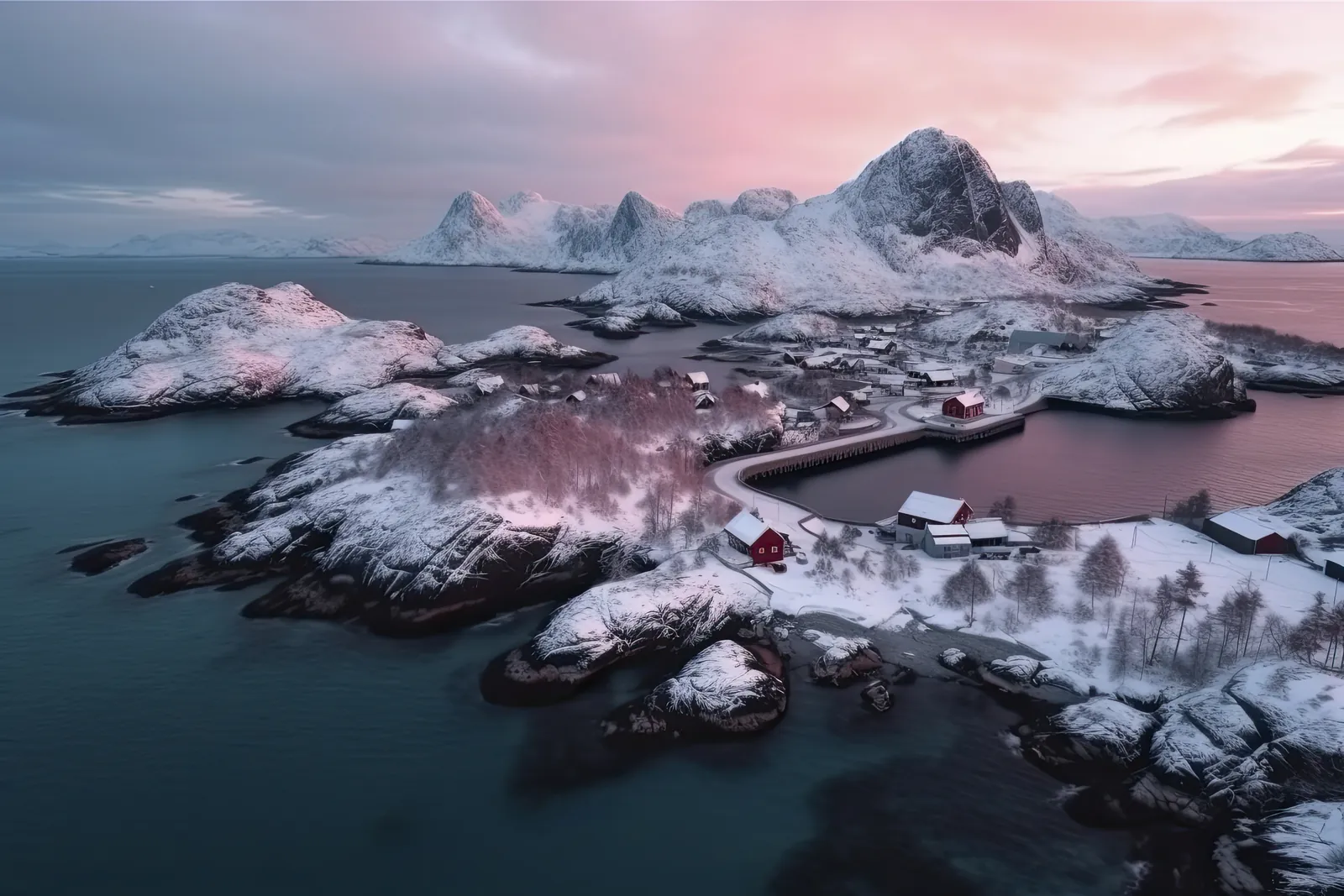
Short answer: the best time to visit Norway is June to August for the fjords, hiking, Lofoten and the midnight sun, when days are long, mountain roads are open and every boat runs. May and September are quieter and cheaper, with full waterfalls in late spring and autumn colors in September. For the Northern Lights, snow and dog sledding, go north between late September and March; July is the busiest month, and winter in the north brings weeks of polar night.
Norway runs from the North Sea to the Arctic Ocean, so it has two great seasons for visitors: the bright summer for the fjords and the dark winter for the aurora. This guide covers the weather, daylight, crowds and events in every month as of October 2026, region by region, with the best times for hiking, skiing and the Northern Lights. For entry, costs and trains, see our Norway travel guide, and plan your days with our AI trip planner.
Best time to visit Norway at a glance
| Goal | Best months | Why |
|---|---|---|
| Fjords and scenic drives | June to August | Long days, open mountain roads, all boats running |
| Fewer crowds, lower prices | May and September | Shoulder season; waterfalls full in late May and June |
| Northern Lights | Late September to March | Dark nights in the north; Visit Norway gives the season as late August to late March |
| Midnight sun | About late May to mid-July above the Arctic Circle | 20 May to 22 July in Tromsø; 28 May to 14 July in Lofoten |
| Hiking | Late June to early September | High routes and DNT huts open; Preikestolen from April to October |
| Skiing | December to April | Cross-country around Oslo and Lillehammer; resorts such as Trysil, Hemsedal and Geilo |
| Winter activities with some daylight | February and March | Snow, dog sledding and aurora, with longer days |
| Christmas markets | Late November and December | Oslo’s markets and Bergen’s gingerbread town |
Norway weather month by month
Weather month by month
The table shows the monthly averages for Oslo from the 1991–2020 climate normals of MET Norway, the Norwegian Meteorological Institute, at its Oslo-Blindern station, as submitted to the World Meteorological Organization, the same source as our country guide. Oslo averages about 0 °C (32 °F) by day in January and 23 °C (73 °F) in July. The west coast is milder in winter but far wetter, with about 2,500 mm (98 in) of rain a year in Bergen, while Tromsø, in the far north, averages about 3.4 °C (38 °F) over the year and has snow on the ground from about November to April. The Gulf Stream keeps the coast largely free of ice.
Norway month by month
January
Cold and snowy inland, with Oslo around 0 °C (32 °F) by day and −5 °C (23 °F) at night; milder and wetter on the west coast. In Tromsø, the polar night lasts until about 15 January, and the city celebrates the sun’s return later in the month. Prime time for the Northern Lights, cross-country skiing and dog sledding; the Tromsø International Film Festival is held in January.
February
Cold, snowy and gradually brighter, one of the best months for winter activities with some daylight. Sámi National Day is 6 February, and Tromsø’s Northern Lights Festival (Nordlysfestivalen), a classical and jazz music festival, runs from 11 to 20 February 2027. Norwegian winter school breaks fill mountain cabins and ski trains.
March
Long, bright, snowy days and often strong aurora activity: an excellent month for the north. The Holmenkollen Ski Festival in Oslo has its World Cup cross-country, ski jumping and Nordic combined weekend from 12 to 14 March 2027, followed by the biathlon World Cup final from 16 to 21 March. Easter falls early in 2027 (25 to 29 March), when Norwegians head to the mountains and Sámi Easter festivals take place in Kautokeino and Karasjok.
April
The snow melts in the lowlands and Oslo warms to about 11 °C (52 °F). The ski season continues in the mountains, and the Preikestolen hike near Stavanger opens for the season. Many summer services have not started yet, so April is quiet and good value.
May
Spring arrives, with fruit blossom along the Hardangerfjord and waterfalls swelling with snowmelt. Constitution Day on 17 May brings parades, flags and national costumes everywhere. The midnight sun begins in the far north: from about 14 May at North Cape and 20 May in Tromsø. Trollstigen and other mountain roads usually open from mid-May into June; some depend on the snow.
June
Long, light days across the country, with waterfalls at their fullest, open mountain roads and Oslo around 20 °C (68 °F). The Bergen International Festival runs from 26 May to 12 June 2027, and Midsummer Eve on 23 June brings bonfires along the shore. The midnight sun shines over Lofoten from about 28 May to 14 July. High season begins: book trains, ferries and rooms early.
July
Norway’s warmest and busiest month, with Oslo averaging about 23 °C (73 °F) and warm spells reaching 25–30 °C (77–86 °F) in some summers. It is the Norwegian holiday month, the fjord villages are busiest when cruise ships are in port, and high hiking routes and DNT huts are open. Festivals include Molde Jazz, Riddu Riđđu and Olavsfest in Trondheim around 29 July.
August
Still summer, with slightly shorter days and more rain in Oslo (about 100 mm / 4 in). Hiking, cycling the Rallarvegen and fjord cruises continue at full swing, and Øya Festival and the Oslo Jazz Festival take place. Late in the month, the first dark nights return to the north and the aurora season starts.
September
Autumn colors on the mountains, fewer crowds and lower prices, with Oslo around 16 °C (61 °F). Some summer boats and routes stop from mid-month, but trains and main ferries run. In the north, nights are dark enough for the Northern Lights, and activity is often high around the equinox.
October
Cool, wet and windy on the coast, with the first snow in the mountains and many seasonal services closed in the fjords; Oslo’s Bygdøy ferries stop at the end of the month. In the north, it is a strong month for the aurora before the deep snow arrives. Prices are low outside the cities.
November
Dark and damp in the south, with Oslo around 4 °C (39 °F). Winter starts in the north: snow covers the ground in Tromsø, the polar night begins around 27 November, and the winter season of aurora trips, whale-watching and dog sledding gets going. Christmas markets open late in the month.
December
Christmas markets, candles in every window and Bergen’s gingerbread town (Pepperkakebyen). Oslo has about six hours of daylight, and the Nobel Peace Prize ceremony takes place in Oslo on 10 December. The north is in polar night, with a few hours of blue twilight at midday; Tromsø is busy from late November to March. The ski season begins.
Best time to visit by region
Oslo
Late May to early September for long, light evenings and swimming in the fjord; December for Christmas lights; February and March for skiing in the forest above the city. Many attractions keep shorter hours from October to April. See our Oslo guide.
Bergen
May to early September, for the longest days and the full range of fjord trips; April to June are the driest months in one of Europe’s rainiest cities. December brings Christmas lights and the gingerbread town. See our Bergen guide.
Flåm and the Sognefjord
May, June and September, for waterfalls, long days and fewer crowds than July and August. The Flåm Railway and Norway in a Nutshell run all year, with a reduced winter timetable and snowy, quiet scenery. See our Flåm guide.
Geiranger
June to August, when the boats, Dalsnibba and the mountain roads are open. Visit Norway says Trollstigen is usually open from mid-May to October or November, but it can close at short notice, and the road to Dalsnibba closes for snow early and late in the season. See our Geiranger guide.
Stavanger and the Lysefjord
May to September for hiking and boat trips; June to August for the longest days. Preikestolen’s hiking season runs from April to October; Kjerag is a summer-only hike, usually from about June to September. See our Stavanger guide.
Tromsø
Late September to March for the Northern Lights; January to March for snow activities with some daylight; 20 May to 22 July for the midnight sun. See our Tromsø guide.
Lofoten
June to August for hiking, kayaking and the midnight sun (about 28 May to 14 July); late September to March for the aurora and snowy peaks over the fishing villages. June and July are the driest months. See our Lofoten guide.
Best time for Northern Lights, hiking, fjord cruises and cycling
Northern Lights
Visit Norway gives the aurora season as late August to late March, with activity often highest in September to October and March. The best viewing is usually between about 23:00 and 02:00 on clear nights away from town lights, in Tromsø, Alta, Senja, Lofoten, Vesterålen or Svalbard. Cloud is the main problem, so allow three or four nights.
Hiking
Late June to early September is the main season for high routes and DNT mountain huts. Trolltunga, Besseggen and Kjerag are summer hikes; Preikestolen opens from April to October, and winter visits need a guide. See our hiking guide.
Fjord cruises and boat trips
June to August for the full timetable of fjord boats and the Geirangerfjord ferry; May and September for quieter decks. The Nærøyfjord boats of Norway in a Nutshell run all year. See our boat trips guide.
Cycling
July to September for the Rallarvegen from Finse or Haugastøl toward Flåm, and summer for Lofoten’s flat roads. See our cycling guide.
Skiing
December to April, with the most reliable snow from January to March. Cabins and trains fill during the February and March winter breaks and at Easter.
Seasons to plan around
Polar night and short days
In Tromsø, the sun stays below the horizon from about 27 November to 15 January, with a few hours of soft twilight at midday. Bodø and Lofoten get only a few hours of low sun around the winter solstice, and Oslo about six hours of daylight in December. Plan daylight activities for midday.
Closed mountain roads and winter driving
Scenic mountain roads such as Trollstigen, Geiranger–Dalsnibba, Sognefjellet and Aurlandsfjellet close for winter, usually from about October or November to May or June. Winter tires are required in snowy conditions, and studded tires are allowed from 1 November (from 16 October in Nordland, Troms and Finnmark). Check Statens vegvesen’s road reports before driving.
July and cruise-ship days
July is the Norwegian holiday month, and Flåm, Geiranger and Bergen are busiest when cruise ships are in port. Book the Flåm Railway, the Lofoten ferry, hire cars and rooms early, and visit popular viewpoints early or late in the day.
Easter and winter school breaks
Norwegians head to the mountains at Easter (25 to 29 March 2027) and during the February and March winter breaks, so mountain lodges and ski trains fill up; shops close on the Easter public holidays.
How long to stay
Five days covers Oslo and Norway in a Nutshell to Bergen; a week adds the fjords around Flåm or Geiranger; and two weeks let you add the Arctic north, flying to Tromsø or Lofoten. See the itineraries in our Norway travel guide.
Best time to visit Norway: FAQ
What is the best month to visit Norway?
June, for long, light days, full waterfalls, open roads and fewer crowds than July. For the Northern Lights, March combines strong aurora activity with snow and longer days.
When is the cheapest time to visit Norway?
The shoulder months of April, May (outside 17 May), September and October are usually cheapest for the fjords; July and the Christmas, winter-break and Easter weeks are the most expensive.
What is the rainiest month in Norway?
It depends on the region. Bergen is wet all year, about 2,500 mm (98 in) a year on some 200 days; Tromsø and Stavanger are wettest in October, and Oslo from August to November.
Can you see the Northern Lights in Norway in October?
Yes. October nights in the north are long and dark, and activity is often high around the autumn equinox; the weather is the main uncertainty.
When is the midnight sun in Norway?
Above the Arctic Circle, from about mid-May to late July, depending on how far north you are: about 4 June to 8 July in Bodø, 28 May to 14 July in Lofoten, 20 May to 22 July in Tromsø and 14 May to 29 July at North Cape.
Is winter a good time to visit Norway?
For the Northern Lights, snow, skiing and Christmas markets, yes. The fjords are quiet and snowy, with the Flåm Railway and Norway in a Nutshell running all year, but many mountain roads and summer boats are closed.
Sources · last reviewed 4 Oct 2026
Researched and last reviewed by TravelerCenter on 8 October 2026. Temperatures and rainfall come from MET Norway’s 1991–2020 climate normals, as submitted to the World Meteorological Organization and archived by NOAA’s National Centers for Environmental Information. Northern Lights and midnight sun seasons and Trollstigen’s usual opening months come from Visit Norway; Tromsø’s polar night from Visit Tromsø; Preikestolen’s season from Region Stavanger; winter tire rules from Visit Norway and the Norwegian government; and the Flåm Railway and Norway in a Nutshell from their operators. Festival dates come from the organizers (Nordlysfestivalen, the Bergen International Festival) and from Visit Oslo for Holmenkollen; Easter 2027 from the calendar. Other festival months, mountain road closures, Kjerag’s season and price seasons are general references, flagged for checking. Check yr.no and Statens vegvesen before you travel.
Also: MET Norway normals 1991–2020, Oslo – Blindern (climate)
Data: Natural Earth (PUBLIC DOMAIN) · © OpenStreetMap contributors (ODBL) · Wikidata (CC0)