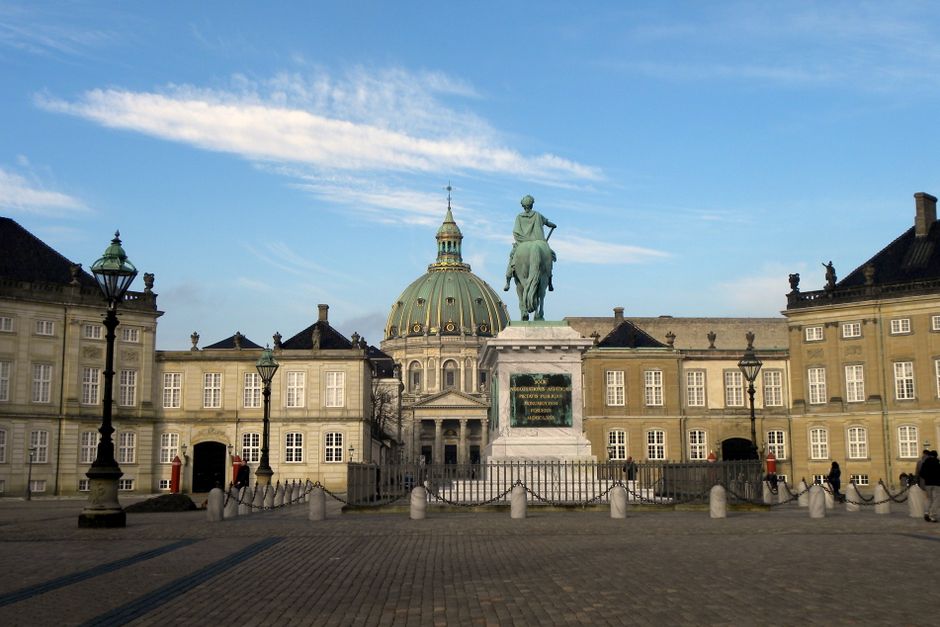
Denmark is small, flat, friendly and surrounded by sea: Copenhagen’s colourful Nyhavn harbour, Tivoli Gardens, bikes everywhere and harbour baths you can swim in; Aarhus with its rainbow-topped art museum and open-air old town; the white dunes and two seas meeting at Skagen; the round churches and smokehouses of the Baltic island of Bornholm; and Viking ships, Hamlet’s castle at Helsingør and Hans Christian Andersen’s Odense in between. Trains link the main cities and bridges tie the islands together. May to September is the best time, with long, light evenings in June and July, and from mid-November Tivoli and the cities glow for Christmas. Denmark is expensive, but it is easy, safe and very well organised. Give it a week for a first trip, 10 days to two weeks to add Skagen, the west coast or Bornholm.
Right now in Denmark
- Wed 9–14°C 47–57°F Cloudy
- Thu 10–14°C 49–58°F 1 mm Cloudy
- Fri 8–13°C 47–56°F 4 mm Rain
Weather: MET Norway (CC BY 4.0) · Air quality: OpenAQ · Rates: ECB
Key facts
| Currency | Danish krone (DKK, kr.), not the euro; cards and phone payment almost everywhere, keep a little cash for small stallsSource: visitdenmark.com · Last reviewed 4 Oct 2026 |
|---|---|
| Languages | Danish; English is very widely spoken; German is a protected minority language in South Jutland; Faroese and Greenlandic in the Faroe Islands and GreenlandSource: visitdenmark.com · Last reviewed 4 Oct 2026 |
| Plugs and voltage | Type C, E, F and K · 230 V, 50 HzSource: wikidata.org · Last reviewed 4 Oct 2026 |
| Emergency number | 112 (police, fire, ambulance); 114 police non-emergencySource: visitdenmark.com · Last reviewed 4 Oct 2026 |
| Driving side | On the right; headlights on all day; 50 in towns, 80 outside, 130 on most motorways; alcohol limit 0.5 per milleSource: visitdenmark.com · Last reviewed 4 Oct 2026 |
| Tap water | Safe to drink everywhere; groundwater with no chlorine; free drinking fountains in CopenhagenSource: hofor.dk · Last reviewed 4 Oct 2026 |
| Tipping | Not expected: service is included; round up or tip for great service if you likeSource: visitdenmark.com · Last reviewed 4 Oct 2026 |
| Calling code | +45 (dial 00 for international calls)Source: wikidata.org · Last reviewed 4 Oct 2026 |
| Time zones | CET (UTC+1), summer time CEST (UTC+2) from the last Sunday in March to the last Sunday in October; the Faroe Islands and Greenland keep other time zonesSource: visitdenmark.com · Last reviewed 4 Oct 2026 |
| Entry summary | Schengen and EU. Most visitors from outside the EU stay visa-free for up to 90 days in 180 and register in the EU Entry/Exit System at the border; ETIAS is not yet in operation. Denmark checks arrivals from Germany until 11 November 2026. The Faroe Islands and Greenland are outside Schengen and the EU.Source: home-affairs.ec.europa.eu · Last reviewed 4 Oct 2026 |
Multi-day tours of Denmark
Multi-day tours from local operators. You check dates and book on Viator, our partner; we may earn a commission at no extra cost to you. How we earn money
Denmark at a glance: a peninsula, 400 islands and a kingdom
Denmark is made up of the Jutland peninsula, which shares Denmark’s only land border with Germany, and more than 400 named islands, of which Zealand (home to Copenhagen), Funen, Lolland, Falster, Møn and far-flung Bornholm are the best known. Bridges connect most of the larger islands, including the Great Belt Bridge between Zealand and Funen and the Øresund Bridge to Malmö in Sweden. The country is low-lying: its highest point is barely 170 metres above sea level. According to Statistics Denmark, 6,032,304 people lived in Denmark in August 2026, about a quarter of them in and around Copenhagen.
Denmark is a constitutional monarchy; King Frederik X has reigned since January 2024. The Kingdom of Denmark also includes the Faroe Islands and Greenland, which are self-governing and, importantly for travellers, outside the EU and the Schengen area, with their own entry rules (see the entry section). This guide covers Denmark proper.
Time zone: Denmark runs on Central European Time (UTC+1) in winter and Central European Summer Time (UTC+2) from the last Sunday in March to the last Sunday in October, the same as Germany and Sweden and one hour ahead of the UK.
Denmark’s regions
- Copenhagen and North Zealand: the capital, with its harbour, palaces, design and food scene; the Louisiana art museum on the coast north of the city; Kronborg Castle at Helsingør; Frederiksborg Castle in Hillerød; and Roskilde’s cathedral and Viking Ship Museum to the west.
- South Zealand and the southern islands: the white chalk cliffs of Møns Klint and Stevns Klint, quiet farmland and manor houses, and the beaches and summer cottages of Lolland and Falster, on the way to the ferries for Germany.
- Funen: “the garden of Denmark”, with Odense, Hans Christian Andersen’s birthplace, the moated Renaissance castle of Egeskov, and the small islands and harbours of the South Funen archipelago.
- Jutland: the mainland peninsula. Aarhus, the second city; Billund and the original Legoland; the Viking-age royal monuments at Jelling; Ribe, Denmark’s oldest town, and the Wadden Sea National Park; the wild North Sea coast with its dunes and surf; and Skagen at the very tip.
- Bornholm: a granite island in the Baltic, closer to Sweden than to Copenhagen, with cliffs, sandy beaches, round churches, fishing villages and the castle ruins of Hammershus.
Regions
- Capital Region of Denmark
- Central Denmark Region
- North Denmark Region
- Region of Southern Denmark
- Region Zealand
Where to go: Copenhagen, Aarhus, Skagen and the islands
Most first trips are based in Copenhagen, with day trips to Helsingør, Roskilde and the Louisiana museum. With a week, add Odense and Aarhus; with more, Skagen, Ribe or Bornholm.
Copenhagen
Denmark’s capital is one of Europe’s most liveable cities, and it shows: clean harbour water you can swim in at the harbour baths, bike lanes on almost every street, and a relaxed mix of royal history and modern design. Stroll along Nyhavn’s painted townhouses, take a canal boat past the opera house and the Little Mermaid, see the crown jewels at Rosenborg Castle, the changing of the guard at Amalienborg Palace and the royal reception rooms at Christiansborg, and spend an evening in Tivoli Gardens, the amusement park and pleasure garden that opened in 1843. Add excellent museums (the National Museum, SMK, the Glyptotek, the Design Museum) and one of Europe’s best food scenes.
Aarhus
Denmark’s second city, about three hours from Copenhagen by train, is young, lively and full of students. Its landmark is the ARoS art museum, crowned by Olafur Eliasson’s circular rainbow walkway, Your rainbow panorama. Den Gamle By (“the Old Town”) is an open-air museum of historic houses and shops from several centuries, Moesgaard Museum just south of the city brings Danish prehistory and the Vikings to life, and the redeveloped harbour front has sea baths and striking new architecture. In late summer, the Aarhus Festuge arts festival takes over the city. Beaches and forests are a short bus ride away.
Skagen and the far north
At Denmark’s northern tip, Skagen is a town of yellow houses with red-tiled roofs and famously clear light that drew the Skagen Painters in the late 19th century; their work fills the Skagens Museum. Walk out to Grenen, the sandy point where the Skagerrak and the Kattegat seas meet in a line of waves, climb the Råbjerg Mile, a migrating sand dune, and see the tower of the Sand-Buried Church, half-swallowed by drifting sand. Skagen is a classic Danish summer resort, busy in July, and easy to reach by train via Frederikshavn.
Bornholm
Out in the Baltic, Bornholm feels like a different country: granite cliffs instead of flat fields, fishing villages such as Gudhjem and Svaneke with their herring smokehouses, sandy beaches at Dueodde, the hilltop ruins of Hammershus, northern Europe’s largest medieval castle ruin, and four whitewashed medieval round churches, of which Østerlars is the largest. It is one of the sunniest parts of Denmark and great for cycling. Most visitors take the train from Copenhagen to Ystad in Sweden and the fast ferry from there to Rønne (about 1 hour 20 minutes); there are also ferries from Køge and, in season, from Sassnitz in Germany, plus short flights from Copenhagen.
Odense and Funen
Odense, Denmark’s third city, is the birthplace of Hans Christian Andersen. The H.C. Andersen’s House museum, rebuilt in 2021 around his childhood neighbourhood with a fairy-tale garden, is the highlight, and the cobbled old streets around it are lovely for a stroll. Odense is about 1 hour 15 minutes from Copenhagen by fast train. Egeskov, a moated Renaissance castle with large gardens, is a good half-day trip south.
Roskilde and Helsingør
Two classic day trips from Copenhagen, each under an hour by train. Roskilde’s brick cathedral, a UNESCO World Heritage Site, holds the tombs of Danish kings and queens, and the Viking Ship Museum on the fjord displays five original Viking ships raised from the seabed, with sailing trips in replica boats in summer. In Helsingør, Kronborg Castle, another UNESCO site, guards the narrow Øresund strait; it is the Elsinore of Shakespeare’s Hamlet, and the excellent Maritime Museum of Denmark is built into the old dry dock beside it.
Ribe and the Wadden Sea
Ribe, in south-west Jutland, is Denmark’s oldest town, founded as a Viking-age trading place in the early 700s, with a cathedral, crooked half-timbered houses and a night watchman who still makes his evening round. Offshore, the Wadden Sea National Park is part of the UNESCO-listed Wadden Sea shared with Germany and the Netherlands: walk across the tidal flats with a guide, spot seals, and in spring and autumn watch the “black sun”, when huge flocks of starlings swirl over the marshes at dusk.
Legoland, Billund and more of Jutland
Billund, in mid-Jutland, is where LEGO was born. The original Legoland (opened 1968) is open from spring to autumn, so check the season dates, and LEGO House in town is open most of the year; Billund’s airport makes it an easy start for Jutland. Nearby are the UNESCO-listed runic stones of Jelling, and the North Sea coast has huge beaches, dunes and Denmark’s best surfing.
Møns Klint and the south
On the island of Møn, about 90 minutes’ drive south of Copenhagen, the white chalk cliffs of Møns Klint rise more than 100 metres above a turquoise sea, with beech forest on top, stairs down to a fossil-hunting beach and dark skies for star-watching. Stevns Klint, a UNESCO-listed cliff closer to Copenhagen, makes a shorter trip.
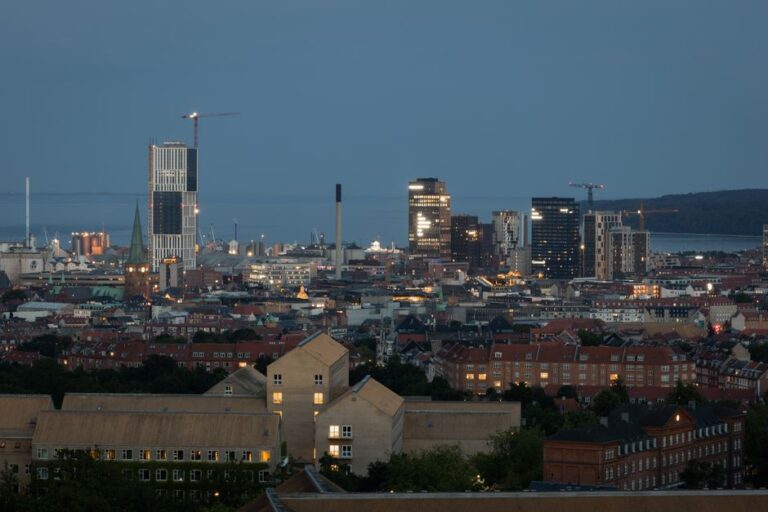
Aarhus Travel Guide
Plan a trip to Aarhus: ARoS and Your rainbow panorama prices and winter hours, Den Gamle By tickets and its 2026 Christmas evenings, Moesgaard…
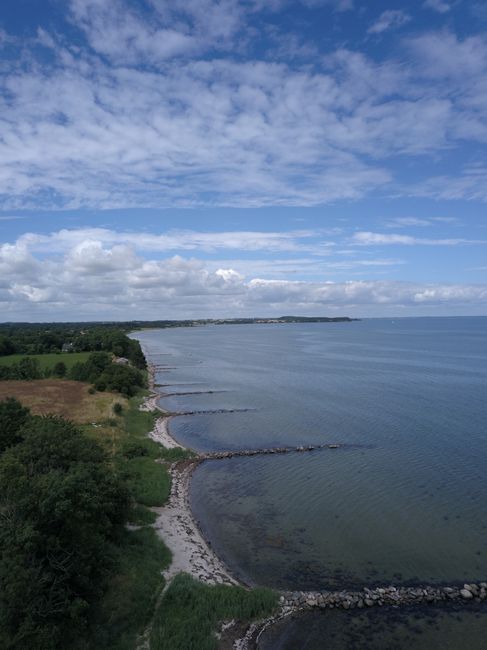
Bornholm Travel Guide
Plan a trip to Bornholm: Hammershus castle ruin and visitor centre, the round churches of Østerlars, Olsker, Nylars and Nyker, Gudhjem and the art…
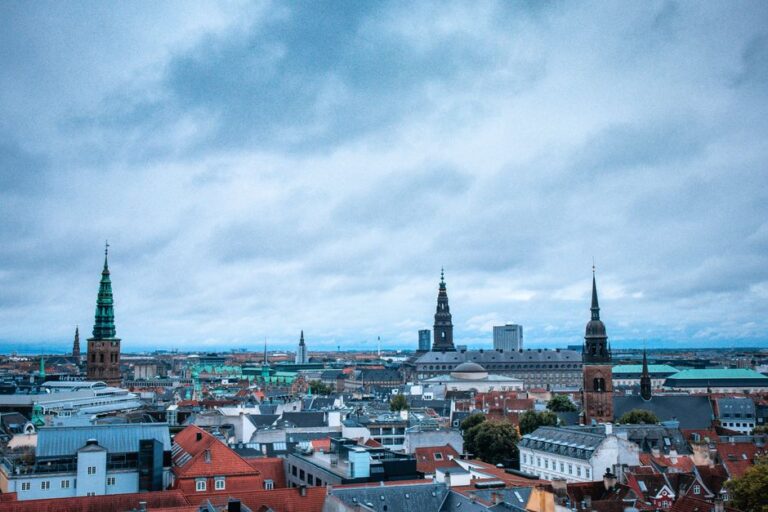
Copenhagen Travel Guide
Plan a trip to Copenhagen: Tivoli Gardens' 2026/27 Halloween, Christmas, Easter and summer seasons and ticket prices, Nyhavn and canal tours, Rosenborg's crown jewels,…
Skagen Travel Guide
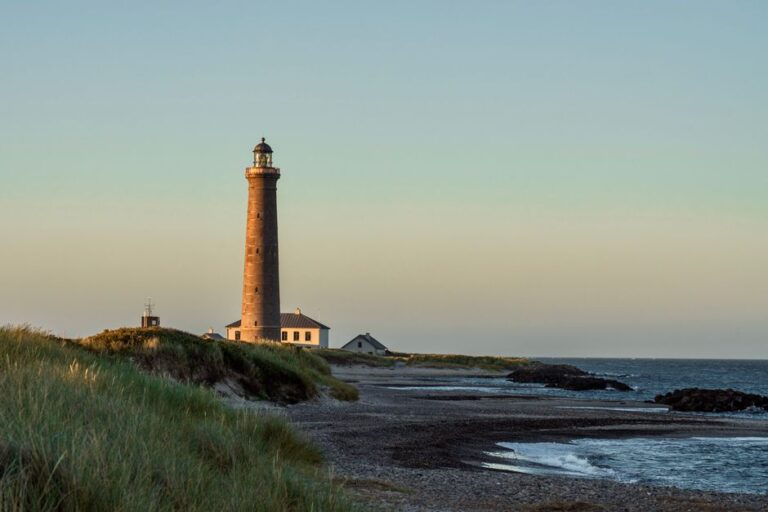
Plan a trip to Skagen: Grenen where two seas meet and the Sandormen tractor bus (2026 season and prices), why you must not swim…
Best time to visit Denmark, region by region
Denmark has a mild, changeable maritime climate. Summers are pleasant rather than hot, winters are grey, damp and dark rather than very cold, and it can rain in any month, with the wettest weather from late summer into autumn. The west coast of Jutland is windier and wetter, while Bornholm and the islands are drier and sunnier in summer. The table shows rounded average daily highs at one weather station per region, which we calculated from the Danish Meteorological Institute’s (DMI) official monthly station records for 2011–2025 (DMI’s open station data only start in 2011), plus the average rainfall a year.
| Region (DMI station) | Spring highs (Mar–May) | Summer highs (Jun–Aug) | Autumn highs (Sep–Nov) | Winter highs (Dec–Feb) | Rain a year |
|---|---|---|---|---|---|
| Copenhagen (Copenhagen Airport, Kastrup) | 8–17 °C | 21–22 °C | 19 °C falling to 9 °C | 4–6 °C | about 630 mm |
| Funen (Odense, H.C. Andersen Airport) | 8–17 °C | 20–22 °C | 18 °C falling to 8 °C | 4–6 °C | about 690 mm* |
| Aarhus and East Jutland (Aarhus Syd) | 7–16 °C | 20–21 °C | 18 °C falling to 8 °C | 4–5 °C | about 730 mm |
| West coast and Ribe (Esbjerg Airport) | 8–16 °C | 19–21 °C | 18 °C falling to 9 °C | 5–6 °C | about 900 mm* |
| Skagen and the far north (Skagen Lighthouse) | 6–14 °C | 18–20 °C | 17 °C falling to 9 °C | 4–6 °C | about 680 mm |
| Bornholm (Bornholm Airport; rain at Nexø) | 6–15 °C | 19–21 °C | 18 °C falling to 9 °C | 4–6 °C | about 630 mm |
*Rainfall records at Odense and Esbjerg are incomplete for these years, so treat those figures as rough. Average winter lows hover around 0 °C, and snow rarely lasts. The sea reaches about 17–20 °C in late July and August. Daylight changes dramatically: in late June Copenhagen has about 17½ hours of daylight, while in December the sun sets before 16:00.
Crowds and prices through the year
- May, June and early September: the best all-round months, with long, light days, beech forests in fresh green leaf, outdoor cafés and harbour swimming starting, and fewer crowds than in July. June has the longest evenings and Sankt Hans (Midsummer) bonfires on 23 June.
- July and the first half of August: peak season and the warmest weather. Many Danes take their summer holiday in July, so beaches, summer-cottage areas, Skagen, Bornholm and Legoland are at their busiest and priciest, and ferries to Bornholm need booking. Copenhagen is lively with festivals but some local restaurants close for a few weeks.
- Late September and October: autumn colours, cosy cafés and fewer visitors. Danish schools have an autumn holiday in mid-October (week 42), when Legoland, the zoos and Tivoli’s Halloween season are busy. Some seasonal sights and summer ferries wind down.
- Mid-November to December: Christmas season, with Tivoli’s Christmas market and lights, Christmas markets in Copenhagen, Aarhus and Odense, gløgg (mulled wine) and æbleskiver (round pancake puffs), and plenty of hygge by candlelight. Days are very short.
- January to April: the quietest and cheapest time, dark and chilly in January and February, with museums, design shops and restaurants to fill the days. Winter school holidays fall in February (weeks 7 and 8). Spring arrives in April.
Festivals and events, 2026–2027
- Autumn 2026: Halloween in Tivoli runs from 2 October to 1 November 2026, and on J-Day, the first Friday in November (6 November 2026), the Christmas beer is released in bars at 20:59.
- Christmas 2026: Christmas in Tivoli runs from 13 November 2026 to 3 January 2027, according to Tivoli; check the website for closed days around Christmas Eve. Danes celebrate on the evening of 24 December, so most shops close early that day and many restaurants are closed.
- January to March 2027: Vinterjazz, the winter jazz festival, runs across the country from 29 January to 28 February 2027. Fastelavn, Denmark’s carnival, is on Sunday 7 February 2027, when children dress up and knock the sweets out of a barrel.
- June 2027: Constitution Day on 5 June; Sankt Hans Eve on 23 June, with bonfires on beaches and by lakes, a witch burned in effigy and the song “Midsommervisen”; and Roskilde Festival, northern Europe’s largest music festival, which usually runs from the last weekend of June into the first days of July, including the warm-up days. Check the 2027 dates on roskilde-festival.dk.
- July and August 2027: Copenhagen Jazz Festival fills the city’s squares, parks and clubs with concerts, many of them free, for about ten days in early July; Copenhagen Pride is in August; and the Aarhus Festuge arts festival takes over Aarhus for about ten days from late August to early September. Dates are announced by the organisers in the spring.
Public holidays
Denmark’s public holidays are mostly Christian festivals. On public holidays, most shops, banks and offices close (supermarkets may open with shorter hours), and buses and trains run a Sunday timetable. Holidays that fall at the weekend are not moved. Great Prayer Day (Store Bededag), a spring Friday holiday for more than 300 years, was abolished from 2024, so you may still see it in older guides; it is now a normal working day. The next holidays, from October 2026:
| Holiday | Date | Good to know |
|---|---|---|
| Christmas Eve | Thursday 24 December 2026 | Not an official holiday, but the main celebration: shops close around midday and most restaurants close |
| Christmas Day and Second Christmas Day | 25 and 26 December 2026 | Public holidays |
| New Year’s Eve | Thursday 31 December 2026 | Not an official holiday; shops close early, with fireworks everywhere at midnight |
| New Year’s Day | Friday 1 January 2027 | Public holiday |
| Maundy Thursday and Good Friday | 25 and 26 March 2027 | Public holidays |
| Easter Sunday and Easter Monday | 28 and 29 March 2027 | Public holidays |
| Ascension Day | Thursday 6 May 2027 | Public holiday; many Danes take the Friday off too |
| Whit Sunday and Whit Monday | 16 and 17 May 2027 | Public holidays |
| Constitution Day (Grundlovsdag) | Saturday 5 June 2027 | Not an official public holiday, but many shops and offices close at noon or all day; also Father’s Day |
1 May (Labour Day) is not a public holiday in Denmark, though many people have the afternoon off and there are rallies in Copenhagen’s Fælledparken.
Weather month by month
Averages from DMI station series 1991–2020, Copenhagen (Landbohøjskolen) (temperature, sun); DMI normals 1991–2020 as submitted to the WMO (rain) · Last reviewed 4 Oct 2026
How long to stay: sample itineraries
Denmark is compact: Copenhagen to Aarhus is about three hours by train, Copenhagen to Skagen about six hours with a change in Aalborg. Trains cover the main line well; rent a car for the west coast, the smaller islands and the countryside of Møn and Funen.
4–5 days: Copenhagen and North Zealand
Three days in Copenhagen for Nyhavn, a canal tour, Rosenborg, the museums, Tivoli and a harbour swim, plus a day along the coast north of the city: the Louisiana museum at Humlebæk and Kronborg Castle at Helsingør, both on the same train line. If you have a fifth day, go to Roskilde for the cathedral and the Viking ships, or cross the Øresund Bridge to Malmö in Sweden (about 40 minutes by train).
7 days: Copenhagen, Odense and Aarhus
Four days in and around Copenhagen, then the train across the Great Belt Bridge to Odense for Hans Christian Andersen and Egeskov (one night), and on to Aarhus for ARoS, Den Gamle By and Moesgaard (two nights). Fly home from Aarhus or Billund, or take the train back to Copenhagen.
10 days: add Skagen or Legoland and Ribe
Follow the seven-day route, then go north from Aarhus to Skagen for two or three nights of beaches, dunes and painters’ light. With children, swap Skagen for Billund (Legoland and LEGO House) and Ribe with the Wadden Sea. A car makes the Jutland part much easier.
14 days: the grand tour
Copenhagen, Møns Klint, Odense, Aarhus, Skagen, Ribe and Billund, then a few days on Bornholm. Denmark also combines easily with its neighbours: trains run from Copenhagen to Hamburg in about four and a half to five hours, continuing to Berlin and the rest of Germany, and from Copenhagen across the bridge to Malmö, Gothenburg and Stockholm in Sweden, while overnight ferries sail to Oslo in Norway.
Entry, money and costs
Entry: Schengen, EES and ETIAS (last reviewed October 2026)
Denmark is part of the European Union and the Schengen area. Citizens of the EU, the European Economic Area and Switzerland can enter with a valid passport or national ID card and stay without limit. Visitors from many other countries, including the United States, Canada, the UK, Australia and New Zealand, can visit without a visa for up to 90 days in any 180-day period across the whole Schengen area; others need a Schengen visa before travelling.
- Entry/Exit System (EES): the EU’s digital border system has been fully running at all Schengen borders since 10 April 2026. The first time you enter, non-EU visitors give fingerprints and a facial photo at a kiosk or border desk instead of getting a passport stamp; children under 12 are not fingerprinted. Registration is free. Allow extra time at passport control at Copenhagen Airport, especially when leaving on a flight outside Schengen.
- ETIAS: the EU’s planned online travel authorisation (fee €20) is not in operation as of October 2026, and no start date has been officially announced. You don’t need one yet. Ignore websites selling “ETIAS applications” before then.
- Passport validity: non-EU passports must have been issued within the last 10 years and be valid for at least three months after the day you plan to leave the Schengen area.
- Temporary border checks: Denmark has run police spot checks at its border with Germany since 2016; according to the European Commission’s list (updated 1 October 2026), the current period runs to 11 November 2026 at the land and sea borders with Germany, and it is usually renewed. Germany checks traffic heading the other way, and Sweden checks travellers arriving from Denmark, including on the Øresund Bridge trains and ferries, until at least 11 November 2026. Always carry your passport or ID card, even on a day trip to Malmö or Flensburg.
- Faroe Islands and Greenland: although part of the Kingdom of Denmark, they are outside the EU and the Schengen area. A Schengen visa is not automatically valid there, and you will need your passport. Check the rules with the Danish authorities or your embassy before booking.
Rules change, so check the official pages before you travel: the European Commission’s EES and ETIAS pages, the Danish Immigration Service (nyidanmark.dk), the Danish police (politi.dk) and your own government’s travel information.
Language
Danish is the official language. Danes speak excellent English, and menus, museums and transport information are usually in English too. Still, a few words are appreciated: Hej (hello, sounds like “hi”), Tak (thank you, used constantly), Mange tak (thanks a lot), Undskyld (excuse me, sorry), Skål! (cheers, with eye contact) and Farvel or Hej hej (goodbye).
Money: the Danish krone, cards and cash
Denmark is in the EU but does not use the euro. The currency is the Danish krone (DKK, plural kroner, written “kr.”), divided into 100 øre. The krone is pegged closely to the euro at about 7.46 kroner to €1, so €1 is roughly 7.5 kr. and 100 kr. is about €13.40. Some tourist shops, ferries and the Great Belt toll accept euros, but you get change in kroner at a poor rate, so pay in kroner.
Denmark is one of the most cashless countries in the world: contactless cards and phone wallets are accepted almost everywhere, from bakeries to market stalls. Visa and Mastercard work fine; American Express less widely. Some shops and restaurants add a small fee for foreign or business cards, which is allowed in Denmark, so look for a sign at the till. Most shops must still accept cash during the day by law, but a few self-service and late-night places are card-only. A little cash (a few hundred kroner) is handy for small markets, flea markets and rural honesty stalls selling strawberries and potatoes by the road. When a machine offers to charge you in your home currency, choose kroner; it is usually the better rate.
Tipping
Service is included in prices by law and staff are paid properly, so tipping is not expected in Denmark. If service was good, rounding up or leaving about 5–10% in a restaurant is a kind gesture, and card terminals sometimes offer a tip option, which you can skip. There is no need to tip in cafés, bars, taxis or hotels, though rounding up a taxi fare is appreciated.
VAT and tax-free shopping
Prices include VAT (moms) at 25%, one of the highest rates in the EU, and it applies to almost everything, including food, hotels and restaurant meals. Visitors who live outside the EU and the Nordic countries can claim the VAT back on goods they take home in their luggage, through shops in a tax-free scheme (look for the tax-free sign), usually with a minimum spend per shop of a few hundred kroner. Ask for the form when you pay, have it stamped by customs when you leave the EU (at Copenhagen Airport, before you check in your bag), then claim the refund, less a fee. Denmark has no city tourist tax on hotel stays as of October 2026.
Typical travel costs
Denmark is one of Europe’s most expensive countries: restaurant meals, alcohol and Copenhagen hotels cost noticeably more than in Germany, while supermarkets, public transport and free parks, beaches and harbour baths help. These estimates, per person per day, are a planning guide as of October 2026:
| Style | Estimated cost per day | What that looks like |
|---|---|---|
| Budget | about 650–950 kr. (€85–130) | Hostel bed or budget hotel, bakery breakfasts, supermarket lunches and a hot dog from a pølsevogn, public transport and free sights |
| Mid-range | about 1,400–2,300 kr. (€190–310) | 3- or 4-star hotel room shared by two, smørrebrød lunches and restaurant dinners, a couple of paid sights a day, saver-fare trains |
| High-end | about 3,500 kr. (€470) and up | Design or luxury hotel, New Nordic tasting menus, guided tours, car hire |
Expect higher prices in July, at Christmas and during big events such as Roskilde Festival, and lower ones outside Copenhagen. The figures are our estimates, not official statistics.
Getting there and getting around
Arrival airports, trains and ferries
- Copenhagen Airport (CPH, Kastrup): the main gateway and the biggest airport in Scandinavia, just 8 km from the centre. Metro line M2 and DSB trains reach the city centre in about 15 minutes, and direct trains run on across the bridge to Malmö and west to Odense and Jutland.
- Billund (BLL), Aarhus (AAR) and Aalborg (AAL): regional airports in Jutland with flights around Europe; Billund is best for Legoland and the west coast, Aalborg for Skagen and the north.
- By train from Germany: direct trains link Hamburg and Copenhagen several times a day, running via Jutland and Funen in about four and a half to five hours; seat reservations are recommended. The old train ferry route via Rødby closed in 2019, and the Fehmarnbelt tunnel between Rødby and Puttgarden, which will cut the trip to about two and a half hours, is still under construction (the fourth of its tunnel elements was laid in September 2026), so it will not open for several years.
- From Sweden: Øresund trains run from Malmö to Copenhagen and its airport every 20 minutes or so, taking about 35–40 minutes, and Swedish trains link Copenhagen with Gothenburg and Stockholm. Ferries cross from Helsingborg to Helsingør in about 20 minutes, and from Gothenburg to Frederikshavn.
- Ferries from Germany and Norway: car ferries sail from Puttgarden to Rødby (about 45 minutes) and Rostock to Gedser (about two hours), and from Sassnitz to Bornholm in season. From Norway, routes run from Kristiansand and Larvik to Hirtshals, from Oslo to Frederikshavn, and overnight from Oslo to Copenhagen. There is no longer a passenger ferry from the UK; fly instead.
Trains: DSB, Orange saver tickets and seat tickets
DSB, the Danish state railway, runs the InterCity and InterCityLyn trains across the country, with regional and private lines (such as Nordjyske Jernbaner to Skagen) feeding in. Typical journey times from Copenhagen: Roskilde about 25 minutes, Helsingør about 45 minutes, Odense about 1 hour 15 minutes to 1 hour 30 minutes, Aarhus about 3 hours, Aalborg about 4 hours 15 minutes. Plan and buy on dsb.dk (in English) or the DSB app; Rejseplanen (rejseplanen.dk) is the national journey planner for all trains, buses and ferries.
- DSB Orange: cheap saver tickets for a specific departure, mainly outside rush hour. They go on sale about two months ahead and are sold only online at dsb.dk or in the DSB app; the earlier you book, the more cheap departures you find. On some short regional routes in Jutland and on Zealand and Funen, Orange tickets start from as little as 23 kr. as of October 2026, and long-distance Orange fares are typically a fraction of the standard fare. Orange Fri is a flexible version.
- Seat tickets (pladsbillet): a seat reservation is optional on most InterCity trains but worth buying on Fridays, Sundays and around holidays, when trains between Copenhagen and Jutland are very full.
- Children and passes: each adult can take two children under 12 free on DSB trains, and 12–15s travel at half price. Interrail and Eurail passes are valid.
Local transport: the Rejsekort changes, apps and the Copenhagen Card
Big change in 2026: the old blue physical Rejsekort travel card has closed (the last types were withdrawn in June 2026), so ignore older advice to buy one. As of October 2026, visitors have three main options:
- Single and zone tickets in an app: the DSB app and the Rejsebillet app sell tickets for buses, trains, the metro and light rail anywhere in Denmark. You pay before you travel and show the ticket on your phone. This is the simplest choice for a short visit. Ticket machines at stations also sell tickets.
- The Rejsekort app: a check-in, check-out app that charges the cheapest fare for your journeys; you create a personal profile and pay by card. It suits longer stays.
- Basiskort: the new physical card that replaced the Rejsekort. The anonymous version is sold at kiosks, sales points and DSB 7-Eleven shops at stations and topped up with cash or card.
- City passes: in Copenhagen, the Copenhagen Card includes unlimited public transport in the capital region, including the airport, plus entry to dozens of museums and sights; there are also transport-only passes for 24 to 120 hours. Check current prices before you buy.
There are no ticket barriers, but inspectors check often and fines are hefty. Copenhagen’s driverless metro runs 24 hours a day, and bikes ride free on the S-trains.
Cycling
Denmark is one of the world’s great cycling countries: flat, with separate bike lanes in every town and signed national cycle routes. Rent a bike from your hotel, a bike shop or a bike-share scheme, and follow the local rules: keep right in the bike lane, signal with your hand before turning or stopping, turn left in two stages at junctions, use lights after dark (it’s the law) and never ride on pavements. Copenhagen’s bike lanes are fast and busy at rush hour, so let others overtake.
Driving: bridge tolls and environmental zones
A car is unnecessary in Copenhagen, where parking is expensive, but useful for the west coast, Møn, Funen’s countryside and Bornholm. Denmark drives on the right, and most visitors can drive on their national licence. Speed limits are 50 km/h in towns, 80 km/h on country roads (90 on some) and 130 km/h on motorways unless signed lower. Dipped headlights must be on at all times, even in daylight. The drink-drive limit is 0.5 g/l and enforced strictly. Watch for cyclists on your right when turning right. There are no motorway tolls, but the two big bridges charge:
- Great Belt Bridge (Storebælt), Zealand–Funen: as of October 2026, a car 3–6 m long pays 235 kr. one way by card or cash at the toll booth, or 205 kr. with an electronic tag or number-plate payment, with return discounts in the evening and at weekends. Euros are accepted in the cash lanes.
- Øresund Bridge, Copenhagen–Malmö: as of October 2026, a car up to 6 m pays 470 kr. one way at the toll station or 420 kr. with an online ticket bought in advance; frequent users can buy the ØresundGO discount contract.
- Environmental zones (miljøzoner): Copenhagen, Frederiksberg, Aarhus, Odense and Aalborg have low-emission zones enforced by cameras. Petrol cars are not affected, but diesel cars must be Euro 5 or have a particulate filter. Owners of older foreign diesel cars must register the vehicle online at miljoezoner.dk, at the latest on the day they enter a zone; the fine for driving illegally in a zone is 1,500 kr. Hire cars from Danish companies comply.
- Parking: pay by app or machine; in many towns free parking for a limited time requires a parking disc (P-skive) on the dashboard.
Island ferries: dozens of small ferries serve islands such as Ærø, Samsø, Læsø and Fanø; book ahead for cars in July. Domestic flights from Copenhagen to Aalborg, Billund and Bornholm exist but, except for Bornholm, are rarely faster than the train.
Culture, food and everyday etiquette
Danish food is simple, seasonal and comforting, and it has been transformed by the New Nordic movement that made Copenhagen a world dining capital. Don’t miss smørrebrød, open sandwiches on dark rye bread topped with pickled herring, egg and shrimp, roast beef with remoulade or warm liver pâté, eaten with a knife and fork at lunchtime, often with a cold beer and a shot of snaps (akvavit). Try stegt flæsk (crispy pork belly with parsley sauce, voted the national dish), frikadeller (meatballs), the red hot dog from a pølsevogn (sausage stand), smoked herring on Bornholm and, of course, Danish pastries, which Danes call wienerbrød, and cinnamon swirls (kanelsnegle). Carlsberg is only the start of a thriving craft beer scene.
Meal times: Danes eat early. Lunch is from about 11:30 to 13:30, and dinner from about 18:00; outside Copenhagen, many kitchens close by 21:00. Tap water is excellent and free; ask for postevand or simply “tap water”.
Hygge and Danish manners
Hygge, the Danish idea of cosy, relaxed time with good company, candles and good food, is real, and you’ll feel it in cafés on a winter afternoon. Danes are informal (everyone uses first names), punctual, modest and quietly direct; they don’t do much small talk with strangers but are helpful when asked. A few habits worth knowing:
- Take a number from the ticket machine in pharmacies, bakeries and post offices and wait to be called.
- Never walk in the bike lane, and look both ways before stepping off a pavement; bikes come fast and silently.
- When toasting, say “Skål” and look your companions in the eye.
- Drinks cans and bottles carry a deposit (pant) of a few kroner; return them to the machines in supermarkets for a refund voucher.
Shop opening hours
Shops generally open from about 10:00 to 18:00 on weekdays and until about 16:00 on Saturdays; supermarkets open longer, often 08:00 to 21:00 or later, including on Sundays. Museums often close on Mondays.
Safety, health, accessibility and connectivity
Safety
Denmark is one of the safest countries in the world. Watch out for pickpockets in crowded places: around Copenhagen Central Station, on Strøget and in Nyhavn, at Tivoli and at festivals, and lock your bike every time, as bike theft is very common. In Christiania, Copenhagen’s alternative “free town”, residents closed the old open cannabis market on Pusher Street in 2024; buying or selling cannabis is illegal everywhere in Denmark, and residents still ask visitors not to take photos in some areas. On the beaches, the North Sea coast of Jutland has strong currents and rip tides, so swim only where it is safe, follow the flags and lifeguards, and never swim near the point at Grenen in Skagen, where swimming is forbidden.
Emergency numbers: 112 for ambulance, fire and police in an emergency (free from any phone), 114 for the police when it is not an emergency. In the Copenhagen region, call the medical helpline 1813 if you are ill or injured but it is not life-threatening: you must call before going to an emergency department, and they will direct you to the right place. In other regions, call the local out-of-hours doctor (lægevagt) number.
Health
Healthcare is excellent. EU visitors should bring their European Health Insurance Card (EHIC); everyone else needs travel insurance. Pharmacies (Apotek) sell most medicines, including some painkillers that are sold in supermarkets elsewhere; big cities have a 24-hour pharmacy. In forests and long grass from spring to autumn, check for ticks, which can carry Lyme disease; Bornholm also has tick-borne encephalitis, so ask your doctor about a vaccine if you will spend a lot of time in the woods there.
Accessibility
The Copenhagen metro is step-free throughout, most buses have low floors, and modern museums and hotels are accessible. DSB offers free help getting on and off trains if you book ahead. Cobbled streets in Ribe and Skagen and some castles and churches are harder.
Connectivity and power
EU mobile plans work in Denmark at home prices, and mobile coverage and 5G are excellent nearly everywhere. Visitors from elsewhere can buy an eSIM or a prepaid SIM. Denmark uses 230 V and type C, E, F and the Danish type K sockets; standard European two-pin plugs (C, E and F) fit, but you need an adapter for UK, US and Australian plugs.
Things to do: cycling, city breaks, beaches and boat trips
- City sightseeing: Copenhagen’s palaces, museums and harbour, Aarhus’s ARoS and Den Gamle By, Odense’s Hans Christian Andersen sights, and small historic towns such as Ribe, Helsingør, Roskilde and Ærøskøbing.
- Cycling: Copenhagen and Aarhus by bike, the island of Bornholm, the gentle lanes of South Funen, the North Sea Cycle Route along the west coast, and day rides along the Øresund coast north of Copenhagen.
- Beaches: wide, white beaches on the west coast, at Skagen, at Dueodde on Bornholm and on the North Zealand coast, plus Copenhagen’s city beach at Amager Strand and its harbour baths. The water is cool, about 17–20 °C in late summer.
- Boat trips: canal tours in Copenhagen, ferries to small islands such as Ærø and Fanø, seal safaris in the Wadden Sea and sailing in replica Viking ships at Roskilde in summer.
- Surfing: “Cold Hawaii” around Klitmøller and Hanstholm on the north-west coast, and Hvide Sande further south, have Denmark’s best waves and windsurfing; a thick wetsuit is needed most of the year.
- Hiking: gentle coastal and forest walks rather than mountains: the clifftops of Møns Klint, the dunes of Thy National Park, the granite coast path of Bornholm and the Camønoen trail on Møn.
What to pack
Whatever the season, pack for changeable weather: a windproof, waterproof jacket is the single most useful item, plus layers you can add or remove, as a sunny summer day can turn cool when the wind picks up or the sun goes down. In summer, bring a swimsuit for the harbour baths and beaches, sunglasses and sun cream (the long days add up), and a light sweater for the evenings. From October to March, bring a warm coat, hat, gloves and waterproof shoes. Comfortable shoes for walking and cycling, a type C/E/F plug adapter if you need one, a refillable water bottle and a phone with the DSB, Rejsebillet and Rejseplanen apps loaded complete the list.
Denmark travel FAQ
When is the best time to visit Denmark?
May to September, and especially June and early September, when days are long and mild and crowds are smaller than in July. Mid-November to Christmas is lovely for Tivoli’s Christmas season and Christmas markets, though days are short and dark.
How many days do you need in Denmark?
Four or five days cover Copenhagen with day trips to Helsingør, Roskilde and the Louisiana museum. A week adds Odense and Aarhus, and 10 days to two weeks gives time for Skagen, Ribe, Legoland or Bornholm.
Does Denmark use the euro?
No. Denmark uses the Danish krone (DKK), pegged to the euro at about 7.46 kroner to €1. Cards and phones are accepted almost everywhere, so you rarely need cash; a few hundred kroner are handy for flea markets and farm stalls.
Should I tip in Denmark?
Tipping is not expected, because service is included in prices by law. Rounding up or leaving 5–10% for very good restaurant service is a nice gesture, but nobody will mind if you don’t.
Do I need ETIAS to visit Denmark?
Not yet. ETIAS is not in operation as of October 2026 and no start date has been announced. Non-EU visitors are, however, registered in the EU’s Entry/Exit System (EES) with fingerprints and a photo on their first entry to the Schengen area.
Are there border checks between Denmark and Germany or Sweden?
Yes, spot checks. Denmark checks travellers arriving from Germany (the current period runs to 11 November 2026 and is usually renewed), and Sweden checks travellers arriving from Denmark, including on Øresund trains. Carry your passport or ID card on every border crossing.
Can I still buy a Rejsekort?
No. The physical Rejsekort travel card has closed. Buy tickets in the DSB or Rejsebillet app or at station machines, use the Rejsekort app (check in and out on your phone), or buy an anonymous Basiskort card at a station kiosk. In Copenhagen, the Copenhagen Card or a transport pass is often simplest.
How do I get cheap train tickets in Denmark?
Book DSB Orange saver tickets on dsb.dk or in the DSB app as early as possible (they go on sale about two months ahead and are cheapest outside rush hour). Children under 12 travel free with an adult, two per adult.
How much is the toll on the Great Belt and Øresund bridges?
As of October 2026, a normal car pays 235 kr. one way on the Great Belt Bridge by card or cash (205 kr. with electronic payment), and 470 kr. one way on the Øresund Bridge to Sweden at the toll station (420 kr. online in advance).
How do I get to Bornholm?
The usual route is the train from Copenhagen to Ystad in Sweden and the fast ferry to Rønne (about 1 hour 20 minutes on the ferry), so bring your passport. Ferries also run from Køge and, in season, from Sassnitz in Germany, and there are short flights from Copenhagen.
Is Denmark expensive?
Yes, it is one of Europe’s priciest countries, especially for eating out, alcohol and Copenhagen hotels. Save with bakery breakfasts, smørrebrød or hot-dog lunches, supermarket picnics, Orange train tickets and the many free parks, beaches and harbour baths.
Are the Faroe Islands and Greenland part of Schengen?
No. They belong to the Kingdom of Denmark but are outside the EU and the Schengen area, with their own entry rules. A Schengen visa is not automatically valid there, so check before you book and take your passport.
What plugs are used in Denmark?
Denmark uses 230 V with type C, E, F and the Danish type K sockets. Standard European two-pin plugs fit; visitors from the UK, US and Australia need an adapter.
Sources
- Natural Earth · Public domain · fetched 4 Oct 2026
- © OpenStreetMap contributors · ODbL · fetched 4 Oct 2026
- Wikidata · CC0 · fetched 4 Oct 2026
Sources and last review
Researched and last reviewed on 4 October 2026. Population from Statistics Denmark; climate calculated from the Danish Meteorological Institute’s (DMI) open monthly station data for 2011–2025; border checks from the European Commission’s list of notifications and the Danish police; bridge tolls from Storebælt and Øresundsbron; environmental zones from miljoezoner.dk; DSB Orange tickets from DSB; the Rejsekort closure and Basiskort from Rejsekort & Rejseplan; the Fehmarnbelt tunnel from Femern A/S; Tivoli dates from Tivoli; Vinterjazz dates from Copenhagen Jazz Festival; EES and ETIAS from the European Commission. Public holiday dates are calculated from Easter 2027; Roskilde Festival, Copenhagen Jazz Festival and Aarhus Festuge 2027 dates, the tax-free minimum, journey times and the krone rate are general knowledge or approximations and are flagged for checking. Daily costs are estimates. Prices, timetables and entry rules change, so check the official links before you travel.
Plugs and power in Denmark
Denmark uses 230 V, 50 Hz and these plugs (left) and wall sockets (right):
Type F (Schuko) plugs work in Danish sockets.
All plug types and voltages by country → · Check what you need to pack →
Plan your trip
Partner links: TravelerCenter may earn a commission if you book, at no extra cost to you.
🇩🇰 Useful Danish phrases for Denmark
All 38 Danish phrases: restaurant, hotel, emergencies, romance (printable) →