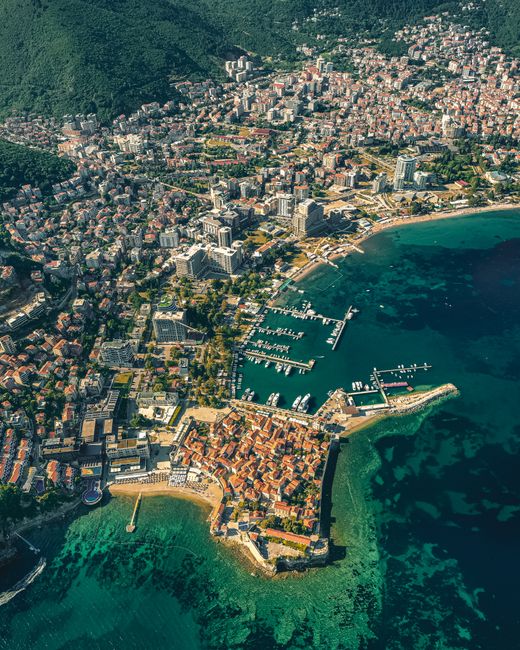
Budva is the busiest resort on Montenegro’s coast and the heart of the Budva Riviera: a small walled old town on a rocky peninsula, a long seafront of hotels, cafés and clubs, and some 35 km of beaches stretching south past Bečići and Pržno to the island village of Sveti Stefan and the fishing town of Petrovac. The old town is more than 2,500 years old, rebuilt in Venetian style after the earthquake of 1979, and its lanes, churches and citadel make a lovely evening walk. Budva is lively, loud and crowded in July and August, when it becomes the party capital of the Adriatic, and much calmer and better value in June and September. Base yourself here for beaches and nightlife, or nearby in Pržno, Sveti Stefan or Petrovac for something quieter. Three to five days is plenty.
Right now in Budva
- Wed17–24°C62–75°FPartly cloudy
- Thu17–19°C62–66°F104 mm rain
- Fri18–20°C64–68°F102 mm rain
Top tours in Budva
See all tours for Budva →
From local operators, with prices and reviews; you check availability and book on Viator, our partner. We may earn a commission at no extra cost to you. How we earn money
Budva at a glance
- Best months: June and September, with average highs of about 28–30 °C in midsummer and a warm sea from June to early October (WMO 1991–2020 normals for Bar, the nearest official coastal station). Winters are mild and wet.
- Days needed: 1 for the old town and Sveti Stefan; 3–5 for a beach holiday with day trips.
- Getting there: Tivat airport (TIV) is about 20 km and 30 minutes away; Podgorica (TGD) about an hour; buses run from Kotor, Herceg Novi, Podgorica and Dubrovnik.
- Getting around: on foot along the seafront; local buses and taxi boats along the riviera.
- Budget level: one of the pricier places in Montenegro in July and August, especially for beach loungers. See our Montenegro guide (coming soon) for entry rules, money and costs.
The Budva Riviera: where to stay and who each area suits
- Budva old town and centre: stay inside or next to the walls for atmosphere, restaurants and nightlife on your doorstep. Noisy in summer.
- Slovenska plaža: the long main beach and promenade east of the old town, lined with hotels, bars and clubs. Convenient and lively; best for young groups.
- Bečići and Rafailovići: a long, broad beach of fine pebbles and coarse sand a few kilometres south, with resort hotels and a seafront path to Budva. Good for families.
- Pržno and Sveti Stefan: pretty coves and villas around the island village, quieter and more upmarket.
- Petrovac: 17 km south, a small, relaxed town with a crescent beach, pine woods and a Venetian fort. Ideal for a calmer stay.
- Jaz: a long open beach west of Budva, near the road to Kotor, with campsites and summer music festivals.
Top things to see in Budva
Details below are as of October 2026; prices for small sights are only indicative, and some facts come from published reports, as marked in our sources.
The old town (Stari grad)
Budva’s old town fills a small peninsula, enclosed by 15th-century Venetian walls. Founded as a Greek and Illyrian settlement, it was badly damaged by the earthquake of April 1979 and carefully rebuilt in the following years, so the stone looks newer than in Kotor. Wander the narrow lanes of shops and cafés to the square of the churches: St John’s, the Catholic church with its tall bell tower; the small Santa Maria in Punta, founded in the 9th century; and the Orthodox Holy Trinity, with its striped stone façade. At the tip stands the Citadel (Kaštel), with a small library and terraces looking over the sea to the island of Sveti Nikola; a small entry fee applies. Parts of the walls can also be walked for a fee. The old town is open to everyone free of charge, and at its best early in the morning or late in the evening.
The dancer statue and Mogren beach
From the old town walls, a cliff path leads west past the bronze Dancer of Budva statue to Mogren, two small beaches of pebbles and coarse sand linked by a short tunnel through the rock, with steep cliffs and clear water. It is a 10-minute walk from the old town and very busy in summer; arrive early. The path is narrow and can be closed after rockfalls, so check locally.
Sveti Stefan
About 6 km south of Budva, Sveti Stefan is the most photographed place in Montenegro: a 15th-century fortified fishing village on a rocky islet, joined to the shore by a narrow causeway between two pink-pebble beaches. Since the 1950s it has been a hotel; it is now run by Aman together with the Villa Miločer and its gardens on the shore. The resort was closed from 2021 after a dispute between the government and the operator; under a settlement adopted by the government in spring 2026, it reopened on 1 July 2026, according to the government and the press. The island itself is for hotel guests, with only limited organised visits for others. On the shore, the regional press reported this plan for the beaches:
- Sveti Stefan beach, east of the causeway: half open to the public with paid loungers, and half free for everyone with a few free loungers for residents.
- Sveti Stefan beach, west of the causeway, and Miločer (King’s) beach: open to hotel guests and the public, with paid loungers.
- Queen’s beach (Kraljičina plaža): may be reserved for hotel guests, but the coastal walking paths stay public.
The best free view is from the viewpoint above the main road and the old coastal path through the Miločer park towards Pržno. Arrangements can change, so check on the spot.
Sveti Nikola island and Petrovac
Across the bay from the old town, the wooded island of Sveti Nikola (nicknamed “Hawaii”) has pebble coves and a beach bar; taxi boats run from the harbour by the old town in summer. Further south, Petrovac has a sandy-pebbly crescent beach, a small Venetian fort (Kastel Lazareti) and Roman mosaics, and the twin coves of Lučice and Buljarica nearby.
Beaches on the Budva Riviera
Budva’s beaches are mostly fine pebbles or coarse sand, and most are split between free public stretches and beach clubs that rent loungers and umbrellas. In July and August, a pair of loungers on a popular beach can be expensive, and the free stretches fill early. See our beaches guide.
- Slovenska plaža: the town beach, 1.6 km long, convenient but crowded and noisy.
- Mogren: two small cliff-backed coves just west of the old town.
- Jaz: a long open beach 3 km west, with space to spread out and a naturist section at the far end.
- Bečići: a broad, gently shelving beach good for children.
- Kamenovo and Drobni pijesak: pretty coves between Bečići and Sveti Stefan; Drobni pijesak is reached down a steep road and is quieter.
- Sveti Stefan and Miločer: pink pebbles and clear water beside the island.
- Petrovac and Lučice: sheltered and family-friendly.
Boat trips, nightlife and day trips
- Boat trips: from Budva harbour to Sveti Nikola, along the coast to Sveti Stefan, or round to the Bay of Kotor with Perast and Our Lady of the Rocks. See our boat trips guide.
- Snorkelling and diving: rocky headlands and small wrecks off the riviera. See snorkeling and diving.
- Nightlife: beach bars and big open-air clubs along Slovenska plaža and near Bečići in July and August; festivals at Jaz.
- Kotor and Perast: about 40 minutes by road.
- Lovćen and Cetinje: up the mountain road behind Budva, about 45–60 minutes to Cetinje.
- Lake Skadar: about an hour to Virpazar for boat trips among the water lilies and wine tasting nearby. See our wine tasting guide.
Crowds, noise and the town’s rules
In July and August, Budva’s population swells many times over, the seafront traffic crawls and music plays late. If you want sleep, choose Pržno, Sveti Stefan, Petrovac or a hotel away from the clubs. Budva’s public order rules ban walking around the old town and the town streets in swimwear or bare-chested; municipal police usually warn first, and fines of about €200 have been reported. Drinking in the street and rowdy behaviour can also be fined. Dress normally away from the beach, and cover shoulders and knees in churches.
Nearby destinations
- Kotor17 km
- Herceg Novi31 km
- Dubrovnik72 km
- Durmitor National Park98 km
- Durrës119 km
- Tirana133 km
- Međugorje139 km
- Mostar145 km
Eating and drinking in Budva
The old town is full of restaurants, many with tables on little squares; prices are highest along the seafront and inside the walls. Look for grilled fish sold by weight, black risotto, mussels na buzaru from the Bay of Kotor, octopus salad, and from the hills behind the coast, Njeguši smoked ham and cheese and lamb cooked under the sač iron bell. Bakeries sell burek and other pastries for a cheap breakfast. Try a glass of Vranac, Montenegro’s red wine, or Krstač, its white. For a more local evening, eat in Petrovac or Pržno, or in the villages on the old road above Budva.
Getting there and getting around
Flights
Tivat airport (TIV), about 30 minutes away, is the closest, with many summer flights; taxis and transfers wait outside, and buses pass on the main road. Podgorica airport (TGD) is about an hour away via the Sozina tunnel, which has a small toll, or the Cetinje road. Dubrovnik (DBV) in Croatia is about 2.5–3 hours plus the border.
Buses and driving
Budva’s bus station, a 15-minute walk from the old town, has frequent buses to Kotor, Herceg Novi, Bar, Ulcinj, Cetinje and Podgorica, and longer routes to Dubrovnik, Sarajevo and Belgrade. Local buses run along the riviera to Bečići, Sveti Stefan and Petrovac in summer. Driving gives you freedom for Lovćen and Skadar, but summer traffic on the coast road is slow and parking in the centre is scarce and paid.
On foot and by boat
A seafront path links Budva with Bečići, and the coastal path through the Miločer park joins Pržno and Sveti Stefan. Taxi boats from the harbour by the old town serve Sveti Nikola and the nearby beaches in season.
When to go and how long to stay
Budva has long, hot, sunny summers and mild, rainy winters. July and August have only two or three days with rain a month but the most crowds and the highest prices. June and September are the sweet spots, with a warm sea, sunshine and space on the beaches. May and October are pleasant for sightseeing and walking but the sea is cooler. From November to March many beach hotels and clubs close, though the old town stays open and quiet.
| Season | Average high / low | Days with rain a month | What it’s like |
|---|---|---|---|
| Spring (Mar–May) | 16–24 °C / 8–15 °C | 7–9 | Warm and green; good for walking; sea cool until late May. |
| Summer (Jun–Aug) | 28–30 °C / 18–21 °C | 3–4 | Hot, sunny and crowded; warm sea; nightlife at full volume. |
| Autumn (Sep–Nov) | 27 °C falling to 19 °C / 18–11 °C | 6–10 | September is ideal; the sea stays warm into October; rain from November. |
| Winter (Dec–Feb) | 13–14 °C / 5–7 °C | 10–12 | Mild, wet and quiet; many hotels closed. |
Figures are the WMO 1991–2020 climate normals for Bar, about 35 km south-east on the same open coast, the nearest station with official published normals, from Montenegro’s Institute of Hydrometeorology and Seismology. Bar gets about 1,350 mm of rain a year, almost all of it from October to April.
2 days in Budva
Day 1: the old town and citadel in the morning, Mogren beach, and dinner within the walls. Day 2: Sveti Stefan and the Miločer park path in the morning, a swim at Sveti Stefan beach, and sunset from the viewpoint above the island.
4–5 days in Budva
Add a boat day to Sveti Nikola or the Bay of Kotor, a day up to Lovćen and Cetinje, an afternoon at Lake Skadar, and a lazy day in Petrovac. With more time, continue to Kotor or north to Durmitor.
Where to stay in Budva
- Nightlife and atmosphere: the old town or the streets just behind it.
- Families: Bečići or Rafailovići, on the broad beach.
- Couples and quiet: Pržno, Sveti Stefan or Petrovac.
- Luxury: Aman Sveti Stefan and the high-end resorts around Miločer and Bečići.
- Budget and camping: apartments uphill from the centre, or the campsites at Jaz.
Your host registers you with the local tourist organisation within 24 hours and adds the tourist tax, reported at €1 per adult per night in Budva, with 12- to 18-year-olds paying half and children under 12 exempt. Keep your registration slip.
Practical tips for Budva
- Loungers: ask the price before you sit; free stretches of beach fill early in summer.
- Dress code: no swimwear or bare chests in town; fines apply.
- Noise: choose your base carefully in July and August.
- Taxis: use registered companies and agree the fare.
- Cash: handy for taxi boats, beach bars and small shops.
- Fire: never light fires on the dry hillsides in summer.
- Emergencies: call 112 (police 122, fire 123, ambulance 124).
What to pack for Budva
Pack swimwear, a quick-dry towel, a sun hat, high-factor sunscreen and sunglasses; water shoes for pebbles and rocky coves; a snorkel mask; light clothes and something smarter for evenings out; comfortable sandals for the seafront path; and a scarf or shirt for churches. In spring and autumn, add a light jacket and a rain jacket.
Budva travel FAQ
Can you visit Sveti Stefan island?
The island is a hotel, Aman Sveti Stefan, which reopened on 1 July 2026, and is mainly for guests, with limited organised visits for others. The causeway and the beaches beside it are open to the public.
Is Sveti Stefan beach free?
Partly. Under the 2026 plan reported in the regional press, half of the beach east of the causeway is free for everyone, and the rest of the Sveti Stefan and Miločer beaches are open to the public with paid loungers. Queen’s Beach may be reserved for hotel guests.
What is the best beach in Budva?
Mogren for a short walk from the old town, Jaz for space, Bečići for families, and Sveti Stefan or Drobni pijesak for scenery and clear water.
How many days do you need in Budva?
One day for the old town and Sveti Stefan; three to five for a beach stay with day trips to Kotor, Lovćen and Lake Skadar.
Is Budva a party town?
In July and August, yes: big open-air clubs and beach bars run late. Out of season, and in Pržno, Sveti Stefan and Petrovac, it is much quieter.
Can you wear swimwear in Budva old town?
No. Budva’s public order rules ban swimwear and bare chests in the old town and on town streets, with fines of about €200 reported if you ignore a warning.
How far is Budva from Kotor?
About 25 km, or 40 minutes by bus or car, longer in summer traffic. Buses run frequently all day.
Which airport is closest to Budva?
Tivat (TIV), about 30 minutes away. Podgorica (TGD) is about an hour away and has more year-round flights.
What is the tourist tax in Budva?
Reported at €1 per adult per night, €0.50 for ages 12–18, and free for under-12s. Your host adds it to the bill when registering you.
Is Budva worth visiting in winter?
For a quiet break, yes: the old town and seafront are calm and mild. But many hotels, clubs and beach bars close, and it rains often.
Plan your trip
Partner links: TravelerCenter may earn a commission if you book, at no extra cost to you.
🇷🇸 Useful Serbian phrases for Budva
All 38 Serbian phrases: restaurant, hotel, emergencies, romance (printable) →
Sources · last reviewed 4 October 2026
Researched and last reviewed on 4 October 2026. Registration rules come from the Tivat Tourist Organisation; climate from Montenegro’s Institute of Hydrometeorology and Seismology (WMO 1991–2020 normals for Bar). The Sveti Stefan reopening and beach plan, Budva’s tourist tax and the swimwear fines come from government statements and municipal rules as reported in the press and are flagged for checking. Prices, timetables and rules change, so check the official sites before you travel.
Data: Weather: MET Norway (CC BY 4.0) · Sea temperature: NOAA CoastWatch · Air quality: OpenAQ · Rates: ECB · Costs: World Bank ICP and price levels · Wikidata (CC0)