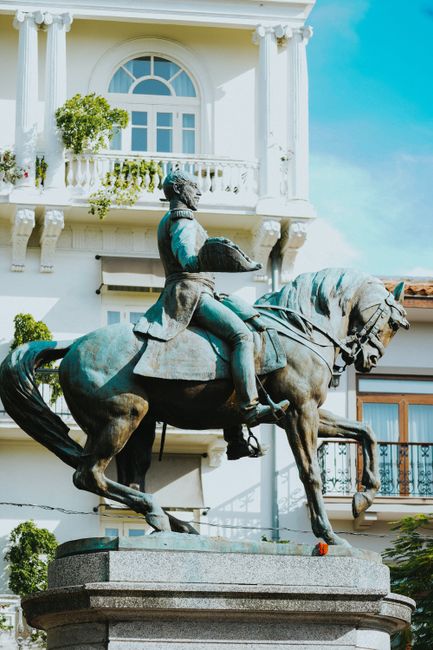
Panama joins two continents and two oceans, and it is easy to see both in a day. Its capital is the most cosmopolitan city in Central America, with a glittering skyline, a restored colonial old town on a peninsula, and the Panama Canal, where you can watch giant ships rise and fall in the locks a few minutes from downtown. Beyond the city are the Caribbean islands of Bocas del Toro, with reefs, surf and stilt-house hotels; the San Blas Islands, hundreds of palm-covered islets governed by the Indigenous Guna people; and the cool coffee highlands of Boquete, below the country’s highest peak, Volcán Barú. Panama uses the US dollar, flights from North America are short and frequent through Tocumen, Central America’s biggest hub, and distances are small. Plan around the seasons, a dry season from mid-December to mid-May and a rainy one for the rest of the year, and give a first trip 10 days to two weeks.
Right now in Panama
- Tue 24–30°C 76–87°F 33 mm Heavy rain
- Wed 25–29°C 76–84°F 12 mm Light rain
- Thu 24–29°C 76–84°F 6 mm Cloudy
Weather: MET Norway (CC BY 4.0)
Multi-day tours of Panama
Multi-day tours from local operators. You check dates and book on Viator, our partner; we may earn a commission at no extra cost to you. How we earn money
Panama at a glance: the isthmus between two oceans
Panama is a republic of about 4.6 million people, divided into ten provinces and several Indigenous comarcas, self-governing territories such as Guna Yala, home of the San Blas Islands. The country is an S-shaped isthmus, only about 80 km (50 miles) wide where the canal crosses it, with the Caribbean to the north and the Pacific to the south, Costa Rica to the west and Colombia to the east. Spanish is the official language; English is common in tourism, banking and on the Caribbean side, especially in Bocas del Toro and Colón, where many families descend from West Indian canal and railroad workers. Panama uses Eastern Standard Time (UTC−5) all year with no daylight saving time, the same as New York in winter and Bogotá all year.
Panama’s regions
- Panama City and the Canal: the capital, Casco Viejo and Panamá Viejo, the canal locks, rainforest parks such as Soberanía and Gamboa on the canal’s banks, and the island of Taboga.
- The Caribbean coast: Colón and the Agua Clara locks, the Spanish forts of Portobelo, Isla Grande and, further east, the San Blas Islands in Guna Yala.
- Bocas del Toro: the island province near the Costa Rican border, with Isla Colón, Bastimentos and a national marine park.
- Chiriquí: the western highlands of Boquete, Volcán and Cerro Punta, coffee farms and Volcán Barú, plus the Gulf of Chiriquí’s islands on the Pacific.
- The Pacific coast and Azuero: the beach resorts of the Pacific Riviera west of the capital, El Valle de Antón in an old crater, the surf of Santa Catalina and Coiba National Park, and the folklore towns of Pedasí and the Azuero Peninsula.
- Darién: the remote rainforest province on the Colombian border, with few roads and visited by very few travelers; our guides don’t cover it.
Where to go: the city, the canal, islands and highlands
Most first trips start with a few days in Panama City and the canal, then add an island stay and the mountains. Short domestic flights from the city’s Albrook airport, or long but cheap buses, link the main regions.
Panama City and the Panama Canal
The capital mixes a skyline of towers along the Bay of Panama with the restored streets, plazas and churches of Casco Viejo (Casco Antiguo), the ruins of the first city at Panamá Viejo, the Frank Gehry-designed Biomuseo on the Amador Causeway, and, on its edge, the Miraflores Locks, where a visitor center lets you watch ships transit the canal. See our Panama City travel guide.
Bocas del Toro
A 45-minute flight from Panama City, according to Panama’s tourism authority, this Caribbean archipelago of nine main islands has a laid-back Caribbean town on Isla Colón, overwater hotels, reefs and starfish, surf breaks, and the beaches and turtle-nesting cays of Isla Bastimentos National Marine Park. See our Bocas del Toro travel guide.
The San Blas Islands (Guna Yala)
More than 365 islands off the Caribbean coast form part of Guna Yala, an autonomous Indigenous territory where the Guna people set the rules for visitors, run all lodging and transport, and charge an entry fee. Expect simple cabins, white sand, clear water and an encounter with a living culture known for its molas, rather than resorts. See our San Blas Islands travel guide.
Boquete and the Chiriquí highlands
A colorful valley town at the foot of Volcán Barú, Boquete is known for its specialty coffee, including the famous Geisha variety, waterfalls and hiking trails, the Quetzal Trail through cloud forest, rafting and a pleasant mountain climate of about 12 to 30 °C (53 to 86 °F), according to Panama’s tourism authority. See our Boquete travel guide.
More places worth the trip
- Portobelo: Spanish colonial forts and customs house on the Caribbean coast, a UNESCO World Heritage Site, with the Black Christ festival in October.
- El Valle de Antón: a mountain village inside an ancient volcanic crater, two hours from the capital, with hikes and waterfalls.
- Coiba National Park and Santa Catalina: a UNESCO-listed marine park on the Pacific with some of the best diving in Central America.
- Pedasí and the Azuero Peninsula: traditional towns, Carnival, surf at Playa Venao, and whale watching offshore from about July to October.
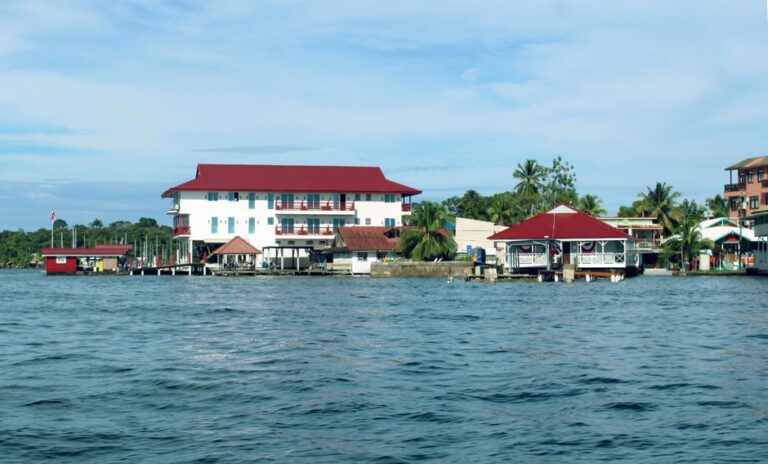
Bocas del Toro Travel Guide
Plan a trip to the Bocas del Toro islands in Panama: Bocas Town on Isla Colón, Starfish Beach and Boca del Drago, Bastimentos Island…
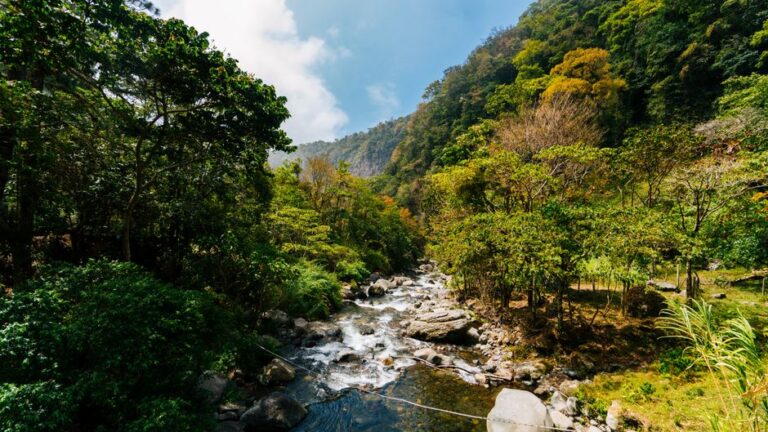
Boquete Travel Guide
Plan a trip to Boquete in Panama's Chiriquí highlands: Geisha coffee farm tours and the December to March harvest, hiking Volcán Barú at 3,474…
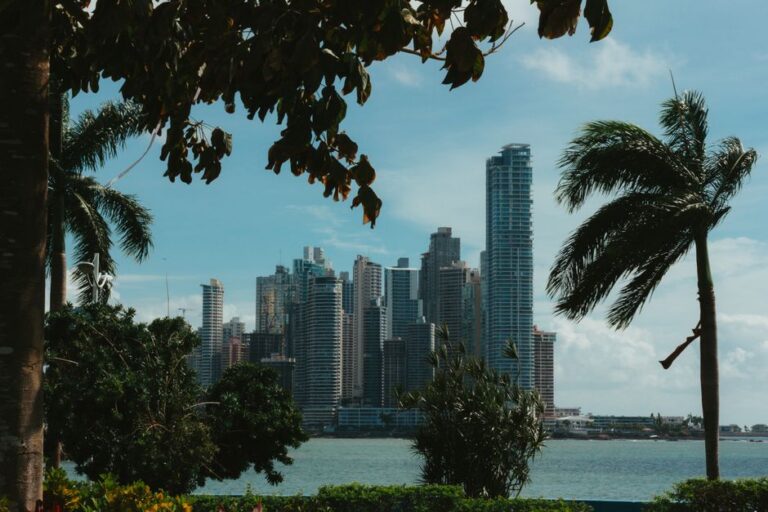
Panama City Travel Guide
Plan a stay in Panama City: Casco Viejo, the ruins of Panamá Viejo with 2026 prices, the Panama Canal's Miraflores Visitor Center with fees,…
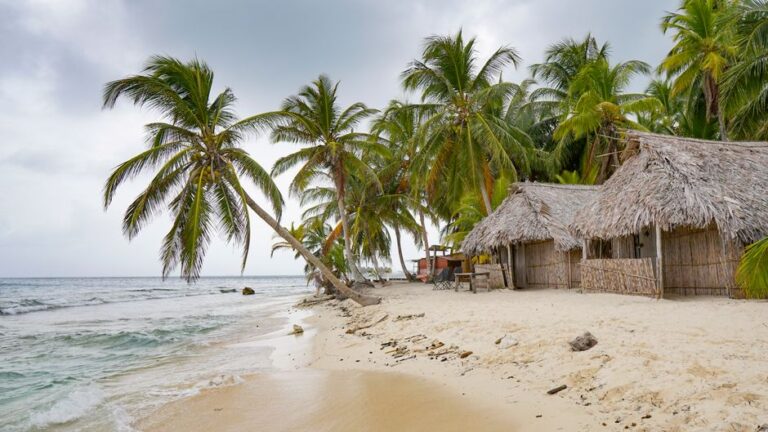
San Blas Islands Travel Guide
Plan a trip to the San Blas Islands in Guna Yala, Panama: how the Guna comarca works, the entry fee paid on the road,…
Best time to visit Panama: dry and rainy seasons
Panama has two seasons. According to Panama’s Institute of Meteorology and Hydrology (IMHPA), the dry season normally runs from December 16 to May 15 and the rainy season from May 16 to December 15, based on the 1981–2010 climate normals. Panamanians call the dry season “verano” (summer). From December to April, northeast trade winds blow across the isthmus, bringing breezy, sunny weather to the Pacific side and Panama City. In the rainy season, the Intertropical Convergence Zone brings heavy afternoon and evening storms; a short dry spell, the “veranillo de San Juan”, usually comes around June 24, and October is the rainiest month of the year, according to the IMHPA.
The two coasts behave differently. The Pacific side, including Panama City, the Azuero Peninsula and the lowlands of Chiriquí, has a marked dry season. The Caribbean side, including Bocas del Toro, Colón and Guna Yala, gets rain in every month and has its own drier spells, often in September and October in Bocas del Toro and in February to April in the San Blas Islands. The highlands of Chiriquí, around Volcán Barú, have their own cooler microclimates, the IMHPA notes, with mist and drizzle blown over from the Caribbean in the dry season.
| Region | Dry season | Rainy season | Temperatures |
|---|---|---|---|
| Panama City and the Pacific side | Mid-December to mid-May; sunny and breezy | Mid-May to mid-December; October wettest | Hot all year, about 30–33 °C (86–91 °F) by day |
| Bocas del Toro and the Caribbean | No true dry season; drier spells often in February–March and September–October | Rain possible in any month; heaviest around November–January and July | Hot and humid; sea about 26 °C (79 °F) all year |
| Guna Yala (San Blas) | Drier from about January to April, with stronger trade winds | May to December | Hot and humid |
| Boquete and the highlands | December to April, windy with drizzle | May to November | About 12–30 °C (53–86 °F) |
El Niño in 2026: the IMHPA declared an El Niño alert on May 12, 2026, and says the event has persisted for five consecutive months and could become very strong through early 2027. Its October 2026 bulletin forecasts below-normal rain for most of the country from October to December, with near- or above-normal rain in parts of Bocas del Toro and the Chiriquí highlands. Low rainfall in the canal watershed led the Panama Canal Authority to reduce the number of daily transit slots from September 2026. For visitors this mostly means a drier, hotter end to the rainy season on the Pacific side; follow the IMHPA for updates.
Hurricanes: Panama lies south of the usual hurricane tracks, and storms rarely reach it directly. The Atlantic hurricane season, from June 1 to November 30 according to NOAA’s National Hurricane Center, can still bring heavy rain and rough seas to the Caribbean coast; check sea conditions before boat trips to San Blas and Bocas.
Crowds, prices and events through the year
- Mid-December to April: the dry high season, busiest at Christmas, New Year and Easter; book island and mountain lodging ahead. Boquete’s Flower and Coffee Fair is held in January.
- Carnival: the four days before Ash Wednesday (February 6–9 in 2027), with the biggest parties in Las Tablas and Panama City; beaches and buses fill up.
- May to August: the green season, with lower prices, afternoon rain and good surf on the Pacific.
- September to November: the wettest months on the Pacific side, but often a good time for Bocas del Toro. November is “the month of the homeland”, with independence parades on November 3, 4, 10 and 28.
Public holidays
Panama’s national holidays and days of mourning close banks and government offices, and many Panamanians travel, especially in the November patriotic holidays and at Carnival. The next ones, from October 2026:
| Holiday | Date | Good to know |
|---|---|---|
| Separation from Colombia | Tuesday, November 3, 2026 | Parades nationwide |
| Flag Day | Wednesday, November 4, 2026 | Parades; many businesses close |
| Colón Day | Thursday, November 5, 2026 | Mainly observed in Colón |
| First Cry of Independence (Los Santos) | Tuesday, November 10, 2026 | Celebrated in Villa de Los Santos |
| Independence from Spain | Saturday, November 28, 2026 | National holiday |
| Mother’s Day | Tuesday, December 8, 2026 | National holiday |
| Day of National Mourning | Sunday, December 20, 2026 | Remembers those killed in the 1989 US invasion |
| Christmas Day | Friday, December 25, 2026 | Busy travel season |
| New Year’s Day | Friday, January 1, 2027 | Nationwide |
| Martyrs’ Day | Saturday, January 9, 2027 | Remembers the 1964 flag protests in the Canal Zone |
| Carnival Monday and Tuesday | February 8–9, 2027 | Four-day weekend from February 6 |
| Good Friday | March 26, 2027 | Holy Week travel peak |
| Labor Day | Saturday, May 1, 2027 | Nationwide |
When a holiday falls on a Sunday, it is often observed on the Monday.
How long to stay: sample itineraries
Panama is compact, and flights from Albrook reach Bocas del Toro and David (for Boquete) in under an hour, so you can see a lot in a short trip.
5 days: Panama City and San Blas
Three days in the city for Casco Viejo, Panamá Viejo, the Miraflores Locks and the Biomuseo, with a morning in Soberanía National Park, then two nights on a San Blas island.
10 days: city, highlands and Caribbean
Three days in Panama City, fly to David and spend three nights in Boquete, then travel overland via Almirante to Bocas del Toro for three or four nights, and fly back to the capital.
2 weeks: coast to coast
Add San Blas, a night in El Valle de Antón or on the Pacific beaches, and Portobelo on the Caribbean. Travelers combining Panama with Costa Rica can cross between Bocas del Toro and Costa Rica’s Caribbean coast at Guabito–Sixaola, or between Chiriquí and Costa Rica’s south Pacific at Paso Canoas.
Entry, money and costs
Entry requirements (last reviewed October 2026)
Citizens of most countries, including the United States, Canada, the UK and the European Union, need no visa to visit Panama as tourists and can stay for up to 90 days, according to Panama’s tourism authority (ATP). According to Panama’s National Migration Service (SNM), every visitor must have:
- A passport or travel document valid for at least three months. The UK government advises British visitors to have six months’ validity and a blank page, so six months is the safe choice.
- Proof of funds for your stay, never less than B/.500 (US$500), shown in cash, a credit card, a bank reference, an employment letter or traveler’s checks; children under 18 don’t need it. Some nationalities may be asked for more, and the UK government says officers may ask British visitors for US$1,000 or a credit card.
- Proof of onward travel, a booked exit from Panama within the time you are allowed to stay; officers check this especially at land borders.
- A visa, only if your nationality requires one.
The ATP also asks for the address of your accommodation and the reason for your trip. Make sure your passport is stamped with your entry date. You can’t normally extend a tourist stay, and leaving for a neighboring country and coming straight back to reset the clock can lead to being detained, according to the UK government. If you arrive by private sailboat or yacht rather than a cruise ship, for example on a San Blas sailing trip from Colombia, different visa rules and fees apply; cruise passengers and canal transits don’t need a visa.
Health: Panama has no COVID entry rules, and a yellow fever vaccination certificate is no longer an entry requirement under the Health Ministry’s rules, according to the ATP, though the vaccine is recommended for travelers from Colombia, Peru, Ecuador, Brazil and Africa and for visiting Darién, Guna Yala and eastern Panama province.
Customs and the departure tax
You only need to declare cash, goods or documents worth more than US$10,000, using the online traveler’s declaration (declaraciondeviajero.ana.gob.pa), which generates a QR code to show at customs; with nothing to declare, you fill in no form, according to the ATP. Panama charges a departure tax of US$40 when you fly out, usually included in your ticket price, according to the UK government.
Money: the balboa and the US dollar
Panama’s official currency, the balboa (B/.), is fixed at par with the US dollar, and Panama uses US banknotes; balboa exists only as coins, which circulate alongside US coins. Prices may be written with “B/.” or “$”; they mean the same. Bring US dollars in small notes, as US$50 and US$100 bills are often refused in shops and taxis. Cards are accepted in hotels, restaurants and supermarkets in the cities, but on the islands and in Guna Yala you’ll need cash. ATMs are common in Panama City, David, Boquete and Bocas Town, but scarce or absent elsewhere; use ones inside banks or malls.
Taxes and tipping
Panama’s sales tax, the ITBMS, is 7% on most goods and services, according to the tax authority (DGI). Lodging of all kinds is taxed at 10%, alcoholic drinks at 10% and tobacco at 15%; basic food, medicines and medical services are exempt. Hotel quotes often exclude the 10% tax, so check the total. In restaurants, a 10% tip is customary when service isn’t already on the bill; tip guides and boat captains a few dollars per person per day.
Typical travel costs
Panama City’s hotels and restaurants cost about what they do in a mid-sized US city, while buses, local food and simple island cabins are cheap. These per-person, per-day estimates are a planning guide as of October 2026:
| Style | Estimated cost per day | What that looks like |
|---|---|---|
| Budget | about B/.50–80 (US$50–80) | Hostel bed, fondas (local diners), metro and buses, free sights and beaches |
| Mid-range | about B/.150–250 (US$150–250) | Comfortable hotel room shared by two, restaurant meals, a tour or boat trip most days, a domestic flight |
| High-end | about B/.400+ (US$400+) | Boutique hotels in Casco Viejo, island eco-lodges, private guides and charters |
San Blas stays are usually sold as packages including transport, meals and island tours. The figures are our estimates, not official statistics.
The Panama Canal: visitor centers and museums
The Panama Canal Authority (ACP) runs the canal’s visitor sites. Prices and hours below are the ACP’s, as published in October 2026:
| Site | Hours | Non-resident price |
|---|---|---|
| Miraflores Visitor Center (Panama City) | Daily 8 a.m.–6 p.m.; ticket office 8 a.m.–5 p.m. | Adults B/.17.22; children 6–12 B/.7.22; under 6 free; includes the IMAX film |
| Agua Clara Visitor Center (Gatún, Colón) | Daily, including holidays, 8 a.m.–5 p.m.; ticket office 8 a.m.–3:30 p.m. | From B/.5 to B/.10 |
| Panama Canal Interactive Center (Calle Gorgas, Panama City) | Tuesday–Sunday 9 a.m.–5 p.m. | Free |
| Interoceanic Canal Museum (Casco Viejo) | Tuesday–Sunday 10 a.m.–6 p.m. | From B/.5 to B/.15 |
At Miraflores, terraces and bleachers overlook the locks, a 3D IMAX film narrated by Morgan Freeman tells the canal’s story, and a visit takes about an hour and a half. Ships don’t pass all day: the ACP’s visitor site publishes each day’s best viewing windows (on October 4, 2026, ships transited Miraflores until 8:30 a.m. and from 2:20 p.m.), so check before you go. Locals and residents pay B/.3. See our Panama City guide for more.
Getting there and getting around
Arrival airports
- Tocumen International (PTY): about 40 minutes east of downtown Panama City, according to the ATP, with direct flights from more than 80 destinations in the Americas and some in Europe, and the hub of Copa Airlines. The ATP counts more than 400 weekly direct flights to 25 North American cities. Its two terminals are linked by a free shuttle bus from 5 a.m. to 11 p.m., and Metro Line 2 has an airport branch station.
- Other airports: David (DAV) in Chiriquí, for Boquete, and Río Hato (RIH) on the Pacific beaches have a few international flights; Bocas del Toro (BOC) has flights from San José, Costa Rica, on SANSA.
Many US travelers fly via Miami or Houston; see our United States travel guide if you are connecting there.
Domestic flights
Domestic flights leave from Panama City’s Marcos A. Gelabert (Albrook) airport, closer to the center than Tocumen. Air Panama flies daily and weekly to David, Changuinola and Isla Colón in Bocas del Toro, and offers charters to Guna Yala, the Pearl Islands, Darién and elsewhere; flights to Bocas take about 45 minutes. Some David flights also leave from Tocumen. Luggage allowances on small planes are limited, so check your fare.
Buses and shuttles
Long-distance buses leave from the Gran Terminal de Albrook in Panama City, next to Albrook Mall and the metro. They reach David in about six hours, according to the ATP, with connections to Boquete and Almirante (for Bocas del Toro). Buses are cheap, frequent and air-conditioned, often very cold. For San Blas, licensed 4×4 vehicles approved by the Guna authorities pick up from Panama City hotels at dawn; buses don’t go there. Private shuttles also run between Boquete, Bocas del Toro and Costa Rica.
Driving
The Pan-American Highway runs the length of the country, and a car is useful for the Pacific beaches, El Valle and the Azuero Peninsula. Driving in Panama City is hard work, with heavy traffic and many tolled urban highways (Corredores) that require an electronic Panapass tag, usually included with rental cars. According to the UK government, tourists can drive on a valid home license for up to three months and should carry their passport with the dated entry stamp; seatbelts are compulsory, and any alcohol in your blood can bring fines, loss of license and the car being impounded. Roads can be poorly lit, with potholes, so avoid driving at night.
Getting around Panama City
The metro (Lines 1 and 2) is clean, cheap and air-conditioned; a rechargeable card also works on MetroBus. Taxis are plentiful, but agree on the fare before you get in, as most don’t use meters; ride-hailing apps are widely used. At Tocumen, official taxis from the airport’s cooperative have fixed fares by destination and uniformed, ID-carrying drivers.
Culture, food and everyday etiquette
Panama’s culture blends Spanish, Afro-Caribbean, Indigenous and international influences, from the Guna’s molas and the Emberá villages of the Chagres River to West Indian calypso in Colón and Bocas and the folklore of the Azuero Peninsula, where women wear the elaborate pollera dress. Food to try: sancocho (chicken soup with culantro), patacones (fried plantains), ceviche from the Mercado de Mariscos, arroz con pollo, hojaldras (fried dough) for breakfast, and, on the Caribbean, rice and beans with coconut. Panama’s coffees from Boquete are among the most prized in the world. Tap water is safe to drink in most of the country, according to the UK government, but follow local advice on the islands and in rural areas.
Etiquette: greet people before asking for anything, dress neatly in cities (shorts and swimwear are for the beach), and ask before photographing people, especially in Guna and Emberá communities, where photos often carry a fee. Smoking, including e-cigarettes, is banned in enclosed public places, with fines of US$25 to US$100, according to the UK government. Carry your passport or a copy with the entry stamp: the police can ask for it. Drug penalties are severe, and the legal process can take years.
Safety, health, accessibility and connectivity
Safety
Most visits to Panama are trouble-free. In Panama City, pickpocketing and bag snatching happen in busy areas, on buses and at bus stations, and some neighborhoods, including El Chorrillo and Santa Ana next to Casco Viejo, San Miguelito, Río Abajo and Calidonia, have more street crime; stick to the main, restored streets of Casco Viejo at night and take taxis between areas. The city of Colón has high crime levels, and a night-time curfew for unaccompanied minors has applied in Colón province since 2024. Use ATMs inside banks or malls.
Protests and road blockades happen from time to time and can affect the Pan-American Highway, the Paso Canoas border and access to airports; in May and June 2025 protests in Bocas del Toro province led to a state of emergency there, lifted on June 29, 2025. Check local news before long road trips. At sea, some Pacific and Caribbean beaches have strong currents and few warning signs; don’t swim in the Bay of Panama, which is polluted. In the Chiriquí highlands, hike with a guide: trails are poorly marked, mobile coverage is unreliable, and hikers have gone missing. For emergencies, call 911 (also for an ambulance); for the police, 104; for the fire service, 103.
Health and insurance
Panama City has good private hospitals and clinics, but facilities outside the capital are limited, so buy travel insurance that covers medical treatment and evacuation. Mosquito-borne diseases including dengue, Zika and chikungunya occur, and malaria is present in some remote areas such as Darién and parts of Guna Yala; use repellent and check with a travel clinic. Altitude is only a minor concern on Volcán Barú’s summit, at 3,474 m (11,398 ft), according to the ATP.
Accessibility
Panama City’s metro, malls and newer hotels are generally accessible, and the Miraflores Visitor Center has a lower viewing platform with wheelchair access, according to the ACP. Casco Viejo has cobblestones and narrow sidewalks, and boats to the islands rarely have ramps; ask operators in advance.
Connectivity and power
Wi-Fi is widespread in cities and hotels and limited or absent on many San Blas islands. Prepaid SIM cards from the main networks, such as Más Móvil and Tigo, are sold at the airport and in shops; bring your passport. Panama uses 120 V and US-style plugs, so visitors from the United States and Canada need no adapter.
Things to do: beaches, snorkeling, diving, hiking and boat trips
- Beaches: the islands of San Blas and Bocas del Toro, Isla Grande near Portobelo, and the Pacific beaches of the Riviera, Playa Venao and the Pearl Islands.
- Snorkeling and diving: reefs in Bocas del Toro and Portobelo, Coiba National Park’s sharks and rays on the Pacific; scuba tanks are banned in Guna Yala, according to the Guna authorities.
- Hiking: Volcán Barú and the Quetzal Trail in Chiriquí, the Pipeline Road in Soberanía, and the crater rim walks of El Valle.
- Boat trips: a partial canal transit, island-hopping in Bocas and San Blas, Gatún Lake’s monkey islands, and humpback whale watching in the Gulf of Chiriquí and the Pearl Islands from about July to October.
- Surfing: Bocas del Toro from December to March, and Santa Catalina and Playa Venao on the Pacific.
- City sightseeing: Casco Viejo, Panamá Viejo and the canal in Panama City.
What to pack
Pack light, breathable clothes for the heat, a light rain jacket or umbrella in any season, and a fleece and long trousers for Boquete’s cool evenings and an early Barú climb. Add swimwear, reef-safe sunscreen, a hat, insect repellent, sandals and water shoes, a dry bag for boat trips, a headlamp for islands with limited electricity, small US dollar bills, and a smart outfit for city restaurants. Plugs are the same as in the US.
Panama travel FAQ
When is the best time to visit Panama?
The dry season, which the IMHPA dates from December 16 to May 15, is best for Panama City, the Pacific and San Blas. Bocas del Toro often has its best weather in September and October.
Do I need a visa for Panama?
Not if you are from the US, Canada, the UK, the EU or most other countries, which can stay up to 90 days. You need a passport valid at least three months (six is safer), proof of at least US$500 and an onward ticket.
Does Panama use the US dollar?
Yes. The balboa is fixed at par with the US dollar, and US banknotes are used everywhere; balboa coins circulate alongside US coins.
How much is the Panama Canal Miraflores Visitor Center?
B/.17.22 (US$17.22) for non-resident adults and B/.7.22 for children 6 to 12, including the IMAX film; it opens daily from 8 a.m. to 6 p.m., according to the Panama Canal Authority.
Is there a departure tax in Panama?
Yes, US$40 when you fly out, usually included in the ticket price.
What is the hotel tax in Panama?
Lodging is taxed at 10% ITBMS, compared with the standard 7%, according to the tax authority. Check whether hotel quotes include it.
How do I get from Panama City to Bocas del Toro?
Fly from Albrook airport to Isla Colón in about 45 minutes, or take a bus to David and on to Almirante, then a water taxi of about 35 minutes.
Do I need a yellow fever vaccine for Panama?
It is no longer an entry requirement, according to the tourism authority, but it is recommended if you come from Colombia, Peru, Ecuador, Brazil or Africa or visit Darién or Guna Yala.
Can I drink tap water in Panama?
In most of the country, yes. On the islands and in rural areas, follow local advice or drink bottled or filtered water.
Is Panama safe for tourists?
Most visits are trouble-free. Watch for pickpockets in busy parts of Panama City, take taxis at night, avoid the higher-crime neighborhoods next to Casco Viejo, and check local news for protests before road trips.
What time zone is Panama in?
Eastern Standard Time (UTC−5) all year, with no daylight saving time.
Sources and last review
Researched and last reviewed on 4 October 2026. Entry requirements and proof of funds: Panama’s National Migration Service (SNM) and tourism authority (ATP); 90-day stays, the yellow fever rule, the customs declaration and travel times: the ATP; passport validity advice, extensions, sea arrivals, the departure tax, driving, smoking fines, tap water, safety and emergency numbers: the UK government’s Panama pages; ITBMS and the 10% lodging rate: the tax authority (DGI); seasons, the veranillo, October’s rainfall, trade winds, microclimates and the 2026 El Niño: the Institute of Meteorology and Hydrology (IMHPA); canal visitor sites, prices, hours and ship times, and reduced transit slots: the Panama Canal Authority (ACP); airport shuttle, metro access and taxis: Tocumen airport; domestic routes: Air Panama; hurricane season: NOAA’s National Hurricane Center; scuba rules in Guna Yala: the Guna General Congress. Population, provinces and comarcas, the coastal climate details and temperatures beyond the ATP’s, Carnival and holiday dates, tipping, SIM providers, plugs, malaria areas and daily costs come from secondary sources or general knowledge and are flagged for checking; daily costs are our estimates. Prices and rules change, so check the official sites before you travel. If you are flying via the United States, see our United States travel guide, and for another trip in the region, our Mexico travel guide.
Plugs and power in Panama
Panama uses 120 V, 60 Hz and these plugs (left) and wall sockets (right):
All plug types and voltages by country → · Check what you need to pack →
Plan your trip
Partner links: TravelerCenter may earn a commission if you book, at no extra cost to you.
🇪🇸 Useful Spanish phrases for Panama
All 38 Spanish phrases: restaurant, hotel, emergencies, romance (printable) →