Short answer: For a first trip, the top places to visit in France are Paris, Mont-Saint-Michel, the French Riviera, the hill villages and lavender of Provence, and the châteaux of the Loire Valley. Round out the list with Chamonix and Mont Blanc, the D-Day beaches and cliffs of Normandy, Lyon, Bordeaux and its vineyards, and Alsace, with Strasbourg and Colmar.
The list is ordered the way we would recommend places to a first-time visitor: Paris and the great icons first, then the regions that pair well with them by fast train or car. Prices are the official 2026 figures, in euros.
1. Paris
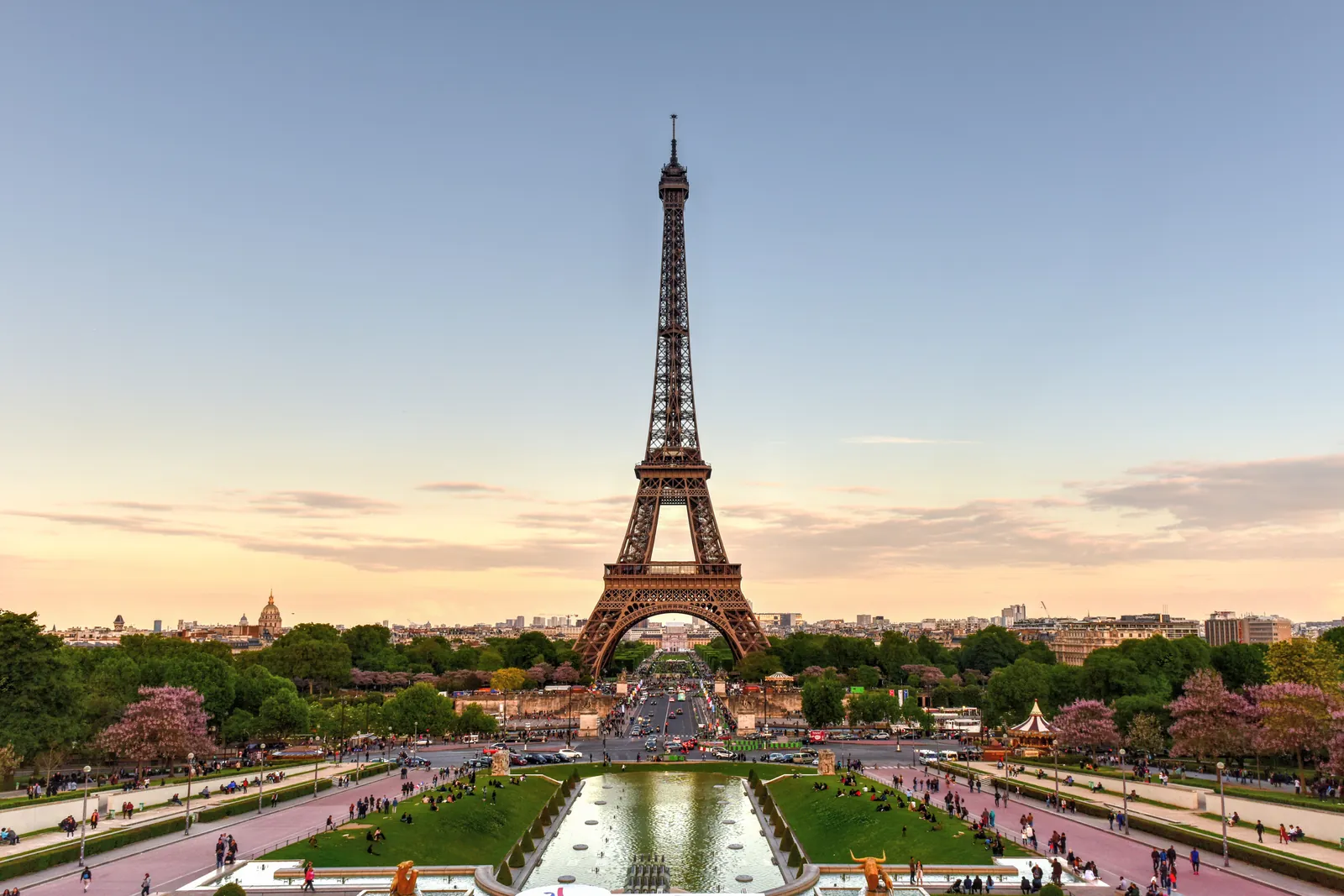
Why it made the list: the big sights live up to the hype: the Eiffel Tower, the Louvre, the Musée d’Orsay and a newly restored Notre-Dame. But the best Paris days mix one great museum with a long lunch, a walk along the Seine and an evening picnic by the river.
Best time to go: April to June and September to October. July and August are busy and can be hot; winter is grey but quiet.
Don’t miss: the Eiffel Tower, where a lift ticket to the top costs €36.70 for adults, and the Louvre. Notre-Dame, reopened in December 2024, is free to enter.
Getting there and how long: RER B from Charles de Gaulle airport or metro line 14 from Orly, both on the €14 airport ticket. Give it four days, five or six with the Palace of Versailles or Disneyland Paris.
Practical note: since January 14, 2026, the Louvre has charged €32 for visitors from outside the European Economic Area (€22 for EEA residents); it is closed on Tuesdays, and a timed slot is recommended for everyone. Paris’s tourist tax is high in 2026, for example €5.53 per adult per night in a 3-star hotel. See our Paris travel guide.
2. Mont-Saint-Michel
Why it made the list: a granite island crowned by a medieval abbey, rising out of a vast tidal bay on the border of Normandy and Brittany, Mont-Saint-Michel is one of France’s most recognizable sights. The village is free to enter at any hour; only the abbey and the car park are paid.
Best time to go: April to June and September to October; early morning or late afternoon on any day, when the coach groups have gone.
Don’t miss: the climb up the single steep street to the abbey, then a walk on the ramparts to watch the tide race in across miles of sand.
Getting there and how long: car parks are on the mainland, 2.5 km from the rock, with a free shuttle bus or a 45-minute walk; buses also run from Pontorson station, Rennes and Saint-Malo. Give it a long day, and stay a night nearby to see it lit up.
Practical note: the abbey costs €13 from October 1, 2026, to March 31, 2027 (€16 from April to September), and is free for under-18s. Never cross the bay on foot without a certified guide: the tides are fast and there is quicksand. Check the tide timetable before you go. See our Mont-Saint-Michel travel guide.
3. The French Riviera
Why it made the list: the Côte d’Azur strings together Menton’s lemon gardens, the tiny principality of Monaco, perched villages such as Èze, the big city of Nice, the ramparts of Antibes and the film-festival town of Cannes, all along a coastal railway. In Nice, the long Promenade and the old town sit beside the curve of the Baie des Anges.
Best time to go: May, June and September to early October. Average highs at Nice run from about 21 °C (70 °F) in May to 28 °C (82 °F) in August, with only two to five rainy days a month from May to September.
Don’t miss: a sunset walk along Nice’s seafront Promenade, part of the UNESCO-listed “Nice, Winter Resort Town of the Riviera”, and a morning in hilltop Èze, high above the sea.
Getting there and how long: Nice Côte d’Azur airport is the gateway, and tram line 2 runs from both terminals to central Nice in under 30 minutes; the airport ticket is a €10 open-dated return. Give the coast at least five days, ideally a week.
Practical note: base yourself in one town and use the regional ZOU! trains, which run along the coast from Saint-Raphaël to Menton. In February, the Nice Carnival runs from February 9 to 28, 2027. See our French Riviera travel guide and Nice travel guide.
4. Provence
Why it made the list: between the Rhône and the Alps, Provence is a land of hilltop villages, lavender fields, vineyards and Roman monuments, with the Popes’ palace in Avignon, the fountains of Aix and the deep canyon of the Gorges du Verdon.
Best time to go: May, June and September to early October. Lavender blooms from about mid-June to late July, depending on altitude.
Don’t miss: the Palais des Papes in Avignon (€16 for the palace), the villages of the Luberon, and the drive along the rim of the Gorges du Verdon, about 25 km long with cliffs up to 700 m (2,300 ft) high.
Getting there and how long: TGV trains from Paris reach Avignon and Aix-en-Provence in about 2 hours 40 minutes to 3 hours. Give it at least five days, ideally a week with a car.
Practical note: a car is by far the easiest way to see the villages, lavender and gorges. In July, the Avignon Festival fills every room in town, so book early. See our Provence travel guide.
5. The Loire Valley
Why it made the list: France’s valley of châteaux is a broad, slow river lined with Renaissance palaces, royal towns, vineyards and gardens. The stretch between Sully-sur-Loire and Chalonnes has been a UNESCO World Heritage cultural landscape since 2000.
Best time to go: May, June and September for gardens, cycling and fewer crowds; July and August are warm and busy.
Don’t miss: Chambord, with its famous double-spiral staircase, and Chenonceau, whose gallery spans the river Cher. In Amboise, Clos Lucé is the house where Leonardo da Vinci spent his last years.
Getting there and how long: about an hour by TGV from Paris to Tours (Saint-Pierre-des-Corps), or regional trains from Paris to Blois and Amboise. Give it three or four days, or a week by bike on the 900 km Loire à Vélo route.
Practical note: Chenonceau costs €19 for adults and is open every day of the year. In 2026 Chambord is testing a reference price of €31, with €21 for nationals and residents of the European Economic Area who show proof. See our Loire Valley travel guide.
6. Chamonix and Mont Blanc
Why it made the list: Chamonix sits at the foot of Mont Blanc, at about 4,805 m (15,765 ft) the highest peak in western Europe, in a deep Alpine valley near the Swiss and Italian borders. It is the place for high-mountain views, glaciers, hiking and some of the most famous skiing in the Alps.
Best time to go: late June to mid-September for hiking and lifts; mid-December to April for skiing. Spring and autumn are quiet, with many lifts closed.
Don’t miss: the cable car to the Aiguille du Midi at 3,842 m (12,605 ft), and the little red train to Montenvers and the Mer de Glace glacier, a 20-minute ride.
Getting there and how long: Geneva airport is the nearest big airport, with transfers by road; trains arrive via Saint-Gervais-Le Fayet. Give it three days in summer, a week to hike or ski.
Practical note: an adult return to the top of the Aiguille du Midi costs from €60.20 to €83, and you need a boarding time, so book online. Staying in the valley gets you a guest card with free trains between Servoz and Vallorcine. See our Chamonix travel guide.
7. Normandy
Why it made the list: this green, apple-growing region along the English Channel combines the D-Day landing beaches, added to UNESCO’s World Heritage list in July 2026, with the chalk cliffs of Étretat, half-timbered Honfleur and Rouen, and Monet’s garden at Giverny.
Best time to go: May to September. Giverny opens from April 1 to November 1, and early June brings the D-Day anniversary events.
Don’t miss: the beaches and the Normandy American Cemetery above Omaha Beach, free to visit, and a clifftop walk at Étretat. At Giverny, Monet’s house and gardens cost €13 for adults.
Getting there and how long: trains run from Paris Saint-Lazare to Rouen, Caen and Bayeux, and a car makes the beaches easy. Give it four days, or a week with Mont-Saint-Michel.
Practical note: the Bayeux Tapestry museum is closed until autumn 2027, while the tapestry is on loan to the British Museum in London. At Étretat, the beaches at the foot of the cliffs and the tunnels are closed for safety, but the clifftop paths are open. See our Normandy travel guide.
8. Lyon
Why it made the list: France’s food capital is one of its most enjoyable cities, with Renaissance lanes and hidden passageways in the old town, a hilltop basilica and Roman theaters, two rivers lined with walkways, and more good restaurants per street than almost anywhere.
Best time to go: May, June, September and October; early December for the Fête des Lumières, the free festival of lights, from December 5 to 8, 2026.
Don’t miss: Vieux Lyon and its traboules, the covered passageways through the old houses, and lunch at a traditional bouchon or a browse through Les Halles Paul Bocuse food market.
Getting there and how long: about 2 hours by TGV from Paris; the Rhônexpress tram from Lyon-Saint-Exupéry airport takes about 30 minutes. Give it two days, three or four with a trip to the Beaujolais vineyards.
Practical note: about 2 million people come for the Fête des Lumières, so book rooms months ahead for early December. See our Lyon travel guide.
9. Bordeaux
Why it made the list: Bordeaux is an elegant river city of pale limestone on a curve of the Garonne, surrounded by the most famous vineyards on earth. Its 18th-century center, “Bordeaux, Port of the Moon”, has been on UNESCO’s World Heritage list since 2007, and nearby Saint-Émilion since 1999.
Best time to go: May, June, September and October; the grape harvest runs from about mid-September.
Don’t miss: the Miroir d’eau, a vast, free reflecting pool by the river, the Cité du Vin wine museum (€23 for adults, including a tasting), and a day among the châteaux of Saint-Émilion or the Médoc.
Getting there and how long: high-speed trains run to Bordeaux Saint-Jean, and tram line F links the airport with the city. Give it three days, five with the vineyards and the coast.
Practical note: the Atlantic is about an hour away, where the Dune du Pilat, 100 to 115 m (330 to 380 ft) high depending on the year, is free to climb; parking costs €6 for four hours. See our Bordeaux travel guide.
10. Alsace: Strasbourg and Colmar
Why it made the list: where France meets Germany, Alsace has half-timbered towns, canals, wine villages and some of Europe’s best Christmas markets. Strasbourg’s pink-sandstone cathedral, with its 142 m spire, was the tallest building in the world from 1647 to 1874; Colmar is a postcard of painted houses and flower boxes.
Best time to go: May to October for terraces and the wine route; late November to Christmas for the markets. Colmar’s markets run from November 23 to December 29, 2026.
Don’t miss: La Petite France in Strasbourg, and in Colmar the Little Venice quarter and the Isenheim Altarpiece in the Unterlinden Museum (€14 for adults).
Getting there and how long: about 1 hour 50 minutes by TGV from Paris to Strasbourg, and about 30 minutes by regional train from Strasbourg to Colmar. Give it three or four days with the wine villages.
Practical note: Strasbourg’s Christmas market, held since 1570, is the oldest in France and very busy, so book rooms early; come to Colmar early or late in the day. See our Strasbourg travel guide and Colmar travel guide.
How to fit them into one trip
France is big, so choose a direction from Paris and let the fast trains do the work.
One week: four days in Paris, with a day trip to Versailles, then three days in the Loire Valley or Normandy, with a night near Mont-Saint-Michel.
Ten days: three or four days in Paris, then a TGV south to Lyon (two days) and Provence (three days with a car), finishing on the Riviera.
Two weeks: add Normandy and Mont-Saint-Michel to the start, or Chamonix in summer, or Bordeaux and the vineyards in autumn. Alsace pairs well with Paris in December.
France is best in May, June and September; July and August are warmest but busiest on the coast. Our best time to visit France guide goes month by month, our France itinerary has 7-, 10- and 14-day routes, and our AI trip planner builds the day-by-day plan for your dates.
Plan your trip
Start with our France travel guide for trains, driving, money and entry rules. Use the AI trip planner to turn this list into a route, check the weather for your dates with the Destination weather tool, and learn a few words with our phrase cards.
Frequently asked questions
What is the most beautiful place in France?
Many travelers name Mont-Saint-Michel at high tide, the hill villages and lavender of Provence in early summer, and the Riviera coast seen from Èze. In Paris, the view from the Eiffel Tower at dusk is hard to beat.
How many days do you need in France?
A week covers Paris and one region, such as the Loire Valley or Normandy. Ten days lets you add Lyon and Provence or the Riviera, and two weeks takes in three or four regions.
What is the best place in France for first-time visitors?
Paris, for its museums, food and landmarks, followed by an easy add-on such as the Loire Valley châteaux, Normandy and Mont-Saint-Michel, or a fast train south to Provence.
Do I need to book the Eiffel Tower and the Louvre in advance?
It is strongly recommended. Both sell timed tickets online, and slots sell out in busy months. At the Louvre, a time slot is recommended for every visitor, including those who enter free.
Do I need a car in France?
Not for Paris, Lyon, Bordeaux, Strasbourg or the Riviera, which trains serve well. A car is by far the easiest way to see Provence’s villages, the Normandy beaches and the Loire châteaux at your own pace.