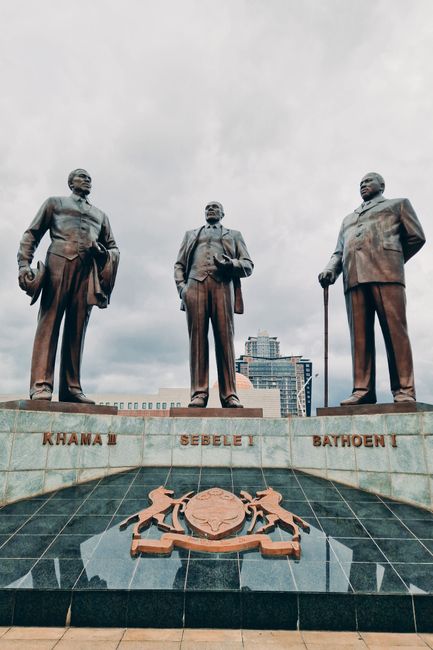
Botswana is one of the great wildlife countries of Africa, and one of the most rewarding places on the continent for a safari. Landlocked in the heart of southern Africa, it is mostly flat, dry Kalahari sandveld, yet in the northwest the waters of the Okavango Delta spread across the desert every winter to create a maze of channels, lagoons and palm islands, a UNESCO World Heritage Site and the country’s most famous destination. To the northeast, Chobe National Park and the Chobe River near Kasane hold some of the largest elephant herds in Africa, a short drive from Victoria Falls. Between and beyond them lie the salt pans of Makgadikgadi and Nxai Pan, the vast Central Kalahari Game Reserve and the rock-art hills of Tsodilo. Botswana has built its tourism on a low-volume, high-value model: many of the best areas are reached by light aircraft and shared by a handful of small camps, so a safari here can feel truly remote. Self-drive travelers with a well-equipped 4×4 can also explore Moremi, Chobe and the pans on their own, camping in unfenced public campsites. Most visitors from North America, Europe, Australia and New Zealand don’t need a visa, the Pula is stable, and the main gateways, Maun and Kasane, are an easy flight from Johannesburg. Plan around the seasons: the dry winter months from June to October bring the best game viewing and the highest prices, while the green summer is quieter, cheaper and wonderful for birds.
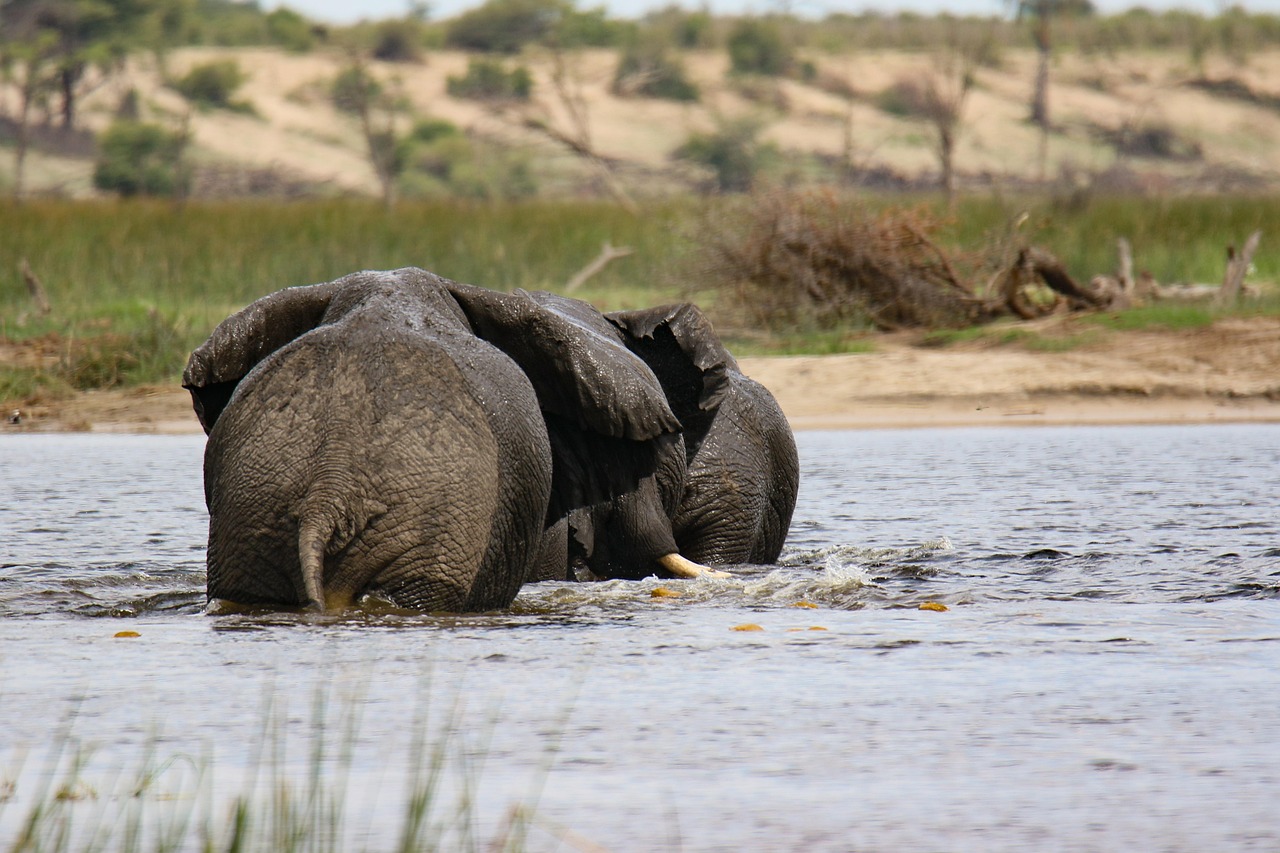
Right now in Botswana
- Wed 15–29°C 58–84°F Clear
- Thu 17–27°C 63–81°F Mostly clear
- Fri 18–31°C 64–89°F Clear
Weather: MET Norway (CC BY 4.0)
Multi-day tours of Botswana
Multi-day tours from local operators. You check dates and book on Viator, our partner; we may earn a commission at no extra cost to you. How we earn money
Botswana at a glance
Botswana covers about 582,000 km² (225,000 square miles), roughly the size of Texas or France. Around two-thirds of the country is covered by the sands of the Kalahari, a semi-arid savanna of grass, thorn scrub and scattered trees rather than a dune desert. Most of the land lies between about 900 and 1,300 m (2,950 and 4,270 ft) above sea level. The Okavango River flows in from the highlands of Angola and fans out into the Okavango Delta; the Chobe and Linyanti rivers mark the northern border with Namibia’s Zambezi Region, and Botswana borders South Africa, Namibia and Zimbabwe, and touches Zambia at the Kazungula bridge. The population is about 2.4 million, one of the lowest population densities in the world, and most people live in the east, around the capital, Gaborone, and the second city, Francistown.
English is the official language and is widely spoken in tourism; Setswana is the national language, and “dumela” (hello) goes a long way. The time zone is Central Africa Time (UTC+2) all year, with no daylight saving, the same as South Africa, Namibia, Zimbabwe and Zambia. Electricity is 230 V; you’ll find both the large three-round-pin type M sockets used in South Africa and the British three-flat-pin type G, so bring an adapter that covers both. Driving is on the left.
Botswana’s regions for travelers
- The Okavango Delta and Moremi: the permanent and seasonal swamps of the delta, the private concessions reached by light aircraft, Moremi Game Reserve on its eastern side, and the safari town of Maun.
- Chobe and Kasane: the Chobe Riverfront near Kasane, the Savuti marsh and the Linyanti in the west of Chobe National Park, and the crossings to Zimbabwe, Zambia and Namibia.
- The Makgadikgadi and Nxai Pans: enormous salt pans, the Boteti River and the zebra migration of the rainy season, between Maun and Nata.
- The Kalahari: the Central Kalahari Game Reserve, Khutse, and the Kgalagadi Transfrontier Park shared with South Africa, for experienced self-drivers.
- The northwest: the Okavango Panhandle, with fishing camps around Shakawe, and the Tsodilo Hills, a UNESCO site with thousands of San rock paintings.
- The east: Gaborone, the Khama Rhino Sanctuary near Serowe, and the Tuli Block on the Limpopo River.
Where to go: delta, river and desert
A classic first safari combines two or three camps: a water camp in the Okavango Delta for mokoro trips and boating, a land camp in Moremi or a private concession for game drives, and the Chobe River for elephants and boat safaris, often with a few nights at Victoria Falls at the start or end. See our guides to each place:
- Okavango Delta: mokoro trips through papyrus channels, fly-in camps, Moremi Game Reserve and the safari hub of Maun.
- Chobe National Park: huge elephant herds on the Chobe Riverfront, boat cruises from Kasane, and the remote Savuti and Linyanti areas.
Other favorites include the Makgadikgadi and Nxai Pans, the Central Kalahari, the Tsodilo Hills and the Khama Rhino Sanctuary. Victoria Falls is about 80 km (50 miles) from Kasane; see our Victoria Falls and Livingstone guides.
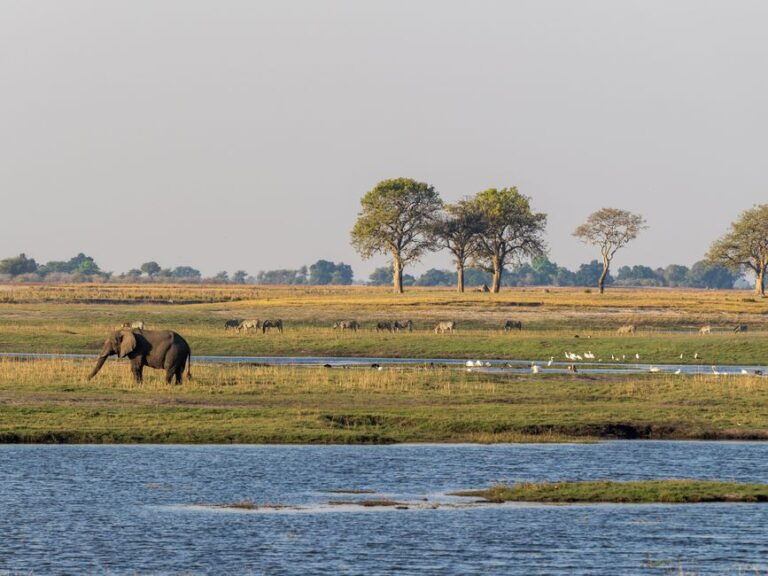
Chobe National Park Travel Guide
Plan a Chobe National Park safari: DWNP entry fees, Sedudu Gate and park rules, the Chobe Riverfront, Savuti and Linyanti, river cruises and game…
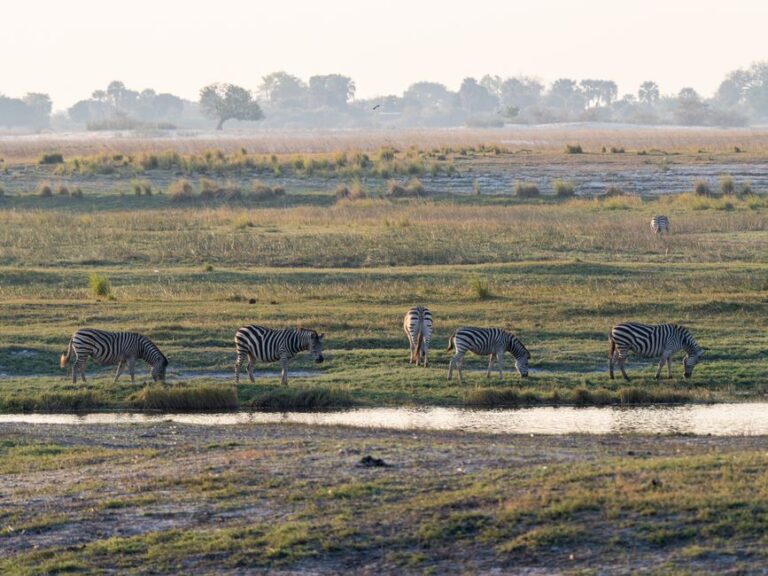
Okavango Delta Travel Guide
Plan an Okavango Delta safari: when the flood arrives and the best months, Moremi Game Reserve fees and self-drive rules, private concessions and fly-in…
Best time to visit Botswana
Botswana has a summer-rainfall climate. The rainy season runs from about November to March, with hot days and afternoon thunderstorms. Winter, from May to August, is dry and sunny, with warm days and cold nights; in the Kalahari, temperatures can drop close to freezing before dawn. September and October are the hottest, driest months, often above 35 °C (95 °F) in the north. The table shows rounded averages from Botswana Meteorological Services (1971–2000), as published by the World Meteorological Organization (WMO).
| Region (station) | January high / low | July high / low | October high / low | Rain a year |
|---|---|---|---|---|
| — | — | — | — | — |
| Okavango Delta (Maun) | 32 °C (90 °F) / 20 °C (68 °F) | 26 °C (78 °F) / 8 °C (46 °F) | 34 °C (94 °F) / 19 °C (66 °F) | about 450 mm (18 in), mostly November to March |
| Chobe (Kasane) | 31 °C (87 °F) / 20 °C (67 °F) | 26 °C (79 °F) / 10 °C (49 °F) | 34 °C (94 °F) / 19 °C (67 °F) | about 575 mm (23 in), mostly November to March |
| South-east (Gaborone) | 32 °C (90 °F) / 19 °C (67 °F) | 23 °C (73 °F) / 5 °C (40 °F) | 31 °C (88 °F) / 16 °C (61 °F) | about 550 mm (22 in), mostly October to March |
| North-east (Francistown) | 31 °C (87 °F) / 19 °C (66 °F) | 23 °C (74 °F) / 5 °C (40 °F) | 32 °C (89 °F) / 17 °C (62 °F) | about 500 mm (20 in), mostly November to March |
The Okavango flood works the opposite way to the local rain. The water that fills the delta falls as rain in Angola’s highlands in summer and takes months to flow south, so the delta is at its fullest in the dry winter, usually from about June to August, when the channels are deep enough for mokoro trips almost everywhere and animals crowd onto the islands. Safari season in Chobe and Moremi peaks from July to October, as waterholes dry up and elephants gather along the rivers. The green season, from December to March, brings newborn antelope, migrant birds, the zebra migration on the Makgadikgadi and Nxai pans, and lower lodge rates, but some sandy tracks become muddy and a few camps close.
Botswana month by month
| Month | Weather | Highlights | Crowds and prices |
|---|---|---|---|
| — | — | — | — |
| January | Hot, humid; afternoon storms | Green season; birding; baby animals | Low season rates at many camps |
| February | Hot; rainy | Zebra on the Makgadikgadi and Nxai pans | Low |
| March | Warm; rains easing | Lush landscapes; good photography light | Low to moderate |
| April | Warm days; cooler nights | End of the rains; quieter roads | Moderate; busy over Easter |
| May | Dry; pleasant | Flood water starts reaching the delta | Shoulder season |
| June | Dry; cold nights | Delta floods spreading; mokoro season | High season begins |
| July | Coolest month; cold mornings | Peak flood; prime game viewing | High; book camps a year ahead |
| August | Dry; warming; windy | Excellent game viewing on the rivers | High |
| September | Hot and dry | Big elephant herds on the Chobe River | High |
| October | Hottest month | Dramatic sightings at shrinking waterholes | High; very hot |
| November | Hot; first storms | Impala calving; migrant birds return | Shoulder season; rates fall |
| December | Hot; rainy | Green season; festive holidays | Low at camps; busy around Christmas |
Public holidays and school holidays
Botswana’s public holidays include New Year (January 1 and 2), Good Friday, Holy Saturday and Easter Monday, Labour Day (May 1), Ascension Day, Sir Seretse Khama Day (July 1), the President’s Day holidays in July, Botswana Day (September 30 and October 1), Christmas Day and Boxing Day. South African school holidays, especially in July and from mid-December to mid-January, bring many self-drive visitors to Moremi, Chobe and the Kalahari, and campsites sell out well in advance.
How long to stay: sample itineraries
- 5 days: fly into Kasane for two nights on the Chobe River, then three nights in a delta camp; or three nights at Victoria Falls and two in Chobe.
- 8 days: Kasane and Chobe (2 nights), a fly-in camp in the Okavango Delta (3 nights), and Moremi or a land concession (3 nights).
- 12 days: Victoria Falls (2 nights), Chobe (2 nights), Savuti or Linyanti (2 nights), the Okavango Delta (4 nights) and the Makgadikgadi Pans (2 nights).
- Self-drive, two weeks: Maun, Moremi (South Gate, Xakanaxa or Khwai), Savuti, the Chobe Riverfront and Kasane, with a fully equipped 4×4 and pre-booked campsites.
- Combining countries: Botswana fits easily with Victoria Falls in Zimbabwe or Zambia and with Namibia’s Zambezi Region; see our Namibia, Zimbabwe and Zambia guides.
Entry, money and costs
Entry and visas (last reviewed October 2026)
Botswana’s online visa portal (evisa.gov.bw), run by the Department of Immigration, publishes the list of nationalities that need a visa. Passport holders from countries not on that list can visit without one. On the list we read in October 2026, travelers from the United States, Canada, the United Kingdom, Ireland, the European Union, Switzerland, Norway, Australia, New Zealand, Japan and South Africa did not need a visa; nationals of countries including China, India, Thailand, Vietnam, Indonesia, the Philippines, Pakistan, Ghana, Nigeria, Egypt and Morocco did. Visa-exempt visitors usually receive up to 90 days. If you need a visa, apply online through the portal at least two to three weeks before travel; according to the Government of Botswana, processing takes 7 to 14 days, and an approved applicant can travel with the approval letter and have the visa printed at the border. All visitors need a passport valid for at least six months, with blank pages for stamps, a return or onward ticket and enough money for the stay.
Children: the e-visa portal asks for consent documents for unaccompanied minors under 18 traveling without both parents; many families traveling through South Africa also carry their children’s full birth certificates.
Customs and what not to bring
Botswana is part of the Southern African Customs Union with South Africa, Namibia, Lesotho and Eswatini. Declare large amounts of cash and any firearms. Fresh meat and dairy products are controlled at veterinary fences inside the country as well as at the borders, so self-drivers may have to hand over raw meat at a checkpoint. Ivory and other products from protected species are strictly controlled. Drones need permission from the Civil Aviation Authority of Botswana, and flying them in national parks is not allowed without a permit.
Money, cards and cash
The currency is the Botswana pula (BWP, P), divided into 100 thebe. On October 5, 2026, the Bank of Botswana’s reference rate put one pula at US$0.0742, which is about P13.50 to the US dollar, the rate used on this page. Safari camps and lodges usually quote in US dollars and include park fees in their rates. Cards are widely accepted in hotels, supermarkets and restaurants in Gaborone, Maun and Kasane, and ATMs are common in towns. Carry pula in cash for fuel stations in small villages, campsite fees, tips and markets, and note that South African rand are accepted in some shops near the border. Park entry fees for self-drivers are best paid in advance at the Department of Wildlife and National Parks offices in Maun or Kasane.
National parks: entry fees
The Department of Wildlife and National Parks (DWNP) charges a daily park entry fee per person, plus vehicle and camping fees. Under the schedule in force since April 2022, as reported when it was introduced, non-residents pay:
| Park (non-resident visitors) | Adult, per day | Notes |
|---|---|---|
| — | — | — |
| Chobe National Park and Moremi Game Reserve | P270 (about US$20) | Higher rate than other parks |
| Other national parks and game reserves (for example, Central Kalahari, Nxai Pan, Makgadikgadi Pans) | P190 (about US$14) | Kgalagadi has separate rates |
| SADC residents in Chobe and Moremi | P205 (about US$15) | Proof of residence needed |
Children usually pay reduced rates and young children enter free. Many campsites inside Moremi, Chobe and the Kalahari parks are run by private operators, who charge their own camping fees, often in US dollars, on top of the park fee; book them months ahead for the dry season. Fly-in camps include park and concession fees in their rates.
Taxes and tipping
Prices include VAT at 14%. Tipping is appreciated: around 10% in restaurants where service isn’t included, and on safari a daily tip for your guide and a contribution to the camp staff box at the end of the stay, usually in US dollars or pula. Many camps give guidance in their welcome pack.
What a trip costs
Prices are typical ranges for October 2026, converted at about P13.50 to the US dollar; official fees are noted.
| Item | Typical cost |
|---|---|
| — | — |
| Chobe or Moremi park entry, non-resident adult, per day (DWNP schedule since 2022) | P270 (about US$20) |
| Coffee in a café in Maun or Kasane | P30–50 (about US$2–4) |
| Main course in a mid-range restaurant | P120–250 (about US$9–19) |
| Chobe River boat cruise, shared, 3 hours | P500–900 (about US$37–67) |
| Okavango mokoro day trip from Maun | P900–1,600 (about US$67–120) |
| Fully equipped 4×4 camper rental, per day | P2,000–3,500 (about US$150–260) |
| Mid-range lodge in Maun or Kasane, double, per night | P1,500–3,500 (about US$110–260) |
| Fly-in safari camp, per person per night, all-inclusive | P10,000–40,000+ (about US$740–3,000+) |
| Light aircraft transfer between camps, per person | P3,000–6,000 (about US$220–450) |
A self-drive camping trip costs roughly US$150–250 per person per day with vehicle, fuel, campsites and park fees. Lodge-based safaris in Kasane and Maun with day activities cost roughly US$250–450 per person per day. Fly-in safaris to private concessions are among the most expensive in Africa, from about US$800 to well over US$2,500 per person per night, with all meals, drinks, activities and park fees included.
Getting there and getting around
Airports
Most international visitors connect through Johannesburg (South Africa). From there, scheduled flights serve Maun (MUB), the gateway to the Okavango Delta and Moremi, Kasane (BBK) for Chobe, and Sir Seretse Khama International (GBE) in Gaborone. Some flights also link Cape Town with Maun, and Kasane is about an hour’s drive from Victoria Falls International Airport (VFA) in Zimbabwe, which has more international connections. Within the north, light aircraft fly between Maun, Kasane and dozens of bush airstrips; luggage on these flights is usually limited to about 20 kg (44 lb) per person in a soft bag, including camera gear.
Road and border crossings
Paved highways link Gaborone, Francistown, Nata, Maun and Kasane. The Kazungula bridge over the Zambezi links Kasane with Zambia; the Kazungula road border leads to Victoria Falls in Zimbabwe; and the Ngoma bridge crosses the Chobe into Namibia’s Zambezi Region. Main crossings with South Africa include Tlokweng (near Gaborone), Martin’s Drift and Ramatlabama. Border posts have fixed opening hours, so check them before you plan a long drive.
Self-drive safaris
Botswana is one of Africa’s great self-drive countries, but the parks are wild and unfenced. Inside Moremi, Chobe and the Kalahari parks, roads are deep sand, mud or water crossings, so you need a high-clearance 4×4 with low-range gears, recovery gear, two spare tires, extra fuel and water, and experience of driving in sand. Rental companies in Maun, Kasane, Windhoek and Johannesburg hire fully equipped 4x4s with rooftop tents. Book every campsite before you arrive: rangers may turn away visitors without a reservation. Drive slowly, never off-road, and plan to reach camp well before dark; driving inside parks at night is not allowed. Fuel is available in Maun, Kasane, Nata and other towns, but not inside the parks.
Fly-in safaris
Many travelers visit the delta and the private concessions of Chobe, Linyanti and Kwando by light aircraft. Camps arrange the flights; you transfer from Maun or Kasane in small planes and are met at the airstrip by your guide. It is expensive but saves days of driving and gives access to areas with no public roads.
Mobile and guided overland safaris
A good middle ground between self-drive and fly-in is a mobile safari: a licensed guide drives you through Moremi, Savuti and Chobe in a safari vehicle, and a support crew moves ahead to set up tents, cook and run camp. Options range from participation trips, where you help pitch tents, to fully serviced mobile camps with large walk-in tents, bush showers and dinner by lantern light. Small-group overland trucks also cross Botswana between Victoria Falls, Maun and Windhoek. These trips use the public campsites, so they get you deep into the parks at a fraction of fly-in prices, with an expert guide who knows the sand roads and where the animals are.
Getting around towns
Maun and Kasane are small; most lodges arrange airport transfers. Taxis are available in towns, and shared minibuses connect larger towns. There are no passenger trains of note for visitors.
Culture, food and everyday etiquette
Food and drink
Botswana’s national dish is seswaa, slow-cooked beef or goat pounded until tender, served with pap (maize porridge) or bogobe (sorghum porridge) and greens. Beef is excellent and widely eaten, and you’ll also find vetkoek (fried bread), morogo (wild spinach), and, for the adventurous, mopane worms. Safari camps serve international menus, often with a sundowner drink on a riverbank or termite mound and dinner around the fire. Tap water is generally treated in the main towns, but most travelers drink bottled or filtered water, which camps provide.
Where to stay
Choices range from simple campsites in the parks and community campsites to riverside lodges in Kasane and Maun, mobile safaris that move between tented camps, and luxury fly-in camps in private concessions. Many concessions limit the number of beds, so the best camps fill a year or more ahead for July to October.
Conservation, concessions and community tourism
Much of northern Botswana is divided into wildlife management areas and concessions, leased to safari companies or to community trusts from nearby villages. Each concession has a limited number of beds, which keeps vehicle numbers low at sightings and pays for anti-poaching patrols and community projects. This is why prices are high, and also why a game drive in a private concession can feel so exclusive: you may see only one or two other vehicles in a day, and guides can drive off-road to follow animals, track on foot or go out after dark. In the national parks themselves, vehicles must stay on the roads, and night drives are not allowed.
Community-run campsites and cultural experiences, such as mokoro trips poled by guides from Okavango villages, basket-weaving cooperatives around Etsha and Gumare, and the campsites of community trusts near Khwai, let you spend money directly with local people. Ask your operator which camps and activities are community-owned or support conservation trusts.
Traveling with children
Botswana suits older children who can sit quietly through long game drives, but many fly-in camps set a minimum age, commonly between 6 and 12, for game drives, walking and mokoro trips, and some don’t accept young children at all. Family tents and private vehicles are available at some camps for an extra charge. Self-drive camping trips are popular with South African families. Talk to a doctor early about malaria prevention for children, or choose malaria-lower areas in the south for very young children.
Etiquette
- Greetings: greet people before asking for anything; a handshake with the left hand touching the right forearm shows respect.
- Photos: ask before photographing people, especially in villages; photographing government buildings, the State House, military sites and border posts is not allowed.
- On safari: stay quiet at sightings, follow your guide’s instructions, and never get out of the vehicle unless your guide says it is safe.
- Dress: casual and modest; neutral colors on safari.
Safety, health and connectivity
Botswana is one of the most stable and orderly countries in Africa, and most visits are trouble-free. The main risks for visitors are natural ones: wild animals, heat, malaria and road conditions.
- Malaria: the north of the country, including the Okavango Delta, Moremi, Chobe, Kasane and the Panhandle, is a malaria area, with the highest risk in the rainy season from about November to April. Gaborone and the south are lower-risk. Talk to a travel-health professional about preventive tablets, sleep under a net or in screened rooms, and use repellent from dusk to dawn.
- Wildlife: most parks and many camps are unfenced, so elephants, lions, hippos and buffalo can walk through camp at any time. Don’t walk around after dark without an escort, keep tent flaps closed, never leave food in a tent, and stay well back from elephants and hippos. Swimming in rivers and lagoons is dangerous because of crocodiles and hippos.
- Roads: on highways, watch for cattle, donkeys and wild animals, especially at dusk and night, when driving is best avoided. Sand roads cause rollovers when drivers go too fast; keep to about 40–60 km/h (25–37 mph) on sand and gravel, lower tire pressure for deep sand as your rental company advises, and reinflate on tar.
- Heat: October temperatures in the north often top 35 °C (95 °F); drink plenty of water and carry extra on every drive.
- Health: private clinics in Gaborone, Maun and Kasane can handle minor problems; serious cases are usually evacuated to South Africa, so travel insurance that includes medical evacuation is essential on a remote safari.
- Emergencies: call 999 for police and 997 for an ambulance; in camps, contact the camp manager first.
Connectivity: prepaid SIM cards from Mascom, Orange and BTC are sold in towns; registration requires your passport. Coverage is good in towns and along main roads but absent in most of the delta and the parks. Many camps have Wi-Fi in the main area only, and some have none at all.
Things to do: safari, water and desert
- Game drives: in Moremi, Chobe, Savuti, Linyanti and the private concessions, with night drives and off-road tracking allowed only in private concessions.
- Mokoro trips: glide through the delta’s channels in a traditional dugout-style canoe, poled by a local guide.
- Boat safaris: cruise the Chobe River at sunset among elephants, hippos and crocodiles, or explore the delta’s lagoons by motorboat. See our boat trips guide.
- Walking safaris: guided walks on delta islands and in private concessions, with armed or highly trained guides. See our hiking guide.
- Scenic flights: helicopter and light-aircraft flights over the delta show its patterns of channels and islands.
- The pans: quad-bike trips and sleep-outs on the Makgadikgadi salt pans in the dry season, and meerkat colonies near Gweta.
- Culture and rock art: the Tsodilo Hills, basket weaving in the Okavango villages, and the museums of Gaborone.
What to pack for Botswana
Pack light in a soft bag if you’ll fly between camps. Bring neutral-colored clothes (khaki, olive, tan), a warm fleece, hat and gloves for winter game drives, which start before dawn in open vehicles, a light rain jacket for the green season, a sun hat, sunglasses and SPF 50 sunscreen, long sleeves for the evenings, insect repellent with DEET or picaridin, binoculars, a camera with a long zoom lens and spare batteries, a headlamp, a power bank, and an adapter for type M and type G sockets. See our travel adapters, rain jackets and hiking shoes guides.
Botswana travel FAQ
Do I need a visa to visit Botswana?
Not if your nationality is absent from the visa-required list on Botswana’s e-visa portal. In October 2026 that included travelers from the United States, Canada, the United Kingdom, the EU, Australia, New Zealand and Japan. Nationals of countries on the list, such as China and India, apply online at evisa.gov.bw.
When is the best time to visit Botswana?
From June to October for game viewing, when it is dry and animals gather at water. The Okavango Delta’s flood usually peaks from June to August. November to March is the green season: hotter and wetter, but cheaper and excellent for birds and newborn animals.
How much are park fees in Botswana?
Under the DWNP schedule in force since April 2022, non-residents pay P270 (about US$20) per adult per day in Chobe and Moremi and P190 in most other parks, plus vehicle and camping fees. Fly-in camps include park fees in their rates.
Is the Okavango Delta in a national park?
Partly. Moremi Game Reserve protects the eastern side of the delta; most of the rest is divided into private and community concessions, where camps operate under lease. The whole delta is a UNESCO World Heritage Site.
Can I do a self-drive safari in Botswana?
Yes, with a fully equipped high-clearance 4×4, experience of driving in sand and every campsite booked in advance. Moremi, Chobe and Savuti are popular self-drive routes. Campsites are unfenced, so animals wander through at night.
Is Botswana malaria-free?
No. The north, including the Okavango Delta and Chobe, is a malaria area, with the highest risk from about November to April. Ask a travel-health professional about preventive tablets.
What currency is used in Botswana?
The Botswana pula (P). On October 5, 2026, it was about P13.50 to the US dollar. Safari camps quote in US dollars, and cards are accepted in towns; carry some pula for fuel, tips and campsites.
How do I get to the Okavango Delta?
Fly to Maun, usually via Johannesburg, then take a light aircraft to a delta camp, a mokoro trip from Maun, or drive a 4×4 to Moremi’s South Gate, about 100 km (60 miles) away.
Can I visit Victoria Falls from Botswana?
Yes. Kasane is about 80 km (50 miles) from Victoria Falls in Zimbabwe, and day trips cross at the Kazungula border. Zambia is reached over the Kazungula bridge. Check visa needs for each country.
Is Botswana expensive?
Fly-in safaris are among the most expensive in Africa, often over US$1,000 per person per night. Self-drive camping and lodge-based safaris from Kasane and Maun cost much less.
Is Botswana safe for travelers?
Botswana is calm and well organized, and most visits are trouble-free. The main precautions concern wildlife in unfenced camps, sandy roads, heat and malaria. Use normal care with valuables in towns.
What should I pack for a fly-in safari?
A soft bag of about 20 kg (44 lb) including camera gear, neutral-colored clothes, warm layers for early drives, sun protection, binoculars and insect repellent.
How many days do I need in Botswana?
At least five nights for Chobe and the Okavango Delta; eight to twelve nights to add Moremi, Savuti or the Makgadikgadi Pans, or to combine with Victoria Falls.
Sources and last review
Researched and last reviewed on 5 October 2026. Visa rules: the Department of Immigration’s e-visa portal (evisa.gov.bw) and the Government of Botswana’s service pages; the exchange rate: the Bank of Botswana; climate: Botswana Meteorological Services’ 1971–2000 station averages as published by the World Meteorological Organization. Park fees are from the Department of Wildlife and National Parks’ 2022 schedule as reported at the time, which we could not confirm on a government page, and are flagged for checking. The population, customs, driving, flight and border details, malaria seasons, public holidays, tipping and typical prices are general references or estimates, flagged for checking. Rules and prices change, so check official sites before you go.
Plan your trip
Partner links: TravelerCenter may earn a commission if you book, at no extra cost to you.