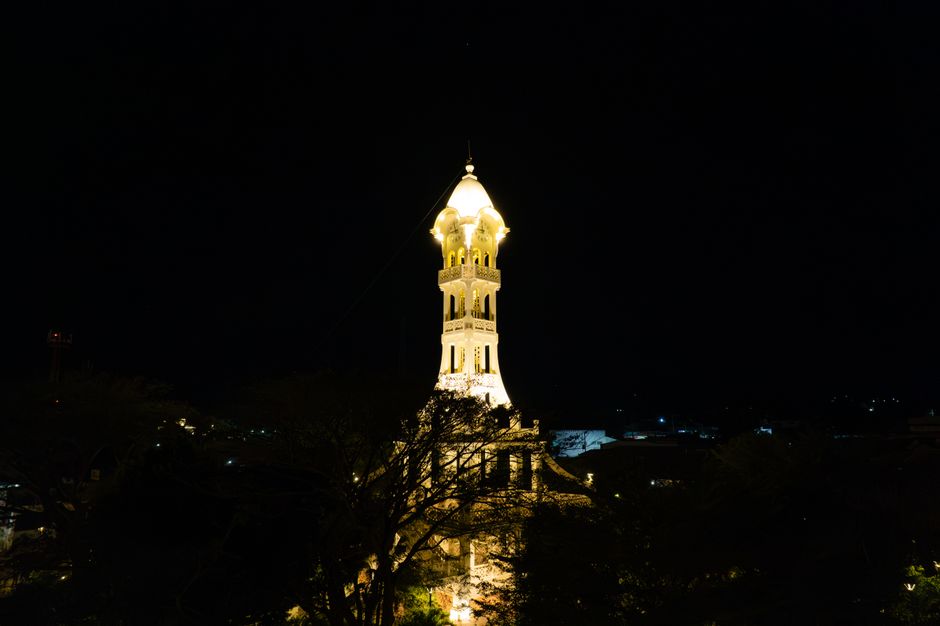
El Salvador is the smallest country in Central America and the only one without a Caribbean coast, but it packs a lot into a short trip: a Pacific shoreline of world-class surf breaks, more than 20 volcanoes, crater lakes, colonial towns, coffee farms and Maya sites, all within about two hours of the capital. Its best-known region for visitors is “Surf City”, the string of beaches and right-hand point breaks around El Tunco, El Sunzal and El Zonte, a short drive from the international airport. Inland, the Ruta de las Flores links mountain towns famous for food markets and murals, Santa Ana volcano’s summit looks down into a turquoise crater lake, and Joya de Cerén, a Maya farming village buried by a volcanic eruption around 1,400 years ago, is the country’s UNESCO World Heritage Site. El Salvador uses the US dollar, flights from the United States take three to five hours, and visitor numbers have grown fast in recent years. Plan around the dry season, from about November to April.
Right now in El Salvador
- Tue 21–28°C 70–83°F 10 mm Heavy rain
- Wed 21–28°C 70–83°F 12 mm Heavy rain
- Thu 21–26°C 70–79°F 16 mm Heavy rain
- Mon 12 Oct Ethnic Pride Day (Día de la raza)
Weather: MET Norway (CC BY 4.0) · Holidays: Nager.Date
Multi-day tours of El Salvador
Multi-day tours from local operators. You check dates and book on Viator, our partner; we may earn a commission at no extra cost to you. How we earn money
El Salvador at a glance: volcanoes and surf
El Salvador is a republic of about 6 million people, divided into 14 departments, with an area of about 21,000 km² (8,100 sq miles), similar to New Jersey. It borders Guatemala to the north-west and Honduras to the north and east, with the Pacific Ocean along its southern coast and the Gulf of Fonseca to the south-east. Spanish is the official language. San Salvador is the capital and largest city. El Salvador uses Central Standard Time (UTC−6) all year with no daylight saving time.
El Salvador’s regions
- San Salvador and the center: the capital, the San Salvador volcano and El Boquerón park, Lake Ilopango, the Maya sites of Joya de Cerén and San Andrés, and the colonial town of Suchitoto above Lake Suchitlán.
- Surf City and the Balsam Coast: the beaches of La Libertad department, including El Tunco, El Sunzal, El Zonte and Mizata, about 30–45 minutes from the airport.
- The west: Santa Ana, the Santa Ana and Izalco volcanoes, Lake Coatepeque, the Ruta de las Flores towns (Nahuizalco, Salcoatitán, Juayúa, Apaneca, Ataco) and the Tazumal ruins at Chalchuapa.
- The east: San Miguel and its volcano, the beaches of El Cuco and Las Flores with more surf, and the islands of the Gulf of Fonseca.
- The north: the mountain village of La Palma, known for its colorful folk art, and the cool pine forests near the Honduran border.
Where to go: San Salvador, the coast and the volcanoes
San Salvador
The capital sits in a valley below the San Salvador volcano, at about 650–700 m (2,100–2,300 ft). Its renovated historic center has the Metropolitan Cathedral, the National Palace and the National Theater, and the western neighborhoods have museums, malls and restaurants. It is the best base for day trips to Joya de Cerén, El Boquerón and Lake Ilopango. See our San Salvador travel guide.
Surf City and the beaches
El Salvador’s Ministry of Tourism brands the coast of La Libertad as Surf City, a stretch of rocky point breaks and black-sand beaches around El Tunco, El Sunzal, El Zonte and Mizata. El Tunco has the most nightlife, El Zonte is quieter, and Punta Roca at the port of La Libertad is one of the best right-hand waves in the region.
Santa Ana volcano and Lake Coatepeque
The country’s highest volcano, Santa Ana (Ilamatepec), at 2,381 m (7,812 ft), can be climbed in a few hours with a guide from Cerro Verde National Park, with a view into its green crater lake. Lake Coatepeque, a blue caldera lake below it, has lakeside restaurants and hotels.
More places worth the trip
- The Ruta de las Flores: a scenic road through the coffee mountains of the west, with the weekend food fair in Juayúa and the murals of Concepción de Ataco.
- Joya de Cerén: a Maya village preserved under volcanic ash, a UNESCO World Heritage Site since 1993, according to the Ministry of Tourism, about 40 minutes from San Salvador.
- Suchitoto: a cobbled colonial town of white houses above Lake Suchitlán, known for art, indigo dyeing and its festivals.
- El Cuco and the east coast: quieter beaches and surf breaks such as Las Flores.
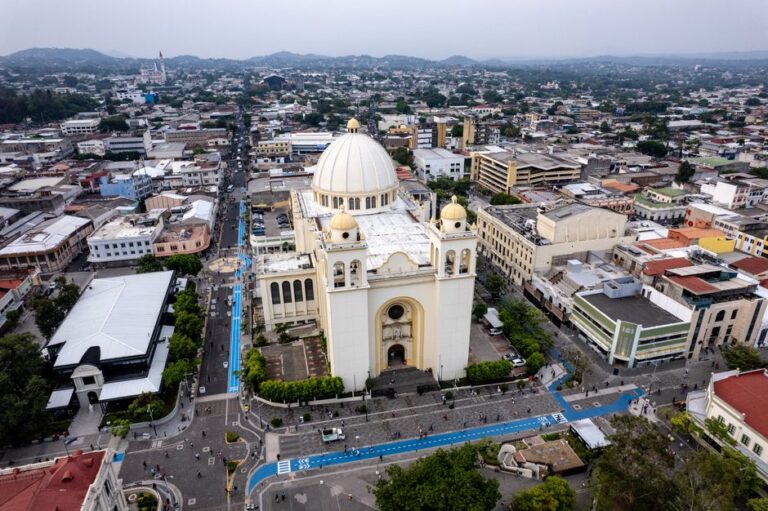
San Salvador Travel Guide
Plan a trip to San Salvador, the capital of El Salvador: the renovated historic center, the Metropolitan Cathedral and Saint Óscar Romero's tomb, El…
Best time to visit El Salvador: dry and rainy seasons
El Salvador has a dry season from about November to April, with sunny days and clear volcano views, and a rainy season from about May to November, when heavy afternoon and evening storms are common, according to the Canadian and UK governments. Temperatures depend on altitude: the coast and lowlands are hot all year, often above 32 °C (90 °F), San Salvador is warm, and the highlands of the Ruta de las Flores and the volcanoes are cool, especially at night. The biggest, most consistent surf arrives in the rainy season, from about March to October.
| Region | Dry season | Rainy season | Temperatures |
|---|---|---|---|
| San Salvador | November to April | May to October | About 23–31 °C (73–88 °F) by day |
| The coast (Surf City, El Cuco) | November to April | May to October; biggest swells | Hot and humid, often 30–34 °C (86–93 °F) |
| The western highlands and volcanoes | November to April; cool nights | May to October; misty | Mild days; nights can drop to 10–15 °C (50–59 °F) |
Hurricanes: the eastern Pacific hurricane season runs from May 15 to November 30, according to NOAA’s National Hurricane Center. Hurricanes rarely make landfall in El Salvador, but tropical storms and depressions from both oceans can bring very heavy rain, landslides and flooding, especially in the mountains. Monitor the Ministry of the Environment’s observatory (DGOA) and follow local authorities.
Crowds, prices and events through the year
- November to April: the dry season and high season, busiest at Christmas, New Year and Holy Week, when Salvadorans go to the beach.
- Holy Week: processions and sawdust carpets in Sonsonate, Izalco and other towns. In 2027, Easter Sunday is March 28.
- Early August: the “fiestas agostinas” in San Salvador, honoring the Divine Savior of the World, with the main holidays around August 3 to 6.
- Weekends year-round: the food fair in Juayúa on the Ruta de las Flores.
- March to October: the main surf season on the Pacific coast.
Public holidays
Banks and offices close on national holidays. The next ones, from October 2026:
| Holiday | Date | Good to know |
|---|---|---|
| Day of the Dead | Monday, November 2, 2026 | Families visit cemeteries |
| Christmas Day | Friday, December 25, 2026 | Nationwide |
| New Year’s Day | Friday, January 1, 2027 | Nationwide |
| Holy Thursday to Holy Saturday | March 25–27, 2027 | Peak beach travel |
| Labor Day | Saturday, May 1, 2027 | Nationwide |
| Mother’s Day | Monday, May 10, 2027 | Nationwide |
| Father’s Day | Thursday, June 17, 2027 | Nationwide |
| Fiestas Agostinas | August 2027 (main day August 6) | San Salvador’s patron saint festivities |
| Independence Day | Wednesday, September 15, 2027 | Parades nationwide |
How long to stay: sample itineraries
El Salvador is small: most sights are within two hours of San Salvador or the airport.
5 days: city and coast
Two nights in San Salvador with a day trip to Joya de Cerén and El Boquerón, then three nights at El Tunco or El Zonte for surf lessons and sunsets.
7 to 10 days: volcanoes, flowers and surf
Add Santa Ana volcano and Lake Coatepeque, two nights on the Ruta de las Flores, and a night in Suchitoto.
2 weeks: El Salvador and Guatemala
Combine El Salvador with Antigua and Lake Atitlán in Guatemala, five to six hours away by shuttle; both are in the CA-4 agreement. Copán in Honduras is another easy addition.
Entry, money and costs
Entry requirements (last reviewed October 2026)
- Visas: citizens of Canada and the UK don’t need a visa for tourist stays of up to 180 days in El Salvador, according to the Canadian and UK governments; US and EU citizens also enter without a visa. El Salvador’s General Directorate of Migration and Foreign Affairs (DGME) publishes the list of nationalities that need one.
- Passport: valid and in good condition, according to the DGME; the UK government says it should be valid for at least six months after arrival, which is the safe choice.
- No COVID rules: the DGME doesn’t ask for COVID-19 tests or vaccination cards.
- Yellow fever certificate: only if you arrive from a country with a risk of transmission.
- Customs: declare cash or traveler’s checks worth US$10,000 or more, according to the UK government.
- Border crossings: migration registration at land borders is personal, doesn’t need an intermediary and has no cost, according to the DGME.
- Transit fee for some nationalities: nationals of India and of African countries traveling through El Salvador must pay a fee of US$1,130, according to the UK government.
The CA-4 agreement
El Salvador is part of the Central America-4 (CA-4) Border Control Agreement with Guatemala, Honduras and Nicaragua. Tourists get one permitted stay of up to 90 days for the four countries combined, starting at the first CA-4 country you enter, and you still pass immigration and get a stamp at each border. El Salvador may grant you up to 180 days, but the other CA-4 countries may only recognize the first 90, according to the Canadian government. If you are expelled from one CA-4 country, you can be excluded from the others too.
Money: the US dollar, and bitcoin’s legal status
El Salvador’s everyday currency is the US dollar, used since 2001, so visitors from the United States don’t need to change money. Bring small notes: many smaller restaurants, bars and shops don’t accept US$50 and US$100 bills, according to the UK government. ATMs are widely available, particularly in San Salvador and La Libertad, and cards are accepted in hotels, malls and larger restaurants.
Bitcoin: El Salvador’s Bitcoin Law of 2021 made bitcoin legal tender. A reform passed by the Legislative Assembly on January 29, 2025 (Decree 199, published in the official gazette on January 30, 2025, and in force 90 days later) keeps bitcoin’s legal-tender definition but makes its acceptance voluntary: only private individuals and private companies may accept it, no business has to, and the article allowing taxes to be paid in bitcoin was repealed. In practice, a few businesses, especially at El Zonte and El Tunco, accept bitcoin, and bitcoin ATMs exist, but everything is priced and paid in dollars. If you use bitcoin wallets, the Canadian government warns of fraud and failed transactions; always make sure you can pay in dollars.
Taxes and tipping
Prices carry 13% value-added tax (IVA). Hotels add a 5% tourism tax, so hotel bills carry about 18% in taxes; check whether quoted rates include them. Restaurants often add a 10% tip (“propina”) to the bill; if not, tip about 10%. Tip surf instructors, guides and drivers for good service.
Typical travel costs
El Salvador is moderately priced: cheaper than Costa Rica or Belize, slightly more than Guatemala or Nicaragua. These per-person, per-day estimates are a planning guide as of October 2026:
| Style | Estimated cost per day | What that looks like |
|---|---|---|
| Budget | about US$40–65 | Hostel bed at El Tunco, pupusas, chicken buses or shared shuttles |
| Mid-range | about US$120–200 | Boutique hotel room shared by two, restaurant meals, surf lessons or guided volcano hikes |
| High-end | about US$350+ | Beach resorts and boutique hotels, private drivers and guides |
The figures are our estimates, not official statistics.
Volcanoes: status and hiking rules (October 2026)
El Salvador has active volcanoes, at least six of them monitored, according to the UK government; the Ministry of the Environment’s observatory (DGOA) publishes daily volcano forecasts. Access to volcanoes may be restricted because of volcanic activity or high winds, especially at Izalco, Santa Ana (Ilamatepec) and San Miguel (Chaparrastique), according to the Canadian government, which notes that volcanic activity has decreased in recent years and that warnings are issued when needed, especially for San Miguel.
- Santa Ana: climbed from Cerro Verde National Park with official guides, who lead groups up at set times; the trail passes through coffee and forest to the crater rim.
- San Salvador and El Boquerón: the volcano above the capital is not erupting; El Boquerón National Park has a short trail around the rim of its large crater.
- Izalco: a steep cone of black cinders next to Santa Ana, once called the “Lighthouse of the Pacific”; check whether it is open.
Hike only during daylight with a guide from a reputable company, according to the UK and Canadian governments, and check the latest warnings before you go.
Getting there and getting around
Arrival airport
El Salvador International Airport Saint Óscar Arnulfo Romero y Galdámez (SAL) is on the coast about 45 minutes south-east of San Salvador and about 30–45 minutes from Surf City. It is a hub for Avianca, with direct flights from US cities such as Houston, Los Angeles, Miami, Dallas, Atlanta and New York, and from Mexico and the rest of Central America. Airport taxes are normally included in ticket prices. See our United States travel guide if you are connecting there.
Land borders
Crossings with Guatemala include La Hachadura, Las Chinamas, San Cristóbal and Anguiatú; with Honduras, El Poy and El Amatillo. Registration is free, according to the DGME. Take care driving to and from the Guatemalan border, and cross in the morning, as borders sometimes close in the early evening, according to the UK government. International coaches run from San Salvador to Guatemala City, Tegucigalpa, Managua and beyond.
Buses and shuttles
Tourist shuttles link the airport, San Salvador, Surf City, Santa Ana and the Ruta de las Flores, and run to Antigua in Guatemala and Copán in Honduras. Public buses, mostly repainted US school buses, are cheap but crowded and not safe because of petty crime, according to the UK government; private intercity coaches with reputable companies are a better choice.
Driving
Roads between the main tourist areas are in good or acceptable condition, according to the UK government, though lane discipline is poor and remote roads may need a 4×4. You can drive on your home license for the first 90 days; El Salvador does not accept the International Driving Permit. Car insurance is essential. Keep doors locked and windows closed, stick to main roads, and take extra care at junctions.
Taxis and ride-hailing
Use radio-dispatched, pre-booked or hotel taxis from reputable companies, or ride-hailing apps, which work in greater San Salvador; don’t use unofficial taxis or hail cabs in the street, according to the UK and Canadian governments.
Culture, food and everyday etiquette
Salvadorans are known for their warmth and hard work, and many families have relatives in the United States. The national dish is the pupusa, a thick corn or rice tortilla stuffed with cheese, beans, pork (chicharrón) or loroco flowers, served with curtido (pickled cabbage) and tomato salsa; El Salvador celebrates National Pupusa Day on the second Sunday of November. Other foods to try: yuca frita, panes con pollo (turkey or chicken sandwiches), tamales, sopa de pata, and seafood cocktails on the coast. Salvadoran coffee from the western highlands is excellent, and indigo dyeing is a traditional craft in Suchitoto.
Etiquette: greet people politely, dress neatly in cities and churches, and ask before photographing people. The police may ask for ID: carry a copy of your passport’s photo page at all times, according to the UK government. It is illegal for foreign nationals to take part in political activities such as demonstrations, and those who do may be detained and deported. Drug penalties are severe.
Safety, health, accessibility and connectivity
Safety
Security in El Salvador has improved considerably, with significant reductions in crime, according to the UK government, though it notes that the risks of violent and petty crime still exist. A state of exception, first declared in March 2022 in response to gang violence, remains in force; it gives the police wider powers of arrest and detention, and security operations take place across the country. These operations don’t usually affect tourists, but carry ID, cooperate with police checks, and stay away from any demonstrations.
Practical precautions, according to the UK government:
- In San Salvador, the areas of Santa Elena, San Benito and Maquilishuat have better security, as do most large shopping malls.
- Keep valuables in a hotel safe, carry little cash, and watch for pickpockets at bus stations, airports, tourist sites and on public transport.
- Withdraw money from ATMs in shopping centers or banks, by day.
- Avoid walking alone on remote trails; hike volcanoes with a guide.
- Driving: take care at junctions, where armed robbers have targeted stationary traffic; avoid remote, unsurfaced roads.
The sea: swimming on the Pacific coast can be dangerous because of strong undertows; the currents around La Bocana de San Diego are particularly treacherous, several people have drowned in recent years, and there are very few lifeguards, according to the UK government. Don’t swim on isolated beaches or after drinking. Rivers tend to be contaminated.
For help, contact the tourist police, POLITUR, on +503 2224 2705; for emergencies, call 911.
Health and insurance
Private hospitals in San Salvador are good; medical facilities outside the capital are usually basic, according to the UK government, so buy travel insurance that covers treatment and evacuation. Dengue occurs; use repellent. Drink bottled water, which is cheap and widely available, as tap water can be contaminated.
Accessibility
New sidewalks and plazas in San Salvador’s renovated historic center and the big malls are easier for wheelchair users, but beaches, volcano trails and colonial towns are hard going. Ask hotels about accessible rooms in advance.
Connectivity and power
Mobile coverage from Claro, Tigo, Movistar and Digicel is good in cities and along the coast. El Salvador uses 120 V and US-style plugs, so visitors from the United States and Canada need no adapter.
Things to do: surfing, volcanoes, Maya sites and food
- Surfing: the point breaks of Surf City, including El Sunzal, El Zonte, El Tunco and Punta Roca, and Las Flores in the east, with surf schools for beginners.
- Hiking: Santa Ana volcano, El Boquerón’s crater rim, and waterfalls on the Ruta de las Flores.
- Beaches: the black-sand beaches of La Libertad and the quieter sands of El Cuco and the Costa del Sol.
- Boat trips: Lake Coatepeque, Lake Suchitlán from Suchitoto, and the mangroves and islands of the Gulf of Fonseca.
- City sightseeing: San Salvador’s historic center, museums and markets, and the colonial towns of Suchitoto and Ataco.
- Maya sites: Joya de Cerén, San Andrés and Tazumal.
What to pack
Pack light clothes for the heat, a light jacket or fleece for the highlands and early volcano hikes, sturdy shoes, swimwear and a rash guard for surfing, reef-safe sunscreen, a hat, insect repellent, a light rain jacket from May to October, a copy of your passport, and US dollars in small notes. Plugs are the same as in the US.
El Salvador travel FAQ
When is the best time to visit El Salvador?
November to April, the dry season, for sunshine and volcano views. The best surf is from about March to October.
Do I need a visa for El Salvador?
US, Canadian, UK and EU citizens don’t. You can stay up to 180 days in El Salvador, but the CA-4 neighbors may only recognize 90 days across the region.
What currency does El Salvador use?
The US dollar. Bring small notes, as US$50 and US$100 bills are often refused.
Is bitcoin legal tender in El Salvador?
It is still defined as legal tender, but since a 2025 reform, accepting it is voluntary and limited to private individuals and companies, and taxes can’t be paid in it. Everyday prices are in dollars.
Is there a fee to cross the border into El Salvador?
No. Migration registration at land borders is free, according to El Salvador’s migration authority.
What is Surf City?
The Ministry of Tourism’s name for the surf beaches of La Libertad, such as El Tunco, El Sunzal and El Zonte, about 30–45 minutes from the airport.
Can I climb Santa Ana volcano?
Yes, with the official guides from Cerro Verde National Park. Access can be restricted for volcanic activity or high winds, so check before you go.
Is El Salvador part of the CA-4 agreement?
Yes, with Guatemala, Honduras and Nicaragua: tourists get one 90-day regional stay, although El Salvador itself may grant up to 180 days.
What is the state of exception?
Emergency measures in force since March 2022 that give the police wider powers of arrest. They don’t usually affect tourists, but you should carry ID and avoid demonstrations.
Can I drink tap water in El Salvador?
No. Drink bottled water, which is cheap and widely available.
Is El Salvador safe for tourists?
Crime has fallen significantly, according to the UK government. Take normal precautions, use reputable taxis and coaches, hike with guides, and be very careful in the sea.
Sources and last review
Researched and last reviewed on 4 October 2026. Bitcoin’s legal status: the Legislative Assembly’s Decree 199 of January 29, 2025 (official gazette of January 30, 2025), amending the 2021 Bitcoin Law (Decree 57); border registration at no cost, passports, the visa list and the absence of COVID requirements: the General Directorate of Migration and Foreign Affairs (DGME); Surf City, the Maya sites and Joya de Cerén’s UNESCO year: the Ministry of Tourism (elsalvador.travel); hurricane season: NOAA’s National Hurricane Center; 180-day stays for Canadians, the CA-4 rules, the rainy season, restricted volcanoes, bitcoin wallet fraud and taxis: the Canadian government; UK stays, passport validity, cash declaration, the transit fee for Indian and African nationals, banknotes, ATMs, the state of exception, safer areas, sea safety, POLITUR, driving, buses, borders, political activity, ID, health care and water: the UK government. Population, area, regions, altitudes and volcano heights, temperatures, holiday dates, hotel taxes, airport routes and times, border names, culture and daily costs come from secondary sources or general knowledge and are flagged for checking; daily costs are our estimates. Prices and rules change, so check the official sites before you travel. For other trips in the region, see our Mexico, Costa Rica and Panama travel guides.
Plan your trip
Partner links: TravelerCenter may earn a commission if you book, at no extra cost to you.
🇪🇸 Useful Spanish phrases for El Salvador
All 38 Spanish phrases: restaurant, hotel, emergencies, romance (printable) →