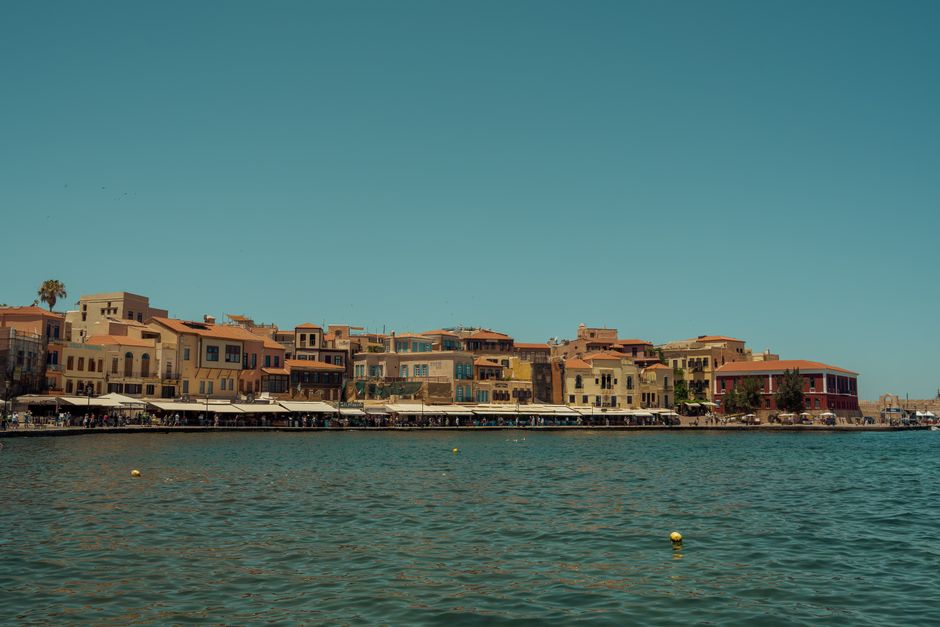
Chania is the loveliest town in Crete, and many say in all of Greece. Its Venetian harbour is a curve of pastel houses, cafés and fish tavernas around a mosque with pink domes, with an old lighthouse at the end of the breakwater that glows gold at sunset. Behind it, the old town is a maze of Venetian palazzi, Ottoman minarets, a restored synagogue and leather workshops. It is also the base for the wild west of the island: the Samaria Gorge, the lagoons of Balos and Elafonisi, and dozens of beaches. Come from May to June or September to October, and give it at least two days for the town and four or five to see the west.
Right now in Chania
- Wed 19–22°C 65–71°F Clear
- Thu 17–22°C 62–71°F Clear
- Fri 18–22°C 65–71°F Clear
Weather: MET Norway (CC BY 4.0) · Sea temperature: NOAA CoastWatch · Air quality: OpenAQ · Rates: ECB
Top tours in Chania
See all tours for Chania →
From local operators, with prices and reviews; you check availability and book on Viator, our partner. We may earn a commission at no extra cost to you. How we earn money
Chania at a glance
- Best months: May–June and September–October. Average highs run from about 25 °C in May to 31 °C in July and August, and winters are mild, around 14–16 °C by day (HNMS normals 1991–2020, Souda station near Chania). The sea is warm enough for swimming from June to October.
- Days needed: 1–2 for the old town, the harbour and the museums; 3–5 to add the Akrotiri peninsula, a beach day and day trips to Balos, Elafonisi, the Samaria Gorge or Rethymno.
- Getting there: fly into Chania airport (CHQ) on the Akrotiri peninsula, about 15 km from town, or take the overnight ferry from Piraeus to Souda, Chania’s port.
- Getting around: the old town is for walking; KTEL buses run from the central bus station to the airport, the beaches, Kissamos, Rethymno and Heraklion; a car makes the west and the south coast much easier.
- Budget level: mid-range, with good-value food; boutique hotels in the old town cost more in summer. Like everywhere in Greece, a climate resilience fee is added per room per night (€2–€15 from April to October, depending on the type of accommodation). See our Greece guide for money, entry rules and daily costs, and our Crete guide for the whole island.
Chania’s neighbourhoods, and who each one suits
- Topanas and the harbour: the western half of the old town, behind the Firkas fortress, with Venetian mansions turned into boutique hotels. Romantic and central, but lively until late.
- Splantzia: the former Ottoman quarter on the east side, with local cafés and fewer tourists. For food lovers.
- Koum Kapi and Halepa: the seafront east of the old walls, with bars and a small town beach and the elegant district of Halepa. Calmer, a short walk from the centre.
- Nea Chora and the west coast: the sandy town beach just west of the old town, then the resort strip of Agioi Apostoli, Kalamaki, Stalos, Agia Marina and Platanias. For families and beach holidays, with frequent buses into town.
Top things to see in Chania
Prices and hours of the state museums and sites come from the Greek Ministry of Culture’s ticketing service (Hellenic Heritage), as of October 2026. At all state sites entry is free for all under-18s and EU citizens under 25 with ID, and on a few set days a year. See our city sightseeing guide for walking-tour tips.
The Venetian harbour and the lighthouse
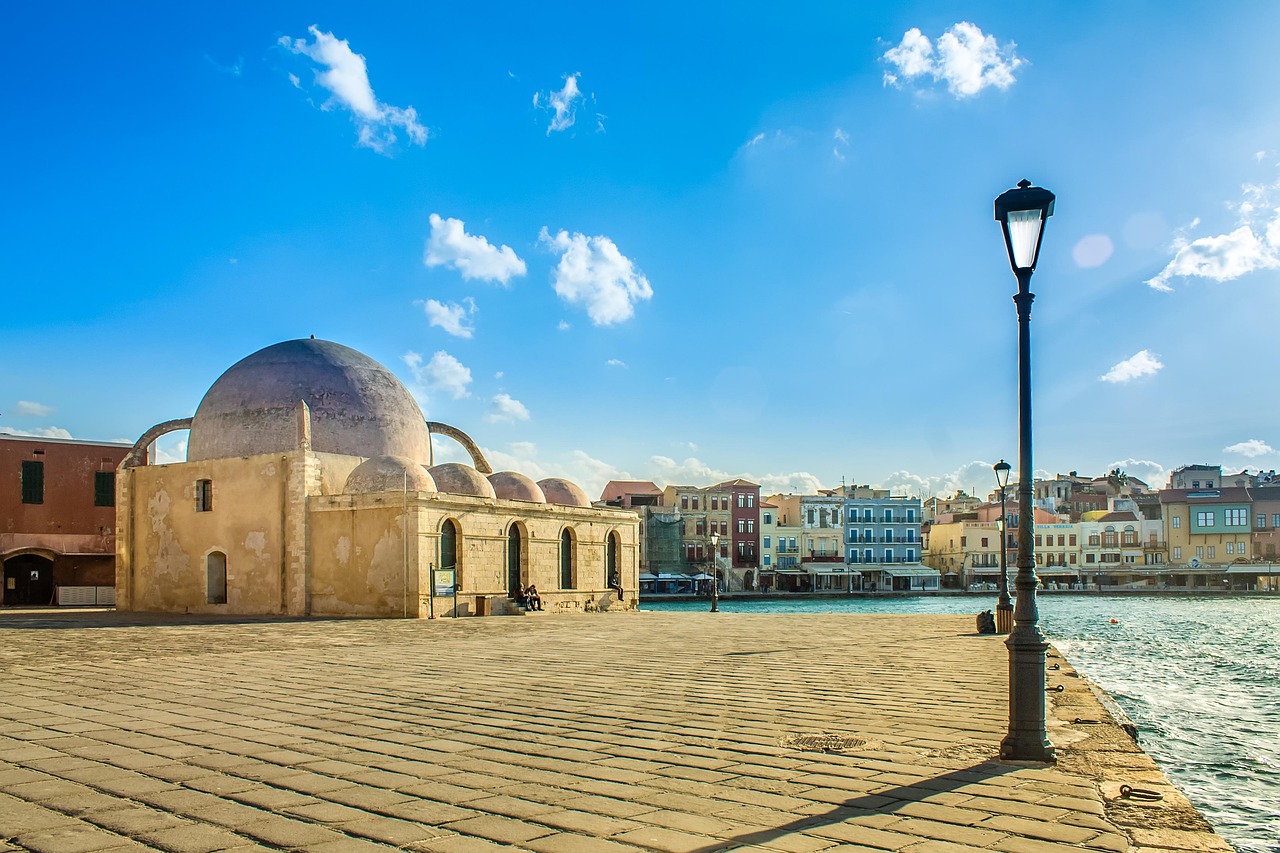
The Venetian harbour is still the heart of the town. Walk the whole crescent, from the Firkas fortress on the west side, past the domed Küçük Hasan (Janissaries’) Mosque, the oldest Ottoman building in Crete, now used for exhibitions, to the long vaulted halls of the Venetian shipyards (Neoria), where galleys were once built and repaired. From the eastern end, a stone breakwater about a kilometre long runs out to the lighthouse, rebuilt in the 19th century on Venetian foundations. Allow 15–20 minutes each way on uneven stones with no railings; the view back over the harbour and the White Mountains at sunset is the classic image of Chania.
The Firkas fortress and the Maritime Museum of Crete
The squat Venetian fort of Firkas guards the western entrance of the harbour. Here, in 1913, the Greek flag was raised to mark the union of Crete with Greece. At its entrance, the Maritime Museum of Crete tells the island’s story at sea, from Minoan ships to the Battle of Crete in 1941, and runs a shipbuilding exhibition with a replica Minoan ship in one of the Venetian shipyards. Check the museum’s own site for hours and tickets.
Evraiki and the Etz Hayyim synagogue
The narrow lanes of Evraiki, the old Jewish quarter behind the harbour, hold the Etz Hayyim synagogue, the only surviving synagogue on Crete. Chania’s ancient Jewish community was destroyed in 1944, when its members were deported and their ship, the Tanais, sank. The synagogue, with a peaceful courtyard and memorial tombs, was restored in 1999 as a place of prayer, memory and reconciliation. How to visit: it usually opens Monday to Thursday 10:00–16:00 and Friday 10:00–15:00, and is closed at weekends and on Greek public holidays. Entry is €4, paid on site, and free for children under 14 and students. Dress modestly.
Splantzia, the Agora and the leather street
On the east side of the old town, Splantzia square is shaded by a huge plane tree and overlooked by the church of Agios Nikolaos, which has both a bell tower and a minaret from its time as a mosque. A few minutes south, the big cross-shaped Municipal Market (Agora), opened in 1913, has been closed for restoration for several years; the Municipality of Chania plans to reopen it on 4 December 2026, with a festival of events. Next to it, Skridlof street, the “leather street”, is still lined with shops selling bags, sandals and belts. Also worth a look in the old town: the Byzantine and Post-Byzantine Collection in the former Venetian church of San Salvatore (€5, €3 reduced; 8:30–15:30, closed on Tuesdays), and the remains of Minoan Kydonia on Kastelli hill, free to see and now on the UNESCO World Heritage List.
The Archaeological Museum of Chania in Halepa
Opened in 2022 in a striking modern building in the Halepa district, about 2 km east of the harbour, the Archaeological Museum of Chania shows more than 4,000 objects from western Crete, from the first cave-dwellers through the Minoans of Kydonia to the Roman era. Highlights include a Roman house destroyed in the earthquake of AD 365 and a statue of the emperor Hadrian. How to visit: €15, €8 reduced. From April to October it opens 8:00–20:00, and from November to March 8:30–15:30, closed on Tuesdays all year; last entry 20 minutes before closing. Walk along the seafront past the mansions of Halepa, or take a city bus or taxi.
Aptera
About 25 minutes’ drive east of town, on a plateau high above Souda Bay, ancient Aptera was one of the most powerful city-states of Crete, founded in the 8th century BC. See its theatre, temple and huge vaulted Roman cisterns, with views over the bay. How to visit: €10, €5 reduced; from 8:00 (until 20:00 from April to August, then earlier each half-month, 18:00 in late October), and 8:30–15:30 from November to March; closed on Tuesdays all year.
The Akrotiri peninsula and Souda Bay
The rocky Akrotiri peninsula, north-east of town between the airport and the sea, is perfect for a half day with a car. Start at the hill of Profitis Ilias, where the statesman Eleftherios Venizelos is buried, then the monastery of Agia Triada (Tzagarolon), built in the 17th century in Venetian style, sits among olive groves and vineyards and sells its own wine and olive oil. A few kilometres north, the walled monastery of Gouverneto is the starting point of a rocky path down a gorge to the cave of Arkoudospilios and the ruined Katholiko monastery, with stairs carved into the rock; allow about two hours there and back, and wear good shoes. Monasteries close at lunchtime and ask for modest dress; check times locally.
On the south side of the peninsula, the Souda Bay War Cemetery, cared for by the Commonwealth War Graves Commission, holds the graves of British, Australian and New Zealand soldiers who died in the Battle of Crete in May 1941 and elsewhere on the island. It is a calm, beautifully kept place by the water, open to all. Souda is also a naval base: take no photos of military areas.
Beaches near Chania
The Chania regional unit had 41 Blue Flag beaches in 2026, including several within a short bus ride of town.
- Nea Chora and Koum Kapi: the town beaches either side of the old town, Nea Chora with sand, sunbeds and fish tavernas, a ten-minute walk from the harbour.
- Agioi Apostoli, Chrysi Akti and Kalamaki: sandy bays 3–5 km west of town, sheltered and shallow, good for families, with city buses.
- Kalathas and Stavros (Akrotiri): Kalathas has two islets close to shore; Stavros is an almost round, shallow bay under a bare mountain, where the final dance scene of Zorba the Greek was filmed. KTEL buses run from Chania to Stavros several times a day.
- Marathi and Seitan Limania: Marathi is a calm double cove with fish tavernas on Souda Bay; Seitan Limania is a dramatic narrow inlet between cliffs with turquoise water, reached by a steep, rough path of about 10 minutes. Wear proper shoes and avoid it in rough seas.
Under Greece’s coastal law, part of every organised beach must be left free of sunbeds and you can always reach the water with your own towel. See our beaches guide, and our snorkeling guide and our diving guide for the clearest coves.
Food in Chania
Try boureki, the town’s signature bake of courgettes, potatoes and soft cheese; kalitsounia (little cheese or greens pies); snails with rosemary; staka with eggs; lamb with wild greens; and dakos, barley rusk with tomato and cheese. Meals often end with a free tsikoudia (raki). For the best value, eat in Splantzia and the lanes away from the harbour front.
Day trips from Chania
Chania is the gateway to the wildest and most beautiful corner of Crete. Bus times are from KTEL’s timetable valid from 26 September 2026.
The Samaria Gorge
One of Europe’s great day hikes: about 13 km down through the gorge from Xyloskalo on the Omalos plateau (1,227 m), plus about 2 km to Agia Roumeli on the Libyan Sea, then a boat to Chora Sfakion, Sougia or Paleochora and a bus back. Most people take 6–7 hours on the trail. The path may open from 10 April to 31 October, and the ticket is €10 per person. KTEL buses leave Chania for Xyloskalo early in the morning (05:00, 06:15, 07:45 and 08:45 in the autumn timetable), As of early October 2026, the national park’s management (NECCA) had closed the gorge because of a severe-weather red alert on Crete, until the path is inspected and repaired; check NECCA’s official ticket site before you go. Full details are in our Samaria Gorge guide and our hiking guide.
Balos and Gramvousa
The shallow turquoise lagoon of Balos lies at the tip of the Gramvousa peninsula, about 45 minutes’ drive west of Chania beyond Kissamos. The easiest way is a day cruise from Kissamos port (Kavonisi), which also stops at the island of Imeri Gramvousa, where you can climb to a Venetian fortress. KTEL buses run from Chania to Kissamos port in the morning (08:15, 09:00, 10:30 and 15:30) and leave the port at 18:30, after the boats come back. By car, a rough dirt road of about 8 km leads from Kalyviani to a car park, then a steep walk of 20–30 minutes down to the lagoon; a small fee per person and per car is collected on the road. Visitor limits apply; see our Crete guide for the latest rules and our boat trips guide.
Elafonisi
At the south-west tip of Crete, about two hours from Chania, Elafonisi is a lagoon of shallow water and pink-tinged sand that you can wade across to a small island of dunes and juniper. It is a protected reserve: park outside the zone, stay on the paths and take no sand. In the autumn timetable, a daily KTEL bus leaves Chania at 09:00 and returns from Elafonisi at 16:00.
Rethymno, Heraklion and Knossos
Rethymno, about an hour east by car or bus, has a smaller Venetian and Ottoman old town, the Rimondi fountain, a long sandy beach and the huge Fortezza on its hill; its Archaeological Museum is temporarily housed in the Venetian church of St Francis (€5, €3 reduced). KTEL buses run between Chania and Rethymno about every hour all day, and continue to Heraklion, with four express buses a day in each direction. Heraklion and the Minoan palace of Knossos are a long day from Chania (about 140 km, 2–2½ hours each way); it is better to spend a night there.
Nearby destinations
Getting there and getting around
Chania airport (CHQ)
Chania International Airport “Ioannis Daskalogiannis” (CHQ), run by Fraport Greece, is on the Akrotiri peninsula about 15 km from town, with flights from Athens all year and from much of Europe in season. By bus: KTEL Chania-Rethymno runs buses between the airport and Chania’s central bus station about every 30 minutes from early morning until late evening (in October 2026, the first bus from the airport left at 05:00 and the last at 00:00, with extra night buses on some days). The fare is €2.70. The stop is across from the Departures area, on the east side of the terminal, and you buy tickets from the driver. Direct buses also link the airport with Souda and Rethymno (€8.80) five times a day. By taxi: the taxi rank is opposite Arrivals B; the ride into town takes about 20–25 minutes.
Ferries from Piraeus to Souda
ANEK Lines sails between Piraeus (gate E3) and Souda, the port of Chania, every day, taking about 9 hours 25 minutes, usually overnight, with cabins and a car deck. Souda is about 7 km from the old town; buses and taxis meet the ship. Book on the operator’s own site or app or on a comparison platform, especially in summer, and keep a buffer day before an international flight: the Coast Guard can ban sailings in strong winds, and storms can change schedules, as in early October 2026. Fast boats to Santorini leave from Heraklion.
Buses, cars and parking
KTEL Chania-Rethymno’s central bus station is just south of the old town. Buses run to Rethymno and Heraklion, Kissamos, the west-coast resorts (every 20 minutes or so), Stavros, Omalos, Chora Sfakion, Paleochora and Elafonisi; buy tickets at the station, online or on board. The old town is mostly pedestrian: park in the municipal car parks by the walls or in the park-and-ride areas and walk in. A car is the best way to see the Akrotiri, Balos, Elafonisi and the south coast; mountain roads are narrow and slow. You need a driving licence valid for the vehicle (from outside the EU, usually with an International Driving Permit).
When to go and how long to stay
Chania has hot, dry summers and mild, wetter winters, with snow on the White Mountains behind the town. July and August are hot and busy, with the meltemi wind on the north coast. May, June, September and October bring warm days, a warm sea and fewer people, and spring is best for hiking and wildflowers. Chania is a living town, so it stays open all winter, though many beach hotels close. Autumn storms can be strong, as in early October 2026.
| Season | Average high / low | What it’s like |
|---|---|---|
| Spring (Mar–May) | 17–25 °C / 10–16 °C | Green and flowery; ideal for walking and the Akrotiri; Samaria usually opens; sea cool until late May. |
| Summer (Jun–Aug) | 29–31 °C / 20–22 °C | Hot, sunny and dry; busy harbour and beaches; meltemi on the north coast. |
| Autumn (Sep–Nov) | 20–28 °C / 13–20 °C | Warm sea in September and October, harvest time; storms possible from October. |
| Winter (Dec–Feb) | 14–16 °C / 8–10 °C | Mild and green, with rainy spells; snow on the mountains; the town is local and quiet. |
Temperatures are the 1991–2020 climate normals of the Hellenic National Meteorological Service (HNMS) for its Souda station, on the Akrotiri near Chania airport. Rain falls mostly from November to March; summer is almost completely dry. Greece’s wildfire season runs from 1 May to 31 October: on days of high fire risk (category 4–5 on the daily map of the Ministry of Climate Crisis and Civil Protection), forests and gorges may be closed and any outdoor fire is banned. Call 112 if you see a fire.
Chania in 1 day
Morning: the Firkas fortress and the Maritime Museum, then Topanas and the Evraiki lanes and the Etz Hayyim synagogue (on a weekday). Lunch in Splantzia, then the leather street and the Byzantine Collection or Kastelli hill. Late afternoon: walk out to the lighthouse along the breakwater, and stay on the harbour for sunset and dinner.
Chania in 2 days
Add the Archaeological Museum in Halepa in the morning, walking along the seafront past Koum Kapi, then a swim at Nea Chora or Agioi Apostoli. Or spend it on the Akrotiri: the monasteries, the war cemetery and a swim at Stavros or Marathi.
3–5 days in Chania
Use the old town as your base and add a day trip each day: the Balos and Gramvousa cruise from Kissamos; Elafonisi, perhaps with Falasarna for the sunset; the Samaria Gorge in season; Aptera and Rethymno; or a slow day in the villages of Apokoronas. With a week, move on east towards Knossos.
Where to stay in Chania
- Romance and atmosphere: a boutique hotel in a Venetian mansion in Topanas or Evraiki, near the harbour (ask about noise and stairs).
- Local and good value: Splantzia and the lanes around the market, or Koum Kapi on the seafront.
- Families and beach time: Agioi Apostoli, Kalamaki, Agia Marina or Platanias, with sandy beaches and frequent buses to town.
Greece adds a climate resilience fee per room per night, set by type of accommodation, usually paid at the property (from April to October €2 for 1–2-star hotels and rooms up to €15 for 5-star hotels; campsites and youth hostels are exempt).
Practical tips for Chania
- Go early or late: the old town is calmest in the morning and loveliest after dark.
- Check closures: the Etz Hayyim synagogue closes at weekends, state sites close on Tuesdays, and the Agora only reopens in December 2026.
- Weather and gorges: check NECCA’s announcements before Samaria, and the weather before boat trips to Balos.
- Emergencies: call 112; tourist police 1571; coast guard 108.
What to pack for Chania
Pack light summer clothes, a sun hat, sunglasses, high-factor sunscreen and a refillable water bottle. Bring shoes with good grip for the polished stones of the old town, hiking boots for Samaria or Gouverneto, water shoes for rocky coves, a light windproof layer for boat trips, and a scarf for the monasteries. From November to April, add a warm jacket and a rain jacket.
Chania travel FAQ
How many days do you need in Chania?
One or two days for the old town, the harbour, the museums and the Akrotiri; three to five days to add Balos, Elafonisi, the Samaria Gorge or Rethymno.
How do I get from Chania airport to the old town?
By KTEL bus to the central bus station, about every 30 minutes, for €2.70 (tickets from the driver), as of October 2026; or by taxi from the rank opposite Arrivals B, in about 20–25 minutes.
How much is the Archaeological Museum of Chania?
€15, or €8 reduced, as of October 2026. It opens 8:00–20:00 from April to October and 8:30–15:30 in winter, and is closed on Tuesdays. Under-18s and EU citizens under 25 enter free.
Can you visit the synagogue in Chania?
Yes. Etz Hayyim usually opens Monday to Thursday 10:00–16:00 and Friday 10:00–15:00, and is closed at weekends and on public holidays. Entry is €4, free for children under 14 and students.
Is the Chania market open?
Not yet. The 1913 Municipal Market has been closed for restoration; the Municipality of Chania plans to reopen it on 4 December 2026. The leather shops of Skridlof street next to it are open.
How do you get from Chania to Balos?
Take a KTEL bus to Kissamos port and a day cruise to Balos and Gramvousa, or drive to Kalyviani and the dirt road, then walk down 20–30 minutes to the lagoon. Visitor limits apply in this protected area.
Can you do the Samaria Gorge from Chania?
Yes, it is the classic day trip, by early KTEL bus or an organised tour, from spring to 31 October. In early October 2026 the gorge was closed after a severe-weather alert, so check NECCA’s official ticket site.
How long is the ferry from Piraeus to Chania?
About 9 hours 25 minutes with ANEK Lines, which sails daily, usually overnight, from Piraeus to Souda, about 7 km from Chania’s old town.
What is the best beach near Chania town?
Nea Chora is walkable from the harbour; Agioi Apostoli and Kalamaki are sheltered and sandy; on the Akrotiri, Stavros, Marathi and Seitan Limania are the most beautiful.
When is the best time to visit Chania?
May, June, September and October: warm, sunny and less crowded than July and August, with a warm sea from June. The town itself is pleasant all year.
Sources and last review
Researched and last reviewed on 4 October 2026. Prices and hours of the Archaeological Museum of Chania, the Byzantine Collection, Kydonia, Aptera and the Rethymno museum come from the Greek Ministry of Culture’s Hellenic Heritage service. Synagogue hours and fees come from Etz Hayyim; the market reopening date from the Municipality of Chania; airport buses, fares and timetables from Chania airport (Fraport Greece) and KTEL Chania-Rethymno; the Piraeus ferry from ANEK Lines; Samaria Gorge rules from NECCA; and Blue Flag beaches from the Blue Flag programme in Greece. The climate resilience fee is set by Greek tax law and collected by AADE. Climate figures are the HNMS 1991–2020 normals for Souda. Bus and ferry times change by season, so check the operators before you travel.
Plan your trip
Partner links: TravelerCenter may earn a commission if you book, at no extra cost to you.
🇬🇷 Useful Greek phrases for Chania
All 38 Greek phrases: restaurant, hotel, emergencies, romance (printable) →