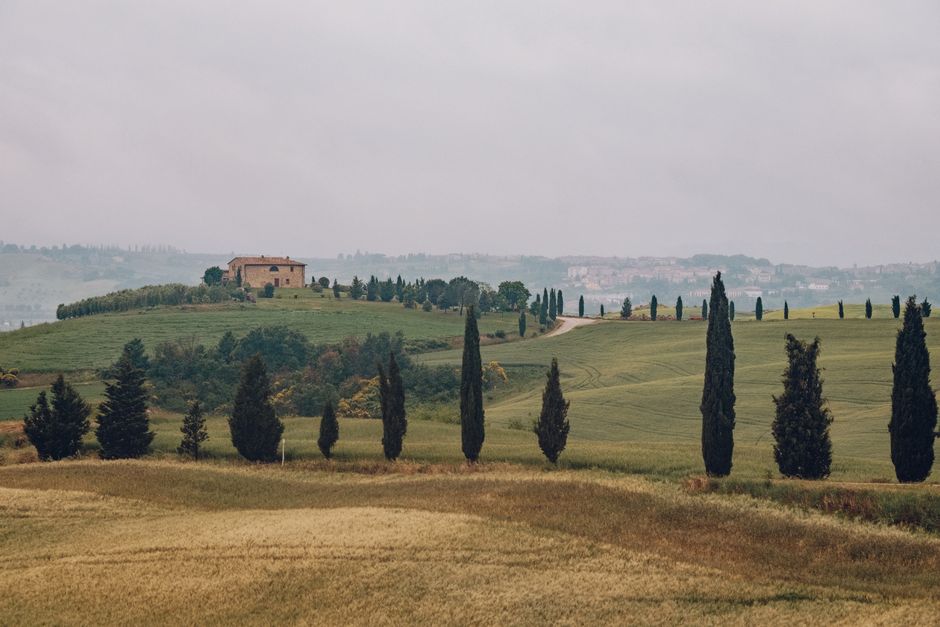
Tuscany is the Italy of postcards and dreams: Renaissance Florence, medieval Siena and San Gimignano’s towers, the Leaning Tower of Pisa, walled Lucca, and between them rolling hills of vineyards, olive groves, cypress-lined roads and stone farmhouses. It is a region for art and slow food, wine tasting in Chianti and Montalcino, cycling along white roads and long lunches on farm terraces. Florence is the natural base for a first visit, with trains to Pisa, Lucca and Siena; for the countryside you will want a car or a stay on a farm. The best months are April to June and September to October. Give it at least five days, ideally a week or more.
Right now in Tuscany (Siena)
- Thu15–20°C59–67°F26 mm rain
- Fri13–20°C55–68°F8 mm rain
- Sat11–20°C52–68°FMostly clear
Top tours in Tuscany
See all tours for Tuscany →
From local operators, with prices and reviews; you check availability and book on Viator, our partner. We may earn a commission at no extra cost to you. How we earn money
Tuscany at a glance
- Best months: April–June and September–October. Inland, average highs run from about 19 °C in April to 32 °C in August, and winter nights are near freezing (WMO normals 1991–2020, Arezzo). September and October bring the grape harvest.
- Days needed: 5 for Florence plus day trips to Pisa, Lucca and Siena; 7–10 with Chianti, San Gimignano and the Val d’Orcia.
- Getting there: fly into Florence (FLR) or Pisa (PSA), or take a high-speed train to Firenze Santa Maria Novella: about 1 h 30 from Rome and under 2 h from Milan.
- Getting around: trains and buses for the cities; a car for Chianti, the Val d’Orcia and the hill towns, parked outside the old centres because of ZTL camera zones.
- Budget level: mid-range to expensive in Florence and in summer; farm stays and smaller towns are better value. A tourist tax is added per person per night in most towns. See our Italy guide for money, entry rules and daily costs.
Tuscany’s areas and who each one suits
- Florence: the Renaissance capital, with the Uffizi, the Duomo and Michelangelo’s David. The best base for a first trip without a car. See our Florence guide.
- Chianti: the hills between Florence and Siena, with wine estates, castles and villages such as Greve, Panzano, Castellina and Radda. For wine lovers, cyclists and slow drives.
- Siena and San Gimignano: two of the best-preserved medieval towns in Italy, with Siena’s shell-shaped Piazza del Campo and San Gimignano’s skyline of towers. For history lovers.
- The Val d’Orcia: the classic Tuscan landscape of rolling hills and cypresses, with Pienza, Montalcino, Montepulciano and hot springs. For photographers, couples and foodies; you need a car.
- Pisa and Lucca: the Leaning Tower and Lucca’s walls, close to Pisa airport and the coast. Easy by train from Florence.
- The coast and islands: the Etruscan Coast, the Maremma’s wild beaches and the island of Elba. For summer and families.
Top things to see in Tuscany
Dates and booking rules below are as of October 2026; check the official websites before you go.
Florence
Florence is where most Tuscan trips begin and end. In a few days you can climb Brunelleschi’s dome, see Botticelli’s Birth of Venus at the Uffizi and Michelangelo’s David at the Accademia, cross the Ponte Vecchio and watch the sunset from Piazzale Michelangelo. Book the big museums and the dome ahead. It is also the best hub for day trips by train and bus. Read our Florence guide for tickets, neighbourhoods and where to stay.
Siena and the Palio
Siena, Florence’s old rival, is a medieval city of red-brick palaces built along three ridges, and its historic centre is a UNESCO World Heritage Site. Everything leads to the Piazza del Campo, the sloping, shell-shaped square under the Torre del Mangia. The striped marble cathedral has an inlaid marble floor, uncovered for a few weeks each year, and the Piccolomini Library’s bright frescoes. Twice a year, the Campo hosts the Palio, a wild, bareback horse race around the square between the city’s districts (contrade), over in about 90 seconds after days of parades and trial races. It is run every year on 2 July and 16 August; in 2027 those dates fall on a Friday and a Monday. Rain can push it to the next day, as happened in July 2026. Standing in the centre of the square is free but very crowded and hot; seats on the stands are sold by private owners and cost a lot. The trial races on the days before are a calmer way to see it.
Pisa and the Leaning Tower
Pisa’s Piazza dei Miracoli (Square of Miracles) gathers the cathedral, the round baptistery, the monumental cemetery and the famous bell tower on a green lawn, a UNESCO World Heritage Site. Climbing the tower: visits are in small groups with a fixed time slot, so book online on the official site of the Opera della Primaziale Pisana (opapisa.it) as early as you can; same-day tickets often sell out in summer. A tower ticket costs about €20 (as of October 2026). Children may climb only from the year they turn 8, and under-18s must be with an adult. Bags must be left in the free cloakroom. Pisa is an hour from Florence by train; the rest of the old town, along the Arno, is pleasant and much quieter than the square.
San Gimignano
San Gimignano’s medieval families built towers to show off their wealth; about 14 still stand, giving the hilltop town its Manhattan-like skyline, and its historic centre is a UNESCO site. Climb the Torre Grossa for the view, see the frescoed Collegiata church and try a gelato on Piazza della Cisterna and a glass of Vernaccia, the local white wine. Day-trippers fill the main street from late morning; stay overnight to see it empty and golden at dusk. Without a car, take the train or bus to Poggibonsi and the local bus up.
Lucca
Lucca is a relaxed, elegant town wrapped in complete Renaissance walls, about 4 km around, topped by a tree-lined park where everyone walks, runs and cycles. Rent a bike and ride the circuit, then explore the oval Piazza dell’Anfiteatro, built on the shape of a Roman amphitheatre, the Guinigi Tower with oak trees on its roof, and the town’s many churches. Lucca is Puccini’s birthplace, with opera concerts most evenings, and the Lucca Comics & Games festival fills the town every autumn. It is about 1 h 20 from Florence and 30 minutes from Pisa by train. See our cycling guide.
Churches and cathedrals
- Pistoia Cathedral
- Siena Cathedral
Other sights
- Leaning Tower of Pisa
- Piazza del Campo
Palaces
- Palazzo Pubblico, Siena
Peaks and mountains
- Mount Amiata
Protected areas
- Piazza dei Miracoli (Piazza del Duomo, Pisa)
Historic centres
- San Gimignano
Nature
- Val d'Orcia
Chianti and Tuscan wine
The Chianti Classico area, marked by the black rooster on its bottles, covers the hills between Florence and Siena. The scenic SR222, the “Chiantigiana”, winds through it via Greve in Chianti, with its arcaded market square, Panzano, Castellina and Radda, past castles and family wineries. Many estates offer tours and tastings; book ahead, especially at weekends, and share the driving or hire a driver or guided tour. Further south are Tuscany’s other great reds: Brunello di Montalcino, Vino Nobile di Montepulciano and, on the coast, the “Super Tuscans” of Bolgheri. The harvest runs from September into October. See our wine tasting guide.
The Val d’Orcia
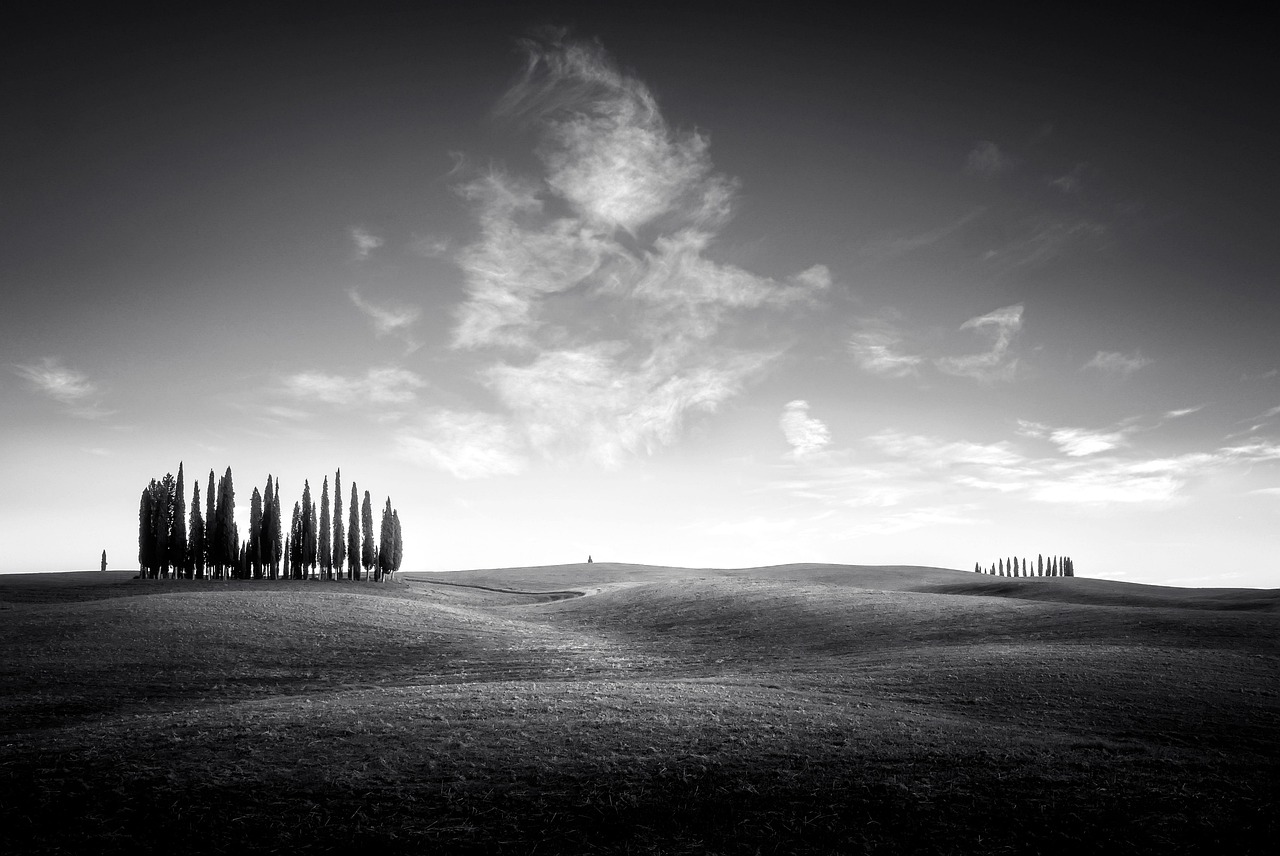
South of Siena, the Val d’Orcia is the landscape on calendars: soft green and gold hills, lines of cypresses, lone farmhouses and medieval villages. The whole valley is a UNESCO World Heritage Site for the way people shaped it in the Renaissance.
- Pienza: a small “ideal city” rebuilt by a Renaissance pope, with valley views from its walls and the best pecorino cheese in Tuscany.
- Montalcino: a hilltop fortress town and home of Brunello wine; nearby is the Romanesque abbey of Sant’Antimo.
- Montepulciano: just outside the valley, a long, steep town of palaces and wine cellars dug into the rock.
- Hot springs: Bagno Vignoni has a steaming pool for a square; free thermal pools at Bagni San Filippo, and the famous Saturnia springs further south in the Maremma.
- Photo spots: the cypresses of San Quirico d’Orcia and the chapel of the Madonna di Vitaleta, best at sunrise.
The white gravel roads are perfect for cycling and walking, and the Via Francigena pilgrim route crosses the valley. See our hiking guide.
Staying on a farm: agriturismo
An agriturismo is a working farm that rents rooms or apartments: anything from a simple room on an olive farm to a restored stone villa with a pool. Many make their own wine, oil and vegetables and serve dinners at a shared table. They are the best way to enjoy the countryside, especially in Chianti and the Val d’Orcia, but you will need a car, and some have a minimum stay of several nights in summer. Look for farms near a village so you can walk to dinner, and ask about the road: many are reached by gravel tracks.
Other things to do in Tuscany
Food
Tuscan cooking is simple and seasonal: bistecca alla fiorentina (a huge T-bone steak, served rare), ribollita and pappa al pomodoro (bread soups), pici pasta, wild boar ragù, pecorino cheese and new olive oil in November. In autumn, look for truffle and chestnut festivals. Many farms and schools offer cooking classes.
Cycling
Chianti and the Val d’Orcia are classic cycling country, with quiet roads and white gravel tracks; e-bikes make the hills easy, and several companies offer guided rides and luggage transfers. Lucca’s walls and the flat Pisa–Lucca area are gentler. See our cycling guide.
The coast
In summer, Tuscans head to the beaches of Versilia (Viareggio, Forte dei Marmi), the Etruscan Coast, the wild Maremma park and the island of Elba, reached by ferry from Piombino. The Cinque Terre villages, in neighbouring Liguria, are an easy trip from Pisa or Lucca. See our beaches guide.
Activities and best months
- Beaches and swimmingVersilia (Forte dei Marmi, Viareggio), the Maremma (Cala Violina, Castiglione della Pescaia), Elba (Sansone, Biodola, Fetovaia), Giglio and Pianosa.
- CyclingL'Eroica, the vintage-bike ride on Chianti's gravel roads, starts from Gaiole on the first Sunday of October; the permanent route can be ridden all year.
- SnorkelingSansone beach on Elba and Cala dell'Arenella on Giglio.
- Wine tastingThe Chianti Classico Wine and Oil Trail from Gaiole in Chianti, Montepulciano's Strada del Vino Nobile cellars and Montalcino's Brunello.
Nearby destinations
Getting there and getting around
Arriving
Pisa airport (PSA) has the most flights, including many low-cost routes, and a short automated train, the PisaMover, to Pisa Centrale, with trains on to Florence in about an hour. Florence airport (FLR) is small but close to the city, linked by tram to Santa Maria Novella station. High-speed trains reach Florence from Rome in about 1 h 30, from Milan in under 2 h and from Venice in about 2 h. See our Rome guide, our Milan guide and our Venice guide.
Trains or car?
Trains are the easiest way to link the cities: frequent regional trains run from Florence to Pisa (about an hour), Lucca (about 1 h 20) and Arezzo, and to Siena (about 1 h 30, with a change sometimes). Buses are often quicker than trains to Siena, and serve San Gimignano via Poggibonsi and some Chianti villages. Buy regional tickets in the Trenitalia app or at the station and, for paper tickets, validate them before you board.
For Chianti, the Val d’Orcia, the hill towns, wineries and farm stays, rent a car: buses are rare, and the beauty is between the towns. Pick it up when you leave Florence, not before, and never drive into a historic centre.
ZTL zones and fines
Florence, Siena, Pisa, Lucca, San Gimignano, Montepulciano and most Tuscan towns have a ZTL (zona a traffico limitato), a limited-traffic zone at the centre, marked by a round white sign with a red border and watched by cameras. If you drive past an active ZTL gate without a permit, you are fined automatically, once for each gate you pass, and the fine reaches you months later through the car-rental company, which adds its own fee. Satellite navigation will happily route you through. If your hotel is inside a ZTL, ask it to register your plate in advance. Otherwise, park in the car parks outside the walls and walk or take the escalators and shuttles into town.
When to go and how long to stay
Inland Tuscany has hot summers and cool, sometimes foggy winters. July and August are hot and busy in Florence, Siena and Pisa, but the countryside is lovely in early summer, when poppies and sunflowers bloom. Spring brings green hills and wildflowers, and autumn the grape and olive harvests, mushrooms and truffles, and the most rain, in October and November. Winter is quiet, cheap and good for museums, but many farm stays close. The coast is mildest in winter.
| Season | Average high / low | Rainy days a month | What it’s like |
|---|---|---|---|
| Spring (Mar–May) | 15–23 °C / 3–10 °C | 7–9 | Green hills, wildflowers and Easter crowds; cool nights. |
| Summer (Jun–Aug) | 28–32 °C / 13–16 °C | 4–6 | Hot, sunny and busy; poppies and sunflowers in June; the Palio in July and August. |
| Autumn (Sep–Nov) | 14–26 °C / 5–12 °C | 7–10 | Grape harvest in September and October, olive oil in November; the wettest season. |
| Winter (Dec–Feb) | 9–11 °C / 0–1 °C | 7–9 | Cold, often foggy mornings; quiet museums; some farms and hotels closed. |
Figures are the WMO 1991–2020 climate normals for the Arezzo station, in inland Tuscany (rainy day = at least 1 mm of rain). Arezzo receives about 860 mm of rain a year. Florence is similar but a little hotter in summer; on the coast, Pisa has milder nights in winter and about 2,540 hours of sunshine a year.
5 days in Tuscany
Three nights in Florence, with a day trip to Pisa and Lucca by train, then two nights in Siena, with an afternoon in San Gimignano.
7 days in Tuscany
Three nights in Florence, then pick up a car and spend four nights at a farm stay in Chianti or near Siena: wineries, San Gimignano, Siena and a day in the Val d’Orcia.
10 days or more
Add three nights in the Val d’Orcia (Pienza, Montalcino, Montepulciano and the hot springs), or a few days on the coast or Elba. Continue to the Cinque Terre, Rome or north to Verona and Venice.
Where to stay in Tuscany
- Without a car: Florence, with Siena or Lucca as a second base.
- Wine country: an agriturismo or village hotel in Chianti, around Greve, Panzano or Radda.
- Classic landscapes: Pienza, Montalcino, San Quirico or a farm in the Val d’Orcia.
- Medieval atmosphere: Siena or San Gimignano, after the day-trippers leave.
- Families in summer: a farm with a pool, or the coast.
A tourist tax (imposta di soggiorno) is added per person per night in most towns, set by each town and type of accommodation. Book Siena months ahead for the Palio.
Practical tips for Tuscany
- Book the big sights: the Uffizi, the Accademia, the Duomo climb in Florence and the Leaning Tower all sell out in season.
- Respect the ZTL signs: never follow the GPS into a walled town; park outside.
- Wine and driving: Italy’s drink-drive limit is strict, and zero for new drivers; use the spittoon, share the driving or book a tour.
- Lunch hours: village restaurants serve lunch from about 12:30 to 14:30 and dinner from 19:30; many close one day a week.
- Start early in summer: visit towns in the morning and spend the hot afternoons at the pool or in a winery.
- Emergencies: call 112.
Weather month by month
What to pack for Tuscany
Bring comfortable walking shoes for steep, cobbled hill towns and tower climbs, light clothes, a sun hat and sunscreen for summer, and a layer for cool evenings in spring and autumn, when inland nights can drop below 10 °C. Pack a light rain jacket for October and November, and a warm coat in winter. A small day bag that you can carry easily helps, since bags are not allowed up the Leaning Tower. Cover your shoulders and knees for churches. Add padded cycling shorts if you plan to ride, and a swimsuit for the farm pools and hot springs.
What to pack
- City walking shoesQuinta visits and harvest days mean steep terraces, gravel and cellar floors.
- Day packs and anti-theft bagsCarries water, towel and sunscreen down the long stairways to Algarve coves.
- Dry bags and phone pouchesProtects phones and cameras from sand and spray on beaches reached by ferry or steep paths.
- Quick-dry beach towelsA sand-shedding quick-dry towel packs small for beach days and lido visits.
- Rain jacketsA packable shell covers showers and wind on coastal routes outside summer.
- Reef-friendly sunscreenSummer UV is strong on Portuguese beaches and there is little shade below the cliffs.
- Snorkel masks and finsYour own mask fits better than a rental and makes clear-water coves and lava pools more fun.
- Water bottles and hydration packsRiding in the Algarve and Alentejo heat needs more water than you expect.
- Water shoesRocky coves, lava pools and weever fish in shallow sand make water shoes useful.
- WetsuitsOn the west and north coasts the sea stays around 16–18 °C even in summer, so a thin suit helps for long swims.
- Wine bottle travel protectorsPort and Douro wines bought at the quintas travel home safely in checked luggage with padded bottle protectors.
Tuscany travel FAQ
What is the best base for exploring Tuscany?
Florence for a first trip without a car, with trains to Pisa, Lucca and Siena. For the countryside, add a few nights at a farm stay in Chianti or the Val d’Orcia.
How many days do you need in Tuscany?
At least five days for Florence and the main cities, and seven to ten to add Chianti, San Gimignano and the Val d’Orcia.
Do I need a car in Tuscany?
Not for Florence, Pisa, Lucca and Siena, which are linked by train and bus. For Chianti, the Val d’Orcia and farm stays, yes. Park outside old centres to avoid ZTL fines.
What is a ZTL and how do I avoid a fine?
A limited-traffic zone in a town centre, marked by a white sign with a red circle and enforced by cameras. Do not drive past an active gate unless your hotel has registered your plate; fines come later through your rental company.
When is the Palio di Siena?
Every year on 2 July and 16 August, in the Piazza del Campo, with trial races on the three days before. Rain can move it to the next day.
Do I need to book the Leaning Tower of Pisa?
Yes, in practice. Climbs are timed and in small groups, and tickets often sell out; book on opapisa.it, the official site. Children may climb only from the year they turn 8.
Can you visit Pisa and Lucca in one day from Florence?
Yes. Take the train to Pisa (about an hour), then on to Lucca (about 30 minutes) and back to Florence (about 1 h 20).
What is the best way to see Chianti?
By car along the SR222 between Florence and Siena, staying a night or two, or on a guided wine tour or e-bike ride if you want to taste without driving.
What is an agriturismo?
A working farm that offers rooms or apartments, often with home-grown food, wine and a pool. It is the classic way to stay in the Tuscan countryside, but you usually need a car.
When is the best time to visit Tuscany?
April to June and September to October: warm, green or golden, and calmer than July and August. September and October add the grape harvest.
Is San Gimignano worth visiting?
Yes, for its medieval towers and views. Arrive early or stay overnight, as day-trippers crowd it from late morning to late afternoon.
Plan your trip
Partner links: TravelerCenter may earn a commission if you book, at no extra cost to you.
🇮🇹 Useful Italian phrases for Tuscany
All 38 Italian phrases: restaurant, hotel, emergencies, romance (printable) →
Traveler centers in Tuscany
Tourist information offices, visitor centers and travel agencies in Tuscany, from OpenStreetMap.
- Travel agency
Harlem Viaggi
- Tourist information office
IAT - Ufficio Turistico Cesena
- Tourist information office
Info Point
- Tourist information office
Informazione Accoglienza Turistica
- Travel agency
Mercuriale
- Travel agency
Soltur Agency
Sources · last reviewed 3 October 2026
Researched and last reviewed on 3 October 2026. Palio dates follow the City of Siena’s fixed calendar, and Leaning Tower tickets are sold on the official site of the Opera della Primaziale Pisana; check its current price and rules when you book. Climate figures are the WMO 1991–2020 normals for Arezzo and Pisa. Train times are typical; check Trenitalia, the regional bus operator and your rental company’s ZTL advice before you travel. Prices, timetables and opening hours change, so check the official sites before you go.
Also: visittuscany.com · Aeronautica Militare normals 1991–2020, Arezzo (climate)
Data: Weather: MET Norway (CC BY 4.0) · Rates: ECB · Costs: World Bank ICP and price levels · © OpenStreetMap contributors (ODBL) · Wikidata (CC0)