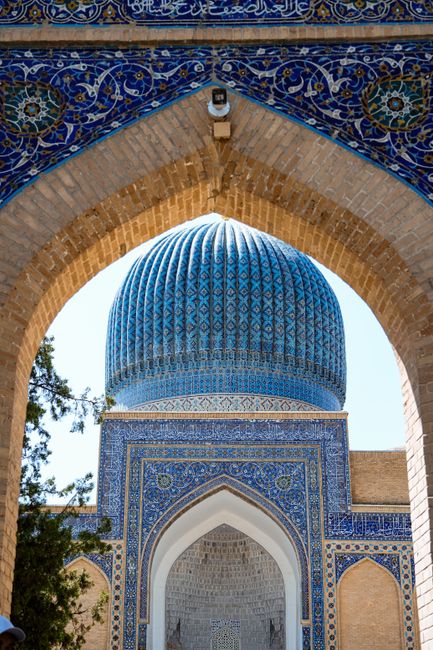
Uzbekistan is the heart of the old Silk Road, a land of turquoise domes, tiled madrasas, mud-brick fortresses and bustling bazaars stretched between the Tian Shan foothills and the deserts of Central Asia. Its great caravan cities are among the most beautiful in the Islamic world: Samarkand, with the soaring portals of the Registan and the blue-tiled tombs of Shah-i-Zinda; Bukhara, a living old town of more than a hundred monuments around shady pools; and Khiva, a complete walled city that looks much as it did two centuries ago. The capital, Tashkent, is a green, modern city of broad avenues, Soviet-era metro stations and lively markets. Beyond the classic route lie the Fergana Valley with its silk and ceramics workshops, the mountain town of Shakhrisabz, the desert fortresses of Karakalpakstan and the stranded ships of the Aral Sea. Travel has never been easier: citizens of dozens of countries can visit without a visa, an e-visa covers most others, and fast trains link the main cities. A few things need planning: every visitor must be registered within three days of arrival, which hotels do for you; summers are very hot and winters cold; and cash in som is still king outside the big cities.
Right now in Uzbekistan
- Wed 8–21°C 47–70°F Partly cloudy
- Thu 9–24°C 48–76°F Clear
- Fri 12–24°C 53–75°F Clear
Weather: MET Norway (CC BY 4.0)
Multi-day tours of Uzbekistan
Multi-day tours from local operators. You check dates and book on Viator, our partner; we may earn a commission at no extra cost to you. How we earn money
Uzbekistan at a glance
The Republic of Uzbekistan has a population of about 38 million, the largest in Central Asia, and covers about 449,000 km² (173,000 sq miles), a little larger than California. It is one of only two doubly landlocked countries in the world, along with Liechtenstein, and borders Kazakhstan, Kyrgyzstan, Tajikistan, Afghanistan and Turkmenistan. The country is divided into 12 regions, the autonomous Republic of Karakalpakstan in the northwest and the capital city, Tashkent. Uzbek is the official language, written in the Latin alphabet, though Cyrillic signs remain common; Russian is widely spoken in cities, and Tajik is the first language of many people in Samarkand and Bukhara. Most Uzbeks are Sunni Muslims, and the country is secular, relaxed and hospitable.
Uzbekistan uses UTC+5 all year, with no daylight saving time. Electricity is 220 V, with round two-pin sockets (types C and F), as in most of Europe. The currency is the Uzbek som (UZS).
A short history
Cities such as Samarkand and Bukhara have stood for more than 2,500 years, in the lands the Greeks called Sogdiana and Transoxiana, conquered in turn by Alexander the Great, Arab armies in the 8th century and Genghis Khan in 1220. In the 14th century, the conqueror Amir Timur (Tamerlane) made Samarkand the capital of an empire stretching from Turkey to India, and his grandson Ulugh Beg built an observatory and a madrasa on the Registan. After the Timurids came the khanates of Bukhara, Khiva and Kokand, which the Russian Empire absorbed in the second half of the 19th century. In the Soviet period, the Uzbek SSR became a land of cotton, irrigation and industry, and the diversion of rivers for cotton caused the Aral Sea to shrink dramatically. Uzbekistan became independent in 1991, and since 2016 it has opened up to visitors, with visa-free entry for many nationalities, new trains and a booming tourism industry.
Uzbekistan’s regions
- Tashkent and the east: the capital, the Chimgan and Charvak mountain resorts, and the Fergana Valley, with Kokand’s palace, Rishton’s blue ceramics and Margilan’s silk workshops.
- The Zarafshan Valley: Samarkand, the Timurid city of Shakhrisabz and the Nuratau mountains, with village homestays and the Aydarkul lake.
- Bukhara and the desert: Bukhara, its desert caravanserais and fortresses, and the southern city of Termez, rich in Buddhist ruins.
- Khorezm and Karakalpakstan: Khiva and its walled Itchan Kala, Urgench, the desert fortresses (kalas) of ancient Khorezm, Nukus’s Savitsky Museum and Moynaq on the shore of the vanished Aral Sea.
Where to go: Silk Road cities, deserts and mountains
The classic route runs west from Tashkent to Samarkand, Bukhara and Khiva, or the reverse, linked by fast trains and short flights. See our guides to each city:
- Samarkand: the Registan, Shah-i-Zinda, the Gur-e Amir mausoleum, the Bibi-Khanym Mosque, Ulugh Beg’s observatory and the Siab Bazaar.
- Bukhara: the Lyabi-Hauz pool, the Po-i-Kalyan minaret, the Ark fortress, trading domes, madrasas and caravanserais in a walkable old town.
- Khiva: the walled inner town of Itchan Kala, with its minarets, palaces and tiled madrasas, and the desert fortresses of Khorezm.
- Tashkent: the capital, with the Khast Imam complex, Chorsu Bazaar, museums, Soviet modernist architecture and the decorated metro.
Other favorites include Shakhrisabz, Timur’s birthplace, with the ruins of his White Palace, about two hours by road from Samarkand; the Fergana Valley, for crafts and markets; Nukus, home to the Savitsky Museum’s collection of Soviet avant-garde art; and Moynaq, where rusting fishing boats lie in the sand where the Aral Sea once was.
The Nuratau mountains and the desert lake of Aydarkul, between Samarkand and Bukhara, offer village homestays, walking, and yurt camps where you can ride camels and sleep under the stars. Closer to Tashkent, the Chimgan mountains and the Charvak reservoir, about 80 km (50 miles) from the city, are popular for hiking in summer and skiing in winter at the Amirsoy resort. In the far south, Termez, near the Afghan border, has ancient Buddhist stupas and monasteries from the Kushan era.
The Fergana Valley, a fertile basin ringed by mountains in the east, is reached by train from Tashkent over the Kamchik Pass in about four to five hours. It is the country’s most populous region and its craft heartland: in Margilan, the Yodgorlik silk factory shows every stage of ikat weaving, from silkworm cocoons to dyeing and hand looms; Rishton has been making blue-glazed ceramics for centuries; and Kokand has the tiled palace of its last khan, Khudayar. The valley is conservative and very hospitable, and few foreign visitors stay more than a couple of days.
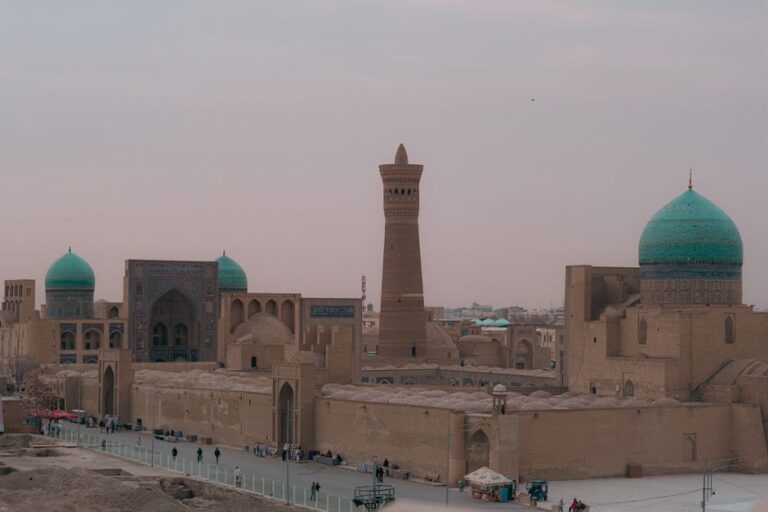
Bukhara Travel Guide
Plan a trip to Bukhara: the old town and where to stay, Lyabi-Hauz, the Po-i-Kalyan minaret and mosque, the Ark, the trading domes, the…
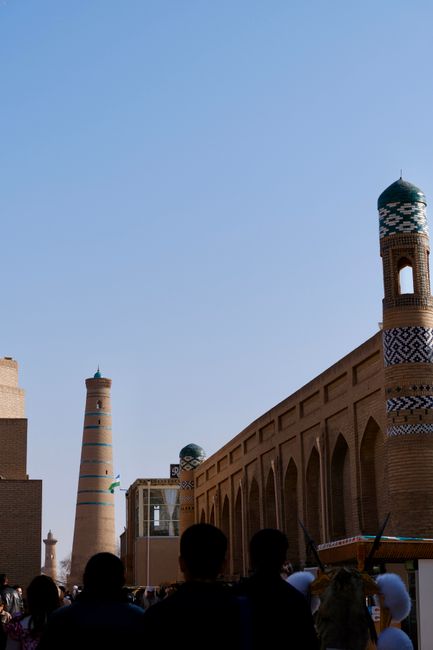
Khiva Travel Guide
Plan a trip to Khiva: the walled Itchan Kala and its ticket, Kalta Minor, the Juma Mosque, Kunya Ark, Tash Khauli and the Islam…
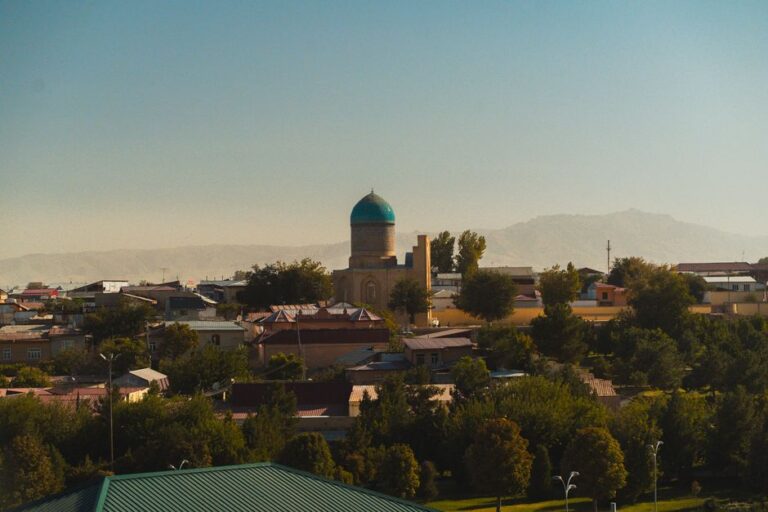
Samarkand Travel Guide
Plan a trip to Samarkand: the Registan and its ticket, Shah-i-Zinda, Gur-e Amir, Bibi-Khanym and the Siab Bazaar, Ulugh Beg's observatory, the Afrasiab murals…
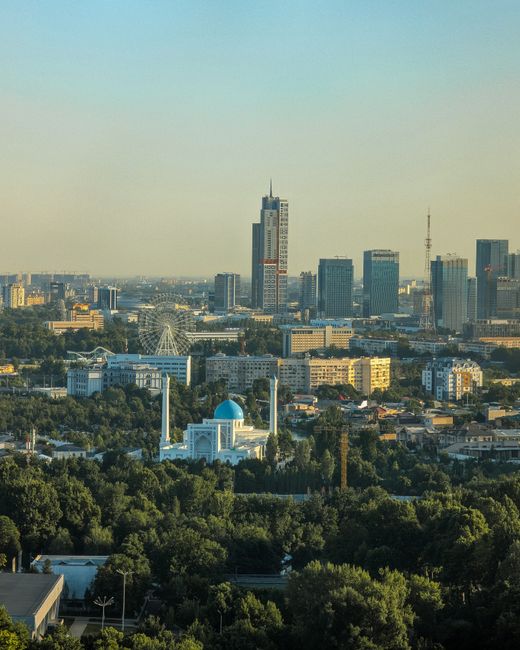
Tashkent Travel Guide
Plan a trip to Tashkent: districts and where to stay, the Khast Imam complex and the Uthman Quran, Chorsu Bazaar, Amir Timur Square, museums,…
Best time to visit Uzbekistan
Uzbekistan has a sharply continental climate: hot, dry summers, cold winters and short, pleasant springs and autumns. Spring, from April to early June, is the best time for most visitors, with warm days of 22–30 °C (72–86 °F), green orchards and the Navruz festivities in late March. Autumn, from September to October, is equally good, with clear skies, harvest-time markets full of melons and grapes, and comfortable temperatures. Summer, from June to August, is very hot, with afternoon temperatures of 35–40 °C (95–104 °F) in Bukhara and Khiva; sightseeing is best done early and late. Winter, from December to February, is cold, with frosty nights and occasional snow, but the monuments are almost empty and hotels are cheaper.
In practice, April, May, September and October are the best months, and also the busiest, so book trains and hotels early. Rain is light everywhere and falls mostly from November to May; the summer months are almost completely dry.
The table shows rounded averages from the 1991–2020 climate normals of Uzbekistan’s Hydrometeorological Service (Uzhydromet), as submitted to the World Meteorological Organization (WMO), for the main stations on the classic route.
| Area (station) | January high / low | July high / low | Rain a year | Wettest months |
|---|---|---|---|---|
| Tashkent | 7 °C (45 °F) / −1 °C (30 °F) | 36 °C (97 °F) / 20 °C (68 °F) | about 460 mm (18 in) | February to April |
| Samarkand | 7 °C (45 °F) / −1 °C (30 °F) | 34 °C (94 °F) / 20 °C (67 °F) | about 380 mm (15 in) | March and April |
| Bukhara | 7 °C (45 °F) / −2 °C (28 °F) | 37 °C (99 °F) / 22 °C (71 °F) | about 130 mm (5 in) | February and March |
| Khiva (Urgench station) | 3 °C (37 °F) / −6 °C (22 °F) | 36 °C (97 °F) / 21 °C (69 °F) | about 120 mm (5 in) | March and April |
Uzbekistan month by month
| Month | Weather | Highlights | Crowds and prices |
|---|---|---|---|
| January | Cold, with frosty nights; snow possible | Empty monuments; low prices | Low |
| February | Cold, with some rain and snow | Quiet travel; winter light on the domes | Low |
| March | Cool to mild; spring rains | Navruz (March 21), with sumalak, music and fairs | Rising |
| April | Warm and green | Ideal sightseeing; orchards in blossom | High |
| May | Warm to hot; mostly dry | Excellent for all cities; Silk and Spices festivities in Bukhara in some years | High |
| June | Hot | Long days; good for the mountains | Moderate |
| July | Very hot and dry | Mountains near Tashkent; early-morning sightseeing | Low to moderate |
| August | Very hot and dry | Melon and grape season; Sharq Taronalari music festival in Samarkand in some years | Moderate |
| September | Warm and dry | Independence Day (September 1); harvest markets | High |
| October | Mild and sunny | One of the best months; cotton harvest in the countryside | High |
| November | Cool; first rains | Quieter monuments; pomegranate season | Moderate |
| December | Cold | New Year decorations in Tashkent; Constitution Day (December 8) | Low |
Festivals and holidays
- Navruz: the Persian New Year on March 21, a public holiday with family feasts, sumalak (a sweet wheat pudding cooked all night), music, wrestling and fairs.
- Ramadan and the Eids: Ramazon Hayit (Eid al-Fitr) and Qurbon Hayit (Eid al-Adha) are public holidays; dates move about 11 days earlier each year. During Ramadan, restaurants stay open, though some families fast.
- Independence Day: September 1, with concerts and fireworks in Tashkent.
- Cultural festivals: the Sharq Taronalari music festival in Samarkand, held every two years in late summer, and the Silk and Spices festival in Bukhara, usually in late spring; dates vary, so check before you plan around them.
- Teachers’ Day and Constitution Day: October 1 and December 8 are also public holidays.
Heat, cold and dust
In July and August, temperatures in Bukhara and Khiva regularly reach 40 °C (104 °F), and the old towns have little shade: sightsee from early morning to late morning and again in the evening, drink plenty of water and cover your head. Winter nights fall well below freezing, especially in Khiva and Karakalpakstan, and some guesthouses are cold. Dust storms occasionally sweep the western deserts in spring and summer.
How long to stay: sample itineraries
- 7 days: Tashkent (1 night), Samarkand (2), Bukhara (2) and Khiva (2), traveling by train and a domestic flight back to Tashkent.
- 10 days: add a day trip to Shakhrisabz from Samarkand, a desert yurt camp at Aydarkul and an extra day in Bukhara.
- 14 days: add the Fergana Valley (3 days) for silk, ceramics and markets, or Nukus and Moynaq (2 days) from Khiva.
- Three weeks: combine Uzbekistan with Kyrgyzstan or Kazakhstan for mountains and lakes, or cross into Tajikistan for the Fann Mountains and the Pamirs.
Entry, money and costs
Visas and the e-visa (last reviewed October 2026)
According to the Ministry of Foreign Affairs on the government portal gov.uz, citizens of more than 80 countries can visit Uzbekistan without a visa for up to 30 days, among them the United Kingdom, Canada, Australia, New Zealand, Japan, South Korea, Turkey, Israel, Malaysia, Indonesia, Singapore, the United Arab Emirates, Brazil, Argentina, Mexico, Switzerland and all the larger European Union countries. Citizens of Kazakhstan, Russia, Belarus, Georgia, Armenia, Azerbaijan, Moldova and Ukraine have no time limit; Kyrgyz citizens can stay up to 60 days, and Tajik citizens up to 30. Citizens of China, Bahrain, Kuwait and Oman can visit without a visa for 10 days if they hold a ticket home or onward. The 30-day period starts when you cross the border, and you must leave when it ends.
Citizens of the United States are on the list for the e-visa, issued online at the official portal e-visa.gov.uz; according to the ministry, US citizens aged 55 and over can visit visa-free for tourism for up to 30 days. The ministry lists the e-visa fee as US$20 for a single entry, US$35 for a double entry and US$50 for a multiple-entry e-visa of up to 30 days; India, China, Vietnam and several dozen other countries are also eligible. In addition, citizens of more than 50 countries flying with Uzbekistan Airways can stop over visa-free for up to five days in transit with an onward ticket to a third country. According to the UK government, your passport should be valid for at least three months after arrival; make sure it is stamped on entry, as border guards check the date on exit.
Registration: the three-day rule
Every foreign visitor must be registered with the authorities at the place they stay. According to the government services portal, temporary registration is done within three days of arrival; when you stay at a hotel, hostel or licensed guesthouse, the staff register you automatically through the e-mehmon system and include the tourist tax in your bill. If you stay with friends, your host registers you; if you camp or travel in a camper van, you must register yourself online through e-mehmon. Keep the registration slips or confirmations your hotels give you, as officials may ask to see a record of where you stayed when you leave, and gaps can bring fines.
Customs and rules to know
According to the UK government, you must complete two copies of the customs declaration on arrival if you carry more than US$10,000 in cash or more than 65 grams of precious metals or gems, keep one stamped copy and show it on departure; you cannot leave with more foreign currency than you brought. Some medicines, including codeine, are restricted; carry prescriptions. Importing or flying a drone without a license and permission is largely prohibited. Possession of drugs brings long prison sentences, and same-sex relationships are illegal. You must carry your passport at all times, as police may check it. Changing money on the black market is illegal; use banks and official exchange booths.
Money and cards
The currency is the som (UZS). On October 3, 2026, the Central Bank of Uzbekistan’s official rate was about 11,773 som to the US dollar; prices on this site use about 11,800. Notes go up to 200,000 som. ATMs that accept foreign cards are common in Tashkent, Samarkand and Bukhara and in big hotels, though fewer elsewhere; Visa and Mastercard are increasingly accepted in hotels, restaurants and shops in the cities, but bazaars, taxis outside the apps and small guesthouses want cash. US dollars are the easiest currency to exchange; official booths reject damaged notes and US bills printed before 2013.
Tipping
Many restaurants add a service charge of 10–15% to the bill; where they don’t, rounding up or leaving about 10% is appreciated. Tip guides and drivers if you are happy with their service.
What a trip costs
Prices are approximate, for October 2026, converted at about 11,800 som to the US dollar.
| Item | Typical cost |
|---|---|
| Plate of plov at a plov center | 40,000–60,000 UZS (about US$3.40–5.10) |
| Dinner in a mid-range restaurant | 150,000–300,000 UZS (about US$13–25) per person |
| Pot of green tea in a chaikhana | 5,000–15,000 UZS (about US$0.40–1.30) |
| Ride-hailing taxi across Tashkent | 20,000–50,000 UZS (about US$1.70–4.20) |
| Afrosiyob train, Tashkent to Samarkand, economy | about 250,000–350,000 UZS (about US$21–30) |
| Registan ticket for foreign visitors | about 100,000 UZS (about US$8.50) |
| Mid-range hotel double, per night | 600,000–1,200,000 UZS (about US$50–100) |
A comfortable mid-range trip costs roughly 900,000–1,500,000 UZS (about US$75–130) per person per day, sharing a double room; backpackers using hostels, plov centers and regular trains can manage on 350,000–550,000 UZS (about US$30–47).
Getting there and getting around
Airports
The main gateway is Tashkent International Airport (TAS), with flights from Istanbul, Dubai, Moscow, Seoul, Frankfurt, Delhi and many other cities; see our Istanbul and South Korea guides. Samarkand (SKD), Bukhara (BHK) and Urgench (UGC), 30 km (19 miles) from Khiva, also have international flights, so open-jaw trips that fly into one city and out of another save time. Uzbekistan Airways and low-cost carriers link Tashkent with all regional cities in about an hour.
High-speed trains
Uzbekistan Railways (O’zbekiston Temir Yo’llari) runs the Afrosiyob high-speed trains from Tashkent to Samarkand in a little over two hours and on to Bukhara, roughly four hours from the capital. Since May 2026, a new high-speed service with Hyundai Rotem trains, named Jaloliddin Manguberdi, has run from Tashkent via Samarkand, Bukhara and Urgench to Khiva in about seven and a half hours, nearly half the time of the conventional train; at its launch it ran three days a week in each direction, with economy seats at 780,000 som and VIP seats at 1,815,000 som, according to local press reports. Buy tickets at railway.uz, the official site and app, or at stations; you need your passport to buy and to board. Trains on the classic route sell out in spring and autumn, so book as soon as tickets go on sale.
Other trains and buses
Slower Sharq and regional express trains also link the main cities, cheaper but slower, and overnight sleeper trains run from Tashkent to Urgench, Nukus and Termez. Shared taxis leave from bus stations and bazaars for most towns, departing when full, and are often faster than buses; agree on the price per seat. Long-distance buses are less common than in neighboring countries.
Taxis and city transport
In the cities, ride-hailing apps such as Yandex Go and MyTaxi are cheap and avoid haggling; use them instead of flagging down unlicensed cars. Tashkent’s metro, the oldest in Central Asia, is cheap, safe and famous for its decorated Soviet-era stations. Samarkand, Bukhara and Khiva are best explored on foot.
Driving and road safety
Uzbeks drive on the right. Roads between the main cities are mostly good, but driving standards are erratic, many roads are poorly lit, and police checkpoints are frequent; you need an international driving permit with your license. Many taxis and buses run on compressed natural gas, and rear seat belts are often missing; choose newer vehicles where you can.
Land borders
Uzbekistan has busy land crossings with Kazakhstan (Tashkent–Zhibek Zholy), Kyrgyzstan (Dostlik for Osh), Tajikistan (Oybek and Penjikent–Samarkand) and Turkmenistan (near Khiva and Bukhara); see our Kazakhstan, Kyrgyzstan, Tajikistan and Turkmenistan guides. Crossings can close at short notice, so check before setting out.
World Heritage Sites and nature
Uzbekistan has several UNESCO World Heritage Sites:
- Itchan Kala: the walled inner town of Khiva, inscribed in 1990. See our Khiva guide.
- Historic Center of Bukhara: the old town’s mosques, madrasas and trading domes, inscribed in 1993. See our Bukhara guide.
- Historic Center of Shakhrisabz: Timur’s birthplace, inscribed in 2000.
- Samarkand – Crossroad of Cultures: the Registan, Shah-i-Zinda, Bibi-Khanym and Afrasiab, inscribed in 2001. See our Samarkand guide.
- Western Tien-Shan: mountain forests and meadows shared with Kazakhstan and Kyrgyzstan, including the Chatkal reserve near Tashkent.
- Silk Roads: Zarafshan–Karakum Corridor and the Cold Winter Deserts of Turan: transnational sites inscribed in 2023 covering caravan routes and desert ecosystems.
Uzbekistan’s nature is less known: the Chatkal and Ugam mountains east of Tashkent offer hiking, the Kyzylkum Desert has yurt camps and camel treks, and the Nuratau–Kyzylkum biosphere reserve protects mountain sheep and walnut forests. See our hiking guide.
Culture, food and everyday etiquette
Food
Uzbek food is hearty and built around bread, meat and fresh produce. The national dish is plov (osh), rice cooked in huge cauldrons with carrots, onions, lamb and chickpeas, traditionally a lunchtime dish served in plov centers; each region has its own style. Try somsa, flaky pastries filled with meat and baked in a clay tandoor; shashlik kebabs; lagman, hand-pulled noodles; manti dumplings; shurpa soup; and the round non bread, stamped with patterns and never placed upside down. Fruit is superb, especially melons, grapes, apricots and pomegranates. Green tea is drunk all day from bowls (piyola) in teahouses (chaikhanas). Alcohol is available in restaurants and shops in cities.
Bazaars and crafts
Every city has a bazaar where locals shop for spices, dried fruit, nuts, bread and household goods: Chorsu in Tashkent, Siab in Samarkand and the covered bazaars of Bukhara are highlights. Uzbekistan is famous for its crafts: hand-woven ikat silk and cotton from Margilan, Bukhara’s suzani embroideries and gold embroidery, ceramics from Rishton and Gijduvan, carved wooden doors and columns in Khiva, and miniature painting. Buy from workshops where you can watch the makers.
Reading the architecture
The monuments of the Silk Road cities follow a few recurring types. A madrasa is a religious college, built around a courtyard lined with students’ cells, with a monumental gateway (pishtaq) facing the street; many now hold craft shops. A mosque may be a vast Friday mosque with a courtyard, or a small neighborhood mosque with a carved wooden porch (ayvan) for summer prayers. Minarets served as calls to prayer, watchtowers and landmarks for caravans. Mausoleums range from the tiled tombs of Shah-i-Zinda to the fluted dome of Gur-e Amir. Caravanserais, covered trading domes and bathhouses complete the scene. The tilework itself tells a story: the cut-tile mosaics and turquoise domes of the Timurid era in Samarkand, the majolica of Khiva, and the brick patterns of the earliest buildings in Bukhara.
Shopping and bargaining
Bargaining is expected in bazaars and craft stalls but not in shops with fixed prices. Start at around half to two-thirds of the asking price and settle somewhere in between, with a smile. Ask workshops for a receipt for carpets and anything that looks old, since customs may ask for proof that it is not an antique.
A few words of Uzbek
Russian is widely understood in cities, and English is spoken in hotels and tourist areas. A few words of Uzbek are appreciated: assalomu alaykum (hello), rahmat (thank you), xayr (goodbye), ha (yes), yo’q (no), qancha? (how much?) and mazali (delicious). In Samarkand and Bukhara, many people speak Tajik at home, where thank you is rahmat too.
Responsible travel
Buy crafts directly from workshops and family businesses, eat at local chaikhanas and stay in family guesthouses, which keep tourism income in the old towns. Ask before photographing people, especially women and in mosques, and respect prayer times. Don’t buy antiques without an export certificate, which customs may ask to see.
Etiquette
Uzbeks are very hospitable, and you may be invited for tea or a meal; it is polite to accept, take a small gift and remove your shoes at the door. Men greet each other with a handshake and a hand on the heart; wait for a woman to offer her hand. Dress modestly, covering shoulders and knees, especially at mosques, mausoleums and pilgrimage sites, where women should cover their hair. Bread is treated with respect: never put it on the ground or upside down. Public displays of affection are frowned upon outside Tashkent.
Safety, health and connectivity
Uzbekistan is one of the safest countries in Asia for visitors, with low levels of violent crime. These are the main things to know:
- Registration and documents: carry your passport and keep your hotel registration slips; police checks are common, and missing registrations can bring fines.
- Petty crime: pickpocketing and bag snatching happen in bazaars, on the metro and in crowds; keep valuables out of sight.
- Roads: driving standards are erratic, and many vehicles lack rear seat belts; night driving outside cities is riskier. Use app-based taxis rather than unlicensed cars.
- Photography: restrictions have been relaxed, but avoid photographing government buildings, military sites, border posts, airports, police and bridges, and ask before photographing people.
- Heat: summer temperatures in the west reach 40 °C (104 °F); carry water, wear a hat and rest at midday.
- Earthquakes: Uzbekistan lies in an active seismic zone, and tremors are frequent; Tashkent was largely destroyed by an earthquake in 1966.
- Health: drink bottled or boiled water, take care with salads and unpeeled fruit, and have travel insurance; good private clinics exist in Tashkent.
- Emergencies: call 101 for fire, 102 for police and 103 for an ambulance.
Mobile coverage is good in cities and along main roads. Prepaid SIM cards and eSIMs from Ucell, Beeline, Mobiuz and Uzmobile are sold with your passport; Wi-Fi is standard in hotels and many cafés.
Things to do: domes, bazaars, trains and deserts
Watch the Registan light up at dusk, wander the trading domes of Bukhara, climb a minaret in Khiva at sunset, ride the high-speed train across the steppe, eat plov at a Tashkent plov center, visit silk and ceramics workshops in the Fergana Valley, sleep in a desert yurt camp near Aydarkul, hike in the Chimgan mountains, and see the abandoned ships of Moynaq. See our city sightseeing and hiking guides. Uzbekistan combines naturally with Kazakhstan, Kyrgyzstan, Tajikistan and Turkmenistan, and many visitors arrive via Turkey, Georgia or Azerbaijan.
Uzbekistan travel FAQ
Do I need a visa to visit Uzbekistan?
Citizens of more than 80 countries, including the UK, Canada, Australia, Japan, South Korea and most of Europe, can visit visa-free for up to 30 days. US citizens and many others can get an e-visa at e-visa.gov.uz; US citizens aged 55 and over can visit visa-free for tourism for up to 30 days.
How much is the Uzbekistan e-visa?
US$20 for a single-entry e-visa, according to the Ministry of Foreign Affairs; double-entry and multiple-entry e-visas for up to 30 days cost US$35 and US$50.
What is the registration rule in Uzbekistan?
Every visitor must be registered within three days of arrival at the place they stay. Hotels and licensed guesthouses do it automatically; if you camp or stay privately, you or your host register through the e-mehmon system.
How do I travel between Tashkent, Samarkand, Bukhara and Khiva?
By train: the Afrosiyob high-speed train takes a little over two hours from Tashkent to Samarkand, and a new high-speed train has linked Tashkent with Khiva in about seven and a half hours since May 2026. Domestic flights and shared taxis are alternatives.
How do I buy train tickets in Uzbekistan?
On railway.uz, the official site and app of Uzbekistan Railways, or at stations, with your passport. Book early for spring and autumn.
What is the best time to visit Uzbekistan?
April to early June and September to October, when days are warm and sunny. July and August are very hot, and winters are cold.
How much does the Registan cost?
About 100,000 som for foreign visitors in 2026, covering the three madrasas; it is sold at the entrance, and prices change, so check on arrival.
What currency is used in Uzbekistan?
The Uzbek som, about 11,800 to the US dollar in October 2026. Cards are increasingly accepted in cities, but carry cash for bazaars and small towns.
Is Uzbekistan safe for tourists?
Yes, it is one of the safest countries in Asia. The main issues are petty theft in crowds, erratic driving, summer heat and keeping your registration in order.
How many days do I need in Uzbekistan?
A week covers Tashkent, Samarkand, Bukhara and Khiva by train; ten days to two weeks lets you add Shakhrisabz, a desert yurt camp or the Fergana Valley.
What should I wear in Uzbekistan?
Light clothing that covers shoulders and knees, especially at mosques and shrines, where women should cover their hair. Shorts are fine in Tashkent and around hotels.
Can I fly a drone in Uzbekistan?
Generally not: importing and using drones requires a license and permission arranged in advance, and drones can be confiscated at the border.
Can I use credit cards in Uzbekistan?
In hotels, many restaurants and shops in the big cities, yes. Bazaars, small guesthouses and rural areas are cash-only, and ATMs are scarce outside the main cities.
Sources and last review
Researched and last reviewed on 4 October 2026. The visa-free list and stay lengths, the 10-day, transit and age-55 exemptions and the e-visa fees: the Ministry of Foreign Affairs of Uzbekistan on the government portal gov.uz; temporary registration within three days and e-mehmon: the Uzbek government services portal; the exchange rate: the Central Bank of the Republic of Uzbekistan; climate normals: Uzhydromet via the World Meteorological Organization’s 1991–2020 normals. Passport validity, the registration slips, customs declarations, drones, medicines, photography, money and road conditions are from the UK government’s factual entry and safety pages. The 2026 high-speed train to Khiva, its schedule and fares are from local press reports; the Registan ticket price, train journey times, population, history, UNESCO inscriptions, festivals, emergency numbers and typical prices are general references or estimates, flagged for checking. Rules and prices change, so check the official sites before you go.
Plan your trip
Partner links: TravelerCenter may earn a commission if you book, at no extra cost to you.
🇺🇿 Useful Uzbek phrases for Uzbekistan
All 38 Uzbek phrases: restaurant, hotel, emergencies, romance (printable) →