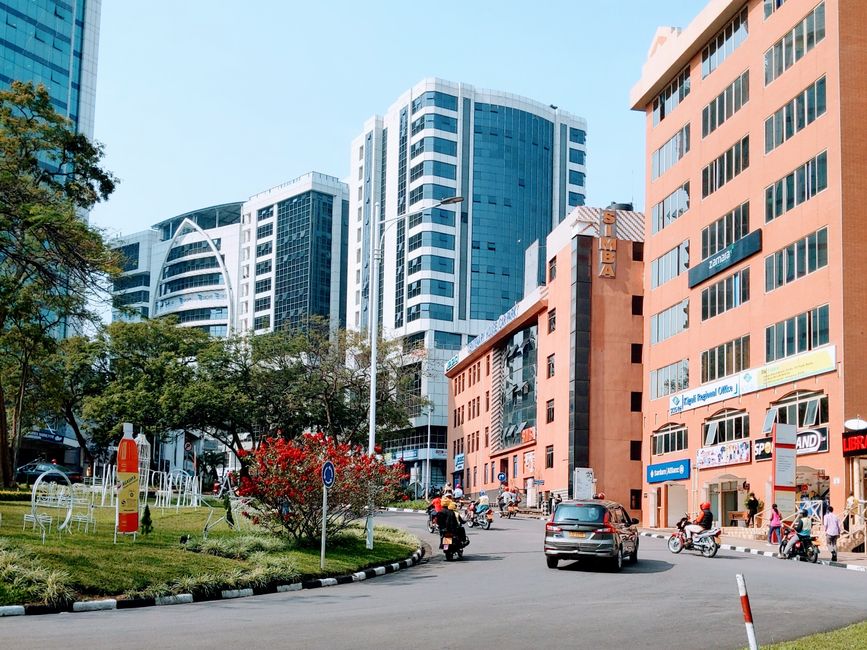
Rwanda is a small, green, mountainous country in the heart of Africa, and it has become one of the continent’s most rewarding places to travel. Known as the “land of a thousand hills”, it rises from the savanna of Akagera National Park in the east to the misty volcanoes of the Virunga range in the northwest, where Volcanoes National Park offers some of the best mountain gorilla trekking on Earth. In between lie the ancient rainforest of Nyungwe, with chimpanzees and a canopy walkway, the long shores of Lake Kivu, terraced tea and coffee hills, and Kigali, a clean, orderly capital with good restaurants, museums and the national genocide memorial. Distances are short: you can drive from Kigali to the gorilla trailheads in about two hours, and most of the country is within a day’s drive. Travel is well organized, too. Visitors of every nationality can get a visa on arrival, and many are exempt from the fee; permits for gorillas and other activities are sold online by the Rwanda Development Board (RDB); and the country’s ban on plastic bags and its monthly community-work morning, Umuganda, are part of everyday life that visitors quickly notice. Plan ahead for the expensive gorilla permit, which sells out in the busiest months, for the altitude and steep hikes in the Virungas, and for malaria protection in the lower areas.
Right now in Rwanda
- Wed 18–28°C 64–83°F 4 mm Showers
- Thu 18–27°C 64–81°F 8 mm Partly cloudy
- Fri 18–27°C 64–81°F 7 mm Rain
Weather: MET Norway (CC BY 4.0) · Air quality: OpenAQ
Multi-day tours of Rwanda
Multi-day tours from local operators. You check dates and book on Viator, our partner; we may earn a commission at no extra cost to you. How we earn money
Rwanda at a glance
Rwanda covers 26,338 km² (10,169 square miles), a little larger than Vermont or Wales, and borders Uganda to the north, Tanzania to the east, Burundi to the south and the Democratic Republic of the Congo to the west. Most of the country lies between 1,500 m and 2,500 m (4,900–8,200 ft) above sea level, according to the Rwanda Development Board’s Visit Rwanda site; the highest point is Mount Karisimbi, a volcano of 4,507 m (14,787 ft), and the lowest is the Rusizi River at 950 m (3,120 ft). The country has five volcanoes, 23 lakes and many rivers. The government estimates the population at more than 12 million, making Rwanda one of the most densely populated countries in Africa, and Visit Rwanda puts it at about 13 million. Kigali is the capital and by far the largest city.
Kinyarwanda is spoken everywhere, and English, French and Kiswahili are also official languages. English is widely used in tourism and business, and French is still common among older Rwandans. Most Rwandans are Christian. Rwanda is on Central Africa Time (UTC+2) all year, with no daylight saving time, so it’s an hour behind Uganda, Kenya and Tanzania. Electricity is 230 V, 50 Hz; most sockets take two-pin European plugs (types C and J), and some hotels also have British-style sockets.
A short history
For centuries Rwanda was a centralized kingdom ruled by a line of kings, or mwami, whose reconstructed palace you can visit at Nyanza in the south. It became a German colony in 1899 and, from 1919, a territory administered by Belgium under a League of Nations mandate. Rwanda became independent on July 1, 1962. In 1994 the country suffered the Genocide against the Tutsi, which Rwanda remembers each year from April 7, the start of the national commemoration period known as Kwibuka (“remember”). Memorials across the country, including the Kigali Genocide Memorial, are places of remembrance and learning that many visitors include in their trip. The government describes community practices such as Umuganda as “home-grown solutions” that have helped rebuild the country, and Rwanda today is known for its clean streets, its conservation work and its growing role as a conference and sports destination.
Rwanda’s regions for travelers
- Kigali: the capital, spread over hills in the center of the country, with the genocide memorial, art galleries, markets and the main airport.
- The north (Northern Province): Musanze and Volcanoes National Park, with mountain gorillas, golden monkeys and volcano hikes, plus the twin lakes of Burera and Ruhondo.
- The west (Western Province): Lake Kivu, with the resort towns of Rubavu (Gisenyi), Karongi (Kibuye) and Rusizi (Cyangugu), the Congo Nile Trail, Gishwati-Mukura National Park and Nyungwe National Park.
- The south (Southern Province): Huye, with the Ethnographic Museum, and Nyanza, with the King’s Palace Museum.
- The east (Eastern Province): Akagera National Park, Rwanda’s Big Five savanna park, and the lakes along the Tanzanian border.
Where to go: gorillas, forests, lakes and Kigali
The classic first trip combines Kigali with two or three nights near Volcanoes National Park for gorilla trekking and golden monkeys. With more time, add Lake Kivu for a few lazy days on the water, Nyungwe for chimpanzees and the canopy walkway, and Akagera for a classic savanna safari with lions, elephants and rhinos. Because the country is small, a week covers a lot. See our guides to these places:
- Volcanoes National Park: mountain gorilla trekking, golden monkeys, the hike to Mount Bisoke’s crater lake and Dian Fossey’s grave.
- Kigali: the capital, with the Kigali Genocide Memorial, Kimironko Market, Nyamirambo, art galleries and a lively food scene.
Nyungwe and Akagera
In the southwest, Nyungwe National Park protects one of Africa’s oldest montane rainforests, with chimpanzees, many other primates, hundreds of bird species and a canopy walkway suspended high above a forested valley. In the east, Akagera National Park is a completely different landscape of rolling grassland, acacia woodland and lakes along the Tanzanian border. Rwanda’s only savanna park, it’s home to the Big Five, with boat trips on Lake Ihema among hippos and crocodiles. Both parks are a half day’s drive from Kigali, and Akagera can be visited on a long day trip from the capital.
Lake Kivu
Lake Kivu, on the western border, is one of Africa’s Great Lakes, with steep green shores, islands and fishing boats whose crews sing as they head out at dusk. Rubavu (Gisenyi) has sandy beaches and lakeside hotels, Karongi (Kibuye) has quiet bays and island boat trips, and Rusizi lies at the southern end near Nyungwe. The Congo Nile Trail follows the lakeshore for hikers and cyclists, and kayaking trips paddle between the towns. Rubavu is about an hour from Musanze, so it pairs well with gorilla trekking.
Rwanda’s wildlife
Rwanda is one of only three countries where you can see wild mountain gorillas; the others are neighboring Uganda and the DR Congo. The RDB’s booking information cites an estimate of about 880 mountain gorillas left in the world, and numbers in the Virungas and Bwindi have risen since that count. Volcanoes National Park also shelters the rare golden monkey. Nyungwe is the place for chimpanzees and colobus monkeys, and Akagera has lions, leopards, elephants, buffalo, black and white rhinos, giraffes and zebras. Birders come for Albertine Rift endemics in the forests and waterbirds, including shoebills, in Akagera’s wetlands.
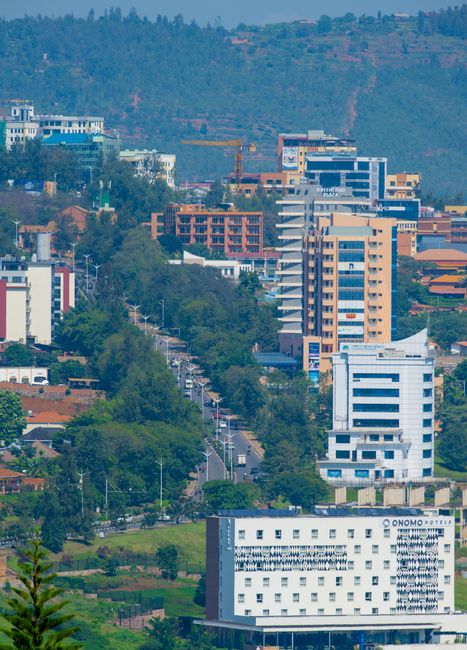
Kigali Travel Guide
Plan a trip to Kigali: the Kigali Genocide Memorial with its free entry, hours and visitor rules, Kandt House, Kimironko Market, Nyamirambo, galleries and…
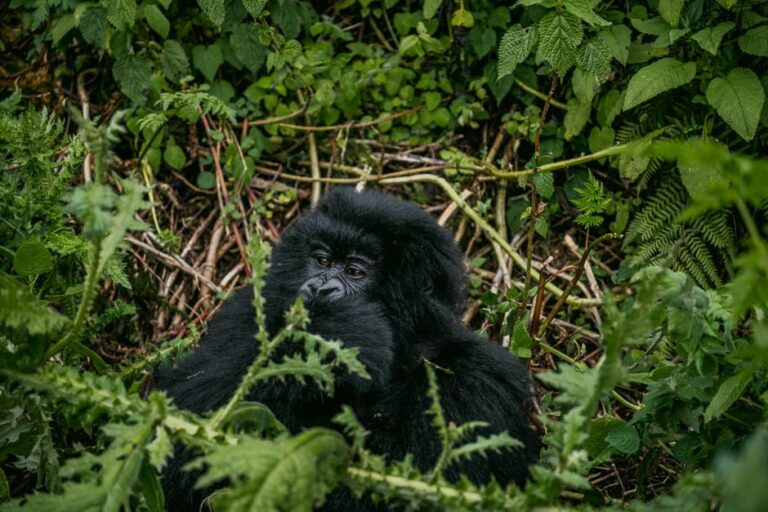
Volcanoes National Park Travel Guide
Plan a visit to Volcanoes National Park: RDB gorilla permit prices, the November–May discount, 96 permits a day, trekking rules and the 7 a.m.…
Best time to visit Rwanda
Rwanda can be visited all year. Thanks to the altitude, Visit Rwanda says temperatures vary much more from place to place than from month to month, with daytime peaks rarely above 30 °C (86 °F) and nights rarely below 15 °C (59 °F) in most of the country; the Virunga volcanoes are the coolest area and Akagera the warmest. There are two rainy seasons, from mid-February to May and from mid-September to mid-December, and the main dry season runs from June to mid-September, when trails are easier and gorilla trekking is at its busiest. A shorter dry spell from mid-December to mid-February is also a good time to go. The table shows rounded average daily highs and lows in January and July and the yearly rainfall for five stations of the Rwanda Meteorology Agency (Meteo Rwanda), from 1961–1990 averages published by the World Meteorological Organization (WMO).
| Region (Meteo Rwanda station) | January high / low | July high / low | Rain a year |
|---|---|---|---|
| Kigali and the center (Kigali) | 27 °C (81 °F) / 16 °C (61 °F) | 27 °C (81 °F) / 15 °C (59 °F) | about 950 mm (37 in) |
| Volcanoes and the north (Musanze) | 25 °C (77 °F) / 11 °C (52 °F) | 24 °C (75 °F) / 11 °C (52 °F) | about 1,250 mm (49 in) |
| Lake Kivu north (Rubavu) | 26 °C (79 °F) / 15 °C (59 °F) | 25 °C (77 °F) / 14 °C (57 °F) | about 1,170 mm (46 in) |
| Lake Kivu south and Nyungwe (Rusizi) | 25 °C (77 °F) / 15 °C (59 °F) | 26 °C (79 °F) / 14 °C (57 °F) | about 1,320 mm (52 in) |
| The south (Huye) | 25 °C (77 °F) / 14 °C (57 °F) | 25 °C (77 °F) / 14 °C (57 °F) | about 1,240 mm (49 in) |
Rwanda month by month
| Month | Weather | Highlights | Crowds and prices |
|---|---|---|---|
| January | Short dry season; warm days | Good gorilla trekking; birding | Moderate; busy early in the month |
| February | Mostly dry; showers return late in the month | Trekking and Lake Kivu; National Heroes’ Day (February 1) | Moderate |
| March | Rainy season; muddy trails | Lush forests; low-season permit discount on combined trips | Quieter |
| April | Wettest month in much of the country | Kwibuka commemoration begins April 7; a quieter, reflective time | Low season |
| May | Rain easing late in the month | Green landscapes; fewer visitors | Low season |
| June | Dry season begins; cooler nights | Prime trekking starts | Rising; book permits early |
| July | Driest month | Gorillas, Akagera safaris; Independence Day (July 1) and Liberation Day (July 4) | High season |
| August | Dry and dusty | Best hiking conditions; Umuganura harvest festival | Peak season |
| September | Dry, then showers from mid-month | Kwita Izina gorilla-naming celebrations are often held around this time | Very high early in the month |
| October | Short rains | Green hills; good primate tracking | Moderate |
| November | Rainy | Low-season permit discount on combined trips | Quieter |
| December | Showers early, drier from mid-month | Holiday trips to Lake Kivu | Busy over Christmas |
Kwita Izina and the gorilla seasons
Gorillas can be seen all year, and every habituated group is visited daily. In the dry months the trails are less slippery, but the gorillas sometimes range higher up the mountains; in the rainy seasons they often feed lower down, though hikes are muddier. Each year Rwanda holds Kwita Izina, a gorilla-naming ceremony in Musanze where newborn gorillas are given names, with cultural events and conservation talks; the RDB calls it a special time to visit the park. Check the date on the RDB’s Visit Rwanda site before you plan around it.
Public holidays
The government lists these public holidays: New Year’s Day, National Heroes’ Day (February 1), Good Friday and Easter Monday, Genocide against the Tutsi Memorial Day (April 7), Labor Day (May 1), Independence Day (July 1), Liberation Day (July 4), Umuganura Day, the national harvest celebration in early August, Assumption Day (August 15), Christmas and Boxing Day. During the week that begins on April 7, public events are subdued and many businesses close early; visitors are welcome, and a respectful attitude is appreciated.
How long to stay: sample itineraries
- 3 days: Kigali (1 night) and Volcanoes National Park (2 nights), with one gorilla trek.
- 5 days: Kigali (1 night), Volcanoes (2 nights) for gorillas and golden monkeys, and Lake Kivu at Rubavu (2 nights).
- 7–8 days: Kigali, Akagera (2 nights), Volcanoes (2 nights) and Nyungwe (2 nights) via Lake Kivu.
- 10–14 days: add more time on Lake Kivu, the Congo Nile Trail, or cross into Uganda for Bwindi; see our Uganda travel guide.
- Gorillas and the beach: combine Rwanda with a safari in Kenya or Tanzania and a few days on Zanzibar; see our Kenya and Zanzibar guides.
Entry, money and costs
Visas on arrival and online (last reviewed October 2026)
Rwanda has one of the most open visa policies in Africa. According to Rwanda’s Directorate General of Immigration and Emigration, a tourist visa is issued on arrival at the border or airport, online before travel, or at a Rwandan mission abroad. It costs US$50 for a single entry, valid for 30 days, or US$70 for multiple entries, valid for 90 days. Citizens of countries that belong to the African Union, the Commonwealth or La Francophonie receive the visa free of charge for 30 days, which covers travelers from the UK, Canada, Australia, New Zealand, India, South Africa, Nigeria, France, Belgium and many other countries; citizens of countries with a visa-waiver arrangement with Rwanda get 90 days free, and citizens of the East African Community receive a free pass for up to six months. US citizens and many Europeans, such as Germans, Italians and Spaniards, pay the fee. Your passport must be valid for at least six months. A transit visa of up to 72 hours costs US$30 (free for the fee-exempt nationalities). Visit Rwanda adds that no agent is authorized to apply on your behalf, so apply only through the government’s official online channel, Irembo, or at the border.
The East Africa Tourist Visa
The East Africa Tourist Visa costs US$100 and allows multiple entries for tourism to Rwanda, Uganda and Kenya for 90 days, according to Uganda’s immigration service; Rwanda’s immigration directorate issues it on arrival, online or at its missions abroad. It must be issued by the country you enter first, and it can’t be renewed once you leave the three countries. Tanzania and Burundi are not included. It’s good value if you’re combining gorillas in Rwanda with Uganda or Kenya, but if you’re visiting Rwanda alone, or if your nationality gets Rwanda’s free visa, the single-country visa is cheaper.
Health requirements
According to the US CDC, Rwanda requires a yellow fever vaccination certificate from travelers aged one year and over who arrive from a country with yellow fever risk, which includes neighboring Uganda and Kenya; direct travelers from the US don’t need one, and the vaccine is generally not recommended for Rwanda itself. If you’re coming overland from Uganda or flying in from Nairobi or Entebbe, carry your certificate.
The plastic ban, drones and customs
Rwanda was one of the first countries to ban plastic bags. Visit Rwanda says plastic bags have been banned since 2008, and any bags found in your luggage will be confiscated at the airport or border. Today, Law No. 17/2019 of August 10, 2019, enforced by the Rwanda Environment Management Authority (REMA), prohibits the manufacture, import, use and sale of plastic carry bags and single-use plastic items, with limited exceptions authorized by REMA. Pack clothes in fabric bags, bring a refillable bottle, and don’t use duty-free plastic bags on your way in. Flying a drone, even for fun, needs a permit from the Rwanda Civil Aviation Authority, which takes weeks to process, and foreigners can’t register a drone themselves, so most visitors leave theirs at home.
Umuganda: the monthly community-work morning
On the last Saturday of every month, Rwandans take part in Umuganda, a morning of community work such as cleaning streets, planting trees or building homes, followed by local meetings. The government lists it among its “home-grown solutions”, and Visit Rwanda links it to the country’s commitment to a clean environment. In practice, much of the country pauses for the morning: shops and many services stay closed, and road traffic is restricted, so buses and private transfers may not run until about midday. Tourists aren’t required to take part, and gorilla treks and other park activities generally go ahead, but plan transfers and airport runs around it, and expect sights such as the Kigali Genocide Memorial to open only in the afternoon (1–5 p.m. on Umuganda Saturdays).
Money and cards
The currency is the Rwandan franc (RWF, written Rwf). On October 5, 2026, the National Bank of Rwanda’s average rate was about RWF 1,474 to the US dollar. Visit Rwanda says US dollars are widely accepted, especially for larger amounts such as gorilla permits and upscale hotels, but you’ll pay for local services, markets and moto-taxis in francs. Cards are accepted in a growing number of places, with Visa more widely accepted than Mastercard, and ATMs are found in Kigali and nearly all major towns. Banks and exchange bureaus are closed on Sundays and public holidays. Bring clean, recent US dollar notes for tips. As a rough guide, Visit Rwanda suggests tipping professional guides and drivers about US$10 a day and trekking porters about US$2, though most visitors give porters more after a long gorilla hike.
Gorilla permits and park activities
All gorilla and Volcanoes park permits are sold by the Rwanda Development Board through its online booking portal or through licensed tour operators. These were the official foreign-visitor rates in October 2026:
| Activity (Volcanoes National Park) | Foreign visitor fee | Minimum age |
|---|---|---|
| Mountain gorilla trekking | US$1,500 per person (about RWF 2.2 million) | 15 |
| Golden monkey tracking | US$100 (about RWF 147,400) | 12 |
| Mount Bisoke hike | US$75 (about RWF 110,600) | — |
| Hike to Dian Fossey’s grave | US$75 (about RWF 110,600) | — |
| Mount Karisimbi two-day climb | US$400 (about RWF 589,600) | — |
| Musanze Caves | US$50 (about RWF 73,700) | 12 |
The RDB offers lower promotional rates to Rwandan citizens, East African citizens and foreign residents of Rwanda and Africa, but it states that they don’t apply from June to October 2026. Foreign visitors can get a 30% low-season discount on a gorilla permit from November to May if they also stay at least two nights in Akagera or Nyungwe national parks, with proof of the hotel booking and one paid activity. Permits are limited to eight visitors per gorilla group per day, so book months ahead for June to September. Uganda’s gorilla permit is cheaper (see our Bwindi guide), but many travelers choose Rwanda for its shorter transfer from the airport.
What a trip costs
Prices are approximate, for October 2026, converted at about RWF 1,474 to the US dollar.
| Item | Typical cost |
|---|---|
| Tourist visa, single entry (if you pay the fee) | US$50 (about RWF 73,700) |
| Gorilla trekking permit | US$1,500 (about RWF 2.2 million) |
| Local lunch (brochettes, buffet) | RWF 3,000–7,000 (about US$2–5) |
| Mid-range restaurant dinner in Kigali | RWF 15,000–35,000 (about US$10–24) |
| Moto-taxi ride in Kigali | RWF 500–2,000 (about US$0.35–1.40) |
| Bus Kigali–Musanze, one way | about RWF 3,000–4,000 (about US$2–3) |
| Private car with driver, per day | about US$100–180 |
| Mid-range hotel double in Kigali, per night | about US$80–180 |
| Lodge near Volcanoes, per person per night, full board | about US$150–500 mid-range; US$1,000 and up for luxury |
Rwanda is a mid- to high-budget destination because of the gorilla permit. Without gorillas, a comfortable trip costs about US$150–300 per person per day with a car and driver; a gorilla-focused trip with mid-range lodges usually costs US$2,500–4,000 per person for four or five days, including one permit.
Getting there and getting around
By air
International flights land at Kigali International Airport (KGL), in the eastern suburbs of the capital. Visit Rwanda lists RwandAir, the national airline, plus Kenya Airways, Ethiopian Airlines, Brussels Airlines, KLM, Qatar Airways and Turkish Airlines among the airlines serving Kigali, so the easiest connections are via Nairobi, Doha, Istanbul, Amsterdam, Brussels and Addis Ababa; see our Addis Ababa guide for Ethiopian Airlines’ hub. Ethiopian Airlines advised in 2026 that roadworks near the airport were causing heavy traffic and asked passengers departing from Kigali to arrive four hours early, so allow plenty of time.
Roads, buses and moto-taxis
Visit Rwanda says the main roads between towns are well surfaced, while smaller roads are often unpaved and can be rough in the rainy seasons. Rwanda drives on the right, unlike its East African neighbors. There are no passenger trains. Shared minibuses and coaches link the towns cheaply and frequently, and in Kigali the buses use a smart card called Tap&Go. Taxis work in the larger towns, and moto-taxis are everywhere; riders carry a helmet for the passenger, but check whether your travel insurance covers motorbikes. Most visitors hire a car with a driver from a tour operator for park trips. Akagera Aviation offers helicopter transfers and scenic flights.
Crossing to neighboring countries
The main road crossings with Uganda are Gatuna (Katuna on the Ugandan side), on the Kigali–Kabale road, and Cyanika, between Musanze and Kisoro, which is handy for Uganda’s Mgahinga and southern Bwindi. The Rusumo crossing leads into Tanzania. The crossings into the DR Congo at Rubavu and Rusizi are not part of standard tourist itineraries and can close at short notice; check their status before you travel. Buses run from Kigali to Kampala and Nairobi, and flights connect Kigali with Entebbe, Nairobi, Dar es Salaam and Kilimanjaro.
Culture, food and everyday etiquette
Food and drink
Rwandan food is simple and filling. Lunch is often a buffet of rice, beans, cooked bananas (ibitoke), sweet potatoes, cassava and vegetables, with a meat stew or fish. Brochettes of goat, beef or fish grilled on skewers are the national snack, usually with fries and a cold beer. Look for isombe, cassava leaves pounded and stewed, sambaza, small fried fish from Lake Kivu, and grilled tilapia on the lakeshore. Rwanda grows excellent coffee and tea, and you can visit coffee washing stations and tea estates; Kigali has many specialty coffee shops. Local beers include Primus and Mützig, and banana beer (urwagwa) is brewed in villages. Kigali has a good international dining scene, from Indian and Ethiopian to modern African cooking.
Where to stay
Kigali has everything from guesthouses to international hotels. Around Volcanoes National Park, lodges cluster near the park headquarters at Kinigi, from simple guesthouses to some of Africa’s most expensive eco-lodges, while budget travelers stay in Musanze town, about 30 minutes away. On Lake Kivu, Rubavu and Karongi have resort hotels and guesthouses; Nyungwe and Akagera have a handful of lodges and tented camps, so book early in the dry season.
Etiquette
- Greetings: “Muraho” means hello and “murakoze” thank you; a handshake and a few words of greeting before any request go a long way.
- Dress: Visit Rwanda calls the dress code informal but respectful; women may feel more comfortable in knee-length clothes or longer, and men shouldn’t walk around shirtless.
- Memorials: dress and behave quietly at genocide memorials; photography is not allowed inside the Kigali Genocide Memorial’s exhibition.
- Litter: Rwanda takes cleanliness seriously; keep your rubbish until you find a bin.
- Photos: ask before photographing people, and don’t photograph government buildings, police or security installations.
Safety, health and connectivity
Rwanda is one of the easiest countries in the region to travel in, and most trips are trouble-free. The main things to plan for are health, the mountains and the roads.
- Malaria: the US CDC recommends antimalarial medicine for travelers to Rwanda, as transmission occurs in all areas; Visit Rwanda notes that much of the country is high enough for malaria to be less of a concern, but it’s present, especially around Akagera and the lakes. Use repellent from dusk to dawn.
- Gorilla trekking health rules: gorillas can catch human illnesses, so the RDB may refuse entry to anyone with a cold, flu or other contagious illness; you must keep about 7 m (22 ft) from the gorillas, stay no more than one hour, and turn away to cough. Children under 15 can’t trek.
- Altitude and hiking: gorilla families live at 2,500–4,000 m (8,200–13,100 ft), and the RDB warns that altitude may cause difficulties; walk slowly, drink plenty of water, and use a porter. Karisimbi, at 4,507 m, is a serious climb with a night on the mountain.
- Roads: roads are winding and busy with pedestrians, cyclists and moto-taxis; avoid driving at night and wear seatbelts and helmets.
- Lakes: the CDC warns that schistosomiasis (bilharzia) can be caught by swimming or wading in freshwater in Rwanda; ask locally about safe swimming spots on Lake Kivu, and never swim among hippos and crocodiles in Akagera’s lakes.
- Water and food: Visit Rwanda advises against drinking tap water; buy sealed bottled water or filter your own.
- Border areas: the national parks and towns in this guide are on Rwanda’s main tourist routes; crossings into the DR Congo are not, and their status can change, so check before you travel near the western border.
- Crime: crime levels are low, but keep an eye on phones and bags in markets and bus stations, as in any city.
- Medical care: Visit Rwanda says King Faisal Hospital in Kigali is the country’s most advanced, and Akagera Aviation runs a daytime helicopter ambulance; make sure your insurance covers evacuation.
Connectivity: Visit Rwanda says the mobile network covers almost the entire country and internet connectivity is among the best in Africa. Buy a prepaid SIM from MTN or Airtel with your passport, or use an eSIM; Wi-Fi is standard in hotels.
Things to do: primates, hiking, lakes and culture
- Primate tracking: mountain gorillas and golden monkeys in Volcanoes National Park; chimpanzees and colobus monkeys in Nyungwe.
- Safaris: game drives and boat trips in Akagera National Park.
- Hiking: Mount Bisoke’s crater lake, Karisimbi, the Nyungwe trails and the Congo Nile Trail along Lake Kivu. See our hiking guide.
- Cycling: the Congo Nile Trail and Kigali’s car-free mornings. See our cycling guide.
- Boat trips and kayaking: islands and fishing villages on Lake Kivu, and Lake Ihema in Akagera. See our boat trips guide.
- Culture and history: the Kigali Genocide Memorial, the King’s Palace Museum in Nyanza and the Ethnographic Museum in Huye. See our city sightseeing guide.
- Coffee and tea: visits to coffee cooperatives near Lake Kivu and tea estates near Nyungwe.
What to pack for Rwanda
Layers for warm days and cool evenings, a fleece for the mountains, a lightweight waterproof jacket, long trousers and a long-sleeved shirt for trekking (the RDB recommends them against stinging nettles), sturdy waterproof hiking boots, gaiters and gardening or leather gloves for gorilla treks, a hat, sunglasses and sunscreen, insect repellent, a refillable water bottle and fabric bags (plastic bags are banned), clothes that cover the knees for towns and villages, swimwear for Lake Kivu, binoculars, a camera without flash for gorillas, any antimalarials and medicines, your yellow fever certificate if you’re arriving from a risk country, and an adapter for European two-pin sockets. See our hiking shoes, rain jackets and travel adapters guides.
Rwanda travel FAQ
Do I need a visa to visit Rwanda?
Yes, but every nationality can get one on arrival or online. It costs US$50 for a 30-day single entry, and it’s free for citizens of African Union, Commonwealth and La Francophonie countries.
Do Americans pay for a Rwanda visa?
Yes. US citizens pay US$50 for a single-entry visa or US$70 for a 90-day multiple-entry visa, according to Rwanda’s immigration directorate.
How much is a gorilla permit in Rwanda?
US$1,500 per person for foreign visitors, sold by the Rwanda Development Board. A 30% discount is available from November to May if you also stay two nights in Akagera or Nyungwe.
What is the minimum age for gorilla trekking?
15 years, in both Rwanda and Uganda. Golden monkey tracking is open from age 12.
Does the East Africa Tourist Visa include Rwanda?
Yes. The US$100, 90-day multiple-entry visa covers Rwanda, Uganda and Kenya for tourism, but not Tanzania.
Can I bring plastic bags to Rwanda?
No. Plastic bags are banned and are confiscated at the airport or border; Law No. 17/2019 also bans most single-use plastic items.
What is Umuganda?
A morning of community work on the last Saturday of each month. Shops close and traffic is restricted until about midday, so plan transfers around it.
When is the best time to visit Rwanda?
June to mid-September and mid-December to mid-February are the drier seasons and best for trekking; the rest of the year is greener, quieter and muddier.
Do I need a yellow fever vaccination for Rwanda?
Only if you arrive from a country with yellow fever risk, such as Uganda or Kenya, according to the US CDC; the vaccine is generally not recommended for Rwanda alone.
Is there malaria in Rwanda?
Yes. The CDC recommends antimalarials for all travelers; the risk is lower in the cool highlands and higher around Akagera and the lakes.
Can I pay with US dollars in Rwanda?
For large items such as permits and lodges, yes. For local services, markets and transport, use Rwandan francs; Visa cards are more widely accepted than Mastercard.
How do I get from Kigali to Volcanoes National Park?
By car or bus to Musanze in about 90 minutes to two hours, then 30 minutes to the park headquarters at Kinigi, where treks start with a 7 a.m. briefing.
How many days do I need in Rwanda?
Three days for Kigali and one gorilla trek; a week to add Lake Kivu, Nyungwe and Akagera.
Sources and last review
Researched and last reviewed on 5 October 2026. Visa types, fees, validity, exemptions, transit visa and the East Africa Tourist Visa: Rwanda’s Directorate General of Immigration and Emigration; the East Africa Tourist Visa’s countries and rules: Uganda’s National Citizenship and Immigration Control; gorilla, golden monkey, hiking and cave permits, minimum ages, promotional rates, the low-season discount and trekking rules: the Rwanda Development Board’s booking portal; permits per day, gorilla families, hiking altitudes, Kwita Izina, geography, weather, money, tipping, transport, drones, health, dress, the plastic ban and Umuganda: the RDB’s Visit Rwanda site; the plastic law: the Rwanda Environment Management Authority; area, population, languages, history and public holidays: the Government of Rwanda; memorial opening hours: the Kigali Genocide Memorial; yellow fever, malaria and schistosomiasis: the US CDC; airport traffic: Ethiopian Airlines; climate averages: the Rwanda Meteorology Agency via the World Meteorological Organization; the exchange rate: the National Bank of Rwanda. Plug types, gorilla population trends, border crossings, food, mobile networks, Kwita Izina timing, Umuganda hours and typical prices are general references or estimates, flagged for checking. Rules and prices change, so check the official sites before you go.
Plan your trip
Partner links: TravelerCenter may earn a commission if you book, at no extra cost to you.