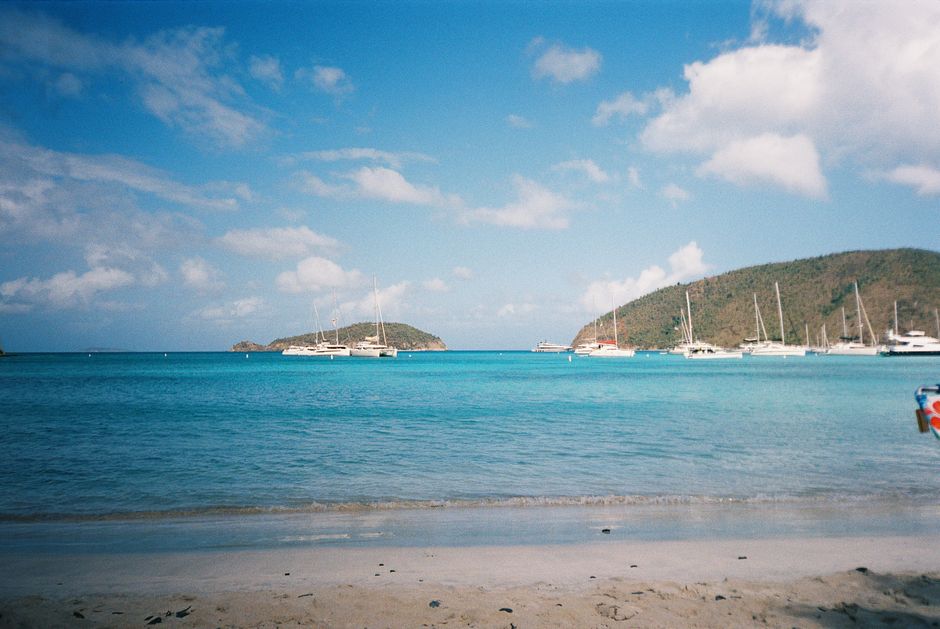
The US Virgin Islands are an American territory in the northeastern Caribbean, about 1,770 km (1,100 miles) southeast of Miami, where you can step off a domestic flight onto green, steep islands with Danish colonial towns, coral reefs and some of the finest beaches in the region. St. Thomas is the busy hub, with the harbor town of Charlotte Amalie, cruise ships and duty-free shopping; a 20-minute ferry away, St. John is two-thirds national park, with bay after bay of white sand, snorkel trails and forested hiking paths; and St. Croix, to the south, is bigger, flatter and quieter, with two historic towns, rum distilleries and Buck Island’s reef. US citizens don’t need a passport for a direct trip from the mainland, the currency is the US dollar and English is the language, but traffic drives on the left and life runs on island time. December to April is the dry, breezy high season, and May, June and early summer are good value. Give it a week to combine St. Thomas and St. John, and add a few days for St. Croix.
Right now in U.S. Virgin Islands
- Tue 28–29°C 82–85°F 11 mm Showers
- Wed 26–29°C 78–84°F 7 mm Rain
- Thu 28–29°C 82–85°F 1 mm Mostly clear
- Mon 12 Oct Columbus Day (Virgin Islands–Puerto Rico Friendship Day & Columbus Day)
Weather: MET Norway (CC BY 4.0) · Holidays: Nager.Date
Multi-day tours of US Virgin Islands
Multi-day tours from local operators. You check dates and book on Viator, our partner; we may earn a commission at no extra cost to you. How we earn money
US Virgin Islands at a glance: overview and geography
The territory has three main islands, St. Thomas, St. John and St. Croix, plus small Water Island off Charlotte Amalie and around 50 islets and cays. St. Thomas and St. John sit on the same shallow bank as the British Virgin Islands, so close that from St. John’s north shore you look straight across a narrow channel to Tortola. Both are mountainous, with steep green hillsides dropping to deep, sheltered bays. St. Croix, the largest island, lies about 65 km (40 miles) to the south across deep water, with rolling hills, a rainforest in the west and dry, cactus-covered land in the east, where Point Udall is the easternmost point of the United States. The 2020 US census counted 87,146 residents.
Taíno and later Kalinago (Carib) peoples lived here before Europeans arrived; Columbus named the islands after the legend of St. Ursula and her 11,000 virgins in 1493. Denmark colonized St. Thomas in 1672, St. John in 1718 and bought St. Croix from France in 1733, building a sugar economy on the labor of enslaved Africans. Enslaved people on St. John rose up in 1733, one of the earliest major revolts in the Americas, and in 1848 a mass protest on St. Croix forced the Danish governor to declare emancipation on 3 July. The United States bought the islands from Denmark for US$25 million in 1917, to secure the sea route to the Panama Canal, and the handover on 31 March is still marked as Transfer Day. Islanders became US citizens in 1927. Danish street names, red-roofed warehouses and stepped streets remain in Charlotte Amalie, Christiansted and Frederiksted.
Time zone: the islands stay on Atlantic Standard Time (UTC−4) all year, with no daylight saving. That is the same as New York and Miami from March to November and one hour ahead of them in winter.
The islands and areas
- Charlotte Amalie and central St. Thomas: the capital, built around a deep harbor, with Danish-era lanes, duty-free shops, the cruise docks at Havensight and Crown Bay, and hillside viewpoints above town.
- North and east St. Thomas: Magens Bay, Coki Point and Sapphire Beach, the resorts of the East End and Red Hook, the port for ferries to St. John and the BVI.
- Water Island: a small, mostly residential island a few minutes by ferry from Crown Bay, with Honeymoon Beach.
- St. John: Cruz Bay, the lively little ferry town; the north-shore beaches of Virgin Islands National Park; and laid-back Coral Bay on the quieter east side.
- Christiansted and east St. Croix: the old Danish capital on its boardwalk, the reef-protected East End beaches, Point Udall and the boats to Buck Island.
- Frederiksted and west St. Croix: the cruise pier town, sunset beaches, the rainforest and the rum distilleries.
Where to go: St. Thomas, St. John and St. Croix
Most first-time visitors split their time between St. Thomas and St. John, which are linked by frequent ferries. St. Thomas has the airport, the most hotels and the busiest nightlife; St. John is for beaches, snorkeling and hiking. St. Croix is a separate trip, by a short flight or a twice-daily ferry on five days a week, and rewards those who want history, diving and fewer crowds.
Charlotte Amalie
The capital climbs the hills above one of the Caribbean’s busiest cruise harbors. Walk the old Danish warehouse alleys off Main Street, now full of jewelry and duty-free shops, climb the 99 Steps, a brick stairway built from ships’ ballast bricks, and see Fort Christian, the red fort built in the 1670s and now a museum, Emancipation Garden and the Government House. The St. Thomas Synagogue, built in 1833 with a sand floor, is one of the oldest synagogues in continual use under the US flag. For views, take the Skyride cable car up to Paradise Point or drive up to Mountain Top. Visit when only one or two ships are in, or late in the afternoon after they sail.
Magens Bay and the St. Thomas beaches
Magens Bay, a deep, calm horseshoe bay on the north side of St. Thomas with a long arc of white sand, is the island’s most famous beach; it is run as a public park with a small admission fee, lifeguards, changing rooms and a snack bar. On the East End, Coki Point has easy snorkeling among many fish next to Coral World Ocean Park, and Sapphire, Secret Harbor and Lindquist Beach are good for swimming. Brewers Bay near the airport is a locals’ favorite with food trucks.
St. John and Virgin Islands National Park
Virgin Islands National Park covers about 60% of St. John’s land, plus large areas of sea and reef around it, which keeps the island green, uncrowded and almost free of large hotels. Start at the visitor center in Cruz Bay, then follow the North Shore Road to a chain of beautiful bays: Honeymoon and Salomon, reached on foot by the Lind Point Trail; Hawksnest; Trunk Bay, with its marked underwater snorkel trail and the only park beach that charges a fee; Cinnamon Bay, whose campground is reopening; and Maho and Francis Bay, where turtles graze on seagrass. Further on, the ruins of the Annaberg sugar plantation look over Leinster Bay, where you can snorkel to Waterlemon Cay. The Reef Bay Trail leads down through forest past Taíno petroglyphs to plantation ruins, and Ram Head and Salt Pond Bay are highlights of the dry southeast. Cruz Bay has restaurants, bars and shops; Coral Bay is smaller and more relaxed.
St. Croix: Christiansted and Frederiksted
Christiansted, on St. Croix’s north coast, has some of the best-preserved Danish colonial architecture in the Caribbean. Its yellow Fort Christiansvaern, the old customs house and scale house form Christiansted National Historic Site, and the boardwalk is lined with restaurants. Frederiksted, on the west coast, is a quieter town of arcaded streets with the cruise pier, the red Fort Frederik, where emancipation was proclaimed in 1848, and calm sunset beaches. Between them are the Cruzan and Captain Morgan rum distilleries, the Estate Whim plantation museum and the rainforest along Mahogany Road.
Buck Island Reef National Monument
A small island about 2.4 km (1.5 miles) off St. Croix’s northeast coast, Buck Island is surrounded by an elkhorn coral barrier reef, with a marked underwater snorkel trail and a beautiful west-facing beach. It is managed by the National Park Service and reached on licensed half-day and full-day boat trips from Christiansted and Green Cay Marina.
A few more worth your time
Cane Bay on St. Croix, where a deep reef wall starts a short swim from the beach; Sandy Point National Wildlife Refuge, a nesting beach for leatherback turtles, open to visitors only at certain times; Salt River Bay, where Columbus’s crew landed in 1493, now a park with night kayak tours of a bioluminescent bay; Point Udall at sunrise; and Hassel Island in Charlotte Amalie’s harbor, part of the national park, with ruined forts and a boatyard.
Best time to visit the US Virgin Islands
The islands are warm all year, cooled by the easterly trade winds, with a drier season from about January to July and a wetter one from August to December, when showers are heavier and tropical storms are possible. The table shows the official 1991–2020 averages for the Charlotte Amalie airport weather station on St. Thomas (Cyril E. King Airport), from the World Meteorological Organization normals archived by NOAA. St. John is very similar; St. Croix is a little drier in the east and wetter in the western hills.
| Season (St. Thomas airport, 1991–2020) | Average afternoon high | Average night low | Rain a month | Days with rain a month | What it’s like |
|---|---|---|---|---|---|
| Winter and spring (Dec–Apr) | 29–30 °C (84–86 °F) | 23–24 °C (74–76 °F) | 47–74 mm (1.9–2.9 in) | 7–12 | Breezy and pleasant, with brief passing showers; peak season and prices. |
| Early summer (May–Jul) | 31–32 °C (87–90 °F) | 25–26 °C (78–79 °F) | 60–77 mm (2.4–3.0 in) | 7–10 | Hotter and calmer, still fairly dry; good value and calm seas. |
| Late summer and autumn (Aug–Nov) | 32 °C falling to 30 °C (90 °F falling to 87 °F) | 26 °C falling to 25 °C (80 °F falling to 77 °F) | 111–154 mm (4.4–6.1 in) | 11–14 | The wettest and most humid months; peak hurricane risk in August and September; quietest and cheapest. |
The airport records about 1,050 mm (41 in) of rain a year, with November and September the wettest months. The sea is pleasant all year, from about 26 °C (79 °F) in February to 29 °C (84 °F) in September and October. In winter, swells generated by storms far to the north can make north-facing beaches rough for a day or two.
Hurricanes, Irma and Maria
The Atlantic hurricane season runs from 1 June to 30 November, with the highest risk from August to October. In September 2017 the islands were hit by two Category 5 hurricanes in two weeks: Irma devastated St. Thomas and St. John on 6 September, and Maria passed just south of St. Croix on 19–20 September, causing severe damage there. Recovery took years, and a few places still show the scars: some resorts were rebuilt from scratch, and the old Caneel Bay resort inside the national park on St. John has remained closed. Most hotels, beaches and trails reopened long ago, and the national park’s Cinnamon Bay campground is reopening. Through early October 2026 the season had been quiet, with no hurricanes in the Atlantic and no storm watches or warnings for the territory, according to the US National Hurricane Center. If you travel between August and October, book flexible rates, take out travel insurance that covers hurricanes, and follow the National Weather Service office in San Juan and the territory’s emergency management agency, VITEMA.
Sargassum seaweed
Sargassum seaweed drifts in from the Atlantic in most years, mainly from about March to September, and collects in bays facing east and south, such as some on St. Thomas’s south and east coasts, the southeast of St. John and the East End of St. Croix. The north-facing beaches of St. Thomas and St. John are usually less affected. 2026 has been a heavy sargassum year across the region; the University of South Florida’s September 2026 bulletin says amounts are falling and should keep falling until about November.
Crowds and prices through the year
High season runs from mid-December to April, peaking over Christmas, New Year, Presidents’ Day and US spring break, when villas on St. John book up months ahead and rental jeeps sell out. May to July is a good-value window with fine weather. From late August to October many restaurants and some hotels on St. John and St. Croix close for a few weeks, and ferry timetables are reduced. Cruise ships call at St. Thomas almost daily in winter, filling Charlotte Amalie, Magens Bay and Trunk Bay on busy days.
Festivals and public holidays
The biggest party is the Virgin Islands Carnival on St. Thomas in April and May, with parades, calypso and soca, food fairs and J’ouvert at dawn. The St. John Celebration builds up to Emancipation Day on 3 July and the Fourth of July, and St. Croix’s Crucian Christmas Festival runs from December into early January. As well as US federal holidays, the territory marks Three Kings Day (6 January), Transfer Day (31 March), Holy Thursday, Good Friday and Easter Monday, Emancipation Day (3 July), Columbus Day and Puerto Rico Friendship Day in October, and Liberty Day (1 November), among others; government offices and banks close on these days.
How long to stay: sample itineraries
St. Thomas and St. John combine easily: stay on one and day-trip to the other, or split your stay. St. Croix needs its own few days.
4 days: St. Thomas and a St. John day
Day 1: Charlotte Amalie, the 99 Steps, Fort Christian and sunset from Paradise Point. Day 2: Magens Bay in the morning, Coki Point snorkeling in the afternoon. Day 3: the early ferry from Red Hook to Cruz Bay, a taxi to Trunk Bay or Cinnamon Bay, and the Lind Point Trail back to town. Day 4: a boat trip or a day sail, or a ferry to Jost Van Dyke in the British Virgin Islands with your passport.
7 days: St. Thomas and St. John
Two nights on St. Thomas, then five on St. John with a hire jeep: the North Shore beaches, Annaberg and Waterlemon Cay, the Reef Bay Trail, Ram Head and Salt Pond Bay, a day in Coral Bay and a snorkel or sailing trip around the cays.
10 days: all three islands
Add three nights on St. Croix: Christiansted’s fort and boardwalk, a boat trip to Buck Island, a dive or snorkel at Cane Bay, the rum distilleries, Frederiksted at sunset and Point Udall at dawn. Many flights connect through Miami, Atlanta or New York, so it is easy to add a city stop on the way home.
Entry, money, fees and costs
Entry rules (last reviewed October 2026)
The US Virgin Islands are a US territory, so United States immigration law applies. They are, however, outside the US customs area, so everyone flying from the islands to the mainland or Puerto Rico goes through a US Customs and Border Protection (CBP) inspection before boarding.
- US citizens: no passport is needed for direct travel between the US mainland or Puerto Rico and the islands. You do need proof of citizenship and identity for the CBP check when you leave: a passport is easiest, or an original birth certificate with a raised seal plus government-issued photo ID. Airline ID rules for domestic flights also apply.
- Non-US visitors: need a valid passport and whatever they would need to enter the United States: an approved ESTA for Visa Waiver Program countries such as the UK and most of the EU, or a US visa. Canadian citizens need a passport but no visa or ESTA.
- Arriving from abroad: if you come from another country, for example by ferry from the British Virgin Islands, you pass through full US immigration and customs on arrival, and everyone, US citizens included, needs a passport or other document valid for international travel.
- Leaving for the mainland: CBP’s predeparture inspection is at Cyril E. King Airport on St. Thomas and Henry E. Rohlsen Airport on St. Croix, before security. Eligible travelers can use the Mobile Passport Control app. Allow extra time.
- Duty-free allowance: returning US residents can bring back US$1,600 worth of goods duty-free from the islands, double the usual allowance, including up to 5 liters of alcohol if at least four were bought in the territory and at least one is a local product. Gifts mailed home from the islands are duty-free up to US$200.
Rules change, so check CBP’s website and the US State Department or your own government’s travel information before you go.
Money, cards and tipping
The currency is the US dollar. Cards are widely accepted, and there are ATMs on all three islands, though fewer on St. John. Carry cash for safari taxis, small food stands, beach chair rentals and tips. Tipping follows US customs: 15–20% in restaurants (check whether a service charge has already been added, which is common for groups), US$1–2 a drink at bars, around 15% for taxis and tour guides, and something for boat crews on snorkel and sailing trips.
Hotel room tax
The territory charges a hotel room tax of 12.5% on the gross room rate for stays of less than 90 days in hotels, guesthouses, villas, condos and other rentals, according to the Virgin Islands Bureau of Internal Revenue. The base includes extra charges such as energy surcharges and maintenance or resort fees, but not food, drinks or tips. It is collected by the hotel or rental host, so check whether a quoted price includes it; many hotels also add their own resort fee.
National park fees and rules
There is no entrance fee for Virgin Islands National Park. The exception is Trunk Bay, which charges an expanded amenity fee of US$5 per person aged 16 and over, from sunrise to sunset, also on the national “fee-free” days. Pay at the fee booth or online through Recreation.gov; since 1 October 2026 the booth takes cards and mobile payments only, no cash. Boaters must pay an overnight mooring fee of US$26 a night, half price with a senior or access pass, through the Recreation.gov app or at payment stations in the bays, with a limit of 7 nights per bay and 30 nights a year. Inside the park, don’t touch or stand on coral, don’t feed fish, take nothing (including shells and coral), keep to the trails and use mooring buoys rather than anchoring on reefs or seagrass. Interagency passes such as America the Beautiful can be bought at Trunk Bay or the Cruz Bay visitor center.
Typical travel costs
The islands are cheaper than some neighbors but still pricey, especially St. John in high season, where villas, groceries and jeep rentals cost well above mainland levels. These estimates, per person per day, are a planning guide as of October 2026:
| Style | Estimated cost per day | What that looks like |
|---|---|---|
| Budget | about US$150–220 | A guesthouse or simple condo shared by two, often on St. Croix or in Charlotte Amalie, food trucks and local lunch spots, safari taxis and ferries, free beaches |
| Mid-range | about US$300–450 | A beach hotel on St. Thomas or a small villa on St. John shared by two, restaurant meals, a jeep, a snorkel or sailing trip |
| High-end | about US$700+ | A luxury resort or villa with a pool, fine dining, private boat charters and day trips to the BVI |
Add the 12.5% room tax and any resort fees. A jeep on St. John often costs US$100 or more a day in high season. The figures are our estimates, not official statistics.
Getting there and getting around
Flights and airports
Cyril E. King Airport (STT) on St. Thomas, just west of Charlotte Amalie, is the main gateway, with nonstop flights from Miami (about 2 hours 45 minutes), Fort Lauderdale, Atlanta, Charlotte, New York, Boston, Philadelphia, Washington, D.C. and Chicago, some of them seasonal, plus frequent short hops from San Juan, Puerto Rico. Henry E. Rohlsen Airport (STX) on St. Croix has fewer nonstop flights from the mainland and connections via San Juan and St. Thomas. Short flights link the two islands in about 25 minutes. St. John has no airport: fly to St. Thomas and take the ferry.
Ferries
- Red Hook (St. Thomas)–Cruz Bay (St. John): the main passenger ferry, run by Varlack Ventures and Transportation Services, about 15–20 minutes, normally hourly from early morning to late evening (a reduced off-season timetable runs into late October). The adult non-resident fare is US$8.15 one way, children US$1, plus a fuel surcharge of US$0.66 added from 12 June 2026 and US$4 per large bag.
- Charlotte Amalie–Cruz Bay: a longer, less frequent ferry, about 45 minutes, convenient from the airport and downtown hotels; adult non-resident fare US$13 one way plus the fuel surcharge.
- Car barge: privately run car ferries carry vehicles between Red Hook and the Enighed Pond terminal in Cruz Bay; for example, Big Red Barge charges non-residents US$50 one way or US$65 return per vehicle, plus a US$3 port fee. Arrive 30–60 minutes early: boarding is first come, first served even with a ticket.
- St. Thomas–St. Croix: the QE IV ferry runs Thursday to Monday between Gallows Bay in Christiansted and the Blyden Terminal in Charlotte Amalie, about 2 hours 10 minutes, US$60 one way, leaving St. Croix at 8:00 and St. Thomas at 15:00.
- To the British Virgin Islands: ferries run daily from Charlotte Amalie to Road Town on Tortola, and from Red Hook and Cruz Bay to West End on Tortola and to Jost Van Dyke, with occasional services to Virgin Gorda. Bring your passport, complete the BVI’s online arrival card and expect the BVI’s arrival levy and ferry departure tax.
Driving and taxis
Traffic drives on the left, unusual for the US, and most cars have the steering wheel on the left too, so take extra care on turns. Roads on St. Thomas and St. John are narrow, steep and winding, with sharp hairpins and few shoulders; speed limits are low, mostly 20–35 mph. A US or foreign driver’s license is valid for up to 90 days, seat belts are required, and using a handheld phone while driving is illegal. On St. John a jeep or other 4×4 is the best way to reach the beaches; book well ahead. Taxis are mostly vans and open-air “safari” trucks that charge set per-person fares by destination, published by the Virgin Islands Taxicab Commission; confirm the price before you get in. Cheap shared safari buses also run along the main roads on St. Thomas.
Beaches, the sea and safety in the water
The best beaches include Magens Bay, Coki Point, Sapphire, Lindquist and Brewers Bay on St. Thomas; Trunk, Cinnamon, Maho, Francis, Hawksnest, Honeymoon and Salt Pond bays on St. John; and Cane Bay, Rainbow Beach, Shoys and Buck Island off St. Croix. Most bays are sheltered and calm, perfect for snorkeling with turtles, rays and reef fish. See our beaches guide, plus snorkeling, diving and boat trips.
- Winter swells: from November to April, north swells can produce strong waves and rip currents on north-facing beaches; check conditions and stay out when the sea is rough.
- Lifeguards: only a few beaches, such as Magens Bay and Trunk Bay at busy times, have them.
- Boats: stay inside buoyed swim areas and wear a bright snorkel vest when snorkeling away from shore.
- Coral and urchins: wear water shoes on rocky entries, never stand on coral and look out for spiny sea urchins and fire coral.
- Manchineel trees: these grow behind some beaches; their sap and small green apples are poisonous, so don’t shelter under them in the rain or touch the fruit.
Safety, health and connectivity
Safety
Tourist areas are generally safe, but the territory’s violent crime rate is higher than the US average, with most shootings happening in residential neighborhoods on St. Thomas and St. Croix, away from visitor areas. Thefts from cars and beaches are the main risk for visitors: don’t leave bags unattended or valuables visible in a parked jeep, especially at trailheads and beaches. At night, stick to busy areas and use taxis rather than walking along unlit roads. Roads are a real hazard, with steep hills, sharp bends and drivers unused to the left-hand rule. Emergency number: 911.
Health
The main hospitals are Schneider Regional Medical Center on St. Thomas and Governor Juan F. Luis Hospital on St. Croix; St. John has a community health center in Cruz Bay. Seriously ill patients may be flown to Puerto Rico or the mainland. US health insurance may or may not cover care here, so check, and non-US visitors should have travel insurance. Tap water often comes from cisterns, so many people drink bottled or filtered water. Mosquitoes can carry dengue, so use repellent, especially in the rainy months.
Connectivity and power
Major US mobile plans usually treat the islands as domestic, though a few charge roaming, so check before you go; coverage is good in towns and patchy in some bays on St. John, where your phone may also pick up a BVI network and charge international roaming. Wi-Fi is standard in hotels and rentals. Electricity is 120 V, 60 Hz with US-style type A and B sockets, so visitors from North America need no adapter; others need a travel adapter.
Food, music and culture
Virgin Islands cooking blends West African, Danish, Caribbean and American influences. Try pates (fried pastries filled with saltfish, beef or conch), johnnycakes, fungi (cornmeal cooked with okra) served with fish, kallaloo (a greens and seafood stew), goat water (a spicy goat stew), conch in butter sauce and, for dessert, red grout made from guava or tapioca. Local drinks include bush tea, maví and sorrel at Christmas, and St. Croix’s Cruzan and Captain Morgan rums. The traditional music of the islands is quelbe, played by scratch bands with a squash gourd, ukulele and flute; you will hear calypso, soca and reggae at carnival and beach bars. Islanders call themselves Virgin Islanders and, depending on the island, Crucians, St. Thomians or St. Johnians; greet people before asking a question, and cover up away from the beach. See our city sightseeing guide for tips on exploring small historic towns.
Things to do: snorkeling, sailing, hiking and history
- Snorkeling: Trunk Bay’s underwater trail, Waterlemon Cay, Maho Bay’s turtles, Coki Point and Buck Island. See our snorkeling guide.
- Diving: the Cane Bay wall on St. Croix, wrecks and reefs off St. Thomas, and the Frederiksted pier at night.
- Sailing and boat trips: day sails around St. John, catamaran trips to the BVI (with passports), and bareboat or crewed charters. See our boat trips guide.
- Hiking: the Reef Bay, Lind Point, Ram Head and Johnny Horn trails on St. John, and the rainforest on St. Croix. See our hiking guide.
- History: Charlotte Amalie’s forts and synagogue, Annaberg and Estate Whim plantations, and Christiansted National Historic Site.
- Kayaking and paddleboarding: calm bays on all three islands, and bioluminescent night paddles at Salt River Bay on St. Croix.
What to pack
Bring swimwear, a rash guard, a hat, sunglasses, reef-safe sunscreen, insect repellent, a refillable water bottle, water shoes and sturdy sandals or light hiking shoes for St. John’s trails. A dry bag is useful for boat trips. Pack a passport even if you are a US citizen, so you can hop over to the BVI and breeze through the CBP check on the way home. Add a light rain jacket from August to December, smart-casual clothes for dinner and a light layer for air-conditioned planes and restaurants.
US Virgin Islands travel FAQ
Do US citizens need a passport for the US Virgin Islands?
Not for direct travel from the US mainland or Puerto Rico, but you need proof of citizenship for the CBP check when you fly home: a passport, or a raised-seal birth certificate plus photo ID. A passport is needed if you visit the BVI.
What do non-US visitors need for the US Virgin Islands?
The same as for the United States: a passport plus an approved ESTA for Visa Waiver Program countries, or a US visa. Canadians need only a passport.
Why do I go through customs when flying home from St. Thomas?
Because the islands are outside the US customs area. CBP checks all passengers to the mainland before departure, and US residents get a US$1,600 duty-free allowance.
When is the best time to visit the US Virgin Islands?
December to April for dry, breezy weather, and May to July for good value and calm seas. August to October is the wettest period with the highest hurricane risk.
Which side of the road do they drive on in the US Virgin Islands?
The left, in mostly left-hand-drive American cars. Roads are steep and narrow, so drive slowly.
How do I get from St. Thomas to St. John?
By passenger ferry from Red Hook (15–20 minutes, US$8.15 plus a fuel surcharge for non-residents) or from Charlotte Amalie (about 45 minutes), or by car barge from Red Hook with a vehicle.
How much does it cost to visit Trunk Bay?
US$5 per person aged 16 and over, paid by card or phone at the booth or online through Recreation.gov. Other national park beaches on St. John are free.
What is the hotel tax in the US Virgin Islands?
12.5% of the gross room rate for stays under 90 days, including energy and maintenance surcharges. Many hotels add a resort fee as well.
Can I visit the British Virgin Islands from St. Thomas or St. John?
Yes, by daily ferry or day-sail charter. Everyone needs a passport, an online BVI arrival card and money for the BVI’s arrival levy and departure tax.
Have the islands recovered from Hurricanes Irma and Maria?
Largely, yes. Hotels, beaches and trails reopened years ago, though a few properties, such as the old Caneel Bay resort on St. John, remain closed.
Is the US Virgin Islands safe for tourists?
Most visits are trouble-free. Lock valuables away from parked cars and beaches, take taxis at night, drive carefully on steep roads and call 911 in an emergency.
Should I stay on St. Thomas or St. John?
St. Thomas for more hotels, easier access and nightlife; St. John for national park beaches, hiking and a quieter pace. Many visitors do both.
Sources and last review
Researched and last reviewed on 4 October 2026. Entry, ID, driving and currency basics come from the US Virgin Islands Department of Tourism; the predeparture inspection, Mobile Passport Control and the US$1,600 duty-free allowance from US Customs and Border Protection; the 12.5% hotel room tax from the Virgin Islands Bureau of Internal Revenue; park size, Trunk Bay and mooring fees from the National Park Service; ferry fares from Varlack Ventures, the Virgin Islands Port Authority and the Department of Public Works; the climate averages (Charlotte Amalie airport station, 1991–2020) from the WMO normals archived by NOAA; the population from the 2020 US census; the 2026 hurricane season from the US National Hurricane Center; and the sargassum outlook from the University of South Florida. Flight routes, the off-season ferry timetable, holiday list, crime patterns and hospital details come from secondary sources and are flagged for checking. Daily costs are estimates. Prices, timetables and rules change, so check the official sites before you travel.
Plan your trip
Partner links: TravelerCenter may earn a commission if you book, at no extra cost to you.