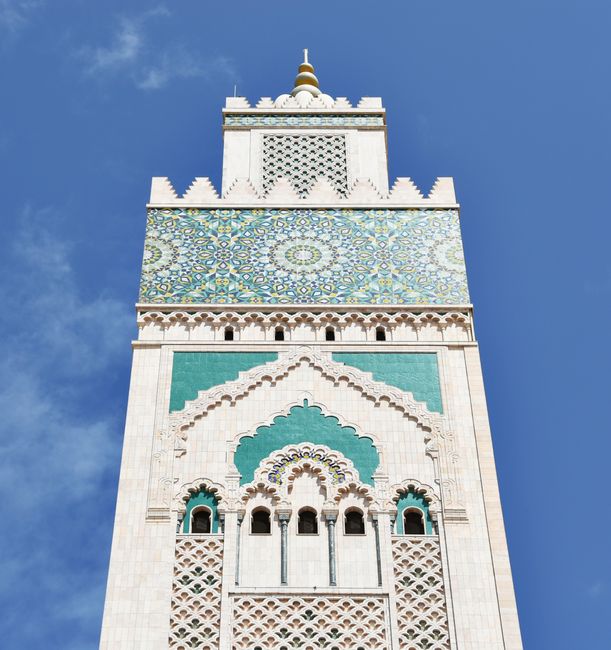
Morocco packs an extraordinary variety into one trip. Just 14 km (9 miles) across the Strait of Gibraltar from Spain, it combines the medieval medinas and souks of Marrakech and Fez, the Atlantic beaches and surf of Agadir, Essaouira and the coast, the snowy peaks and Amazigh villages of the High Atlas, the blue lanes of Chefchaouen in the Rif, the earthen kasbahs of Ouarzazate and the golden Sahara dunes of Merzouga. A first trip usually links the four imperial cities, Rabat, Fez, Meknes and Marrakech, with a journey over the Atlas to the desert, and many visitors finish on the coast. Travel is easier than ever: most Western visitors don’t need a visa, the Al Boraq high-speed train links Tangier, Rabat and Casablanca, and a new high-speed line to Marrakech is under construction ahead of the 2030 FIFA World Cup, which Morocco co-hosts with Spain and Portugal. Staying in a riad, a traditional house built around a courtyard, sharing mint tea and a tagine, and getting lost in a medina are experiences you won’t forget. Plan ahead for a few things: online-only tickets at some sights, cash for souks and taxis, the heat in summer inland, cold nights in the mountains and desert in winter, and the touts and small scams of the busiest medinas.
Right now in Morocco
- Wed 19–24°C 67–76°F Clear
- Thu 18–24°C 64–75°F 1 mm Partly cloudy
- Fri 17–23°C 62–73°F 1 mm Mostly clear
Weather: MET Norway (CC BY 4.0)
Multi-day tours of Morocco
Multi-day tours from local operators. You check dates and book on Viator, our partner; we may earn a commission at no extra cost to you. How we earn money
Morocco at a glance
Morocco lies in the northwest corner of Africa, with coasts on the Mediterranean and the Atlantic. Its backbone is formed by mountain ranges: the Rif in the north, the Middle Atlas with its cedar forests, the High Atlas, which rises to 4,167 m (13,671 ft) at Toubkal, North Africa’s highest peak, and the Anti-Atlas further south. Beyond them, the land drops into the oases, stony plateaus and dunes of the Sahara. According to the 2024 census by the High Commission for Planning (HCP), Morocco had 36.8 million inhabitants. Rabat is the capital and Casablanca the largest city and economic hub. The country is a constitutional monarchy, divided into 12 regions.
The official languages are Arabic and Amazigh (Tamazight), the language of the Indigenous Berber peoples, written in the Tifinagh alphabet you’ll see on public signs. Most people speak Darija, Moroccan Arabic, and French is widely used in business, menus and signs; Spanish is common in the north, and English is spoken in hotels and tourist areas. Almost all Moroccans are Muslim. Morocco uses UTC+1 for most of the year and moves its clocks back to UTC+0 during Ramadan. Electricity is 220 V, with two-pin European type C and E sockets.
Morocco’s regions for travelers
- The imperial cities: Rabat, the capital; Fez, with its vast medieval medina; Meknes and the Roman ruins of Volubilis; and Marrakech.
- The north and the Rif: Tangier on the Strait, Asilah, the Andalusian-style medina of Tetouan, Chefchaouen and the Rif Mountains, and the Mediterranean beaches.
- The Atlantic coast: Casablanca, El Jadida, Essaouira, Agadir and the surf villages of Taghazout and Imsouane.
- The High Atlas and Middle Atlas: Imlil and Toubkal, the Ourika valley, the Ait Bouguemez valley, Ifrane, Azrou and the cedar forests.
- The south and the Sahara: Ouarzazate and Aït Ben Haddou, the Draa, Dades and Todra valleys, Merzouga and Erg Chebbi, Zagora and Erg Chigaga.
Regions
Where to go: medinas, mountains, coast and desert
The classic first trip runs from Casablanca or Tangier through Rabat, Meknes and Fez, then south over the Middle Atlas to the Sahara at Merzouga, west along the gorges to Ouarzazate, and over the High Atlas to Marrakech, with a few days in Essaouira or Agadir to finish. Shorter trips often focus on Marrakech, with a day in the mountains and a night in the desert or on the coast. See our guides to each of these places:
- Marrakech: the Red City, with Jemaa el-Fna, the souks, riads, palaces and the Majorelle Garden.
- Fez: the largest medieval medina in the Arab world, with madrasas, tanneries and crafts.
- Meknes: Moulay Ismail’s imperial city and the base for Volubilis and Moulay Idriss.
- Rabat: the relaxed capital, with the Kasbah of the Udayas, the Hassan Tower and fine museums.
- Casablanca: the economic capital, with the Hassan II Mosque, Art Deco streets and the Corniche.
- Tangier: the gateway from Spain, with its Kasbah, cafés and literary history.
- Chefchaouen: the blue town of the Rif Mountains.
- Essaouira: a whitewashed port town with ramparts, seafood and kitesurfing.
- Agadir: Morocco’s biggest beach resort, near the surf coast of Taghazout.
- Ouarzazate: film studios, kasbahs and Aït Ben Haddou, gateway to the south.
- Merzouga: the dunes of Erg Chebbi, camel treks and desert camps.
Other favorites include the painted seaside town of Asilah, the Portuguese fortress city of El Jadida, the High Atlas villages around Imlil, the Ouzoud waterfalls, the walled town of Taroudant, and the Draa Valley’s palm groves leading to the remote dunes of Erg Chigaga.
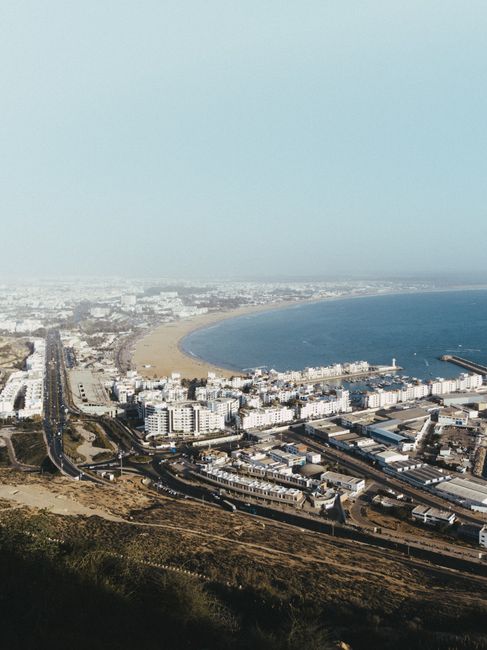
Agadir Travel Guide
Plan a trip to Agadir: the beach and promenade, the Kasbah of Agadir Oufella, the Museum of the Reconstruction price and hours, Souk El…
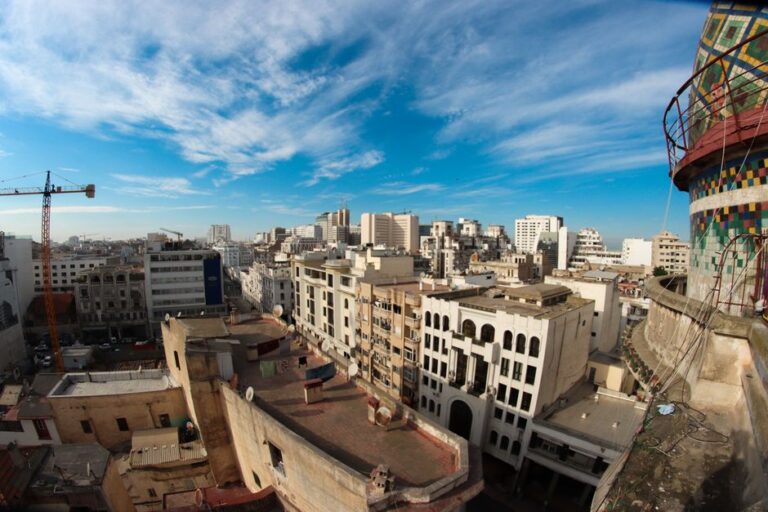
Casablanca Travel Guide
Plan a trip to Casablanca: Hassan II Mosque guided tour prices and times, Art Deco downtown, the Habous quarter, the old medina, the Corniche…
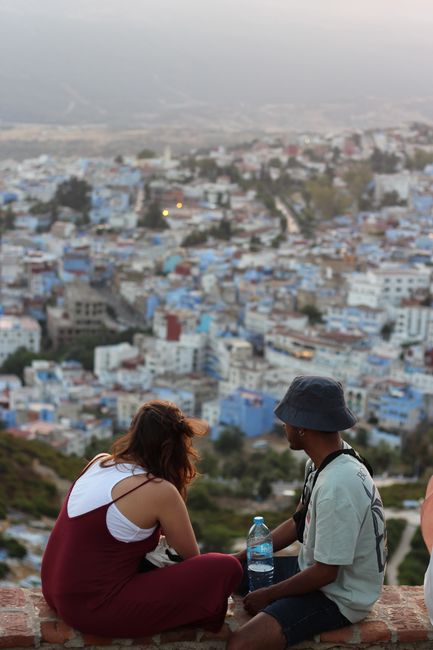
Chefchaouen Travel Guide
Plan a trip to Chefchaouen, the blue town of the Rif: the medina, Plaza Uta el-Hammam, the Kasbah ticket price, Ras el-Maa, the Spanish…
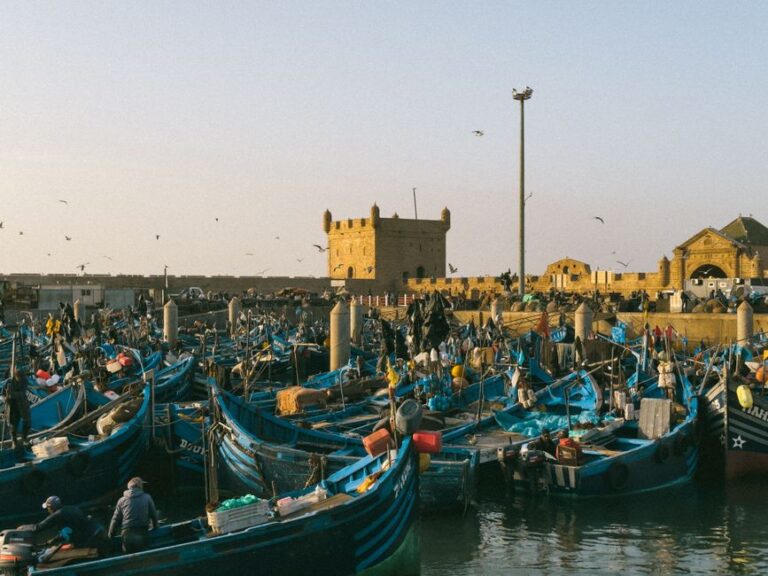
Essaouira Travel Guide
Plan a trip to Essaouira: the UNESCO medina and Skala ramparts, the fishing port and Skala du Port ticket price, fish grills, galleries, the…
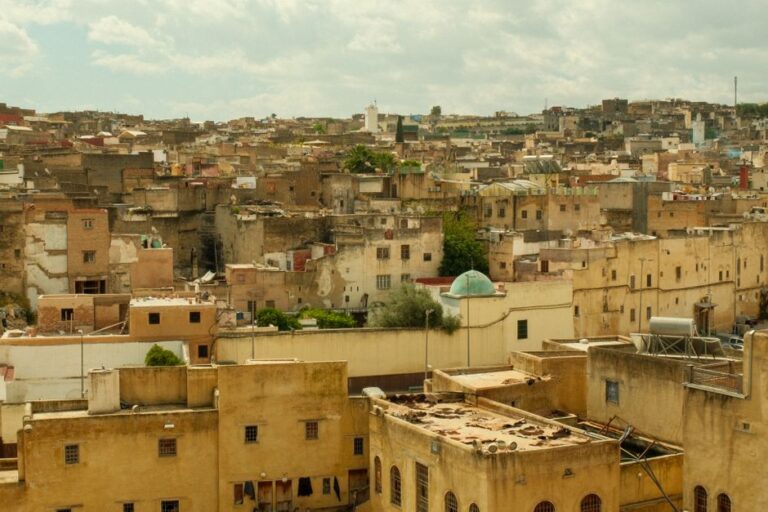
Fez Travel Guide
Plan a trip to Fez: the UNESCO medina of Fes el-Bali, Bou Inania and Al-Attarine madrasas, the Qarawiyyin, the Chouara tannery, the Batha Museum…
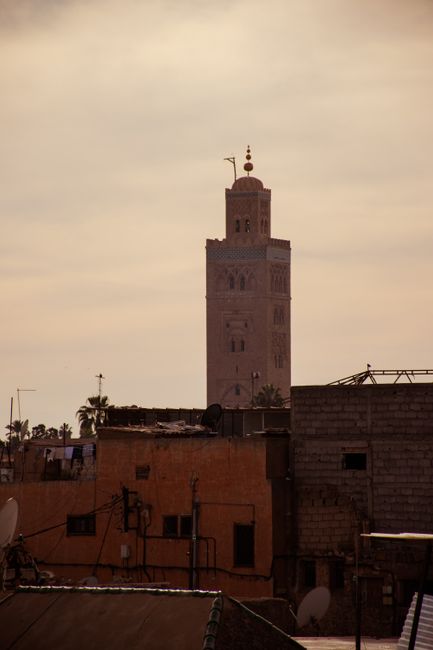
Marrakech Travel Guide
Plan a trip to Marrakech: Jemaa el-Fna and the souks, riads in the medina, Gueliz and the Palmeraie, Bahia and Badi palace and Saadian…
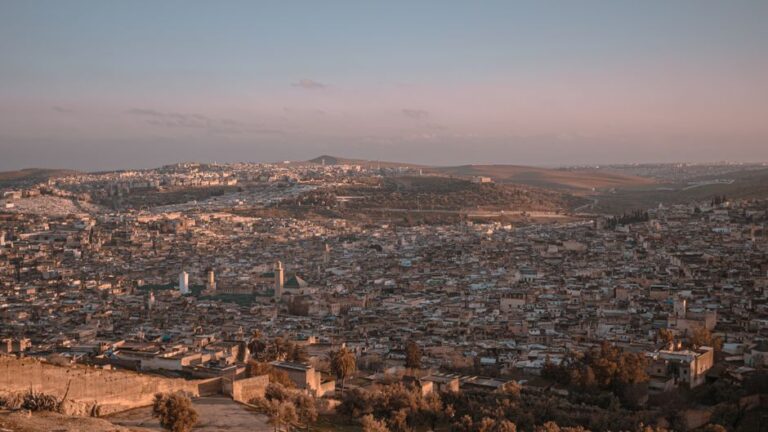
Meknes Travel Guide
Plan a trip to Meknes: Bab Mansour and Place el-Hedim, the Mausoleum of Moulay Ismail, Heri es-Souani granaries, Dar Jamaï museum price and hours,…
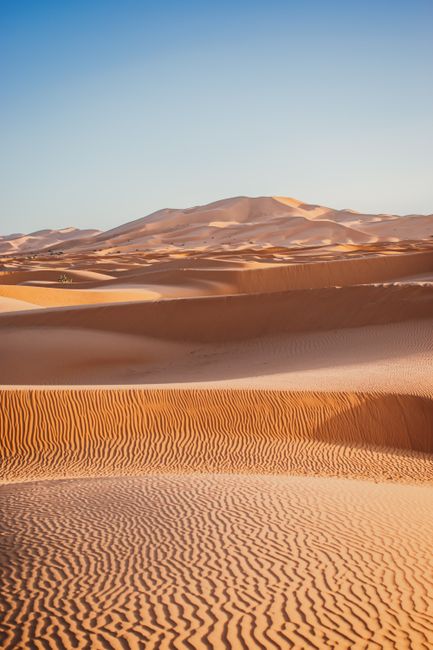
Merzouga Travel Guide
Plan a trip to Merzouga and the Erg Chebbi dunes: camel treks, standard and luxury desert camps, sunrise and stargazing, Khamlia's Gnawa music, Rissani,…
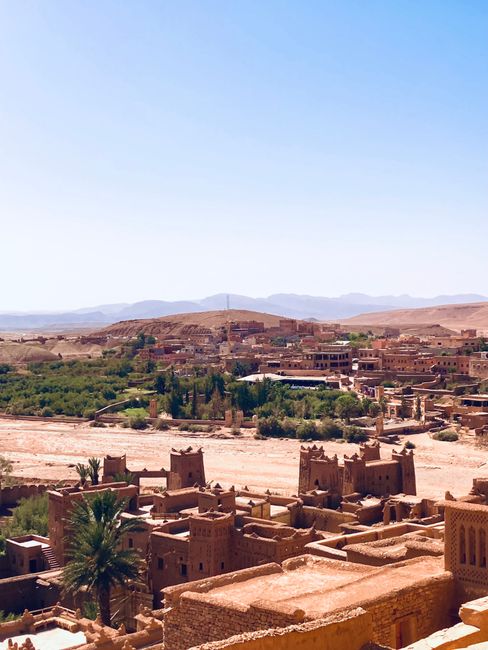
Ouarzazate Travel Guide
Plan a trip to Ouarzazate: the UNESCO Ksar of Aït Ben Haddou, Atlas and CLA film studios, the Taourirt Kasbah, Skoura and Fint oases,…
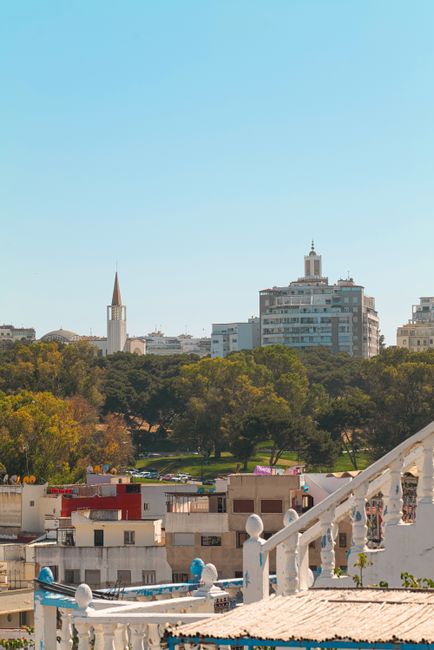
Rabat Travel Guide
Plan a trip to Rabat, Morocco's capital: the Kasbah of the Udayas and Andalusian Garden, the Hassan Tower and Mausoleum of Mohammed V, the…
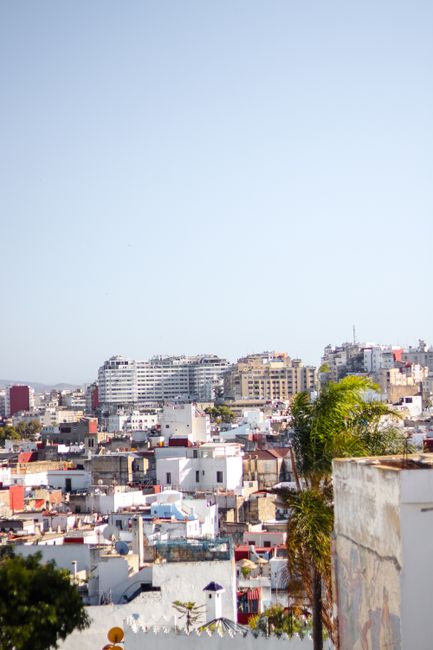
Tangier Travel Guide
Plan a trip to Tangier: the Kasbah and its museum, the medina, Grand and Petit Socco, the American Legation, Café Hafa, the Caves of…
Best time to visit Morocco
Morocco’s climate varies sharply with altitude and distance from the sea. Spring (March to May) and autumn (September to November) are the best seasons for most trips, with warm days in the cities and the desert. Summer (June to August) is very hot inland, with average highs near 38 °C (100 °F) in Marrakech, Ouarzazate and the Sahara, but the Atlantic coast stays mild, and Essaouira, Agadir and the beaches are at their busiest. Winter (December to February) brings sunny, mild days in Marrakech and the south, rain in the north, snow on the Atlas, and nights near or below freezing in the mountains and the desert. The table shows rounded average daily highs and lows from the 1991–2020 climate normals of Morocco’s General Directorate of Meteorology (DGM), as published by the World Meteorological Organization (WMO).
| Region (DGM station) | January high / low | August high / low | Rain a year |
|---|---|---|---|
| Marrakech and the plains (Marrakech) | 19 °C (66 °F) / 6 °C (43 °F) | 37 °C (99 °F) / 21 °C (70 °F) | about 220 mm (8.7 in) |
| Atlantic coast (Casablanca) | 18 °C (64 °F) / 9 °C (48 °F) | 27 °C (80 °F) / 21 °C (70 °F) | about 410 mm (16 in) |
| Southern Atlantic coast (Agadir) | 21 °C (70 °F) / 8 °C (47 °F) | 27 °C (81 °F) / 20 °C (67 °F) | about 230 mm (9 in) |
| Mediterranean north (Tetouan) | 17 °C (63 °F) / 9 °C (49 °F) | 30 °C (87 °F) / 21 °C (71 °F) | about 650 mm (26 in) |
| Interior and imperial cities (Fès-Saïss) | 16 °C (61 °F) / 4 °C (39 °F) | 35 °C (95 °F) / 18 °C (65 °F) | about 490 mm (19 in) |
| Middle Atlas (Ifrane, 1,663 m) | 9 °C (49 °F) / -1 °C (30 °F) | 30 °C (87 °F) / 15 °C (60 °F) | about 960 mm (38 in) |
| South, gateway to the desert (Ouarzazate) | 17 °C (63 °F) / 2 °C (35 °F) | 38 °C (100 °F) / 22 °C (72 °F) | about 115 mm (4.5 in) |
| Sahara edge (Errachidia) | 16 °C (61 °F) / 2 °C (36 °F) | 38 °C (101 °F) / 25 °C (77 °F) | about 130 mm (5 in) |
Morocco month by month
| Month | Weather | Highlights | Crowds and prices |
|---|---|---|---|
| January | Sunny and mild in Marrakech and the south; cold nights; snow on the Atlas | Amazigh New Year (January 14); clear desert skies | Busy over New Year, then quieter |
| February | Mild; almond blossom in the valleys | Good for cities and the desert; Ramadan expected to begin around February 8–9, 2027 | Moderate; quieter during Ramadan |
| March | Warming; showers in the north | Spring in the Atlas foothills; Eid al-Fitr expected around March 9–10, 2027 | Moderate; busy around European Easter |
| April | Warm and green; sandstorms possible in the desert | One of the best months overall | High around Easter |
| May | Warm to hot inland | Rose harvest in the Dades Valley; good hiking | High |
| June | Hot inland, mild on the coast | Gnaoua festival in Essaouira; Mawazine in Rabat | Moderate |
| July | Very hot inland | Beach season on both coasts | Busy on the coasts; Moroccans abroad return home |
| August | Hottest month inland | Mountain walks at altitude; beaches | Very busy at the beaches and ports |
| September | Hot early, then pleasant | Date harvest begins in the oases | Rising |
| October | Warm days, cool nights | Excellent for the desert and the cities | High |
| November | Mild days, cooler nights; first rains in the north | Olive harvest; Marrakech film festival season | High |
| December | Mild sunny days, cold nights | Christmas and New Year in Marrakech and the desert | Very high late in the month |
Ramadan and holidays
During Ramadan, the month of daytime fasting, sights stay open, often with shorter hours; many restaurants outside hotels close until sunset, and the evenings are lively with family meals and late-night streets. The dates move about 11 days earlier each year and depend on the sighting of the new moon. In 2027, Ramadan is expected to begin around February 8 or 9 and end with Eid al-Fitr around March 9 or 10, and Eid al-Adha is expected in mid-May. Morocco also turns its clocks back by one hour during Ramadan. National holidays include Throne Day (July 30), the Green March (November 6) and Independence Day (November 18), when offices and some museums close.
How long to stay: sample itineraries
- 7 days: Marrakech (3 nights) with a day in the High Atlas; then a 3-day desert loop over the Tizi n’Tichka via Aït Ben Haddou, the Dades Valley and Merzouga, back to Marrakech; or Marrakech (4 nights) and Essaouira (3 nights).
- 10 days: Arrive in Tangier or Casablanca, take Al Boraq to Rabat, continue to Fez (3 nights) via Meknes and Volubilis, cross the Middle Atlas to Merzouga (1–2 nights), then Ouarzazate and Aït Ben Haddou, ending in Marrakech (3 nights).
- 14 days: Add Chefchaouen (2 nights) after Tangier, and Essaouira or Agadir (3 nights) at the end.
- Beach and culture: a week in Agadir or Essaouira with a trip to Marrakech, about 3 hours away.
- From Spain: cross from Tarifa to Tangier, spend a few days in Tangier, Asilah, Chefchaouen and Tetouan, and return to Andalusia; see our Spain guide for Seville, Málaga and Granada.
Entry, money and costs
Entry and visas (last reviewed October 2026)
Morocco’s Ministry of Foreign Affairs publishes the list of countries whose citizens can enter without a visa. In October 2026 it includes the United States, Canada, the United Kingdom, Ireland, all European Union countries, Switzerland, Norway, Iceland, Australia, New Zealand, Japan, South Korea, China, Brazil, Argentina, Mexico and many others. Tourists from these countries can usually stay up to 90 days. Your passport should be valid for at least three months after your arrival date and undamaged, and make sure the border officer stamps it when you enter, because travelers without an entry stamp have had trouble leaving.
Nationals of some countries that need a visa can apply for an electronic visa (eVisa) on the official portal, acces-maroc.ma. According to the portal’s conditions, it covers three groups: citizens of listed countries such as India, Israel, Thailand, Vietnam and Jordan; visa-requiring nationals who hold a residence permit for the European Union, the United States, the United Kingdom, Japan, Norway, New Zealand, the United Arab Emirates or Switzerland valid for at least 180 days; and holders of a valid multiple-entry visa for the Schengen area, the United States, the United Kingdom and some other countries. The eVisa is for tourism or business, allows a single entry and a stay of up to 30 days, is valid for 180 days from issue, and is normally processed within 24 hours (Moroccan working days). The fee is paid online and isn’t refundable. Carry a printout, a return ticket, proof of funds and travel insurance.
Customs and what not to bring
The Moroccan dirham is a closed currency, so you can’t easily buy or sell it outside Morocco. You must declare foreign currency worth MAD 100,000 or more when you enter or leave. Drones need permission from Morocco’s civil aviation authority and can otherwise be confiscated. Drugs, including cannabis, carry long prison sentences, and airports scan luggage closely; never carry bags for anyone else.
Money, cards and cash
The currency is the Moroccan dirham (MAD or DH), divided into 100 centimes. On October 2, 2026, Bank Al-Maghrib’s reference rate was about MAD 9.85 to the US dollar and MAD 11.08 to the euro. ATMs are common in cities and towns and give the best rates; banks and official exchange bureaus change euros, dollars and pounds, and keeping your receipts makes it easier to change leftover dirhams back at the airport. Cards are accepted in most hotels, larger restaurants, supermarkets, malls and for train tickets, but cash is still king in the souks, small riads and cafés, taxis, buses and for tips. In the desert and mountain villages, ATMs are scarce, so carry enough cash. Notes of MAD 20, 50, 100 and 200 are in circulation; keep small notes and coins, as change is often short.
Monument tickets
The Ministry of Youth, Culture and Communication runs an official online ticket site for its historic monuments, where you can buy timed tickets in advance; museums are run by the National Museums Foundation, and some major sights by their own foundations. Foreigners pay more than Moroccan residents, and children often pay less. As of October 2026, the official sites list these foreign adult prices:
| Site | Foreign adult ticket |
|---|---|
| Majorelle Garden, Marrakech (online only) | MAD 170 (about US$17) |
| Bahia Palace, Marrakech | MAD 100 (about US$10) |
| Badi Palace or Saadian Tombs, Marrakech | MAD 100 (about US$10) |
| Hassan II Mosque guided tour, Casablanca | MAD 140 (about US$14) |
| Volubilis Roman site, near Meknes | MAD 100 (about US$10) |
| Kasbah of Chefchaouen | MAD 80 (about US$8) |
| Caves of Hercules, Tangier | MAD 80 (about US$8) |
| Batha Museum, Fez | MAD 60 (about US$6) |
| Bou Inania Madrasa, Fez | about MAD 20 (about US$2) |
Most national museums close one day a week, usually Tuesday (some on Monday). Moroccan nationals enter ministry monuments free on Fridays, which can make them busier that day. Few mosques are open to non-Muslims; the Hassan II Mosque in Casablanca, on guided tours, is the best-known exception, along with some madrasas and mausoleums.
Taxes and tipping
Prices in shops and restaurants include VAT. Hotels and riads usually add a local tourist tax per person per night, which varies with the category of accommodation and the city; check whether it’s included when you book. Tipping is expected for most services: leave about 10% in restaurants if service isn’t included, round up taxi fares, give small notes to porters, parking attendants and hammam staff, and budget about MAD 150–300 a day for a licensed guide and something for drivers on desert tours.
What a trip costs
Prices are approximate, for October 2026, converted at about MAD 9.85 to the US dollar.
| Item | Typical cost |
|---|---|
| Mint tea in a café | MAD 8–20 (about US$0.80–2) |
| Tagine lunch in a local restaurant | MAD 50–100 (about US$5–10) |
| Mid-range restaurant dinner | MAD 150–400 (about US$15–41) |
| Petit taxi across a city | MAD 15–50 (about US$1.50–5) |
| Al Boraq, Tangier to Casablanca, second class | from about MAD 200 (about US$20), depending on the fare |
| Desert camp night with camel ride and meals, per person | MAD 400–900 (about US$40–90) |
| Mid-range riad double, per night | MAD 700–1,800 (about US$70–185) |
| Licensed guide, half day | MAD 300–500 (about US$30–50) |
A comfortable mid-range trip costs roughly US$90–160 per person per day, including a shared riad room, meals, entry tickets and transport, with tours, private drivers and luxury camps as the main extras. Budget travelers in guesthouses who use trains and buses can manage on much less.
Getting there and getting around
Airports
Most international flights land at Casablanca Mohammed V (CMN), the hub of Royal Air Maroc, and Marrakech Menara (RAK). Other airports with flights from Europe include Agadir (AGA), Fes–Saïss (FEZ), Tangier (TNG), Rabat-Salé (RBA), Essaouira (ESU) and Ouarzazate (OZZ). Domestic flights link Casablanca with most cities, including Errachidia (ERH) for the desert.
Al Boraq and the trains
Morocco’s national railway, ONCF, runs Africa’s first high-speed train, Al Boraq, which stops at Tangier, Kenitra, Rabat Agdal and Casablanca (Casa Voyageurs). According to the Moroccan National Tourist Office, Tangier to Casablanca takes about 2 hours 10 minutes and Tangier to Rabat about 1 hour 20 minutes. Conventional Al Atlas trains link Casablanca and Rabat with Marrakech, Meknes, Fez and Oujda, and Kenitra is the interchange between Al Boraq and the trains to Meknes and Fez. Book online or in the ONCF app; early tickets are cheaper.
ONCF is building the Kenitra–Marrakech high-speed line, launched by King Mohammed VI on April 24, 2025. It will extend the Tangier–Kenitra line by 430 km (267 miles) and connect airports and stadiums, bringing Tangier within about 2 hours 40 minutes of Marrakech. In October 2026 it was still under construction, with works in the Casablanca area planned to last until the end of 2027, so some trains run on adjusted timetables; it is planned to open before the 2030 World Cup. There is no railway south of Marrakech: Supratours, ONCF’s coach company, runs connecting buses to Agadir, Essaouira and the south.
Ferries from Spain
Fast ferries cross from Tarifa to Tangier’s city port in about an hour, and car ferries sail from Algeciras to Tanger Med, east of Tangier, as well as from other Spanish, French and Italian ports. In July and August, heavy traffic from Moroccans living in Europe returning home can mean long waits. See our Tarifa guide.
Buses, taxis and driving
CTM and Supratours run comfortable long-distance buses with fixed fares and luggage tickets. In cities, petit taxis carry up to three passengers and should use the meter; shared grand taxis, older cars with fixed routes, link towns and villages. Ride-hailing apps work in the big cities, but drivers may not be licensed. Trams run in Rabat-Salé and Casablanca. Driving is the most flexible way to explore the south and the mountains: roads are generally good and motorways link the main cities, but expect police checkpoints and speed checks, slow trucks on mountain passes, animals and unlit vehicles at night. Carry an international driving permit (1968 version) with your license, and avoid driving after dark outside towns.
The 2030 World Cup
Morocco, Spain and Portugal were confirmed as hosts of the 2030 FIFA World Cup in December 2024, with three centenary matches in South America. The Moroccan venues are in Casablanca (the new Grand Stade Hassan II at Benslimane, with a planned gross capacity of 115,000), Rabat, Tangier, Marrakech, Fez and Agadir, and the new high-speed line, airport extensions and stadiums are part of the preparations. Morocco also hosted the Africa Cup of Nations from December 2025 to January 2026, when ONCF ran extra trains for fans.
Culture, food and everyday etiquette
Food
Moroccan cooking is one of the great cuisines of the world. Try tagines, slow-cooked in conical clay pots, with lamb and prunes, chicken with preserved lemon and olives, or kefta and eggs; couscous, traditionally eaten on Fridays; pastilla, a flaky pie of pigeon or chicken with almonds, cinnamon and sugar; harira, the tomato, lentil and chickpea soup that breaks the fast in Ramadan; tanjia, Marrakech’s slow-cooked beef; mechoui, slow-roasted lamb; and fresh grilled sardines on the coast. Breakfast brings msemen and baghrir pancakes with honey and amlou, and mint tea is poured everywhere, often very sweet. Street food includes snails, grilled brochettes and orange juice. Alcohol is served in licensed hotels, bars and restaurants, and Morocco produces wine around Meknes; drinking in the street is illegal.
Riads and where to stay
A riad is a traditional townhouse built around a courtyard garden, and many in the medinas of Marrakech, Fez and Essaouira have been converted into guesthouses with a handful of rooms, roof terraces and home cooking. They’re a highlight of a trip, but they’re reached on foot down narrow lanes, so ask your riad to meet you at the nearest gate on arrival. Elsewhere you’ll find kasbah hotels in the south, desert camps in the dunes, mountain guesthouses (gîtes) in the Atlas, and international resorts on the coast.
Etiquette
- Dress: cover shoulders and knees in towns, villages and religious sites; swimwear is fine on beaches and by pools.
- Mosques: most are closed to non-Muslims; respect prayer times and don’t enter religious buildings uninvited.
- Photos: ask before photographing people, and don’t photograph police, soldiers, royal guards up close or military sites.
- Ramadan: avoid eating, drinking or smoking in public during daylight.
- Hospitality: accept mint tea when offered, use your right hand for eating and greeting, and take your shoes off when entering a home.
- Bargaining: expected in the souks; stay friendly, and only start if you intend to buy.
- Greetings: “salam alaykum” (peace be upon you), “shukran” (thank you) and “la, shukran” (no, thank you) are useful.
Safety, health and connectivity
Morocco welcomes millions of visitors a year, and most trips are trouble-free. There is a visible police and tourist police presence in the medinas and at major sites. The most common problems are hassle, small scams and environmental risks rather than serious crime.
- Medina touts and scams: in Marrakech, Fez and Tangier especially, young men may offer to guide you, claim a street is “closed” or lead you to a tannery or shop, then ask for money. Decline politely and firmly, use offline maps, and hire only licensed guides with an official badge. Agree prices in advance for taxis, henna, photos with animals, food stalls and porters, and buy tickets only on official sites or at the gate. Watch for pickpockets and bag snatchers in crowds and on the squares.
- The 2023 Al Haouz earthquake: on September 8, 2023, an earthquake centered in Al Haouz province in the High Atlas, southwest of Marrakech, killed nearly 3,000 people and destroyed many mountain villages, and damaged parts of Marrakech’s medina. The government’s reconstruction program has rebuilt most damaged homes in the affected provinces and is restoring roads, schools and monuments, including palaces and the city walls in Marrakech. Tourist areas are open; in the mountain valleys you may see new houses and road works. Minor earthquakes are not unusual in Morocco, so read the safety information in your hotel.
- Desert heat: from June to September, temperatures inland and in the Sahara often exceed 40 °C (104 °F). Travel early, carry water, wear a hat and long sleeves, and rest in the middle of the day. Don’t wander into the dunes alone, and never camp in a dry riverbed: rare storms cause flash floods.
- The Atlas roads in winter: snow, ice, fog and rockfalls can close mountain passes such as the Tizi n’Tichka, Tizi n’Test and the Middle Atlas roads around Ifrane for hours or days. Check conditions, drive in daylight, and hire a professional guide for winter treks and for climbing Toubkal.
- Surf and beaches: the Atlantic has strong waves and rip currents, and many beaches have lifeguards only in summer. Swim at supervised beaches, follow the flags, learn to surf or kitesurf with a qualified school, and check that your insurance covers water sports.
- Roads, quads and balloons: road accidents are common; avoid night driving. Use reputable, licensed operators for quad bikes, hot-air balloons and adventure activities, and wear helmets.
- Drugs and alcohol: you may be offered hashish, especially in the north; possession and use carry long prison sentences. Drink alcohol only in licensed venues, and be cautious with unlabeled spirits, as cases of methanol poisoning have been reported.
- Health: drink bottled or filtered water, be careful with salads at first, and avoid stray dogs and cats because rabies is present. Pharmacies are everywhere, and private clinics in the cities are good but expensive, so buy travel insurance.
- Emergencies: call 190 for the police, 177 for the gendarmerie in rural areas, and 150 for an ambulance or fire.
Connectivity: buy a prepaid SIM from Maroc Telecom, Orange or inwi at the airport with your passport, or use an eSIM. Most riads and hotels have free Wi-Fi, though signal can be weak behind thick medina walls.
Things to do: medinas, mountains, surf and desert
- Medinas and monuments: the souks and palaces of Marrakech, the madrasas of Fez, Meknes and Volubilis, the Kasbah of the Udayas in Rabat and the Hassan II Mosque in Casablanca. See our guide to city sightseeing.
- Hiking: day walks from Imlil, the two-day ascent of Toubkal, the Ait Bouguemez valley, the Rif around Chefchaouen and the gorges of the south. See our hiking guide.
- Surfing and kitesurfing: Taghazout and Imsouane north of Agadir, Sidi Kaouki and Essaouira, and Dakhla in the far south. See our surfing guide.
- Beaches: Agadir’s bay, the Mediterranean coves near Tetouan, and the wild Atlantic beaches of Essaouira, Asilah and Oualidia. See our beaches guide.
- Cycling: the Palmeraie of Marrakech, the oases of Skoura and the Draa, and road climbs over the Atlas. See our cycling guide.
- Wine tasting: estates on the Saïss plain around Meknes and near Essaouira. See our wine tasting guide.
- Desert trips: camel treks and camps in Erg Chebbi near Merzouga, the remote dunes of Erg Chigaga beyond Zagora, and the Agafay desert near Marrakech.
- Hammams and food: a traditional steam bath and scrub, cooking classes and food tours in Marrakech and Fez.
What to pack for Morocco
Light, loose clothes that cover shoulders and knees, a scarf or shawl, a sun hat, sunglasses and high-factor sunscreen, comfortable walking shoes with grip for medina lanes, warm layers and a jacket for desert and mountain nights from October to April, a rain jacket for the north in winter, swimwear and a wetsuit for the Atlantic if you surf, a refillable water bottle, hand sanitizer, a headlamp, and small notes in dirhams. Morocco uses 220 V with two-pin type C and E sockets. See our travel adapters, hiking shoes, rain jackets and wetsuits guides.
Morocco travel FAQ
Do I need a visa to visit Morocco?
Not if you’re a citizen of a visa-exempt country, including the United States, Canada, the United Kingdom, the EU countries, Australia, New Zealand and Japan; tourists can usually stay up to 90 days. Some other nationalities can apply for an eVisa on the official portal, acces-maroc.ma.
How does the Moroccan eVisa work?
Eligible travelers apply on acces-maroc.ma; the eVisa allows a single entry and a stay of up to 30 days, is valid for 180 days, and is normally processed within 24 hours on Moroccan working days.
Is there a high-speed train in Morocco?
Yes. Al Boraq links Tangier, Kenitra, Rabat and Casablanca; Tangier to Casablanca takes about 2 hours 10 minutes. A high-speed line from Kenitra to Marrakech is under construction.
Can I take the high-speed train to Marrakech?
Not yet. Take Al Boraq to Casablanca and change to a conventional train to Marrakech, about 2 hours 40 minutes. The new line will cut Tangier to Marrakech to about 2 hours 40 minutes when it opens before the 2030 World Cup.
What is the best time to visit Morocco?
March to May and September to November for most trips. Summer is very hot inland but good on the coast; winter is sunny and mild in Marrakech, with cold nights in the mountains and desert.
Should I bring cash or use cards in Morocco?
Both. Cards work in hotels, larger restaurants, shops and stations, but you’ll need cash in dirhams for souks, taxis, small cafés, tips and rural areas. ATMs are widely available in towns.
How much should I tip in Morocco?
About 10% in restaurants if service isn’t included, small notes for porters, hammam staff and parking attendants, and about MAD 150–300 a day for a licensed guide.
How much is the Majorelle Garden ticket?
MAD 170 (about US$17) for the garden, sold only online on the official ticket site; combined tickets with the Berber Museum and the Yves Saint Laurent Museum cost more.
Can non-Muslims visit mosques in Morocco?
Most mosques are closed to non-Muslims. The Hassan II Mosque in Casablanca can be visited on guided tours (MAD 140 for foreign adults), and some madrasas and mausoleums are open.
When is Ramadan in 2027?
Ramadan is expected to begin around February 8 or 9, 2027, and end around March 9 or 10, depending on the sighting of the moon. Sights stay open, often with shorter hours.
Is Morocco safe for travelers?
Most visits are trouble-free. The main issues are touts and small scams in the busiest medinas, pickpocketing, road safety, the heat, winter conditions in the mountains and strong Atlantic currents.
Was Morocco affected by the 2023 earthquake?
Yes, the September 2023 earthquake hit villages in the High Atlas south of Marrakech hardest. Reconstruction is well advanced, and Marrakech and the main tourist areas are open.
How many days do I need in Morocco?
A week for Marrakech plus the desert or the coast; 10–14 days to add Fez, Meknes, Rabat, Chefchaouen and the Sahara.
Sources and last review
Researched and last reviewed on 5 October 2026. Visa-exempt countries: the Ministry of Foreign Affairs consular portal; eVisa conditions: the official eVisa portal acces-maroc.ma; passport validity, the 90-day stay, the entry stamp, currency declaration, drones, drugs, alcohol, methanol, driving permits, earthquake, flood, beach and road safety, and emergency numbers: the UK government’s factual entry and safety pages, used for practical facts only; Al Boraq stops and times: ONCF and the Moroccan National Tourist Office; the Kenitra–Marrakech line: ONCF and the Moroccan government portal; monument prices and online tickets: the Ministry of Youth, Culture and Communication, the National Museums Foundation, the Jardin Majorelle and the Fondation de la Mosquée Hassan II; earthquake reconstruction and the 2030 World Cup: the Moroccan government portals; population: the High Commission for Planning; UNESCO sites: the UNESCO World Heritage Center; the exchange rate: Bank Al-Maghrib; climate normals: Morocco’s General Directorate of Meteorology via the World Meteorological Organization’s 1991–2020 normals. Ramadan and holiday dates, the eVisa fee, tourist taxes, tipping, the Bou Inania price, ferry and bus details, the opening date of the new high-speed line and typical prices are general references or estimates, flagged for checking. Rules and prices change, so check the official sites before you go.
Plugs and power in Morocco
Morocco uses 220 V, 50 Hz and these plugs (left) and wall sockets (right):
All plug types and voltages by country → · Check what you need to pack →
Plan your trip
Partner links: TravelerCenter may earn a commission if you book, at no extra cost to you.
🇪🇬 Useful Arabic phrases for Morocco
All 38 Arabic phrases: restaurant, hotel, emergencies, romance (printable) →