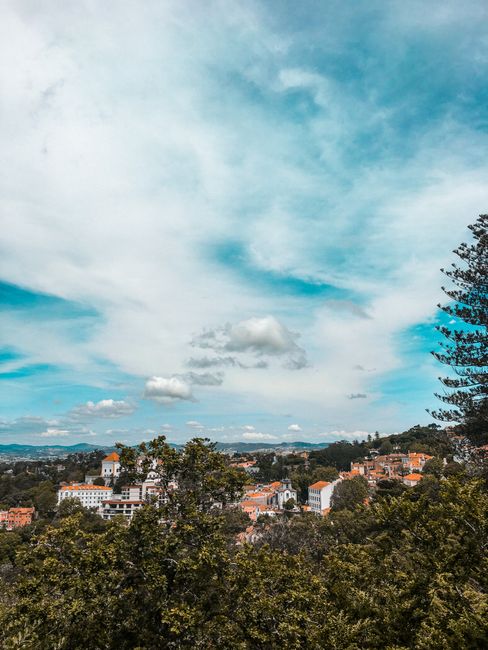
Sintra is a green, often misty hill town just west of Lisbon, where fairy-tale palaces, a Moorish castle and wild romantic gardens sit in the forest above a small historic centre, with Atlantic cliffs and beaches a short bus ride away. Go on a weekday, book Pena Palace for a timed slot, and choose two or three sights rather than all of them.
Right now in Sintra
- Wed16–20°C60–68°F1 mm rain
- Thu14–22°C58–72°FMostly clear
- Fri17–25°C62–77°FClear
Top tours in Sintra
See all tours for Sintra →
From local operators, with prices and reviews; you check availability and book on Viator, our partner. We may earn a commission at no extra cost to you. How we earn money
Sintra at a glance
- What it is: the “Cultural Landscape of Sintra”, a UNESCO World Heritage Site since 1995, with palaces, parks and convents spread across the Sintra hills.
- From Lisbon: about 40 minutes by CP train from Rossio, also from Oriente and Entrecampos. A Lisbon–Sintra return ticket is €5.10 (as of October 2026).
- Time needed: one full day for two or three sights; two days to add Monserrate, the coast or a hike.
- Book ahead: Pena Palace (a fixed date and time slot, with no late entry) and Quinta da Regaleira (half-hourly slots).
- Open every day: including Mondays, so it’s a good choice when Lisbon’s national monuments are closed. The Parques de Sintra monuments close only on 24, 25 and 31 December and 1 January.
- No cars to the palaces: private cars can’t drive up to Pena or the Moorish Castle, and only residents can drive in the historic centre. Use the train, buses 434 and 435, or your feet.
Sintra’s areas and who each suits
- The historic centre (the vila): a small tangle of lanes, cafés and pastry shops around the National Palace, with its two giant white chimneys. Quinta da Regaleira is a ten-minute walk away. It suits first-timers, families with small children and anyone who wants to see a lot without much climbing.
- The Sintra hills (Pena and the Moorish Castle): the ridge above town, reached by bus 434 or on steep forest trails. Home to the famous palace, the castle walls and the widest views, and to the crowds. It suits walkers, photographers and first-timers.
- The Monserrate side: west of town along the road towards Colares, past Seteais, to Monserrate’s palace and botanical gardens and the Convent of the Capuchos higher up in the forest. It suits garden lovers, couples and repeat visitors.
- The coast: Cabo da Roca, the westernmost point of mainland Europe, plus the cliff village of Azenhas do Mar and wild beaches like Adraga, Praia Grande and Ursa. It suits beach days, sunset seekers and anyone who has had enough of palaces.
Palaces and sights: how to visit
Most of Sintra’s monuments are run by Parques de Sintra – Monte da Lua. The prices below are for adults (18–64) and come from its official site and from Quinta da Regaleira’s, as of October 2026. Children under 6 go free at Pena, the National Palace and Cabo da Roca. Buying tickets for several Parques de Sintra sites in one purchase gives a discount: 5% for two sites, 6% for three, rising to 10% for six.
Pena Palace and Park
The romantic, castle-like palace that crowns the hills was the dream project of King Ferdinand II, the “King-Artist”. Its terraces look out over the forested hills, and the park around it hides lakes, a fern valley and the Chalet of the Countess of Edla. How to visit: the park opens 9:00–19:00 (last entry 18:00) and the palace 9:30–18:30 (last ticket 17:30). The Essential Visit (€20; ages 6–17 and over-65s €18; family €65) covers the palace’s main wing, the terraces, the whole park and the chalet. The Complete Visit (€45) adds the royal private apartments, for small groups of up to 20 at set times. A park-only ticket is €12. Palace tickets are for a fixed date and time slot, with no late entry and no refunds if you miss it. It takes about 30 minutes to get from the park gate up to the palace on foot. A round-trip transfer from the gate costs €4.50 extra.
Moorish Castle
Founded in the 10th century, when the Moors ruled the region, the castle’s granite walls snake along a rocky peak next to Pena. Walking the battlements gives the best view of Pena Palace, the town below and the ocean. How to visit: daily, 9:30–18:00 (last entry 17:30); adults €12, youths and seniors €10, family €33. Dogs are welcome. The walk involves many uneven steps, so wear proper shoes.
Quinta da Regaleira
This late-19th-century estate was designed by the Italian architect and set designer Luigi Manini for the collector António Augusto de Carvalho Monteiro. It is a playground of grottoes, towers, tunnels and the spiral Initiation Well, which you walk down into. How to visit: October to March, 10:00–18:30 (last entry 17:30); April to September, 9:00–19:30 (gardens). Adults €20, ages 6–17 and over-65s €15, family €60. Children up to 5 go free but still need a ticket. Entry is by half-hour slot, and you can arrive up to an hour after your slot time. Buy only from the official ticket office, regaleira.byblueticket.pt: the estate warns that tickets from other websites have caused problems. The aquarium is closed for restoration as of October 2026.
National Palace of Sintra
Right in the town square, this is the only palace that spans the whole history of Portugal. It probably started as a Moorish building in the 10th or 11th century, and it became a favourite royal retreat for summer and the hunt. How to visit: 9:30–18:30 (last entry 17:30). The Essential Visit costs €13 (youths and seniors €10, family €35); a Full Visit is €35. The Royal Chapel is under restoration until February 2028.
Monserrate Park and Palace
The British collector Francis Cook turned Monserrate into a masterpiece of Romanticism, with a palace by the architect James Knowles Jr. and gardens planted with exotic species from around the world, from a fern valley to Mexican and Japanese gardens. How to visit: park 9:00–19:00 (last entry 18:00), palace 9:30–18:00; adults €12, youths and seniors €10, family €33. Dogs are welcome. Bus 435 stops at the gate.
Convent of the Capuchos
A tiny Franciscan convent built into the granite boulders of the forest. It was deliberately poor and plain, the opposite of Pena, and the woods around it are among the best surviving examples of Sintra’s original forest. How to visit: 9:00–17:30 (last entry 17:00); adults €11, youths and seniors €9, family €29. It is deep in the hills, so come by taxi or ride-hailing car, or hike in.
Cabo da Roca
The westernmost point of mainland Europe: wind-blasted cliffs, a lighthouse that first shone in 1772, and a stone cross quoting Camões’s line about the place “where the land ends and the sea begins”. How to visit: the lighthouse courtyard and interpretation area open 9:30–17:30; an Essential Visit is €5 and a Panoramic Visit €10. Carris Metropolitana bus 1253 runs a loop from Sintra station via Cabo da Roca, and route 1624 links Cascais and Sintra via the cape.
Monuments
- Castle of the Moors
- Pena Palace
- Sintra National Palace
Parks and gardens
Other sights
Protected areas
- Sintra-Cascais Natural Park
Viewpoints
Museums
- Palace of Queluz
Planning your day in Sintra
Pick two or three, not six. Each big sight takes two to three hours, plus travel time between them. For a first visit, the classic trio is Pena, the Moorish Castle and Regaleira. Swap the castle for Monserrate if you prefer gardens to battlements. Save the National Palace for when it rains or you’re short of time.
Plan the day around your Pena slot. Pena is the one fixed appointment, so book it first and build the rest around it. Allow 30 minutes from the park gate to the palace door, more on busy days. Since afternoons are currently quieter at Pena, many people do Regaleira or the castle in the morning and Pena after lunch.
Walking, bus or tuk-tuk? From the historic centre to Pena is a steep forest climb of about an hour on Parques de Sintra’s marked Villa Sassetti or Santa Maria trails. Bus 434 does the same climb in a loop from the station via the town centre and the Moorish Castle. The queue for it can be long at midday, so go early. Tuk-tuks and taxis wait in the centre and suit small groups who want to save their legs; agree the price first.
Beat the crowds: come on a weekday, take an early train, and book online to skip the ticket queues.
One day in Sintra
Take an early train from Rossio. Walk into town and visit Quinta da Regaleira at its first slot (10:00 from October to March, 9:00 in summer). Lunch in the centre, with a travesseiro for dessert. Then take bus 434 or walk up to the Moorish Castle, cross to Pena for an afternoon slot, and catch the bus back down to the station.
Two days in Sintra
Day 1: the hills, with Pena Palace and Park (including the Countess of Edla’s chalet) and the Moorish Castle, then dinner in the vila once the day-trippers leave. Day 2: the National Palace when it opens, bus 435 to Monserrate’s gardens, then west to the coast: sunset at Cabo da Roca, or a swim and grilled fish at Praia Grande or Adraga in summer.
Things to do in Sintra
Hike the hills
The Sintra hills are part of the Sintra-Cascais Natural Park, and walking is the nicest way to enjoy the forest. Parques de Sintra marks three short trails up from town: the Villa Sassetti trail (1.85 km, about 45 minutes, from Largo Ferreira de Castro, through the free Villa Sassetti garden, open 10:00–18:00), the Santa Maria trail (1.77 km, about an hour, from the Info Parques de Sintra point in São Pedro de Sintra) and the Seteais trail (2.41 km, about 1.5 hours, from the Palace of Seteais). On days of high fire risk, access to the forest can be restricted, so check before a longer hike.
Hit the beaches
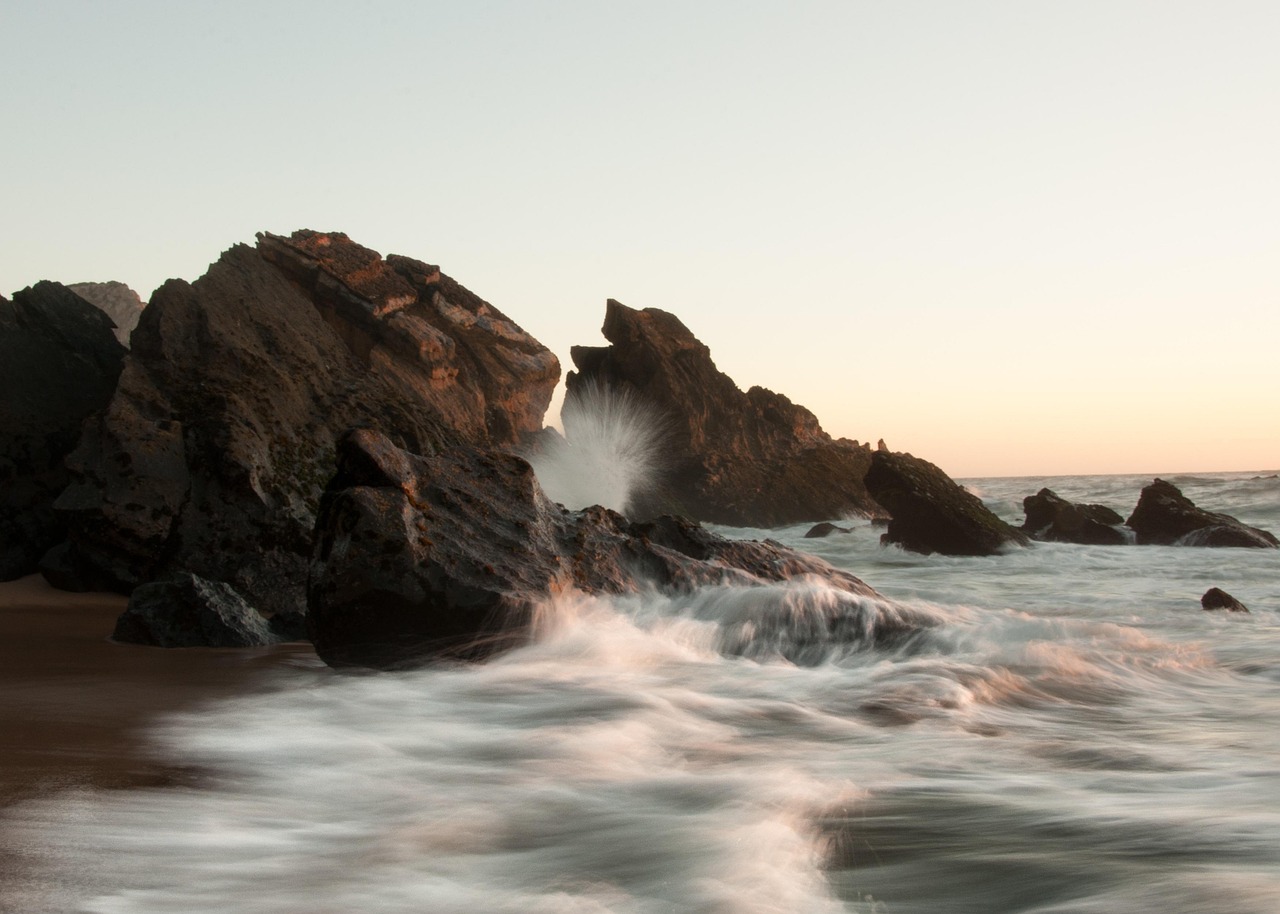
Sintra’s Atlantic coast is wild and beautiful, and the water is cold. In the 2026 season, five beaches flew the Blue Flag: São Julião, Magoito, Maçãs, Grande and Adraga. São Julião, Maçãs and Grande are also certified as accessible beaches. Praia Grande is a long, lively beach with a seafront promenade, with dinosaur footprints preserved in the limestone cliff at its southern end. Praia da Adraga is smaller and almost wild, known for its rock arch and clean water. Azenhas do Mar is a village stacked on a cliff, with natural seawater pools at the bottom of the valley. Praia da Ursa, next to Cabo da Roca, is spectacular but has no lifeguards or facilities, and you reach it only on foot by a steep path. Treat it as a viewpoint and swim elsewhere. Carris Metropolitana route 1254 runs from Portela de Sintra station to Praia Grande, Praia das Maçãs, Azenhas do Mar and Magoito.
Eat travesseiros and queijadas
Sintra has two pastries you must try. Queijadas are small, crisp cups of fresh cheese, sugar, egg yolk and cinnamon. Their origins go back to the 13th century, and people once used them to pay their dues. Travesseiros (“pillows”) are puff pastry filled with egg-and-almond cream and dusted with sugar. They were created at the Piriquita pastry shop (founded 1862) during the Second World War. For a sit-down meal, try grilled fish on the coast and a glass of Colares, the local wine.
Activities and best months
- Beaches and swimmingJunJulAugPraia Grande, Adraga, Samarra and Praia das Maçãs line the Sintra-Cascais Natural Park coast; Adraga, between sculpted cliffs, is a summer favourite.
- HikingThemed trails of all difficulty levels in the Sintra-Cascais Natural Park, e.g. from Praia Grande (dinosaur tracks on the cliff) to Cabo da Roca.
- SurfingJanFebSepOctNovDecPraia Grande hosts national and international surfing and bodyboarding competitions, including a world bodyboarding tour event. On the west coast the best surf comes in early autumn and winter.
Getting there and getting around
From Lisbon by train
CP’s Sintra line runs from Rossio station in central Lisbon (about 40 minutes) and also from Oriente and Entrecampos. Get off at the terminus, Sintra. A Lisbon–Sintra return ticket costs €5.10 on a €0.50 navegante card. Alternatively, load a 24-hour Carris/Metro/CP ticket (€11.40), which also covers Lisbon’s Metro and buses, or use “zapping” credit (€2.05 per CP trip). The Lisboa Card also covers the train. Fares are as of October 2026. Don’t count on CP’s combined “Train & Bus” day ticket, which added buses 434 and 435: as of October 2026, CP lists it as temporarily suspended. See our Lisbon guide for Lisbon transport.
Buses in Sintra
- 434 (Scotturb): a loop from Sintra station through the centre to the Moorish Castle and Pena.
- 435 (Scotturb): from Sintra station via the centre to Quinta da Regaleira and Monserrate.
- 1253 (Carris Metropolitana): a loop from Sintra station past Regaleira, Seteais and Monserrate to Colares and Cabo da Roca.
- 1624 (Carris Metropolitana): Cascais to Portela de Sintra via Cabo da Roca, handy for a Sintra–coast–Cascais loop.
- 1254 (Carris Metropolitana): Portela de Sintra to the beaches (see above).
Check current Scotturb fares and timetables before you go. In 2026 the municipality adjusted the 434 and 435 routes as part of its traffic plan.
By car: think twice
Driving into Sintra is the hardest way to visit. Private cars may not drive to Pena or the Moorish Castle, and only residents may drive in the historic centre. Under the municipality’s “Living and Visiting Sintra Village” plan, expanded in July 2026, tour buses must stop at the Lourel car park, which has about 540 free spaces and links to buses 434 and 435. Ride-hailing cars may only stop at signed pick-up points, and Regaleira drop-offs happen only on Volta do Duche. Regaleira has no parking of its own. If you drive, leave the car in a peripheral car park (see parking.sintra.pt) and continue by bus or on foot.
When to go
Sintra is noticeably cooler and damper than Lisbon. Kings came here to escape the summer heat, and Parques de Sintra describes the hills as frequently hidden under mist. IPMA has no official climate normals for the town itself. The closest official station is on the coast at Cabo da Roca (141 m), and its 1991–2020 figures show how much fresher this side of the region is:
| Season | Average high / low (Cabo da Roca) | Rainy days a month | What it’s like |
|---|---|---|---|
| Spring (Mar–May) | 16–19 °C / 11–14 °C | 5–6 | Camellias and green gardens, with mixed sun and mist. A lovely time for walking; Easter is busy. |
| Summer (Jun–Aug) | 20–22 °C / 15–17 °C | Fewer than 2 | Mild while Lisbon averages 26–29 °C; mist is common on the hills. Peak crowds; the beaches are lifeguarded. |
| Autumn (Sep–Nov) | 22 °C falling to 17 °C / 16–13 °C | 3 in September, 8–9 in October–November | September is warm and golden; from October the rain returns and the woods turn moody and beautiful. |
| Winter (Dec–Feb) | 14–15 °C / 10–11 °C | 6–9 | Damp, windy and quiet, with no queues. Bring a waterproof. |
Best time: April–June and September–October, on a weekday. In July and August, expect queues at the bus stops and palaces. Mist can hide Pena’s views on any day, so pick the clearest day for the hills if you can.
Weather month by month
Day trip or overnight? Where to stay
Most people visit Sintra on a day trip from Lisbon, and one day covers the highlights. Staying a night gives you quiet evening streets, palaces at opening time before the first trains arrive, and an easy second day on the coast.
- The historic centre: the most atmospheric choice, with guesthouses and old townhouses within walking distance of the National Palace and Regaleira. There are steep lanes, and car access is restricted, so travel light.
- Near the station (Estefânia) and Portela: practical, with the train on your doorstep and the 434 and 435 buses starting nearby.
- São Pedro de Sintra: a village feel just above the centre, close to the start of the Santa Maria trail.
- Colares and the coast (Praia das Maçãs, Azenhas do Mar, Praia Grande): for beach days and sunsets; you’ll want a car or good bus timing.
Sintra charges a municipal tourist tax of €2 per person per night, from age 13, for up to 3 nights (as of October 2026). See our Portugal guide for money, safety and entry rules.
Practical tips for Sintra
- Book Pena first, and be on time: the slot has no delay tolerance, and getting from the gate to the palace takes about 30 minutes.
- Buy from official sites: parquesdesintra.pt for the Parques monuments and regaleira.byblueticket.pt for Regaleira. Fast-track Pena tickets are only sold through Parques de Sintra’s listed partners.
- Shoes and layers: expect cobbles, forest paths and castle steps, often damp. The hills can be several degrees cooler and mistier than Lisbon.
- Mondays and holidays: Sintra’s parks and palaces open every day except 24, 25 and 31 December and 1 January, so it’s a great Monday plan. Residents of Portugal get in free at the Parques monuments on Sundays and public holidays.
- Unplanned closures: monuments can close for state events, high fire risk or extreme weather. Check parquesdesintra.pt on the morning of your visit.
- No food inside the monuments: Parques de Sintra’s ticket conditions forbid bringing food into the sites. There are cafés at the main monuments.
- Watch your bag: the municipality has stepped up theft-prevention patrols around Pena, Regaleira, the Moorish Castle and Portela. Keep valuables zipped in crowds and on buses.
What to pack for Sintra
Pack for a day of climbing in changeable weather. Most important: comfortable walking shoes or light trail shoes with grip, because you’ll be on wet cobbles, forest paths and castle steps. Bring a light fleece or jumper and a windproof or waterproof jacket all year. Even in August, Cabo da Roca averages only about 22 °C, and the mist can roll in fast. Carry a small daypack with a refillable water bottle and some snacks for the trail (you can’t eat inside the monuments). In summer, add sunscreen, sunglasses and a hat for the terraces and the coast. For the beaches, bring a swimsuit and a quick-dry towel, and expect the Atlantic to be cold. Download your tickets to your phone and bring a power bank.
What to pack
- Day packs and anti-theft bagsCarries water, towel and sunscreen down the long stairways to Algarve coves.
- Dry bags and phone pouchesProtects phones and cameras from sand and spray on beaches reached by ferry or steep paths.
- Fleeces and warm layersSummits like Pico do Areeiro averaged about 11 °C over 2024, so a fleece is needed even in summer.
- HeadlampsLevada routes such as PR1 and PR9 pass through long, dark, wet tunnels.
- Hiking shoes and bootsMadeira's levadas and the Azores' crater rims are wet, rocky and slippery, so grippy shoes matter more than anywhere else in Portugal.
- Quick-dry beach towelsA sand-shedding quick-dry towel packs small for beach days and lido visits.
- Rain jacketsMountain and island weather changes fast; a real shell beats an umbrella in the wind.
- Reef-friendly sunscreenSummer UV is strong on Portuguese beaches and there is little shade below the cliffs.
- Surf accessories (boots, leashes, wax)Neoprene boots keep feet warm in winter and protect them on rock and reef breaks.
- Trekking polesLong stone staircases and steep descents on Madeira's peaks and the Azores' crater rims are easier on the knees with poles.
- Water bottles and hydration packsAlgarve and Alentejo trails are hot and exposed with few refill points.
- Water shoesRocky coves, lava pools and weever fish in shallow sand make water shoes useful.
- WetsuitsOn the west and north coasts the sea stays around 16–18 °C even in summer, so a thin suit helps for long swims.
Sintra travel FAQ
Is one day enough for Sintra?
One day is enough for two or three big sights, such as Pena, the Moorish Castle and Regaleira. Add a second day for Monserrate, the coast and a hike.
How do I get from Lisbon to Sintra?
Take the CP train from Rossio (about 40 minutes), Oriente or Entrecampos to the end of the line at Sintra. A return ticket costs €5.10 (as of October 2026).
How much are Pena Palace tickets?
As of October 2026, the Essential Visit (palace main wing, terraces and park) is €20 for adults and €18 for ages 6–17 and over-65s. The Complete Visit, with the private apartments, is €45, and the park alone is €12. Under-6s go free.
Do I need to book Pena Palace in advance?
Yes. Palace entry is only possible with a date and time slot, and there is no late entry. Book online, and you can reschedule up to 18:00 the day before.
Pena or Quinta da Regaleira: which is better?
They’re very different. Pena is the iconic royal palace with huge views; Regaleira is a mysterious garden of grottoes, tunnels and the Initiation Well. Pick Pena for a first visit, Regaleira if you have kids or love quirky places.
Can I drive up to Pena Palace?
No. Private cars can’t drive to Pena or the Moorish Castle, and only residents can drive in the historic centre. Park in a peripheral car park, such as Lourel, and take bus 434, a taxi or a tuk-tuk, or walk.
Can I walk from Sintra town to Pena Palace?
Yes, if you’re fit. The marked Villa Sassetti trail takes about 45 minutes from Largo Ferreira de Castro, and the Santa Maria trail takes about an hour from São Pedro de Sintra. Both climb steadily through the forest.
Is the Train & Bus ticket still sold?
As of October 2026, CP lists the Train & Bus day ticket (train plus buses 434 and 435) as temporarily suspended. Buy the train ticket and the bus ticket separately, and check cp.pt for updates.
Which bus goes to Cabo da Roca?
Carris Metropolitana route 1253 runs a loop from Sintra station via Cabo da Roca, and route 1624 links Cascais and Sintra via the cape. Older guides mention route 403, which no longer appears in Carris Metropolitana’s line list.
Are Sintra’s monuments open on Mondays?
Yes. The Parques de Sintra monuments open daily except 24, 25 and 31 December and 1 January. Regaleira closes on the same four days.
Can you swim at Sintra’s beaches?
Yes, at lifeguarded beaches in summer, such as Praia Grande, Adraga, Maçãs, Magoito and São Julião, all Blue Flag beaches in 2026. The Atlantic is cold and the surf can be strong. Avoid swimming at Praia da Ursa, which has no lifeguards.
Nearby destinations
Plan your trip
Partner links: TravelerCenter may earn a commission if you book, at no extra cost to you.
🇵🇹 Useful Portuguese phrases for Sintra
All 38 Portuguese phrases: restaurant, hotel, emergencies, romance (printable) →
Traveler centers in Sintra
Tourist information offices, visitor centers and travel agencies in Sintra, from OpenStreetMap.
- Travel agency
inLX - Travel and Tourism
- Travel agency
Cruzar Meridianos
- Travel agency
Overland Portugal
- Travel agency
Roots & Routes
- Tourist information office
Centro Interpretativo das Águas de Caneças
- Travel agency
asviagens.com
Sources · last reviewed 3 October 2026
Researched and last reviewed on 3 October 2026. Hours, prices, booking rules, access and trails come from Parques de Sintra – Monte da Lua and Quinta da Regaleira’s official site (Fundação Cultursintra); traffic, parking, beaches and the tourist tax from Sintra City Council; fares and routes from CP, Parques de Sintra and Carris Metropolitana; climate from IPMA’s 1991–2020 normals for Cabo da Roca and Lisbon. Prices, timetables and access rules change often, so check the official sites before you go. For Lisbon itself, see our Lisbon guide.
Also: visitlisboa.com · visitportugal.com · IPMA normals 1991–2020, Lisboa / Instituto Geofísico (climate)
Data: Weather: MET Norway (CC BY 4.0) · Sea temperature: NOAA CoastWatch · Air quality: OpenAQ · Rates: ECB · Costs: World Bank ICP and price levels · © OpenStreetMap contributors (ODBL) · Wikidata (CC0)