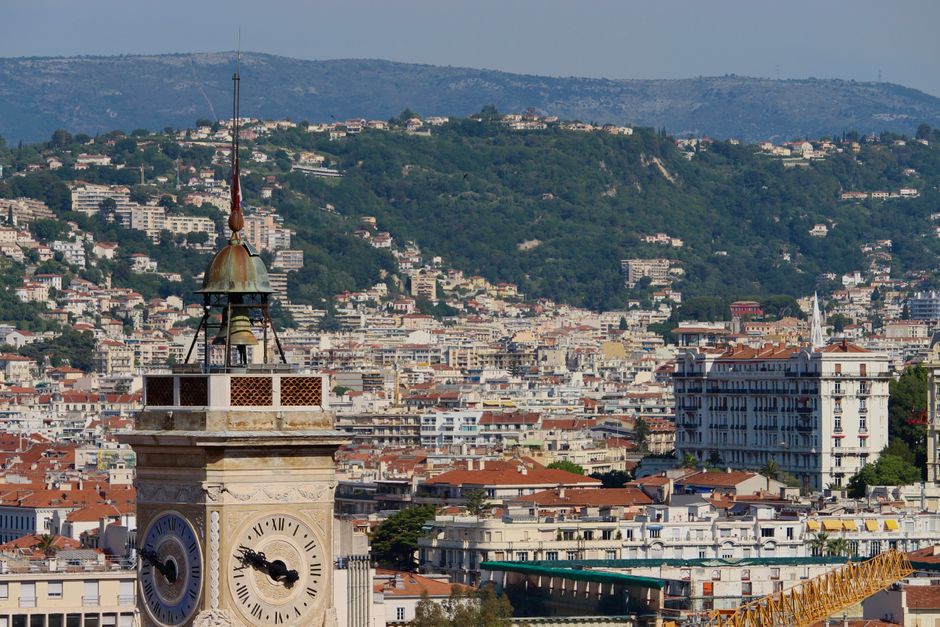
Nice is the capital of the French Riviera: a big, sunny seaside city where a pastel-coloured old town, a castle hill with sweeping views and two of France’s best art museums sit beside a long pebble beach and the curve of the Baie des Anges. Trains and buses run along the coast to Monaco, Èze, Villefranche, Antibes and Cannes, so it makes an easy base for the whole Côte d’Azur. The best months are May, June and September, warm enough to swim without the August crowds. Give the city two or three days, plus extra days for the Riviera.
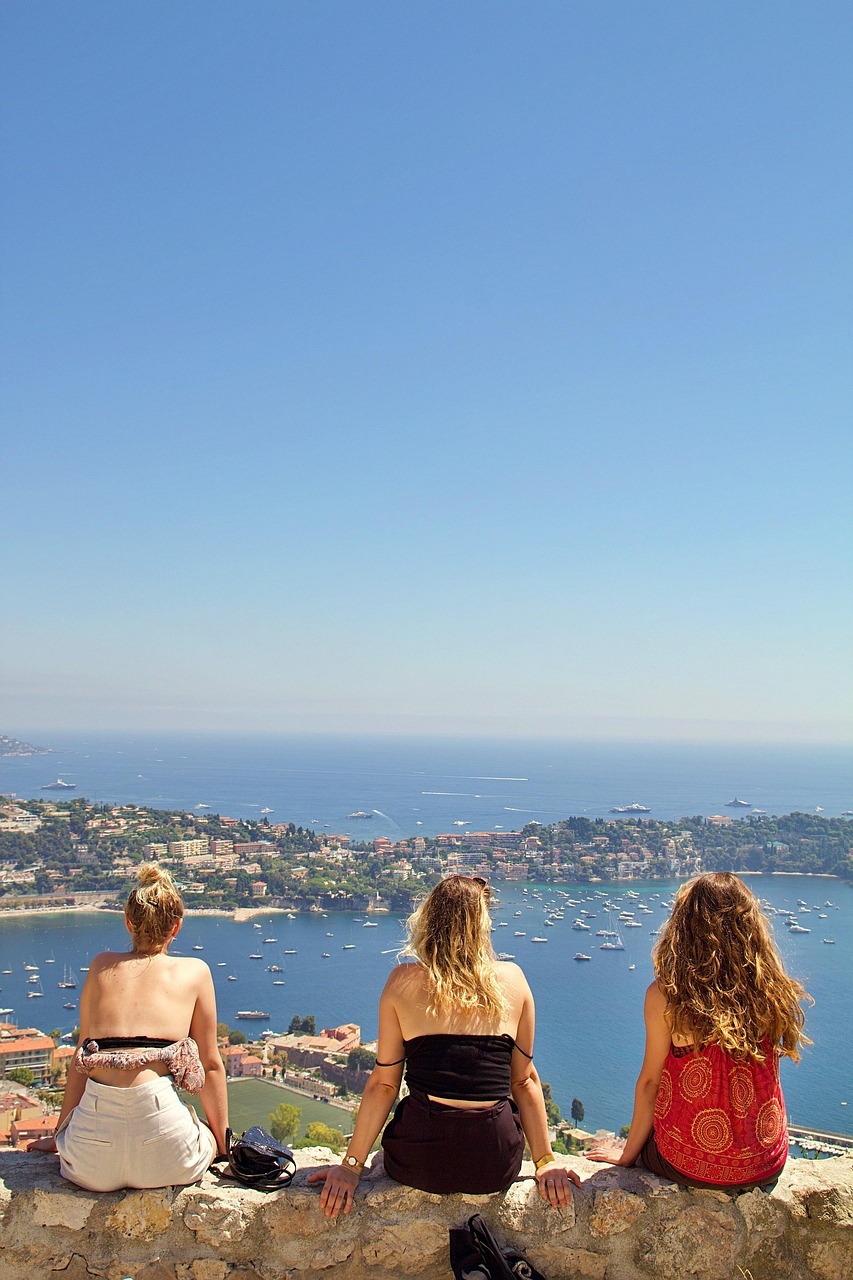
Right now in Nice
- Wed 17–20°C 63–67°F 44 mm Heavy rain
- Thu 16–22°C 60–71°F 16 mm Heavy showers
- Fri 13–21°C 55–70°F 1 mm Clear
Weather: MET Norway (CC BY 4.0) · Sea temperature: NOAA CoastWatch · Air quality: OpenAQ · Rates: ECB
Top tours in Nice
See all tours for Nice →
From local operators, with prices and reviews; you check availability and book on Viator, our partner. We may earn a commission at no extra cost to you. How we earn money
Nice at a glance
- Best months: May–June and September–early October. Average highs run from about 21 °C in May to 28 °C in August, with only 2–5 rainy days a month from May to September (Météo-France normals 1991–2020, Nice airport). October and November are the wettest months, with short, heavy storms.
- Days needed: 2–3 for the city, 4–6 with day trips to Monaco, Èze, Villefranche, Antibes or Cannes.
- Airport: Nice Côte d’Azur (NCE), about 7 km west of the centre. Tram line 2 runs from both terminals to Jean Médecin and the port in under 30 minutes.
- Getting around: the old town, the Promenade and the port are all walkable; three tram lines and Lignes d’Azur buses cover the rest for €1.70 a trip (as of October 2026), and regional trains and buses run along the coast.
- Budget level: one of the pricier cities in France, especially for rooms in July and August, but markets, socca and the free parks keep a day cheap. A tourist tax is added per person per night (see below). See our France guide for money, entry rules and daily costs.
Nice’s neighbourhoods
Nice stretches for several kilometres along the bay. Most visitors stay between the old town and the Promenade, with the hills of Cimiez and Mont Boron behind.
- Vieux Nice (old town): a maze of narrow lanes with ochre and pink façades, Baroque chapels, the Cours Saleya market and bars that stay busy late. The most atmospheric base, but rooms are small and the streets are noisy at night.
- Promenade des Anglais and the Carré d’Or: the seafront and the grid of streets just behind it, with the big hotels, shops and restaurants. Good for beach-and-city stays and easy tram access.
- Jean Médecin and Libération: the main shopping avenue and, further north, the Libération market district near Nice-Ville station. Plainer, better value and handy for trains.
- Le Port (Lympia): the old harbour east of Castle Hill, with yachts, ferries to Corsica, fish restaurants and a growing café scene. The end of tram line 2.
- Cimiez: a quiet, leafy hill of Belle Époque villas, Roman ruins and the Matisse museum. Calm and green, but you will need the bus to get down to the sea.
- Mont Boron: the wooded headland east of the port, with villas, walking trails and views towards Villefranche. For travellers with a car or who like a quiet retreat.
Top things to see in Nice
Hours and prices below come from the official websites, as of October 2026. Two good budget facts: the Promenade, the old town and Castle Hill are free, and the city’s museums are free for everyone under 18.
Promenade des Anglais
The palm-lined seafront runs for about 7 km around the Baie des Anges, from the airport to the foot of Castle Hill, with its famous blue chairs, a cycle lane and grand hotels such as the Negresco. It is the heart of “Nice, Winter Resort Town of the Riviera”, listed by UNESCO as a World Heritage Site in 2021. Walk it at sunrise or sunset, or rent a bike and ride the whole length. At its eastern end, the Quai des États-Unis leads to the old town and the war memorial carved into the rock.
Vieux Nice and the Cours Saleya
The old town packs Baroque churches, the Sainte-Réparate cathedral on Place Rossetti and the 17th-century Palais Lascaris into a few hundred metres of shady lanes. The Cours Saleya market is the place for flowers, fruit, olives and local snacks most mornings; on Mondays it becomes an antiques and flea market. Try socca, a thin chickpea pancake baked in a wood oven and eaten hot with pepper, and pissaladière, an onion and anchovy tart. Come early, before the day-trip groups arrive.
Castle Hill (Colline du Château)
There is no castle left, but the hill above the old town is a free park with shady paths, a man-made waterfall, a playground and the best view in Nice: the whole bay on one side and the port on the other. You can climb the stairs from the old town or the end of the Quai des États-Unis, or take the free lift near the Rauba Capeù corner, which sometimes stops for maintenance. The park opens early in the morning and closes in the early evening, later in summer. Sunset here is one of the great free sights of the Riviera.
Musée Matisse
Henri Matisse lived in Nice for most of his last 37 years, and this red Genoese-style villa in the olive grove of Cimiez shows paintings, drawings, paper cut-outs and objects from his studio. How to visit: 10:00–18:00 from 1 April to 31 October and 10:00–17:00 from 1 November to 31 March, closed on Tuesdays, 1 January, Easter Sunday, 1 May and 25 December; the ticket office closes 30 minutes before. Entry is €12 (free for under-18s and students), or €15 for the city’s 4-day museums pass, which also covers Nice’s other municipal museums. Note: the museum is closed from 29 September to 20 October 2026 to prepare a new exhibition. Matisse is buried in the Cimiez monastery cemetery a few minutes’ walk away.
Musée National Marc Chagall
Built for Chagall’s huge “Biblical Message” paintings, this national museum holds the largest public collection of his work, with bright canvases, stained glass and a mosaic reflected in a pool. How to visit: open every day except Tuesday (and 1 January, 1 May and 25 December), 10:00–18:00 from May to October and 10:00–17:00 from November to April, with a lunch break from 13:00 to 14:30 when only the garden and shop stay open. Tickets are €10, or €12 during temporary exhibitions (reduced €8–10). Entry is free for everyone on the first Sunday of the month, for under-18s and for EU residents under 26. As a national museum, it is not covered by the city’s museum pass. It sits on the hill below Cimiez, about 15 minutes’ walk from Nice-Ville station.
The port and Mont Boron
Walk round the base of Castle Hill to the old harbour, where pastel houses line the quays, fishermen sell their catch and the ferries leave for Corsica. From the far side, a coastal path and quiet roads lead up to Mont Boron, a pine-covered park with trails and views over the bay of Villefranche.
Monuments
- Hotel Negresco
- Nice Cathedral
- Russian Orthodox Cathedral, Nice
- Sainte Jeanne d'Arc Church
Museums
- Marc Chagall National Museum
- Musée des Beaux-Arts Jules Chéret
- Musée Matisse
Things to do in Nice
Swim from the pebble beaches
Nice’s beaches are made of smooth, grey pebbles (galets), not sand. The water is clear, deep a few steps out and usually calm, but the pebbles are hard on bare feet, so bring water shoes and a thick mat or rent a sunbed. Most of the seafront is public and free, with showers and lifeguards on the main beaches in summer; between them are private beach clubs where you pay for a lounger, a parasol and lunch. For sand, take the train to Antibes, Juan-les-Pins or Cannes. See our beaches guide for more.
Eat the Niçoise way
Nice has its own cuisine, closer to Liguria than to Paris. Look for salade niçoise (tuna, eggs, olives and raw vegetables, never cooked potatoes or green beans for purists), pan bagnat (the same salad in a round bun), petits farcis (stuffed vegetables), daube and Swiss chard pie. Socca and pissaladière are the classic snacks. Restaurants showing the “Cuisine Nissarde” label have committed to serving the local recipes.
Get out on the water
In summer, boats leave from the port for coastal cruises along the Riviera, sunset sails and trips to Monaco or the Lérins Islands off Cannes. You can also rent paddleboards and kayaks on several beaches, and the clear water around Villefranche and Cap de Nice suits snorkelling on calm days. Go out in the morning, when the sea is flattest. See our boat trips guide and our snorkelling guide.
Walk and cycle the coast
A cycle lane runs the full length of the Promenade. For a longer walk, follow the coast path from the port round Cap de Nice to Villefranche, or take the train to Èze-sur-Mer and climb the steep Nietzsche path up to Èze village (about 1 h 30 uphill). See our hiking guide and our cycling guide.
Carnival and events
The Nice Carnival is one of the biggest in Europe, with giant floats, parades and flower battles on the Promenade, where costumed riders throw mimosa and other flowers to the crowd. The 2027 carnival runs from 9 to 28 February with the theme “Vive l’Amour”. Seats for the parades are ticketed; book early and expect higher hotel prices.
Activities and best months
- Beaches and swimmingThe Promenade des Anglais runs almost 7 km along the Baie des Anges, lined with white-pebble beaches, both public beaches and private beach clubs with bars and restaurants. · source
- Boat tripsThe tourist office's Nice itinerary suggests a coastal boat trip from Nice to Villefranche-sur-Mer. · source
- City sightseeingNice has been on the UNESCO World Heritage List since July 2021 as a 'Winter Resort Town of the Riviera': 522 hectares from the Promenade des Anglais to Mont Boron, Castle Hill and Cimiez. The Heritage Centre runs guided tours of the listed districts. · source
- Scuba divingMayJunJulAugSepOctThe same port-of-Nice centre offers try-dives, guided dives and PADI or FFESSM courses in the Villefranche and Cap-Ferrat bay, from 6 May to 9 October in 2026. · source
- SnorkelingMayJunJulAugSepOctA dive centre at the port of Nice, listed by the tourist office, runs 2-hour boat snorkelling trips to the bays of Villefranche and Saint-Jean-Cap-Ferrat; its 2026 season runs 6 May to 9 October (minimum age 10, swimmers only). · source
Day trips along the Riviera
The coastal railway is the easiest way to explore: regional TER trains (now branded ZOU!) run frequently from Nice-Ville and Nice-Riquier along the shore in both directions. The ZOU! bus network covers the hill villages. Buy train tickets on the SNCF Connect app or at the station.
- Villefranche-sur-Mer: one of the deepest natural harbours on the Mediterranean, with a citadel, a sandy-pebbly beach, the little Saint-Pierre chapel decorated by Jean Cocteau and waterfront restaurants. A few minutes by train, or a pleasant walk over Mont Boron.
- Èze: a medieval village perched on a rock 400 m above the sea, with a cactus garden at the top and views to Corsica on clear days. Take a ZOU! bus to the village, or the train to Èze-sur-Mer and walk up the Nietzsche path (go up in the cool morning, or take the bus up and walk down).
- Monaco: the tiny principality is about 20 minutes away by train. See the Prince’s Palace and the changing of the guard just before noon, the old town on the Rock, the Oceanographic Museum, the Monte-Carlo Casino and the Grand Prix circuit. Monaco has no border checks with France, but it is a separate country, with its own prices to match. ZOU! bus line 80 also runs along the coast to Monaco and Menton.
- Menton: the last town before Italy, with lemon gardens, a colourful old town climbing a hill, the Jean Cocteau Museum and the Lemon Festival in February.
- Antibes and Juan-les-Pins: ramparts, a lively Provençal market, the Picasso Museum in the Château Grimaldi and the yachts of Port Vauban; Juan-les-Pins next door has sandy beaches and the Jazz à Juan festival in July. About 20–25 minutes by train.
- Cannes and the Lérins Islands: the Croisette, the Film Festival in May and the old Suquet quarter, plus a short ferry to Île Sainte-Marguerite, where the Man in the Iron Mask was held, and the monks’ island of Saint-Honorat. About 30–40 minutes by train.
- Saint-Paul-de-Vence and Grasse: inland, the walled hill village of Saint-Paul and the Fondation Maeght art museum, and the perfume town of Grasse. Both are easier by car or by bus with a change.
For the rest of France’s south coast, read our Marseille guide and our Provence guide. Ferries from Nice’s port also sail to Corsica.
Nearby destinations
- Monte Carlo13 km
- Cannes26 km
- French Riviera65 km
- Saint-Tropez70 km
- Verdon Gorge76 km
- Provence107 km
- Aix-en-Provence148 km
- Genoa154 km
Getting there and getting around
From the airport to the city
- Tram line 2 (best choice): it leaves from Terminal 1 and Terminal 2 and runs through the centre (Jean Médecin) to Port Lympia in under 30 minutes, every 7–8 minutes on weekdays. The airport ticket (“AERO”) is sold only as a €10 return, open-dated. The section between Terminal 2, Terminal 1 and the Grand Arénas stop is free, so travellers with little luggage often ride free to Grand Arénas and then validate a standard €1.70 ticket for the rest of the trip (as of October 2026).
- Buy tickets: at the ticket machines at tram stops, on the Lignes d’Azur Tickets app or at the airport service desks. Validate every trip.
- Coast buses: ZOU! regional buses run from the airport along the coast, including line 80 to Monaco and Menton.
- Taxi: taxis wait outside both terminals; the ride to the centre takes about 20 minutes outside rush hour. Check the fare at the rank before you set off.
Trains to Nice
TGV high-speed trains run from Paris Gare de Lyon to Nice-Ville in roughly 5 h 40–6 h, and regional trains link Nice with Marseille (about 2 h 30–2 h 45) and the Italian border at Ventimiglia. Book TGV and intercity trains on SNCF Connect; the cheapest fares go early. Nice-Ville station is a 10-minute walk from Jean Médecin and 20 minutes from the beach.
Getting around the city
Most of central Nice is walkable. The Lignes d’Azur network runs three tram lines and many buses: a single “Solo” ticket costs €1.70 and allows connections for 74 minutes, and you can buy multi-trip tickets at the same price per trip (as of October 2026). Line 1 crosses the centre north–south past Jean Médecin and Place Masséna, line 2 links the airport, the centre and the port, and line 3 serves the western districts. Buses climb to Cimiez for the Matisse museum. Driving in central Nice is slow and parking is expensive; you do not need a car unless you plan to explore the hill villages.
When to go and how long to stay
Nice has a mild Mediterranean climate, with average highs of about 13 °C in January and 28 °C in August, and about 2,750 hours of sunshine a year. Summer is warm and dry rather than scorching, thanks to the sea breeze. Most of the year’s rain falls in autumn, in short, heavy storms: October and November average about 130–140 mm each. The sea is warmest in August and September, at around 24–25 °C.
| Season | Average high / low | Rainy days a month | What it’s like |
|---|---|---|---|
| Spring (Mar–May) | 15–21 °C / 8–15 °C | 5–6 | Mild and flowery; the sea is still cool (about 15–18 °C). Good for walking and day trips. |
| Summer (Jun–Aug) | 25–28 °C / 18–21 °C | 2–4 | Warm, sunny and busy; beaches full and rooms at their dearest in July and August. |
| Autumn (Sep–Nov) | 17–25 °C / 10–18 °C | 5–9 | September is perfect beach weather; October and November bring heavy rain on some days. |
| Winter (Dec–Feb) | 13–14 °C / 6–7 °C | 5–6 | Mild, often sunny and quiet, with the Carnival in February. Too cold for most swimmers. |
Figures are Météo-France’s 1991–2020 normals for Nice airport (rainy day = at least 1 mm of rain).
2 days in Nice
Day 1: the Cours Saleya market and the old town in the morning, Castle Hill for the view, an afternoon on the beach and dinner in Vieux Nice. Day 2: the Matisse and Chagall museums in Cimiez (check the Tuesday closures), then walk or cycle the Promenade des Anglais at sunset.
3 days in Nice
Add a Riviera day: the train to Villefranche for a swim, then on to Monaco for the palace and the old town, or the bus up to Èze and the coast path down.
4–5 days or more
Add Antibes and Cannes on another day, and the hill villages of Saint-Paul-de-Vence and Grasse on a third. With a week, combine Nice with a few nights in Provence or a ferry to Corsica.
Where to stay in Nice
- First visit: Vieux Nice or the streets just behind the Promenade, for the old town, the beach and the tram on your doorstep. Ask for a room away from the street at weekends.
- Sea views: the Promenade des Anglais and the Quai des États-Unis, where the classic hotels face the bay.
- Value and trains: Jean Médecin or Libération, near Nice-Ville station and the Libération market, 15–20 minutes’ walk from the sea.
- Local and lively: the Port, for cafés, seafood and ferries, at the end of tram line 2.
- Quiet and green: Cimiez or Mont Boron, for villas and gardens, with a bus ride to the beach.
Nice’s tourist tax (taxe de séjour)
The Métropole Nice Côte d’Azur charges a tourist tax per person per night, usually paid at the hotel and not always included in the room price. From 1 January 2026 the total, including a 34% surcharge for the new Provence–Côte d’Azur railway line, is €6.43 in palaces, €4.69 in 5-star hotels, €3.48 in 4-star, €2.28 in 3-star, €1.34 in 2-star and €1.07 in 1-star hotels, B&Bs and youth hostels. Unclassified hotels and holiday flats pay 6.70% of the price per person per night, capped at €6.43. Under-18s are exempt.
Practical tips for Nice
- Water shoes: the pebbles are hard to walk and lie on; a pair of water shoes and a thick mat make the beach far more comfortable.
- Museum closures: the Matisse and Chagall museums both close on Tuesdays, and the Matisse museum is shut from 29 September to 20 October 2026. The Chagall museum also closes for lunch.
- Free first Sundays: the Chagall museum is free for everyone on the first Sunday of the month; under-18s get into all the city museums free.
- Mondays at the Cours Saleya: the food and flower market makes way for antiques and second-hand stalls.
- Pickpockets: watch your bag on the trams, at the market, on crowded beaches and on the coastal trains in summer. The emergency number is 112.
- Autumn storms: heavy rain in October and November can cause flash flooding; follow Météo-France warnings and keep away from riverbeds and underpasses.
Weather month by month
Averages from Météo-France normals 1991–2020, Nice (airport) · Last reviewed 4 Oct 2026
What to pack for Nice
For the beach, bring water shoes for the pebbles, a swimsuit, a beach mat or thick towel, sunscreen, sunglasses and a hat; from June to September the sun is strong even when the breeze keeps it pleasant. Comfortable walking shoes with grip help on the old town’s steps and the steep paths of Castle Hill and Èze. Pack a light cover-up for walking from the beach into town, and something a little smarter if you plan to visit Monaco’s casino, which has a dress code in the evening. From November to March, add a warm layer and a light waterproof jacket, as evenings drop to 6–7 °C and autumn storms can be heavy.
What to pack
- City walking shoesLisbon and Porto are steep, with polished limestone cobbles that get slippery, so grippy soles matter.
- Day packs and anti-theft bagsCarries water, towel and sunscreen down the long stairways to Algarve coves.
- Dry bags and phone pouchesProtects phones and cameras from sand and spray on beaches reached by ferry or steep paths.
- Fleeces and warm layersIt is cooler at sea than on land, especially on morning whale-watching trips.
- Quick-dry beach towelsA sand-shedding quick-dry towel packs small for beach days and lido visits.
- Rain jacketsA windproof, waterproof shell keeps you warm on open boats, where wind and spray cool you quickly.
- Reef-friendly sunscreenSummer UV is strong on Portuguese beaches and there is little shade below the cliffs.
- Snorkel masks and finsYour own mask fits better than a rental and makes clear-water coves and lava pools more fun.
- Travel adapters and convertersPortugal uses Type C and F sockets at 230 V, so most visitors from outside Europe need an adapter.
- Water shoesRocky coves, lava pools and weever fish in shallow sand make water shoes useful.
- WetsuitsOn the west and north coasts the sea stays around 16–18 °C even in summer, so a thin suit helps for long swims.
Nice travel FAQ
How many days do you need in Nice?
Two days covers the old town, Castle Hill, the museums and the beach. Four or five lets you add Monaco, Èze, Villefranche, Antibes and Cannes.
What is the best time to visit Nice?
May, June and September: warm and sunny with a pleasant sea, but cheaper and calmer than July and August. Winter is mild and quiet, and February brings the Carnival.
How do I get from Nice airport to the city centre?
Take tram line 2 from Terminal 1 or 2 to Jean Médecin or the port, in under 30 minutes. The airport ticket is a €10 return; the ride between the terminals and the Grand Arénas stop is free, and a standard €1.70 ticket covers the rest (as of October 2026).
How much is a bus or tram ticket in Nice?
€1.70 for a single Lignes d’Azur ticket, valid for 74 minutes including connections (as of October 2026). Only the airport ticket is different.
How much is the tourist tax in Nice?
It depends on the accommodation: from €1.07 per person per night in 1-star hotels and hostels to €3.48 in 4-star and €6.43 in palaces, as of 2026. Unrated rentals pay 6.70% of the price per person, capped at €6.43. Under-18s pay nothing.
Are the beaches in Nice sandy?
No. Nice’s beaches are pebbles, with clear water and deep swimming close to shore. For sand, go to Antibes, Juan-les-Pins or Cannes.
Is the Matisse museum open?
It is normally open every day except Tuesday, but it is closed from 29 September to 20 October 2026 for a new exhibition. Entry is €12, and free for under-18s and students.
When is the Chagall museum free?
On the first Sunday of every month for everyone, and always for under-18s and EU residents under 26. Otherwise tickets are €10, or €12 during exhibitions (as of October 2026). It closes on Tuesdays.
How do I get from Nice to Monaco?
By regional train from Nice-Ville in about 20 minutes, or by ZOU! bus line 80 along the coast road. There are no border checks.
How do I get to Èze from Nice?
Take a ZOU! bus to Èze village, or the train to Èze-sur-Mer station and walk up the steep Nietzsche path, about 1 h 30 uphill.
Do I need a car in Nice?
No. Trams, buses and the coastal trains reach all the main Riviera towns. A car only helps for the hill villages and the backcountry.
When is the Nice Carnival?
Every February. The 2027 Carnival runs from 9 to 28 February, with the theme “Vive l’Amour”.
Sources
- © OpenStreetMap contributors · ODbL · fetched 3 Oct 2026
- Wikidata · CC0 · fetched 3 Oct 2026
Sources and last review
Researched and last reviewed on 3 October 2026. Prices and hours come from the official websites of the Musée Matisse, the Musée National Marc Chagall, Lignes d’Azur and Nice Côte d’Azur airport. Tourist-tax rates are from the Métropole Nice Côte d’Azur’s 2026 rate sheet, the climate figures are Météo-France’s 1991–2020 normals for Nice airport, and event dates come from the Nice Côte d’Azur tourist office. Prices, timetables and opening hours change, so check the official sites before you travel.
Plan your trip
Partner links: TravelerCenter may earn a commission if you book, at no extra cost to you.
🇫🇷 Useful French phrases for Nice
All 38 French phrases: restaurant, hotel, emergencies, romance (printable) →