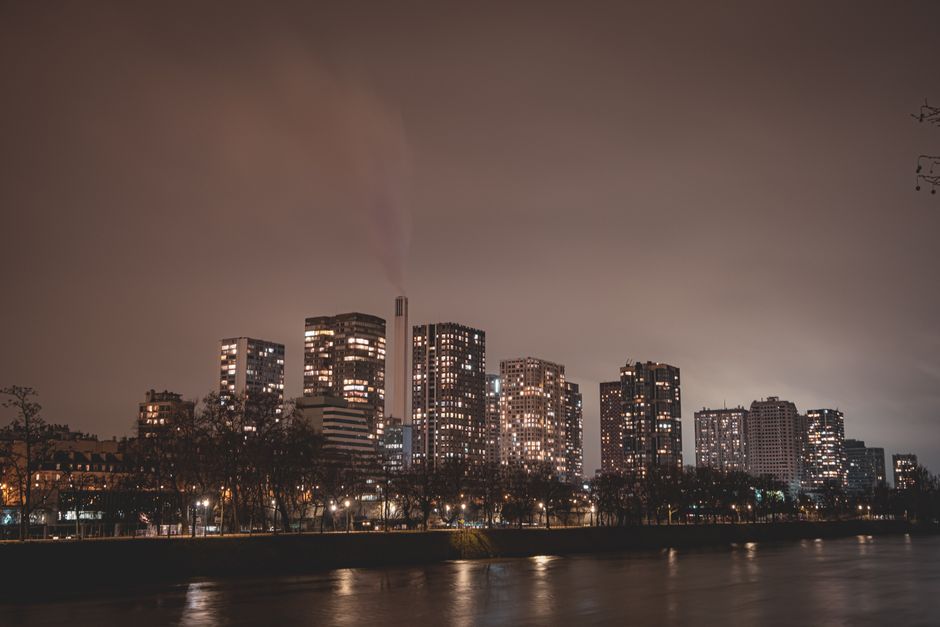
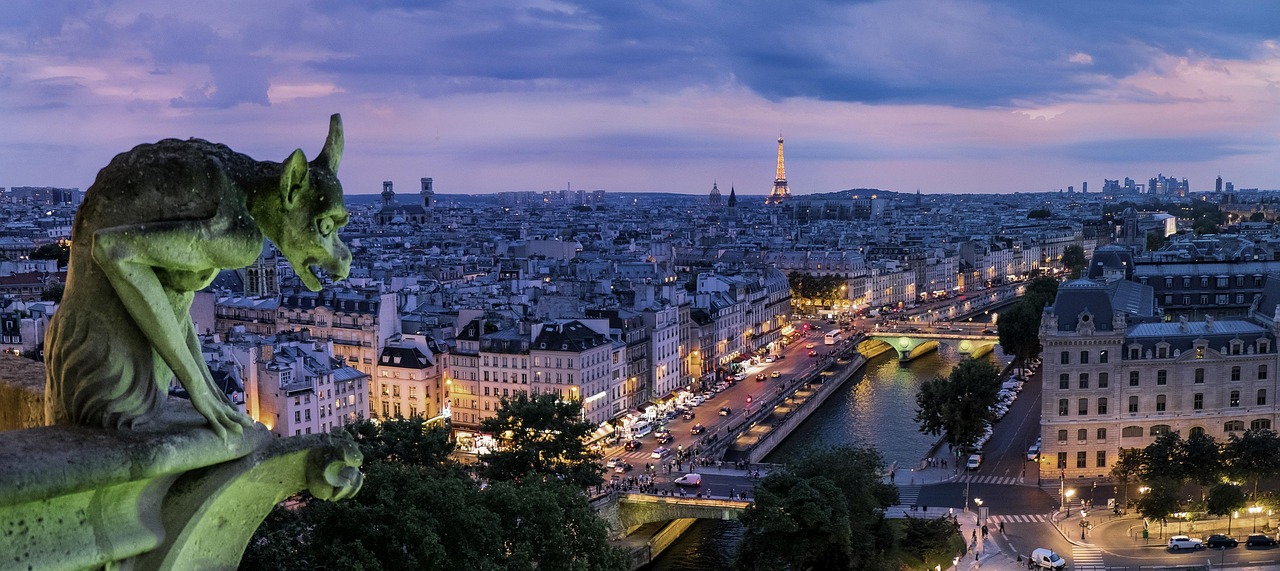
Paris is made for wandering and city sightseeing: along the Seine at sunset, through market streets on a Sunday morning, from café terrace to bookshop to bakery. The big sights live up to the hype, the Eiffel Tower, the Louvre, the Musée d’Orsay and a newly restored Notre-Dame, but the best days often mix one great museum with a long lunch, a park and an evening picnic by the river. Give it four days for the highlights, five or six to add Versailles or Disneyland Paris, and a week to slow down and live like a Parisian.
Right now in Paris
- Wed 13–19°C 55–65°F 13 mm Light rain
- Thu 10–15°C 50–60°F Clear
- Fri 9–14°C 47–57°F 2 mm Rain
Weather: MET Norway (CC BY 4.0) · Rates: ECB
Top tours in Paris
See all tours for Paris →
From local operators, with prices and reviews; you check availability and book on Viator, our partner. We may earn a commission at no extra cost to you. How we earn money
Paris at a glance
- Best for: art and museums, food and cafés, architecture, romantic walks, shopping and easy day trips.
- How long: 4 days for the main sights, 5–6 with Versailles or Disneyland, 7 at a relaxed pace.
- Best time: April to June and September to October. July and August are busy and can be hot; winter is grey but quiet.
- Getting in: RER B from Charles de Gaulle or metro line 14 from Orly, both on the €14 airport ticket; fixed taxi fares from €36 to €65 (as of October 2026).
- Tourist tax: high in 2026: €5.53 per adult per night in a 3-star hotel, €8.45 in a 4-star.
- Before you go: entry rules, money, trains and general safety are on our France travel guide.
Paris neighbourhoods and who each one suits
Paris is divided into 20 arrondissements (districts) that spiral out like a snail shell from the centre: the 1st around the Louvre, the 20th on the eastern edge. The Seine splits the city into the Right Bank (Rive Droite, north) and the Left Bank (Rive Gauche, south). The centre is compact; you can walk from the Eiffel Tower to Notre-Dame in about an hour.
Le Marais (3rd and 4th)
Medieval lanes and grand 17th-century mansions around the elegant Place des Vosges, with the Picasso Museum, the Carnavalet (the free museum of Paris history), falafel on Rue des Rosiers, vintage and design shops, and a lively LGBTQ+ scene. Busy on Sundays, when most shops stay open. A great all-round base.
The islands: Île de la Cité and Île Saint-Louis
The historic heart of Paris, with Notre-Dame, the stained glass of the Sainte-Chapelle and the Conciergerie on the Île de la Cité, and quiet streets and famous ice cream on the Île Saint-Louis. Few hotels, but everything is a short walk away.
Latin Quarter and Saint-Germain-des-Prés (5th and 6th)
The Left Bank of students, writers and old bookshops: the Sorbonne, the Panthéon, the Luxembourg Gardens with their pond and toy sailboats, and the literary cafés of Saint-Germain such as Les Deux Magots and Café de Flore. Classic Paris, ideal for first-timers and couples, at a higher price in Saint-Germain.
Eiffel Tower and the 7th
Wide avenues, the Musée d’Orsay, the Rodin Museum, Napoleon’s tomb at Les Invalides and the market street Rue Cler. Calm and elegant, with views of the tower, but quiet at night.
Louvre, Opéra and the Champs-Élysées (1st, 2nd, 8th and 9th)
Grand Paris: the Louvre and the Tuileries Garden, the Palais Garnier opera house, the big department stores on Boulevard Haussmann, covered 19th-century shopping arcades, and the Champs-Élysées rising to the Arc de Triomphe. Central and well connected, though the 8th is pricey and quiet after dark.
Montmartre (18th)
The hilltop village of painters, crowned by the white Sacré-Cœur basilica, with steep lanes, small vineyards, cabarets and views over the city. Place du Tertre is crowded with portrait artists; the streets just behind it are quieter. Charming, hilly and good value, but watch for pickpockets and scams near the steps.
Canal Saint-Martin, Belleville and Bastille (10th, 11th and 20th)
Younger, local Paris: picnics along the canal’s iron footbridges, natural-wine bars and bistros around Rue Oberkampf, street art and Asian restaurants in Belleville, and nightlife around Bastille. Good for food lovers and travellers on a budget.
Top things to see in Paris
Prices and hours were checked on the official sites in October 2026; check again before you go, and book timed tickets for the big names, especially from April to October.
The Eiffel Tower
Built for the 1889 World’s Fair, the tower is still the best view in Paris. As of October 2026, an adult ticket (25 and over) costs €36.70 by lift to the top, €23.50 by lift to the second floor and €14.80 by stairs to the second floor; there is also a stairs-plus-lift ticket to the top for €28. Ages 12–24 pay about half, ages 4–11 about a quarter, and under-4s go free. It opens every day from 9:30 until late evening, with longer hours in summer. Book on the official site only (toureiffel.paris), well ahead in busy months. After dark, the tower sparkles for five minutes on the hour. For the classic photo, go to the Trocadéro across the river; for a picnic, the Champ-de-Mars lawns.
The Louvre
The world’s most visited museum, home to the Mona Lisa, the Venus de Milo and the Winged Victory of Samothrace, in a former royal palace. Since 14 January 2026 tickets cost €22 for residents and citizens of the European Economic Area and €32 for everyone else; under-18s, and EEA residents under 26, go free. It is open Monday, Thursday, Saturday and Sunday 9:00–18:00 and Wednesday and Friday 9:00–21:00, and is closed on Tuesdays, as well as 1 January, 1 May and 25 December. The museum recommends booking a time slot for everyone, including free visitors. Pick two or three wings rather than trying to see it all, and go on a Wednesday or Friday evening for smaller crowds.
Notre-Dame de Paris
After the 2019 fire, the cathedral reopened in December 2024, its stone and stained glass cleaner and brighter than in living memory. Entry is free. As of October 2026 it opens Monday to Friday 7:50–19:00 (Thursday until 22:00) and Saturday and Sunday 8:15–19:30, with last entry 30 minutes before closing. You can book a free time slot on the cathedral’s official website or app, usually opening a couple of days ahead; it is optional but saves a long wait in busy months. No one else is authorised to sell entry. The towers reopened in September 2025: climbing the 424 steps costs €16 (free for under-18s and EU nationals or residents aged 18–25), and an online time slot is compulsory. From October to March the towers open 9:00–17:30.
The Musée d’Orsay
Impressionist heaven in a former railway station: Monet, Renoir, Degas, Van Gogh and Cézanne, with a view through the giant station clock. As of October 2026 tickets cost €16 online or €14 at the museum, with a €12 ticket for Thursday evenings from 18:00. It opens Tuesday to Sunday 9:30–18:00 (Thursday until 21:45) and is closed on Mondays. Entry is free on the first Sunday of the month, when booking is compulsory. Combine it with the Musée de l’Orangerie, across the river, for Monet’s huge Water Lilies.
Sacré-Cœur and Montmartre
The basilica on top of Montmartre is free to enter and open from early morning to late evening; climbing the dome (280 steps), with one of the highest views in the city, costs €8 for adults, paid on site (as of October 2026). Walk up through the gardens or ride the funicular from the bottom of the hill, which takes a normal metro ticket. Arrive early or at sunset, and avoid anyone offering to tie a “free” bracelet on your wrist.
More classic sights
- Sainte-Chapelle: a 13th-century royal chapel with walls made almost entirely of stained glass, best on a sunny morning. Timed tickets online.
- Arc de Triomphe: climb to the roof for the view down the Champs-Élysées; use the underground passage, never the traffic circle.
- Panthéon, Luxembourg Gardens and the Latin Quarter: the domed resting place of Voltaire, Victor Hugo and Marie Curie, then a chair by the pond in the gardens.
- The Catacombs: tunnels lined with the bones of six million Parisians. Tickets sell out, so book well ahead.
- Centre Pompidou: closed for renovation from September 2025 until 2030; its modern art collection is shown in other venues in the meantime.
Monuments
- Arc de Triomphe
- Eiffel Tower
- Notre-Dame de Paris
- Père Lachaise Cemetery
Museums
Other sights
- Champs-Élysées
Palaces
Churches and cathedrals
The Paris Museum Pass: is it worth it?
The official pass covers more than 50 museums and monuments in and around Paris, including the Louvre, the Musée d’Orsay, the Arc de Triomphe, the Sainte-Chapelle, the Panthéon and Versailles. As of October 2026 it costs €85 for 2 days, €105 for 4 days and €125 for 6 days, counted in hours from your first visit. It does not cover the Eiffel Tower, the Catacombs or the Notre-Dame towers, and you still have to book a free time slot at many sites, including the Louvre and Versailles. It pays off if you visit three or four paid sights a day; non-EEA visitors save more since the 2026 price rises at the Louvre and Versailles. Under-18s and young EU residents, who get into most national museums free, rarely need it.
Activities and best months
- Boat tripsThe Paris tourist office ticket shop sells one-hour Seine sightseeing cruises (Bateaux Mouches, Bateaux Parisiens from the Eiffel Tower, Bateaux de Paris, Vedettes de Paris), the Batobus hop-on hop-off boat and Canal Saint-Martin trips. · source
- City sightseeingFrance's official tourism site picks out Notre-Dame (more than 850 years beside the Seine), the Eiffel Tower, the Arc de Triomphe and the Champs-Élysées, the Louvre and the Musée d'Orsay, and the districts of Montmartre, the Latin Quarter and Saint-Germain-des-Prés. · source
Other things to do in Paris
Cafés, bistros and markets
Eating is half the point of Paris. Start with a croissant from a neighbourhood bakery, spend the morning at an open-air market such as the Marché d’Aligre or Rue Cler, and have lunch in a bistro with a set menu. In the evening, share small plates in a wine bar, or pick up cheese, bread and a bottle for a picnic on the Seine quays, the Canal Saint-Martin or the Champ-de-Mars. Many restaurants close on Sunday and Monday, and dinner starts around 19:30–20:00; book popular places a few days ahead.
On the river: cruises and even a swim
A one-hour boat trip on the Seine passes most of the great monuments; take one at dusk, when the lights come on. In summer, Paris Plages turns parts of the riverbanks into a beach with deckchairs and games, and since 2025 you can swim in the Seine itself: in 2026, three free, supervised swimming spots in Paris (Bras Marie near the Marais, Bercy and Grenelle) opened from 4 July to 30 August, closing on days when water quality is not good enough.
Parks, bikes and rooftops
Row a boat in the Bois de Boulogne or the Bois de Vincennes, watch the sunset from the Buttes-Chaumont or Belleville park, and ride Vélib’ shared bikes along the many new cycle lanes, including the car-free riverbanks. For views, try the Galeries Lafayette and Printemps roof terraces (free) or the Montparnasse Tower.
Shows and nightlife
See a ballet or opera at the Palais Garnier or Opéra Bastille, jazz in a Latin Quarter cellar, or a cabaret in Pigalle. Nightlife centres on the Marais, Oberkampf, Pigalle and Bastille, and summer brings outdoor cinema at La Villette.
Day trips from Paris
Since 2025, one standard Métro-Train-RER ticket (€2.55 in 2026) covers rail trips anywhere in the Île-de-France region, including Versailles and Disneyland Paris; only the airports cost more.
Palace of Versailles
Louis XIV’s palace, with the Hall of Mirrors, the royal apartments, vast formal gardens, Marie Antoinette’s hamlet and the Trianon palaces. RER C runs to Versailles Château Rive Gauche, about 10 minutes’ walk from the gates; trains from Saint-Lazare and Montparnasse also go to Versailles. As of October 2026, the all-day Passport ticket (palace with a timed slot, Trianon estate and gardens) costs €35 from April to October and €25 from November to March, or €32 and €22 for EEA residents and citizens; under-18s, and EEA residents under 26, go free. The palace and Trianon are closed on Mondays; the palace opens 9:00–18:30. Book the palace time slot online, arrive early, and keep the gardens for the afternoon; on Musical Fountains days in high season, the gardens charge separately.
Disneyland Paris
Europe’s biggest theme park resort is at Marne-la-Vallée, about 40 minutes from central Paris on RER A to Marne-la-Vallée–Chessy, which also has a TGV station. It has two parks: Disneyland Park with Sleeping Beauty Castle, and Disney Adventure World, the former Walt Disney Studios Park, renamed and reopened on 29 March 2026 with a new World of Frozen area. Tickets are dated and prices vary by day, so buy them online and go on a weekday outside school holidays.
Giverny, Fontainebleau and further afield
Monet’s house and garden at Giverny (April to October) is a train ride from Saint-Lazare to Vernon plus a shuttle bus. The Château de Fontainebleau and its forest are about 40 minutes from Gare de Lyon. With a full day, take the TGV to the champagne houses of Reims, the châteaux of the Loire Valley, or join a tour to Normandy and Mont-Saint-Michel, which is better with an overnight stay.
Nearby destinations
Getting there and getting around
From Charles de Gaulle airport (CDG)
- RER B: the main public link, from Terminal 1 and Terminal 2 stations to Gare du Nord, Châtelet–Les Halles, Saint-Michel–Notre-Dame and the Left Bank, in about 30–40 minutes. It needs the Paris Région–Airports ticket, €14 as of October 2026 (€7 reduced), loaded on a Navigo Easy card or your phone. Watch your bags on board.
- Buses: the RoissyBus to Opéra stopped running on 1 March 2026. Regular bus lines run to the north of Paris and the new line 9517 links the airport with Saint-Denis–Pleyel for metro line 14, but they are slower than the train with luggage. Le Bus Direct coaches run to central stops for a higher fare.
- Taxi: official taxis charge fixed fares to or from the airport in 2026: €56 to the Right Bank and €65 to the Left Bank, day or night, luggage included. Only a booking fee (€4 immediate, €7 in advance) and €5.50 per passenger from the fifth person can be added. Use the official taxi rank, never drivers who approach you inside the terminal.
- Coming soon: the CDG Express, a non-stop train between the airport and Gare de l’Est in about 20 minutes, is due to open on 28 March 2027.
From Orly airport (ORY)
- Metro line 14: since June 2024 the automatic metro runs from Orly to Châtelet and Gare de Lyon in about 25 minutes, with the same €14 airport ticket. It is the fastest and most accessible option; the Orlybus no longer runs.
- Orlyval and RER B: the shuttle train to Antony, then RER B into Paris, also on the airport ticket.
- Taxi: fixed fares in 2026 of €36 to the Left Bank and €45 to the Right Bank, with the same small booking and passenger supplements.
By train
Paris has six main stations. Eurostar from London, Brussels and Amsterdam arrives at Gare du Nord; TGVs to Lyon, the Alps, Marseille and Nice leave from Gare de Lyon; to Strasbourg and Germany from Gare de l’Est; and to Bordeaux, Brittany and the Loire from Montparnasse. Normandy trains use Saint-Lazare. Low-cost OUIGO trains sometimes leave from Marne-la-Vallée or Massy instead, so check your ticket.
Metro, Navigo Easy and passes
The metro, RER, buses and trams cover the whole city; most places are within a few minutes of a station. Paper tickets have been withdrawn: since June 2026, cardboard tickets are no longer accepted. Buy a Navigo Easy card (€2) at a station and load tickets onto it, or buy and validate tickets in the Île-de-France Mobilités or Bonjour RATP apps on your phone. As of October 2026:
- Métro-Train-RER ticket: €2.55, valid for one journey of up to 2 hours with changes, anywhere in the region except the airports.
- Bus-Tram ticket: €2.05, valid for 90 minutes with changes between buses and trams.
- Navigo Jour: a one-day pass, about €12.30, not valid to the airports.
- Navigo Semaine: €32.40 for unlimited travel from Monday to Sunday, airports included. It needs a Navigo Découverte card (€5, with a passport photo) and is the best deal if you arrive early in the week and stay four days or more.
- Paris Visite: a tourist pass with airports included, €30.60 for 1 day and €78 for 5 days; usually worse value than a Navigo Semaine.
The metro runs from about 5:30 to around 1:00, later on Friday and Saturday nights; Noctilien night buses fill the gaps. Many older stations have long corridors and stairs, so pack light.
Driving
Don’t drive in Paris. Most streets have a 30 km/h limit, parking is scarce and expensive, and the Greater Paris low-emission zone requires a Crit’Air sticker (it was not issuing fines in 2026, but the rules still apply). If you are touring France by car, pick it up when you leave the city.
When to go and how long to stay
Paris has a mild, changeable climate. The table uses Météo-France’s official 1991–2020 normals for the Paris-Montsouris station in the 14th arrondissement: average daily highs and lows, and days with at least 1 mm of rain.
| Season | Average high / low | Rainy days per month | What it’s like | Good for |
|---|---|---|---|---|
| Winter (Dec–Feb) | 8–9 °C / 3–4 °C | 9–11 | Grey, damp and cool; occasional frost | Museums without crowds, Christmas lights, January sales |
| Spring (Mar–May) | 13–20 °C / 6–11 °C | About 9 | Blossom, showers and long evenings by May | Walking, parks, café terraces |
| Summer (Jun–Aug) | 23–26 °C / 14–16 °C | 7–8 | Warm, sometimes hot; heatwaves pass 35 °C | Picnics, Seine swimming, Bastille Day, open-air events |
| Autumn (Sep–Nov) | 22 °C falling to 11 °C / 13 °C falling to 6 °C | 8 in September, 10 in November | Golden September, cooler and wetter later | Sightseeing, food, cultural season |
Paris gets about 630 mm of rain a year, spread across some 109 days, so an umbrella is useful in any month. July and August are the warmest months, with average highs near 26 °C, but heatwaves now push past 35 °C most summers, and many older hotels have no air conditioning. Some small restaurants and shops close for two or three weeks in August.
Events worth planning around
- Autumn: Nuit Blanche, an all-night contemporary art festival, in early October; the Paris Motor Show and art fairs fill hotels in October.
- Christmas and New Year: lights on the Champs-Élysées and the department stores, Christmas markets and ice rinks, and fireworks at the Arc de Triomphe on 31 December.
- Spring: the Paris Marathon in April, and Roland-Garros tennis from late May into June.
- 21 June: the Fête de la Musique, with free concerts all over the city until late.
- Summer: Pride in late June, Bastille Day on 14 July with the parade and fireworks at the Eiffel Tower, the Tour de France finish in late July, and Paris Plages on the river.
- September: the European Heritage Days on the third weekend, when palaces and ministries open to the public.
How long to stay: 4-, 5- and 7-day plans
4 days: Day 1, Notre-Dame, the Sainte-Chapelle and the islands, then the Latin Quarter and the Luxembourg Gardens. Day 2, the Louvre in the morning (not on a Tuesday), the Tuileries, and a Seine cruise at dusk. Day 3, the Musée d’Orsay (not on a Monday), the Eiffel Tower and a picnic on the Champ-de-Mars. Day 4, Montmartre and Sacré-Cœur in the morning, the Marais in the afternoon and dinner by the Canal Saint-Martin.
5–6 days: add Versailles (not on a Monday) and Disneyland Paris or Giverny. 7 days: add a market morning, the Catacombs, the Arc de Triomphe and the Champs-Élysées, a show at the Palais Garnier, or a day trip to Reims for champagne.
Weather month by month
Averages from Météo-France normals 1991–2020, Paris-Montsouris · Last reviewed 4 Oct 2026
Where to stay in Paris and the tourist tax
- Le Marais: central, lively and full of character; rooms are small and pricey.
- Latin Quarter and Saint-Germain: classic Left Bank Paris, walkable to most sights.
- Louvre and Opéra: the most central and best connected, good for short stays.
- 7th (Eiffel Tower): calm and elegant, good for families; quiet at night.
- Montmartre: village feel and good value, but hilly.
- Canal Saint-Martin, Oberkampf and Bastille: local, foodie and cheaper, with good metro links.
Paris tourist tax (taxe de séjour) in 2026: every adult pays a nightly tax on top of the room rate; under-18s are exempt. Since 1 January 2026 the totals per adult per night, including the regional transport surcharge, are:
| Type of accommodation | Tax per adult per night (2026) |
|---|---|
| Palace hotel | €15.93 |
| 5-star hotel | €11.70 |
| 4-star hotel | €8.45 |
| 3-star hotel | €5.53 |
| 2-star hotel | €3.25 |
| 1-star hotel, B&B (chambre d’hôtes), youth hostel | €2.60 |
| Unclassified rental (most holiday flats) | 5% of the nightly price per person before tax, plus surcharges, up to €15.93 |
For a couple in a 4-star hotel that is about €17 a night, so check whether the price you see includes it. Air conditioning is worth paying for from June to August, and prices rise sharply during fashion weeks, trade fairs and big sporting events.
Practical tips for Paris
- Plan around closing days: the Louvre is closed on Tuesdays; the Musée d’Orsay and Versailles on Mondays.
- Book the big ones: timed tickets for the Eiffel Tower, Louvre, Versailles, Sainte-Chapelle and Catacombs, on the official sites.
- Say bonjour: greet staff when you walk into any shop, café or restaurant; it changes everything.
- Watch your pockets: on the metro, at the Eiffel Tower, Sacré-Cœur, the Louvre and on the RER B; ignore petition-signers and bracelet sellers.
- Check for strikes: look at the RATP or Île-de-France Mobilités app the day before; strikes are usually announced in advance.
What to pack for Paris
Comfortable, good-looking walking shoes come first: Parisians walk everywhere, and so will you. Pack layers and a compact umbrella or light rain jacket in every season, a warm coat, scarf and gloves from November to March, and light clothes plus sunglasses and a refillable bottle in summer. Parisians dress smart-casual, so bring one nicer outfit for dinner. A cross-body bag that zips is the best defence against pickpockets, and a small backpack under 40 × 40 × 20 cm gets through security at the Notre-Dame towers and most museums.
What to pack
- City walking shoesLisbon and Porto are steep, with polished limestone cobbles that get slippery, so grippy soles matter.
- Day packs and anti-theft bagsA small zipped or anti-theft bag makes crowded trams and viewpoints less stressful.
- Dry bags and phone pouchesSpray soaks phones and cameras on open boats to the Algarve caves and on whale-watching trips.
- Fleeces and warm layersIt is cooler at sea than on land, especially on morning whale-watching trips.
- Rain jacketsA windproof, waterproof shell keeps you warm on open boats, where wind and spray cool you quickly.
- Reef-friendly sunscreenSun reflects off the water on cruises and cave tours.
- Travel adapters and convertersPortugal uses Type C and F sockets at 230 V, so most visitors from outside Europe need an adapter.
- Water shoesKayak and small-boat trips to the Algarve grottoes land on rock and wet sand.
Paris travel FAQ
How many days do you need in Paris?
Four days covers the Eiffel Tower, the Louvre, the Musée d’Orsay, Notre-Dame, Montmartre and the Marais. Add a day each for Versailles and Disneyland Paris; a week lets you slow down and enjoy the neighbourhoods.
What is the best time to visit Paris?
April to June and September to October, with average highs of about 17–23 °C and long evenings. Summer is busier and can be hot; winter is cool, grey and quiet, with average highs of 8–9 °C.
How do I get from Charles de Gaulle airport to central Paris?
Take RER B to Gare du Nord or Châtelet in about 30–40 minutes with the €14 airport ticket, or a taxi at the fixed fare of €56 to the Right Bank or €65 to the Left Bank (as of October 2026). The RoissyBus stopped running in March 2026.
How do I get from Orly airport to Paris?
Metro line 14 runs from Orly to Châtelet and Gare de Lyon in about 25 minutes on the €14 airport ticket. A taxi costs a fixed €36 to the Left Bank or €45 to the Right Bank in 2026.
Is the Louvre closed on Tuesdays?
Yes. The Louvre is closed every Tuesday and on 1 January, 1 May and 25 December. It stays open until 21:00 on Wednesdays and Fridays, which are good evenings to visit.
How much does the Louvre cost in 2026?
Since 14 January 2026, €22 for EEA residents and citizens and €32 for other visitors. Under-18s, and EEA residents under 26, go free. Book a time slot online in advance.
Is Notre-Dame open, and do I need a ticket?
Yes, it reopened in December 2024 and entry is free. Booking a free time slot on the cathedral’s official website is optional but avoids long queues. Climbing the towers costs €16 and needs an online booking.
How much does it cost to go up the Eiffel Tower?
As of October 2026, an adult pays €36.70 by lift to the top, €23.50 by lift to the second floor or €14.80 by stairs to the second floor. Young people aged 12–24 pay about half. Book on toureiffel.paris.
Which metro ticket or pass should I buy?
For a few rides, load €2.55 Métro-Train-RER tickets on a €2 Navigo Easy card or your phone. Staying four days or more from a Monday? A €32.40 Navigo Semaine covers everything, including the airports. Paper tickets are no longer accepted.
Is the Paris Museum Pass worth it?
Yes if you plan three or more paid museums or monuments a day. In 2026 it costs €85 for 2 days, €105 for 4 and €125 for 6. You still need to book free time slots at many sites, and it doesn’t include the Eiffel Tower.
How much is the Paris tourist tax in 2026?
It depends on the accommodation: per adult per night, €5.53 in a 3-star hotel, €8.45 in a 4-star and €11.70 in a 5-star, and 5% of the nightly price (capped at €15.93) in most holiday rentals. Under-18s don’t pay.
How do I get to Versailles from Paris?
Take RER C to Versailles Château Rive Gauche, about 40 minutes from central Paris, on a standard €2.55 ticket. Book a palace time slot and avoid Mondays, when it is closed.
Can you swim in the Seine?
Yes, in summer, at supervised spots only. In 2026, three free sites in Paris (Bras Marie, Bercy and Grenelle) opened from 4 July to 30 August, closing on days when water quality falls short. Swimming anywhere else in the river is forbidden.
Sources
- © OpenStreetMap contributors · ODbL · fetched 3 Oct 2026
- Wikidata · CC0 · fetched 3 Oct 2026
Sources and last review
Researched and last reviewed on 3 October 2026. Climate: Météo-France 1991–2020 normals for Paris-Montsouris; fares: Île-de-France Mobilités and RATP; taxi fares: service-public.fr (2026 decree); tourist tax: service-public.fr and the Paris tourist office; museums and monuments: the Louvre, the Musée d’Orsay, the Eiffel Tower, Notre-Dame de Paris and its towers, the Palace of Versailles and the Paris Museum Pass; Seine swimming: the City of Paris. Bus changes, the CDG Express date, the Navigo Jour price and Disneyland information come partly from press reports and are flagged for checking. Prices, hours and timetables change, so check the official links before you go. For entry rules, money and general safety, see our France travel guide.
Plan your trip
Partner links: TravelerCenter may earn a commission if you book, at no extra cost to you.
🇫🇷 Useful French phrases for Paris
All 38 French phrases: restaurant, hotel, emergencies, romance (printable) →