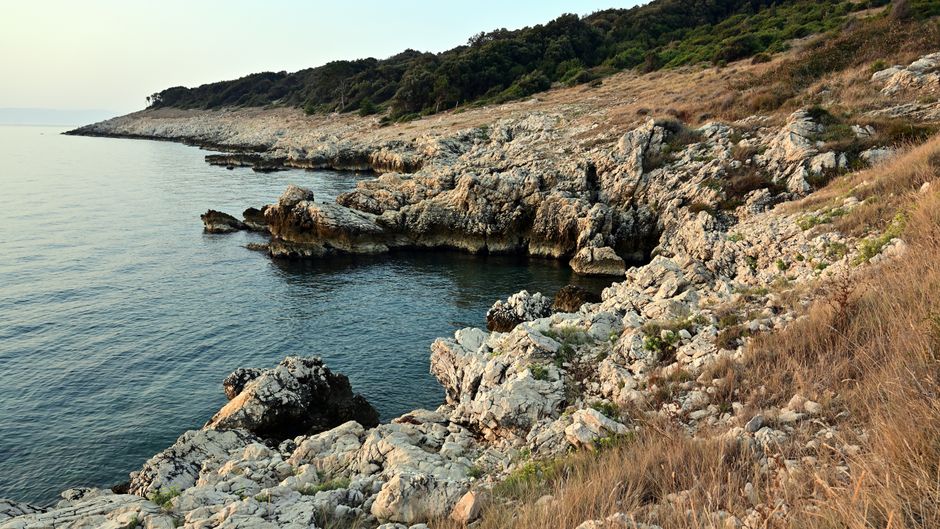
Istria is the heart-shaped peninsula at the top of the Adriatic, where Croatia meets Slovenia and Italy, and it feels like a blend of all three. On the coast are Venetian harbour towns: Rovinj, with its hilltop church rising above pastel houses, Poreč, with its gold Byzantine mosaics, and Pula, with one of the best-preserved Roman amphitheatres in the world. Inland, green hills are topped by medieval villages such as Motovun and Grožnjan, surrounded by vineyards, olive groves and the oak forests where truffles are dug. Signs are in Croatian and Italian, menus mix pasta and seafood with truffles and olive oil, and an old narrow-gauge railway, the Parenzana, is now a cycling trail. Istria is good from April to October, with autumn the season for truffles and wine.
Right now in Istria (Rovinj)
- Thu19–23°C67–73°F65 mm rain
- Fri18–21°C65–70°F12 mm rain
- Sat17–20°C62–67°FCloudy
Top tours in Istria
See all tours for Istria →
From local operators, with prices and reviews; you check availability and book on Viator, our partner. We may earn a commission at no extra cost to you. How we earn money
Istria at a glance
- Best months: May–June and September–October; autumn for truffles and wine harvests, July–August for the beach.
- Days needed: 4–5 for Rovinj, Pula and the hill towns; a week with cycling, Brijuni and the coast.
- Getting there: Pula airport (PUY), or fly to Trieste, Venice or Ljubljana and drive; seasonal catamarans from Venice. Rijeka and Zagreb are 1.5 and about 3 hours by road.
- Getting around: a car is by far the easiest way to see the inland towns; buses link the coastal towns.
- Budget level: mid-range; Rovinj is the most expensive. See our Croatia guide for money, entry rules and costs.
Istria’s towns and who each one suits
- Rovinj: the most romantic town, built on a former island, with steep cobbled lanes, art galleries and waterside bars. Best for couples and photographers.
- Poreč: a lively resort around a compact old town with a UNESCO basilica; good for families with plenty of beach hotels and campsites.
- Pula: a real working city with Roman monuments, a market and the Arena; the best base for Brijuni and Cape Kamenjak, and for culture lovers.
- Novigrad and Umag: calmer coastal towns in the north-west, near Slovenia, with tennis, cycling and seafood.
- The hill towns (Motovun, Grožnjan, Buzet, Hum): small medieval towns inland, with truffle restaurants, wine and views. For foodies, walkers and cyclists.
- Labin and Rabac: a hilltop old town above a beach resort on the east coast, facing the Kvarner Gulf.
Top things to see in Istria
Prices and hours below are as of October 2026, from the sites’ official pages where available.
Rovinj
Rovinj’s old town fills a rounded headland, crowned by the Baroque Church of St Euphemia, whose bell tower, modelled on St Mark’s in Venice, is topped by a copper statue of the saint that turns with the wind. Climb the tower’s wooden stairs for a view over the red roofs and the islands. Below, Grisia street is lined with galleries, and the harbour fills with fishing boats. South of town, the Golden Cape (Zlatni rt) forest park has pine-shaded paths, rocks for swimming and cliffs for climbing. Rovinj is busiest in July and August, and parking is far from the old town.
Pula and the Arena
Pula’s Arena, built in the 1st century AD, is one of the six largest surviving Roman amphitheatres in the world and the only one to keep all four of its corner towers and its full outer ring of walls. Walk the arena floor and the underground galleries, which hold an exhibition on olive oil and wine in Roman Istria. How to visit (as of October 2026): according to the Arena’s official visitor page, tickets are €10 for adults and €5 for students and children. It is open daily, 08:00–19:00 in October, 09:00–17:00 from November to March, and until 20:00–22:00 from April to September; it can close or shorten its hours for concerts and events, so check the notice on the official site. In summer the Arena hosts concerts and the Pula Film Festival. In town, see the Temple of Augustus on the Roman forum, the Arch of the Sergii and the Austro-Hungarian market hall. South of the city, Cape Kamenjak is a wild nature reserve of rocky coves and cliffs at Istria’s southern tip.
Poreč and the Euphrasian Basilica
Poreč’s old town sits on a small peninsula with a Roman street plan. Its Euphrasian Basilica, built in the 6th century, has some of the finest Byzantine mosaics outside Ravenna and Istanbul, glittering with gold in the apse, and is a UNESCO World Heritage Site. Climb the bell tower for a view over the town and the sea.
Motovun, Grožnjan and the hill towns
Motovun crowns a hill above the Mirna valley, its old town ringed by walls you can walk around for views over vineyards and the Motovun forest; it hosts a film festival in summer. Grožnjan is an artists’ village of galleries, studios and music in summer. Hum, with about 30 inhabitants, calls itself the smallest town in the world; taste the local mistletoe brandy, biska. Buzet styles itself the “city of truffles”. Drive the quiet roads between them for the views, and stop at a family winery or olive oil producer.
Brijuni National Park
The Brijuni islands, a short boat ride from Fažana near Pula, were Tito’s summer residence. The national park has Roman villa ruins, a safari park with animals given to Tito by world leaders, dinosaur footprints and a 1,600-year-old olive tree. Visits are by the park’s own boat and a guided tour on the main island; book ahead in summer.
Historic centres
- Motovun
- Rovinj Old Town
Churches and cathedrals
- Euphrasian Basilica
Protected areas
- Brijuni National Park
- Cape Kamenjak
Monuments
- Pula Arena
- Temple of Augustus
Truffles, wine and olive oil
Istria is one of the few places in Europe where the prized white truffle (Tuber magnatum) grows, in the damp oak woods of the Mirna valley around Motovun and Buzet. The white truffle season runs roughly from late September to January, with black truffles found for much of the rest of the year. In autumn, truffle fairs and festivals are held in the hill towns, and Livade, at the foot of Motovun, holds weekend truffle days. Join a truffle hunt with a local family and their dogs, then eat the result on fresh pasta (fuži or pljukanci), with eggs or on beef carpaccio.
Istria’s signature wines are the white Malvazija istarska and the red Teran; wineries cluster around Poreč, Buje, Motovun and Momjan, and many open for tastings. Istrian extra-virgin olive oil regularly wins international awards; visit a producer for a tasting. Seafood is excellent too, especially oysters and mussels from the Lim Channel, a 10 km fjord-like inlet near Rovinj. For more, see our wine tasting guide.
Cycling the Parenzana and other routes
The Parenzana was a narrow-gauge railway that ran from Trieste to Poreč (Parenzo in Italian) between 1902 and 1935, linking the coast with the hill towns. Its route, about 120 km in all through Italy, Slovenia and Croatia, is now a walking and cycling trail, with about 80 km in Croatian Istria. It follows the old line through tunnels and over viaducts past Buje, Grožnjan, Livade and Motovun, mostly on gravel with gentle gradients. The stretch from Grožnjan to Motovun, with its tunnels and views, is the most popular; e-bikes can be hired in the hill towns. Istria also has a large network of marked road and gravel bike routes; see our cycling guide.
Activities and best months
- Beaches and swimmingCape Kamenjak, the protected southern tip of the peninsula, has over 30 km of coast with coves and flat rocks and a few sandy beaches for families; at Rovinj, the beaches of the Golden Cape (Zlatni rt) forest park are a 15-minute walk from the centre.
- CyclingThe Parenzana, a narrow-gauge railway that ran 123 km from Trieste to Poreč (1902-1935), is now Istria's best-known and most visited cycling and hiking trail, with tunnels and viaducts, from the Slovenian border to Poreč.
- Scuba divingThe Baron Gautsch, an Austrian passenger ship sunk by a mine in 1914, lies at 39 m about 9 nautical miles off Rovinj; it may be dived only with diving centres holding a Ministry of Culture permit, and only the first two decks may be entered. Rovinj has four diving centres with courses for all levels.
- SnorkelingRovinj's tourist board marks a snorkelling area at Balzamake in the Golden Cape forest park, inside a cork-line barrier that keeps boats out; Kamenjak is also known for its underwater life.
- Wine tastingIstria's wine roads lead from cellar to cellar, with tastings of Istrian Malvazija (white) and Teran (red) at family wineries such as Kozlović in Momjan, Coronica near Umag and Damjanić near Poreč; Motovun is a grand cru area for Teran.
Beaches in Istria
Istria’s coast is mostly rocks, flat stone slabs and pebble coves, often with pine trees behind them, and the water is very clear. The best areas are the Golden Cape and the islands off Rovinj, the many small bays around Pula and Medulin, and the wild coves of Cape Kamenjak, where you need a vehicle permit in summer or can cycle in. Poreč, Novigrad and Umag have family beaches with concrete platforms and shallow sections. Rabac, on the east coast, has pebble bays below green hills. Bring water shoes. See our beaches guide for more.
Other things to do in Istria
The Lim Channel and the coast by boat
The Lim Channel (Limski kanal) is a narrow, 10 km inlet between wooded hills just north of Rovinj, where the sea pushes deep inland. Boat trips run from Rovinj, Vrsar and Poreč, often with a stop at a pirate cave and a seafood lunch at the head of the channel, where oyster and mussel farms line the water. On the coast, short boat trips from Rovinj visit the islands of Sveta Katarina and Crveni otok, and from Fažana you reach Brijuni. See our boat trips guide.
Cape Kamenjak and Medulin
Cape Kamenjak, a protected landscape at the southern tip of Istria, has dozens of coves, low cliffs for jumping and rare orchids in spring. In summer cars pay an entry fee, and the dirt tracks are dusty; cycling in is a pleasure. Nearby Medulin and Premantura are family resorts with shallow bays, windsurfing and kayaking.
Labin and the east coast
Labin, a hilltop town above the Kvarner Gulf, was a coal-mining centre until the 1980s; its old town is now full of galleries, and a mining museum tells its story. Below it, Rabac has pebble bays and clear water. Further north, just beyond Istria, Opatija is a Habsburg seaside resort of villas and gardens with a 12 km seafront path, the Lungomare, and Rijeka is a lively port city with a big carnival in February.
Istrian food to try
Istrian cooking is rich and seasonal. Look for fuži and pljukanci (hand-made pasta) with truffles or game sauce, maneštra (a thick bean and corn soup), Istrian pršut (air-dried ham, cured without smoke), boškarin (meat from the native long-horned Istrian ox), wild asparagus omelettes in spring and supa, warm red wine with olive oil, pepper and toasted bread, served in a shared jug. Agritourism farms (agroturizam) serve home-grown food in the hills, often by reservation only.
Combining Istria with Slovenia, Trieste and Venice
Istria is an easy add-on to a trip through northern Italy or Slovenia. From Venice, a summer catamaran or a three-hour drive brings you to Rovinj, Poreč or Pula. From Trieste, the Croatian border is about 30 minutes away, and the Slovenian coast between them has the Venetian town of Piran, worth a stop. Ljubljana and the Postojna and Škocjan caves are about two hours from northern Istria. A good loop is Venice – Trieste – Piran – Motovun and Grožnjan – Rovinj – Pula, then either back north or on to the Kvarner islands and Dalmatia. Remember that hire cars crossing borders may need the rental company’s permission, and that Slovenia’s motorways need an e-vignette, while Croatia’s charge tolls.
Nearby destinations
- Piran45 km
- Trieste51 km
- Krk57 km
- Ljubljana106 km
- Venice125 km
- Bled131 km
- Triglav National Park132 km
- Plitvice Lakes139 km
Getting there and getting around
Flights and boats
Pula airport (PUY) has flights from many European cities in summer and from Zagreb all year. Trieste airport in Italy is about 1–1.5 hours from northern Istria, Venice about 2.5–3 hours, and Ljubljana about 2 hours. In summer, catamarans run from Venice to Rovinj, Poreč, Pula and Umag; they are a lovely way to combine Istria with Venice.
By road
The “Istrian Y” motorway (A8/A9) connects Pula, Rovinj, Poreč and Umag with the Slovenian border and with Rijeka through the Učka tunnel; it has tolls. Croatia and Slovenia are both in the Schengen area, so there are no routine passport checks at the border, but Slovenia has carried out temporary checks at times since 2023, so carry your passport or ID. Slovenia requires a motorway vignette for its own motorways. Buses connect Pula, Rovinj, Poreč and the other coastal towns, but inland buses are few: hire a car to explore the hill towns.
When to go and how long to stay
Istria is greener and slightly cooler than Dalmatia, with more rain spread through the year. The coast is warm and sunny from May to September, with the sea warm enough to swim from June to September. Inland, nights are cooler, and autumn brings fog in the valleys, the grape and olive harvests and truffle season. Many coastal hotels and campsites close from November to March, but hill-town restaurants stay open for truffle season.
| Season | Mean temperature (inland, Pazin) | Days with rain a month | What it’s like |
|---|---|---|---|
| Spring (Mar–May) | 7–15 °C | 10–13 | Green and fresh; good for cycling and walking; towns open from Easter. |
| Summer (Jun–Aug) | 19–21 °C | 9–12 | Warm to hot; beach season on the coast; festivals in Pula and Motovun. |
| Autumn (Sep–Nov) | 16 °C falling to 8 °C | 10–12 | Wine and olive harvests and white truffles; quieter coast; wet November. |
| Winter (Dec–Feb) | 3–4 °C | 9–10 | Cool and quiet; truffle dinners inland; many coastal hotels closed. |
Figures are DHMZ long-term monthly averages for Pazin, in central Istria (1961–2024). They are means over day and night; the coast at Pula, Rovinj and Poreč is about 2–3 °C milder, and summer afternoons there reach about 28–30 °C. Pazin gets about 1,140 mm of rain a year, the coast less.
Weather month by month
4 days in Istria
Day 1: Rovinj, the bell tower and the Golden Cape. Day 2: Pula, the Arena and Cape Kamenjak. Day 3: Poreč’s basilica and a winery. Day 4: Motovun, Grožnjan and a truffle lunch in Livade or Buzet.
A week in Istria
Add a day on Brijuni, a day cycling the Parenzana from Grožnjan to Motovun, a boat trip in the Lim Channel and an afternoon in Hum and Labin. With more time, continue to the islands of the Kvarner Gulf, or drive on to Zadar and Plitvice.
Where to stay in Istria
- Romance and style: Rovinj’s old town or a hotel by the Golden Cape.
- Families and beaches: Poreč, Novigrad or the resort hotels and campsites of Medulin and Vrsar.
- Culture on a budget: Pula.
- Food, wine and quiet: an agritourism farm or stone villa with a pool near Motovun, Grožnjan, Buje or Vižinada.
- Cyclists: Grožnjan, Motovun or Livade on the Parenzana.
A tourist tax per person per night is added to most bills; children under 12 are exempt, and 12- to 18-year-olds pay half.
Practical tips for Istria
- Hire a car to see the hill towns; park outside the old centres.
- Language: Istria is officially bilingual in many towns, so place names appear in Croatian and Italian (Rovinj/Rovigno, Poreč/Parenzo, Pula/Pola).
- Truffles: prices are by weight; ask before shaving fresh truffle onto your plate.
- Fire rules: open fires are banned outdoors in summer; never light barbecues in the woods.
- Bora: the cold north-easterly wind can make winter days bitter, especially on the east coast below Učka.
- Emergencies: call 112.
What to pack for Istria
For summer, bring light clothes, a sun hat, sunscreen, swimwear and water shoes for rocky beaches, plus a snorkel mask. For cycling, pack padded shorts, a helmet if you bring your own bike, and a light rain jacket. In spring and autumn, add a warm layer and a waterproof for cool evenings and rain inland. Comfortable shoes are a must for the cobbled hill towns.
What to pack
- City walking shoesQuinta visits and harvest days mean steep terraces, gravel and cellar floors.
- Day packs and anti-theft bagsCarries water, towel and sunscreen down the long stairways to Algarve coves.
- Dry bags and phone pouchesProtects phones and cameras from sand and spray on beaches reached by ferry or steep paths.
- Fleeces and warm layersA warm layer or windproof after a dive stops you chilling on the boat ride back.
- Quick-dry beach towelsA sand-shedding quick-dry towel packs small for beach days and lido visits.
- Rain jacketsA packable shell covers showers and wind on coastal routes outside summer.
- Reef-friendly sunscreenSummer UV is strong on Portuguese beaches and there is little shade below the cliffs.
- Snorkel masks and finsYour own mask fits better than a rental and makes clear-water coves and lava pools more fun.
- Water bottles and hydration packsRiding in the Algarve and Alentejo heat needs more water than you expect.
- Water shoesRocky coves, lava pools and weever fish in shallow sand make water shoes useful.
- WetsuitsOn the west and north coasts the sea stays around 16–18 °C even in summer, so a thin suit helps for long swims.
- Wine bottle travel protectorsPort and Douro wines bought at the quintas travel home safely in checked luggage with padded bottle protectors.
Istria travel FAQ
Is Rovinj or Pula a better base?
Rovinj for romance, beauty and the best restaurants; Pula for Roman sites, Brijuni and Cape Kamenjak, and better value. Both are about 40 minutes apart by car.
How much is the Pula Arena ticket?
As of October 2026 it is €10 for adults and €5 for students and children, according to the Arena’s official site. It is open daily, with longer hours in summer, but can close for events.
When is truffle season in Istria?
White truffles are found roughly from late September to January, with festivals and truffle days in Livade, Motovun and Buzet in autumn. Black truffles are available for much of the rest of the year.
What is the Parenzana?
A former narrow-gauge railway between Trieste and Poreč, now a cycling and walking trail of about 120 km through Italy, Slovenia and Croatia, with about 80 km in Istria past Grožnjan and Motovun.
Do I need a car in Istria?
For the hill towns, wineries and quieter beaches, yes. The coastal towns are linked by bus.
How many days do you need in Istria?
Four or five days for Rovinj, Pula, Poreč and the hill towns; a week with cycling, Brijuni and the beaches.
Can you visit Istria from Venice?
Yes. Seasonal catamarans run from Venice to Rovinj, Poreč, Pula and Umag in about 2.5–3.5 hours, and the drive takes about 2.5–3 hours.
Are there sandy beaches in Istria?
Hardly any. Istria’s beaches are mostly rocks, stone slabs and pebbles with very clear water. Bring water shoes.
Is Istria good for a family holiday?
Yes. Poreč, Novigrad, Vrsar and Medulin have family resorts, shallow beach areas, campsites with pools and plenty of activities, and the hill towns and Brijuni make easy outings.
What language is spoken in Istria?
Croatian, with Italian widely spoken and official alongside Croatian in many towns. English and German are common in tourist areas.
Plan your trip
Partner links: TravelerCenter may earn a commission if you book, at no extra cost to you.
🇭🇷 Useful Croatian phrases for Istria
All 38 Croatian phrases: restaurant, hotel, emergencies, romance (printable) →
Traveler centers in Istria
Tourist information offices, visitor centers and travel agencies in Istria, from OpenStreetMap.
- Tourist information office
Bike Center Poreč
- Travel agency
Tourist agency Krevatin
- Travel agency
Apartments Laguna Izola
- Travel agency
brioni Pula
- Travel agency
Camelus Adventures
- Travel agency
Guidina Destination Management
Sources · last reviewed 4 October 2026
Researched and last reviewed on 4 October 2026. Pula Arena prices and hours come from the Arena’s official visitor page; climate from the Croatian Meteorological and Hydrological Service (DHMZ); UNESCO listings from UNESCO. Parenzana distances, truffle seasons, catamaran times from Venice and the Slovenian border checks come from regional tourism and secondary sources and are flagged for checking. Prices, timetables and rules change, so check the official sites before you travel.
Also: istra.hr · rovinj-tourism.com · Aeronautica Militare normals 1991–2020, Trieste (Italy) (climate)
Data: Weather: MET Norway (CC BY 4.0) · Sea temperature: NOAA CoastWatch · Rates: ECB · Costs: World Bank ICP and price levels · © OpenStreetMap contributors (ODBL) · Wikidata (CC0)