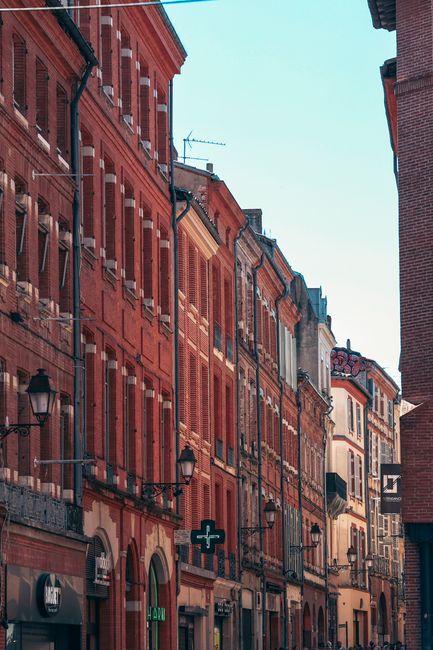
Toulouse is called la ville rose, the pink city, for the warm red brick of its churches, squares and riverside quays. It is France’s fourth-largest city and the capital of Europe’s aerospace industry, yet the centre feels relaxed and southern, with student bars, long lunches and sunsets over the Garonne. Come for the great Romanesque basilica of Saint-Sernin, the Jacobins cloister, the space and aircraft museums, cassoulet and the Canal du Midi. Two days cover the old centre; give it three or four with the Cité de l’espace and a day trip to Albi or Carcassonne.
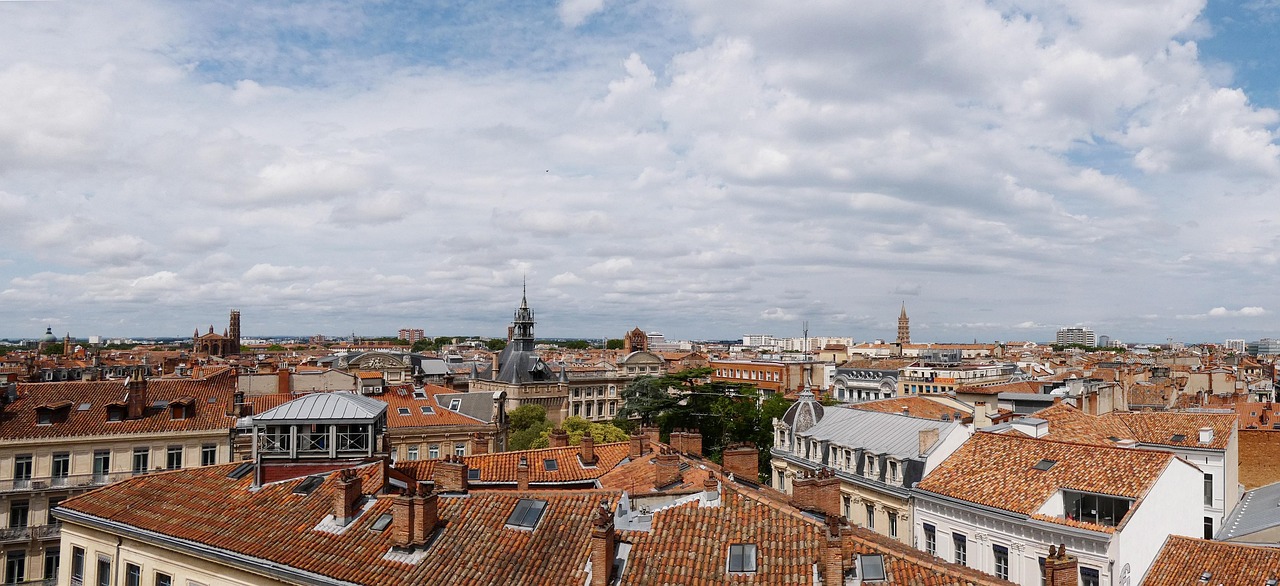
Right now in Toulouse
- Wed16–22°C60–71°F14 mm rain
- Thu13–17°C56–62°F6 mm rain
- Fri8–16°C46–60°FPartly cloudy
Top tours in Toulouse
See all tours for Toulouse →
From local operators, with prices and reviews; you check availability and book on Viator, our partner. We may earn a commission at no extra cost to you. How we earn money
Toulouse at a glance
- Best for: brick architecture and churches, aviation and space, food markets, river evenings and easy trips to medieval towns and the Pyrenees.
- How long: 2 days for the centre, 3–4 with the museums and a day trip.
- Best time: April to June and September to October; July and August are hot.
- Getting in: Toulouse-Blagnac airport is linked to the centre by the Navette Aéroport bus (€9, as of October 2026); trains from Paris take about 4 hours 20 minutes.
- Getting around: two metro lines, trams and buses on one Tisséo ticket: €1.90 a trip or €7.20 for a day (as of October 2026).
- Before you go: entry rules, money, trains and general safety are on our France travel guide.
Toulouse’s neighbourhoods and who each one suits
The historic centre sits on the east bank of the Garonne, inside a ring of boulevards, and is compact enough to cross on foot in half an hour. The Matabiau railway station and the Canal du Midi lie just north-east of it; Saint-Cyprien is across the river.
Capitole and the old centre
The heart of the city, around the vast Place du Capitole: arcades, cafés, the city hall, and lanes running south to the Saint-Étienne cathedral and the elegant mansions (hôtels particuliers) built by merchants who grew rich on woad, a blue dye plant. The best base for a first visit, with the metro at the door.
Carmes and the riverside
South of the centre, the Carmes and Saint-Étienne districts have food shops, a covered market, antique dealers and quiet squares, close to the Garonne quays. Good for a calm, stylish stay.
Saint-Cyprien
Across the Pont Neuf, the left bank is more local and multicultural, with a lively market square, the Les Abattoirs modern art museum and riverside gardens. Rooms are often cheaper, and the sunset view back across the river to the pink quays is the best in town.
Matabiau, the canal and Compans
Around the station, hotels are practical for early trains and the airport bus, and the Canal du Midi runs right past. The area by the station is less charming and best avoided late at night; the Compans-Caffarelli business district nearby has a park with a Japanese garden.
Top things to see in Toulouse
Many of Toulouse’s best sights, including its two great churches and the Capitole’s main halls, are free. Prices below are as of October 2026.
The Capitole
The 18th-century facade of the city hall fills one side of Place du Capitole, with the Occitan cross set into the paving of the square. Inside, when there is no official event, you can usually visit the grand staircase and the Salle des Illustres, lined with huge paintings of the city’s history, free of charge. The building also houses the Théâtre du Capitole, home to the city’s opera.
Basilica of Saint-Sernin
One of the largest Romanesque churches in Europe, built in brick and stone from the late 11th century, with a soaring octagonal bell tower. It was a major stop for pilgrims on the way to Santiago de Compostela, and is listed by UNESCO as part of the Routes of Santiago de Compostela in France. Entry to the church is free; the crypt, with its relics, sometimes has a small fee and limited hours. On Sunday mornings a flea market fills the square around it.
Couvent des Jacobins
The Dominican church is famous for its “palm tree”: a single slender column whose ribs fan out across the vault. The church is free; a ticket covers the cloister, garden, chapter house, Saint-Antonin chapel and refectory. As of October 2026, it costs €5 (€3 reduced), or €9 including the temporary exhibition. The convent opens Tuesday to Sunday from 10:00 to 18:00 and is closed on Mondays; Thursdays are set aside for booked groups, so check before you go.
Musée des Augustins and Fondation Bemberg
The fine arts museum in a former Augustinian convent is famous for its Romanesque sculpture and its cloister. It has been under long restoration and is partly open: the Gothic rooms reopen in October 2026, and the church is due to reopen in autumn 2027. While the work continues, tickets are reduced to €9 (as of October 2026), and the museum opens Monday, Thursday and Friday 12:00–18:00 and weekends 10:00–18:00; it is closed on Wednesdays, and Tuesdays are for groups only. The Fondation Bemberg, in the Renaissance Hôtel d’Assézat, shows a private collection strong in Bonnard and other French painters; entry costs €12, or €15 with the temporary exhibition, and it opens 10:00–18:00, daily from May to July and Tuesday to Sunday the rest of the year.
The Garonne quays and the Prairie des Filtres
Walk along the brick quays from the Pont Neuf, the city’s oldest bridge, to the Quai de la Daurade, where students and families gather on the steps at sunset. Across the river, the Prairie des Filtres is a riverside park used for picnics, concerts and festivals. River boats run short cruises from the Daurade in the warmer months.
Cité de l’espace, Aeroscopia and the Halle de la Machine
- Cité de l’espace: a space theme park east of the centre, with a full-size Ariane 5 rocket, a Mir space station module, a planetarium and simulators. A day ticket costs €29–32 for adults and €22.50–25.50 for 5–18-year-olds, depending on the date; under-5s go free. Allow most of a day.
- Aeroscopia: the aircraft museum beside the Airbus factories in Blagnac, with two Concordes, an A380 and dozens of other aircraft. Tickets cost €16 for adults and €13 reduced; under-6s go free.
- Halle de la Machine: giant mechanical creatures in a hall at Montaudran, including the Minotaur you can ride. The visit and the Minotaur ride cost €12 each for adults, or €21 together; it is generally open Tuesday to Sunday.
The Canal du Midi
The 17th-century canal, a UNESCO World Heritage Site, starts in Toulouse and runs to the Mediterranean. The tree-lined towpath from the Port de l’Embouchure past Matabiau station is a pleasant walk or cycle ride, and keen cyclists can follow it all the way to Carcassonne.
Eating in Toulouse: cassoulet, sausage and markets
Toulouse cooking comes from the farmland of the south-west: duck and goose, saucisse de Toulouse (a coarse pork sausage), garlic from Lautrec and, above all, cassoulet, a slow-cooked dish of white beans with sausage, duck confit and pork. Order it at lunch and expect a long afternoon. Other treats include foie gras, croustade (apple pastry) and sweets made with violets, the city’s flower.
The Marché Victor Hugo is the city’s main covered market, open in the mornings from Tuesday to Sunday, with butchers, cheesemongers and fishmongers; upstairs, small restaurants serve generous set lunches with produce from the stalls below. The Marché des Carmes is smaller and more upmarket. On the riverside and in Saint-Cyprien, bars and terraces fill from early evening. Local wines include Fronton, a fruity red made close to the city, and Gaillac.
Other things to do in Toulouse
- Les Abattoirs: modern and contemporary art in a former slaughterhouse in Saint-Cyprien, with a garden above the river.
- Japanese garden: a peaceful garden with a pond and tea house in the Compans-Caffarelli park.
- A river cruise: short boat trips on the Garonne and the Canal de Brienne leave from the Daurade quay in season.
- Hôtels particuliers: look into the courtyards of the Renaissance mansions such as the Hôtel d’Assézat and the Hôtel de Bernuy.
- Walking tours: the tourist office runs guided city walks, and its Pass Tourisme gives discounts on museums and transport.
Day trips from Toulouse
Toulouse is a good base for the Occitanie region. Times are approximate; check the SNCF Connect app for trains.
Albi
About an hour north-east by regional train, Albi has a massive brick cathedral, Sainte-Cécile, with a painted interior, and the Toulouse-Lautrec museum in the bishops’ palace beside it. The old episcopal city is a UNESCO World Heritage Site.
Carcassonne
The famous walled city of Carcassonne is 40 minutes to 1 hour 10 minutes away by train. You can walk into the medieval Cité for free; the castle and ramparts need a ticket. It is an easy day trip, though one night lets you see the walls lit up.
Cordes-sur-Ciel and the Tarn villages
Cordes-sur-Ciel, a medieval hilltop town with Gothic houses, is about 1¼ hours away by car. Combine it with Gaillac’s vineyards or Saint-Antonin-Noble-Val. A car makes this trip much easier.
The Pyrenees and Andorra
The mountains are close: Saint-Bertrand-de-Comminges, Luchon and the ski resorts are 1½–2 hours by car, and hiking trails start from many valleys. Andorra is about three hours by coach, with regular services from Toulouse, or by train to L’Hospitalet-près-l’Andorre and then a bus.
Further afield
Bordeaux is about two hours away by train, and the Mediterranean coast at Narbonne about 1½ hours. Moissac, with one of the finest Romanesque cloisters in France, makes a quieter outing to the north-west.
Nearby destinations
- Carcassonne85 km
- Andorra la Vella122 km
- Lourdes133 km
- Dordogne185 km
- Montpellier196 km
- Bordeaux212 km
- Girona212 km
- Costa Brava228 km
Getting there and getting around
By train
Toulouse-Matabiau is the main station, on the edge of the centre beside the Canal du Midi, with metro line A. TGV trains from Paris-Montparnasse take about 4 hours 20 minutes via Bordeaux, and regional and Intercités trains run to Carcassonne, Narbonne, Montpellier and Marseille. For Barcelona, change at Narbonne or Perpignan for a high-speed train across the border. Compare fares on SNCF Connect and book early for the best prices.
From Toulouse-Blagnac airport
The airport is about 8 km north-west of the centre. The easiest link is the Navette Aéroport bus from outside gate C2 on the arrivals level, which stops at Compans-Caffarelli (metro B), the Jeanne d’Arc boulevard (metro B) and Matabiau station (metro A). As of October 2026, it costs €9 one way, runs every 15 minutes every day except 1 May, and takes 25–45 minutes depending on traffic. The first bus leaves the airport at 5:40 and the last at 0:10; the ticket is also valid on the rest of the Tisséo network.
The T2 tram no longer reaches the terminal: its airport branch has been closed since 2023 for metro works. A new short tram line, the Ligne Aéroport, will link the terminal with the T1 tram at Jean-Maga; Tisséo’s engineering company announces it for December 2026, though press reports say the opening may slip to early 2027. The new metro line C, from Colomiers to Labège via Matabiau, is due to open at the end of 2028; with a change to the airport tram, Tisséo expects the trip from Matabiau to the terminal to take about 20 minutes.
Metro, trams and buses
Tisséo runs two automatic metro lines (A and B), two tram lines and the buses, all on one ticket; the Téléo cable car crosses the Garonne in the south of the city. As of October 2026, a single trip costs €1.90, 10 trips €16, a one-day pass €7.20 and a three-day pass €14.30. These tickets do not cover the airport bus. Buy them from machines in stations or in the Tisséo app. The centre is flat and easy on foot, and VélôToulouse shared bikes are handy along the river and canal.
Driving and the low-emission zone
Toulouse has a low-emission zone (ZFE) covering most of the city inside the ring road (the périphérique) and its western bypass. As of October 2026, Toulouse Métropole confirms the zone remains in force: unclassified, Crit’Air 5 and Crit’Air 4 vehicles may not drive or park in it, while Crit’Air 3 and cleaner vehicles may. Every vehicle, French or foreign, must display a Crit’Air sticker inside the zone, and fines apply. Parking in the centre is expensive and traffic slow, so leave the car at a park-and-ride by a metro or tram terminus.
When to go and how long to stay
Toulouse has a mild, sunny climate, with hot summers and short, cool winters; the warm south-easterly vent d’autan can blow for days. The table uses Météo-France’s official 1991–2020 normals for the Toulouse-Blagnac station: average daily highs and lows, and days with at least 1 mm of rain.
| Season | Average high / low | Rainy days per month | What it’s like | Good for |
|---|---|---|---|---|
| Winter (Dec–Feb) | 10–11 °C / 3–4 °C | 8–9 | Cool and grey, frosty some nights | Museums, cassoulet, Christmas market |
| Spring (Mar–May) | 15–21 °C / 6–11 °C | 8–10 | Mild, with showers and thunderstorms by May | Walking, terraces, gardens |
| Summer (Jun–Aug) | 26–29 °C / 15–17 °C | 6–7 | Hot and sunny; heatwaves can pass 40 °C | River evenings, festivals, the Pyrenees |
| Autumn (Sep–Nov) | 25 °C falling to 14 °C / 14 °C falling to 6 °C | 7 in September–October, 10 in November | Warm and golden, then wetter | Grape harvest, day trips, food |
Toulouse gets about 627 mm of rain a year, less than Paris, spread over about 96 days. August is the warmest month, with an average high of about 28.5 °C; on hot days, visit outdoor sights early and spend the afternoon in a museum.
How long to stay: 2-, 3- and 4-day plans
2 days: Day 1, Place du Capitole, Saint-Sernin, the Jacobins and lunch at the Victor Hugo market, then the quays at sunset. Day 2, the Augustins or the Fondation Bemberg, the Carmes and Saint-Étienne, and an evening in Saint-Cyprien.
3 days: add the Cité de l’espace, or Aeroscopia and the Halle de la Machine. 4 days: add a day trip to Albi or Carcassonne.
Where to stay in Toulouse
- Capitole: central and lively, near metro lines A and B.
- Carmes and Saint-Étienne: elegant, quieter streets, markets and good restaurants.
- Saint-Cyprien: local feel and river views, often better value.
- Matabiau and Jean-Jaurès: practical for trains and the airport bus.
- Blagnac: only if you are flying early or visiting Aeroscopia and Airbus.
Toulouse Métropole charges a tourist tax (taxe de séjour) per adult per night; under-18s are exempt. As of October 2026, the metropolis’s latest published rates, including the 10% Haute-Garonne surcharge and the 34% surcharge that funds the new south-west high-speed rail lines, are €1.15 in a 1-star hotel, chambre d’hôtes or hostel, €1.44 in a 2-star, €2.30 in a 3-star, €3.60 in a 4-star, €4.75 in a 5-star and €6.62 in a palace. Unclassified rentals pay 5% of the nightly price per person, capped, plus the surcharges. Prices rise for big rugby matches, concerts and aerospace trade events.
Practical tips for Toulouse
- Check museum days: the Augustins closes on Wednesdays, the Jacobins on Mondays, and several sites keep certain days for groups.
- Book the Cité de l’espace: buy online for school holidays and weekends.
- First Sundays: many city museums are free on the first Sunday of the month, and busier.
- Eat at lunch: set menus at the Victor Hugo market and in bistros are the best value.
- Watch your bags: around Matabiau station and on busy metro trains.
What to pack for Toulouse
Comfortable walking shoes are enough for the flat centre. In summer bring light clothes, a sun hat, sunscreen and a refillable bottle; in spring and autumn, layers and a light rain jacket. Winters are mild but damp, so pack a warm coat from December to February. Smart-casual clothes suit the opera and nicer restaurants, and a picnic blanket is handy for evenings on the riverbank.
Toulouse travel FAQ
How many days do you need in Toulouse?
Two days covers the Capitole, Saint-Sernin, the Jacobins, the quays and a market lunch. Three or four days lets you add the Cité de l’espace or Aeroscopia and a day trip to Albi or Carcassonne.
What is the best time to visit Toulouse?
April to June and September to October, with average highs of about 18–26 °C. July and August average 28 °C or more, and heatwaves are common.
How do I get from Toulouse airport to the city centre?
Take the Navette Aéroport bus from gate C2: as of October 2026 it costs €9, runs every 15 minutes and reaches Matabiau station in 25–45 minutes. The T2 tram no longer serves the terminal.
Is metro line C open in Toulouse?
Not yet. As of October 2026, line C is under construction and due to open at the end of 2028. A short airport tram line is due to open first, announced for December 2026 but possibly early 2027.
How much is a metro ticket in Toulouse?
As of October 2026, €1.90 for a single trip, €16 for 10 trips, €7.20 for a day pass and €14.30 for three days, valid on Tisséo metro, tram and buses but not the airport bus.
Is the Musée des Augustins open?
Partly. As of October 2026 the museum is open with reduced tickets (€9) during restoration; the Gothic rooms reopen in October 2026 and the church in autumn 2027. It is closed on Wednesdays.
How much does the Cité de l’espace cost?
As of October 2026, a day ticket costs €29–32 for adults and €22.50–25.50 for 5–18-year-olds, depending on the date; under-5s go free. Allow most of a day.
Can I drive into Toulouse with an older car?
Only if it is Crit’Air 3 or cleaner. As of October 2026, Toulouse’s low-emission zone bans unclassified, Crit’Air 5 and Crit’Air 4 vehicles inside the ring road, and every car needs a Crit’Air sticker there.
How long is the train from Paris to Toulouse?
About 4 hours 20 minutes by TGV from Paris-Montparnasse to Toulouse-Matabiau, via Bordeaux. Bordeaux itself is about two hours away.
What food is Toulouse famous for?
Cassoulet, Toulouse sausage, duck and foie gras, and sweets made with violets. Try them at the Victor Hugo market, where upstairs restaurants serve set lunches.
Can I visit Andorra from Toulouse?
Yes. Coaches run from Toulouse to Andorra in about three hours, or you can take the train to L’Hospitalet-près-l’Andorre and continue by bus. Stay at least one night to make it worthwhile.
How much is the tourist tax in Toulouse?
As of October 2026, from €1.15 per adult per night in a 1-star hotel or B&B to €2.30 in a 3-star and €3.60 in a 4-star, surcharges included. Under-18s don’t pay.
Plan your trip
Partner links: TravelerCenter may earn a commission if you book, at no extra cost to you.
🇫🇷 Useful French phrases for Toulouse
All 38 French phrases: restaurant, hotel, emergencies, romance (printable) →
Sources · last reviewed 4 October 2026
Researched and last reviewed on 4 October 2026. Transport fares: Tisséo’s online shop; airport bus: Toulouse-Blagnac airport; airport tram and metro line C: Tisséo Ingénierie, with a press report on the possible delay; low-emission zone: Toulouse Métropole; tourist tax: Toulouse Métropole’s published rate sheet; museum prices and hours: the Couvent des Jacobins, the Musée des Augustins, the Fondation Bemberg, Aeroscopia and the Halle de la Machine; Cité de l’espace prices: the Toulouse tourist office; Carcassonne train times: the Grand Carcassonne tourist office; climate: Météo-France 1991–2020 normals for Toulouse-Blagnac. Paris and day-trip journey times are general guidance. Prices, hours and timetables change, so check the official links before you go. For entry rules, money and general safety, see our France travel guide.
Data: Weather: MET Norway (CC BY 4.0) · Rates: ECB · Costs: World Bank ICP and price levels · Wikidata (CC0)