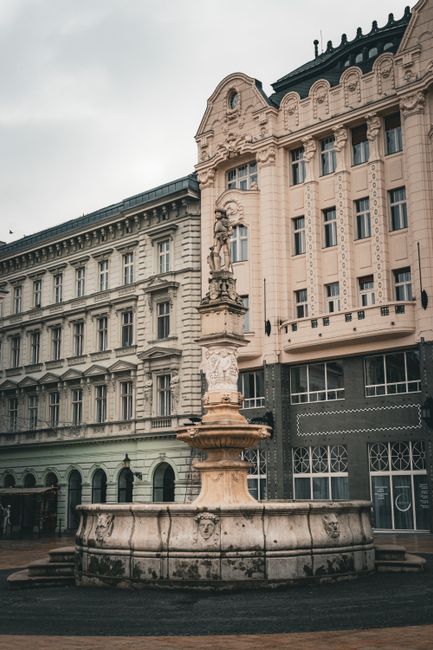
Slovakia is a small, mountainous country in the heart of Central Europe, squeezed between Austria, Czechia, Poland, Ukraine and Hungary, and it packs a lot into a short trip: a compact capital on the Danube, the granite peaks and glacial lakes of the High Tatras, medieval mining towns, wooden churches and one of the largest castle ruins in Europe. Most visitors arrive in Bratislava, only an hour from Vienna, and many leave the same day. Stay longer: the country gets better the further east you go, through the silver town of Banská Štiavnica, the Tatras, Spiš Castle and Levoča to Košice and Bardejov. Slovakia uses the euro, trains are cheap, and prices are lower than in Austria or Germany. June to September is best for hiking, December to March for skiing and Christmas markets. Give it two days for Bratislava, a week to cross the country, and ten days to two weeks to add the national parks and the far east.
Right now in Slovakia
- Wed 10–23°C 50–74°F Clear
- Thu 14–24°C 57–76°F 1 mm Partly cloudy
- Fri 11–16°C 53–60°F Clear
Weather: MET Norway (CC BY 4.0) · Air quality: OpenAQ
Multi-day tours of Slovakia
Multi-day tours from local operators. You check dates and book on Viator, our partner; we may earn a commission at no extra cost to you. How we earn money
Slovakia at a glance: from the Danube to the Tatras
Slovakia is a landlocked country of about 5.4 million people, roughly 400 km from west to east and 200 km from north to south. It became independent on 1 January 1993, when Czechoslovakia split peacefully into two countries, and it joined the European Union and NATO in 2004, the Schengen area in 2007 and the euro in 2009. The capital, Bratislava, sits in the far south-west corner, on the Danube where Slovakia meets Austria and Hungary; Košice, the second city, is in the east.
Most of the country is covered by the arc of the Carpathian Mountains, and the highest of them, the High Tatras, rise to 2,655 m at Gerlachovský štít, the highest peak in the whole Carpathian range. The south is lower and warmer, with the Danube lowland, vineyards and thermal springs. The south has a large Hungarian-speaking minority, and the east has Rusyn communities and Greek Catholic wooden churches.
Time zone: Slovakia runs on Central European Time (UTC+1) in winter and Central European Summer Time (UTC+2) from the last Sunday in March to the last Sunday in October, the same as Austria, Czechia, Poland and Hungary.
Slovakia’s regions
- Bratislava and the west: the capital and its castle, Devín Castle above the meeting of the Danube and the Morava, the Small Carpathian wine route through Pezinok and Modra, the towers and churches of Trnava, Trenčín Castle and the spa town of Piešťany.
- The Tatras and the north: the High Tatras around Štrbské Pleso, Starý Smokovec and Tatranská Lomnica; the Belianske and Western Tatras; rafting on the Dunajec in the Pieniny; the ladders and gorges of the Slovak Paradise (Slovenský raj); the Malá Fatra hills near Žilina; Orava Castle; and the log-cabin village of Vlkolínec, a UNESCO site.
- Central Slovakia: the old gold and silver mining towns of Banská Štiavnica (UNESCO) and Kremnica, the town of Banská Bystrica, the romantic Bojnice Castle and the Low Tatras, with Slovakia’s biggest ski area at Jasná below Chopok.
- The east: Košice with its Gothic cathedral; the Spiš region, with the vast ruins of Spiš Castle and the walled town of Levoča (both UNESCO); the Renaissance square of Bardejov (UNESCO); the wooden churches of the Carpathians (UNESCO); the caves of the Slovak Karst (UNESCO); and the Slovak part of the Tokaj wine region.
Where to go: Bratislava, the Tatras, mining towns and the east
A first trip usually follows the main railway line from Bratislava north-east through Žilina and Poprad to Košice, with side trips to the mountains and castles along the way. Mountain roads make journeys longer than the map suggests.
Bratislava
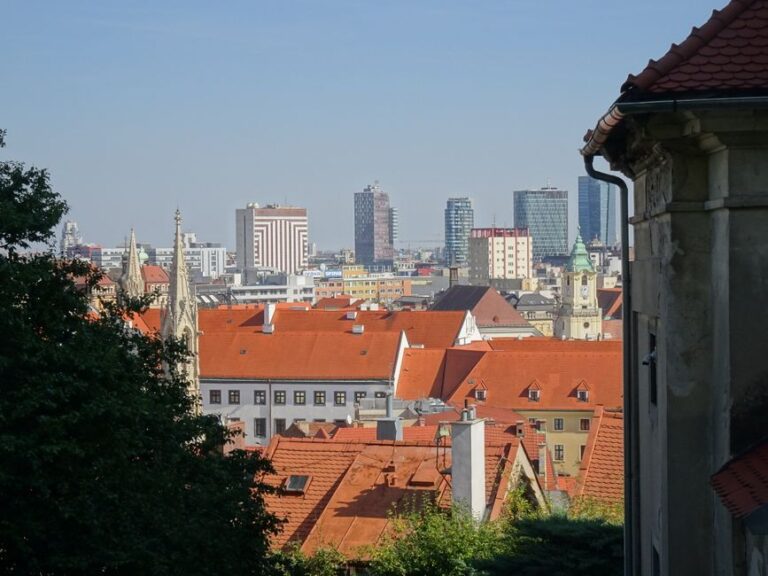
The capital is small and easy to like: a pedestrian Old Town of baroque palaces and cafés, St Martin’s Cathedral, where Hungarian kings were crowned for almost 300 years, the white castle on its hill above the Danube, the Art Nouveau Blue Church and the flying-saucer restaurant and viewpoint on top of the UFO bridge. Devín Castle, on a rock above the river 10 km upstream, makes an easy half-day trip. Read our Bratislava guide for 2026 castle prices, Danube boats, public transport tickets and the Christmas market dates.
The High Tatras
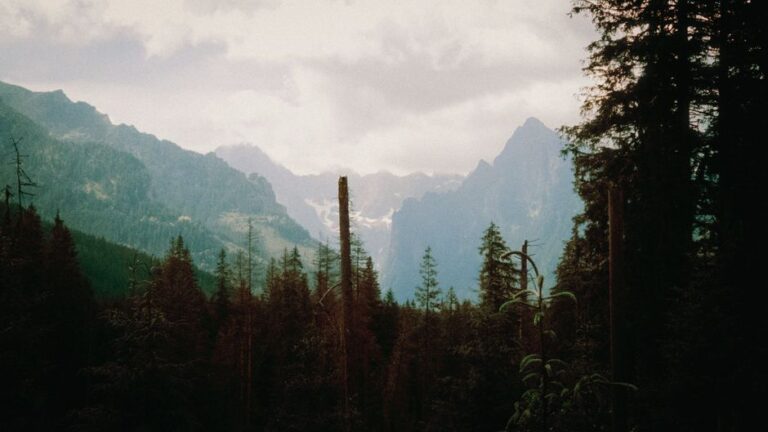
The High Tatras are the smallest high mountains in Europe: a wall of granite peaks only about 26 km long, with more than 100 glacial lakes, pine forests and mountain huts, protected as Tatra National Park (TANAP). The resorts of Štrbské Pleso, Starý Smokovec and Tatranská Lomnica are linked by the little Tatra Electric Railway from Poprad. Walk to the lakes and waterfalls, take the cable cars to Skalnaté pleso and Lomnický štít, or climb to a hut for lunch. Trails above the tree line are closed every year from 1 November to 31 May to protect wildlife, so summer and early autumn are the hiking season; winter brings skiing and snowshoeing. Across the ridge lies Zakopane in Poland.
Banská Štiavnica
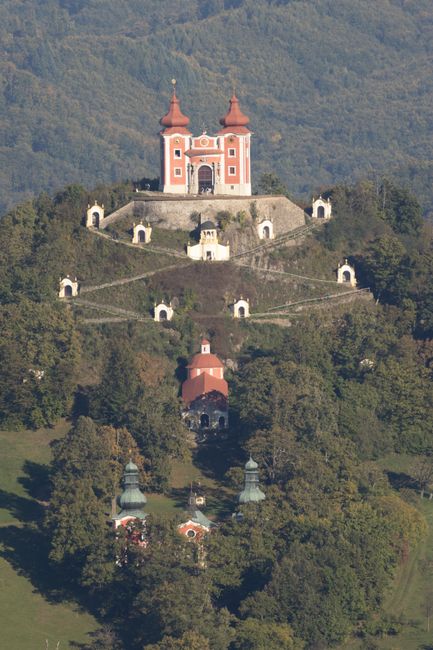
Banská Štiavnica was one of the richest silver-mining towns in Europe and is now one of the most charming small towns in the country: steep streets of burghers’ houses spilling down a volcanic crater, two castles, a calvary on the hill and old mining ponds (tajchy) in the forests around, where locals swim in summer. The town and the technical monuments around it are a UNESCO World Heritage Site. Stay at least one night.
Spiš Castle and Levoča
Spiš Castle, a huge white ruin spread across a limestone hill east of Poprad, is one of the largest castle complexes in Central Europe and the classic image of eastern Slovakia. It is open from spring to mid-November and closed from December to March. Nearby, the walled town of Levoča has a long square of Renaissance houses and the Basilica of St James, home to Master Paul of Levoča’s carved Gothic altar, one of the tallest of its kind in the world. Both, together with the church town of Spišská Kapitula and the village church of Žehra, are part of a UNESCO site.
Košice and Bardejov
Košice, Slovakia’s second city, has a long, lively main street lined with cafés and the Cathedral of St Elizabeth, the easternmost Gothic cathedral in Europe, with a tower you can climb. It is a good base for the Slovak Karst caves, the Tokaj vineyards and the Spiš region, and it has an airport. Further north, Bardejov has one of the best-preserved Renaissance squares in Central Europe, a UNESCO site, and wooden churches in the villages around it.
More places worth the trip
The Slovak Paradise National Park has gorges climbed by ladders, chains and metal steps beside waterfalls, and is one of the most exciting hiking areas in the region. In the Pieniny, wooden rafts float down the Dunajec gorge on the Polish border. Bojnice Castle looks like a fairy-tale chateau, and Orava Castle sits on a cliff above its river. Trenčín has a castle above the Váh, and in 2026 it is the European Capital of Culture. Vlkolínec is a living village of painted log houses. Wine lovers should follow the Small Carpathian wine route north of Bratislava, or head to the Slovak Tokaj in the far south-east.
Banská Štiavnica Travel Guide
Plan a trip to Banská Štiavnica, Slovakia's UNESCO mining town: the Open-air Mining Museum underground tour, the Old and New Castles with 2026 prices…
Bratislava Travel Guide
Plan a trip to Bratislava: the castle museum and grounds with 2026 prices, St Martin's Cathedral, the Old Town and the Blue Church, the…
High Tatras Travel Guide
Plan a trip to the High Tatras in Slovakia: Tatra National Park rules and the 1 November–31 May closure of high trails, the Lomnický…
Best time to visit Slovakia
Slovakia has a continental climate with four clear seasons: warm summers, cold winters and most of the rain in early summer, often in afternoon thunderstorms. The south-west around Bratislava is the warmest and driest part of the country; the Tatras and the valleys below them are much cooler, with long snowy winters. The table shows rounded average daily highs and rainfall a year for one weather station in each part of the country, from the 1991–2020 averages of the Slovak Hydrometeorological Institute (SHMÚ).
| Place (weather station) | Spring highs (Mar–May) | Summer highs (Jun–Aug) | Autumn highs (Sep–Nov) | Winter highs (Dec–Feb) | Rain a year |
|---|---|---|---|---|---|
| Bratislava (airport) | 11–22 °C | 26–28 °C | 22 °C falling to 9 °C | 3–6 °C | about 575 mm |
| Central Slovakia (Sliač, near Zvolen) | 10–22 °C | 25–27 °C | 21 °C falling to 8 °C | 1–5 °C | about 715 mm |
| Below the High Tatras (Poprad, 695 m) | 7–18 °C | 22–24 °C | 18 °C falling to 7 °C | 0–3 °C | about 635 mm |
| The east (Košice airport) | 10–21 °C | 25–27 °C | 21 °C falling to 8 °C | 1–4 °C | about 615 mm |
Winter nights are below freezing almost everywhere: Poprad averages about −8 °C on January nights, with snow on the ground for around 75 days a year, and the peaks are colder still. July is the wettest month in the mountains. Bratislava gets about 2,075 hours of sunshine a year, and its summer afternoons regularly pass 30 °C. In June it stays light until after 21:00; in December it is dark by about 16:00.
Crowds and prices through the year
- June to mid-September: the hiking season in the Tatras, when the high trails are open (snow can linger on the passes into June), the huts are busy and the Dunajec rafts run. July and August are the busiest months in the mountains; book accommodation early.
- May and September: the best months for towns, castles and the wine country, with mild weather and fewer people. Remember that the high Tatra trails stay closed until 31 May.
- October: autumn colours, young wine and quiet trails before the seasonal closure on 1 November. Some castles and caves shorten their hours or close for the winter from November.
- Late November to early January: Christmas markets in Bratislava, Košice and other towns, with kapustnica (sauerkraut soup), potato pancakes and mulled wine. Hotels are busy at weekends.
- December to March: ski season in Jasná (Low Tatras), Štrbské Pleso and Tatranská Lomnica, with busy school-holiday weeks in February. Many castles, including Spiš Castle, are closed.
Festivals and events
- Spring: Easter Monday customs, when boys splash girls with water and playfully whip them with willow switches; maypoles raised in villages on 30 April.
- Summer: folk festivals, including the national folklore festival at Východná below the Tatras in early July; the Marian pilgrimage to Levoča in early July; open-air music festivals; and, at the start of September, the re-enacted coronation celebrations in Bratislava.
- Autumn: wine harvest festivals (vinobranie) in Pezinok, Modra and other Small Carpathian towns in September; Bratislava Jazz Days (23–25 October 2026); and Bratislava’s Young Wine Festival in the courtyards of the Primate’s Palace and the Old Town Hall (6–7 November 2026, free entry).
- Winter: Christmas markets (Bratislava’s main markets run from 26 November 2026 to 3 January 2027, closed on 24 and 25 December), and carnival (fašiangy) parades with masks and pig-slaughter feasts in villages before Lent.
Public holidays and shop closures
Slovakia changed its holiday rules in 2024 and again in 2025 to save money. Three state holidays, 1 September (Constitution Day), 28 October and 17 November, are still marked but are now normal working days: offices, shops and banks open as usual. In 2026 only, 8 May and 15 September were also working days. On the days off listed below, banks and offices close and buses and trains run a holiday timetable. By law, large shops must close on 1 January, Good Friday, Easter Sunday and 25 and 26 December, and from noon on 24 December; on other holidays, most supermarkets now stay open. The next days off, from October 2026:
| Holiday | Date |
|---|---|
| All Saints’ Day | Sunday 1 November 2026 |
| Christmas Eve, Christmas Day, St Stephen’s Day | 24, 25 and 26 December 2026 |
| Day of the Establishment of the Slovak Republic (New Year’s Day) | Friday 1 January 2027 |
| Epiphany | Wednesday 6 January 2027 |
| Good Friday and Easter Monday | 26 and 29 March 2027 |
| Labour Day, Victory over Fascism Day | Saturday 1 May and Saturday 8 May 2027 |
| Saints Cyril and Methodius | Monday 5 July 2027 |
| Slovak National Uprising anniversary | Sunday 29 August 2027 |
| Our Lady of Seven Sorrows | Wednesday 15 September 2027 |
The 2027 dates follow the law as it stood in October 2026. The government can change the list again in its budget, so check close to your trip.
How long to stay: sample itineraries
The easiest trips follow the main railway line and add buses or a hire car for castles and valleys.
3–4 days: Bratislava and Vienna
Two days in Bratislava for the Old Town, the castle, the UFO viewpoint and Devín Castle, then the train or the Twin City Liner boat to Vienna, an hour away. Add a half day in the Small Carpathian wine villages if you have time.
7 days: across Slovakia
Bratislava (two nights), Banská Štiavnica (one night), the High Tatras (two nights, based in Starý Smokovec or Tatranská Lomnica), then east via Spiš Castle and Levoča to Košice (two nights). Fly home from Košice or take the train back west.
10 days: mountains and castles
Follow the seven-day route and add the Slovak Paradise for a day of gorge hiking, a raft down the Dunajec in the Pieniny, and Bardejov and its wooden churches in the far north-east. In winter, swap the hikes for skiing at Jasná or in the Tatras.
14 days: Central Europe by train
Slovakia links easily with its neighbours. Start in Prague or Brno, take the train to Bratislava, cross the country to the Tatras and Košice, then continue south to Budapest; or cross the Tatras to Zakopane and on to Kraków by road. Vienna to Bratislava to Budapest is one of the easiest three-capital trips in Europe. See our Austria, Hungary, Poland and Czech Republic guides to plan the next leg.
Entry, money and costs
Entry: Schengen, EES and ETIAS (last reviewed October 2026)
Slovakia is part of the European Union and the Schengen area. Citizens of the EU, the European Economic Area and Switzerland can enter with a valid passport or national ID card and stay without limit. Visitors from many other countries, including the United States, Canada, the UK, Australia and New Zealand, can visit without a visa for up to 90 days in any 180-day period across the whole Schengen area; others need a Schengen visa.
- Entry/Exit System (EES): the EU’s digital border system has been fully running at all Schengen external borders since 10 April 2026. Non-EU visitors give fingerprints and a facial photo the first time they enter the Schengen area, instead of getting a passport stamp; registration is free. Most visitors to Slovakia pass this check at Vienna, Bratislava or Košice airport, or at the land border with Ukraine. Allow extra time at passport control, especially when leaving.
- ETIAS: the EU’s planned online travel authorisation (fee €20) is not in operation as of October 2026, and no start date has been officially announced. You don’t need one yet; ignore websites selling “ETIAS applications”.
- Passport validity: non-EU passports must have been issued within the last 10 years and be valid for at least three months after the day you plan to leave the Schengen area.
- Border checks: Slovakia itself has no internal border checks in force, but Austria runs temporary checks on its land and river borders with Slovakia until at least 15 March 2027, so trains, buses, cars and Danube boats between Vienna and Bratislava can be stopped. Carry your passport or ID card at all times: Slovak police can also ask for it, and the UK Foreign Office warns of fines of up to €1,600 for not showing ID.
Check the official pages before you travel: the European Commission’s EES and ETIAS pages, the Slovak Ministry of Foreign and European Affairs and your own government’s travel information.
Language
Slovak is the official language, a Slavic language very close to Czech and related to Polish. English is widely spoken by younger people and in hotels in Bratislava and the Tatras; German and Hungarian help in some places. A few words go a long way: Dobrý deň (good day, the standard greeting in shops), Dovidenia (goodbye), Ďakujem (thank you), Prosím (please, and here you are), Prepáčte (excuse me), Pivo, prosím (a beer, please), Zaplatím (I’d like to pay) and Na zdravie! (cheers).
Money: the euro
Slovakia has used the euro since 2009, so there is nothing to change if you come from Austria or most of the EU, unlike in neighbouring Czechia, Poland and Hungary. Cards and contactless payments are accepted almost everywhere in towns, including on Bratislava’s trams and buses, but carry some cash for mountain huts, village shops, market stalls and toilets. Use ATMs that belong to a bank, and when a card machine or ATM offers to charge you in your home currency, choose euros: the “conversion” on offer is almost always a worse rate.
Tipping
Service is not usually included. In sit-down restaurants and cafés, round up or add about 10% for good service, and say the total you want to pay when the server brings the bill rather than leaving coins on the table. Round up for taxis and drinks at the bar. In Bratislava’s Old Town, check drink prices before you order: the UK Foreign Office warns that some bars and clubs charge tourists extortionate prices.
Accommodation taxes
Towns set their own tax per person per night on hotel and apartment stays, added to the bill. In Bratislava it is €3 per night, or €3.50 in the Old Town; mountain resorts and other towns charge less or similar. Children are often exempt.
Typical travel costs
Slovakia is cheaper than Austria or Germany, though Bratislava’s Old Town and the Tatra resorts in high season are not bargains. A half-litre of draught beer in a local pub still costs less than in Vienna, and lunch menus (denné menu) on weekdays are good value. These estimates per person per day are a planning guide as of October 2026:
| Style | Estimated cost per day | What that looks like |
|---|---|---|
| Budget | about €50–80 | Hostel bed or simple guesthouse, weekday lunch menus, supermarket picnics, buses and trains |
| Mid-range | about €110–180 | 3- or 4-star hotel room shared by two, restaurant meals with wine or beer, a castle or cable car a day, trains between towns |
| High-end | about €250+ | Boutique or spa hotel, fine dining, private guides, car hire |
The figures are our estimates, not official statistics. Cable cars in the Tatras and ski passes are the big extra costs.
Getting there and getting around
Arrival airports, trains and boats
- Vienna (VIE): the main long-haul gateway for western Slovakia, only about 40 km from Bratislava. Buses run from the airport to Bratislava every 30 to 60 minutes with Slovak Lines, RegioJet and FlixBus.
- Bratislava (BTS): a smaller airport with mainly low-cost and holiday flights. City bus 61 runs to the main railway station; details are in our Bratislava guide.
- Košice (KSC): the best airport for eastern Slovakia, the Spiš region and the Tatras, with a handful of European routes. Kraków and Budapest airports are other options for the east and the Tatras.
- By train: Bratislava has direct trains from Vienna (about an hour), Prague (about 4 hours), Brno, Budapest (about 2 hours 30 minutes) and other Central European cities, and night trains from Prague run to Poprad and Košice.
- By boat: from spring to autumn, the Twin City Liner catamaran sails along the Danube between Vienna and Bratislava in about 75 minutes.
Trains: ZSSK, RegioJet and Leo Express
Slovakia’s national passenger railway is Železničná spoločnosť Slovensko (ZSSK), which sells tickets in English on its website and app and at stations. Two private companies run trains on the main line: RegioJet, with yellow trains between Bratislava, Žilina and Košice and from Prague, and Leo Express, from Prague to Žilina, Poprad and Košice. Fares are low by Western European standards; seat reservations are compulsory on ZSSK’s InterCity trains. Bratislava to Žilina takes about 2 hours, and Bratislava to Košice five to six hours, depending on the train, with Poprad, for the Tatras, about an hour before Košice. Below the Tatras, the narrow-gauge Tatra Electric Railway links Poprad with Starý Smokovec, Štrbské Pleso and Tatranská Lomnica.
Half-price fares in October 2026. To offset high fuel prices, the government halved ZSSK’s domestic second-class fares from 1 to 31 October 2026, including the Tatra Electric Railway and the rack railway to Štrbské Pleso, but not first class, international tickets or seat reservations. City transport in Bratislava and the other regional capitals, and regional buses, are due to drop to half price from 12 October 2026. The government reviews the measure month by month, so check whether it has been extended.
City transport
Bratislava has trams, trolleybuses and buses, run by DPB and part of the regional IDS BK network. You can buy tickets in the IDS BK app, at machines and kiosks, or simply tap a contactless bank card on the reader when you board; validate paper tickets on board. As of October 2026, before the temporary discount, a 30-minute paper ticket cost €1.20 and a 24-hour paper ticket €5.40. Košice also has trams and buses, and smaller towns have local buses.
Driving: e-vignette, rules and winter tyres
A car is the easiest way to reach castles, caves, wooden churches and mountain valleys, but you don’t need one in Bratislava. Slovakia drives on the right; many main roads have one lane in each direction and get busy behind lorries on the mountain passes.
- Motorway e-vignette: cars need an electronic vignette (diaľničná známka), linked to your number plate, to use the motorways and expressways. As of October 2026 it costs €8.10 for 1 day, €10.80 for 10 days, €17.10 for 30 days and €90 for 365 days for a car. Buy it only on the official website, eznamka.sk, or at official points of sale: other websites sell the same vignette at a higher price. Slovak hire cars normally have one; check.
- Speed limits: 50 km/h in towns, 90 km/h outside and 130 km/h on motorways and expressways (90 km/h where they pass through towns), unless signed otherwise.
- Zero alcohol: the drink-drive limit is zero, and fines are heavy.
- Lights and equipment: dipped headlights are compulsory day and night, all year. Carry a warning triangle, first-aid kit and reflective vest within the driver’s reach.
- Winter tyres: compulsory whenever there is snow, ice or frost on the road, which in the mountains can be any time from October to April. Carry snow chains for mountain passes in winter.
Buses, bikes and boats
Regional buses reach almost every village and are often quicker than the train for places off the main line, such as Banská Štiavnica, Levoča and Bardejov. Cyclists can follow the Danube cycle route from Bratislava towards Vienna and Budapest and the wine trails of the Small Carpathians. Sightseeing boats run on the Danube in Bratislava from April to October, and wooden rafts take visitors down the Dunajec gorge in the Pieniny in summer.
Culture, food and everyday etiquette
Slovak food is mountain food: filling, made with potatoes, cabbage, sheep’s cheese and smoked meat. The national dish is bryndzové halušky, small potato dumplings with soft, tangy sheep’s cheese (bryndza) and crispy bacon, best eaten in a rustic salaš (shepherd’s hut restaurant). Try kapustnica, a sauerkraut soup with sausage and mushrooms served at Christmas; pirohy, filled dumplings; lokše, potato pancakes; fried cheese; and garlic soup served in a bread bowl.
Drinks: Slovakia makes good white wine in the Small Carpathians, around Nitra and in its own small corner of the Tokaj region, famous for sweet wines. Beer is cheap and popular, juniper-flavoured borovička is the national spirit, and Kofola, a herbal cola invented in Czechoslovakia in the 1960s, is on tap in almost every pub.
Etiquette: say Dobrý deň when you walk into a shop, café or lift. Take your shoes off when you visit someone’s home. Smoking is banned inside restaurants and pubs. Bratislava bans drinking alcohol in the streets of the city centre, outside terraces and events, with on-the-spot fines, and has strict quiet hours from 22:00 to 06:00; groups on stag weekends are a common target for the police.
Tap water
Tap water is safe to drink in Slovak towns and cities. Restaurants serve bottled water by default; ask for voda z vodovodu (tap water). In the mountains, don’t drink from streams; fill your bottle at the huts.
Safety, health, accessibility and connectivity
Safety
Slovakia is a safe country with low levels of violent crime. The UK Foreign Office warns of pickpockets in Bratislava’s tourist areas, especially at the Christmas markets and in bars, drink spiking and overcharging in some Old Town clubs, and thieves who target foreign-registered cars at petrol stations, sometimes by faking a puncture. Use taxi apps or licensed taxis. The far east borders Ukraine: crossings can be slow or restricted at short notice, and most governments advise against travel to Ukraine.
Emergency numbers: 112 (general emergency, with English-speaking operators), 155 ambulance, 150 fire, 158 police and 18 300 mountain rescue.
Health and mountain rescue
Healthcare is good. EU visitors should bring their European Health Insurance Card (EHIC), which gives access to public healthcare on the same terms as locals; everyone else needs travel insurance. Pharmacies (lekáreň) are marked with a green cross. Ticks in forests and long grass from spring to autumn can carry Lyme disease and tick-borne encephalitis; check yourself after walks.
Mountain rescue is not free. The Mountain Rescue Service (Horská záchranná služba, HZS) covers the Tatras, the Fatra ranges, the Low Tatras and the Slovak Paradise. Since 2006, Slovak law has required adults to pay the costs of a rescue or search in mountain areas, and a helicopter rescue can cost thousands of euros. The EHIC does not cover it. Before hiking, skiing or climbing, check that your travel insurance covers mountain rescue in Slovakia, or buy mountain insurance from a Slovak insurer online or by text message; the HZS website lists them. Save 18 300 in your phone and check the HZS weather and avalanche warnings before you set off.
Accessibility
Newer trams and buses in Bratislava and Košice are low-floor and the UFO viewpoint has a lift, but old towns are cobbled and hilly, and castles such as Spiš and Devín have steep, uneven paths. In the Tatras, cable cars and the Tatra Electric Railway reach some viewpoints without hiking.
Connectivity and power
EU mobile plans work at home prices. Visitors from elsewhere can buy an eSIM or a prepaid SIM from Orange, Telekom, O2 or 4ka. Slovakia uses 230 V and type E sockets, with two round pins and an earth pin in the socket; type C and F (European) plugs fit, but UK, US and Australian plugs need an adapter.
Things to do: hiking, city sightseeing, cycling, wine and boat trips
- Hiking: the lakes and passes of the High Tatras, the ladders of the Slovak Paradise, the ridges of the Malá Fatra and the Low Tatras, all on a dense network of colour-marked trails. Mind the seasonal closure of the high Tatra trails from 1 November to 31 May.
- City sightseeing: Bratislava, Košice, Banská Štiavnica, Levoča, Bardejov, Trnava and Trenčín, with a castle above almost every valley.
- Cycling: the Danube cycle route from Bratislava, the Small Carpathian wine trails and quiet roads in the Spiš and Liptov regions.
- Wine tasting: the Small Carpathian wine route through Rača, Pezinok and Modra, with open-cellar days and the September harvest festivals, and the Slovak Tokaj around Viničky and Malá Tŕňa.
- Boat trips: the Danube from Bratislava to Devín Castle or to Vienna, and the wooden rafts of the Dunajec gorge in the Pieniny.
In winter, Jasná in the Low Tatras is the country’s largest ski area, and Štrbské Pleso and Tatranská Lomnica offer skiing with views of the High Tatras. Slovakia also has many thermal spas and water parks, and show caves including the UNESCO-listed caves of the Slovak Karst; check the Slovak Caves Administration for which caves are open before you go.
What to pack
Pack proper hiking boots with a good grip if you are going to the mountains, plus a waterproof jacket, a warm layer and a hat even in summer: in the Tatras it can snow in any month, and afternoon storms are common in July. For towns, comfortable shoes for cobbles and castle hills. From November to March, bring a warm coat, gloves and waterproof boots. Add a type E/F plug adapter, a refillable bottle, a headlamp for early starts, some euros in cash for mountain huts, and a phone with the IDS BK, ZSSK and HZS apps installed and the mountain rescue number saved.
Slovakia travel FAQ
Does Slovakia use the euro?
Yes. Slovakia has used the euro since 2009, unlike its neighbours Czechia, Poland and Hungary. Cards are widely accepted, but carry some cash for mountain huts and small shops.
Do I need ETIAS or a visa to visit Slovakia?
Not ETIAS: as of October 2026 it is not in operation and has no official start date. Americans, Canadians, Britons, Australians and many others can visit visa-free for up to 90 days in any 180 across Schengen, and non-EU visitors are registered in the EU’s Entry/Exit System (fingerprints and photo) at the external border.
What is the best time to visit Slovakia?
June to September for hiking in the Tatras, when the high trails are open; May, June and September for towns, castles and wine; late November and December for Christmas markets; and December to March for skiing.
How many days do you need in Slovakia?
One or two days for Bratislava, a week to cross the country via Banská Štiavnica, the High Tatras, Spiš Castle and Košice, and ten days to two weeks to add the Slovak Paradise, the Pieniny and Bardejov.
How much is the Slovak motorway vignette?
As of October 2026, a car e-vignette costs €8.10 for one day, €10.80 for 10 days, €17.10 for 30 days and €90 for 365 days. Buy it on the official site, eznamka.sk, to avoid resellers’ mark-ups.
Is mountain rescue free in Slovakia?
No. Since 2006, adults must pay the cost of a rescue or search in the mountains, which can run into thousands of euros for a helicopter. The EHIC does not cover it, so check your travel insurance or buy Slovak mountain insurance before you hike or ski. The rescue number is 18 300, or 112.
When are the High Tatras trails closed?
Every year from 1 November to 31 May, trails above the tree line in Tatra National Park are closed to protect wildlife; in 2026 they reopened on 1 June. Trails to huts that stay open all year, and a few marked exceptions such as Predné Solisko, remain open. See our High Tatras guide.
How do I get from Vienna to Bratislava?
By train in about an hour, by bus from Vienna city or airport, or from spring to autumn by the Twin City Liner boat along the Danube in about 75 minutes. Carry your passport: Austria runs checks on its border with Slovakia until at least March 2027.
How do I get around Slovakia without a car?
By train along the main line from Bratislava through Žilina and Poprad to Košice, with ZSSK, RegioJet or Leo Express, then by regional bus or the Tatra Electric Railway. Buses are often better for Banská Štiavnica, Levoča and Bardejov.
Is Slovakia safe for tourists?
Yes. Watch for pickpockets in Bratislava’s Old Town and at Christmas markets, check drink prices in nightlife areas, use licensed taxis or apps, and carry your passport as ID. In the mountains, the main risks are weather and getting lost, so plan routes and check the forecast.
How much should I tip in Slovakia?
Round up or add about 10% in restaurants for good service, telling the server the total when you pay. Round up for taxis and bar drinks.
Are shops open on public holidays in Slovakia?
Mostly, yes. Large shops must close on 1 January, Good Friday, Easter Sunday and 25 and 26 December, and from noon on 24 December. On other holidays most supermarkets open. Since 2024–2025, 1 September, 28 October and 17 November are normal working days.
Is tap water safe to drink in Slovakia?
Yes, in towns and cities. Restaurants will bring bottled water unless you ask for tap water. In the mountains, refill at huts rather than from streams.
Sources and last review
Researched and last reviewed on 4 October 2026. Public holidays and working days from Act 241/1993 on state holidays as amended to 1 November 2025, read on Slov-Lex, the official Slovak legal database; e-vignette prices from eznamka.sk, the official vignette portal; driving rules and train information from Slovakia.travel, the official tourism portal; mountain rescue costs from the Mountain Rescue Service (HZS); the Tatra trail closure from Tatra National Park; Spiš Castle hours and Bratislava Castle prices from the Slovak National Museum; EES and ETIAS from the European Commission; border checks from the European Commission’s list of temporary border controls; safety advice from the UK Foreign Office; Bratislava events from the Bratislava Tourist Board; the Twin City Liner from its 2026 timetable. Climate figures are 1991–2020 SHMÚ station normals, as submitted to the WMO and archived by NOAA NCEI. The October 2026 half-price fares, shop-closure holidays, Bratislava’s accommodation tax and fares, tipping and some journey times come partly from secondary sources and are flagged for checking. Daily costs are our estimates. Prices, timetables and rules change, so check the official links before you travel. Neighbouring countries: our Austria, Czech Republic, Poland and Hungary guides.
Plugs and power in Slovakia
Slovakia uses 230 V, 50 Hz and these plugs (left) and wall sockets (right):
All plug types and voltages by country → · Check what you need to pack →
Plan your trip
Partner links: TravelerCenter may earn a commission if you book, at no extra cost to you.
🇸🇰 Useful Slovak phrases for Slovakia
All 38 Slovak phrases: restaurant, hotel, emergencies, romance (printable) →