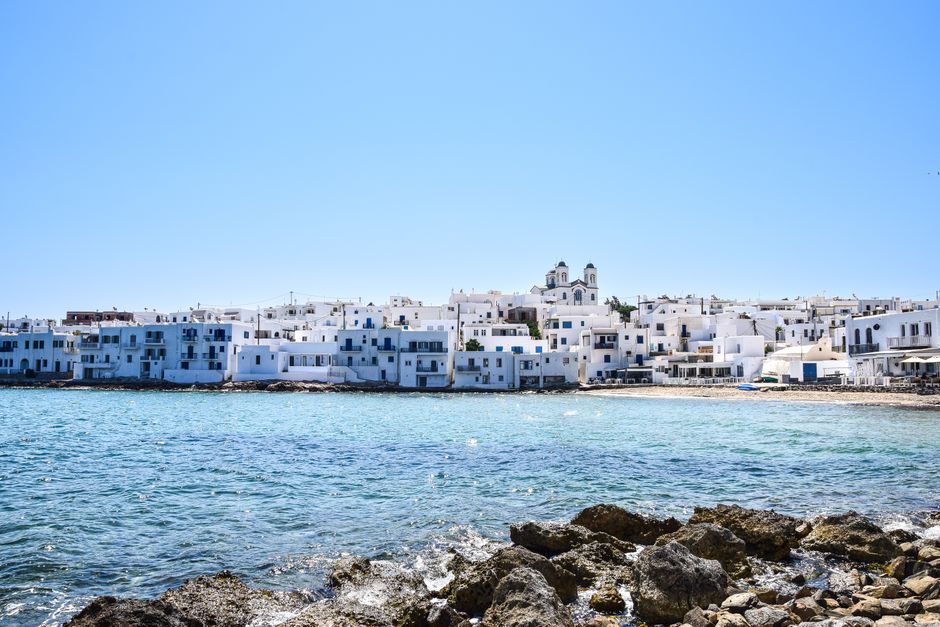
Paros sits in the very middle of the Cyclades, and it has a bit of everything the islands are loved for: white villages with blue doors and bougainvillea, a 1,500-year-old Byzantine church, a fishing harbour turned into one of the prettiest evening spots in the Aegean, golden beaches, and a steady summer wind that has made it one of Europe’s great windsurfing destinations. It is livelier than Naxos next door, more relaxed and better value than Mykonos, and easy to reach, with daily ferries from Piraeus and Rafina and flights from Athens. Base yourself in Parikia or Naoussa, walk the old marble path from Lefkes, and hop across to little Antiparos. Come in May, June, September or early October, and give it four days to a week.
Right now in Paros (Parikia)
- Wed 19–21°C 66–69°F Clear
- Thu 19–22°C 66–72°F Mostly clear
- Fri 20–23°C 68–73°F Clear
Weather: MET Norway (CC BY 4.0) · Sea temperature: NOAA CoastWatch · Rates: ECB
Top tours in Paros
See all tours for Paros →
From local operators, with prices and reviews; you check availability and book on Viator, our partner. We may earn a commission at no extra cost to you. How we earn money
Paros at a glance
- Best months: May–June and September–early October. Average highs run from about 22 °C in May to 28–29 °C in July and August, and winters are mild, around 13–14 °C by day (HNMS normals 1991–2020 for Mykonos, the nearest station with published normals). The sea is warm enough for swimming from June to October.
- Days needed: 3 for Parikia, Naoussa, Lefkes and a couple of beaches; 5–7 to add Antiparos, a boat trip and water sports.
- Getting there: ferry from Piraeus (about 4 hours on Blue Star) or Rafina, or from the other Cyclades; or fly from Athens to Paros airport (PAS) in about 45 minutes.
- Getting around: KTEL buses link Parikia, Naoussa and the villages all year (fares from €2.20, paid by bank card); a car, scooter or quad for the quieter beaches.
- Budget level: mid-range; Naoussa is the most expensive, Parikia and the south-east villages cheaper. Like everywhere in Greece, a climate resilience fee is added per room per night (€2–€15 from April to October, depending on the type of accommodation). See our Greece guide for money, entry rules and daily costs.
Paros’s towns and villages, and who each one suits
- Parikia: the capital and main port on the west coast, with the great church of Ekatontapyliani, a Venetian castle, the museum and a long seafront facing the sunset. Practical and lively, the best base without a car and for island hopping.
- Naoussa: the former fishing village on the north coast, with its little harbour, Venetian fort and maze of white lanes full of restaurants, boutiques and bars. Stylish and busy in summer, for couples, food lovers and nightlife; close to Kolymbithres and Santa Maria.
- Lefkes: the old inland capital, a hill village of marble lanes, mansions and olive groves. Peaceful and cooler, for walkers and a slower stay.
- Piso Livadi, Logaras, Chrysi Akti and Drios: small resorts on the east and south-east coast, with sandy beaches and the windsurfing centres. For families, water sports and calmer holidays.
- Antiparos: the small island just off the west coast, with one relaxed village and quiet beaches. For a low-key stay or a day trip.
Top things to see in Paros
The Archaeological Museum’s price and hours come from the Greek Ministry of Culture’s ticketing service (Hellenic Heritage), as of October 2026. Churches are free to enter; dress modestly and cover your shoulders.
Panagia Ekatontapyliani
The “Church of a Hundred Doors” in Parikia is one of the oldest and most important churches in Greece. According to tradition it was founded by St Helen, mother of Constantine the Great, in the 4th century, and rebuilt under the emperor Justinian in the 6th century. Inside the walled courtyard, the main church, a chapel and a baptistery with a sunken cross-shaped font for adult baptisms form a complex of stone domes, marble columns and old icons. A small Byzantine museum displays icons and church treasures. It is a working church, busiest on 15 August, the Feast of the Dormition, when pilgrims come from all over Greece.
Parikia’s old town and Kastro
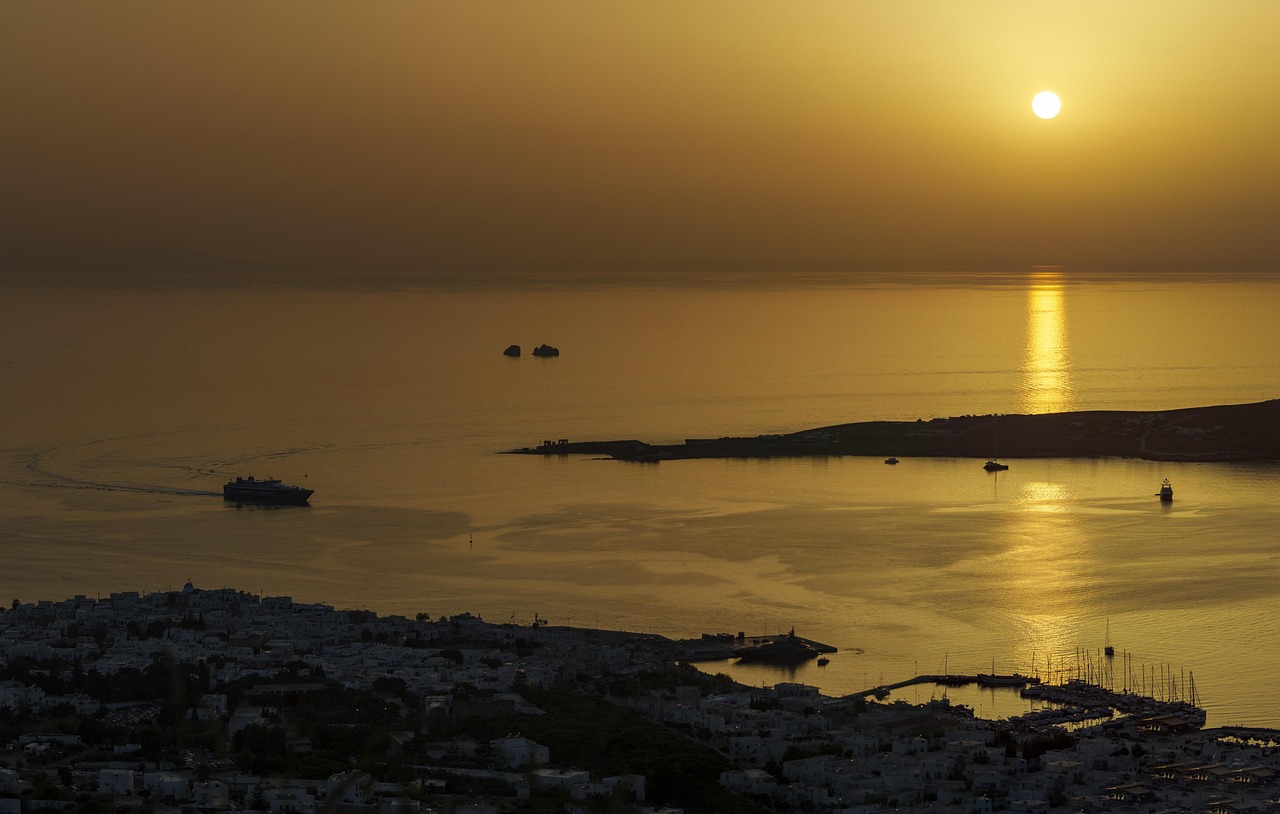
Behind the port, the old town is a maze of whitewashed lanes, arches and little squares. Follow the main shopping street, Gravari, with neoclassical mansions and marble lintels, to the Kastro, a 13th-century Venetian castle built from the blocks of ancient temples: column drums and marble pieces are set into its walls. Come at sunset, when the seafront cafés below face the sun dropping behind Antiparos. Near the church, the Archaeological Museum of Paros has finds from the island’s ancient sanctuaries, sculpture in Parian marble and a fragment of the Parian Chronicle, a marble tablet listing events of Greek history. How to visit: €5, €3 reduced; open 8:30–15:30 all year, closed on Tuesdays.
Naoussa
Naoussa’s small harbour is one of the most photographed sights in the Cyclades: fishing boats, octopus drying in the sun and tables at the water’s edge, beside the half-sunken walls of a little Venetian fort. Behind it, the lanes of the old village climb to the church of Agios Nikolaos. Go in the late afternoon and stay for dinner; in July and August it is very busy until late at night. Naoussa’s carnival and its 23 August festival, with a re-enactment of a fight against pirates, are local highlights.
Lefkes and the Byzantine path
Lefkes, in the hills at the centre of the island, was the capital in the days of pirate raids, when people moved inland. Its lanes paved with marble wind past old mansions, the grand church of Agia Triada and windmills, with views down to the sea and Naxos. From the edge of the village, a stone-paved Byzantine path leads downhill through terraces and olive groves to Prodromos, about 3–4 km away, in about an hour; continue to the beach at Marpissa or Logaras, or catch a bus back. The municipality also suggests longer trails around Lefkes to old monasteries and the hamlet of Lagada. Wear proper shoes and carry water. See our hiking guide.
The marble quarries and the Valley of the Butterflies
Paros was famous in antiquity for its fine white marble, used for the Venus de Milo and the Winged Victory of Samothrace. You can see the ancient underground quarries at Marathi, between Parikia and Lefkes, where the stone was cut by lamplight; the tunnels themselves are not safe to enter. About 7 km south of Parikia, the Valley of the Butterflies (Petaloudes) is a green, shady gorge where thousands of Jersey tiger moths rest on the trees from late May to August; a small fee is charged at the entrance. Keep quiet, and do not disturb them.
Antiparos
Antiparos, a short hop across the strait, has one cheerful village, sandy beaches and a famous cave in the hills, where steps lead deep down past stalactites and stalagmites; a small fee is charged. Boat trips from Antiparos circle the island and visit Despotiko, an uninhabited islet where archaeologists are uncovering a large ancient sanctuary of Apollo. Car ferries cross from Pounta on Paros about every 30 minutes all year, taking about 10 minutes (the last boat back from Antiparos is around 2:00 in summer); in summer, passenger boats also sail from Parikia harbour.
Beaches in Paros
Paros has beaches all around its coast. On days when the north wind, the meltemi, blows hard in July and August, the south and east coasts and the sheltered bays are usually calmer.
- Kolymbithres: small coves among smooth, sculpted granite rocks in the bay of Naoussa, with shallow water. Busy in summer; boats run across the bay from Naoussa.
- Santa Maria: a long sandy beach north-east of Naoussa, with dunes, beach bars and water sports.
- Golden Beach (Chrysi Akti) and New Golden Beach (Tserdakia): long sandy beaches on the south-east coast, facing Naxos across the windy strait; Paros’s windsurfing and kitesurfing centre.
- Logaras and Piso Livadi: sheltered sandy bays with tavernas, good for families.
- Lageri and Monastiri: Lageri is a wilder sandy beach with dunes beyond Santa Maria; Monastiri, below Paros Park on the Naoussa peninsula, is sheltered and clear.
- Kalogeros: a small beach on the east coast, known for its clay rocks.
Under Greece’s coastal law, part of every organised beach must be left free of sunbeds and you can always reach the water and spread your own towel. See our beaches guide.
Windsurfing, kitesurfing and the meltemi
The summer meltemi turns the channels between Paros and Naxos and between Paros and Antiparos into one of Europe’s best-known windsurfing areas. New Golden Beach hosted international windsurfing championships for years. Schools and rental centres at Golden Beach, New Golden Beach, Pounta, Santa Maria and Kolymbithres teach beginners and rent kit, with flatter water in the mornings and stronger winds in the afternoons; Pounta, opposite Antiparos, is the kitesurfers’ favourite. The wind is strongest in July and August, often force 5–7. See our surfing guide.
Boat trips, diving and other activities
- Boat trips: day cruises from Parikia, Naoussa and Antiparos go round Antiparos and Despotiko, and summer excursions from Naoussa visit Mykonos, Delos and Naxos; from Piso Livadi, boats go to the Small Cyclades and Amorgos. See our boat trips guide.
- Snorkeling and diving: clear water around Antiparos and the rocky coves of the north coast; licensed dive centres run trips to reefs and wrecks. See our snorkeling guide and our diving guide.
- Paros Park: a protected headland on the Naoussa peninsula with walking trails, a lighthouse, the monastery of Agios Ioannis Detis and an open-air cinema in summer.
- Cycling: the road through the centre of the island is hilly, but quiet back roads and e-bike tours make cycling rewarding outside the hottest months. See our cycling guide.
Food and wine in Paros
Try gouna (sun-dried mackerel grilled over charcoal), revithada (chickpeas slow-baked overnight in a clay pot), souma (the island’s grape spirit), local cheeses and fresh fish and octopus in Naoussa and Piso Livadi. Paros has its own wine, including whites from the Monemvasia grape and reds from Mandilaria, and a few wineries open for tastings. See our wine tasting guide.
Island hopping from Paros
Paros is the hub of the central Cyclades. Naxos is under an hour away by ferry, and boats run often in summer to Mykonos, Ios and Santorini. Ferries also link Paros with Syros, Tinos, Sifnos, Milos, Folegandros, Amorgos, the Small Cyclades and Heraklion on Crete. A classic route is Athens, Paros, Naxos and Santorini, flying home from Santorini or back to Athens.
Nearby destinations
Getting there and getting around
Ferries
- From Piraeus (Athens’ main port): Blue Star Ferries sails daily, taking about 4 hours and 10 minutes; high-speed boats are faster in season.
- From Rafina, closer to Athens airport: ferries and high-speed boats, often via Andros, Tinos or Mykonos.
- Within the Cyclades: boats to Naxos, Mykonos, Ios, Santorini and other islands, several times a day in summer.
Ferries dock at Parikia, next to the bus station and taxi rank. Book on the operator’s own site or app or a comparison platform in July and August, and allow for cancellations when the meltemi blows hard: the Coast Guard can ban sailings in strong winds. Keep a buffer day before an international flight.
Flights
Paros airport (PAS) is about 9 km south-west of Parikia, near Alyki. Flights from Athens take about 45 minutes. KTEL buses serve the airport, and taxis and hire cars are available.
Buses, cars and scooters
KTEL Paros buses run all year between Parikia, Naoussa and the villages, with a loop around the island via Lefkes, Marpissa, Piso Livadi, Golden Beach and Drios, and frequent services to Naoussa and Pounta (for Antiparos) in summer, late into the night. Fares are paid by bank card only: the minimum fare is €2.20, a ticket bought on the bus costs €3.50 or €4.00 depending on the route, and a day ticket for the whole island is €12. A car or scooter is the easiest way to explore the beaches and villages. You need a driving licence valid for the vehicle (from outside the EU, usually with an International Driving Permit), helmets are compulsory on scooters and quads, and your travel insurance may not cover quads. Parking in Naoussa and Parikia is tight in August.
When to go and how long to stay
Paros has hot, dry, windy summers and mild, wetter winters. July and August are the busiest, most expensive and windiest months, ideal for windsurfers but tiring for some. May, June, September and early October have warm days, warm or warming sea and fewer people, and are the best time for walking. From November to March many hotels and restaurants close, but Parikia and Naoussa keep some life.
| Season | Average high / low | What it’s like |
|---|---|---|
| Spring (Mar–May) | 15–22 °C / 10–16 °C | Green and flowery; good for walking; sea still cool; Easter is a big celebration. |
| Summer (Jun–Aug) | 27–29 °C / 20–23 °C | Hot, sunny and dry; strong meltemi winds in July and August; peak crowds and prices. |
| Autumn (Sep–Nov) | 18–26 °C / 14–20 °C | Warm sea in September and October, fewer people; first rain from late October. |
| Winter (Dec–Feb) | 13–14 °C / 9–10 °C | Mild but windy and damp; many places closed; quiet villages. |
Temperatures are the 1991–2020 climate normals of the Hellenic National Meteorological Service (HNMS) for its Mykonos station, about 40 km north-east and the closest with published normals; Paros is similar. Rain falls mainly from November to February. Greece’s wildfire season runs from 1 May to 31 October: on days of high fire risk (category 4–5 on the daily map of the Ministry of Climate Crisis and Civil Protection), forests may be closed and any outdoor fire is banned. Call 112 if you see a fire.
3 days in Paros
Day 1: Parikia, Ekatontapyliani, the museum and the Kastro, with sunset on the seafront. Day 2: walk from Lefkes to Prodromos, a swim at Logaras or Golden Beach, and dinner by the harbour in Naoussa. Day 3: Kolymbithres and Santa Maria in the morning, then over to Antiparos for the afternoon and evening.
5–7 days in Paros
Add a boat trip round Antiparos and Despotiko, the Antiparos cave, a windsurfing or kitesurfing lesson at New Golden Beach or Pounta, Paros Park and the Valley of the Butterflies, and a lazy beach day. Then take the ferry on to Naxos, Santorini or Mykonos, or back to Athens.
Where to stay in Paros
- Without a car and for island hopping: Parikia, next to the port and bus station.
- Style, food and nightlife: Naoussa, with boutique hotels and the best restaurants; book early for summer.
- Windsurfing and families: Golden Beach, Drios, Logaras or Piso Livadi.
- Village calm: Lefkes or Marpissa, with a car.
- Low-key: Antiparos village.
Greece adds a climate resilience fee per room per night, set by type of accommodation, usually paid at the property (from April to October €2 for 1–2-star hotels and rooms up to €15 for 5-star hotels; campsites and youth hostels are exempt).
Practical tips for Paros
- Pay by card on the bus: KTEL Paros does not take cash fares.
- Wind and beaches: check the forecast and pick a sheltered beach when the meltemi blows.
- Wind and ferries: strong winds can delay or cancel boats; leave a spare day before an international flight.
- 15 August: the Feast of the Dormition fills Parikia; book rooms and ferries well ahead.
- Fire risk: no barbecues or fires in the countryside in summer; follow 112 alerts.
- Emergencies: call 112; tourist police 1571; coast guard 108.
What to pack for Paros
Pack light summer clothes, a sun hat, sunglasses, high-factor sunscreen and a refillable water bottle. Bring walking shoes for the Byzantine path and marble lanes, sandals for the beaches, and a windproof layer for windy evenings and boat trips. Add a swimsuit, a snorkel mask, a light scarf for churches, and a warmer jacket from November to April. Windsurfers can rent all their kit on the island.
Paros travel FAQ
How many days do you need in Paros?
Three days covers Parikia, Naoussa, Lefkes and a few beaches. Five to seven days adds Antiparos, boat trips and water sports at a relaxed pace.
Is Paros better than Naxos?
They are different. Paros is smaller, livelier and more polished, with Naoussa and great windsurfing; Naxos is bigger, greener and less developed, with longer beaches and mountain villages. They are under an hour apart by ferry, so many people visit both.
How do you get to Paros from Athens?
Take a ferry from Piraeus (about 4 hours on Blue Star, faster on high-speed boats in season) or from Rafina, or fly from Athens to Paros airport in about 45 minutes.
How do you get from Paros to Antiparos?
Car ferries cross from Pounta about every 30 minutes all year, in about 10 minutes, and in summer passenger boats also leave from Parikia harbour.
Do you need a car in Paros?
Not necessarily. KTEL buses link Parikia, Naoussa, Lefkes and the main beaches all year, and a day ticket costs €12. A car or scooter helps for quieter beaches and villages.
Where is the best windsurfing in Paros?
Golden Beach and New Golden Beach on the south-east coast are the main centres, and Pounta, opposite Antiparos, is popular with kitesurfers. The wind is strongest in July and August.
What is the best beach in Paros?
Kolymbithres for its sculpted rocks, Santa Maria for sand and beach bars, Golden Beach for water sports, and Logaras or Piso Livadi for families. On windy days, choose a sheltered bay.
What is the Ekatontapyliani?
Paros’s great Byzantine church in Parikia, the “Church of a Hundred Doors”, founded according to tradition in the 4th century and rebuilt in the 6th. It is free to visit and has a small museum of icons.
How much does the Archaeological Museum of Paros cost?
€5, or €3 reduced, as of October 2026. It is open 8:30–15:30 all year and closed on Tuesdays.
When is the best time to visit Paros?
May, June, September and early October: warm, sunny and less windy and crowded than July and August, with the sea warm enough for swimming from June.
Sources and last review
Researched and last reviewed on 4 October 2026. The Archaeological Museum’s price and hours come from the Greek Ministry of Culture’s Hellenic Heritage service. Port, airport, Antiparos ferry, trail and windsurfing information comes from the Municipality of Paros; bus fares from KTEL Paros; Piraeus ferry times and island connections from Blue Star Ferries. The climate resilience fee is set by Greek tax law and collected by the Independent Authority for Public Revenue (AADE). Climate figures are the HNMS 1991–2020 normals for Mykonos, the nearest station with published normals. Ferry times change by season, so check the ferry companies and KTEL Paros before you travel.
Plan your trip
Partner links: TravelerCenter may earn a commission if you book, at no extra cost to you.
🇬🇷 Useful Greek phrases for Paros
All 38 Greek phrases: restaurant, hotel, emergencies, romance (printable) →