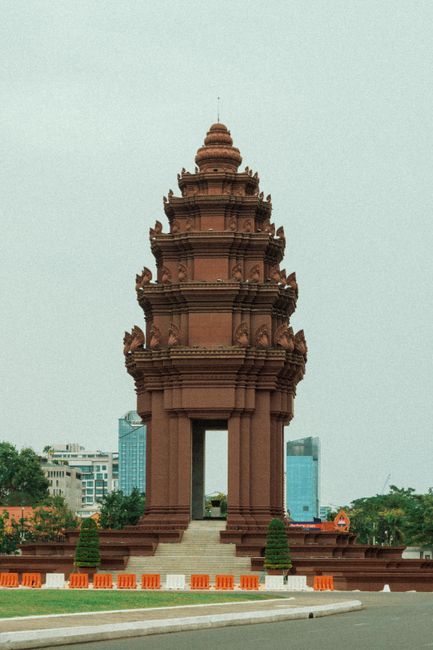
Cambodia, the heartland of the ancient Khmer Empire, lies between Thailand, Laos and Vietnam in the south of mainland Southeast Asia, and it holds one of the world’s great travel experiences: the temples of Angkor, a vast complex of stone sanctuaries, towers and carved galleries rising from the forest around Siem Reap. Beyond Angkor, the country rewards travelers with the riverside capital of Phnom Penh, its royal palace and its sobering memorials to the Khmer Rouge years; the Mekong River and the great lake of the Tonle Sap, which swells and shrinks with the seasons; the beaches and islands of the south coast around Sihanoukville and Koh Rong; and the sleepy riverside town of Kampot, with its pepper farms and the seaside crab market of Kep. Cambodians are warm and welcoming, travel is good value, and the food, from fish amok to Kampot pepper crab, is a discovery. A few things need planning: most visitors need a visa, available online as an e-visa or on arrival; everyone arriving by air fills in a free online e-Arrival card; Phnom Penh’s flights moved to the new Techo International Airport in September 2025; and the land border with Thailand has been closed to travelers since June 2025, so most visitors fly in or cross from Vietnam or Laos.
Right now in Cambodia
- Wed 24–32°C 76–89°F 15 mm Heavy showers
- Thu 24–30°C 76–86°F 15 mm Heavy showers
- Fri 25–29°C 77–84°F 14 mm Heavy rain
- Sat 10 Oct Pchum Ben (ពិធីបុណ្យភ្ផុំបិណ្ឌ)
- Sun 11 Oct Pchum Ben (ពិធីបុណ្យភ្ផុំបិណ្ឌ)
- Mon 12 Oct Pchum Ben (ពិធីបុណ្យភ្ផុំបិណ្ឌ)
Weather: MET Norway (CC BY 4.0) · Holidays: Nager.Date
Multi-day tours of Cambodia
Multi-day tours from local operators. You check dates and book on Viator, our partner; we may earn a commission at no extra cost to you. How we earn money
Cambodia at a glance
Cambodia is a constitutional monarchy, with King Norodom Sihamoni as head of state, and a population of about 17 million. It covers about 181,000 km² (70,000 sq miles), roughly the size of Missouri, and is divided into 24 provinces and the capital, Phnom Penh, which is also the largest city. More than 90% of Cambodians are Khmer and follow Theravada Buddhism, and saffron-robed monks are part of everyday life. The official language is Khmer, written in its own script; English is widely spoken in tourism, and some older people speak French.
Cambodia uses Indochina Time (UTC+7), with no daylight saving time, the same as Thailand, Laos and Vietnam. Electricity is 230 V, with sockets that usually take flat two-pin (type A) and round two-pin (type C) plugs, and sometimes British three-pin (type G). The currency is the riel (KHR), but US dollars are used side by side with it.
A short history
From the 9th to the 15th centuries, the Khmer Empire, ruled from Angkor, controlled much of mainland Southeast Asia and built its greatest monuments, among them Angkor Wat in the early 12th century and the Bayon under Jayavarman VII. After Angkor declined, the capital moved toward Phnom Penh, and Cambodia was squeezed between its Thai and Vietnamese neighbors until it became a French protectorate in 1863. It regained independence in 1953 under King Norodom Sihanouk. The Vietnam War spilled across the border in the late 1960s and early 1970s, bringing heavy American bombing, and from 1975 to 1979 the Khmer Rouge regime emptied the cities and imposed forced labor, starvation and executions in which about a fifth of the population died. Decades of conflict followed before peace agreements in 1991 and UN-organized elections in 1993 restored the monarchy. Since then, Cambodia has rebuilt rapidly, though the legacy of those years, including landmines and the memorial sites now listed by UNESCO, remains part of any visit.
Cambodia’s regions
- Angkor and the northwest: Siem Reap and the Angkor Archaeological Park, the remote temples of Koh Ker, Beng Mealea and Preah Vihear, and the colonial town of Battambang.
- Phnom Penh and the Mekong: the capital at the meeting of the Mekong and Tonle Sap rivers, and river towns such as Kampong Cham and Kratie, where rare Irrawaddy dolphins live.
- The Tonle Sap: Southeast Asia’s largest lake, with floating villages and flooded forests.
- The south coast: Sihanoukville and the islands of Koh Rong and Koh Rong Sanloem, Kampot and Kep, and the Cardamom Mountains in the southwest.
- The northeast: the forested highlands of Mondulkiri and Ratanakiri, home to indigenous communities, waterfalls and crater lakes.
Where to go: temples, river towns and islands
A classic first trip combines three or four days at Angkor with two or three in Phnom Penh, followed by a few days on the south coast in the dry season. See our guides to each place:
- Siem Reap: the town at the gates of Angkor, with Angkor Wat, the Bayon and Ta Prohm, the Tonle Sap’s floating villages, Pub Street and a lively food and arts scene.
- Phnom Penh: the capital’s Royal Palace and Silver Pagoda, the National Museum, the Tuol Sleng Genocide Museum and Choeung Ek, riverside cafés and markets.
- Sihanoukville: Cambodia’s main port and beach city, and the ferry gateway to Koh Rong and Koh Rong Sanloem.
- Kampot: a riverside town of French colonial shophouses, pepper farms, Bokor Mountain and the crab market at nearby Kep.
Other favorites include Battambang’s bamboo train and countryside, the jungle temples of Koh Ker and Beng Mealea, the cliff-top temple of Preah Vihear near the Thai border, Kratie and its river dolphins, the Cardamom Mountains, and the hills of Mondulkiri.
Battambang, Cambodia’s second-largest city, about 3 hours from Siem Reap by road, is a relaxed base of French colonial shophouses on the Sangker River, with hilltop temples at Phnom Banan and Phnom Sampeau, a bat cave that empties at dusk, the Phare Ponleu Selpak circus school and countryside tours by tuk-tuk through rice fields and villages. Its famous bamboo train, a flat platform on rails, now runs as a short tourist ride.
Kampot Travel Guide
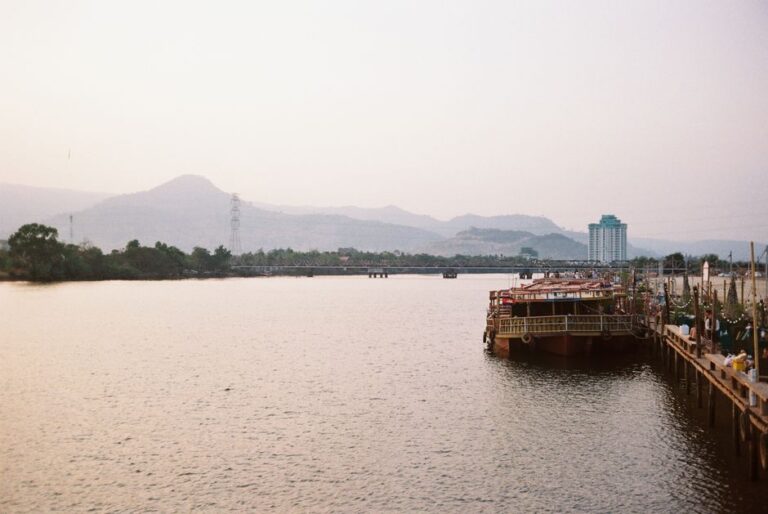
Plan a trip to Kampot: the old town, the riverside and Kep and where to stay, the river and colonial shophouses, pepper farms, Bokor…
Phnom Penh Travel Guide
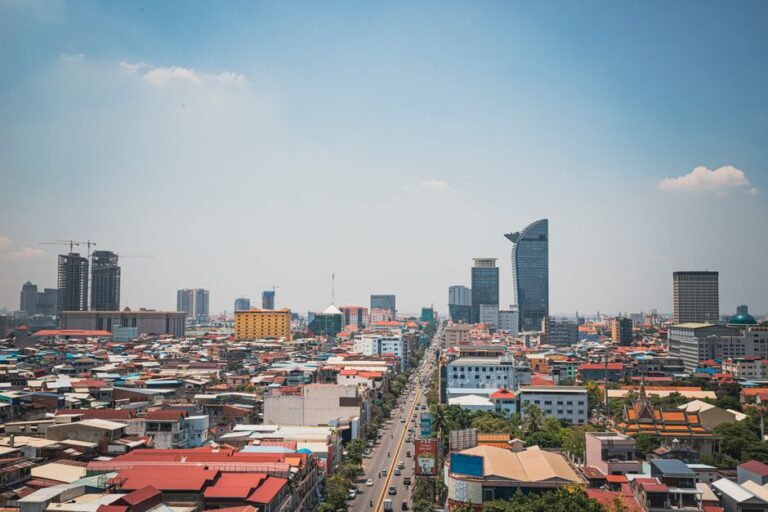
Plan a trip to Phnom Penh: the riverside, Daun Penh, BKK1, Tuol Tom Poung and the islands and where to stay, the Royal Palace…
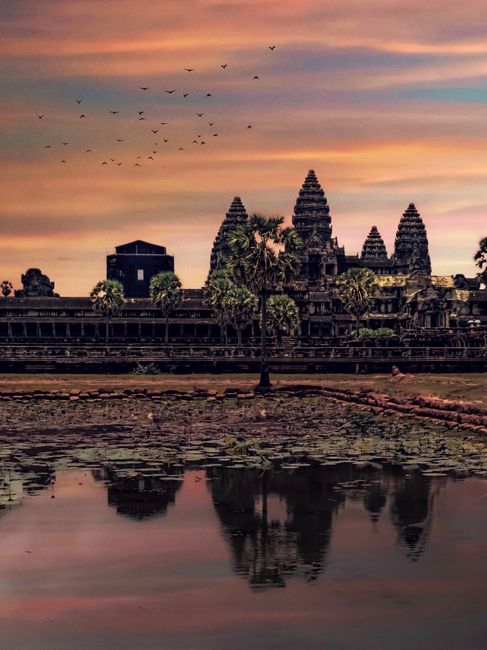
Siem Reap Travel Guide
Plan a trip to Siem Reap: the Old Market, Wat Bo, Wat Damnak and the temple road and where to stay, Angkor Wat, Angkor…
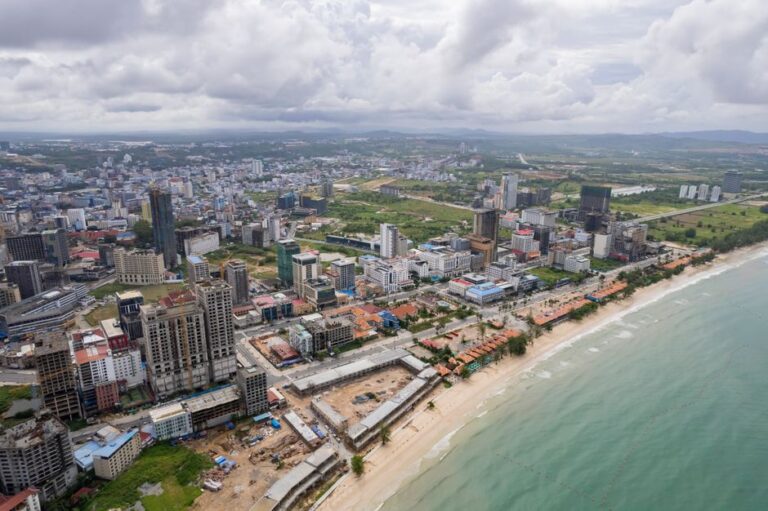
Sihanoukville Travel Guide
Plan a trip to Sihanoukville: Otres, the seafront, Independence Beach, downtown and the islands and where to stay, Koh Rong and Koh Rong Sanloem,…
Best time to visit Cambodia
Cambodia has a tropical monsoon climate, hot all year, with two main seasons. The dry season runs from about November to April: the cool season from November to February, with highs around 30–32 °C (86–90 °F), clear skies and low humidity, is the most popular time to visit, and the hot season of March to May brings highs of 34–35 °C (93–95 °F). The wet season runs from about May to October, with heavy afternoon downpours, green landscapes and fewer visitors; rain peaks in September and October, when rivers flood low-lying areas, the Tonle Sap reaches its largest size and some rural roads become difficult. The south coast is wetter than the rest of the country, and Sihanoukville receives about 3,200 mm (126 in) of rain a year, most of it from May to October.
In practice, November to February is the best time for Angkor, Phnom Penh and the beaches; March to May is hot but quieter; and the green season from June to October brings lower prices and lush temples, with the Tonle Sap’s floating villages at their most impressive from about August to November.
The table shows rounded long-term averages from Cambodia’s Ministry of Water Resources and Meteorology, as published by the World Meteorological Organization’s World Weather Information Service, which cover 1982 to 2024 rather than the standard 1991–2020 period.
| Area (station) | January high / low | July high / low | Rain a year | Wettest months |
|---|---|---|---|---|
| Phnom Penh (Pochentong) | 31 °C (88 °F) / 22 °C (71 °F) | 32 °C (90 °F) / 25 °C (76 °F) | about 1,320 mm (52 in) | September and October |
| Siem Reap (for Angkor) | 31 °C (88 °F) / 20 °C (68 °F) | 33 °C (91 °F) / 24 °C (75 °F) | about 1,380 mm (54 in) | September and October |
| South coast: Preah Sihanouk | 31 °C (88 °F) / 22 °C (71 °F) | 31 °C (87 °F) / 24 °C (74 °F) | about 3,220 mm (127 in) | June to September |
| South coast: Kampot | 31 °C (88 °F) / 21 °C (71 °F) | 32 °C (90 °F) / 24 °C (76 °F) | about 1,900 mm (75 in) | August |
Cambodia month by month
| Month | Weather | Highlights | Crowds and prices |
|---|---|---|---|
| January | Cool, dry and sunny | Peak season at Angkor; ideal beach weather | High |
| February | Dry; warming up | Clear skies for Angkor sunrises; Chinese New Year in some years | High |
| March | Hot and dry | Quieter temples; good beaches | Moderate |
| April | The hottest month | Khmer New Year (mid-April), when many Cambodians travel home and businesses close | Busy around New Year |
| May | Hot; first rains | Royal Ploughing Ceremony; Visak Bochea | Low |
| June | Wet season begins in earnest | Green rice fields; fewer visitors at Angkor | Low |
| July | Afternoon storms | Lush temples; rough seas on the south coast | Low |
| August | Wet | Tonle Sap rising; good for floating villages | Low |
| September | Very wet | Pchum Ben, the festival of the dead (September or October) | Low; busy around Pchum Ben |
| October | Very wet early, drying late | Tonle Sap at its fullest; Pchum Ben in some years | Moderate |
| November | Rains ending; cool season begins | Water Festival (Bon Om Touk) with boat races in Phnom Penh | Rising; busy around the festival |
| December | Cool and dry | Peak season returns; festive period | High |
Monsoon floods
Heavy rain from August to October regularly floods low-lying parts of Phnom Penh and Siem Reap, villages along the Mekong and the Tonle Sap, and some rural roads, and occasional tropical storms that cross Vietnam bring several days of heavy rain. Follow forecasts from the Ministry of Water Resources and Meteorology and local news, and allow extra time for road travel in the wet season.
Festivals and holidays
- Khmer New Year (Choul Chnam Thmey): three days in mid-April, Cambodia’s biggest holiday, with water throwing, temple visits and family gatherings; many shops close and transportation is full.
- Pchum Ben: a two-week period in September or October when Cambodians honor their ancestors with offerings at pagodas; the last three days are public holidays.
- Water Festival (Bon Om Touk): at the November full moon, marking the reversal of the Tonle Sap River’s flow, with dragon-boat races on the river in Phnom Penh.
- Visak Bochea and the Royal Ploughing Ceremony: Buddhist and royal festivals in May.
How long to stay: sample itineraries
- 5 days: Siem Reap and Angkor (3 nights), then Phnom Penh (2).
- 7 days: Siem Reap (3), Phnom Penh (2) and Kampot (2).
- 10 days: Siem Reap (3), Battambang (1), Phnom Penh (2), Kampot and Kep (2), and Koh Rong (2).
- Two weeks: add Kratie and the Mekong dolphins, Mondulkiri, or a longer stay on the islands; or continue to Vietnam or Laos. See our Vietnam and Laos guides.
Entry, money and costs
Visas and the e-visa (last reviewed October 2026)
Most visitors need a visa. According to Cambodia’s Ministry of Foreign Affairs and International Cooperation, the e-visa costs US$36 and is processed in one working day, and the approval is valid for three months; a tourist visa allows a stay of 30 days from the date of entry, which can be extended once inside Cambodia. Apply only through the official site, evisa.gov.kh, or the official e-visa app; many lookalike sites charge extra. Visas are also available on arrival at the international airports and main land border crossings, paid in US dollars with a passport photo. Your passport should be valid for at least six months from arrival and be undamaged.
According to the ministry’s list, ordinary passport holders from the other ASEAN countries do not need a visa for short stays: 30 days for citizens of Indonesia, Laos, Malaysia, the Philippines, Singapore and Vietnam, and 14 days for Brunei, Myanmar and Thailand; the Maldives (30 days) and Seychelles (15 days) also have agreements with Cambodia.
The e-Arrival card
Cambodia’s General Department of Immigration says that all travelers can submit the Cambodia e-Arrival within seven days before or on arrival, and that submission is free. It replaces the paper arrival card and, according to the UK government, is required for everyone flying into Phnom Penh, Siem Reap or Sihanoukville airports. Use only the official site, arrival.gov.kh, and keep the confirmation on your phone. Hotels and guesthouses must also register foreign guests with the immigration department’s online system.
Customs and rules to know
Drug offenses, including possession of cannabis, carry very heavy penalties, including long prison sentences. Cover shoulders and knees at Angkor and other temples, where the authorities have issued a code of conduct for visitors. Commercial surrogacy is banned. Do not photograph military sites. Overstaying a visa leads to a daily fine and can lead to detention and deportation.
Money: riel and US dollars
Cambodia runs on two currencies. The US dollar is used for most tourist prices, hotels, tours and larger purchases, and ATMs usually dispense dollars; the riel is used for small change and in local markets, so a bill paid in dollars often comes back with change partly in riel. On October 5, 2026, the National Bank of Cambodia’s official exchange rate was 4,057 riel to the US dollar; in shops, 4,000 riel is commonly accepted as one dollar. Bring clean, undamaged US dollar notes, as torn or marked bills are often refused, and check that notes you receive are genuine. The government encourages the use of the riel, and Cambodia’s KHQR code payments work in many shops and restaurants. Visa and Mastercard are accepted in hotels and larger restaurants, often with a surcharge.
Tipping
Tipping is not traditional but is appreciated in tourism. Leave small change or 5–10% in restaurants without a service charge, and tip guides, drivers and tuk-tuk drivers you hire for the day if you are happy with their service.
What a trip costs
Prices are approximate, for October 2026, converted at about 4,050 riel to the US dollar. Many tourist prices are quoted in dollars.
| Item | Typical cost |
|---|---|
| Bowl of kuy teav noodle soup or rice dish at a local stall | 8,000–16,000 KHR (about US$2–4) |
| Dinner in a mid-range restaurant | 32,000–80,000 KHR (about US$8–20) per person |
| Draft beer in a bar | 4,000–10,000 KHR (about US$1–2.50) |
| Tuk-tuk ride across town | 8,000–20,000 KHR (about US$2–5) |
| Tuk-tuk with driver for a day at Angkor | 80,000–120,000 KHR (about US$20–30) |
| Angkor Pass, 1 day / 3 days / 7 days | US$37 / US$62 / US$72 (about 150,000 / 251,000 / 292,000 KHR) |
| Bus, Phnom Penh to Siem Reap | 40,000–100,000 KHR (about US$10–25) |
| Mid-range hotel double, per night | 120,000–300,000 KHR (about US$30–75) |
A comfortable mid-range trip costs roughly 240,000–400,000 KHR (about US$60–100) per person per day, sharing a double room, plus temple passes; backpackers using hostels, street food and buses can manage on 100,000–140,000 KHR (about US$25–35).
Getting there and getting around
Airports
Cambodia has three main international airports. Techo International Airport (KTI), about 20 km (12 miles) south of central Phnom Penh, replaced the old Phnom Penh International Airport (PNH) as the capital’s gateway on September 9, 2025; Cambodia’s embassies note that travelers should now select KTI as their entry point when applying for visas and booking flights. Siem Reap Angkor International Airport (SAI), which opened in October 2023 about 40 km (25 miles) east of Siem Reap, replaced the old airport near the temples. Sihanouk International Airport (KOS) serves the south coast. There are direct flights from Bangkok, Kuala Lumpur, Singapore, Ho Chi Minh City, Hanoi, Hong Kong, Seoul, Taipei and several Chinese cities, and from the Gulf; see our Thailand, Malaysia, Singapore, Hong Kong, South Korea and Taiwan guides.
Land borders and the Thai border
Thailand–Cambodia crossings: Thailand closed its land border crossings with Cambodia, including the main Aranyaprathet–Poipet checkpoint, on June 23, 2025, after armed clashes in the border area, and in May and June 2026 Thai officials said that the crossings remained closed, with exceptions only for humanitarian cases. Travelers between the two countries should fly. Vietnam: the busiest crossing is Bavet–Moc Bai on the Phnom Penh–Ho Chi Minh City road, served by direct buses; others include Kaam Samnor–Vinh Xuong, for boats on the Mekong, and Prek Chak–Xa Xia near Kep and Ha Tien. Laos: the Trapeang Kriel–Nong Nok Khiene crossing links Stung Treng with southern Laos. Check that your visa type is accepted at the crossing you plan to use.
Buses, minivans and trains
Comfortable air-conditioned buses and minivans link Phnom Penh with Siem Reap (about 5–6 hours), Battambang, Kampot, Kep, Sihanoukville and the Vietnamese border, and night buses with flat berths run on longer routes. The Phnom Penh–Sihanoukville Expressway, opened in 2022, cuts the journey to the coast to about 2.5–3 hours. Royal Railway runs slow, scenic trains from Phnom Penh to Kampot and Sihanoukville, mainly on weekends.
Domestic flights, tuk-tuks and ride-hailing
Domestic flights link Phnom Penh with Siem Reap and Sihanoukville. In towns, tuk-tuks (remorks) and motorbike taxis are everywhere, and the ride-hailing apps PassApp and Grab show prices in advance and are widely used in Phnom Penh, Siem Reap and Sihanoukville.
Driving and motorbikes
Cambodians drive on the right, and traffic is chaotic, with frequent accidents. Renting a motorbike is easy, but you need a license valid in Cambodia, helmets are compulsory, and police issue on-the-spot fines. Most visitors use tuk-tuks, buses or a car with driver.
Angkor, national parks and World Heritage Sites
Cambodia has five UNESCO World Heritage Sites:
- Angkor: the capitals of the Khmer Empire from the 9th to the 15th centuries, near Siem Reap. See our Siem Reap guide.
- Temple of Preah Vihear: an 11th-century temple on a clifftop on the Dangrek escarpment, right on the Thai border; check the current access situation before planning a visit.
- Sambor Prei Kuk: pre-Angkorian brick temples of the 7th century in Kampong Thom province.
- Koh Ker: the 10th-century capital of Jayavarman IV, with a seven-tiered pyramid temple, inscribed in 2023.
- Cambodian Memorial Sites: inscribed in 2025, including the Tuol Sleng Genocide Museum and the Choeung Ek killing fields in Phnom Penh. See our Phnom Penh guide.
The Angkor Pass, sold by Angkor Enterprise, the state body that manages tickets for the park, costs US$37 for one day, US$62 for three days and US$72 for seven days, and tickets for Koh Ker (US$15), Beng Mealea (US$10) and Kbal Spean (US$5) are sold separately. Nature lovers can head for the Cardamom Mountains, Bokor and Ream national parks on the south coast, the Prek Toal bird sanctuary on the Tonle Sap and the forests of Mondulkiri. See our hiking, diving, snorkeling and boat trips guides.
Culture, food and everyday etiquette
Food
Khmer cooking is less fiery than Thai food and full of fresh herbs, lemongrass, galangal and lime. The national dish is fish amok, a fragrant curry steamed in banana leaves; others include lok lak, stir-fried beef with a lime and pepper dip; num banh chok, rice noodles with green fish curry, eaten for breakfast; kuy teav, pork noodle soup; bai sach chrouk, grilled pork with rice; and dishes flavored with prahok, fermented fish paste. On the coast, try Kampot pepper crab at Kep, and everywhere, fresh fruit shakes, iced coffee with condensed milk and the local beers. French bread is a colonial legacy, sold as baguette sandwiches called num pang.
A few words of Khmer
English is widely spoken in hotels, restaurants and among tuk-tuk drivers in the main towns, but a few words of Khmer are always appreciated: chum reap suor (hello, formal), arkun (thank you), baat or chaa (yes, said by men and women respectively), ot te (no), t’lay pon man? (how much?) and ot mien ey te (you’re welcome, or no problem). Numbers and prices are often given in dollars, but market vendors will understand riel too. Khmer script is used on most signs outside tourist areas, so carry your hotel’s address written in Khmer or saved on your phone.
Etiquette
Cambodians are gentle and polite; greet people with the sampeah, palms together at chest height, and smile. Dress modestly away from the beach, and cover shoulders and knees at temples, the Royal Palace and Angkor, where you may be refused entry otherwise. Remove your shoes before entering homes and temple halls, don’t touch people’s heads, and don’t point your feet at people or Buddha images. Women should not touch monks or hand things to them directly. Ask before photographing people, especially monks. Treat genocide memorials with quiet respect.
Responsible travel
A few choices make a real difference. Avoid “orphanage tourism”: many children in Cambodian residential care have living parents, and visiting or volunteering in orphanages can encourage their separation from families. Don’t give money or buy from young children selling souvenirs at temples and bars, which keeps them out of school; support social enterprises, training restaurants and craft shops instead, of which Phnom Penh, Siem Reap and Battambang have many. Elephant rides at Angkor ended in 2020, and responsible elephant projects in Mondulkiri let you observe the animals without riding them. At genocide memorials, follow the rules on photography and behave quietly.
Safety, health and connectivity
Cambodia is generally safe for visitors, and most visits are trouble-free. These are the main things to know:
- Road safety: Cambodia has one of the highest rates of road deaths in the region, and traveling after dark increases the risk; use reputable bus companies, ride in tuk-tuks rather than on motorbike taxis where possible, and wear a helmet on motorbikes.
- Landmines and unexploded ordnance: Cambodia remains heavily affected by landmines and explosive remnants of war, especially in rural parts of the northwest near the Thai border; mined areas are often unmarked. Stay on main roads and well-used paths, including around remote temples, never touch metal objects, and look for warning signs. The Cambodian Mine Action and Victim Assistance Authority coordinates clearance and publishes casualty reports.
- The Thai border area: the border has seen armed clashes since 2025; land crossings with Thailand are closed, and access to some areas near the border, including Preah Vihear, can be restricted. Follow local information.
- Monsoon floods: heavy rains from August to October cause local flooding; follow forecasts from the Ministry of Water Resources and Meteorology.
- Petty crime and scams: bag and phone snatching by thieves on motorbikes is common in Phnom Penh, Siem Reap and Sihanoukville; carry bags away from the road. Be wary of offers of “easy, well-paid jobs”, which have been used to traffic people into online scam compounds.
- Alcohol: methanol-contaminated drinks have caused deaths; drink sealed, branded bottles, and never leave drinks unattended.
- Water and the sea: river currents can be strong, and jellyfish occur off the coast at times.
- Health: dengue fever is common in the wet season and malaria is present in remote forested areas; use insect repellent and drink bottled or filtered water. Medical facilities outside Phnom Penh and Siem Reap are limited; have travel insurance.
- Emergencies: call 117 for police, 119 for an ambulance and 118 for fire.
Mobile coverage is good in towns and along main roads but patchy on islands and in remote areas. Prepaid SIM cards and eSIMs from Smart, Cellcard and Metfone are sold at airports and must be registered with your passport; Wi-Fi is standard in hotels and cafés.
Things to do: temples, rivers, islands and food
Watch the sunrise over Angkor Wat, explore Ta Prohm’s tree-strangled ruins, cycle between temples, take a boat to a floating village on the Tonle Sap, learn about Cambodia’s history in Phnom Penh, watch dolphins on the Mekong at Kratie, island-hop off Sihanoukville, kayak on the river at Kampot and eat pepper crab in Kep. See our city sightseeing, cycling and beaches guides. Cambodia combines well with Vietnam, Laos and Sri Lanka.
Cambodia travel FAQ
Do I need a visa to visit Cambodia?
Most visitors do. You can get an e-visa online at evisa.gov.kh or a visa on arrival at airports and main land borders. Citizens of the other ASEAN countries can visit visa-free for 14 or 30 days, depending on the country.
How much is the Cambodia e-visa?
US$36, according to the Ministry of Foreign Affairs and International Cooperation. It is processed in one working day, valid for three months, and allows a 30-day stay.
What is the Cambodia e-Arrival card?
A free online arrival form that all travelers can submit within seven days before arrival, or on arrival, at arrival.gov.kh. It replaces the paper arrival card at the international airports.
How much is the Angkor Pass?
US$37 for one day, US$62 for three days (used within seven days) and US$72 for seven days (used within 30 days), sold by Angkor Enterprise; children under 12 enter free.
Which airport serves Phnom Penh?
Techo International Airport (KTI), about 20 km (12 miles) south of the city, which replaced the old Phnom Penh International Airport (PNH) on September 9, 2025.
Is the Thailand–Cambodia border open?
No. Thailand closed its land crossings with Cambodia, including Aranyaprathet–Poipet, on June 23, 2025, and Thai officials said in mid-2026 that they remained closed. Travelers between the two countries need to fly.
Can I use US dollars in Cambodia?
Yes. US dollars are used for most tourist prices and come out of ATMs; small change is given in riel, at about 4,000 riel to the dollar. Bring clean, undamaged notes.
What is the best time to visit Cambodia?
November to February, when it is cool and dry. March to May is very hot, and May to October is the wet season, with the heaviest rain in September and October.
How many days do I need in Cambodia?
About a week covers Angkor and Phnom Penh, with time for Kampot or the coast; ten days to two weeks lets you add Battambang, the islands or Kratie.
How do I get from Phnom Penh to Siem Reap?
By bus or minivan in about 5–6 hours, or by domestic flight in under an hour.
Is Cambodia safe for tourists?
Yes, generally. The main risks are road accidents, bag snatching in cities, landmines in rural areas off the beaten track, and monsoon floods; the land border with Thailand is closed.
Do I need to cover up at Angkor?
Yes. Shoulders and knees must be covered at Angkor Wat and other temples, and you may be refused entry to some areas otherwise.
Can I travel overland from Cambodia to Vietnam or Laos?
Yes. Buses cross to Vietnam at Bavet–Moc Bai and boats at Kaam Samnor–Vinh Xuong, and the Trapeang Kriel–Nong Nok Khiene crossing links Cambodia with southern Laos.
Sources and last review
Researched and last reviewed on 4 October 2026. The e-visa fee, processing time and validity, and the ASEAN visa exemptions: Cambodia’s Ministry of Foreign Affairs and International Cooperation; the e-Arrival card: the General Department of Immigration; Angkor Pass prices, validity, entry hours and rules: Angkor Enterprise; Techo International Airport and the switch from PNH to KTI: the Royal Embassy of Cambodia in Berlin (Ministry of Foreign Affairs); exchange rate: the National Bank of Cambodia; climate averages (1982–2024): Cambodia’s Ministry of Water Resources and Meteorology via the World Meteorological Organization’s World Weather Information Service. The 30-day tourist stay, passport validity, visas on arrival in US dollars, the e-Arrival requirement at the three airports, guest registration, landmines, road safety, methanol, scam compounds, drug penalties and temple dress are from the UK government’s factual entry and safety pages. The status of the Thai border crossings is from Thai and Cambodian media reporting Thai government statements; tourist arrivals, population, area, the Siem Reap and Sihanouk airport details, UNESCO inscription years, transport times, festival timing, emergency numbers and typical prices are general references or estimates, flagged for checking. Rules and prices change, so check the official sites before you go.
Plan your trip
Partner links: TravelerCenter may earn a commission if you book, at no extra cost to you.
🇰🇭 Useful Khmer phrases for Cambodia
All 38 Khmer phrases: restaurant, hotel, emergencies, romance (printable) →