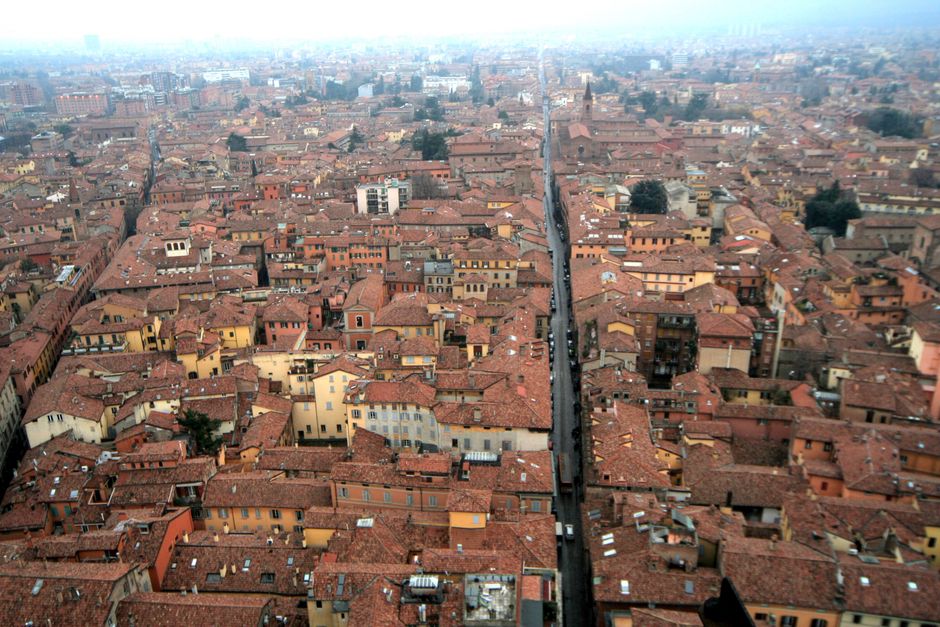
Bologna is Italy’s food capital and one of its most liveable cities: a terracotta-red old town of medieval towers, lively squares and almost 40 km of covered porticoes, home to the oldest university in the Western world and a table that gave the world tagliatelle al ragù, tortellini and mortadella. It feels lived-in rather than staged, with students in the bars, market stalls in the Quadrilatero and locals strolling under the arcades on Sunday afternoons. Fast trains put it 35 minutes from Florence and about an hour from Milan, which makes it a superb base for city sightseeing and food-filled day trips to Modena, Parma and Ravenna. Give it two days for the city, three or four with day trips.
Right now in Bologna
- Wed14–23°C56–74°F1 mm rain
- Thu17–26°C63–78°F3 mm rain
- Fri13–16°C56–61°F14 mm rain
Top tours in Bologna
See all tours for Bologna →
From local operators, with prices and reviews; you check availability and book on Viator, our partner. We may earn a commission at no extra cost to you. How we earn money
Bologna at a glance
- Best for: food and markets, medieval towers and porticoes, a lively student atmosphere, and day trips to Modena, Parma, Ferrara and Ravenna.
- How long: 2 days for the city, 3–4 with day trips for Parmesan, balsamic vinegar and mosaics.
- Best time: April to June and September to October. Summers are hot and humid; winters are cold and foggy but cosy.
- Good to know: the Asinelli Tower, the taller of the Two Towers, is closed to climbers until further notice while the leaning Garisenda is made safe.
- Getting in: the Marconi Express monorail links the airport and Bologna Centrale in about 7 minutes; fast trains reach Florence in about 35 minutes.
- Before you go: entry rules, money, trains and general safety are on our Italy travel guide.
Bologna’s neighbourhoods and who each one suits
The historic centre, inside the ring of boulevards that follows the old walls, is one of the largest in Europe, yet flat and easy to walk. Everything radiates from the Piazza Maggiore and the Two Towers.
Piazza Maggiore and the Quadrilatero
The monumental heart: the Piazza Maggiore with the basilica of San Petronio and the Palazzo d’Accursio, the Neptune Fountain, and just east the Quadrilatero, a grid of medieval lanes packed with delicatessens, market stalls and wine bars. The most central base, busy by day and lively in the evening.
The university quarter
North-east of the Two Towers, around Via Zamboni and Piazza Verdi, the student district is full of cheap eats, bookshops, street art and late-night bars. Fun and young, but noisy at night.
Santo Stefano and Strada Maggiore
South-east of the towers, the elegant streets around the “Seven Churches” of Santo Stefano and the porticoed Strada Maggiore, with antique shops and smart restaurants. Calm, beautiful and the favourite area for a romantic stay.
Via del Pratello and Saragozza
West of the centre, Via del Pratello is lined with osterie and bars popular with locals, while Saragozza is a quiet residential area by the start of the portico up to San Luca. Good value and more local.
Around the station
North of the centre, near Bologna Centrale and the Via dell’Indipendenza shopping street, with business hotels and good transport. Handy for short stays and day trips.
Top things to see in Bologna
Prices and hours were checked on the official sites in October 2026 where available; check again before you go.
Piazza Maggiore and San Petronio
Bologna’s great square is framed by the unfinished brick front of the basilica of San Petronio, one of the largest churches in the world, the Palazzo d’Accursio (the town hall, with free art collections and a clock tower you can visit), and the Palazzo del Podestà. Inside San Petronio, look for the meridian line on the floor, set out in the 17th century to measure the sun’s movement. Next door, Giambologna’s bronze Neptune Fountain is the meeting point of the city.
The Two Towers
The leaning Asinelli and Garisenda towers, built by rival families around the 12th century, are the symbol of Bologna. The Asinelli, 97 metres high with 498 steps, used to be the city’s classic climb, but it has been closed to visitors since October 2023 while the more sharply leaning Garisenda is monitored and restored, and as of October 2026 the official booking site still lists it as closed. The square at their feet, Piazza di Porta Ravegnana, is fenced off until the work is finished. You can still admire them from the surrounding streets; for a view over the rooftops, visit the clock tower of the Palazzo d’Accursio instead.
The porticoes and San Luca
Bologna’s porticoes, about 62 km of covered walkways in total, were added to the UNESCO World Heritage List in 2021. The most spectacular is the portico of San Luca, almost 4 km long with 666 arches, which climbs from the Porta Saragozza up a hill to the sanctuary of the Madonna di San Luca. Walking up takes about an hour and is a favourite local workout, with a wide view over the city and the Apennines at the top. A little tourist train also goes up from the centre in season.
The Archiginnasio and the Anatomical Theatre
The first permanent seat of the university, built in the 16th century, has walls and ceilings covered in thousands of student coats of arms. Upstairs, the wooden Anatomical Theatre, where dissections were once performed under the gaze of carved “skinned men”, is one of Bologna’s most striking rooms. The building also houses the city library.
More classic sights
- Santo Stefano: a cluster of interlinked medieval churches and cloisters known as the “Seven Churches”.
- The Quadrilatero and Mercato di Mezzo: market stalls and food halls for mortadella, tortellini and local cheeses.
- Pinacoteca Nazionale: Emilian painting, with Raphael’s Ecstasy of St Cecilia and works by the Carracci.
- Basilica of San Domenico: the saint’s tomb, with small statues carved by a young Michelangelo.
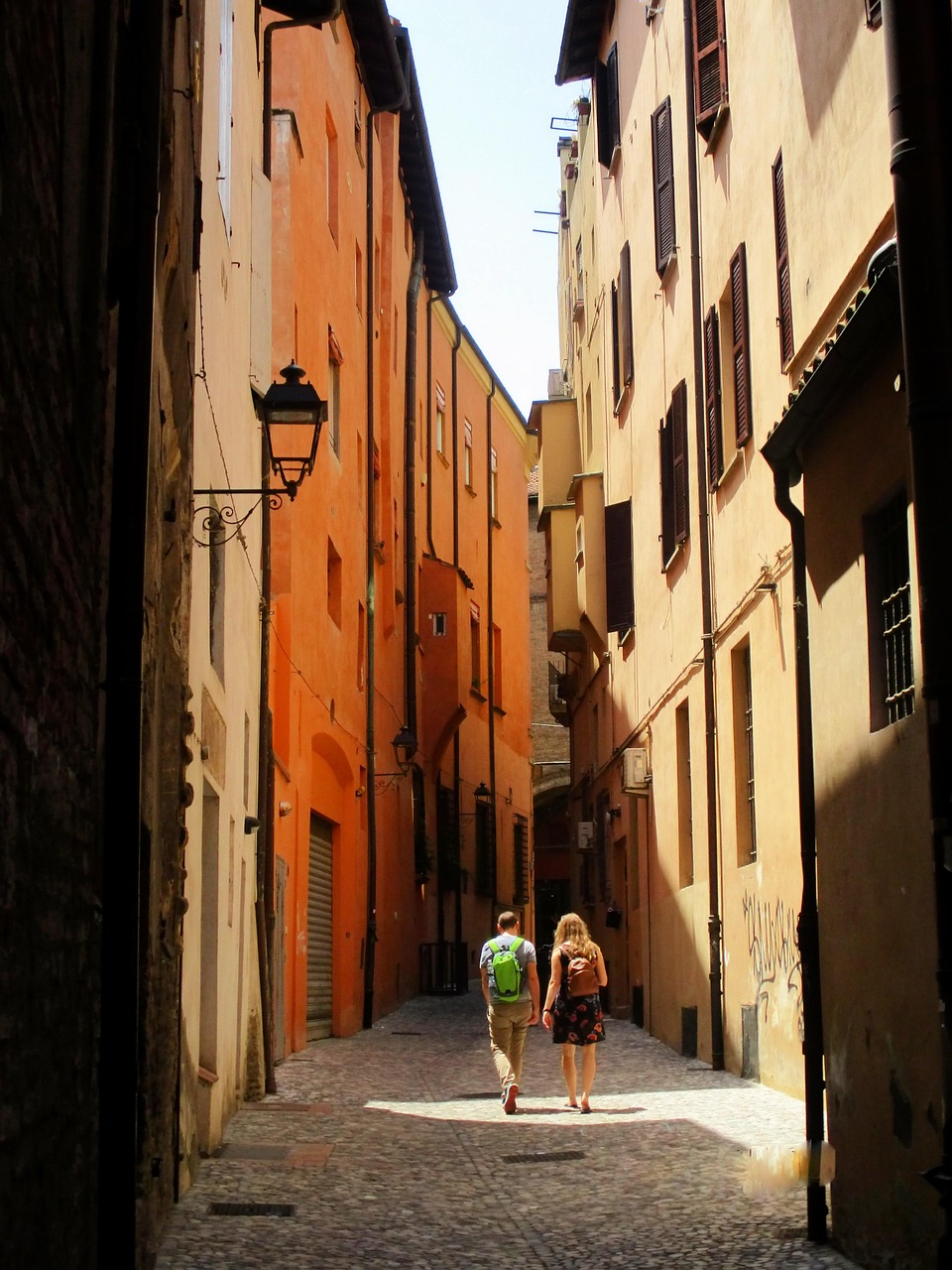
- The “little window” on Via Piella: a hatch in a wall that opens on to one of the city’s hidden canals.
- Santa Maria della Vita: Niccolò dell’Arca’s dramatic terracotta Lamentation over the Dead Christ.
The Bologna Welcome Card: is it worth it?
The city’s official tourist card, sold by Bologna Welcome, comes in two versions: the Easy (€35) and the Plus (€55), as of October 2026. They bundle entries to city museums and sights with tours and other services, and stay valid for a set time once activated or until the included services are used up. Many of Bologna’s best sights are free, including the town-hall art collections, the churches and the porticoes, so compare what is included with your plan before buying. Details are at bolognawelcome.com, which also runs the tourist office in Piazza Maggiore.
Other things to do in Bologna
Eating the Bolognese way
Bologna is called la Grassa, “the Fat One”, for good reason. Try tagliatelle al ragù (never spaghetti bolognese, which locals don’t recognise), tortellini in brodo, lasagne verde, mortadella and crescentine (fried dough) with cured meats. The Quadrilatero, the Mercato delle Erbe and the osterie of Via del Pratello are the places to eat. Many cooking schools teach fresh pasta, a great half-day activity. Pair it all with Lambrusco, the sparkling red of the region, or a Pignoletto white from the hills (see our wine tasting guide).
Evenings and aperitivo
Bologna’s bar scene centres on Via Zamboni, Piazza Santo Stefano, Via del Pratello and the Quadrilatero, where wine bars spill into the lanes with aperitivo platters. At weekends, part of Via dell’Indipendenza, Via Rizzoli and Via Ugo Bassi is closed to traffic for the “T-Days”, turning the centre into a big pedestrian promenade.
Cycling and the hills
The city is flat and has a bike-share scheme and cycle lanes; the green hills just south, with the Villa Ghigi park and the route to San Luca, are good for walks and rides. See our cycling guide.
Day trips from Bologna: Modena, Parma, Ravenna and Ferrara
Emilia-Romagna is Italy’s food valley, and fast regional trains make Bologna the perfect hub.
Modena
About 25 minutes by train: a handsome town with a Romanesque cathedral and Piazza Grande on the UNESCO list, traditional balsamic vinegar cellars (acetaie), and the Enzo Ferrari museum. Nearby Maranello has the Ferrari Museum.
Parma
About an hour away: Parma ham, Parmigiano Reggiano dairies, a pink-marble baptistery, Correggio’s dome frescoes and the elegant Teatro Regio opera house. Book a dairy visit in the morning, when the cheese is made.
Ravenna
About 1 hour 10 minutes by train: eight early Christian and Byzantine monuments covered in glittering 5th- and 6th-century mosaics, among the finest in the world, including the Basilica of San Vitale and the Mausoleum of Galla Placidia. Book the mosaic monuments in advance in high season.
Ferrara
About 30 minutes by train: a Renaissance city with a moated castle, complete walls you can cycle around, and a flat, quiet centre that is a joy by bike.
Florence and beyond
Florence is only 35 minutes by high-speed train, and Verona is about an hour and Venice about 1½ hours, so Bologna works well as a stop between them.
Nearby destinations
Getting there and getting around
From Bologna airport
Bologna Guglielmo Marconi airport (BLQ) is just north-west of the city. The Marconi Express monorail runs to Bologna Centrale station in about 7 minutes, from 5:40 to midnight, every 7 minutes at busy times and every 15 minutes at others; as of October 2026 a single costs €12.80 and a return €23.30, with cheaper fares online, and you can tap a contactless card at the gates. Between midnight and 5:40, bus line Q links the airport and the station. The monorail is occasionally replaced by buses during maintenance, so check marconiexpress.it.
By train
Bologna Centrale is one of Italy’s main rail junctions. Frecciarossa and Italo high-speed trains reach Florence in about 35 minutes, Milan in about 1 hour 5 minutes, Venice in about 1½ hours and Rome in about 2¼ hours. High-speed trains use the deep underground platforms, so allow 10 minutes to reach them. Regional trains serve Modena, Parma, Ferrara and Ravenna; validate paper regional tickets before boarding.
Walking, buses and bikes
The centre is flat and best on foot, with the porticoes keeping off rain and sun. TPER city buses cover the rest; buy tickets before boarding or tap a contactless card where readers are fitted. Bike-share is useful for longer hops.
Driving, the ZTL and the 30 km/h limit
Don’t drive into the centre. The historic centre is a ZTL limited-traffic zone from 7:00 to 20:00 every day, watched by the Sirio camera gates; the Via Rizzoli, Ugo Bassi and Indipendenza streets have stricter rules and weekend pedestrian days. Hotels inside the ZTL can register guests’ plates for access. Bologna was also the first big Italian city to adopt a general 30 km/h speed limit on most of its streets, enforced by cameras. Park outside the boulevards and walk or take the bus.
When to go and how long to stay
Bologna sits on the edge of the Po plain, so summers are hot and muggy and winters cold and often foggy, though drier than the coast. The table uses the WMO 1991–2020 climate normals for the Bologna Borgo Panigale station at the airport: long-term average daily highs and lows, and days with at least 1 mm of rain. The official sheet lacks some May to July values, so the summer row is based on August, which is typical of the hottest months.
| Season | Average high / low | Rainy days per month | What it’s like | Good for |
|---|---|---|---|---|
| Winter (Dec–Feb) | 7–10 °C / 0–1 °C | 5–6 | Cold, damp and often foggy; crisp sunny days too | Food, museums, cosy osterie |
| Spring (Mar–May) | 15–19 °C in March and April, warmer in May / 4–8 °C | 6–8 | Mild and fresh, with spring showers | Walking the porticoes, day trips |
| Summer (Jun–Aug) | About 31 °C / 19 °C in August | 3–4 | Hot, humid and sticky; many locals leave in August | Early starts, evenings outdoors, open-air cinema |
| Autumn (Sep–Nov) | 26 °C falling to 13 °C / 15 °C falling to 6 °C | 5–8 | Warm September, golden October, foggy November | Food festivals, truffles, wine |
These are long-term averages, and recent summers have been hotter. Bologna is fairly dry for northern Italy, with about 540 mm of rain a year at the airport station, and November is the wettest month.
Events worth planning around
- Summer: free open-air film screenings in the Piazza Maggiore on summer evenings.
- Autumn: truffle, chestnut and food fairs in the towns of the Apennines and the plain, and the new-season olive oil and wine.
- 4 October: the feast of San Petronio, the city’s patron saint and a local holiday.
- Weekends: the “T-Days” pedestrian streets in the centre.
How long to stay: 2-, 3- and 4-day plans
2 days: Day 1, Piazza Maggiore, San Petronio, the Archiginnasio, lunch in the Quadrilatero, the Two Towers from the street and Santo Stefano. Day 2, the walk up the San Luca portico in the morning, the university quarter and the Pinacoteca in the afternoon, and dinner on Via del Pratello.
3 days: add a day trip to Modena for balsamic vinegar and the cathedral. 4 days: add Parma for ham and Parmesan, or Ravenna for the mosaics.
Where to stay in Bologna and the tourist tax
- Piazza Maggiore and the Quadrilatero: the most central; busy and lively.
- Santo Stefano and Strada Maggiore: elegant, quiet and romantic.
- The university quarter: young and cheap, but noisy at night.
- Via del Pratello and Saragozza: local, with good-value osterie.
- Near the station: best for trains, the airport and day trips.
Bologna tourist tax (imposta di soggiorno): charged per person per night and paid to your accommodation when you leave. Unusually, it depends on the room price rather than the stars. For 2026 the city confirmed these rates, based on the price per person per night (excluding VAT): €4 if it is under €31, €5.80 from €31 to €70.99, €6.50 from €71 to €120.99 and €7 from €121; campsites and hostels charge a flat €2.80, and short-term rentals 10.5% of the price up to €7. Children under 14 are exempt.
Practical tips for Bologna
- Don’t plan to climb the Asinelli: it is closed until further notice; check bolognawelcome.com for news.
- Book restaurants at weekends: the best osterie fill up fast with locals.
- Eat at local hours: lunch from about 12:30 and dinner from 19:30 or later.
- Use the porticoes: they keep you dry in rain and cool in summer, so you can walk almost anywhere under cover.
- Mind August: some family restaurants and shops close for the holidays in mid-August.
- Respect the ZTL and the 30 km/h limit if you have a car.
- Emergencies: call 112.
What to pack for Bologna
Comfortable walking shoes, since you will cover many kilometres under the porticoes and maybe the long climb to San Luca. In summer, pack breathable, light clothes, a hat and a refillable water bottle for the humid heat, plus a light scarf or covering for churches. In winter, bring a warm coat, scarf and gloves for the cold, foggy days. A compact umbrella is useful in spring and autumn, although the porticoes do much of the work. Leave space in your bag for Parmesan, balsamic vinegar and dried pasta.
Bologna travel FAQ
Is Bologna worth visiting?
Yes. It has one of Italy’s best food scenes, a beautiful medieval centre with UNESCO-listed porticoes, a lively university atmosphere and easy day trips to Modena, Parma, Ferrara and Ravenna, with fewer crowds than Florence or Venice.
How many days do you need in Bologna?
Two days for the city and its food, three or four with day trips to Modena, Parma or Ravenna.
Can you climb the Two Towers in Bologna?
Not at the moment. The Asinelli Tower has been closed since October 2023 for safety works on the neighbouring Garisenda, and as of October 2026 it remains closed until further notice. You can still see both towers from the streets around them.
How do I get from Bologna airport to the city centre?
Take the Marconi Express monorail to Bologna Centrale, about 7 minutes, €12.80 one way as of October 2026. At night, bus line Q replaces it. From the station, the centre is a 15-minute walk or a short bus ride.
What food is Bologna famous for?
Tagliatelle al ragù, tortellini in brodo, lasagne verde, mortadella and crescentine with cured meats, plus nearby Parmigiano Reggiano, Parma ham and Modena’s balsamic vinegar.
How long is the walk to San Luca?
About 4 km under an almost continuous portico of 666 arches, from Porta Saragozza to the hilltop sanctuary. It takes around an hour going up, with steep sections near the top.
Is Bologna a good base for day trips?
Yes. Modena is about 25 minutes by train, Ferrara about 30 minutes, Parma about an hour, Ravenna about 1 hour 10 minutes and Florence 35 minutes by high-speed train.
How much is the tourist tax in Bologna?
It depends on the room price per person per night: €4 under €31, €5.80 up to €70.99, €6.50 up to €120.99 and €7 above that, in 2026. Children under 14 are exempt.
Can I drive into central Bologna?
Not without a permit. The centre is a ZTL from 7:00 to 20:00 every day, enforced by cameras, and most streets have a 30 km/h limit. Park outside the boulevards; if your hotel is inside the zone, it can register your plate.
What is the best time to visit Bologna?
April to June and September to October, when it is warm but not sweltering. July and August are hot and humid, and winter is cold and foggy but good for food and museums.
Is Bologna safe for tourists?
Yes, it is generally safe. Watch for pickpockets at the station and on buses, and keep an eye on bikes and bags in the busy evening bar areas. Call 112 in an emergency.
Plan your trip
Partner links: TravelerCenter may earn a commission if you book, at no extra cost to you.
🇮🇹 Useful Italian phrases for Bologna
All 38 Italian phrases: restaurant, hotel, emergencies, romance (printable) →
Sources · last reviewed 4 October 2026
Researched and last reviewed on 4 October 2026. The Two Towers’ status and the Bologna Welcome Card come from Bologna Welcome, the city’s official tourism foundation, and the Comune di Bologna’s towers site; the Marconi Express fares and hours from marconiexpress.it; the 2026 tourist tax from the city council decision published by the Comune di Bologna; climate from the WMO 1991–2020 normals for Bologna Borgo Panigale (Italian Air Force station, archived by NOAA), with the missing summer months described in words. ZTL hours come from Bologna Welcome; the 30 km/h limit, train times and food details are general knowledge and should be checked. Prices, timetables and opening hours change, so check the official sites before you go. For entry rules, money and safety, see our Italy travel guide.
Data: Weather: MET Norway (CC BY 4.0) · Rates: ECB · Costs: World Bank ICP and price levels · Wikidata (CC0)