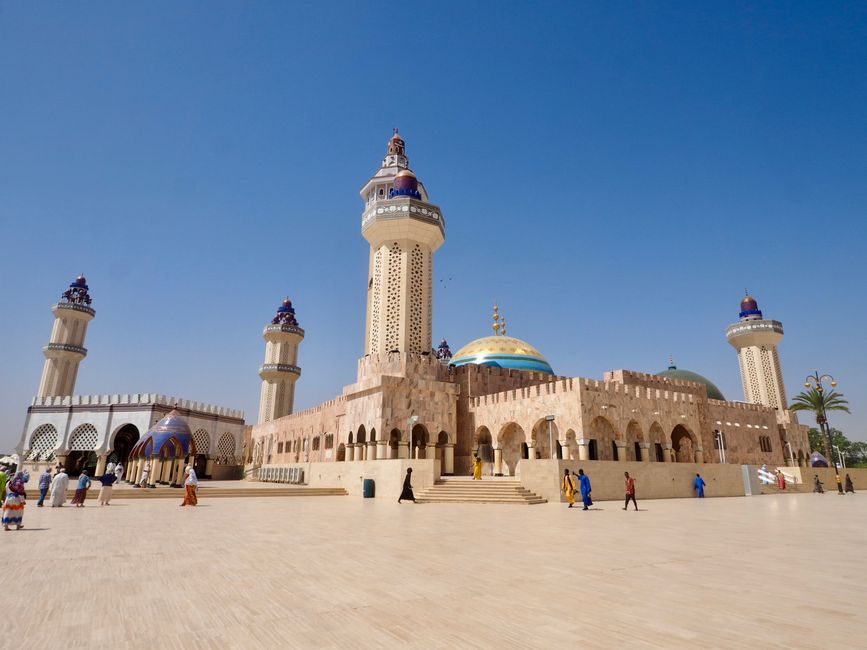
Senegal, on the westernmost bulge of Africa, is a country of music, color and teranga, the Wolof word for the generous hospitality Senegalese people are proud of. It’s one of the most stable and visitor-friendly countries in West Africa, and it packs a remarkable variety into a compact area. Dakar, the capital, spreads across the Cap-Vert peninsula with ocean views, a vibrant arts and music scene, surf breaks and seafood restaurants, and a 20-minute ferry ride takes you to Gorée Island, a UNESCO World Heritage Site and a powerful memorial to the Atlantic slave trade. To the north, the old colonial capital of Saint-Louis, also on the UNESCO list, sits on an island in the Senegal River, close to the bird-filled wetlands of Djoudj. South of Dakar, the beaches and lagoons of the Petite Côte lead to the mangrove creeks and islands of the Sine-Saloum Delta, and farther south, the green Casamance region has the palm-fringed beaches of Cap Skirring and the distinctive culture of the Diola people. In the southeast, Niokolo-Koba National Park and the hills of Bassari Country offer wildlife, waterfalls and traditional villages. Senegal is easy to visit: citizens of the US, Canada, the UK, most EU countries and many others need no visa for stays of up to three months. Plan ahead for malaria, the heat of the rainy season and the long distances between regions.
Right now in Senegal
- Wed 25–29°C 78–84°F 11 mm Light rain
- Thu 26–28°C 79–83°F 15 mm Cloudy
- Fri 27–28°C 80–83°F 13 mm Cloudy
Weather: MET Norway (CC BY 4.0)
Multi-day tours of Senegal
Multi-day tours from local operators. You check dates and book on Viator, our partner; we may earn a commission at no extra cost to you. How we earn money
Senegal at a glance
Senegal covers about 196,700 km² (76,000 square miles), a little smaller than South Dakota, and almost surrounds The Gambia, which forms a narrow strip along the Gambia River. It borders Mauritania, Mali, Guinea and Guinea-Bissau, and has about 530 km (330 miles) of Atlantic coast. The landscape is mostly flat savanna and Sahel, with the Senegal River valley in the north, the wetter, forested Casamance in the south, and low hills in the far southeast. Senegal has about 18 million people, and Dakar is the capital and largest city.
French is the official language, used in government, signs and business, while Wolof is spoken by most people as a common language; Pulaar, Serer, Diola, Mandinka and Soninké are other national languages. A few words of Wolof, such as “nanga def?” (how are you?) and “jërëjëf” (thank you), are much appreciated. More than 90% of Senegalese are Muslim, most belonging to Sufi brotherhoods such as the Mourides and the Tijaniyya, with a Christian minority, especially in the Casamance and the Serer region. Senegal is on Greenwich Mean Time (UTC+0) all year, with no daylight saving time. Electricity is 230 V, with European-style two-pin sockets.
A short history
The region was part of great Sahelian empires, including Ghana, Mali and the Jolof Empire, and Islam spread here from the 11th century. European traders arrived from the 15th century, and Gorée Island and Saint-Louis became French trading posts, involved in the Atlantic slave trade and later in the gum and peanut trades. Saint-Louis was the capital of French West Africa until 1902, when Dakar took over. Senegal became independent on April 4, 1960, with the poet Léopold Sédar Senghor as its first president. The country has a long tradition of peaceful elections, and its music, wrestling and art have a big following across Africa and beyond.
Senegal’s regions for travelers
- Dakar and the Cap-Vert peninsula: the capital, Gorée Island, the Almadies, Ngor Island, Yoff and Lac Rose.
- The Petite Côte: the beach resorts of Saly, Somone and Ngaparou, the Bandia reserve and the shell island of Joal-Fadiouth.
- The Sine-Saloum Delta: mangroves, islands and fishing villages around Toubacouta, Ndangane and Palmarin.
- The north: Saint-Louis, the Langue de Barbarie, Djoudj National Bird Sanctuary and the Senegal River.
- Casamance: Ziguinchor, the beaches of Cap Skirring and Diola villages around Oussouye.
- The southeast: Tambacounda, Niokolo-Koba National Park, Kédougou and Bassari Country.
- Touba and the interior: the holy city of the Mourides and its great mosque.
Where to go: Dakar, islands, deltas and the deep south
Most visitors start in Dakar and Gorée, then choose between the north (Saint-Louis and Djoudj), the coast south of Dakar (the Petite Côte and the Sine-Saloum), and the far south (Casamance). Ten days covers Dakar, Saint-Louis and the Sine-Saloum comfortably; two weeks adds the Casamance or the southeast. See our guide to:
- Dakar: Gorée Island, the African Renaissance Monument, the Museum of Black Civilizations, the Almadies and Ngor, markets, music and day trips to Lac Rose.
Gorée Island
Just 3 km (2 miles) off Dakar, the small, car-free Island of Gorée was one of the earliest European settlements in West Africa and, from the 15th to the 19th century, a center of the Atlantic slave trade. It was inscribed on the UNESCO World Heritage List in 1978. Today, its quiet sandy lanes, bougainvillea and pastel colonial houses contrast with its history. The House of Slaves (Maison des Esclaves), built in the late 18th century, with its narrow cells and “Door of No Return,” is a place of remembrance visited by leaders and travelers from around the world. Gorée also has a historical museum in the old fort, a women’s museum, a small beach, artists’ studios and the Castel, a rocky hill with views back to Dakar. Ferries leave from the port of Dakar throughout the day, and the crossing takes about 20 minutes.
Saint-Louis and the north
About 260 km (160 miles) north of Dakar, Saint-Louis stands on a narrow island in the Senegal River, linked to the mainland by the iron Faidherbe Bridge. Its grid of colonial houses with wooden balconies, its fishing quarter of Guet Ndar on the Langue de Barbarie peninsula, and its relaxed atmosphere made it a UNESCO World Heritage Site in 2000. The town hosts the well-known Saint-Louis Jazz Festival, usually in May or June. Nearby, the Djoudj National Bird Sanctuary, also on the UNESCO list, is one of the most important wetlands in West Africa, with great white pelicans, flamingos and millions of migrant birds from about November to April. The Langue de Barbarie National Park protects a sand spit and its seabirds and turtles.
Lac Rose and the Grande Côte
About 35 km (22 miles) northeast of Dakar, Lac Retba, better known as Lac Rose, is a shallow salt lake that can turn pink in the dry season, especially from about December to April when the light is strong, thanks to salt-loving algae. Salt collectors work the lake by hand, wading out with baskets and loading the salt into pirogues, and stacks of salt line the shore. Beyond the dunes, the Grande Côte runs north toward Saint-Louis as one long, wild Atlantic beach, used by fishing communities rather than resorts; the waves and currents here are powerful, so it’s for walking, not swimming. Day trips from Dakar often combine the lake with a dune drive and lunch.
The Petite Côte
South of Dakar, the Petite Côte has Senegal’s main beach resorts, sheltered from the strongest Atlantic swells. Saly has large hotels, golf and nightlife; Somone has a lagoon full of birds and boats; and Ngaparou is quieter. Nearby, the Bandia Reserve has giraffes, rhinos and antelopes on game drives, and Joal-Fadiouth is a village built on an island of shells, linked by a wooden bridge, with a cemetery also made of shells.
The Sine-Saloum Delta
Where the Sine and Saloum rivers meet the sea, a maze of mangrove channels, sandbanks and islands forms the Saloum Delta, a UNESCO World Heritage Site since 2011 for its shell mounds and the way of life of its fishing communities. Lodges around Toubacouta, Ndangane, Mar Lodj and Palmarin organize pirogue (wooden boat) trips through the mangroves, birdwatching, fishing and visits to island villages. It’s one of the most peaceful places in the country.
Casamance
South of The Gambia, the Casamance is greener and wetter than the north, with rice paddies, palm forests and the traditions of the Diola people. Cap Skirring has some of the best beaches in West Africa and resort hotels, while Ziguinchor, the regional capital on the Casamance River, has a colonial center and river trips. Around Oussouye, you can visit villages with impluvium houses and learn about the region’s sacred forests and kingdom. Most visitors fly or take the overnight ferry from Dakar.
Niokolo-Koba and Bassari Country
In the southeast, Niokolo-Koba National Park, a UNESCO World Heritage Site, protects savanna and gallery forest along the Gambia River, with antelope, hippos, crocodiles, monkeys and birds; larger animals are hard to see, so go with a guide. Beyond it, around Kédougou, the hills of Bassari Country (UNESCO, 2012) are home to the Bassari, Bedik and Fula peoples, with hilltop villages and the Dindéfélo waterfall. The best time is the dry season, from about December to May.
Touba and the Stone Circles
Inland, Touba, the holy city of the Mouride brotherhood, has one of the largest mosques in Africa and draws millions of pilgrims for the annual Grand Magal. Visitors are welcome outside the pilgrimage if dressed modestly and accompanied by a guide; alcohol and tobacco are banned in the city. In the center of the country, the Stone Circles of Senegambia at Sine Ngayène are a UNESCO World Heritage Site shared with The Gambia.
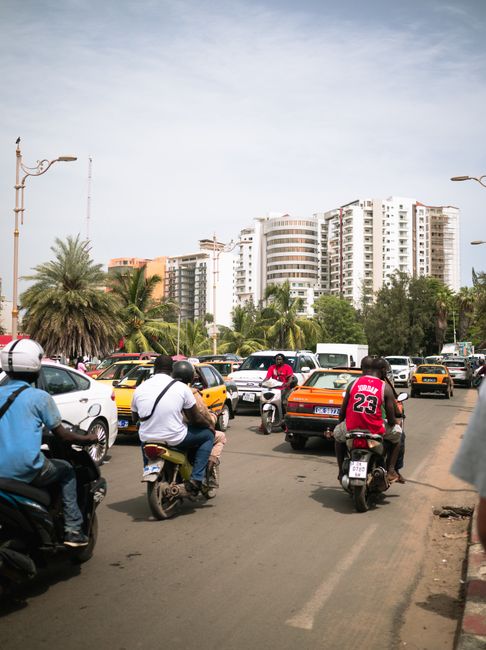
Dakar Travel Guide
Plan a trip to Dakar: Gorée Island and the House of Slaves, the African Renaissance Monument, the Museum of Black Civilizations, the IFAN Museum,…
Best time to visit Senegal
Senegal has two seasons. The dry season, from about November to June, is the best time to visit, with sunny skies, low humidity and pleasant temperatures on the coast. Along the northern coast, including Dakar and Saint-Louis, the cool Canary Current keeps winters mild, with highs of about 25 °C (77 °F) and cool evenings, and the sea is chilly from January to April. Inland, it’s much hotter, especially from March to June, when highs exceed 40 °C (104 °F) around Tambacounda. Between about December and March, the dry, dusty harmattan wind can bring haze. The rainy season runs from about July to October, peaking in August and September, with heavy storms, high humidity, flooding and some roads becoming difficult; it’s longer and much wetter in the Casamance. Many lodges in the Sine-Saloum and Casamance close for part of the rainy season. The table shows rounded average daily highs and lows and annual rainfall from Senegal’s National Agency of Civil Aviation and Meteorology (ANACIM), as published by the World Meteorological Organization (WMO) in its 1991–2020 climate normals.
| Region (ANACIM station) | January high / low | September high / low | Rain a year |
|---|---|---|---|
| Dakar and Gorée (Dakar-Yoff) | 26 °C (79 °F) / 19 °C (65 °F) | 31 °C (88 °F) / 25 °C (77 °F) | about 390 mm (15 in) |
| The north (Saint-Louis) | 31 °C (89 °F) / 16 °C (61 °F) | 33 °C (91 °F) / 25 °C (77 °F) | about 270 mm (11 in) |
| Petite Côte (Mbour) | 34 °C (93 °F) / 17 °C (62 °F) | 32 °C (90 °F) / 24 °C (75 °F) | about 560 mm (22 in) |
| Casamance coast (Cap Skirring) | 32 °C (89 °F) / 18 °C (64 °F) | 31 °C (88 °F) / 24 °C (75 °F) | about 1,220 mm (48 in) |
| The southeast (Tambacounda) | 35 °C (95 °F) / 18 °C (64 °F) | 33 °C (91 °F) / 22 °C (72 °F) | about 740 mm (29 in) |
Senegal month by month
| Month | Weather | Highlights | Crowds and prices |
|---|---|---|---|
| January | Dry, sunny; cool evenings on the coast | Birds at Djoudj; Casamance beaches | High season |
| February | Dry; harmattan haze possible | Birdwatching; cool sea in Dakar | High season |
| March | Dry and warming; hot inland | Good for the Sine-Saloum | High |
| April | Dry; very hot inland | Independence Day (April 4); last big flocks at Djoudj | Busy at Easter |
| May | Dry and hot inland; mild on the coast | Saint-Louis Jazz Festival (often May or June) | Moderate |
| June | Humid; first storms in the south | Surf on the Dakar peninsula | Shoulder season |
| July | Rainy season begins | Green landscapes | Low season; some lodges close |
| August | Wettest period | Lush countryside; summer holidays for the diaspora | Low in the regions |
| September | Rainy and humid | Warmest sea | Low season |
| October | Rains ending; hot and humid | Green season; birds start arriving | Quiet |
| November | Dry season begins | Djoudj birds return; lodges reopen | Rising |
| December | Dry and pleasant | Festive season; Petite Côte busy | Very busy over Christmas |
Festivals and public holidays
Senegal’s biggest celebrations follow the Islamic calendar: Tabaski (Eid al-Adha), when families share a sheep, Korité (Eid al-Fitr) at the end of Ramadan, the Prophet’s birthday (Maouloud), with a great gathering in Tivaouane, and the Grand Magal of Touba, the Mouride pilgrimage that brings millions to Touba. Dates move about 11 days earlier each year. Other highlights are the Saint-Louis Jazz Festival, Dakar’s art biennale Dak’Art (in even-numbered years), and traditional wrestling (laamb) matches, Senegal’s most popular sport, mainly in the dry season. National holidays include New Year’s Day, Independence Day (April 4), Easter Monday, Labor Day (May 1), Ascension, Whit Monday, Assumption Day (August 15), All Saints’ Day, Christmas and the Muslim festivals.
How long to stay: sample itineraries
- 5 days: Dakar (3 nights) with Gorée Island and Lac Rose, then 2 nights on the Petite Côte or in the Sine-Saloum.
- 10 days: Dakar (3 nights), Saint-Louis and Djoudj (3 nights), the Sine-Saloum Delta (3 nights), back to Dakar.
- 2 weeks: add the Casamance, flying or sailing from Dakar to Ziguinchor, with beach days at Cap Skirring and village visits around Oussouye.
- Southeast adventure: Tambacounda, Niokolo-Koba, Kédougou and Bassari Country, best from December to May, with a driver and guide.
- Combine with neighbors: The Gambia lies between the Sine-Saloum and the Casamance; see our Gambia travel guide. Cabo Verde is a short flight from Dakar; see our Cabo Verde travel guide.
Entry, money and costs
Visas (last reviewed October 2026)
According to Senegal’s official tourism promotion agency (ASPT), citizens of the following countries don’t need a visa for stays of less than three months: the United States, Canada, the United Kingdom, most EU countries (including France, Germany, Belgium, the Netherlands, Spain, Portugal, Italy, Sweden, Denmark, Finland, Poland and others), Brazil, China, India, Japan, South Korea, Malaysia, Singapore, the United Arab Emirates, Mauritius and Djibouti, plus many African countries, including all of Senegal’s West African neighbors, Morocco, Tunisia and Kenya. Ireland, Switzerland and Norway aren’t on the agency’s list, so check with a Senegalese embassy if you hold one of those passports. Nationals of countries not on the list, and travelers with refugee travel documents, need a visa from a Senegalese embassy or consulate before travel. Your passport should be valid for at least six months. The UK government notes that border officials may ask for proof of return or onward travel and of accommodation, so carry printouts. For longer stays, you must register with the authorities.
Yellow fever and health requirements
Senegal requires a yellow fever vaccination certificate from travelers aged 9 months and over arriving from a country with yellow fever risk, including after airport transits of more than 12 hours in such countries, according to the US CDC. The CDC recommends the vaccine for all travelers aged 9 months and over, and Senegal is itself a yellow fever risk country, so neighboring countries may ask for a certificate if you travel on. Malaria is present throughout Senegal, and the CDC recommends preventive medicine.
Money and mobile payments
The currency is the West African CFA franc (XOF, written FCFA or CFA), shared with seven other countries and pegged to the euro at 655.957 CFA to €1, about 585 CFA to the US dollar in October 2026. Euros are the easiest foreign currency to exchange. Dakar has ATMs that accept foreign cards, but there are few outside the main towns, withdrawal limits can be low and machines sometimes run out of cash, so carry enough for your trip. Larger hotels and restaurants take cards, and mobile payment apps such as Orange Money and Wave are used everywhere. Change money only at banks or reputable exchange offices, as fake notes are sometimes passed in street exchanges.
Taxes and tipping
Many hotels add a small tourist tax per person per night. Tipping isn’t compulsory, but 5–10% in restaurants and small tips for guides, drivers and pirogue crews are appreciated.
What a trip costs
Prices are approximate, for October 2026, converted at about 585 CFA to the US dollar (the fixed euro rate and the European Central Bank’s dollar rate).
| Item | Typical cost |
|---|---|
| Dakar–Gorée ferry, non-resident adult, return | about 5,200 CFA (about US$9) |
| Thiéboudienne or yassa in a local restaurant | 1,500–3,500 CFA (about US$2.60–6) |
| Mid-range restaurant dinner | 8,000–18,000 CFA (about US$14–31) |
| Taxi across Dakar | 2,000–5,000 CFA (about US$3.40–8.50) |
| Sept-place shared taxi, Dakar to Saint-Louis | about 6,000–9,000 CFA (about US$10–15) |
| Pirogue trip in the Sine-Saloum, half day | 15,000–30,000 CFA per boat (about US$26–51) |
| Mid-range hotel double, per night | 35,000–80,000 CFA (about US$60–137) |
A comfortable mid-range trip costs about US$90–160 per person per day, including hotels, meals, a driver and excursions; budget travelers using shared taxis and simple campements can manage on US$40–60.
Getting there and getting around
By air
International flights land at Blaise Diagne International Airport (DSS) at Diass, about 45 km (28 miles) southeast of central Dakar, with direct flights from Europe, the US, the Middle East, Morocco and across Africa; many travelers connect through Paris, Brussels, Madrid, Lisbon, Casablanca or Istanbul, and there are direct flights from New York. Allow about 45 minutes to an hour by road to central Dakar on the toll highway; shuttle buses and taxis wait outside, and the TER commuter train links Dakar with Diamniadio, on the way to the airport. Pre-arrange transport with your hotel or use the official taxi desk, and beware of drivers who pretend to know you. Domestic flights link Dakar with Ziguinchor and Cap Skirring in the Casamance.
Trains, buses and shared taxis
In and around Dakar, the TER suburban train and the BRT rapid bus line are modern, fast ways to beat traffic. Between towns, most Senegalese travel by sept-place (seven-seat) shared taxis, which leave from garages when full, or by minibuses and coaches; they’re cheap but often crowded, and driving standards vary. A private car with a driver is the most comfortable way to tour the regions and is reasonably priced.
The Casamance ferry and The Gambia
A passenger ferry sails between Dakar and Ziguinchor several times a week, an overnight trip of about 15 hours, with cabins; book ahead. By road, the Casamance is reached through The Gambia, crossing the river on the Senegambia Bridge at Farafenni.
Driving
Senegal drives on the right. Main roads are mostly good, but minor roads can be very poor, especially in the rainy season and in the Casamance. Driving standards are erratic and many vehicles are poorly maintained, so avoid driving after dark. If you’re involved in an accident, call the police on 17 and don’t move the car until they arrive.
Culture, food and everyday etiquette
Food and drink
Senegalese cuisine is one of the best in West Africa. The national dish is thiéboudienne (ceebu jën), fish cooked with broken rice, tomato and vegetables, eaten from a shared platter. Try yassa, chicken or fish in a tangy onion and lemon sauce; mafé, a rich peanut stew; dibi, grilled lamb with onions and mustard; and street snacks such as fataya and pastels (fried pastries) and grilled corn. Seafood is excellent on the coast, especially in Dakar and Saint-Louis. Drinks include bissap (hibiscus), bouye (baobab fruit) and ginger juices, spiced café Touba, and the ritual of attaya, strong sweet green tea served in three rounds. Alcohol is sold in bars, hotels and restaurants, but public drunkenness is frowned upon.
Music, wrestling and art
Senegal’s music, from the drum-driven mbalax made famous by Youssou N’Dour to hip-hop and jazz, fills Dakar’s clubs and concert halls. Traditional wrestling (laamb) is the national passion, with big matches in Dakar’s arenas. The country has a strong art scene, from Dakar’s galleries and the Village des Arts to colorful reverse-glass paintings.
Campements and community tourism
Outside Dakar and the resorts, much of Senegal’s accommodation is in campements, small lodges of huts or bungalows, often run by village associations or families, especially in the Sine-Saloum, the Casamance and the southeast. They’re simple but comfortable, serve home-cooked meals and are a good way to meet local people and support village economies. Book guides through your lodge or a recognized local association, agree prices before excursions, and buy crafts directly from makers where you can. Plastic waste is a problem on beaches and in rivers, so carry a reusable water bottle and refill it from filtered water where available.
Etiquette
- Greetings: greetings are long and important; shake hands and ask after the person’s family before getting to business.
- Right hand: eat, give and receive with your right hand, especially when sharing a communal platter.
- Dress: dress modestly in towns and villages, especially during Ramadan and in religious places; beachwear is fine at resorts.
- Mosques and holy cities: remove your shoes, cover arms and legs (and hair, for women), and follow your guide in Touba.
- Photos: always ask before photographing people, and avoid photographing police, military sites and government buildings.
- Haggling: bargain with humor in markets and with taxi drivers; agree the price first.
Safety, health and connectivity
Senegal is one of the most stable countries in West Africa, and most visits are trouble-free. The main issues are practical: health, heat, the sea, roads and petty crime in Dakar.
- Malaria: present throughout the country, all year, with the highest risk in the rainy season. Take preventive medicine as advised, use repellent and sleep under nets.
- Yellow fever: carry your certificate, especially if arriving from or continuing to another yellow fever country.
- Heat and harmattan: inland temperatures exceed 40 °C (104 °F) from March to June, so drink plenty of water and avoid the midday sun; dust can irritate eyes and lungs during the harmattan.
- Sea currents: the Atlantic around Dakar and on the north coast has strong waves and rip currents; swim only at supervised or sheltered beaches and follow local advice.
- Road safety: road accidents are a major risk; avoid traveling at night, choose reputable drivers and wear seatbelts where available.
- City precautions: in Dakar, pickpocketing and bag snatching occur in crowded areas and markets, and robberies sometimes happen at night. Be alert at ATMs, use pre-arranged transport after dark, and don’t walk alone in quiet areas at night.
- Demonstrations: protests sometimes happen in Dakar and can block main roads, including the airport highway; avoid gatherings and follow local news.
- Areas off the tourist routes: remote areas near the borders with Mauritania and Mali, and rural areas of the Casamance near the borders with The Gambia and Guinea-Bissau, are off the tourist routes. In the Casamance, stick to main roads, travel by day, and check locally before you travel.
- Emergencies: call 17 for the police, 1515 for an ambulance (SAMU) and 18 for the fire service.
Connectivity: buy a prepaid SIM card from Orange, Free or Expresso with your passport, or use an eSIM. Mobile coverage is good in towns and along main roads, and Wi-Fi is common in hotels.
Things to do: history, birds, beaches and boats
- History: Gorée Island, Saint-Louis and the Stone Circles of Senegambia. See our city sightseeing guide.
- Birdwatching: Djoudj, the Langue de Barbarie, the Somone lagoon and the Sine-Saloum Delta.
- Boat trips: pirogues through the Saloum mangroves and on the Casamance River, and ferries to Gorée and Ngor. See our boat trips guide.
- Beaches: Cap Skirring, Saly, Somone and the islands off Dakar. See our beaches guide.
- Surfing: reliable waves around Dakar’s Ngor, Yoff and Ouakam. See our surfing guide.
- Diving and snorkeling: around the islands off Dakar and the Madeleine Islands. See our diving guide.
- Hiking: Bassari Country and the Dindéfélo waterfall near Kédougou. See our hiking guide.
- Music and wrestling: live mbalax in Dakar and laamb matches in the dry season.
What to pack for Senegal
Light, loose cotton or linen clothes that cover shoulders and knees, a light sweater or jacket for cool evenings on the northern coast from December to March, a scarf for mosques and dusty days, sandals and closed walking shoes, a sun hat, sunglasses and high-factor sunscreen, insect repellent with DEET or picaridin, any antimalarials, your yellow fever certificate, proof of onward travel and accommodation, a light rain jacket from July to October, water shoes for rocky beaches, and a European two-pin plug adapter. See our rain jackets, water shoes, hiking shoes and travel adapters guides.
Senegal travel FAQ
Do I need a visa for Senegal?
Citizens of the US, Canada, the UK, most EU countries and many others don’t need a visa for stays of less than three months, according to Senegal’s tourism promotion agency. Others need a visa from a Senegalese embassy.
How long can I stay in Senegal without a visa?
Up to three months for nationals of visa-exempt countries. For longer stays, you must register with the authorities.
Do I need a yellow fever vaccine for Senegal?
A certificate is required if you arrive from a country with yellow fever risk, and the CDC recommends the vaccine for all travelers aged 9 months and over.
Is there malaria in Senegal?
Yes, throughout the country, especially during and after the rainy season. The CDC recommends preventive medicine.
What is the best time to visit Senegal?
November to May, during the dry season; December to February is coolest on the coast. July to October is hot, humid and rainy.
How do I get to Gorée Island?
Take the ferry from Dakar’s port; the crossing takes about 20 minutes and runs throughout the day.
What is the House of Slaves on Gorée?
The Maison des Esclaves is a late-18th-century house that has become a memorial to the Atlantic slave trade, with its “Door of No Return” facing the sea.
What currency is used in Senegal?
The West African CFA franc (XOF), pegged at 655.957 CFA to the euro, about 585 CFA to the US dollar in October 2026.
How far is the airport from Dakar?
Blaise Diagne International Airport is about 45 km (28 miles) from central Dakar, roughly 45 minutes to an hour by road.
Can I visit the Casamance?
Yes. Cap Skirring, Ziguinchor and Oussouye are visited by many travelers, usually by air or the Dakar–Ziguinchor ferry. Stick to main roads, travel by day, and check locally before visiting rural border areas.
Is Senegal safe for tourists?
Most visits are trouble-free. Take normal precautions against petty crime in Dakar, avoid road travel at night, respect the sea, and protect yourself against malaria.
Is it easy to combine Senegal and The Gambia?
Yes. The Gambia lies between northern Senegal and the Casamance, and you can cross by road or fly between Dakar and Banjul.
How many days do I need in Senegal?
About a week for Dakar, Gorée and Saint-Louis or the Sine-Saloum; two weeks to add the Casamance or the southeast.
Sources and last review
Researched and last reviewed on 5 October 2026. Visa exemptions and the CFA franc peg: the Senegalese Tourism Promotion Agency (ASPT); Gorée, Saint-Louis, Djoudj, the Saloum Delta, Niokolo-Koba, Bassari Country and the Stone Circles: the UNESCO World Heritage Center; yellow fever and malaria: the US CDC; passport validity, proof of travel and accommodation, crime precautions, bogus airport taxis, fake notes, ATMs and mobile payments, roads, demonstrations, border areas and emergency numbers: the UK government’s factual entry and safety pages, used for practical facts only; the dollar rate: the European Central Bank; climate averages: Senegal’s National Agency of Civil Aviation and Meteorology via the World Meteorological Organization’s 1991–2020 normals. Area, population, history, languages, festivals, holidays, distances, the Gorée ferry fare, transport, food and typical prices are general references or estimates, flagged for checking. Rules and prices change, so check the official sites before you go.
Plugs and power in Senegal
Senegal uses 230 V, 50 Hz and these plugs (left) and wall sockets (right):
All plug types and voltages by country → · Check what you need to pack →
Plan your trip
Partner links: TravelerCenter may earn a commission if you book, at no extra cost to you.
🇫🇷 Useful French phrases for Senegal
All 38 French phrases: restaurant, hotel, emergencies, romance (printable) →