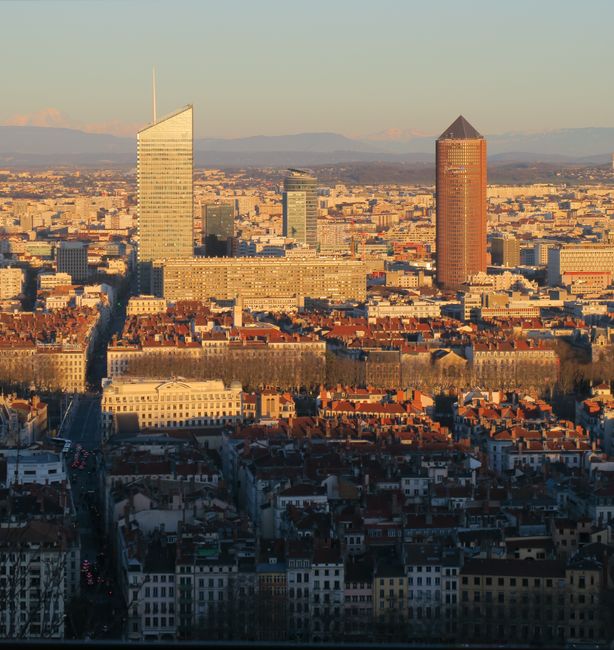
Lyon is France’s food capital and one of its most enjoyable cities: Renaissance lanes and secret passageways in the old town, a hilltop basilica and Roman theatres, two rivers lined with bars and walkways, and more good restaurants per street than almost anywhere. It is lived-in rather than showy, two hours from Paris by fast train and a natural stop between Paris, the Alps and Provence. Give it two days for the highlights, three or four with a day trip to the Beaujolais vineyards or a medieval village, and plan ahead if you come for the Fête des Lumières in December.
Right now in Lyon
- Wed15–18°C58–65°F7 mm rain
- Thu13–16°C55–60°F15 mm rain
- Fri7–14°C44–58°FPartly cloudy
Top tours in Lyon
See all tours for Lyon →
From local operators, with prices and reviews; you check availability and book on Viator, our partner. We may earn a commission at no extra cost to you. How we earn money
Lyon at a glance
- Best for: food and wine, history from Roman to Renaissance, river walks, festivals and easy trips to vineyards and the Alps.
- How long: 2 days for the main sights, 3–4 with a day trip.
- Best time: May, June, September and October; early December for the Fête des Lumières (5–8 December 2026).
- Getting in: about 2 hours by TGV from Paris; the Rhônexpress tram from Lyon-Saint-Exupéry airport takes about 30 minutes.
- Getting around: metro, trams, buses and two funiculars on one network; a single ticket is €2.10 and a 24-hour pass €7.10 (as of October 2026).
- Before you go: entry rules, money, trains and general safety are on our France travel guide.
Lyon’s neighbourhoods and who each one suits
Lyon grew where the Saône and the Rhône meet. Between them lies the long, narrow Presqu’île (“almost-island”), the modern centre. West of the Saône, the old town hugs the foot of Fourvière hill; north, the Croix-Rousse hill rises above the Presqu’île; east of the Rhône are the newer districts and the Part-Dieu station. In 1998 UNESCO listed the historic heart, from Fourvière to the Croix-Rousse slopes, as a World Heritage Site.
Vieux Lyon
One of Europe’s largest Renaissance quarters, built when Lyon grew rich on banking, printing and silk. Three districts, Saint-Paul, Saint-Jean and Saint-Georges, run along the Saône, with cobbled streets, pastel facades, spiral staircases hidden in courtyards and the Gothic Saint-Jean cathedral with its astronomical clock. Busy with visitors and bouchons by day, atmospheric by night. Ideal for a short, romantic stay.
Presqu’île
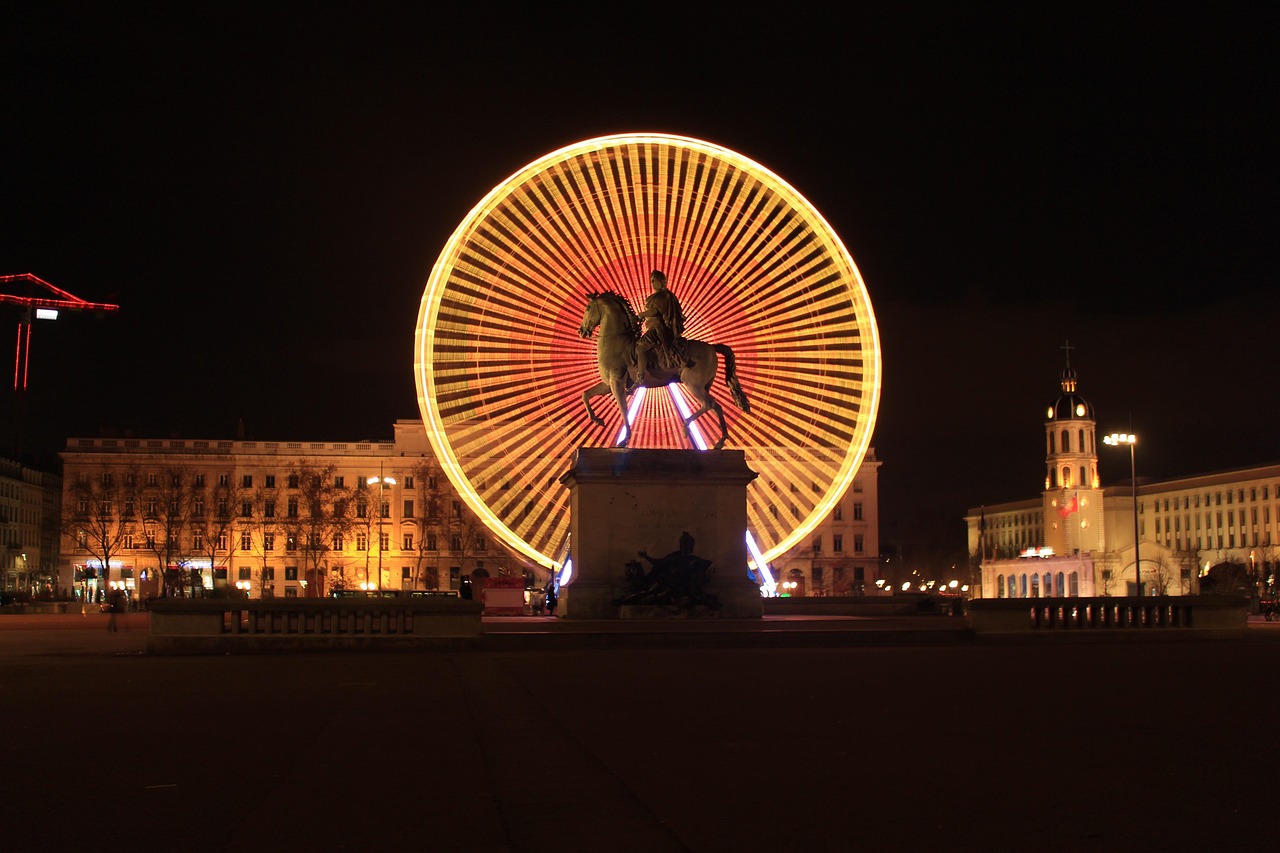
The lively centre between the rivers: the vast red-gravel Place Bellecour, shopping streets, the grand Place des Terreaux with its fountain and city hall, the Opera, and the Musée des Beaux-Arts, one of France’s best art museums outside Paris. The most practical base, with metro and trams at the door.
La Croix-Rousse
The hill of the canuts, the silk weavers, whose tall workshops with high ceilings for the looms still line the streets. It feels like a village, with a big daily market on the boulevard, small bars, the giant painted Mur des Canuts and steep stairways down to the Presqu’île. Good for a local, relaxed stay.
Confluence, Part-Dieu and the Rhône’s left bank
At the southern tip of the Presqu’île, the old docks of Confluence have become a district of bold architecture, waterfront terraces and the Musée des Confluences. Part-Dieu, around the main station and Les Halles Paul Bocuse, is business-like but handy for trains. The left bank of the Rhône has riverside walkways, floating bars and the Parc de la Tête d’Or.
Top things to see in Lyon
Most of Lyon’s best sights are free: churches, viewpoints, traboules, parks and riverbanks. Check museum hours on the official sites before you go.
The traboules
Traboules are covered passageways that cut through buildings and courtyards from one street to the next. Silk workers used them to carry fabric down to the river dry, and the Resistance used them during World War II. Several dozen in Vieux Lyon and on the Croix-Rousse slopes are open to the public in the daytime under an agreement with the residents: push the door, keep your voice down and look for the small plaques marking them. In Vieux Lyon, the long traboule at 54 Rue Saint-Jean and the pink-towered courtyard of the Maison du Crible are classics; on the Croix-Rousse, the Cour des Voraces has a monumental six-storey staircase. The tourist office runs guided traboule walks if you want the stories.
Fourvière hill
Ride the funicular from the Vieux Lyon station up to the Basilica of Notre-Dame de Fourvière, built in the late 19th century and covered inside with mosaics and gold. The esplanade beside it has the best view in Lyon, across the rooftops and rivers to the Alps on a clear day. A short walk away are the two Roman theatres of Lugdunum, the Roman capital of Gaul, which still host summer concerts, and the Lugdunum museum of Roman Lyon. Walk back down through the Jardins du Rosaire to the old town.
Museums
- Musée des Beaux-Arts: in a former abbey on Place des Terreaux, with Egyptian antiquities, old masters, Impressionists and a peaceful cloister garden.
- Musée des Confluences: a science and anthropology museum in a striking glass-and-steel “cloud” at the rivers’ meeting point; great for families.
- Institut Lumière: the Lumière brothers invented the cinematograph here, and filmed workers leaving their factory in Lyon in 1895. The museum is in the family villa.
- Musée Gadagne and the Cinéma et Miniature museum: the history of Lyon and its puppets, including Guignol, in Vieux Lyon, and film props and models nearby.
Parc de la Tête d’Or and the riverbanks
One of the largest city parks in France, with a lake for rowing boats, rose gardens, glasshouses and a free zoo. The quays of the Rhône and the Saône are car-free in long stretches: walk, cycle on a Vélo’v shared bike, or join the locals for a drink on the péniches (river barges) at sunset.
Museums
- Musée des Confluences
- Museum of Fine Arts of Lyon
Monuments
- Basilica of Notre-Dame de Fourvière
- Amphitheatre of the Three Gauls
- Basilica of Saint-Martin d'Ainay
- Lyon Cathedral
Archaeological sites
Parks and gardens
Other sights
Historic centres
Eating in Lyon: bouchons, markets and Les Halles
Lyon has been called the capital of gastronomy since the 1930s, thanks to the mères lyonnaises, women cooks who ran simple, famous restaurants, and later to chef Paul Bocuse. You can eat a three-star tasting menu here, but the real joy is everyday food done well.
Bouchons
A bouchon is a small, convivial Lyon restaurant with checked tablecloths, shared tables and hearty local dishes. Try quenelles de brochet (light pike dumplings in crayfish sauce), saucisson brioché, salade lyonnaise with bacon and a poached egg, andouillette (a strong tripe sausage, for the brave), cervelle de canut (herby fresh cheese) and pink praline tart. Wine comes in a pot, a thick-bottomed 46 cl bottle, often Beaujolais or Côtes du Rhône. Many places around Rue Saint-Jean cater to tourists; look for the “Les Bouchons Lyonnais” association sign, or for streets like Rue Mercière and the area around the Terreaux. Lunch set menus are much cheaper than dinner, and booking is wise from Thursday to Saturday.
Les Halles de Lyon Paul Bocuse
Lyon’s covered food market, near Part-Dieu station, gathers cheesemongers (look for the creamy Saint-Marcellin), butchers, pastry shops, chocolate makers and oyster bars. As of October 2026, most stalls open Monday to Saturday 7:30–19:30 and Sunday 7:30–13:00; the market’s restaurants serve lunch, and the oyster bars open from 9:00 to 22:00 (16:00 on Sundays). The best time is a late Saturday or Sunday morning, when locals stand at the counters with oysters and a glass of white wine.
Open-air markets and a drink
The Saint-Antoine market along the Saône quay (mornings, Tuesday to Sunday) and the Croix-Rousse market on the boulevard are the places to buy picnic food. In the evening, Lyon goes out for an apéro on the riverside terraces, in the bars of the Croix-Rousse and on the barges along the Rhône.
Activities and best months
- Boat tripsGuided cruises on the Saône and Rhône from Île Barbe to La Confluence, past Vieux-Lyon and the Presqu'île, run every day of the year from Quai des Célestins; lunch and dinner cruises last about 2.5 hours.
- City sightseeingLyon has about 500 traboules (passages through buildings), some 80 open to the public in Vieux-Lyon, the Croix-Rousse slopes and the Presqu'île; the tourist office runs guided walks of the UNESCO-listed old town and sells the Lyon City Card.
The Fête des Lumières and other events
The Fête des Lumières (Festival of Lights) grew from a tradition that began on 8 December 1852, when the people of Lyon put candles in their windows to celebrate the Virgin Mary. Today the city runs a free festival over four evenings, with around twenty light shows, projections on monuments and installations in squares, parks and along the rivers; the city says some 2 million people come each year. The 2026 edition runs from Saturday 5 to Tuesday 8 December, from 19:00 to 23:00, except Sunday from 18:00 to 22:00. Many residents still put candles (lumignons) on their windowsills on the evening of 8 December.
Tips: book a hotel months ahead, or stay in a nearby town with a direct train. Arrive early, follow the signed one-way routes, wear warm shoes, keep bags small and expect bag checks and some closed metro stations. Weeknights are less crowded than the weekend.
- June to July: Les Nuits de Fourvière, concerts, theatre and dance in the Roman theatres.
- Late June to July: Jazz à Vienne in the Roman theatre of Vienne, half an hour south.
- October: the Festival Lumière, a celebration of classic cinema in the city where film was born.
- Third Thursday of November: the Beaujolais Nouveau release, celebrated in bars across the city (19 November 2026).
Day trips from Lyon: vineyards, villages and the Alps
Lyon is the gateway to the Auvergne-Rhône-Alpes region. Times are approximate; check the SNCF Connect app for trains.
The Beaujolais
Rolling vineyards and golden-stone villages such as Oingt, about 40 minutes north by car. Visit a family winery for a wine tasting of the ten Beaujolais crus, such as Morgon, Fleurie and Moulin-à-Vent. A car or a guided tour makes it easiest; cyclists will love the quiet lanes.
Pérouges
A tiny walled medieval village on a hilltop north-east of Lyon, all cobbles and timber-framed houses, about 40 minutes by car or a short regional train ride to Meximieux plus a walk uphill. Try the galette de Pérouges, a sugary flat cake.
Vienne and the northern Rhône
Vienne, about 20–30 minutes south by regional train, has a Roman temple standing in a town square and a Roman theatre. Beyond it, steep terraced vineyards produce Côte-Rôtie and Condrieu wines.
Annecy and the Alps
Annecy, with its canals and turquoise lake, is about two hours away by train or 1½ hours by car; swim, cycle around the lake or take a boat trip in summer. Grenoble is about 1 hour 20 minutes by train, and Chamonix and Mont Blanc make a worthwhile overnight trip.
Burgundy and further south
Beaune and the Burgundy vineyards are a long but rewarding day trip north. Going south, the TGV reaches Avignon in about 1 hour 10 minutes and Marseille in under 2 hours, so Lyon pairs well with Provence and Marseille.
Nearby destinations
- Annecy101 km
- Geneva112 km
- Courchevel145 km
- Burgundy wine region156 km
- Chamonix158 km
- Val d'Isère170 km
- Montreux177 km
- Avignon202 km
Getting there and getting around
By train
Lyon is one of France’s main rail hubs. TGV INOUI and low-cost OUIGO trains link Paris (Gare de Lyon) with Lyon Part-Dieu in about 2 hours, and Trenitalia also runs high-speed trains on the route. Direct trains also run to Marseille, Montpellier, Lille, Strasbourg, Geneva and Barcelona. Most trains stop at Part-Dieu, east of the Rhône; some use Perrache, at the southern end of the Presqu’île. Check which station is on your ticket.
From Lyon-Saint-Exupéry airport
The airport is about 25 km east of the city and has its own TGV station. The Rhônexpress tram runs to Part-Dieu in about 30 minutes, every 15 minutes or so from early morning to around midnight. As of October 2026 a single costs about €16 online and €17.10 from the machine, with lower fares for 12–25-year-olds. Taxis take 30–45 minutes depending on traffic.
Metro, trams, funiculars and bikes
TCL runs four metro lines, trams, buses and the two funiculars up Fourvière hill, all on one ticket. As of October 2026, a single ticket for the city (zones 1 and 2) costs €2.10 and is valid for one hour with changes; a 24-hour pass costs €7.10, and a 10-trip ticket €20.50. You can buy tickets in the TCL app or at machines in stations and tram stops. The Lyon City Card adds unlimited transport to entry at most museums, a guided walk and a river cruise; it pays off if you visit several museums. The centre is easy on foot, and Vélo’v shared bikes are cheap for short hops along the rivers.
Driving
Leave the car outside the centre. Lyon has a low-emission zone (ZFE) that applies 24 hours a day, every day; a Crit’Air sticker is required, and since 1 July 2026 Crit’Air 3 cars are being fined, as well as older categories. Parking in the centre is expensive. Hire a car only for the Beaujolais, Pérouges or the mountains.
When to go and how long to stay
Lyon sits between the mild north and the Mediterranean south, with hotter summers and colder winters than Paris. The table uses Météo-France’s official 1991–2020 normals for the Lyon-Bron station: average daily highs and lows, and days with at least 1 mm of rain.
| Season | Average high / low | Rainy days per month | What it’s like | Good for |
|---|---|---|---|---|
| Winter (Dec–Feb) | 7–9 °C / 1–2 °C | 8–9 | Cold, often foggy along the rivers | Fête des Lumières, bouchons, museums |
| Spring (Mar–May) | 14–22 °C / 4–11 °C | 8–10 | Fresh, with thunderstorms by May | Walking, terraces, markets |
| Summer (Jun–Aug) | 26–28 °C / 15–17 °C | 7–9 | Hot and sunny; heatwaves can pass 35 °C | Riverside evenings, Nuits de Fourvière, Annecy’s lake |
| Autumn (Sep–Nov) | 23 °C falling to 11 °C / 13 °C falling to 5 °C | 7 in September, about 10 in October–November | Warm September, wetter October | Grape harvest, food, Festival Lumière |
Lyon gets about 820 mm of rain a year, more than Paris, with October the wettest month. July is the warmest month, with an average high of about 28 °C. In summer, do the hills early and spend afternoons in museums or by the water.
How long to stay: 2-, 3- and 4-day plans
2 days: Day 1, Vieux Lyon and its traboules, the funicular to Fourvière, the Roman theatres, and dinner in a bouchon. Day 2, the Croix-Rousse market, traboules and the Mur des Canuts in the morning, the Presqu’île and the Musée des Beaux-Arts in the afternoon, and drinks on the Rhône.
3 days: add Les Halles Paul Bocuse, the Parc de la Tête d’Or and the Musée des Confluences. 4 days: add a day trip to the Beaujolais or Pérouges, or Annecy in summer.
Weather month by month
Where to stay in Lyon
- Presqu’île (Bellecour to Terreaux): central and practical, close to everything.
- Vieux Lyon: Renaissance charm and bouchons on the doorstep; streets can be noisy at night and rooms small.
- Croix-Rousse: village atmosphere, markets and good value, but hilly.
- Part-Dieu: best for early trains and the airport tram; less charming.
- Confluence: modern hotels and riverside walks, a few tram stops from the centre.
Like most French cities, Lyon adds a nightly tourist tax (taxe de séjour) per adult to your bill, depending on the type of accommodation; under-18s are exempt. Prices rise steeply for the Fête des Lumières and big trade fairs.
Practical tips for Lyon
- Eat at lunchtime: set menus in bouchons and bistros are the best value of the day.
- Respect the traboules: they are people’s homes, so visit in daytime and keep quiet.
- Use the funicular: go up Fourvière by funicular and walk down.
- Check Sunday and Monday hours: many restaurants close on Sunday evening and Monday.
- Watch your bags: around Part-Dieu station and in crowds during festivals.
What to pack for Lyon
Bring walking shoes with good grip for cobbles and steep stairs on Fourvière and the Croix-Rousse. In summer, pack light clothes, a sun hat and a refillable bottle; in spring and autumn, layers and a light rain jacket. For the Fête des Lumières, dress for standing outside at night near freezing: a warm coat, hat, gloves and warm socks. A smart-casual outfit fits in at dinner, and a picnic blanket is handy for the riverbanks.
What to pack
- City walking shoesLisbon and Porto are steep, with polished limestone cobbles that get slippery, so grippy soles matter.
- Day packs and anti-theft bagsA small zipped or anti-theft bag makes crowded trams and viewpoints less stressful.
- Dry bags and phone pouchesSpray soaks phones and cameras on open boats to the Algarve caves and on whale-watching trips.
- Fleeces and warm layersIt is cooler at sea than on land, especially on morning whale-watching trips.
- Rain jacketsA windproof, waterproof shell keeps you warm on open boats, where wind and spray cool you quickly.
- Reef-friendly sunscreenSun reflects off the water on cruises and cave tours.
- Travel adapters and convertersPortugal uses Type C and F sockets at 230 V, so most visitors from outside Europe need an adapter.
- Water shoesKayak and small-boat trips to the Algarve grottoes land on rock and wet sand.
Lyon travel FAQ
How many days do you need in Lyon?
Two days covers Vieux Lyon, Fourvière, the Croix-Rousse and the Presqu’île, with time for good meals. Three or four days lets you add Les Halles, the museums and a day trip to the Beaujolais or Pérouges.
What is the best time to visit Lyon?
May, June, September and October, with average highs of about 18–26 °C. Summer is hot, around 28 °C on average in July, and early December brings the Fête des Lumières.
When is the Fête des Lumières in 2026?
From Saturday 5 to Tuesday 8 December 2026, from 19:00 to 23:00 each evening (18:00 to 22:00 on Sunday). It is free; book accommodation as early as you can.
What are the traboules in Lyon?
Covered passageways through buildings and courtyards, linking one street to the next. Several dozen in Vieux Lyon and on the Croix-Rousse slopes are open to visitors in the daytime; go quietly, as people live there.
What is a bouchon?
A small, traditional Lyon restaurant serving hearty local dishes such as quenelles, saucisson brioché and salade lyonnaise, usually with a pot of Beaujolais or Côtes du Rhône. Look for the “Les Bouchons Lyonnais” sign to find the real thing.
What are the opening hours of Les Halles Paul Bocuse?
Most stalls open Monday to Saturday 7:30–19:30 and Sunday 7:30–13:00, as of October 2026. Oyster bars open from 9:00 to 22:00 (16:00 on Sundays).
How do I get from Lyon airport to the city?
The Rhônexpress tram reaches Part-Dieu station in about 30 minutes; a single costs about €16 online or €17.10 from the machine (as of October 2026). A taxi takes 30–45 minutes.
How long is the train from Paris to Lyon?
About 2 hours by TGV from Paris Gare de Lyon to Lyon Part-Dieu. SNCF’s TGV INOUI and OUIGO and Italy’s Trenitalia all run the route, so compare fares and book early.
How do I get up to Fourvière?
Take the funicular from the Vieux Lyon metro station; a standard TCL ticket (€2.10) is valid. It takes a few minutes, and the walk back down through the gardens is easy.
Can I drive into central Lyon?
Only with a valid Crit’Air sticker, and it’s best avoided. Lyon’s low-emission zone applies around the clock, and since July 2026 Crit’Air 3 cars are fined. Use public transport and hire a car only for trips out.
What are the best day trips from Lyon?
The Beaujolais vineyards and the medieval village of Pérouges are closest. Vienne’s Roman sites are half an hour away, and Annecy’s lake is about two hours by train.
Is the Lyon City Card worth it?
If you plan to visit three or more museums and use public transport, usually yes. It includes most museums, unlimited TCL travel, a guided walk and a river cruise; check the current price at the tourist office before you buy.
Plan your trip
Partner links: TravelerCenter may earn a commission if you book, at no extra cost to you.
🇫🇷 Useful French phrases for Lyon
All 38 French phrases: restaurant, hotel, emergencies, romance (printable) →
Sources · last reviewed 3 October 2026
Researched and last reviewed on 3 October 2026. Climate: Météo-France 1991–2020 normals for Lyon-Bron; festival dates and hours: the City of Lyon’s Fête des Lumières site; market hours: Les Halles de Lyon Paul Bocuse; transport fares: the Lyon Metropolis and TCL; airport tram: Rhônexpress (via the tourist office and press); low-emission zone: service-public.fr and press reports. Some fares and the low-emission zone enforcement date are flagged for checking. Prices, hours and timetables change, so check the official links before you go. For entry rules, money and general safety, see our France travel guide.
Also: en.visiterlyon.com · Météo-France normals 1991–2020, Lyon-Bron (climate)
Data: Weather: MET Norway (CC BY 4.0) · Rates: ECB · Costs: World Bank ICP and price levels · © OpenStreetMap contributors (ODBL) · Wikidata (CC0)