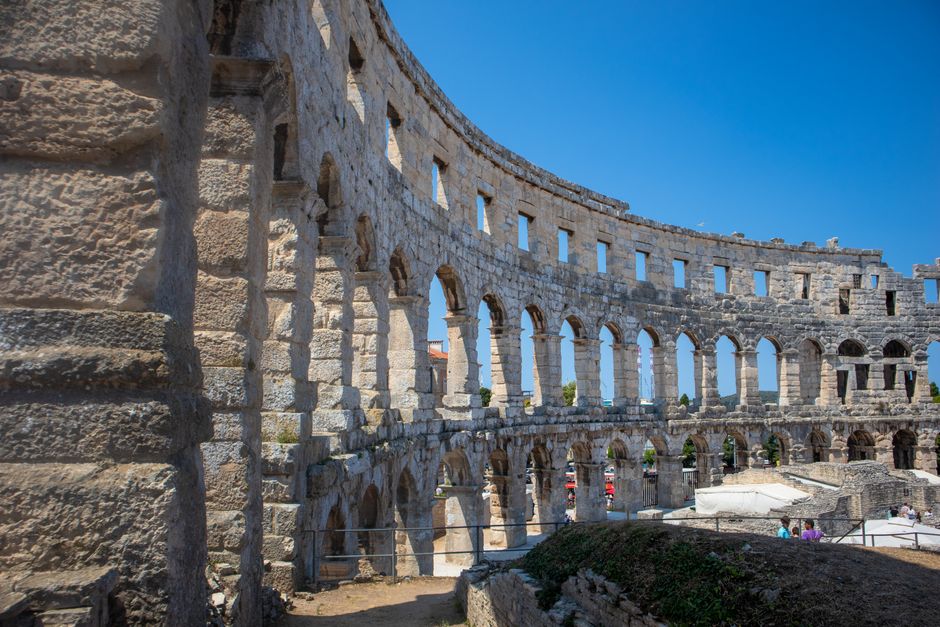
Croatia stretches along the eastern shore of the Adriatic, a long, sunny coast of stone harbour towns, more than a thousand islands and some of the clearest sea in Europe, backed by mountains, lakes and a lively capital inland. Start with the walled city of Dubrovnik, Split and its Roman palace, and the islands of Hvar, Brač, Vis and Korčula; add the waterfalls and turquoise lakes of Plitvice and Krka; then head north to Zadar, the hill towns and truffles of Istria, or the café life of Zagreb. Since 2023 Croatia has used the euro and been part of the Schengen area, so travel from the rest of the EU is seamless. Late May to June and September to early October are the sweet spots. Give it 10 days for a first trip, two weeks to add the islands.
Right now in Croatia
- Wed 6–23°C 43–74°F Mostly clear
- Thu 11–24°C 51–75°F 5 mm Partly cloudy
- Fri 12–14°C 53–58°F 10 mm Rain
Weather: MET Norway (CC BY 4.0) · Rates: ECB
Key facts
| Currency | Euro (EUR, €)Source: croatia.hr · Last reviewed 4 Oct 2026 |
|---|---|
| Languages | Croatian; Italian is also official in Istria (bilingual signs). English and German are widely spoken in tourismSource: istra-istria.hr · Last reviewed 4 Oct 2026 |
| Plugs and voltage | Type C and F · 230 V, 50 HzSource: croatia.hr · Last reviewed 4 Oct 2026 |
| Emergency number | 112 (all emergencies); 192 police, 194 ambulance, 193 fire; 195 sea rescue; 1987 roadside assistanceSource: croatia.hr · Last reviewed 4 Oct 2026 |
| Driving side | On the rightSource: croatia.hr · Last reviewed 4 Oct 2026 |
| Tap water | Safe to drink across Croatia (Croatian National Tourist Board)Source: croatia.hr · Last reviewed 4 Oct 2026 |
| Tipping | Not required and no service charge is added; 10-15% in restaurants for good service; round up in cafés and barsSource: croatia.hr · Last reviewed 4 Oct 2026 |
| Calling code | +385 (dial 00 for international calls)Source: croatia.hr · Last reviewed 4 Oct 2026 |
| Time zones | All of Croatia: CET (UTC+1), summer CEST (UTC+2)Source: transport.ec.europa.eu · Last reviewed 4 Oct 2026 |
| Entry summary | Schengen area since 2023 · EU member. See the entry section for rules by passport.Source: home-affairs.ec.europa.eu · Last reviewed 4 Oct 2026 |
Multi-day tours of Croatia
Multi-day tours from local operators. You check dates and book on Viator, our partner; we may earn a commission at no extra cost to you. How we earn money
Croatia at a glance: overview and geography
Croatia is shaped like a crescent, curving from the plains of the Danube in the east, around Zagreb, and down the full length of the Adriatic coast to Dubrovnik in the far south. It borders Slovenia and Hungary to the north, Serbia to the east, and Bosnia and Herzegovina and Montenegro to the south and east, with Italy across the sea. The mainland coast is about 1,800 km long, but with all the islands it runs to more than 6,000 km, and there are well over a thousand islands, islets and reefs, of which about 50 are inhabited. The 2021 census by the Croatian Bureau of Statistics counted about 3.9 million people, around a fifth of them in Zagreb.
History is layered everywhere: Illyrian hill forts, Greek colonies on the islands, Roman cities such as Pula, Salona and Zadar, the palace of the Emperor Diocletian in Split, Venetian towns and fortifications along the coast, the merchant Republic of Ragusa (Dubrovnik), Habsburg Zagreb and Opatija, and Ottoman-era frontier forts inland. Modern Croatia declared independence in 1991 and joined the European Union in 2013. Life on the coast follows the sea and the seasons: long lunches of grilled fish, evening walks along the waterfront (the đir), and summer festivals in every town square.
Time zone: Croatia runs on Central European Time (UTC+1, UTC+2 in summer), the same as Italy, Austria and Germany.
The regions
- Dalmatia: the long southern coast and its islands, from Zadar through Šibenik and Split to Dubrovnik: Roman and Venetian towns, Hvar, Brač, Vis, Korčula and Mljet, Krka National Park and the Kornati.
- Istria: the peninsula in the north-west, next to Slovenia and Italy: Rovinj, Pula and Poreč on the coast, hill towns, truffles and wine inland.
- Kvarner: the gulf between Istria and Dalmatia: the port city of Rijeka, the Habsburg resort of Opatija and the islands of Krk, Cres, Lošinj and Rab.
- Lika and Gorski kotar: the green, forested highlands behind the coast, home to Plitvice Lakes and the Velebit mountains.
- Zagreb and central Croatia: the capital, the Zagorje hills with their castles and spas, and Baroque Varaždin.
- Slavonia: the flat, fertile east along the Drava and Danube rivers: Osijek, Vukovar, wine country around Ilok and the Kopački rit wetlands.
Regions
- Bjelovar-Bilogora County
- Brod-Posavina County
- Dubrovnik-Neretva County
- Istria
- Istria County
- Karlovac County
- Koprivnica-Križevci County
- Krapina-Zagorje County
- Lika-Senj County
- Međimurje County
- Osijek-Baranja County
- Požega-Slavonia County
- Primorje-Gorski Kotar County
- Sisak-Moslavina County
- Split-Dalmatia County
- Varaždin County
- Virovitica-Podravina County
- Vukovar-Srijem County
- Zadar County
- Zagreb County
- Šibenik-Knin County
Where to go: cities, islands and national parks
Most visitors come for the coast, and most of the coast is Dalmatia. The simplest first trip runs along it, from Zadar or Split south to Dubrovnik, with a detour inland to Plitvice and a few nights on an island. Istria and Zagreb suit a second trip, or a route that starts from Venice, Trieste, Ljubljana or Vienna.
Dubrovnik
The “pearl of the Adriatic” is a perfectly preserved walled city of marble streets, Baroque churches and fortresses above the sea. Walk the 2 km of city walls early in the morning, take the cable car up Mount Srđ at sunset and the boat to Lokrum, and day-trip to the Elaphiti islands, Ston or Montenegro. It is crowded and expensive in summer, with limits on cruise ships and fines for bad behaviour. See our Dubrovnik guide.
Split, Hvar and the Dalmatian islands
Split grew inside the walls of a Roman emperor’s palace, and it is the hub for ferries and catamarans to the central Dalmatian islands. Our Split guide covers the palace, Marjan hill and island hopping. Glamorous Hvar has lavender, vineyards, the Pakleni islands and a lively harbour town; Brač has the famous Zlatni Rat beach; remote Vis was a military base closed to foreigners until 1989 and is now a foodie favourite; Korčula is a mini-Dubrovnik on its own island; and Mljet is green and wild, with a national park of saltwater lakes.
Plitvice Lakes and Krka
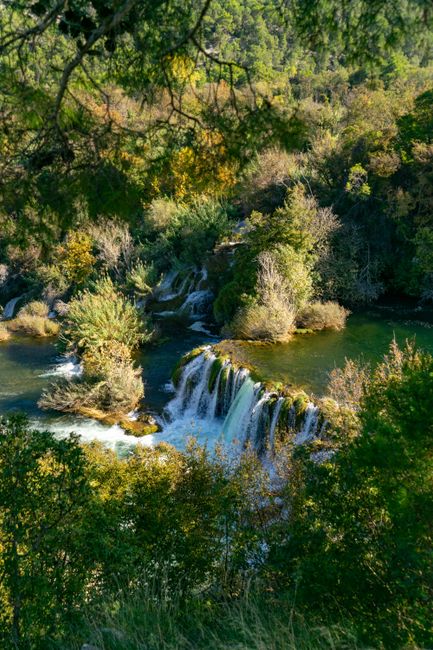
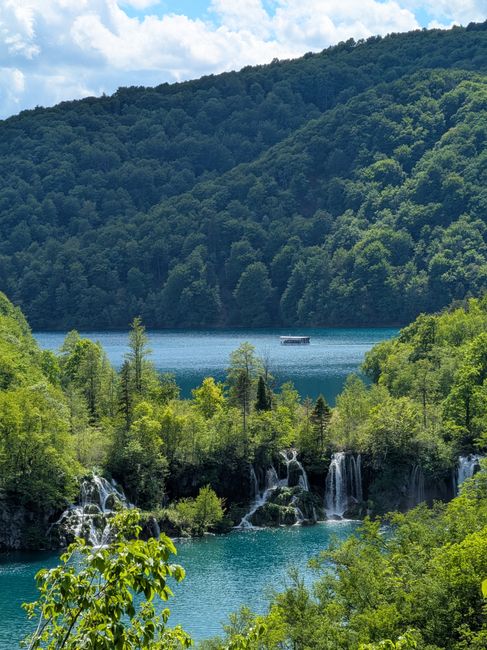
Croatia’s two most famous national parks are both made of tufa waterfalls. Plitvice Lakes, in the highlands between Zagreb and the coast, has sixteen terraced lakes connected by boardwalks; book an early entry time online, and remember that swimming is banned. Krka National Park, near Šibenik and an hour from Split, has the broad cascades of Skradinski buk, reached by boat from Skradin; swimming there has been banned since 2021.
Istria
The heart-shaped peninsula in the north-west feels half Italian: Rovinj’s pastel harbour, the Roman Arena in Pula, the Byzantine mosaics of Poreč, and hill towns such as Motovun and Grožnjan surrounded by vineyards and the forests where white truffles grow. Cycle the old Parenzana railway and eat very well. See our Istria guide.
Zadar
Zadar mixes a Roman forum and a 9th-century round church with the Sea Organ and the Greeting to the Sun on its waterfront, where the sunsets are famous. It is a cheap-flight gateway and a base for Plitvice, Krka, Paklenica and boat trips to the Kornati and Telašćica. See our Zadar guide.
Zagreb
Croatia’s capital is a Central European city of trams, cafés, museums and parks, with a medieval Upper Town above a grand Austro-Hungarian centre. It is still repairing the damage of the 2020 earthquake, but the cathedral reopened in 2026, and its Advent market in December is one of Europe’s best. See our Zagreb guide.
A few more worth your time
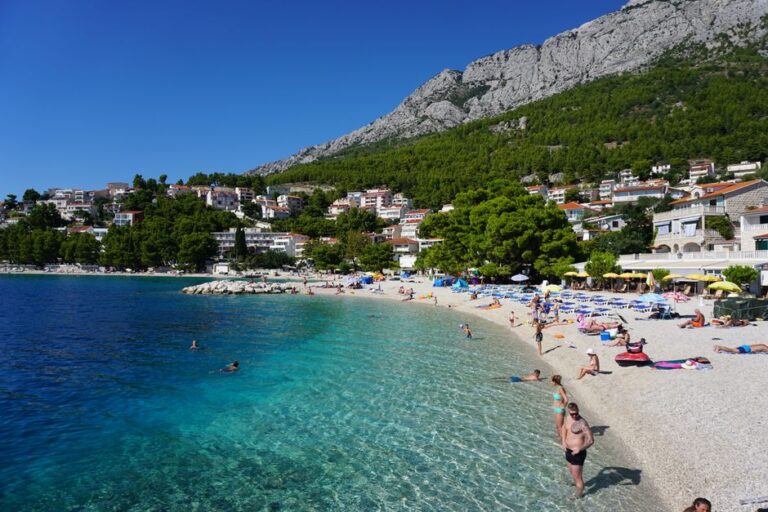
Šibenik, with its stone cathedral and sea fortress, both UNESCO-listed; Trogir, a medieval island town near Split; Korčula and its old town; the Makarska Riviera’s long pebble beaches below the Biokovo mountain; Opatija’s villas and seaside promenade and the islands of Krk, Cres, Lošinj and Rab in Kvarner; Paklenica’s canyons in the Velebit mountains; the Baroque streets of Varaždin; and Slavonia’s river landscapes, wine and food in the east.
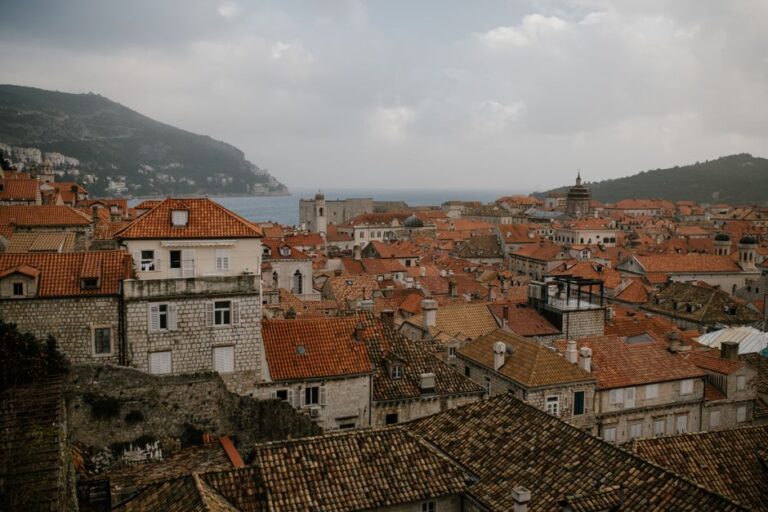
Dubrovnik Travel Guide
Plan a trip to Dubrovnik: the city walls with 2026 tickets and hours, the Stradun and old town, Fort Lovrijenac, the cable car to…
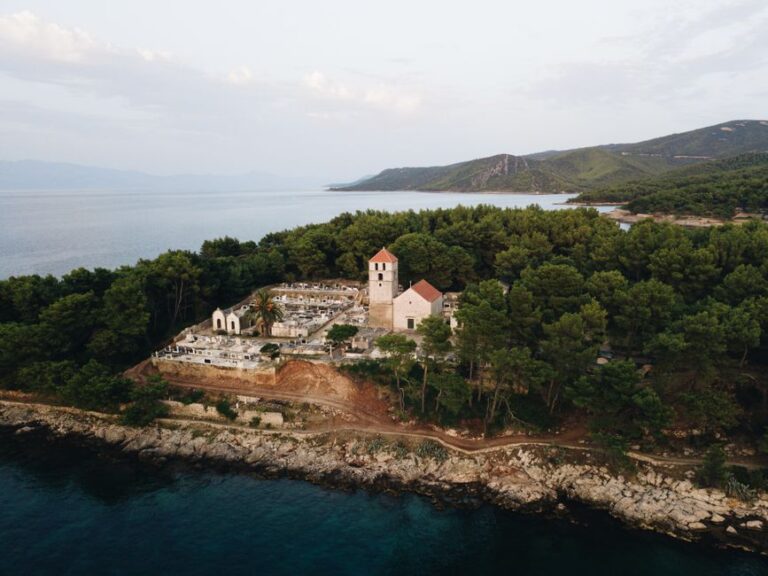
Hvar Travel Guide
Plan a trip to Hvar: Hvar Town, St Stephen's Square and the fortress, Stari Grad and the UNESCO Stari Grad Plain, lavender and wine,…
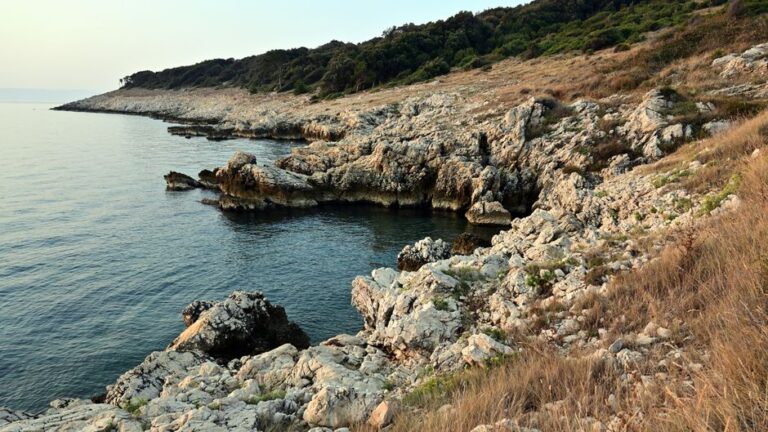
Istria Travel Guide
Plan a trip to Istria: Rovinj and the Golden Cape, the Pula Arena with 2026 prices and hours, Poreč's Euphrasian Basilica, Motovun, Grožnjan and…
Krk Travel Guide
Plan a trip to Krk, the island you can drive to: Krk Town and its cathedral, Baška's long beach and the Baška Tablet at…
Krka National Park Travel Guide
Plan a visit to Krka National Park: 2026 ticket prices by season, the boat from Skradin and the bus from Lozovac, Skradinski buk, Visovac…
Makarska Riviera Travel Guide
Plan a trip to the Makarska Riviera: Makarska town and the Malacological Museum, Brela and Punta Rata, Tučepi and Podgora, the Biokovo Skywalk and…
Plitvice Lakes Travel Guide
Plan a visit to Plitvice Lakes National Park: 2026 ticket prices by season, online booking with entry times, Entrance 1 or Entrance 2, routes…
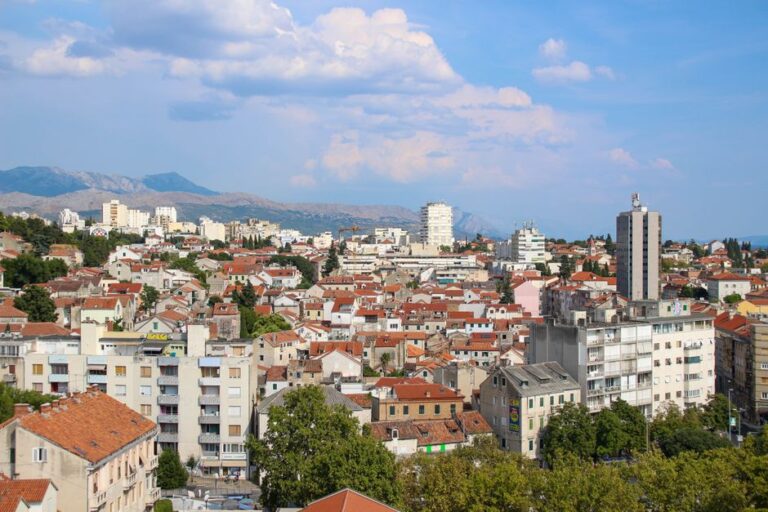
Split Travel Guide
Plan a trip to Split: Diocletian's Palace, the cellars, the cathedral and bell tower, the Riva and Marjan hill, Bačvice beach, ferries and catamarans…
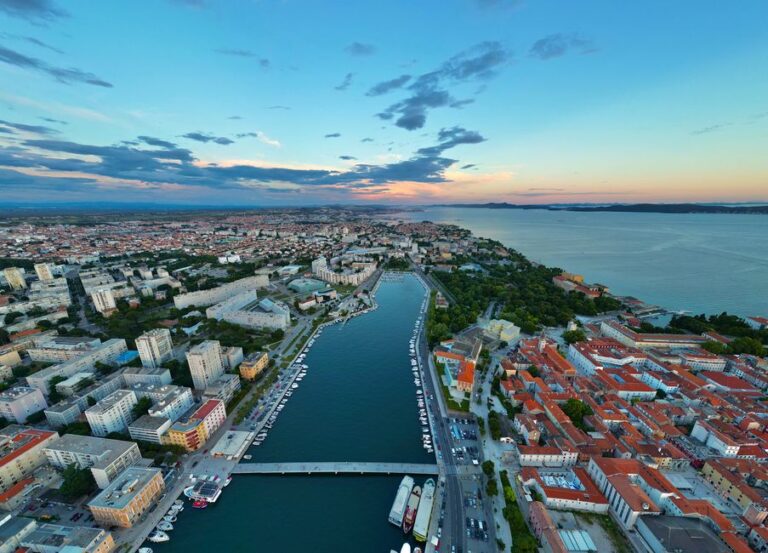
Zadar Travel Guide
Plan a trip to Zadar: the Sea Organ and the Greeting to the Sun, the Roman Forum and St Donatus, the Venetian walls and…
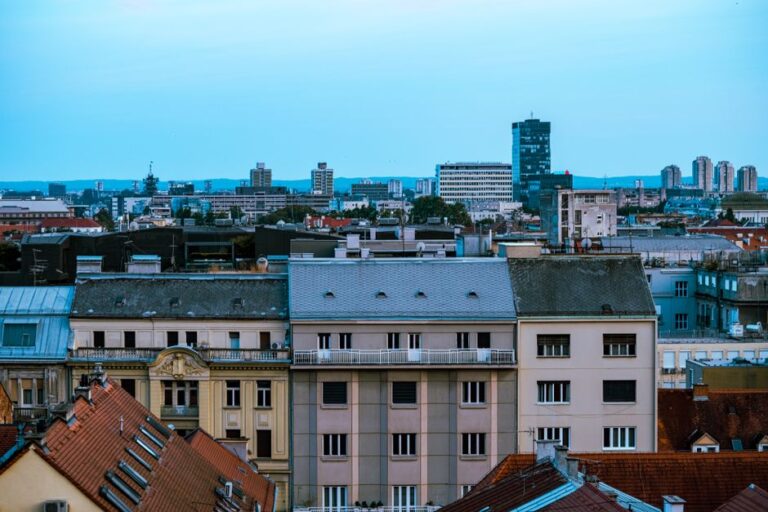
Zagreb Travel Guide
Plan a trip to Zagreb: Ban Jelačić Square and Dolac market, the cathedral after its 2026 reopening, the Upper Town, St Mark's Church and…
Best time to visit Croatia
The coast has a Mediterranean climate: hot, dry, very sunny summers and mild, wetter winters, with most rain from October to January. Inland, Zagreb and Slavonia have a continental climate with warm summers and cold winters, and the highlands around Plitvice are cooler again, with snow in winter. The table shows rounded long-term mean temperatures (averaged over day and night) at one Croatian Meteorological and Hydrological Service (DHMZ) station per area; summer afternoon highs on the coast are usually 28–31 °C, and recent summers have often been hotter than these averages.
| Area (DHMZ station) | Spring (Mar–May) | Summer (Jun–Aug) | Autumn (Sep–Nov) | Winter (Dec–Feb) | Best months |
|---|---|---|---|---|---|
| Dubrovnik | 12–19 °C | 23–25 °C | 22 °C falling to 14 °C | 9–11 °C | May–June, September–October |
| Split | 11–19 °C | 23–26 °C | 22 °C falling to 13 °C | 8–9 °C | late May–June, September |
| Hvar | 11–19 °C | 23–25 °C | 22 °C falling to 14 °C | 9–10 °C | June, September |
| Zadar | 10–18 °C | 22–25 °C | 20 °C falling to 12 °C | 7–9 °C | June, September |
| Istria (Pazin, inland) | 7–15 °C | 19–21 °C | 16 °C falling to 8 °C | 3–4 °C | May–June, September–October |
| Plitvice area (Gospić) | 4–13 °C | 17–19 °C | 14 °C falling to 5 °C | −2 to 0 °C | May–June, September–October |
| Zagreb (Grič) | 7–17 °C | 20–22 °C | 17 °C falling to 7 °C | 1–3 °C | May–June, September; December for Advent |
The Dalmatian coast is among the sunniest places in Europe, with about 2,600–2,750 hours of sunshine a year at Split, Dubrovnik and Hvar, and only four to six days with rain a month in July and August. The sea is warm enough for most swimmers from about mid-June to late September or early October, and warmest in August.
Winds, heat and the shoulder seasons
Two winds shape the coast. The bura (bora) is a cold, gusty north-easterly that rushes down from the mountains, mostly in winter; it brings clear skies but can close bridges and roads to high vehicles and cancel catamarans. The jugo is a warm, humid south-easterly that brings cloud, rain and big waves, and also delays boats. In summer the gentle maestral, a north-westerly sea breeze, cools the afternoons. Heatwaves above 35 °C have become more frequent in July and August, especially inland and in the cities; plan sightseeing for the morning and evening. May, June, September and early October offer the best balance of warm weather, open hotels, regular ferries and smaller crowds.
Crowds and prices through the year
July and August are the peak: the most visitors, the highest prices, full ferries and crowded old towns, especially in Dubrovnik, Split and Hvar. Book accommodation and catamarans well ahead. June and September are still warm with better prices; many Croatians take their own holidays in August. From November to March, much of the coast goes quiet: many hotels, island restaurants and campsites close, and ferries run on reduced winter timetables, though cities such as Zagreb, Split, Zadar and Dubrovnik stay alive all year.
Festivals and public holidays
Highlights include Easter processions on Hvar (the “Za Križen” night procession, a UNESCO-listed tradition), the Dubrovnik Summer Festival (about 10 July to 25 August), the Split Summer Festival, concerts in Pula’s Roman Arena, the Motovun Film Festival, the Sinjska alka knights’ tournament in Sinj in early August, Rijeka’s carnival in February and Advent in Zagreb from late November. Public holidays: New Year’s Day, Epiphany (6 January), Easter Monday (29 March 2027), Labour Day (1 May), Statehood Day (30 May), Corpus Christi (27 May 2027), Anti-Fascist Struggle Day (22 June), Victory Day (5 August), the Assumption (15 August), All Saints’ Day (1 November), Remembrance Day (18 November) and Christmas (25–26 December). Many shops close on Sundays and public holidays.
Weather month by month
Averages from DHMZ normals 1991–2020, Zagreb-Maksimir · Last reviewed 4 Oct 2026
How long to stay: sample itineraries
Distances are short, but ferries, winding coast roads and summer traffic slow you down. Plan on one move every two or three days.
7 days: Split, Hvar and Dubrovnik
Fly into Split. Two nights in Split, with a half-day at Krka or in Trogir; two nights on Hvar; then a catamaran (via Korčula in summer) to Dubrovnik for three nights. Fly home from Dubrovnik.
10 days: the Dalmatian coast and Plitvice
Fly into Zadar: two nights there, with a day at Plitvice. Then Krka and Šibenik on the way to Split (two nights), Hvar (two nights), Korčula (one night) and Dubrovnik (three nights).
14 days: from Zagreb to Dubrovnik
Two nights in Zagreb; a night at Plitvice; two nights in Zadar; Krka and Šibenik on the way to Split (two nights); two islands, such as Hvar and Vis or Korčula (four nights); and three nights in Dubrovnik. Alternatively, swap Zagreb for four days in Istria, arriving from Venice or Trieste.
Entry, money, fees and costs
Entry and visas (last reviewed October 2026)
Croatia joined the Schengen area on 1 January 2023 (with checks at airports removed from 26 March 2023), so there are no routine passport checks on arrival from other Schengen countries such as Slovenia, Hungary, Italy or Austria. Citizens of EU and EEA countries and Switzerland can enter with a national ID card or passport. Visitors from many other countries, including the United States, Canada, the UK and Australia, can stay without a visa for up to 90 days in any 180-day period, counting time in all Schengen countries. Others need a Schengen visa from a Croatian consulate.
- Entry/Exit System (EES): the EU’s digital border system has been fully running at all Schengen external borders since 10 April 2026. Non-EU visitors on short stays have their passport details, a photo and fingerprints recorded on their first entry instead of getting passport stamps; children under 12 are not fingerprinted. Registration is free, and the record lasts three years. Allow extra time at airports with flights from outside Schengen, such as the UK, and at land borders with Bosnia and Herzegovina, Serbia and Montenegro.
- ETIAS: the EU’s planned online travel authorisation (fee €20) is not in operation as of October 2026. The European Commission has said it is scheduled for the last quarter of 2026, with the exact date to be announced in advance; no date has been published, and press reports point to 2027. Until the EU confirms a date, you don’t need one. Ignore websites selling “ETIAS applications” before then.
- Passports: for non-EU visitors, your passport should have been issued less than 10 years before you arrive and be valid for at least 3 months after the day you plan to leave the Schengen area.
- Day trips outside the EU: Mostar and Međugorje in Bosnia and Herzegovina, and Kotor and Budva in Montenegro, are popular day trips from Dubrovnik and Split. They are outside Schengen: carry your passport, check your own visa rules and expect border queues in summer. Since the Pelješac Bridge opened in 2022, you no longer need to cross Bosnia at Neum to drive to Dubrovnik.
Rules change, so check the official pages before you travel: the European Commission’s EES and ETIAS pages, the Croatian Ministry of Foreign and European Affairs and your own government’s travel information.
Croatian basics: language and a few useful words
Croatian is the official language, written in the Latin alphabet with a few extra letters: č and ć sound like “ch”, š like “sh”, ž like the “s” in “pleasure”, and đ like “j”. English is widely spoken on the coast and by younger people, and German and Italian are common in tourist areas, especially Istria. A few words go a long way: dobar dan (good day), bok (hi, bye), hvala (thank you), molim (please, and also “you’re welcome”), oprostite (excuse me), da (yes), ne (no) and živjeli (cheers). Place names change with grammar (Split, but “u Splitu”, in Split), so don’t worry if they look different on signs.
The euro, cash and tipping
Croatia replaced the kuna with the euro on 1 January 2023, at a fixed rate of 7.53450 kuna to the euro; you may still see old prices in both currencies. Cards and phone payments are accepted in most hotels, restaurants, shops and ferry ticket offices, but carry some cash for small cafés, markets, bakeries, island taxis, water taxis and beach loungers. When a cash machine or card terminal offers to charge you in your home currency, choose euros. Avoid the independent cash machines in tourist areas, which often charge high fees; use those attached to banks. Tipping is appreciated but not compulsory: round up or leave about 10% in restaurants for good service, round up taxi fares and leave a little for boat crews and guides.
Tourist tax
Croatia charges a tourist tax (turistička pristojba) per person per night on all registered accommodation, from hotels to private rooms and campsites. It is usually added to the bill or collected by your host. Each county sets the rate for each town, with higher rates in summer. As of October 2026, it is €2.65 per adult per night from April to September and €1.85 the rest of the year in the City of Dubrovnik, one of the highest rates in the country, according to the Dubrovnik-Neretva County Assembly’s 2026 decision; most towns charge less. Children under 12 pay nothing, and young people aged 12 to 18 pay half. Booking sites do not always include it in the headline price.
Typical travel costs
Croatia is no longer a budget destination on the coast in summer: prices in Dubrovnik, Hvar and Split are similar to Italy’s, while Zagreb, Slavonia and the inland villages are cheaper. These estimates, per person per day, are a planning guide as of October 2026:
| Style | Estimated cost per day | What that looks like |
|---|---|---|
| Budget | about €60–90 | Hostel bed or simple private room, bakery breakfasts and burek, one konoba meal, buses and foot-passenger ferries, free beaches |
| Mid-range | about €130–200 | 3-star hotel or apartment shared by two, restaurant lunches and dinners, a national park or museum ticket, catamarans, a hire car for a few days |
| High-end | about €350+ | Boutique hotel with a sea view, fine dining, private boat trips and guided tours |
Add €50–100 a day for Dubrovnik or Hvar in July and August. National park tickets now cost up to €40 in summer (Plitvice and Krka), and Dubrovnik’s city walls €40. The figures are our estimates, not official statistics.
Getting there and getting around
Arrival airports
Croatia’s main airports are Zagreb (ZAG), Split (SPU), Dubrovnik (DBV), Zadar (ZAD) and Pula (PUY), with smaller airports at Rijeka (on the island of Krk), Osijek and Brač. In summer, dozens of airlines fly direct from across Europe to the coast; in winter, most international flights use Zagreb, with fewer to Split and Dubrovnik. Open-jaw tickets, for example into Zadar or Split and out of Dubrovnik, save backtracking.
Ferries and catamarans
The islands are reached by sea. Jadrolinija, the state-owned company, runs most car ferries and many catamaran lines, from short hops such as Split–Supetar (Brač) and Zadar–Preko (Ugljan) to longer routes to Vis, Lastovo and Mljet. Private operators add fast passenger catamarans: Krilo (Kapetan Luka) links Split with Hvar, Korčula, Mljet and Dubrovnik, and runs Pula–Zadar; TP Line runs lines such as Split–Milna–Hvar–Korčula–Dubrovnik; and smaller companies serve individual islands. International ferries link Split, Zadar and Dubrovnik with Ancona and Bari, a good way to combine Croatia with Italy.
- Car ferries are cheap for foot passengers and carry cars, but on busy summer routes vehicles often board in order of arrival, so arrive an hour or two early even with a ticket.
- Catamarans are faster, foot passengers only, and stop in the island towns. Buy tickets online or at the port a day or two ahead in July and August.
- Timetables are fullest from June to September; many catamaran routes run only in summer. Strong bura or jugo winds can cancel sailings, so check the operator’s site on the day.
Planning an island-hopping route
The classic route runs one way along the coast: Split – Hvar – Korčula – Dubrovnik (or the reverse), with optional detours to Brač, Vis or Mljet. Spend at least two nights on each island. Catamarans between the islands mostly run from June to September; outside that season, you may have to return to Split between islands. Organised island-hopping cruises on small ships are popular with younger travellers and families. See our Split guide for operators and tips.
Buses and trains
Buses are the backbone of public transport, frequent and comfortable along the coast and between Zagreb and the main cities; buy tickets online or at the station and expect a small charge for luggage in the hold. Trains are slow and limited, but useful between Zagreb and Ljubljana, Vienna, Budapest, Rijeka and Split (about 6–8 hours, with a summer night train). There are no trains to Dubrovnik.
Driving
A car makes it easy to explore Istria, the national parks and the inland villages, but you do not need one in Dubrovnik, Split or Hvar Town. Drive on the right. The motorways are excellent; the coast road (the Jadranska magistrala) is spectacular but slow and winding. Key rules, according to the Croatian Automobile Club (HAK): dipped headlights must be on in daylight from the last Sunday in October to the last Sunday in March; the blood alcohol limit is 0.5 g/kg, and zero for drivers under 24; speed limits are usually 50 km/h in towns, 90 km/h on open roads, 110 km/h on expressways and 130 km/h on motorways. For roadside help, call HAK on 1987. Parking in coastal old towns is scarce and expensive.
Motorway tolls and the new e-toll system
Croatian motorways have tolls, not vignettes. As of October 2026, you still take a ticket on entering the motorway and pay at a toll booth when you leave, by cash, card or an ENC electronic tag. That is changing: Croatia is building a barrier-free “free flow” system called Crolibertas, with gantries over the motorway that read an ENC tag or your number plate, so you never stop. According to Croatian Motorways (HAC) and the government, it is due to go live on 1 March 2027, when the toll booths are removed and cash payment ends. Private cars will be able to choose an ENC tag or to register their number plate with a payment card; foreign-registered cars will need to register too. Check the official Crolibertas and HAC sites before a 2027 trip. Slovenia, next door, uses an e-vignette for its motorways.
Beaches, the sea and safety in the water
Croatia’s sea is famously clean and clear, but most of its beaches are pebble or rock, often with concrete platforms and ladders into deep water, rather than sand. Bring water shoes. Sandy exceptions include Sakarun on Dugi Otok, the beaches of Nin near Zadar, Lopar on the island of Rab, Saplunara on Mljet and parts of Lumbarda on Korčula; Zlatni Rat at Bol on Brač is a long spit of fine pebbles. Croatia has a long naturist tradition, and many areas have marked “FKK” beaches. Lifeguards are present on some busy beaches in summer, but not on most. See our beaches guide, plus snorkeling, diving and boat trips.
- Sea urchins: black spiny urchins are common on rocks in shallow water; wear water shoes, and remove spines carefully or see a pharmacy.
- Jellyfish: the mauve stinger (Pelagia noctiluca) and other jellyfish appear in some summers; stings are painful but rarely dangerous. Rinse with seawater, not fresh water, and ask at a pharmacy for treatment. Lifeguards and locals usually know when they are around.
- Boats and swimmers: stay inside the marked swimming zones; boats and jet skis pass close to rocky shores. Use a bright swim buoy if you swim far out.
- Wind: on bura days, offshore winds can push inflatables and paddleboards out to sea quickly.
Safety, wildfires, health and connectivity
Safety
Croatia is one of the safest countries in Europe for visitors. Watch for pickpockets in crowded old towns and on busy buses and ferries, agree water-taxi and taxi prices in advance (or use apps), and take care on scooters and quad bikes on narrow island roads. Several coastal towns, including Dubrovnik, Split, Hvar and Zadar, fine people for walking around in swimwear or bare-chested, drinking in public or behaving rowdily; in 2026 a new national law also let towns ban the sale of alcohol in shops at night, and Split and Hvar did so. Croatia declared itself free of known landmines in 2026, after three decades of clearance following the 1990s war; if you ever see an old warning sign or an unexploded device, keep away and call 112. Emergency numbers: 112 for all services, 192 police, 193 fire and 194 ambulance.
Heat and wildfire rules
Summer heat and dry pine forests make wildfires a real risk on the coast and islands, especially when the bura blows. From 1 June to 31 October, lighting fires in the open, including barbecues and campfires outside designated places, is banned across Croatia, with fines starting at about €2,000 and much higher penalties for causing a fire. Never drop cigarettes, never park on dry grass, follow the instructions of firefighters and the police, and leave immediately if you are told to evacuate. Report any fire on 193 or 112. On very hot days, avoid hiking at midday, carry plenty of water and seek shade; old towns of polished stone store heat into the evening.
Health
Tap water is safe to drink almost everywhere. EU visitors should carry a European Health Insurance Card; everyone else should have travel insurance. Pharmacies (ljekarna) are well stocked and pharmacists speak English. In forests and meadows inland, check for ticks after walks. In summer, mosquitoes are common on the coast in the evening.
Accessibility
Old towns such as Dubrovnik, Hvar and Rovinj are built on slopes with steps and polished stone, which is hard going with a wheelchair or a pushchair. Newer hotels, Zagreb’s trams and many ferries are more accessible; Plitvice and Krka have some accessible sections, but many boardwalks have steps. Check with each site before you go.
Connectivity and power
Mobile coverage and 4G/5G are good on the coast and most islands. EU visitors roam at home rates under EU rules; others can buy a local SIM or eSIM. Wi-Fi is standard in accommodation and cafés. Plugs are the European two-pin type (C and F), at 230 V.
Food, wine and culture
Food follows the regions. On the coast, eat grilled fish and squid, buzara (mussels or scampi in wine and garlic), black cuttlefish risotto, Dalmatian pašticada (slow-cooked beef in sweet wine), and peka, meat or octopus baked under an iron bell in embers, which you often need to order a day ahead. Istria adds truffles, pasta and olive oil; Slavonia, paprika sausages and river-fish stews; Zagreb, štrukli (cheese pastry) and hearty Central European cooking. A konoba is a traditional tavern. Wines to try include Plavac Mali and Pošip in Dalmatia, Malvazija and Teran in Istria, and Graševina in Slavonia. In summer, the a cappella klapa singing of Dalmatia, listed by UNESCO, fills squares and churches. Croatia is mostly Catholic: dress modestly in churches, covering shoulders and knees. See our wine tasting guide and our city sightseeing guide.
Things to do: beaches, boats, hiking and cycling
- Island hopping and sailing: by catamaran, on a small-ship cruise or on a chartered yacht with a skipper; Croatia is one of Europe’s great sailing grounds.
- Swimming and snorkelling: clear water almost everywhere, with the best visibility around the outer islands such as Vis, Lastovo and the Kornati.
- Diving: wrecks, walls and caves off Vis, Krk, Istria and the Kornati.
- Kayaking: around Dubrovnik’s walls, the Pakleni islands and the Elaphiti islands.
- Hiking: the Velebit and Paklenica, Biokovo above Makarska, Mount Srđ above Dubrovnik and Medvednica above Zagreb. See our hiking guide.
- Cycling: Istria’s Parenzana and marked routes, the islands and Slavonia’s flat river paths. See our cycling guide.
- National parks: Plitvice, Krka, Kornati, Mljet, Paklenica, Brijuni, Risnjak and Northern Velebit.
What to pack
For summer, bring light clothes, a sun hat, sunglasses, high-factor sunscreen, a refillable water bottle, swimwear, a quick-dry towel, water shoes for pebble beaches and sea urchins, and a snorkel mask. Add comfortable shoes with grip for polished old-town streets, hiking shoes for national parks and mountain trails, a light layer for windy ferry decks, and a scarf or shirt for churches. In spring and autumn, pack a rain jacket and a warm layer; in winter, a proper coat for Zagreb and the bura. Keep beachwear for the beach: towns fine swimwear on the streets.
Croatia travel FAQ
When is the best time to visit Croatia?
Late May to June and September to early October: warm, sunny weather, a warm sea, regular ferries and fewer crowds than in July and August. December is good for Zagreb’s Advent market.
How many days do you need in Croatia?
A week for Split, one island and Dubrovnik; 10 days to add Zadar and Plitvice; two weeks for Zagreb or Istria, the national parks and two or three islands.
Does Croatia use the euro?
Yes. Croatia replaced the kuna with the euro on 1 January 2023, at 7.53450 kuna to the euro. Cards are widely accepted, but carry some cash.
Is Croatia in the Schengen area?
Yes, since 1 January 2023 (airports since 26 March 2023). There are no routine passport checks from other Schengen countries, but non-EU visitors are registered by the EU’s Entry/Exit System at external borders.
Do I need ETIAS to visit Croatia?
Not as of October 2026. ETIAS is not yet running; the EU has said it is planned for the last quarter of 2026 but has not set a date, and press reports point to 2027.
What is the tourist tax in Croatia?
A fee per person per night on registered accommodation, set for each town. In Dubrovnik it is €2.65 per adult in summer 2026; most towns charge less. Children under 12 are exempt and 12- to 18-year-olds pay half.
How do motorway tolls work in Croatia?
As of October 2026, you take a ticket on entry and pay at a booth by cash, card or ENC tag. A barrier-free system called Crolibertas, using ENC tags or number-plate recognition, is due to replace the booths on 1 March 2027.
Are Croatian beaches sandy?
Mostly not. Most beaches are pebble or rock with very clear water. Sandy exceptions include Sakarun on Dugi Otok, Nin near Zadar and Lopar on Rab. Bring water shoes.
How do I get between the Croatian islands?
By Jadrolinija car ferries and catamarans, and by private catamarans run by Krilo and TP Line. Catamaran routes between islands run mainly from June to September; book ahead in summer.
Can you swim at Plitvice or Krka?
No at Plitvice, where swimming is banned throughout the park. At Krka, swimming at Skradinski buk has been banned since 2021; only a few marked spots upriver allow it.
Can I light a barbecue in Croatia in summer?
No. From 1 June to 31 October, open fires and barbecues outside designated places are banned, with heavy fines. Wildfire risk is high on the coast and islands.
Is Croatia expensive?
On the coast in July and August, yes, especially Dubrovnik and Hvar. Inland Croatia, Zagreb and the shoulder seasons are better value.
Is Croatia safe for tourists?
Yes, very. Watch for pickpockets in crowds, take care on scooters, respect fire and swimwear rules, and call 112 in an emergency.
Can I combine Croatia with Italy or Greece?
Yes. Ferries link Split, Zadar and Dubrovnik with Ancona and Bari, and catamarans run from Venice to Istria in summer. Flights connect Croatia with Athens and the Greek islands. See our Italy guide and our Greece guide.
Sources
- Natural Earth · Public domain · fetched 4 Oct 2026
- © OpenStreetMap contributors · ODbL · fetched 4 Oct 2026
- Wikidata · CC0 · fetched 4 Oct 2026
Sources and last review
Researched and last reviewed on 4 October 2026. Entry rules come from the European Commission; population from the Croatian Bureau of Statistics; climate normals from the Croatian Meteorological and Hydrological Service (DHMZ); tourist tax from the Dubrovnik-Neretva County Assembly; ferry routes from Jadrolinija, Krilo and TP Line; driving rules from the Croatian Automobile Club (HAK); national park prices from Plitvice Lakes and Krka national parks. The Crolibertas start date, the open-fire ban dates and fines, the 2026 shop alcohol bans and the mine-free declaration come from government statements reported in the press and are flagged for checking. Daily costs are estimates. Prices, timetables and rules change, so check the official sites before you travel.
Plugs and power in Croatia
Croatia uses 230 V, 50 Hz and these plugs (left) and wall sockets (right):
All plug types and voltages by country → · Check what you need to pack →
Plan your trip
Partner links: TravelerCenter may earn a commission if you book, at no extra cost to you.
🇭🇷 Useful Croatian phrases for Croatia
All 38 Croatian phrases: restaurant, hotel, emergencies, romance (printable) →