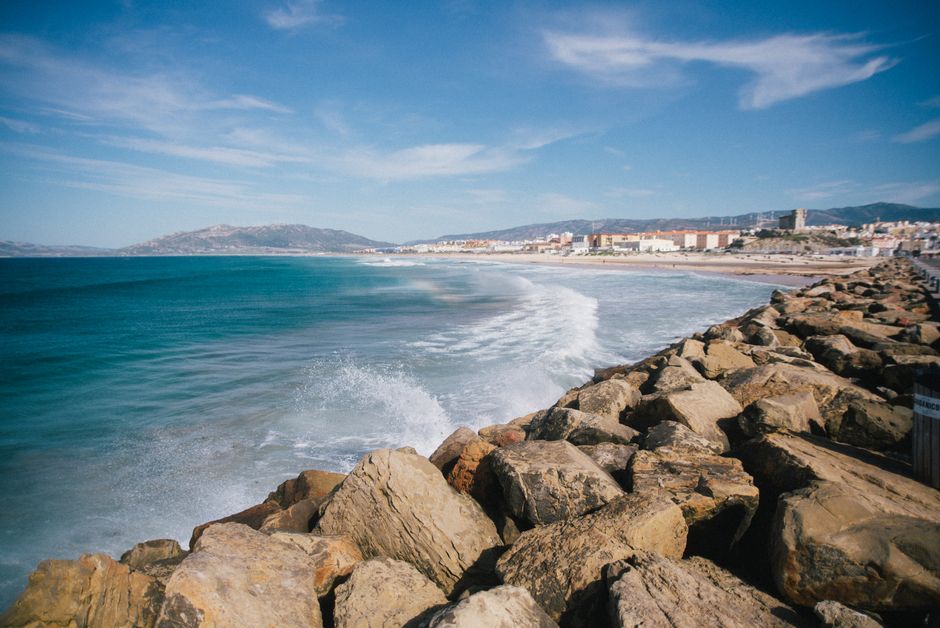
Tarifa is the southernmost town of mainland Europe, a whitewashed old town inside Moorish walls at the point where the Atlantic meets the Mediterranean. Africa is only 14 km away across the Strait of Gibraltar, and on clear days the mountains of Morocco seem close enough to touch. The wind that blows here most of the year has made Tarifa one of Europe’s capitals of kitesurfing and windsurfing, and the coast to the north-west is a string of wild, sandy beaches backed by pine woods and dunes, with a Roman town on the sand at Bolonia. Add dolphins and whales in the Strait, ferries to Tangier and a relaxed surf-town feel, and it is easy to stay longer than planned. Tarifa is about 1 hour 40 minutes by road from Cádiz. The best months are May, June, September and October.
Right now in Tarifa
- Wed19–24°C67–74°F3 mm rain
- Thu18–25°C64–78°FMostly clear
- Fri19–21°C66–70°F10 mm rain
- Mon 12 Oct National Day of Spain (Fiesta Nacional de España)
Top tours in Tarifa
See all tours for Tarifa →
From local operators, with prices and reviews; you check availability and book on Viator, our partner. We may earn a commission at no extra cost to you. How we earn money
Tarifa at a glance
- Best for: kitesurfing and windsurfing, long wild beaches, Roman ruins at Baelo Claudia, whale and dolphin watching, birdwatching, a day trip to Tangier and a laid-back old town.
- How long: 2 days for the old town, the castle and Bolonia; 4–5 days for the beaches, a whale-watching trip and Tangier; a week or more for a kite course.
- Best time: May–June and September–October. July and August are busy and the beaches crowded; winter is mild but windy and wet at times.
- Getting there: Gibraltar airport is the closest, about 45 km away; Jerez, Málaga and Seville have more flights. Buses run from Algeciras, Cádiz and Seville. There is no railway.
- Getting around: on foot in town; a car, bike or the summer buses for the beaches along the coast road.
- Before you go: entry rules, money, trains and general safety are on our Spain travel guide.
Tarifa’s areas and who each one suits
Tarifa municipality is large, stretching some 40 km along the coast from the town to beyond Bolonia, with most hotels in the town or along the N-340 coast road.
The old town
Inside the walls, entered through the Puerta de Jerez, the old town is a maze of white lanes, small squares, the church of San Mateo and the castle, with tapas bars, boutiques and restaurants. Small hotels and apartments are atmospheric but parking is impossible. Best for couples and anyone without a car; it is lively in summer until late.
Los Lances and the new town
Just north-west of the old town, the long Los Lances beach begins, lined by a protected natural area. Behind it, the newer streets around Calle Batalla del Salado have kite schools, surf shops, cafés and more modern hotels and apartments. Good for kitesurfers who want to walk to the beach and the old town.
The coast road to Valdevaqueros and Punta Paloma
The N-340 runs north-west past kite hotels, campsites and beach clubs set in the pine woods behind Los Lances and Valdevaqueros, below the great sand dune of Punta Paloma. This is where the kite scene lives. Best for active travellers and families with a car; quiet in winter, busy in summer.
Bolonia
About 20 km north-west of the town, the tiny village of Bolonia sits on a sheltered bay beside the ruins of Baelo Claudia, with a few guesthouses and fish restaurants. Perfect for a slow beach holiday and for families who want sand and calm water when the wind allows; you need a car.
Top things to see in Tarifa
Prices and hours below were checked on the official sites in October 2026, unless we say otherwise; check again before you go.
The Castle of Guzmán el Bueno
Built in 960 on the orders of the Caliph of Córdoba, Abd al-Rahman III, this fortress guarded the Strait for centuries. It takes its name from Alonso Pérez de Guzmán, who defended Tarifa against a siege in 1294 and, according to legend, threw down his own knife rather than surrender the town to save his captive son. Walk the battlements for views across to Africa, and see the interpretation centre on Tarifa’s history. It is run by the town council. As of October 2026 entry costs €4 for adults, €2.50 for ages 12–18 and €1.50 for students, over-65s and large families; under-12s go free. A ticket including the town walls costs €5. It opens Wednesday to Sunday, 10:00–16:00 (last entry 15:15) and closes on Mondays and Tuesdays; a guided tour starts at 12:00, and entry is free on Sundays in the last two hours of opening.
The old town, San Mateo and the Mirador del Estrecho
Enter through the Puerta de Jerez, the main gate of the medieval walls, and wander through the old town to the church of San Mateo, with its Baroque façade and Gothic interior, and the Plaza de Santa María with its tiled fountain. Next to the castle, the Mirador del Estrecho viewpoint looks over the port, the Isla de las Palomas and the Moroccan coast. In the evening the squares fill with tables and the bars stay open late in summer.
Punta de Tarifa and the Isla de las Palomas
A causeway from the port runs out to the Isla de las Palomas, the southern tip of continental Europe, with the Mediterranean on one side and the Atlantic on the other; a sign marks the meeting of the two seas. You can walk the causeway and its seafront path freely, with views of both beaches. The island itself, with its lighthouse, old fortifications and military buildings, is part of the Estrecho Natural Park and is not open for free access: entry is only on guided visits arranged through the town’s interpretation centre and tourist office, when they are running. Ask at the tourist office on the Paseo de la Alameda for dates.
Baelo Claudia
On the beach at Bolonia lie the remains of a Roman town founded in the 2nd century BC, which grew rich on salted fish and garum sauce, traded across the Strait with what is now Tangier. You can see the forum, temples to Jupiter, Juno and Minerva, a theatre, the basilica, an aqueduct and the fish-salting tanks right by the sea, after a small museum at the entrance. The site is run by the Junta de Andalucía. As of October 2026 entry is free for EU citizens with ID and €1.50 for everyone else. From 21 September to 20 March it opens Tuesday to Saturday 9:00–18:00 and on Sundays and holidays 9:00–15:00; from 21 March to 20 June until 21:00, and from 21 June to 20 September only 9:00–15:00. It is closed on Mondays, except a few holiday Mondays (in 2026: 12 October, 2 November and 7 December), and last entry is 30 minutes before closing. During works on the reception area, the entrance is from the south car park by the beach. No booking is needed for individuals.
Bolonia beach and dune
The bay of Bolonia is one of the most beautiful beaches in Spain: almost 4 km of white sand and clear water, with no buildings except the little village. At its western end, the Duna de Bolonia, a natural monument, is a huge, moving dune of white sand about 30 m high that is slowly burying the pine wood behind it. Climb it by the marked access for views over the bay to Africa, and keep off fenced areas, where plants are fixing the sand. Parking is limited in summer; arrive early.
More to see
- Los Lances: a 7 km beach next to the town, within a protected natural area, busy with kites when the wind blows.
- Valdevaqueros and Punta Paloma: a kite beach under a giant sand dune, with beach bars in the pines.
- Mirador del Estrecho on the N-340: a roadside viewpoint about 7 km east of town with a sweeping view over the Strait to the Rif mountains.
- Torre de la Peña: a 16th-century watchtower above the coast road, built to warn of pirate raids.
- Ermita de la Virgen de la Luz: the shrine of Tarifa’s patron saint, in the countryside north of town.
Other things to do in Tarifa
Kitesurfing, windsurfing and the winds
Two winds rule Tarifa. The Levante, from the east, is hot, dry and gusty; it can blow strongly for days, especially in summer, and blows offshore at Los Lances, which makes it dangerous for beginners. The Poniente, from the west, is cooler, steadier and blows onshore, ideal for learning. Dozens of schools on Los Lances and Valdevaqueros teach kitesurfing and windsurfing to all levels; book a certified school and take lessons rather than renting alone. In the summer bathing season, kites must stay in the marked launch and sailing zones. Wingfoil and surfing are popular too, and on calm days the beaches belong to swimmers. See our surfing guide.
Whale and dolphin watching
The Strait is one of the best places in Europe to see cetaceans. Boats leave Tarifa port for trips of about two to three hours, and common and striped dolphins and long-finned pilot whales live here all year; sperm whales are usually seen in spring and summer, and orcas follow the tuna in July and August. Spanish law (Royal Decree 1727/2007) sets the rules: boats must stay out of a 60 m exclusion zone around the animals and approach slowly, swimming or diving within that zone is forbidden, and so is feeding them. Choose an operator that respects these rules. Trips are cancelled when the Levante blows hard, so keep a spare day. See our boat trips guide.
Beaches and snorkeling
From Los Lances to Bolonia the beaches are long, wide and natural, with fine white sand and few buildings. The Atlantic here is cool, often 18–20 °C even in summer, because of the currents in the Strait. On windy days head for the Chica beach by the causeway, sheltered on the Mediterranean side, or for Bolonia. The rocky coves around Punta Paloma and near the Isla de las Palomas have good snorkeling on calm days. See our beaches and snorkeling guides.
Hiking and birdwatching in the Estrecho Natural Park
The Estrecho Natural Park protects the coast and the sea from Cape Trafalgar to near Algeciras. Trails follow the cliffs between Tarifa and Algeciras and climb the hills of the Sierra de la Plata above Bolonia. Every spring and autumn hundreds of thousands of storks, eagles, kites and vultures cross the Strait between Europe and Africa, best seen from August to October from the viewpoints along the N-340. See our hiking guide.
Day trips and onward travel
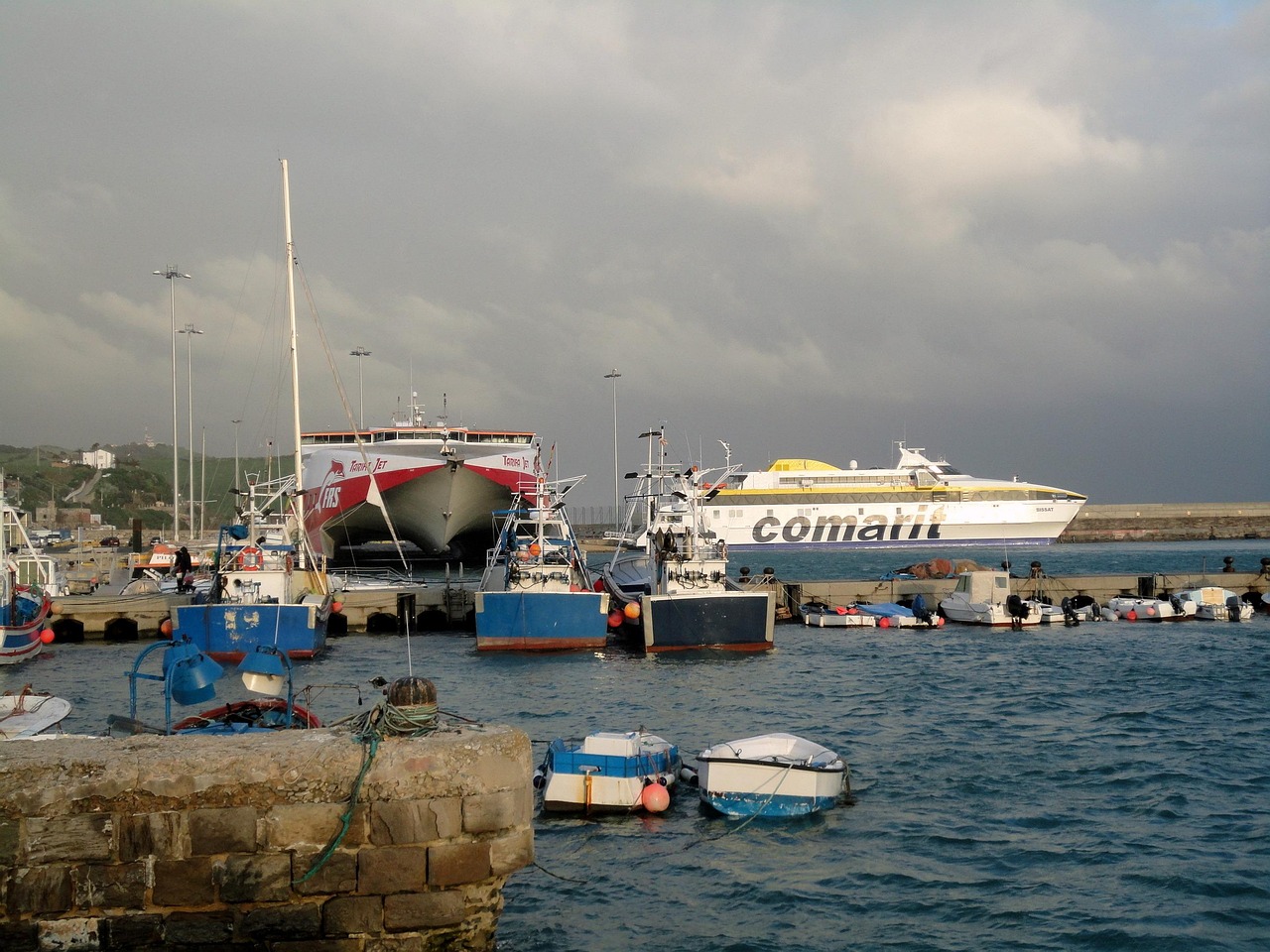
Tangier by ferry
Fast ferries cross from Tarifa port to Tánger Ville, the port in the heart of Tangier, in about an hour. Since May 2025 the line has been run by Baleària, which won the concession from the Port Authority of the Bay of Algeciras, with several crossings a day; book on the operator’s site and check times, as sailings are cancelled in strong Levante. You need a passport, not just an ID card: the UK government advises that it must be valid for at least three months after you arrive, and UK citizens need no visa for tourist stays of up to 90 days. Other nationalities should check their own government’s advice. A day trip lets you see Tangier’s medina, kasbah and the café terraces looking back at Spain; take Moroccan dirhams or a card for small purchases.
Cádiz, Vejer and the Costa de la Luz
North-west along the coast lie Zahara de los Atunes, famous for its bluefin tuna, the hilltop white town of Vejer de la Frontera and the surf beach of El Palmar. Further on, Cádiz is about 1 hour 40 minutes by car, and Seville about 2 hours 30 minutes. East, Algeciras is 20 km away and Gibraltar about 45 km; the Costa del Sol and Málaga are about 2 hours away.
Nearby destinations
- Tangier33 km
- Cádiz85 km
- Marbella85 km
- Costa del Sol85 km
- Ronda89 km
- Chefchaouen99 km
- Málaga132 km
- Seville157 km
Getting there and getting around
By air
Gibraltar airport is the closest, about 45 km and 45 minutes by road, with flights from the UK; you cross the border on foot into La Línea de la Concepción, so carry your passport. Jerez airport (XRY) is about 1 hour 30 minutes by car, and Málaga (AGP) and Seville (SVQ) about 2 hours and 2 hours 30 minutes, with far more flights. A hire car is the easiest option from all of them; by public transport, connect by bus via Algeciras or Cádiz.
By bus and train
Tarifa’s bus station is on the edge of the new town, a short walk from the old town. Line M-150 of the Campo de Gibraltar transport consortium, run by Transportes Generales Comes, links Tarifa and Algeciras several times a day, and Comes coaches also run to Cádiz and Seville. Tarifa has no railway; the nearest station is Algeciras, but trains on the Algeciras–Bobadilla line have been suspended since February 2026 for works, and Renfe runs replacement buses until they reopen.
Driving and parking
The N-340 coast road links Tarifa with Algeciras and Cádiz. In summer, beach parking at Valdevaqueros, Punta Paloma and Bolonia fills early, and the narrow road down to Bolonia can be slow. Leave the car at your hotel or in the car parks outside the walls and walk in; the old town is closed to most traffic.
When to go and how long to stay
Tarifa has a mild, breezy Atlantic climate: summers warm rather than hot, and winters very mild with some rainy spells. There is no AEMET climate normal for Tarifa itself, so the table uses AEMET’s 1991–2020 normals for the Cádiz observatory, the nearest coastal station with published normals, about 80 km north-west: average daily highs and lows, and days with at least 1 mm of rain. Tarifa has similar temperatures but is much windier, and the sea in the Strait stays cooler.
| Season | Average high / low | Rainy days per month | What it’s like | Good for |
|---|---|---|---|---|
| Winter (Dec–Feb) | 16–17 °C / 10–11 °C | 6–7 | Mild, with rainy spells and strong winds; many beach bars close | Quiet walks, wave sports, low prices |
| Spring (Mar–May) | 19–23 °C / 12–17 °C | 3–6 | Fresh and sunny, flowers in the park; bird migration | Hiking, birdwatching, whale watching |
| Summer (Jun–Aug) | 26–28 °C / 20–22 °C | 0–1 | Warm, dry and windy, with long Levante spells; busy | Kitesurfing, beaches, orcas and dolphins |
| Autumn (Sep–Nov) | 26 °C falling to 20 °C / 21 °C falling to 13 °C | 3 in September, 7 in November | Warm sea in September, fewer people; rain returns in November | Beaches, kite courses, bird migration |
The Cádiz observatory averages about 522 mm of rain a year on 51 days, almost all between October and April. In Tarifa, the wind matters more than the rain: check the Levante and Poniente forecast before planning beach days and boat trips.
Events worth planning around
- Spring and late summer: the great bird migration over the Strait, at its peak from August to October.
- Summer: the busiest kite season, with competitions and beach parties when the wind is right.
- Early September: Tarifa’s fair and the festivities of its patron, the Virgen de la Luz, with a local holiday on 8 September.
How long to stay: 2, 4 and 7 days
2 days: day one, the castle, the old town and a walk to Punta de Tarifa, then sunset on Los Lances; day two, Baelo Claudia, the dune and a swim at Bolonia.
4 days: add a whale-watching trip and a day in Tangier. 7 days: add a kitesurf or windsurf course, a hike in the natural park and a drive to Vejer and Cádiz.
Where to stay in Tarifa and the tourist tax
- Old town: small hotels and apartments with character, close to bars and restaurants; noisy on summer nights.
- New town and Los Lances: modern rooms near the beach and kite schools, walkable to everything.
- Coast road: kite hotels, campsites and rural lodges in the pines towards Valdevaqueros; best with a car.
- Bolonia: a few guesthouses by the beach; peaceful and remote.
Book well ahead for July, August and long weekends, when prices rise steeply. There is no tourist tax in Tarifa or anywhere else in Andalusia as of October 2026; check again if you are booking for 2027.
Practical tips for Tarifa
- Watch the wind: strong Levante can sandblast the beaches; move to the Chica beach, Bolonia or the old town on those days.
- Take your passport for Tangier: an ID card is not enough to enter Morocco.
- Castle days: the castle is closed on Mondays and Tuesdays.
- Respect the dunes: stay on marked paths and boardwalks in the natural park, and do not take sand or plants.
- Swim with care: currents can be strong on the Atlantic beaches; swim where there are lifeguards and keep away from the kite zones.
- Emergencies: call 112.
What to pack for Tarifa
Wind decides what you wear here: bring a windproof jacket and a warm layer even in summer, sunglasses that stay on, a cap rather than a wide-brimmed hat, and high-factor sunscreen, because the breeze makes the sun feel weaker than it is. For the beaches, pack a swimsuit and a towel; the water is cool, so kitesurfers and windsurfers wear wetsuits most of the year (schools lend them). Sandals and sturdy shoes for the old town’s cobbles and the dune, binoculars for birds and whales, and a passport if you plan to visit Tangier complete the list.
Tarifa travel FAQ
Is Tarifa good for beginners at kitesurfing?
Yes, with lessons from a certified school. Learn in the Poniente, the gentler onshore west wind; the strong east wind, the Levante, blows offshore at Los Lances and is risky for beginners.
How much does the Tarifa castle cost?
As of October 2026, €4 for adults, €2.50 for ages 12–18 and €1.50 for students and over-65s; under-12s go free. It opens Wednesday to Sunday, 10:00–16:00, and is free on Sundays in the last two hours.
Is Baelo Claudia free?
Yes for EU citizens with ID; others pay €1.50 as of October 2026. From late September to late March it opens Tuesday to Saturday 9:00–18:00 and Sundays and holidays 9:00–15:00, and it closes on most Mondays.
Can you visit the Isla de las Palomas?
You can walk the causeway to Punta de Tarifa freely, but the island itself is a military and protected area, visited only on guided tours arranged through the town’s interpretation centre and tourist office when they run.
How long is the ferry from Tarifa to Tangier?
About an hour, from Tarifa port to Tánger Ville in the centre of Tangier. Baleària runs the line, and you need a passport; check sailings, which stop in strong winds.
When can you see whales in Tarifa?
Dolphins and pilot whales all year, sperm whales mostly in spring and summer, and orcas in July and August. Trips are cancelled in strong Levante winds, so allow a spare day.
What is the nearest airport to Tarifa?
Gibraltar, about 45 km away; walk across the border to La Línea and continue by car or bus. Jerez, Málaga and Seville have more flights but are 1 hour 30 minutes to 2 hours 30 minutes away by road.
Is there a tourist tax in Tarifa?
No. As of October 2026 Andalusia does not charge a tourist tax.
Is Tarifa too windy for a beach holiday?
Sometimes. The wind blows on most days, and strong Levante spells can last several days. Choose sheltered beaches such as the Chica beach or Bolonia, or come in late spring or September, when calm days are more common.
Plan your trip
Partner links: TravelerCenter may earn a commission if you book, at no extra cost to you.
🇪🇸 Useful Spanish phrases for Tarifa
All 38 Spanish phrases: restaurant, hotel, emergencies, romance (printable) →
Sources · last reviewed 4 October 2026
Researched and last reviewed on 4 October 2026. Castle prices and hours: the Castle of Guzmán el Bueno’s official site (Tarifa Town Council); Baelo Claudia: the Junta de Andalucía’s museums network; whale-watching rules: Royal Decree 1727/2007 in the BOE; Tarifa–Algeciras bus: the Campo de Gibraltar transport consortium; replacement buses on the railway: Renfe; passport and visa advice for Morocco: the UK government; climate: AEMET’s 1991–2020 normals for the Cádiz observatory, published through the WMO. The ferry operator and crossing time, access to the Isla de las Palomas, wind and kite-zone rules, cetacean seasons, sea temperatures, road distances and event dates come from the operators’ and other secondary sources and are flagged for checking. Prices, hours and timetables change, so check the official sites before you go. For entry rules, money and general safety, see our Spain travel guide.
Data: Weather: MET Norway (CC BY 4.0) · Sea temperature: NOAA CoastWatch · Air quality: OpenAQ · Rates: ECB · Holidays: Nager.Date · Costs: World Bank ICP and price levels · Wikidata (CC0)