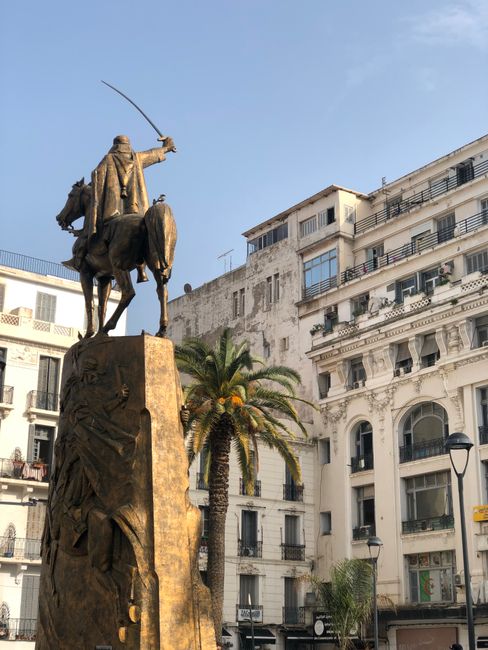
Algeria is Africa’s largest country and one of the Mediterranean’s least-visited treasures, a land where few tourists go but where the rewards are extraordinary. Along the northern coast, the white capital, Algiers, rises above its bay, with the labyrinthine Casbah, a UNESCO World Heritage Site, at its heart. Nearby, the Roman ruins of Tipasa stand among pines beside the sea, and in the eastern highlands, Djémila and Timgad are among the best-preserved Roman towns anywhere, with hardly another visitor in sight. Constantine spans a dramatic gorge on a series of bridges, Oran is a lively port and the home of raï music, and Tlemcen preserves some of the finest Islamic architecture in North Africa. South of the Atlas Mountains begins the Sahara, which covers more than four-fifths of the country: the fortified towns of the M’Zab Valley around Ghardaïa, the red ksar of Timimoun among the dunes, the volcanic peaks of the Hoggar near Tamanrasset, and the sandstone forests and prehistoric rock art of Tassili n’Ajjer near Djanet. Algeria takes planning: almost all visitors need a visa, usually from a consulate in advance, though organized Saharan tours can now use a visa on arrival; tourism infrastructure is limited; and Saharan travel goes through licensed agencies. But travelers who make the effort find warm hospitality, uncrowded heritage sites and some of the most spectacular desert landscapes on Earth.
Right now in Algeria
- Wed 23–31°C 74–88°F Partly cloudy
- Thu 21–27°C 70–81°F 4 mm Cloudy
- Fri 20–25°C 68–78°F Clear
Weather: MET Norway (CC BY 4.0)
Multi-day tours of Algeria
Multi-day tours from local operators. You check dates and book on Viator, our partner; we may earn a commission at no extra cost to you. How we earn money
Algeria at a glance
Algeria covers about 2.38 million km² (919,600 square miles), making it the largest country in Africa, more than three times the size of Texas. A narrow, fertile coastal strip of about 1,200 km (750 miles) along the Mediterranean is backed by the Tell Atlas mountains and the high plateaus; south of the Saharan Atlas, the desert stretches about 2,000 km (1,250 miles) to the borders of Mali and Niger, with great sand seas (ergs), rocky plateaus and the volcanic massifs of the Hoggar, where Mount Tahat rises to about 3,000 m (9,850 ft). Most of Algeria’s roughly 47 million people live in the north. Algiers is the capital and largest city, followed by Oran and Constantine.
The official languages are Arabic and Tamazight (Berber), and Algerian Arabic (Darja) is the everyday language; French is widely understood in cities, business and tourism, and English is increasingly spoken by young people. Islam is the state religion, and almost all Algerians are Sunni Muslims. Algeria is on Central European Time (UTC+1) all year, with no daylight saving time. Electricity is 230 V, with European two-pin sockets.
A short history
The region was home to the Numidian kingdoms and then to Roman cities such as Timgad, Djémila and Tipasa, and later to Vandal, Byzantine and Arab rule; from the 11th century, Berber dynasties such as the Hammadids built cities including the Qal’a of Beni Hammad. From the 16th century, Algiers was an Ottoman regency and a powerful Mediterranean port. France took Algiers in 1830, and Algeria became independent on July 5, 1962. Since then, Algeria has relied heavily on oil and gas, and has only recently begun to promote international tourism, especially to the Sahara.
Algeria’s regions for travelers
- Algiers and the central coast: the capital, the Casbah, Tipasa, Cherchell and the Kabylie mountains.
- The east: Constantine, Djémila, Timgad, Sétif, Béjaïa, Annaba and the Aurès mountains.
- The west: Oran, Tlemcen and the coast toward the Moroccan border.
- The northern Sahara: Ghardaïa and the M’Zab Valley, Biskra, El Oued and Taghit.
- The Great South: Timimoun and the Gourara, Tamanrasset and the Hoggar, Djanet and the Tassili n’Ajjer.
Where to go: Roman ruins, Islamic cities and the Sahara
A first trip of 10 to 14 days typically combines Algiers and Tipasa with the eastern Roman sites and Constantine, or with a flight to the Sahara for a week-long tour of the Tassili n’Ajjer or the Hoggar. See our guide to:
- Algiers: the Casbah, Notre-Dame d’Afrique, the Martyrs’ Memorial, the Jardin d’Essai, the Great Mosque of Algiers, museums, the metro and day trips to Tipasa.
Tipasa and Cherchell
About 70 km (45 miles) west of Algiers, Tipasa is a Punic and Roman town whose ruins, including a theater, basilicas, villas and an amphitheater, stretch along the shore among pines and wildflowers. It was inscribed on the UNESCO World Heritage List in 1982 and inspired the writer Albert Camus. On a hill nearby stands the Royal Mausoleum of Mauretania, a huge circular tomb from the 1st century BC. Farther west, Cherchell, the ancient Caesarea, has an excellent museum of Roman sculpture.
Djémila and Timgad
In the eastern highlands, Djémila (ancient Cuicul), set on a ridge northeast of Sétif, has forums, temples, a theater, baths and mosaics, with a superb museum. Timgad, near Batna, was founded by Emperor Trajan around 100 AD as a military colony; its perfect grid of streets, its triumphal arch and its theater are among the finest examples of Roman town planning. Both were inscribed on the UNESCO list in 1982.
Constantine
Perched on a rock plateau above the deep gorge of the Rhumel River, Constantine is one of the world’s most dramatic cities, linked by a series of bridges, including the suspension bridge of Sidi M’Cid, high above the gorge. Visit the Palace of Ahmed Bey, the old medina and the Monument to the Dead, and walk the paths along the gorge.
Oran and Tlemcen
Oran, Algeria’s second city, is a lively Mediterranean port with a Spanish and French past, the hilltop Santa Cruz fort and chapel, a buzzing seafront and a strong music scene; it’s the birthplace of raï. Inland, Tlemcen was a great center of Islamic learning, with the Great Mosque, the Sidi Boumediene mosque and madrasa, and the ruins of the medieval walled city of Mansourah.
Béjaïa and Kabylie
East of Algiers, the green mountains of Kabylie and the Djurdjura range have Berber villages, forests and hiking trails. On the coast, Béjaïa has a fine bay, an old kasbah and the cliffs of the Gouraya National Park.
Ghardaïa and the M’Zab Valley
About 600 km (370 miles) south of Algiers, the five fortified hilltop towns of the M’Zab Valley, founded from the 11th century, are a UNESCO World Heritage Site (1982) admired by modern architects for their simple, functional design. Ghardaïa has a busy market square, and nearby Beni Isguen is a traditional walled town; visits to the towns are with local guides only, who explain the strict local customs, including dress rules and restrictions on photography.
Timimoun and the Gourara
In the southwest, Timimoun is an oasis town of red mud-brick buildings at the edge of the Grand Erg Occidental, surrounded by palm groves irrigated by ancient underground channels (foggaras), salt lakes and abandoned ksour (fortified villages). It’s one of the most beautiful parts of the Sahara and a popular destination for winter tours.
Annaba and the Qal’a of Beni Hammad
In the far northeast, Annaba is a pleasant port city with beaches, the ruins of ancient Hippo Regius, where Saint Augustine was bishop, and the hilltop Basilica of Saint Augustine. In the highlands southeast of Algiers, the Qal’a of Beni Hammad, founded in 1007 as the first capital of the Hammadid dynasty, has the ruins of a great mosque with a tall minaret and palaces in a mountain setting; it was Algeria’s first UNESCO World Heritage Site, inscribed in 1980.
Taghit and the northwestern Sahara
South of the Atlas in the west, the oasis of Taghit, near Béchar, is a small ksar of mud-brick houses beneath towering golden dunes of the Grand Erg Occidental, with palm groves and rock engravings nearby. It’s one of the easiest places to see the Sahara from the north and is busy with Algerian visitors at New Year. Farther south, Béni Abbès is another beautiful oasis on the edge of the dunes.
Tassili n’Ajjer and Djanet
In the southeast, Tassili n’Ajjer is a vast sandstone plateau of rock arches, canyons and stone “forests,” famous for more than 15,000 prehistoric rock paintings and engravings of elephants, giraffes, cattle and people from a time when the Sahara was green. It’s both a UNESCO World Heritage Site (1982) and a national park. The oasis of Djanet is the base for treks and 4×4 tours to the plateau and the dunes of Tadrart Rouge, and each year it hosts the traditional Sebiba festival.
Tamanrasset and the Hoggar
Tamanrasset, the capital of the far south, is the gateway to the Hoggar (Ahaggar) mountains, a landscape of volcanic peaks and basalt columns. The highlight is the Assekrem plateau, at about 2,700 m (8,860 ft), where the hermitage of Charles de Foucauld looks out over a sea of peaks; tours drive up to watch the sunset and sunrise.
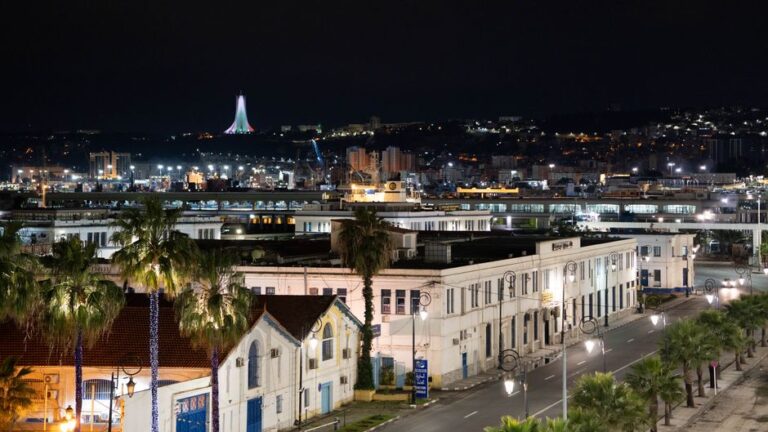
Algiers Travel Guide
Plan a trip to Algiers: the UNESCO-listed Casbah, Ketchaoua Mosque and Place des Martyrs, Notre-Dame d'Afrique, the Martyrs' Memorial, the Jardin d'Essai, the Great…
Best time to visit Algeria
The best time to visit depends on where you go. In the north, spring (March to May) and autumn (September to November) are ideal, with warm, sunny days; summers on the coast are hot and humid, with highs around 32–33 °C (90–91 °F) in Algiers, and winters are mild but rainy, with snow on the mountains. The inland highlands around Constantine and Sétif are much colder in winter and hotter in summer. In the Sahara, the season runs from about October to April: days are warm and sunny, but nights can drop close to freezing from December to February, especially at altitude in the Hoggar and the Tassili. From May to September, the desert is extremely hot, with highs of 40–45 °C (104–113 °F) in places such as Timimoun, and most tours stop. Sandstorms can occur in spring. The table shows rounded average daily highs and lows and annual rainfall from Algeria’s National Meteorological Office (ONM), as published by the World Meteorological Organization (WMO) in its 1991–2020 climate normals.
| Region (ONM station) | January high / low | July high / low | Rain a year |
|---|---|---|---|
| Algiers and the central coast (Algiers–Dar El Beïda) | 17 °C (63 °F) / 6 °C (42 °F) | 32 °C (90 °F) / 19 °C (67 °F) | about 600 mm (24 in) |
| The west (Oran) | 17 °C (63 °F) / 5 °C (42 °F) | 32 °C (89 °F) / 20 °C (69 °F) | about 355 mm (14 in) |
| The eastern highlands (Constantine) | 12 °C (54 °F) / 2 °C (36 °F) | 35 °C (95 °F) / 18 °C (65 °F) | about 500 mm (20 in) |
| The M’Zab (Ghardaïa) | 17 °C (62 °F) / 6 °C (43 °F) | 41 °C (106 °F) / 28 °C (82 °F) | about 75 mm (3 in) |
| The Gourara (Timimoun) | 19 °C (67 °F) / 5 °C (41 °F) | 45 °C (114 °F) / 29 °C (83 °F) | about 20 mm (1 in) |
| The Hoggar (Tamanrasset) | 20 °C (69 °F) / 5 °C (41 °F) | 36 °C (97 °F) / 23 °C (74 °F) | about 60 mm (2 in) |
| The Tassili (Djanet) | 20 °C (67 °F) / 4 °C (38 °F) | 38 °C (101 °F) / 24 °C (75 °F) | under 20 mm (under 1 in) |
Algeria month by month
| Month | Weather | Highlights | Crowds and prices |
|---|---|---|---|
| January | Mild and wet on the coast; cold nights in the desert | Desert tours; Yennayer, the Amazigh New Year (January 12) | Low in the north; Saharan season |
| February | Cool and showery in the north | Saharan treks; almond blossom in the north | Saharan season |
| March | Spring arrives; warm desert days | Roman sites in wildflowers | Popular |
| April | Pleasant everywhere | Best month for the north and the desert edge | Popular |
| May | Warm; desert getting hot | Coast and Kabylie | Moderate |
| June | Hot; beach season starts | Coastal towns | Domestic holidays begin |
| July | Hot and humid on the coast; extreme heat in the south | Beaches; Independence Day (July 5) | Busy with domestic tourists |
| August | Hottest month on the coast | Beaches and summer festivals | Very busy on the coast |
| September | Warm; first storms | Pleasant for the north | Moderate |
| October | Mild; desert season begins | Roman sites and the M’Zab | Popular |
| November | Cooler; rain in the north | Revolution Day (November 1); Saharan tours | Saharan season |
| December | Mild, rainy coast; cold desert nights | Year-end desert tours in Djanet and Timimoun | Busy in the Sahara |
Festivals and public holidays
National holidays include New Year’s Day, Yennayer (the Amazigh New Year, January 12), Labor Day (May 1), Independence Day (July 5), Revolution Day (November 1), and the Islamic holidays of Eid al-Fitr, Eid al-Adha, the Islamic New Year, Ashura and the Prophet’s Birthday, whose dates follow the lunar calendar. During Ramadan, which next begins in February 2027, restaurants close by day and life shifts to the evening. In the Sahara, the Sebiba festival in Djanet, held at Ashura, features drumming and dancing, and Timimoun’s Sbou festival marks the Prophet’s Birthday with pilgrimages to local shrines.
How long to stay: sample itineraries
- 5 days: Algiers (3 nights), with a day trip to Tipasa and the Royal Mausoleum, and a day in the Casbah.
- 10 days: Algiers and Tipasa (3 nights), then fly or take the train to Constantine (2 nights), with day trips to Djémila and Timgad, and finish in Oran or Tlemcen (3 nights).
- Saharan week: fly from Algiers to Djanet or Tamanrasset for a 6–8 day organized tour of the Tassili n’Ajjer or the Hoggar, from October to April.
- 2 weeks: combine Algiers, the eastern Roman sites, Ghardaïa and a Saharan tour from Timimoun or Djanet.
- Combine with neighbors: Algiers has flights to Tunis; see our Tunisia travel guide and Tunis guide.
Entry, money and costs
The tourist visa (last reviewed October 2026)
Almost all visitors, including citizens of the US, Canada, the UK, the EU and Australia, need a visa to visit Algeria. The standard route is a consular visa obtained before travel from the Algerian embassy or consulate responsible for your place of residence, which will list the documents required, usually including proof of accommodation (a hotel booking or a host’s certificate), travel insurance and your itinerary or invitation. Allow several weeks. Your passport should be valid for at least six months after arrival. Check the dates on your visa carefully: according to the UK government, overstaying can lead to detention at the airport and prosecution; extensions are handled by the local wilaya (provincial) administration.
The Saharan visa on arrival
To promote desert tourism, Algeria offers a visa on arrival (officially a “regularization visa”) to tourists traveling on organized trips with an approved Algerian travel agency to the Great South, according to announcements by Algeria’s Ministry of Foreign Affairs. It applies only to trips to the southern wilayas, including Tamanrasset, Djanet, Illizi, Adrar, Timimoun, Béchar, Béni Abbès, In Salah and Touggourt. The agency submits your details through a digital platform run by the Ministry of Tourism, and once approved, sends you an authorization with a QR code, which lets you board a flight to the south, either directly or via an international airport in the north. The visa, valid for up to 30 days, is issued on arrival, and the visa fee is paid on arrival. Trips to other parts of the country, and independent travelers without an agency, need a standard consular visa. Book with a licensed agency well in advance, especially for the December holidays.
Health requirements
Algeria requires a yellow fever vaccination certificate only from travelers aged 9 months and over arriving from a country with yellow fever risk, including after airport transits of more than 12 hours there, according to the US CDC, which doesn’t recommend the vaccine for Algeria itself. Algeria was certified malaria-free by the World Health Organization in 2019.
Customs and currency rules
Declare foreign currency on arrival if you carry more than the equivalent of €5,000, and keep exchange receipts and your declaration to take unused currency out again. Only residents may import or export Algerian dinars, up to DZD 10,000. According to the UK government, it’s illegal to bring drones, binoculars, telescopes and certain photography equipment into Algeria without authorization, so check with Algerian customs before packing them. Buying antiquities is illegal; get proof of authenticity for anything that looks old.
Money and cards
The currency is the Algerian dinar (DZD, written DA). On October 5, 2026, the Bank of Algeria’s rate was about DZD 133.6 to the US dollar and DZD 151.2 to the euro. Algeria is mostly a cash economy: international cards are accepted only in larger hotels, some airlines and a few shops, and ATMs that take foreign cards are limited. Bring euros or US dollars in cash and change them at banks, licensed exchange offices or hotels, keeping the receipts. Saharan tours are often paid in euros, by transfer or in cash.
Tipping
Service is sometimes included in restaurant bills; otherwise, rounding up or leaving about 10% is appreciated. On Saharan tours, a tip for the guide, cook and drivers is customary at the end of the trip.
What a trip costs
Prices are approximate, for October 2026, converted at about DZD 133.6 to the US dollar (Bank of Algeria).
| Item | Typical cost |
|---|---|
| Coffee or mint tea in a café | DZD 100–250 (about US$0.75–1.90) |
| Local meal (couscous, chorba, grilled meat) | DZD 800–1,800 (about US$6–13) |
| Mid-range restaurant dinner | DZD 2,500–5,500 (about US$19–41) |
| Algiers metro or tram ticket | about DZD 50–70 (about US$0.40–0.50) |
| Domestic flight, Algiers to Djanet or Tamanrasset, one way | about DZD 20,000–45,000 (about US$150–340) |
| Organized Saharan tour, per person per day, all-inclusive | about DZD 13,000–27,000 (about US$100–200) |
| Mid-range hotel double, per night | DZD 12,000–27,000 (about US$90–200) |
Getting there and getting around
By air and sea
Most visitors arrive at Houari Boumediene International Airport (ALG) in Algiers, about 20 km (12 miles) east of the center, with flights from Europe, the Middle East, Turkey and North Africa, including Paris, Marseille, Lyon, Madrid, Barcelona, Istanbul, Dubai, Doha, Cairo and Tunis. Oran and Constantine also have international flights, mainly from France and Spain. Ferries link Algiers, Oran, Béjaïa and other ports with Marseille and Alicante. The land border with Morocco is closed; land crossings to Tunisia exist but are used mainly by local traffic.
Domestic flights
Distances are vast, so domestic flights are the practical way to reach the Sahara: Air Algérie and other carriers link Algiers with Oran, Constantine, Ghardaïa, Timimoun, Tamanrasset, Djanet, Illizi and other cities. Saharan tour operators usually coordinate flights with their programs.
Trains, buses and shared taxis
The national railway, SNTF, runs trains along the north, including Algiers–Oran and Algiers–Constantine, and to some cities on the edge of the Sahara; trains are inexpensive and comfortable on the main lines. Long-distance buses and shared taxis connect most towns. Algiers, Oran and Constantine have modern tram lines, and Algiers has a metro; see our Algiers guide.
Driving and the desert
Algeria drives on the right. Main roads are generally good, but the accident rate is high, lane discipline is poor, and minor roads may have potholes and no lighting, so avoid driving at night outside towns. Expect frequent police and military checkpoints: slow down, follow instructions and have your passport ready. In the Great South, travel is with licensed agencies, guides and 4×4 vehicles, and independent driving in the desert is not permitted in many areas.
Booking a Saharan tour
A typical Saharan trip lasts five to ten days and is run by a licensed agency in Djanet, Tamanrasset, Timimoun or Algiers. Prices usually include airport transfers, 4×4 vehicles with drivers, a local guide, a cook, camping equipment and all meals, with nights spent in tents or under the stars and sometimes in simple guesthouses. Treks on the Tassili plateau involve steep climbs and several days of walking, with donkeys carrying the gear. Ask the agency what’s included, whether it can arrange the visa on arrival, how many people share each vehicle, and what sleeping bags and water are provided. December and the New Year holidays fill up fast, so book several months ahead.
Culture, food and everyday etiquette
Food and drink
Algerian food blends Berber, Arab, Ottoman, Andalusian and French influences. The national dish is couscous, served with vegetables and lamb or chicken; try chorba (spiced soup, especially during Ramadan), chakhchoukha (torn flatbread in a rich sauce) in the east, rechta (fresh noodles) in Algiers, mhadjeb (stuffed flatbread), karantika (chickpea flan) and grilled merguez sausages. Desserts include makroud (date-filled semolina pastries) and baklava, and the Sahara is famous for its dates, especially deglet nour. Mint tea and strong coffee are drunk everywhere. Alcohol is available in some hotels and licensed restaurants in the cities, but not in many towns and in the south.
Music and culture
Algeria’s music ranges from chaâbi, the Algiers urban music, and Andalusian classical music to raï from Oran and Kabyle song. In the Sahara, the Tuareg play guitar-driven music and the imzad violin, an instrument whose practices are inscribed on UNESCO’s Intangible Cultural Heritage list.
Etiquette
- Greetings: shake hands with people of the same gender; wait for a woman to offer her hand first.
- Dress: dress modestly, especially outside central Algiers and Oran; cover shoulders and knees, and women may want a scarf for mosques and the M’Zab.
- Ramadan: don’t eat, drink or smoke in public in daylight; check opening hours.
- Photos: ask before photographing people, especially women, and never photograph military sites, police, checkpoints or government buildings.
- Hospitality: you may be invited for tea or a meal; accept graciously and bring a small gift such as pastries.
- ID: carry your passport on longer journeys and flights; hotels require it at check-in.
Safety, health and connectivity
Most visitors to Algiers, the northern cities, the Roman sites and the organized Saharan circuits have trouble-free trips. The authorities devote significant resources to the safety of foreign visitors, and there’s a visible security presence that can feel intrusive.
- Security arrangements: police may accompany foreign visitors or check their itineraries on some routes; carry your passport and keep your hotel or agency informed of your plans.
- Areas off the tourist routes: the border areas, especially in the south and east, and some rural mountain areas are off the tourist routes and closed to independent travel; Saharan trips go through licensed agencies on approved routes. Check the situation before you travel.
- City precautions: pickpocketing and petty theft occur in big cities; keep valuables out of sight, take taxis recommended by your hotel, and don’t accept lifts from strangers. Visit the Casbah of Algiers with a good local guide.
- Road safety: accident rates are high; avoid night driving and use reputable drivers.
- Heat and desert: in the Sahara, drink plenty of water, protect yourself from the sun, and pack warm layers for cold nights.
- Natural hazards: earthquakes occur in the north, including Algiers; flash floods can follow heavy rain; and wildfires are a risk in summer.
- Health: tap water is treated in cities, but bottled water is safer; medical care is better in private clinics, so carry travel insurance with evacuation cover.
- Emergencies: call 17 or 1548 for the police and 14 for the fire service and ambulances (Civil Protection, which also answers on 1021).
Connectivity: buy a prepaid SIM from Mobilis, Djezzy or Ooredoo with your passport, or use an eSIM; coverage is good in the north but patchy or absent in remote parts of the south.
Things to do: history, desert and coast
- Roman and historic sites: Tipasa, Djémila, Timgad, the Qal’a of Beni Hammad and the Casbah of Algiers. See our city sightseeing guide.
- Desert trekking: the Tassili n’Ajjer, the Hoggar and the dunes of Timimoun and Taghit. See our hiking guide.
- Rock art: guided treks to prehistoric paintings near Djanet.
- Beaches: the coasts of Tipasa, Béjaïa, Jijel and Oran, busiest in July and August. See our beaches guide.
- Diving and snorkeling: clear water along the coast of Béjaïa and Jijel. See our snorkeling guide.
- Mountains: hiking in Kabylie and the Djurdjura.
What to pack for Algeria
Modest clothing that covers shoulders and knees, a scarf for women visiting mosques and the M’Zab, comfortable walking shoes for ruins and medinas, a light rain jacket for the northern winter, and, for the Sahara, a wide-brimmed hat, sunglasses, high-factor sunscreen, a scarf or buff against sand, sturdy hiking shoes, a warm fleece and a sleeping-bag liner for cold desert nights. Bring euros or dollars in cash, copies of your passport and visa, and a European two-pin plug adapter, and leave drones and binoculars at home unless authorized. See our hiking shoes, rain jackets and travel adapters guides.
Algeria travel FAQ
Do I need a visa to visit Algeria?
Yes, almost all visitors need a visa, usually obtained in advance from the Algerian consulate responsible for their place of residence.
Can I get a visa on arrival in Algeria?
Only for organized trips to the Great South with an approved Algerian travel agency. The agency obtains a QR-coded authorization in advance, and the visa, valid for up to 30 days, is issued and paid for on arrival.
Which regions does the Saharan visa on arrival cover?
The southern wilayas, including Tamanrasset, Djanet, Illizi, Adrar, Timimoun, Béchar, Béni Abbès, In Salah and Touggourt. Trips elsewhere need a consular visa.
What is the best time to visit Algeria?
Spring and autumn for the north; October to April for the Sahara, when days are warm and nights cold.
Is there malaria in Algeria?
No. Algeria was certified malaria-free by the World Health Organization in 2019.
Do I need a yellow fever vaccine for Algeria?
Only if you arrive from a country with yellow fever risk, according to the US CDC.
What currency is used in Algeria?
The Algerian dinar (DZD), about DZD 133.6 to the US dollar in October 2026. Algeria is mainly cash-based, so bring euros or dollars to exchange.
Can I use credit cards in Algeria?
Only in larger hotels and some businesses. Bring cash and change it at banks or licensed exchange offices.
Can I bring a drone to Algeria?
Not without authorization. Drones, binoculars, telescopes and some photography equipment need prior permission from the authorities.
What are the top sights in Algeria?
The Casbah of Algiers, Tipasa, Djémila and Timgad, Constantine’s bridges, the M’Zab Valley, Timimoun, and the Tassili n’Ajjer and Hoggar in the Sahara.
How do I visit the Sahara in Algeria?
Book an organized tour with a licensed Algerian agency, which arranges permits, guides, vehicles and, if eligible, the visa on arrival.
Is Algeria safe for tourists?
Most visitors on standard routes have trouble-free trips. Expect a visible security presence, follow your guide’s and the authorities’ instructions, and check the situation before traveling outside the main areas.
How many days do I need in Algeria?
About a week for Algiers, Tipasa and the eastern Roman sites; two weeks to add a Saharan tour.
Sources and last review
Researched and last reviewed on 5 October 2026. The Saharan visa on arrival, its regions, the QR-code authorization, the 30-day validity and fee payment on arrival: Algeria’s Ministry of Foreign Affairs (announcements of the embassies in Brussels and Astana) and France’s foreign ministry; the consular visa, passport validity, overstays, cash and dinar rules, restricted equipment, the closed Moroccan border, security escorts, the Casbah guide advice, roads, checkpoints, natural hazards, Ramadan dates and emergency numbers: the UK government’s factual entry and safety pages, used for practical facts only; yellow fever: the US CDC; malaria-free status: the World Health Organization; UNESCO sites: the UNESCO World Heritage Center; the exchange rate: the Bank of Algeria; climate averages: Algeria’s National Meteorological Office via the World Meteorological Organization’s 1991–2020 normals. Area, population, history, attractions, festivals, holidays, transport, food and typical prices are general references or estimates, flagged for checking. Rules and prices change, so check the official sites before you go.
Plan your trip
Partner links: TravelerCenter may earn a commission if you book, at no extra cost to you.
🇪🇬 Useful Arabic phrases for Algeria
All 38 Arabic phrases: restaurant, hotel, emergencies, romance (printable) →