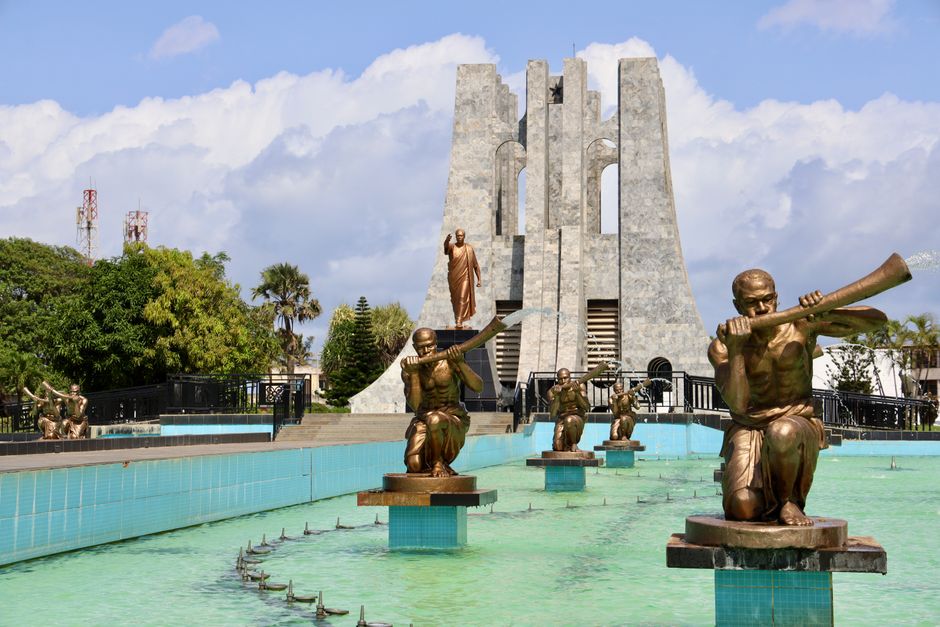
Ghana is one of the friendliest and most rewarding countries in West Africa, and for many travelers it’s the natural place to start exploring the region. Its Atlantic coast is lined with palm-fringed beaches, fishing villages and the great white forts and castles built by European traders, including Cape Coast Castle and Elmina Castle, which are part of a UNESCO World Heritage Site and among the most moving places in Africa to learn about the transatlantic slave trade. Inland, the rainforest of Kakum National Park has a canopy walkway high in the trees; Kumasi, the historic capital of the Ashanti kingdom, is a center of gold, kente cloth and royal tradition; the Volta Region has waterfalls, mountains and monkey sanctuaries; and in the savanna north, Mole National Park has elephants that wander past the lodge. Accra, the capital, is a buzzing, creative city of markets, art galleries, beach bars and some of the best food in West Africa. English is the official language, people are famously welcoming (“Akwaaba!” means welcome), and Ghana has a long record of stable democracy. Plan ahead for a few essentials: most visitors need a visa, now applied for online through the new e-visa portal; a yellow fever vaccination certificate is required for entry; malaria is present throughout the country; and road journeys take longer than the map suggests.
Right now in Ghana
- Wed 23–28°C 74–82°F 1 mm Partly cloudy
- Thu 23–29°C 74–84°F 7 mm Heavy showers
- Fri 24–28°C 75–83°F 1 mm Light showers
Weather: MET Norway (CC BY 4.0)
Multi-day tours of Ghana
Multi-day tours from local operators. You check dates and book on Viator, our partner; we may earn a commission at no extra cost to you. How we earn money
Ghana at a glance
Ghana covers about 238,500 km² (92,100 square miles), roughly the size of Oregon or the United Kingdom, on the Gulf of Guinea between Côte d’Ivoire, Burkina Faso and Togo. The south is green and humid, with rainforest, cocoa farms and a 550 km (340-mile) coastline, while the north is a drier savanna of baobabs and mud-brick villages. Lake Volta, created by the Akosombo Dam in the 1960s, is one of the largest artificial lakes in the world. Ghana has a population of over 30 million, and Accra is the capital and largest city, followed by Kumasi. The country is divided into 16 regions.
English is the official language, used in government, business and schools, and widely spoken in towns. Dozens of local languages are spoken, including Twi and other Akan languages, Ewe, Ga, Dagbani and Fante; a few words of Twi, such as “medaase” (thank you), go a long way. Most Ghanaians are Christian, with a large Muslim community, especially in the north. Ghana is on Greenwich Mean Time (UTC+0) all year, with no daylight saving time. Electricity is 230 V, mostly with three-pin British-style sockets.
A short history
The lands of present-day Ghana were home to powerful states, above all the Ashanti (Asante) kingdom, whose wealth in gold gave the coast its colonial name, the Gold Coast. From the late 15th century, the Portuguese, followed by the Dutch, British, Danes, Swedes and others, built dozens of forts along the shore to trade in gold and, later, enslaved Africans; millions were shipped across the Atlantic through these “doors of no return.” Britain took control in the 19th century, and on March 6, 1957, under Kwame Nkrumah, the Gold Coast became Ghana, the first sub-Saharan African colony to gain independence. Today, Ghana is a major producer of cocoa and gold, and it has welcomed many visitors of African descent through heritage tourism programs such as the 2019 Year of Return.
Ghana’s regions for travelers
- Greater Accra: the capital, its beaches, markets and nightlife, and nearby Ada Foah and the Shai Hills.
- The Central and Western coast: Cape Coast, Elmina, Kakum National Park, Anomabo, Busua, Axim and the Nzulezu stilt village.
- Ashanti: Kumasi, the Manhyia Palace, kente-weaving villages and Lake Bosomtwe.
- The Eastern Region and the Volta: Aburi’s botanical gardens, the Akosombo Dam, Lake Volta, Wli Falls, Mount Afadja and Tafi Atome.
- The north: Tamale, Mole National Park, the Larabanga mosque, Paga’s crocodile ponds and the Upper East’s painted villages.
Where to go: castles, rainforest, kingdoms and savanna
A classic first trip of 10 days to two weeks starts in Accra, follows the coast west to Cape Coast and Elmina with a morning in Kakum, then heads inland to Kumasi. With more time, add the Volta Region or fly north to Tamale for Mole National Park. See our guide to:
- Accra: the capital, with Jamestown, the Kwame Nkrumah Memorial Park, Makola Market, Osu’s restaurants and the beaches of Labadi and Kokrobite.
Cape Coast and Elmina castles
About 140–160 km (90–100 miles) west of Accra, Cape Coast Castle and Elmina Castle (St. George’s Castle) are the best-known of the coastal forts that make up the UNESCO World Heritage Site “Forts and Castles, Volta, Greater Accra, Central and Western Regions,” inscribed in 1979. Elmina was founded by the Portuguese in 1482, making it the first major European building in tropical Africa, and was taken by the Dutch in 1637; Cape Coast Castle was begun by the Swedes in 1653 and became the seat of British rule. Guided tours lead you through the dark male and female slave dungeons, the governors’ quarters and the “Door of No Return”, a powerful, often emotional experience. According to the Ghana Museums and Monuments Board, both castles open daily from 9 a.m. to 4:30 p.m., and entrance for non-Ghanaian adults is GH¢80 (about US$7), with lower rates for students and children; fees were last reviewed in July 2023, so check before you go. Both towns have colorful fishing harbors, and Elmina’s Fort St. Jago stands on the hill opposite the castle.
Kakum National Park
North of Cape Coast, Kakum National Park protects a large area of tropical rainforest, home to forest elephants, monkeys and hundreds of bird and butterfly species. Its highlight is the canopy walkway, a chain of narrow rope bridges suspended up to about 40 m (130 ft) above the forest floor. Go early in the morning, when it’s coolest and the birds are most active.
Kumasi and Ashanti
Ghana’s second city, Kumasi, is the seat of the Asantehene, the Ashanti king. Visit the Manhyia Palace Museum, the huge Kejetia Market, one of the largest in West Africa, and the National Cultural Centre. Nearby villages specialize in crafts: Bonwire for kente cloth weaving, Ntonso for adinkra cloth printing and Ahwiaa for wood carving. The Asante Traditional Buildings, decorated shrines in villages around Kumasi, are a separate UNESCO World Heritage Site, and Lake Bosomtwe, in a meteorite crater, is a peaceful escape.
The Volta Region
East of the Volta River, the hilly Volta Region has Ghana’s highest waterfall, Wli Falls, and its highest mountain, Mount Afadja (Afadjato), as well as the Tafi Atome Monkey Sanctuary, where mona monkeys live in a sacred forest. The Akosombo Dam and boat trips on Lake Volta are a short drive from Accra.
Mole National Park and the north
Ghana’s largest national park, Mole, near Tamale, is a savanna reserve best known for its elephants, which often gather at the waterholes below the park lodge, as well as antelope, baboons, warthogs and birds. Guided walking safaris and jeep drives run daily, and the dry season from about December to April is best for wildlife. Nearby, the Larabanga mosque, built of mud and timber, is one of the oldest in West Africa. Farther north, Paga has sacred crocodile ponds, and the painted houses of Sirigu and Tiébélé (across the border in Burkina Faso) are famous.
Beaches and the west
West of Takoradi, the coast has some of Ghana’s best beaches, around Busua, Akwidaa and Axim, with surf schools, eco-lodges and old forts. From Beyin, guides take you by dugout canoe to Nzulezu, a village built on stilts over a lake. Closer to Accra, Ada Foah at the mouth of the Volta River has beach lodges and boat trips.
Heritage travel
Many visitors of African descent come to Ghana to connect with the history of the transatlantic slave trade and with the continent itself, and the country actively welcomes them. Beyond the castles of Cape Coast and Elmina, heritage routes include Assin Manso, where captives were bathed in the “last bath” river before the march to the coast and which now has a memorial and a wall of return; the smaller forts of Anomabo and Fort Amsterdam at Abandze; and in Accra, the W.E.B. Du Bois Centre, the home and resting place of the African American scholar who settled in Ghana, and the Kwame Nkrumah Memorial Park. Many travelers time their visit for Emancipation Day events or the PANAFEST cultural festival in Cape Coast, usually held around late July and August. Local guides at each site explain the history carefully and respectfully; allow time for reflection, as visits can be emotional.
Accra Travel Guide
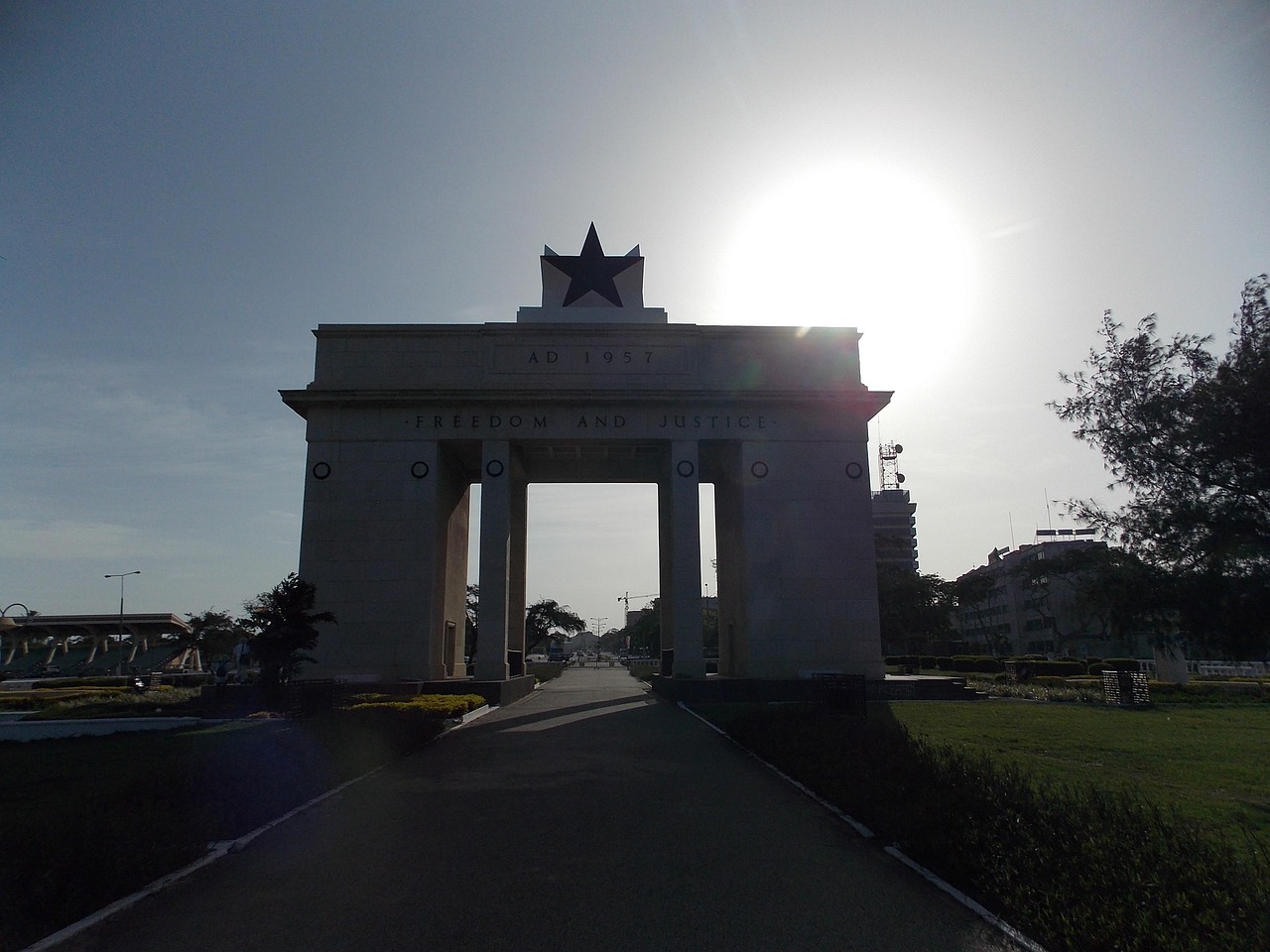
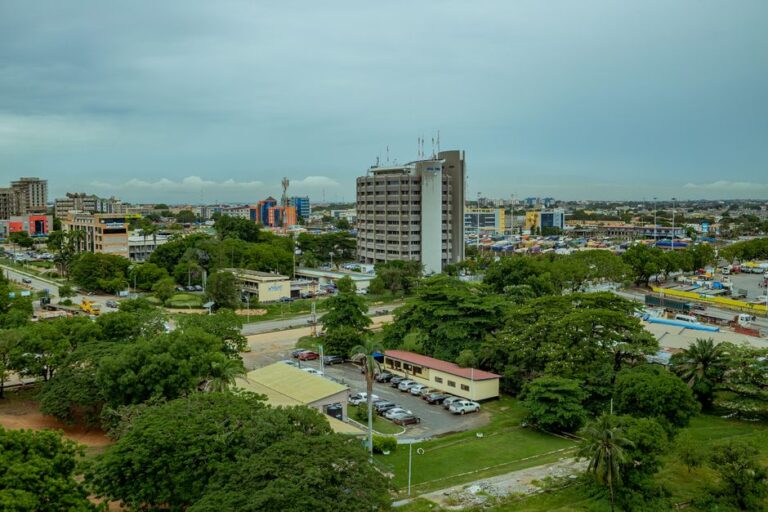
Plan a trip to Accra: the Kwame Nkrumah Memorial Park, Independence Square, Jamestown and its lighthouse, Makola Market, Osu Castle, the W.E.B. Du Bois…
Best time to visit Ghana
Ghana is hot and humid all year, with daytime highs around 28–33 °C (82–91 °F) on the coast. The best time to visit is the dry season from about November to March, when roads are easier and there’s little rain, though it’s hot. In the north, and sometimes as far south as Accra, the harmattan wind blows dry, dusty air from the Sahara between about December and February, bringing hazy skies, cooler nights and sometimes flight delays. In the south there are two rainy seasons: the main one from about April to June or July, with heavy downpours and some flooding, and a shorter one from about September to November. July and August are relatively dry and cooler on the coast, with overcast skies, and are a popular time for diaspora visitors and festivals. The north has a single rainy season, from about May to October, and becomes very hot in March and April. The table shows rounded average daily highs and lows and annual rainfall from the Ghana Meteorological Agency (GMet), as published by the World Meteorological Organization (WMO) in its 1991–2020 climate normals.
| Region (GMet station) | January high / low | August high / low | Rain a year |
|---|---|---|---|
| Accra and the east coast (Accra) | 33 °C (91 °F) / 24 °C (76 °F) | 28 °C (83 °F) / 23 °C (73 °F) | about 800 mm (31 in) |
| Cape Coast and the Central coast (Saltpond) | 31 °C (88 °F) / 23 °C (74 °F) | 27 °C (81 °F) / 23 °C (73 °F) | about 970 mm (38 in) |
| Western coast (Takoradi) | 31 °C (89 °F) / 23 °C (74 °F) | 28 °C (82 °F) / 22 °C (72 °F) | about 1,130 mm (45 in) |
| Ashanti (Kumasi) | 33 °C (92 °F) / 22 °C (71 °F) | 28 °C (83 °F) / 22 °C (71 °F) | about 1,370 mm (54 in) |
| The north and Mole (Tamale) | 36 °C (97 °F) / 20 °C (67 °F) | 30 °C (86 °F) / 23 °C (73 °F) | about 1,070 mm (42 in) |
Ghana month by month
| Month | Weather | Highlights | Crowds and prices |
|---|---|---|---|
| January | Hot and dry; harmattan haze | Good for the coast and Mole | Busy after the December holidays |
| February | Hot and dry; harmattan in the north | Wildlife at Mole’s waterholes | Moderate |
| March | Hottest month; first storms in the south | Independence Day (March 6) | Moderate |
| April | Rains begin in the south; very hot in the north | Easter; green landscapes | Quieter |
| May | Heavy rain in the south | Aboakyer festival in Winneba | Low season |
| June | Wettest month on the coast | Lush rainforest; fewer visitors | Low season |
| July | Cooler and cloudier on the coast; rain in the north | Republic Day (July 1); heritage events | Busy with diaspora visitors |
| August | Driest month on the coast; cool and overcast | Chale Wote street art festival and Homowo in Accra; Emancipation Day events | Busy |
| September | Short rains begin in the south | Fetu Afahye in Cape Coast | Moderate |
| October | Rainy in the south and north | Green season; waterfalls at their best | Quieter |
| November | Rains ending; dry season starts | Hogbetsotso festival in the Volta Region | Rising |
| December | Dry and hot; harmattan begins | Festive season and concerts in Accra | Very busy; book flights early |
Festivals and public holidays
Ghana’s festivals are colorful and often linked to harvests, ancestors and chiefs. Highlights include Homowo of the Ga people in Accra (August to September), Fetu Afahye in Cape Coast (September), the Aboakyer deer-hunt festival in Winneba (May), Hogbetsotso in Anloga (November), and the Ashanti Akwasidae ceremonies held every six weeks in Kumasi. Accra’s Chale Wote Street Art Festival fills Jamestown with art and music each August, and December is a month of concerts and parties. National holidays include New Year’s Day, Constitution Day (January 7), Independence Day (March 6), Good Friday and Easter Monday, May Day (May 1), Republic Day (July 1), Founders’ Day (August 4), Kwame Nkrumah Memorial Day (September 21), Farmers’ Day (the first Friday in December), Christmas and Boxing Day, plus Eid al-Fitr and Eid al-Adha.
How long to stay: sample itineraries
- 5 days: Accra (2 nights), then Cape Coast and Elmina with Kakum (3 nights).
- 10 days: Accra (2 nights), Cape Coast and Elmina (3 nights), Kumasi (2 nights), and the Volta Region or Akosombo (3 nights).
- 2 weeks: add a flight from Accra or Kumasi to Tamale for Mole National Park (3 nights), and a few beach days at Busua or Ada Foah.
- Heritage trip: Accra’s Nkrumah Memorial Park and W.E.B. Du Bois Centre, the Assin Manso slave river site, and Cape Coast and Elmina castles.
- Combine with neighbors: fly to Lagos or Dakar; see our Nigeria travel guide and Senegal travel guide.
Entry, money and costs
Visas and the Ghana e-visa (last reviewed October 2026)
Most visitors from outside Africa, including citizens of the US, Canada, the UK, the EU and Australia, need a visa to visit Ghana. In 2026, the Ghana Immigration Service (GIS), with the Ministry of Foreign Affairs, launched an official e-visa portal, evisa.immigration.gov.gh, linked from the GIS website. You check your eligibility, create an account, fill in the form, upload documents and pay online, and the e-visa is emailed to you as a PDF with a QR code, to show printed or on your phone at any Ghana airport or border post. According to the GIS applicant guide, the fee is a flat rate regardless of nationality: US$260 for standard processing (about 96 hours), US$338 for priority (48 hours) and US$442 for express (about 5 hours), generally non-refundable. Ghana currently issues single-entry e-visas, valid for 90 days from the date of issue, and the immigration officer on arrival decides your permitted stay, up to 60 days. Your passport must be valid for at least six months beyond your intended stay, and approval doesn’t guarantee entry, which is decided at the border.
African passport holders don’t need a visa: Ghana has introduced visa-free entry for all African nationals, who complete an Electronic Travel Authorization (ETA) through the same portal instead. Some other countries have bilateral visa waivers, so use the portal’s eligibility checker. Visas can still be issued by Ghanaian embassies and high commissions abroad, which may be useful if you need a multiple-entry visa.
Yellow fever certificate and health requirements
A valid yellow fever vaccination certificate is required for entry into Ghana, for all arriving travelers aged 9 months and over, according to the US CDC and the GIS applicant guide; travelers who arrive without one may be referred to airport health officials, including for vaccination. Have the vaccine at least 10 days before you travel and carry the original yellow card. The CDC also recommends the vaccine for all travelers aged 9 months and over.
Customs and currency rules
Declare foreign currency on arrival using the form provided. According to the UK government, you shouldn’t carry more than the equivalent of US$10,000 in cash, or it may be confiscated. Wearing military or camouflage clothing is illegal.
Money, cards and mobile money
The currency is the Ghana cedi (GHS, written GH¢), divided into 100 pesewas. On October 5, 2026, the Bank of Ghana’s interbank rate was about GH¢11.77 to the US dollar. ATMs are common in towns and accept Visa cards, but they’re scarcer in rural areas. Many hotels, guesthouses and larger shops accept cards, but Mastercard is not widely accepted, so bring a Visa card and some backup cash. Mobile money, especially MTN MoMo, is used everywhere, from taxis to market stalls, and visitors can register a local SIM card for it with a passport. Change money only at banks and licensed forex bureaus, and bring clean US dollar, euro or pound notes.
Taxes and tipping
Hotels and restaurants add VAT and levies, often shown separately on the bill. Tipping isn’t compulsory, but 5–10% is appreciated in restaurants if service isn’t included, and guides, drivers and porters welcome small tips.
What a trip costs
Prices are approximate, for October 2026, converted at about GH¢11.77 to the US dollar.
| Item | Typical cost |
|---|---|
| Ghana e-visa, standard processing | US$260 (about GH¢3,060) |
| Cape Coast or Elmina Castle, non-Ghanaian adult | GH¢80 (about US$7) |
| Jollof rice or waakye at a chop bar | GH¢40–90 (about US$3.40–7.60) |
| Mid-range restaurant dinner | GH¢250–550 (about US$21–47) |
| Ride-hailing trip across Accra | GH¢60–180 (about US$5–15) |
| Intercity bus, Accra to Kumasi or Cape Coast | GH¢120–250 (about US$10–21) |
| Mid-range hotel double, per night | GH¢950–2,100 (about US$80–180) |
A comfortable mid-range trip costs about US$100–180 per person per day, including hotels, meals, a driver or tours and entrance fees; budget travelers using buses and guesthouses can manage on US$50–70.
Getting there and getting around
By air
Most international flights land at Kotoka International Airport (ACC) in Accra, about 10 km (6 miles) from the city center, with direct flights from Europe, the US, the Middle East and across Africa; many travelers connect through London, Amsterdam, Brussels, Istanbul, Dubai, Doha or Nairobi, and there are direct flights from New York and other US cities. Domestic flights link Accra with Kumasi, Tamale, Takoradi and other towns in about an hour, saving long drives. At the airport, use uniformed porters only, and if a driver is collecting you, confirm their identity before leaving.
Buses, tro-tros and ride-hailing
Long-distance buses run by state-owned STC and private companies such as VIP Jeoun link Accra with Kumasi, Cape Coast, Takoradi, Tamale and other cities; they’re cheap and fairly comfortable, but slow. Tro-tros (minibuses) and shared taxis go everywhere, leaving when full; they’re cheap and lively but crowded, and safety standards vary. In Accra and Kumasi, ride-hailing apps such as Uber, Bolt and Yango are widely used and avoid fare haggling.
Driving
Ghana drives on the right. Main highways are paved, but rural roads can be rough, street lighting is poor or absent, and accidents are common, so avoid driving outside towns after dark. You can drive with a 1949 international driving permit, but most visitors hire a car with a driver, which is affordable and saves stress. Expect police checkpoints; stay calm, show your documents and don’t hand over cash. Leaves or branches placed on the road usually mean an accident or broken-down vehicle ahead.
Crossing borders
Ghana’s land borders with Togo (at Aflao, near Lomé), Côte d’Ivoire (at Elubo) and Burkina Faso (at Paga) are used by buses along the West African coast; you’ll need the right visas and a yellow fever certificate. Check opening hours and rules before you travel.
Culture, food and everyday etiquette
Food and drink
Ghanaian food is filling, spicy and delicious. Jollof rice, cooked in a spicy tomato sauce, is a national obsession (and a friendly rivalry with Nigeria). Try waakye (rice and beans) with spaghetti, eggs and shito (black pepper sauce); banku or kenkey (fermented corn dough) with grilled tilapia and pepper sauce; fufu, pounded cassava and plantain, with light soup, palm nut soup or groundnut (peanut) soup; red red, black-eyed beans in palm oil with fried plantain; and kelewele, spicy fried plantain sold on the street at night. Chichinga are grilled meat skewers. Local drinks include sobolo (hibiscus juice), fresh coconut water, palm wine, Club and Star beers and the strong spirit akpeteshie. Ghana is one of the world’s biggest cocoa producers, and local chocolate makers are worth seeking out. Eat in a chop bar for local food at local prices.
Crafts and shopping
Look for kente cloth from Bonwire and the Volta Region, adinkra cloth, glass beads from Krobo villages, wood carvings, baskets from Bolgatanga, and colorful wax-print fabric, which tailors can turn into clothes in a day or two. Accra’s Arts Centre and Kumasi’s markets are the main craft centers; bargain politely. Exporting antiques requires authorization.
Etiquette
- Greetings: always greet people before asking a question; a handshake, sometimes ending with a finger snap, is common.
- Right hand: use your right hand to eat, give and receive things.
- Elders and chiefs: show respect to elders; if visiting a chief, you may be expected to bring a small gift, often a bottle of schnapps, through your guide.
- Dress: shorts and T-shirts are fine, but avoid very revealing clothes away from the beach.
- Photos: ask before photographing people, and never photograph military sites, the airport or guarded buildings.
- “Obroni”: you may hear children call out “obroni” (foreigner); it’s usually friendly curiosity.
Safety, health and connectivity
Ghana is one of West Africa’s most stable and welcoming countries, and most visits are trouble-free. The main issues are practical: health, roads, the sea and crime in the big cities.
- Malaria: present throughout the country, and the US CDC recommends preventive medicine for all travelers. Use repellent, sleep under a net or in air conditioning, and see a doctor at once if you develop a fever, even after returning home.
- Yellow fever and other vaccines: a yellow fever certificate is required for entry. The CDC also recommends a meningitis vaccine for the northern savanna during the dry season, roughly December to June.
- Heat and harmattan: drink plenty of water, especially in the north from March to May, and expect dusty air and haze during the harmattan.
- Sea currents: swimming is dangerous on many beaches along the southern coast because of rip tides and undertows; swim only at hotel beaches or where locals say it’s safe, and never swim alone.
- Road safety: road accidents are the biggest risk; avoid traveling between towns after dark, choose reputable bus companies or drivers, and wear seatbelts.
- City precautions: in Accra, pickpocketing and bag snatching occur in crowded places, and robberies sometimes happen at night. Be alert at ATMs, avoid walking alone after dark, keep car windows up and doors locked in traffic, and use licensed taxis or ride-hailing apps, checking the driver and car before you get in.
- Scams and card fraud: be wary of online romance or business schemes, keep your card in sight when paying, and check ATMs for skimming devices.
- Rainy season: flash floods affect Accra and the north during heavy rains; avoid flooded roads.
- Areas off the tourist routes: a few areas in the far northeast, around Bawku in the Upper East Region, are off the tourist routes and subject to curfews and police checks; check locally before traveling there.
- Emergencies: call 112 or 999 for police, ambulance or fire.
Connectivity: buy a prepaid SIM card from MTN, Telecel or AirtelTigo with your passport (registration is required) or use an eSIM. Mobile data is good in towns, and power cuts sometimes occur, so carry a power bank.
Things to do: history, wildlife, beaches and culture
- History and heritage: Cape Coast and Elmina castles, Fort St. Jago, Assin Manso and Accra’s Kwame Nkrumah Memorial Park. See our city sightseeing guide.
- Wildlife: elephant walks in Mole National Park, the Kakum canopy walkway and the Tafi Atome monkeys.
- Hiking: Mount Afadja, Wli Falls and the Shai Hills. See our hiking guide.
- Beaches: Busua, Ada Foah, Kokrobite and Labadi. See our beaches guide.
- Surfing: beginner-friendly waves at Busua and Kokrobite. See our surfing guide.
- Boat trips: canoes to Nzulezu, cruises on Lake Volta and the Volta estuary at Ada. See our boat trips guide.
- Culture: kente weaving at Bonwire, Ashanti ceremonies in Kumasi, festivals and live highlife music.
What to pack for Ghana
Light, breathable cotton or linen clothes, a few smarter outfits for restaurants and church visits, clothes that cover shoulders and knees for chiefs’ palaces and the Muslim north, a light rain jacket from April to October, comfortable walking shoes and sandals, a hat, sunglasses and high-factor sunscreen, insect repellent with DEET or picaridin, any antimalarials and medicines, your yellow fever certificate, a printed copy of your e-visa, a reusable water bottle with a filter, a power bank for outages and a UK-style type G plug adapter. See our rain jackets, hiking shoes and travel adapters guides.
Ghana travel FAQ
Do I need a visa to visit Ghana?
Most non-African visitors do. Apply online through the official e-visa portal, evisa.immigration.gov.gh, run by the Ghana Immigration Service, or at a Ghanaian embassy. African passport holders can enter visa-free with an Electronic Travel Authorization.
How much does the Ghana e-visa cost?
According to the Ghana Immigration Service, US$260 for standard processing (about 96 hours), US$338 for priority (48 hours) and US$442 for express (about 5 hours), the same for every nationality.
How long can I stay in Ghana on an e-visa?
The e-visa is single-entry and must be used within 90 days of issue; the immigration officer sets your stay on arrival, up to 60 days.
Do I need a yellow fever vaccination for Ghana?
Yes. A yellow fever vaccination certificate is required for all arriving travelers aged 9 months and over.
Is there malaria in Ghana?
Yes, throughout the country, all year. The US CDC recommends preventive medicine, along with repellent and nets.
What is the best time to visit Ghana?
The dry season from November to March is best for most travelers; July and August are cooler and fairly dry on the coast. April to June is the main rainy season in the south.
How much does it cost to visit Cape Coast and Elmina castles?
According to the Ghana Museums and Monuments Board, GH¢80 (about US$7) for non-Ghanaian adults at each castle, including a guided tour; both open daily from 9 a.m. to 4:30 p.m.
How far is Cape Coast from Accra?
About 140–150 km (90 miles), usually 3–4 hours by road depending on traffic; Elmina is about 15 km (9 miles) farther west.
Can I use credit cards in Ghana?
Visa cards are widely accepted in hotels, larger restaurants and ATMs; Mastercard is not widely accepted. Mobile money and cash are used for everyday purchases.
Is it safe to swim in the sea in Ghana?
Many beaches along the southern coast have rip tides and strong undertows. Swim only where it’s known to be safe, such as some hotel beaches, and never alone.
Is Ghana safe for tourists?
Most visits are trouble-free. The main risks are road accidents, petty crime in Accra, malaria and strong sea currents; use licensed transport and avoid road travel after dark.
How many days do I need in Ghana?
About a week for Accra and the coast; 10 days to two weeks to add Kumasi, the Volta Region or Mole National Park.
Sources and last review
Researched and last reviewed on 5 October 2026. The e-visa, fees, processing times, validity, permitted stay, ETA for African nationals and yellow fever requirement: the Ghana Immigration Service and its official e-visa portal and applicant guide; Cape Coast and Elmina castle history, opening hours and fees: the Ghana Museums and Monuments Board; UNESCO listings: the UNESCO World Heritage Center; yellow fever, malaria and meningitis: the US CDC; currency declaration, camouflage clothing, Mastercard acceptance, crime precautions, airport drivers, rip tides, roads, flooding, the far northeast and emergency numbers: the UK government’s factual entry and safety pages, used for practical facts only; the exchange rate: the Bank of Ghana; climate averages: the Ghana Meteorological Agency via the World Meteorological Organization’s 1991–2020 normals. Area, population, history, regions, festivals, holidays, attractions, transport, food and typical prices are general references or estimates, flagged for checking. Rules and prices change, so check the official sites before you go.
Plan your trip
Partner links: TravelerCenter may earn a commission if you book, at no extra cost to you.