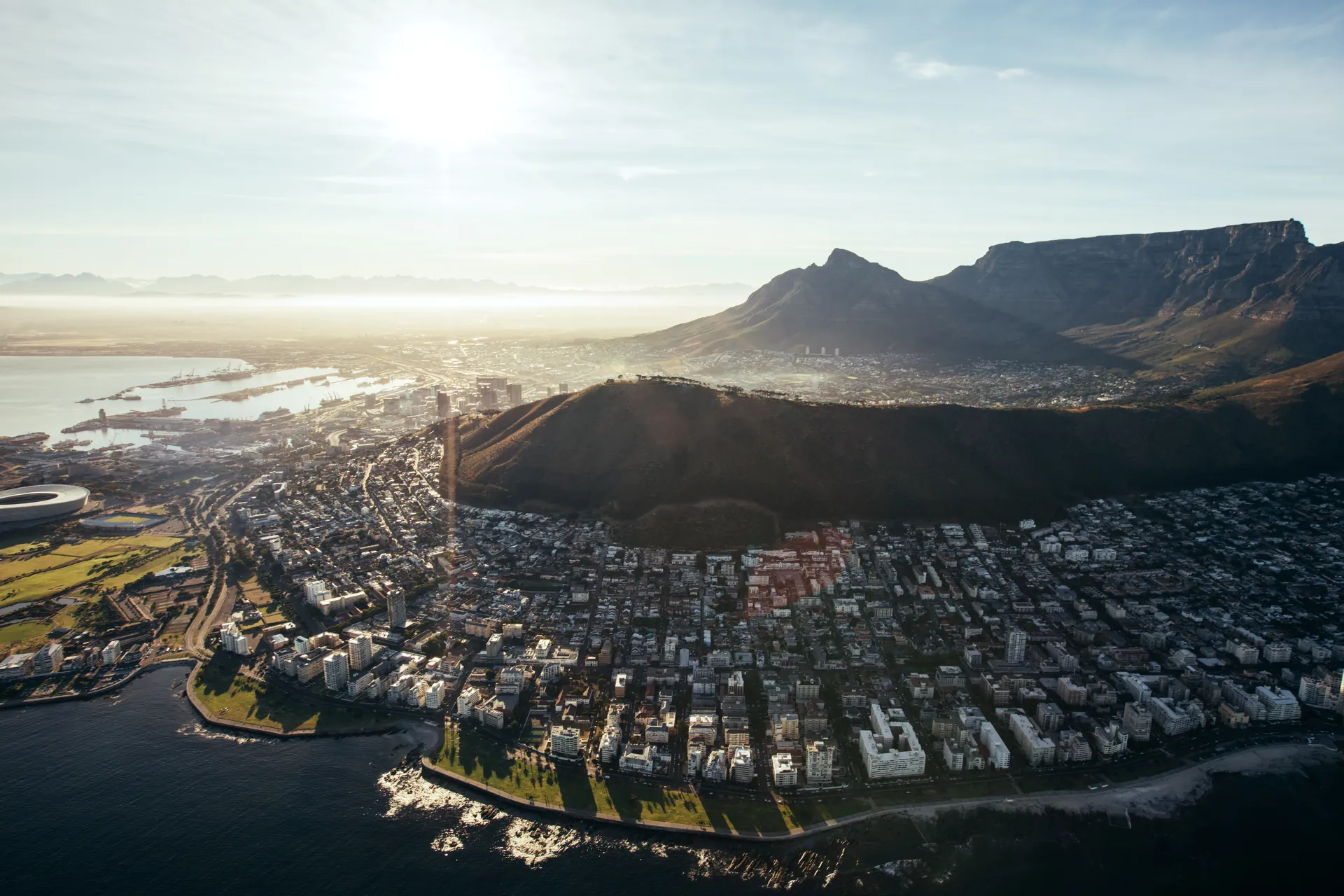
Short answer: with 7 days, spend four nights in Cape Town, with Table Mountain, the Cape Peninsula and a day in the Winelands, then fly to Kruger for a two-night safari. With 10 days, add two nights in Stellenbosch and give Kruger a third night. With 14 days, drive the classic road trip from Cape Town via Hermanus and the Garden Route to Addo Elephant National Park, then fly to Johannesburg for a final safari in Kruger or Pilanesberg. Long distances mean flying between regions and driving within them.
This guide turns the sample trips on our South Africa travel guide into day-by-day plans, with travel times between stops and the best area to sleep in each night. Choose your month with our best time to visit South Africa guide, see the highlights in our top 10 places to visit in South Africa, and for a plan built around your dates and interests, use our AI trip planner. Everything was checked as of October 2026.
The three routes at a glance
| Route | Days | Stops and nights | Best for |
|---|---|---|---|
| Cape Town and Kruger | 7 | Cape Town 4, Kruger area 2 | First trip: the city, the Cape and the Big Five in a week |
| Cape Town, the Winelands and Kruger | 10 | Cape Town 4, Stellenbosch 2, Kruger area 3 | The same with wine estates and a longer safari |
| The Garden Route road trip and a safari | 14 | Cape Town 4, Hermanus 1, Wilderness or Knysna 2, Plettenberg Bay or Tsitsikamma 2, Addo 2, Kruger or Pilanesberg 2 | Coast, whales, forests, elephants and a Big Five finale |
Long-haul flights land at OR Tambo International in Johannesburg, the main hub, or at Cape Town International, which has direct flights from Europe, North America and the Middle East. Book an “open-jaw” ticket, into Cape Town and home from Johannesburg (or the reverse), so you don’t backtrack. Holders of US, Canadian, UK, Irish, Australian, New Zealand and most EU ordinary passports don’t need a visa for visits of up to 90 days; bring a passport with at least two blank pages, valid for 30 days after you leave.
Travel times between the main stops
These are the legs used in the plans below. Flight times are typical, and drive times are approximate and assume few stops; South Africans drive on the left.
| Leg | Fastest way | Time | Source |
|---|---|---|---|
| Cape Town – Johannesburg | Domestic flight | about 2 h | Approximate |
| Cape Town or Johannesburg – Kruger | Flight to Skukuza, Kruger Mpumalanga International (Mbombela) or Hoedspruit | about 1 h from Johannesburg; longer from Cape Town | Approximate |
| Johannesburg – Kruger’s southern gates | Car | about 5–7 h (about 400–600 km, by gate) | SANParks distances; time approximate |
| Johannesburg – Pilanesberg | Car | about 2–2½ h (about 170–190 km) | Approximate |
| OR Tambo Airport – Sandton or Pretoria | Gautrain | a short ride | Gautrain |
| Cape Town – Stellenbosch | Car | about 45 min (about 50 km) | Approximate |
| Cape Town – Hermanus | Car via Sir Lowry’s Pass / via coastal Clarence Drive | about 1½ h / about 2 h | Approximate |
| Hermanus – Wilderness | Car on the N2 | about 5 h | Approximate |
| Cape Town – Mossel Bay | Car on the N2 | about 4–4½ h (about 390 km) | Approximate |
| Mossel Bay – Knysna | Car | about 1½ h | Approximate |
| Plettenberg Bay – Gqeberha | Car, via the Tsitsikamma toll | about 2½ h | Approximate |
| Gqeberha – Addo main gate | Car | about 1 h (about 70 km) | Approximate |
| Gqeberha – Johannesburg | Domestic flight | about 1 h 30 | Approximate |
| Durban – Drakensberg (Central Berg) | Car on the N3 | about 3 h (about 250 km) | Approximate |
Kruger’s entrance gates open and close at fixed times that change through the year: in SANParks’ schedule, gates open at 05:30 from October to March and at 06:00 from April to September, and close between 17:30 (May to July) and 18:30 (November to February). Plan your drive or flight so you arrive well before closing, as late entry is allowed only in emergencies.
7 days: Cape Town and Kruger
The classic first week: one of the world’s most beautiful cities, then the bush. Hire a car in Cape Town, or use ride-hailing apps and day tours.
- Day 1, Cape Town: Arrive and head to the V&A Waterfront; if the sky is clear, go straight up Table Mountain on the cableway (it closes in high wind, so use the first clear day). Sleep: the City Bowl, Green Point or the Waterfront (4 nights).
- Day 2, the Cape Peninsula: Drive Chapman’s Peak, walk to the Cape Point lighthouse and the Cape of Good Hope in Table Mountain National Park, then see the African penguins at Boulders Beach and finish in Kalk Bay for seafood.
- Day 3, the city and Kirstenbosch: The colorful houses of Bo-Kaap, the Company’s Garden, the Zeitz MOCAA museum, and an afternoon at Kirstenbosch National Botanical Garden. Or take the ferry to the Robben Island museum (tours about 3½ hours; book ahead).
- Day 4, the Winelands: A day in Stellenbosch and Franschhoek, about 45 minutes away, with cellar tastings and lunch on a wine estate (choose a driver or a tour rather than driving yourself).
- Day 5, to Kruger: Fly to Skukuza, Kruger Mpumalanga International or Hoedspruit (often via Johannesburg), and pick up a car or a lodge transfer. Afternoon game drive. Sleep: a rest camp in the south of Kruger, such as Skukuza or Lower Sabie, or a lodge in a private reserve (2 nights).
- Day 6, safari: A dawn drive, when animals are most active, a rest at midday, and a sunset or night drive with a ranger.
- Day 7, home: A last early game drive, then fly to Johannesburg for your connection home.
Swap it: starting in Johannesburg? Do the safari first and finish in Cape Town. With no time to fly to Kruger, a night or two at malaria-free Pilanesberg, about 2–2½ hours from Johannesburg, is the shortcut. More detail is in our Cape Town and Kruger guides.
10 days: Cape Town, the Winelands and Kruger
Three extra days let you sleep among the vineyards and give the safari more time, which improves your chances of seeing all of the Big Five.
- Days 1–4, Cape Town: Table Mountain, the Cape Peninsula and Boulders, the city and Kirstenbosch, and the Robben Island museum or a hike up Lion’s Head. Sleep: the City Bowl, Green Point or the Waterfront (4 nights).
- Day 5, to Stellenbosch: A short drive to the oak-lined university town, with its Cape Dutch buildings and galleries; a cellar tour in the afternoon. Sleep: Stellenbosch town or a wine estate (2 nights).
- Day 6, Franschhoek and the passes: The wine tram or a driver around Franschhoek’s estates, or a drive over Helshoogte Pass to Paarl. From June to November, you can make an early day trip to Hermanus for whale watching instead.
- Day 7, to Kruger: Drive to Cape Town airport (about 30 minutes) and fly to the Kruger area; afternoon drive. Sleep: a Kruger rest camp or a private-reserve lodge (3 nights).
- Days 8–9, safari: Self-drive the loops around your camp at dawn and dusk, or join ranger-led morning walks, sunset drives and night drives. In a private reserve, guided drives in open vehicles are included.
- Day 10, home: A final dawn drive, then fly to Johannesburg. If you have time, the Panorama Route’s canyon viewpoints near Hoedspruit and Graskop are a scenic detour by road.
Kruger is in a malaria area. SANParks says the risk is usually low, and highest from November to April; talk to a travel-health professional about prevention before you go, and cover up at dusk. A Wild Card can save money if you visit several national parks.
14 days: the Garden Route road trip and a safari
South Africa’s favorite road trip, east along the N2 from Cape Town to Addo, then a flight north for the Big Five. Pick up a car in Cape Town and drop it in Gqeberha (one-way fees usually apply).
- Days 1–4, Cape Town and the Winelands: Table Mountain, the Peninsula, the city and a day in Stellenbosch. Sleep: the City Bowl, Green Point or the Waterfront (4 nights).
- Day 5, Hermanus: Take the spectacular coastal road, Clarence Drive, past Betty’s Bay’s penguin colony to Hermanus (about 2 hours). From June to November, watch southern right whales from the Cliff Path; the rest of the year, taste wine in the Hemel-en-Aarde valley. Sleep: Hermanus (1 night).
- Day 6, to Wilderness: A long drive east on the N2 (about 5 hours), with a stop at Mossel Bay. Evening on the beach at Wilderness. Sleep: Wilderness or Knysna (2 nights).
- Day 7, lakes and lagoons: Canoe and walk the Half-Collared Kingfisher Trail in Wilderness, then Knysna’s lagoon and the cliffs of the Knysna Heads, and the indigenous forests inland.
- Day 8, to Plettenberg Bay: A short drive east; hike the Robberg Peninsula, with seals and cliff views, and swim at Plett’s beaches. Sleep: Plettenberg Bay, or near Storms River (2 nights).
- Day 9, Tsitsikamma: The suspension bridge over the Storms River Mouth in the Garden Route National Park, a forest canopy tour, or the bungee jump from Bloukrans Bridge for the brave.
- Day 10, to Addo: Drive east to Gqeberha and on to Addo Elephant National Park (about 3½ hours in all), with a stop at the surf town of Jeffreys Bay. Afternoon drive among the elephant herds. Sleep: Addo rest camp or a nearby lodge (2 nights).
- Day 11, Addo: Self-drive or guided drives in a malaria-free park with hundreds of elephants, plus buffalo, lions and zebras.
- Day 12, to the bush: Drive to Gqeberha airport (about an hour) and fly to Johannesburg (about 1½ hours), then either connect to the Kruger area or drive to Pilanesberg (about 2–2½ hours). Sleep: a Kruger camp or lodge, or Pilanesberg (2 nights).
- Day 13, Big Five safari: Dawn and sunset game drives.
- Day 14, home: A morning drive, then back to Johannesburg for your flight.
Swap it: want more wildlife and less coast? Replace the Garden Route (days 5–11) with Johannesburg and Pretoria, four nights in Kruger and the Panorama Route, then Durban and the Drakensberg, about 3 hours from Durban. Each stop on the coastal route has its own guide: Hermanus, Garden Route, Addo and Gqeberha.
Where to sleep, by stop
| Stop | Best area for a short stay | Why |
|---|---|---|
| Cape Town | The City Bowl, Green Point or the V&A Waterfront; Camps Bay for the beach | Close to the cableway, restaurants and the Peninsula drive |
| Winelands | Stellenbosch town or Franschhoek, or a wine-estate guesthouse | Walk to restaurants, or wake among the vines |
| Hermanus | Near the Old Harbour and the Cliff Path | Whales from the shore in season |
| Garden Route | Wilderness or Knysna, then Plettenberg Bay or Storms River | Two bases cut the driving |
| Addo | Inside the park at the main rest camp, or lodges near the gates | Early and late drives |
| Kruger | Southern rest camps (Skukuza, Lower Sabie, Pretoriuskop) or private reserves such as Sabi Sand and Timbavati | The south has the most game and is closest to the airports |
| Pilanesberg | Lodges inside the park or near Sun City | Easy from Johannesburg and malaria-free |
| Johannesburg | Sandton or Rosebank | On the Gautrain line to the airport and Pretoria |
SANParks charges a daily conservation fee per person in its parks, and new fees for Kruger, Addo, the Garden Route and Table Mountain apply from 1 November 2026; check sanparks.org when you book. Kruger also has a daily visitor limit that can be reached on public holidays and long weekends, when only pre-booked guests are admitted.
Alternatives by interest
Wildlife lovers
Give Kruger four or five nights, split between a southern rest camp for self-drives and a private reserve for guided drives in open vehicles and walking safaris. The best game viewing is from May to September, the dry winter, when the bush is thin and animals gather at water. Add whale watching at Hermanus (best in September and October), the penguins at Boulders, and Addo’s elephants.
Wine and food lovers
Stay three nights in the Winelands, splitting your time between Stellenbosch and Franschhoek, and add the Constantia route behind Table Mountain, the oldest in the country, and the Hemel-en-Aarde valley near Hermanus. The harvest, from February to April, is a lively time in the cellars. Use a driver or a wine tram rather than driving between tastings.
Hikers
Climb Table Mountain by Platteklip Gorge and Lion’s Head at sunrise, walk Robberg and the trails of Tsitsikamma, and spend three nights in the Drakensberg’s Amphitheatre and Cathedral Peak areas, best in April and May or September and October. The five-day Otter Trail along the Tsitsikamma coast must be booked far in advance.
Families
Choose malaria-free parks, Addo and Pilanesberg, for safaris with young children, and many private lodges set minimum ages for game drives, so check before booking. Cape Town’s beaches, the Two Oceans Aquarium and the penguins at Boulders are favorites. Use fewer bases and shorter driving days on the Garden Route.
Tips for planning your route
- Combine the seasons. Safari is best from May to September; Cape Town and the Garden Route from October to April. September to November is the sweet spot for these routes, with the safari season ending, the Cape warming up and whales still off the coast. See our best time to visit South Africa guide.
- Book Kruger camps and lodges early. Rest-camp rooms and popular lodges sell out months ahead for South African school holidays, mid-December to mid-January and Easter.
- Drive in daylight. Distances are long, and park gates close at sunset; plan driving days so you arrive in good time, and keep to the speed limits (lower inside national parks).
- Leave a spare day for Table Mountain. The cableway stops in high wind or cloud, so keep your plans flexible in Cape Town.
- Fly between regions. Domestic flights are frequent and save long days on the road: Cape Town, Johannesburg, Durban, George and Gqeberha are all well connected.
- Bring the right papers for children. Check the Department of Home Affairs’ current rules for minors traveling with one parent or other adults before you fly.
South Africa itinerary FAQ
Is 7 days enough for South Africa?
Yes for Cape Town and a short safari, connected by a flight. It is not enough to add the Garden Route without rushing; for the full road trip and a safari, plan two weeks.
Should I start in Cape Town or Johannesburg?
Start wherever your flight is cheapest. Many travelers start in Cape Town to recover from the flight in a relaxed city and end with the safari near Johannesburg; others do the safari first and finish on the coast.
How many days do you need in Kruger?
Two nights gives you three or four game drives; three or four nights greatly improves your chances of seeing the Big Five and lets you enjoy the rhythm of the bush.
Do I need a car in South Africa?
For the Garden Route, the Winelands and self-drive safaris, yes: there is little public transport outside the cities. In Cape Town you can manage with ride-hailing apps and tours, and private game lodges include transfers and guided drives.
How long does the Garden Route take?
At least three nights, and five to seven at a relaxed pace. The route itself, from Mossel Bay to the Storms River, is only about 200 km, but there is a lot to see along the way.
Is there a malaria-free safari in South Africa?
Yes. Addo Elephant National Park, near Gqeberha, and Pilanesberg National Park, about 2–2½ hours from Johannesburg, are both malaria-free, which makes them popular with families.
What is the best month for a South Africa itinerary?
September, October or November to combine a safari with the Cape: the bush is still dry, the Cape is warm and whales are off Hermanus in September and October. February to April is also good, with calm weather in the Cape and the wine harvest.
Sources
Researched and last reviewed by TravelerCenter on 8 October 2026. Visa exemptions and passport rules come from the Department of Home Affairs; Kruger gate times, distances, visitor limits and malaria guidance, the 1 November fee year and the Wild Card from South African National Parks (SANParks); Robben Island tours from the Robben Island Museum; the Gautrain from its operator; and climate from the South African Weather Service, as cited on our South Africa guides. Flight durations and drive times are approximate. Timetables, prices and rules change, so check with the operator before you travel.
Data: Wikidata (CC0)