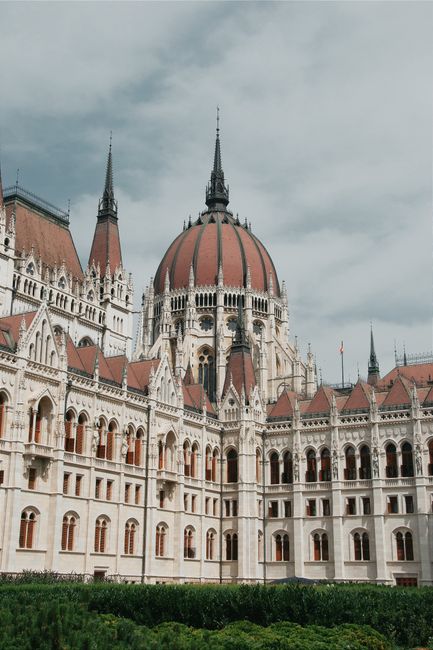
Hungary is a small, landlocked country in the middle of Europe with a big personality. Budapest, its capital, is one of the most beautiful cities on the Danube: a parliament like a Gothic cathedral, a castle district on a hill, grand coffee houses, ruin bars and, above all, thermal baths fed by hot springs. Beyond the capital you find Lake Balaton, Central Europe’s largest lake, with beaches, vineyards and the warm healing lake at Hévíz; baroque Eger, with its castle and red wine; the golden sweet wines of Tokaj; the Danube Bend’s riverside towns; and the wide horizons and horsemen of the Great Plain. Prices are lower than in Austria or Germany, the food is generous, and the trains run almost everywhere. May, June and September are the sweet spots. Give it a week for a first trip, ten days to two weeks to see the country properly.
Right now in Hungary
- Wed 7–24°C 45–76°F Clear
- Thu 12–26°C 53–79°F 4 mm Mostly clear
- Fri 13–18°C 56–64°F 1 mm Clear
Weather: MET Norway (CC BY 4.0) · Air quality: OpenAQ · Rates: ECB
Key facts
| Currency | Hungarian forint (HUF, Ft), not the euro; cards in most shops, keep some forints for markets and small placesSource: visithungary.com · Last reviewed 4 Oct 2026 |
|---|---|
| Languages | Hungarian; English is widely spoken in Budapest and tourism, German around Lake Balaton and HévízSource: wikidata.org · Last reviewed 4 Oct 2026 |
| Plugs and voltage | Type C and F · 230 V, 50 HzSource: visithungary.com · Last reviewed 4 Oct 2026 |
| Emergency number | 112 (police, fire, ambulance); also 104 ambulance, 105 fire, 107 policeSource: visithungary.com · Last reviewed 4 Oct 2026 |
| Driving side | On the right; motorway e-matrica vignette required; 50 in towns, 90 outside, 110 on expressways, 130 on motorways; zero alcohol limit; headlights on outside townsSource: nemzetiutdij.hu · Last reviewed 4 Oct 2026 |
| Tap water | Safe to drinkSource: vizmuvek.hu · Last reviewed 4 Oct 2026 |
| Tipping | Customary, not compulsory: about 10% in restaurants and taxis, unless a service charge is already on the billSource: visithungary.com · Last reviewed 4 Oct 2026 |
| Calling code | +36 (dial 00 for international calls)Source: visithungary.com · Last reviewed 4 Oct 2026 |
| Time zones | CET (UTC+1), summer time CEST (UTC+2) from the last Sunday in March to the last Sunday in OctoberSource: data.iana.org · Last reviewed 4 Oct 2026 |
| Entry summary | Schengen and EU. Most visitors from outside the EU stay visa-free for up to 90 days in 180 and register in the EU Entry/Exit System at the border; ETIAS is not yet in operation. Austria checks arrivals from Hungary until 15 March 2027, and Slovenia until 21 December 2026.Source: home-affairs.ec.europa.eu · Last reviewed 4 Oct 2026 |
Multi-day tours of Hungary
Multi-day tours from local operators. You check dates and book on Viator, our partner; we may earn a commission at no extra cost to you. How we earn money
Hungary at a glance: the Danube, the lake and the plain
Hungary covers about 93,000 square kilometres in the Carpathian Basin, bordered by Austria, Slovakia, Ukraine, Romania, Serbia, Croatia and Slovenia. The Danube flows south through the middle of the country and through Budapest; east of it lies the Great Hungarian Plain (the Alföld), flat farmland and grassland crossed by the River Tisza; west of it is Transdanubia, a gentler land of hills, vineyards and Lake Balaton. The highest point, Kékes (1,014 m), is in the Mátra hills near Eger, so most of the country is good for easy walking and cycling rather than mountaineering.
According to the Hungarian Central Statistical Office (KSH), about 9.49 million people lived in Hungary on 1 January 2026, a number that has been slowly falling for decades; roughly one in six of them lives in Budapest. Hungarian (magyar) is the official language. It is not related to the languages of its neighbours but belongs to the Finno-Ugric family, so even common words look unfamiliar. English is widely spoken in Budapest, at Balaton and in tourist businesses, less so in the countryside, where German is often the second language of older people.
Hungary has been a member of the European Union since 2004 and of the Schengen area since 2007, but it still uses its own currency, the forint. Time zone: Central European Time (UTC+1, UTC+2 from the last Sunday in March to the last Sunday in October), the same as Austria, Croatia and Germany.
Hungary’s regions
- Budapest: the capital, split by the Danube into hilly Buda (the Castle District, Gellért Hill) and flat, lively Pest (the Parliament, St Stephen’s Basilica, Andrássy Avenue, the Jewish Quarter and its ruin bars). The banks of the Danube, the Castle District and Andrássy Avenue are a UNESCO World Heritage Site.
- The Danube Bend: just north of Budapest, where the river turns south through wooded hills: the artists’ town of Szentendre, the hilltop castle of Visegrád and Esztergom with Hungary’s largest basilica, all easy day trips by train, bus or boat.
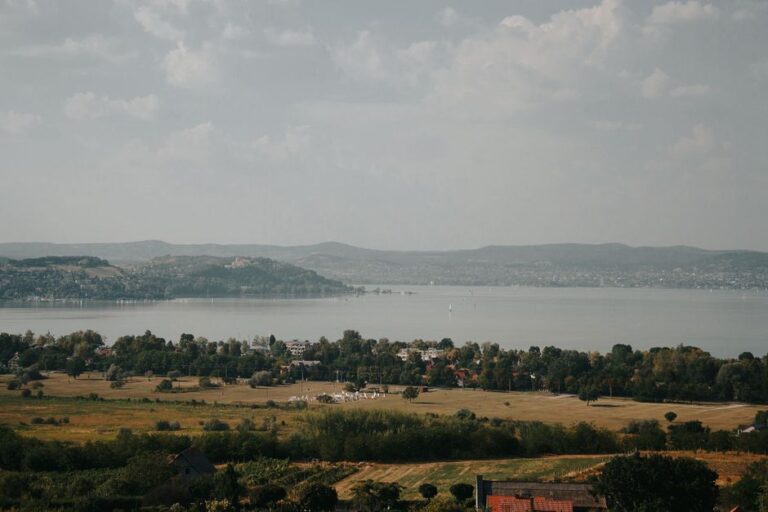
- Lake Balaton and the Bakony: the “Hungarian sea”, about 77 km long, with family beaches on the shallow south shore (Siófok, Balatonboglár, Fonyód) and vineyards, volcanic hills and historic villages on the north shore (Balatonfüred, Tihany, Badacsony, Szigliget). Keszthely and the thermal lake at Hévíz are at the western end.
- Western Transdanubia: Győr’s baroque centre, Sopron on the Austrian border, the Benedictine abbey of Pannonhalma (UNESCO), the Esterházy Palace at Fertőd and the spa towns of Bük, Sárvár and Zalakaros.
- Southern Transdanubia: Pécs, a warm, Mediterranean-feeling university city with Ottoman monuments, an early Christian burial site (UNESCO) and the Zsolnay Cultural Quarter; the red-wine villages of Villány; and the Busójárás carnival in Mohács.
- Northern Hungary: low mountains and wine country: Eger and its castle, the Mátra and Bükk hills, the palóc village of Hollókő (UNESCO), the Aggtelek caves (UNESCO, shared with Slovakia) and the Tokaj wine region (UNESCO), home of the famous sweet aszú.
- The Great Plain: the puszta of Hortobágy National Park (UNESCO), with grey cattle, horse shows and huge skies; Debrecen, Hungary’s second city; Art Nouveau Kecskemét and Szeged; Lake Tisza; and the cave bath at Miskolctapolca on its northern edge.
Regions
- Baranya County
- Borsod-Abaúj-Zemplén County
- Bács-Kiskun County
- Békés County
- Csongrád-Csanád County
- Fejér County
- Győr-Moson-Sopron County
- Hajdú-Bihar County
- Heves County
- Jász-Nagykun-Szolnok County
- Komárom-Esztergom County
- Lake Balaton
- Nógrád County
- Pest County
- Somogy County
- Szabolcs-Szatmár-Bereg County
- Tolna County
- Vas County
- Veszprém County
- Zala County
Where to go: Budapest, the lake and the wine towns
Most first trips start in Budapest, the hub of the rail network. From there, Lake Balaton is about an hour and a half south-west, Eger two hours north-east and the Danube Bend under an hour north.
Budapest
Hungary’s capital is grand, lively and good value. Tour the neo-Gothic Parliament (book ahead), walk up to the Buda Castle District for Matthias Church and the views from Fisherman’s Bastion, climb the dome of St Stephen’s Basilica, stroll Andrássy Avenue to Heroes’ Square and City Park, and remember the past at the Shoes on the Danube Bank memorial, the Dohány Street Synagogue and the House of Terror. Above all, soak in a thermal bath: the yellow neo-baroque Széchenyi Baths in City Park are the most famous, while the much-loved Art Nouveau Gellért Baths closed on 30 September 2025 for a renovation planned to last until 2028. In the evening, the Jewish Quarter’s ruin bars, Danube cruises and the lit-up bridges are hard to beat.
Lake Balaton
In summer, half of Hungary seems to head to Balaton. The lake is shallow, warm and milky green, ideal for families on the south shore, where you can wade out for hundreds of metres. The north shore is prettier and quieter: the Tihany peninsula with its abbey and lavender fields, the old spa town of Balatonfüred, the volcanic hill and wine cellars of Badacsony, the castle ruin at Szigliget, and Keszthely with the Festetics Palace.
Hévíz
Near the western tip of Balaton, Hévíz is built around a natural thermal lake of about 4.4 hectares, the largest swimmable warm-water lake of its kind in the world. The water never drops below about 22 °C, even in winter, when steam rises among the dormant water lilies and people float in rubber rings.
Eger
Eger is one of Hungary’s most charming small cities: a baroque centre of churches and pastel houses beneath a castle where, in 1552, a small garrison held off a huge Ottoman army, a story every Hungarian child learns. The Ottomans later left a slender minaret you can climb. Just outside the centre, the Valley of the Beautiful Women (Szépasszony-völgy) is lined with wine cellars cut into the hillside, where you taste Egri Bikavér (Bull’s Blood) red and the white Egri Csillag straight from the barrel. Eger also has a thermal bath and an Ottoman-era Turkish bath.
The Danube Bend: Szentendre, Visegrád and Esztergom
An easy day out from Budapest. Szentendre, at the end of the HÉV suburban railway, is a cobbled town of Serbian churches, galleries and cafés. At Visegrád, a hilltop citadel looks down on the great bend of the river, and Esztergom, seat of Hungary’s first kings, is crowned by its enormous basilica.
Tokaj and the north-east
The Tokaj wine region, a UNESCO-listed landscape of volcanic hills and old cellars, makes some of the world’s great sweet wines from grapes shrivelled by noble rot, as well as excellent dry Furmint. Nearby are the castle of Sárospatak, the cave bath at Miskolctapolca and the caves of Aggtelek.
Pécs and Villány
Pécs, in the far south, is a relaxed university city with a sunny climate, a former mosque turned church on the main square, a Roman-era Christian necropolis, the colourful glazed ceramics of the Zsolnay factory and a lively café scene. Half an hour south, Villány is Hungary’s red-wine village, a single street of cellars and wine bars at the foot of vine-covered hills.
Győr, Sopron and Pannonhalma
On the way from Vienna, Győr has a handsome baroque old town, and Pannonhalma Archabbey, founded in 996, stands on a hill nearby. Sopron has one of Hungary’s best-preserved medieval centres, with the Esterházy Palace at Fertőd half an hour away.
The Great Plain: Hortobágy, Debrecen and Szeged
For a different Hungary, head east onto the plain. In Hortobágy National Park, horse herders put on riding shows, grey long-horned cattle graze and cranes gather in their thousands in autumn. Debrecen has a great yellow Calvinist church and a big spa; Szeged, near the Serbian border, is known for Art Nouveau buildings, its summer theatre festival and spicy fisherman’s soup.
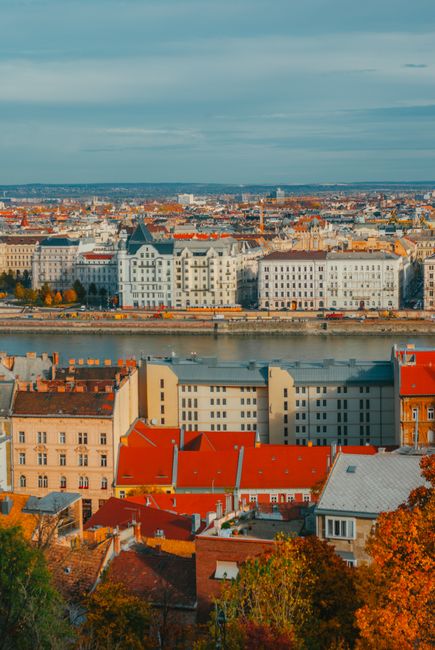
Budapest Travel Guide
Plan a trip to Budapest: Parliament tickets for EU and non-EU visitors, the Széchenyi Baths and the Gellért closure until 2028, Buda Castle, Matthias…
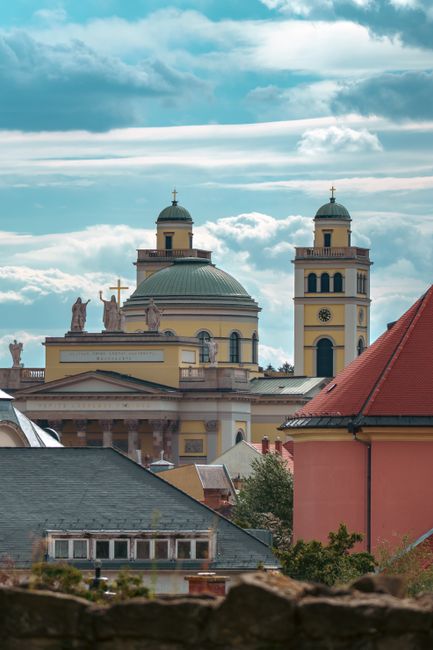
Eger Travel Guide
Plan a trip to Eger: castle tickets and hours, the 1552 siege story, the Valley of the Beautiful Women wine cellars and Egri Bikavér,…
Hévíz Travel Guide
Plan a trip to Hévíz: the warm thermal lake and its 2026–27 tickets and opening hours, water temperatures through the year, bathing advice and…
Lake Balaton Travel Guide
Plan a trip to Lake Balaton: the north and south shores town by town, Tihany Abbey and the lavender peninsula, Balatonfüred, Keszthely and the…
Best time to visit Hungary, region by region
Hungary has a continental climate with four clear seasons: warm to hot, sunny summers with thunderstorms, cold winters with frost and some snow, and short, pleasant springs and autumns. Differences between regions are modest because the country is low-lying; the south (Pécs, Szeged) is a little warmer, the north-east (Miskolc, Eger, Tokaj) a little colder in winter, and Balaton’s water keeps its shores slightly milder in autumn. Most rain falls from May to July, often in short, heavy showers. The table shows rounded average daily highs and lows and yearly rainfall from HungaroMet, the Hungarian Meteorological Service, for the official 1991–2020 period.
| Region (HungaroMet station) | Spring highs (Mar–May) | Summer highs (Jun–Aug) | Autumn highs (Sep–Nov) | Winter highs (Dec–Feb) | Winter lows (Dec–Feb) | Rain a year |
|---|---|---|---|---|---|---|
| Budapest (Pestszentlőrinc) | 11 °C rising to 23 °C | 26–28 °C | 23 °C falling to 9 °C | 3–6 °C | about −2.5 to −1.5 °C | about 590 mm |
| Lake Balaton (Siófok) | 11 °C rising to 22 °C | 26–28 °C | 22 °C falling to 9 °C | 3–5 °C | about −2 to −0.5 °C | about 560 mm |
| North-west (Győr) | 12 °C rising to 22 °C | 26–28 °C | 22 °C falling to 10 °C | 3.5–6.5 °C | about −3.5 to −2 °C | about 615 mm |
| South (Pécs) | 11.5 °C rising to 22 °C | 25.5–28 °C | 22 °C falling to 10 °C | 3.5–6 °C | about −2.5 to −1 °C | about 675 mm |
| Southern plain (Szeged) | 12 °C rising to 23 °C | 27–29 °C | 24 °C falling to 10.5 °C | 3.5–6.5 °C | about −3 to −1.5 °C | about 535 mm |
| Eastern plain (Debrecen) | 11 °C rising to 22.5 °C | 26–28 °C | 22.5 °C falling to 10 °C | 2–5 °C | about −3.5 to −2 °C | about 545 mm |
| North-east, near Eger and Tokaj (Miskolc) | 11 °C rising to 22.5 °C | 26–28 °C | 22 °C falling to 9 °C | 2–5 °C | about −4 to −2.5 °C | about 640 mm |
July is the warmest month, with average highs around 28 °C and frequent heatwaves above 30 °C; January is the coldest, with highs of only 2–3 °C and nights below freezing. Balaton’s water is usually warm enough for swimming from about June to early September. Days are long in midsummer, with light until after 20:30 in late June, and short in December, when it is dark by about 16:00.
Crowds and prices through the year
- April to early June: one of the best times to go: mild weather, blossom, outdoor café terraces reopening and moderate prices. Weekends around Easter and Whitsun are busy with Hungarian holidaymakers.
- July and August: peak season. Budapest is hot and full of visitors, and Balaton is packed, especially at weekends and during the school holidays (mid-June to the end of August), when lakeside rooms cost most. The Formula 1 Grand Prix and Sziget festival push Budapest hotel prices sharply up.
- September and October: excellent: warm, often settled weather, grape harvest and wine festivals in Eger, Tokaj, Villány and around Balaton, and thinner crowds. Many Balaton beaches, boats and seasonal restaurants close or cut back from mid-September.
- November to March: cold, often grey, but cheap outside Christmas, and the perfect time for steaming outdoor thermal pools; Hévíz’s lake stays warm all winter.
- Christmas markets: from mid-November to the end of December, Budapest’s markets on Vörösmarty Square and in front of St Stephen’s Basilica draw big crowds; book central hotels early for December weekends.
Festivals and events: late 2026 and 2027
Confirmed dates for some of the big ones, as published by the organisers or set by law:
| Event | Dates | Good to know |
|---|---|---|
| 70th anniversary of the 1956 Revolution | Friday 23 October 2026 | A national holiday; expect commemorations, flags and road closures around Parliament and in central Budapest over the long weekend of 23–25 October |
| Formula 1 Hungarian Grand Prix | 30 July – 1 August 2027 | At the Hungaroring, north-east of Budapest; hotels in the city fill up and prices rise |
| Sziget Festival | 10–14 August 2027 | One of Europe’s biggest music festivals, on Óbuda Island in the Danube in Budapest |
| St Stephen’s Day | Friday 20 August 2027 | Hungary’s national day: a craft and food festival in the Castle District and fireworks over the Danube in Budapest in the evening |
- November and December: St Martin’s Day (11 November) brings goose dishes and the first new wine; Christmas markets run in Budapest, Eger, Győr, Pécs and other towns; Budapest’s 2026 market dates had not been announced when we checked.
- February: the Busójárás in Mohács, a UNESCO-listed carnival in which men in wooden masks and sheepskins chase away winter, held in the days before Ash Wednesday (10 February 2027).
- March to May: 15 March national day celebrations, the Budapest Spring Festival of music and arts, and Easter folk traditions.
- July and August: the Valley of Arts (Művészetek Völgye) festival in the villages near Kapolcs, north of Balaton; the Kékszalag (Blue Ribbon) sailing race round the lake; Szeged’s open-air theatre festival; wine weeks in Balatonfüred and Badacsony.
- September: the Budapest Wine Festival in Buda Castle and harvest festivals in Eger, Tokaj and Villány.
Public holidays
Hungary has eleven public holidays a year, plus Easter Sunday and Whit Sunday. On the main holidays most shops close, museums often change their hours, and public transport runs a Sunday timetable. When a holiday falls on a Tuesday or Thursday, the government usually makes the Monday or Friday in between a “bridge” rest day, and a Saturday nearby becomes a working day instead, so long weekends are common and Balaton and the spa towns fill up. The next ones, from October 2026:
| Holiday | Date |
|---|---|
| 1956 Revolution Day | Friday 23 October 2026 |
| All Saints’ Day | Sunday 1 November 2026 |
| Christmas Eve (bridge rest day in 2026; Saturday 12 December is a working day instead) | Thursday 24 December 2026 |
| Christmas | Friday 25 and Saturday 26 December 2026 |
| New Year’s Day | Friday 1 January 2027 |
| 1848 Revolution Day | Monday 15 March 2027 |
| Good Friday, Easter Sunday and Easter Monday | 26, 28 and 29 March 2027 |
| Labour Day | Saturday 1 May 2027 |
| Whit Sunday and Whit Monday | 16 and 17 May 2027 |
| St Stephen’s Day | Friday 20 August 2027 |
| 1956 Revolution Day and All Saints’ Day | Saturday 23 October and Monday 1 November 2027 |
| Christmas | Saturday 25 and Sunday 26 December 2027 |
The government announces any bridge days for 2027 by the end of October 2026, so check before booking around holidays.
Weather month by month
Averages from HungaroMet normals 1991–2020, Budapest Pestszentlőrinc · Last reviewed 4 Oct 2026
How long to stay: sample itineraries
Hungary’s rail network spreads out from Budapest like the spokes of a wheel, so the capital is the natural base. Trains reach Balaton, Eger, Pécs, Győr and Debrecen in two to three hours or less; crossing between the spokes, for example from Eger to Balaton, usually means going back through Budapest. A car helps for the wine villages, Hortobágy and the north shore of Balaton, but you don’t need one in Budapest.
5 days: Budapest and a day trip
Spend three days in Budapest: the Parliament and the Danube embankment, the Castle District and Fisherman’s Bastion, St Stephen’s Basilica and Andrássy Avenue, the Jewish Quarter, a morning at the Széchenyi Baths and an evening cruise. On day four, take a day trip to the Danube Bend (Szentendre and Visegrád) or to Eger. On day five, visit a museum such as the House of Terror or the Museum of Fine Arts, or relax in another bath before you leave.
7 days: Budapest, Eger and Balaton
Three nights in Budapest, then two in Eger for the castle, the minaret, the wine cellars of the Valley of the Beautiful Women and a soak in the Turkish bath, perhaps with a day in Tokaj. Return through Budapest and take the train to Balaton for two nights in Balatonfüred or Tihany, with a boat across the lake and an afternoon at the wine cellars of Badacsony.
10 days: the classic loop
Follow the seven-day plan, then continue round Lake Balaton to Keszthely and Hévíz for two nights, with a morning on the thermal lake and a visit to the Festetics Palace. Finish with a night in Pécs or Győr on the way back to Budapest, or fly home from Budapest.
14 days: Hungary and its neighbours
Add the Great Plain (Hortobágy and Debrecen) and Tokaj in the east, or Pécs and Villány in the south. Hungary also combines easily with its neighbours: Vienna is under three hours from Budapest by train, Prague about seven, and Graz and Zagreb are within reach from western Hungary and Balaton. A classic Central European loop links Budapest, Vienna, Prague and Kraków.
Entry, money and costs
Entry: Schengen, EES and ETIAS (last reviewed October 2026)
Hungary is part of the Schengen area, so there are normally no passport checks when you arrive from Austria, Slovakia, Slovenia, Croatia or Romania. Citizens of EU and EEA countries and Switzerland can enter with a national ID card or passport. Visitors from many other countries, including the United States, Canada, the UK and Australia, can stay without a visa for up to 90 days in any 180-day period, counting time in all Schengen countries. Others need a Schengen visa from a Hungarian consulate.
- Entry/Exit System (EES): the EU’s digital border system has been fully running at all Schengen external borders since 10 April 2026. Non-EU visitors on short stays have their passport details, a photo and fingerprints recorded on their first entry instead of getting passport stamps; children under 12 are not fingerprinted. Registration is free, and the record lasts three years. In Hungary this happens at Budapest Airport for flights from outside Schengen, such as from the UK, and at the land borders with Serbia and Ukraine; allow extra time.
- ETIAS: the EU’s planned online travel authorisation (fee €20) is not in operation as of October 2026. The EU had aimed for the last quarter of 2026, but no start date has been published and press reports point to 2027. Until the EU confirms a date, you don’t need one. Ignore websites selling “ETIAS applications” before then.
- Passports: for non-EU visitors, your passport should have been issued less than 10 years before you arrive and be valid for at least 3 months after the day you plan to leave the Schengen area.
- Temporary checks at internal borders: although Hungary is inside Schengen, some neighbours run spot checks. As of October 2026, Austria has notified checks on its borders with Hungary until 15 March 2027, and Slovenia has extended checks on its borders with Hungary and Croatia until 21 December 2026. Carry your passport or ID card when you cross by car, bus or train, and expect occasional delays.
Rules change, so check the official pages before you travel: the European Commission’s EES and ETIAS pages, Hungary’s Ministry of Foreign Affairs and Trade, and your own government’s travel information.
Language
A few Hungarian words help: szia (hi, informal), jó napot (good day), köszönöm (thank you), kérem (please), egészségére (cheers, literally “to your health”), bejárat and kijárat (entrance and exit), fürdő (bath), pályaudvar (railway station), and férfi and női (men and women) on toilet doors.
Money: the forint, cards and cash
Hungary uses the forint (HUF, written Ft), not the euro. In early October 2026, one euro was worth about 368 forints at the Hungarian National Bank’s official rate, so 1,000 Ft is a little under €3. Cards and phone payments are accepted almost everywhere in Budapest and in most shops, restaurants and petrol stations elsewhere; carry some forints for market stalls, small wine cellars, beach kiosks, toilets and tips. Some hotels, tours and Balaton businesses quote prices in euros, and a few accept euro cash at a poor rate. Use bank ATMs rather than the independent “Euronet”-style machines in tourist areas, which charge high fees, and when a machine or terminal offers to charge you in your home currency, choose forints.
Tipping and service charges
Tipping is customary. In restaurants, about 10–15% is normal, but check the bill first: many Budapest restaurants add a service charge (szervízdíj) of 10–15%, and then you don’t need to add more. Hand the tip to the waiter or tell them the total you want to pay, rather than leaving it on the table. Round up taxi fares, and tip guides, bath attendants and spa therapists a little if you are happy.
VAT and tax-free shopping
Prices include VAT (ÁFA). Hungary’s standard rate of 27% is the highest in the EU, with lower rates on some foods, accommodation and books. Travellers who live outside the EU can reclaim VAT on goods they take home if they spend more than €175 (68,000 Ft in 2026, according to the Hungarian tax and customs authority, NAV) in one shop: ask for the tax refund form when you pay, keep the goods unused, and have the form stamped by customs, with your passport, receipt and goods, when you leave the EU within 90 days. At Budapest Airport, export can also be confirmed at digital kiosks. The refund is then paid by the shop or its refund agent, minus a fee. Export can’t be confirmed after you have left.
Typical travel costs
Hungary is good value by Western European standards, though Budapest prices have risen fast and central restaurants, bath tickets and Balaton in August are no longer cheap. Outside the capital, wine, food and rooms are noticeably cheaper. These estimates, per person per day, are a planning guide as of October 2026:
| Style | Estimated cost per day | What that looks like |
|---|---|---|
| Budget | about 25,000–40,000 Ft (€70–110) | Hostel dorm or simple guesthouse, bakery breakfasts and lunch menus (napi menü), public transport passes, free viewpoints and one bath or museum |
| Mid-range | about 60,000–100,000 Ft (€160–270) | Double room in a 3- or 4-star hotel shared by two, restaurant dinners with wine, a couple of paid sights a day, trains between cities |
| High-end | about 200,000 Ft+ (€540+) | Luxury hotel on the Danube or a spa resort, fine dining, private guides and wine tours |
Hotels add a local tourist tax (idegenforgalmi adó) per night, set by each town or Budapest district; it is often a percentage of the room price or a few hundred forints per person. The figures above are our estimates, not official statistics.
Getting there and getting around
Airports
- Budapest Ferenc Liszt International (BUD): almost all international flights land here, at Terminal 2, about 16 km south-east of the centre. In summer 2026, 49 airlines flew to 166 destinations, including seasonal direct flights from North America. The 100E airport express bus runs to Kálvin tér, Astoria and Deák Ferenc tér in the city centre in about 40 minutes; it needs its own airport ticket (2,500 Ft as of October 2026), sold at the purple machines outside arrivals, in the BudapestGO app or by tapping a contactless card on the bus readers.
- Hévíz–Balaton Airport (SOB): a small airport at Sármellék near the western end of Lake Balaton, with only a handful of seasonal and charter flights, mainly from Germany.
- Debrecen (DEB): a regional airport in the east with low-cost flights to some European cities.
Vienna Airport, closer to Győr and Sopron, is a useful alternative with more long-haul flights.
Trains: MÁV
The state railway, MÁV, runs trains from Budapest’s three main stations: Keleti (East) for Eger, Miskolc, Debrecen and many international trains; Nyugati (West) for Szeged and the Danube Bend line to Vác; and Déli (South) for Lake Balaton, with many Balaton and Vienna trains also stopping at Kelenföld. Direct trains reach Eger in just under two hours, Siófok on Lake Balaton in about one and a quarter hours and Keszthely in about two and a half to three hours, Pécs in about three hours and Vienna in under three. InterCity trains need a seat reservation, included when you buy online. Tickets are cheap by Western standards; buy in the MÁV app or at machines and ticket offices. For longer stays, an Országbérlet (national monthly pass) for 18,900 Ft as of October 2026 covers MÁV trains and Volánbusz coaches nationwide (InterCity seat reservations extra).
Buses
Volánbusz, now part of the MÁV group, runs a dense network of intercity and local buses, useful for places off the railway such as Hévíz, Tihany, Hollókő and many wine villages. Long-distance buses from Budapest leave mainly from Népliget bus station. Flixbus and other private coaches link Budapest with Vienna, Prague, Bratislava, Zagreb and further afield.
Driving and the e-matrica motorway vignette
Roads are generally good and motorways radiate from Budapest: the M1 to Győr and Vienna, the M7 to Balaton and Croatia, the M3 towards Eger and Tokaj, the M5 to Szeged and the M6 to Pécs.
- The e-matrica: to use most motorways and expressways you need an electronic vignette linked to your number plate; there is no sticker. As of October 2026, for a car (category D1) a 1-day e-matrica costs 5,550 Ft, a 10-day (“weekly”) one 6,900 Ft, a monthly one 11,170 Ft and an annual national one 61,760 Ft; annual county vignettes (7,190 Ft) cover individual counties. Buy it before you join the motorway, online at the official National Toll Payment Services site (nemzetiutdij.hu), in apps or at petrol stations, and type the number plate carefully. Cameras check plates, and the basic penalty for driving without one is 27,790 Ft. Prices change each 1 January. Hire cars usually come with a valid vignette; ask.
- Zero alcohol: Hungary has a zero-tolerance drink-driving rule; any alcohol in your blood is an offence.
- Speed limits are 130 km/h on motorways, 110 on expressways, 90 on other roads outside towns and 50 in built-up areas. Outside built-up areas, dipped headlights must be on in daytime.
- In Budapest, traffic is heavy and street parking in the centre is paid and limited, so leave the car at your hotel or a park-and-ride and use public transport.
- Licences: EU licences are valid; visitors from many other countries should carry an International Driving Permit alongside their national licence. Check with your hire company.
Boats, bikes and taxis
On Lake Balaton, the BAHART company runs passenger boats between the main resorts from spring to autumn and a car ferry between Szántód and the Tihany peninsula all year. In Budapest, public boats and sightseeing cruises run on the Danube, and in summer boats go up the river to Szentendre, Visegrád and Esztergom. Cycle paths circle Lake Balaton and follow the Danube (EuroVelo 6) and the shore of Lake Tisza. In Budapest, order licensed yellow taxis by phone or app rather than flagging cars on the street.
Culture, baths, food and everyday etiquette
Bathing is part of daily life. Hungary sits on a huge reserve of hot mineral water, and almost every town has a thermal bath (gyógyfürdő or termálfürdő), from the Ottoman domes of Budapest’s Rudas and Eger’s Turkish bath to modern family spas. Bring a swimsuit, flip-flops and a towel (or rent one); swimming caps are required in some lap pools. Medicinal pools are often meant for 20-minute soaks, and people with heart conditions or high blood pressure, or who are pregnant, should check with a doctor before using the hottest pools.
Hungarian food is hearty and full of paprika. Try gulyás (goulash, really a soup), halászlé (spicy fisherman’s soup), pörkölt (stew), paprikás csirke (chicken in paprika and sour cream), töltött káposzta (stuffed cabbage), lángos (fried dough with sour cream and cheese, a beach favourite), kürtőskalács (chimney cake) and cakes such as Dobos, Esterházy and Rákóczi túrós in a grand café. The wines are excellent and underrated: Tokaji aszú and dry Furmint, Egri Bikavér, Villány reds and Balaton whites such as Olaszrizling. Pálinka, a strong fruit brandy, is offered as a welcome; Unicum is the herbal digestif.
Hungarians are proud of their language, history and culture, polite and fairly formal at first. Greet shopkeepers when you enter, shake hands when you meet, and say egészségére while looking people in the eye when you toast. An old tradition holds that you don’t clink beer glasses, because the Habsburgs were said to have celebrated the execution of Hungarian revolutionary leaders in 1849 that way; wine and pálinka glasses are fine. Dress modestly in churches.
Safety, health, accessibility and connectivity
Safety
Hungary is a safe country to visit. In Budapest, watch for pickpockets on crowded trams (especially lines 4 and 6 and line 2 along the Danube), in the metro and in nightlife areas; check restaurant and bar bills, avoid places where friendly strangers lead you for a drink, and change money only at banks or reputable exchange offices. At Balaton, storms can blow up quickly in summer: when the shore-side warning lights flash fast, get out of the water and off the lake. Emergency numbers: 112 for all services (with English-speaking operators), or 104 for an ambulance, 105 for the fire service and 107 for police.
Health
EU and EEA visitors should bring their European Health Insurance Card (EHIC), and UK residents their GHIC, for necessary public healthcare; everyone else should have travel insurance, and private clinics in Budapest serve many foreign visitors. Pharmacies (gyógyszertár or patika) are found in every town. Tap water is safe to drink. In summer, use insect repellent near Balaton, the Danube and Lake Tisza in the evening, and check for ticks after walks in forests and meadows.
Accessibility
Budapest’s newer trams, buses and the M4 metro line are accessible, as are many museums and the bigger baths. Older metro lines, cobbled streets in the Castle District and small wine cellars can be difficult. MÁV offers assistance if you book ahead.
Connectivity and power
EU mobile plans work in Hungary at home prices under EU roaming rules. Others can buy an eSIM or a prepaid SIM from Yettel, Telekom or One. Coverage is good across the country, and Wi-Fi is standard in hotels and cafés. Hungary uses 230 V and European two-pin plugs, type F (and the slim type C, which fits the same sockets). You need an adapter for UK, US and Australian plugs; see our guide to travel adapters.
Things to do: sightseeing, wine, cycling, boat trips and beaches
- City sightseeing: Budapest’s Parliament, Castle District, basilica and grand boulevards, plus baroque Eger, Győr and Szentendre, Sopron’s medieval centre, Pécs’s Ottoman and Roman monuments and the Art Nouveau of Szeged and Kecskemét.
- Wine tasting: the cellars of Eger’s Valley of the Beautiful Women, the volcanic hills of Tokaj, Villány’s red-wine street, and Badacsony and the north shore of Balaton, where many wineries have terraces looking over the lake.
- Cycling: the Balaton cycle path (about 200 km round the lake), the Danube route north of Budapest and the flat tracks around Lake Tisza; bikes can be hired in every Balaton resort and carried on many trains.
- Boat trips: evening cruises past the floodlit Parliament in Budapest, boats up the Danube Bend, BAHART boats across Balaton between Siófok, Balatonfüred and Tihany, and sailing on the lake.
- Beaches: Balaton’s lakeside beaches (strand), from the sandy, shallow south shore to grassy lidos on the north shore; some are free, others charge a small entry fee in summer.
- Hiking: gentle hills rather than mountains: the Buda Hills above the capital, the Danube Bend’s Visegrád Hills, the volcanic buttes of the Tapolca basin above Balaton, and the Bükk and Mátra near Eger. The National Blue Trail crosses the country.
What to pack
Pack for the season: light, breathable clothes, a sun hat and sunscreen for hot summers; a warm coat, hat and gloves from November to March. Bring a swimsuit whatever the time of year, plus flip-flops or water shoes for baths and for Balaton’s stony north-shore entries. Comfortable walking shoes are essential for Budapest’s hills and cobbles, and hiking shoes help in the hills. A light rain jacket covers spring and early-summer showers and thunderstorms. Don’t forget a type F plug adapter if you come from outside continental Europe.
Hungary travel FAQ
When is the best time to visit Hungary?
May, June and September are the best all-round months: warm, with long days and fewer crowds than in July and August. Summer is best for Lake Balaton, autumn for wine harvests, and winter for thermal baths and Christmas markets.
How many days do you need in Hungary?
Three days covers the highlights of Budapest. A week lets you add Eger and Lake Balaton, and ten days to two weeks gives time for Hévíz, Tokaj, Pécs or the Great Plain, or a side trip to Vienna.
Does Hungary use the euro?
No. Hungary uses the forint (HUF); in early October 2026, one euro was worth about 368 forints. Cards are widely accepted, but carry some forints for small purchases. Prices quoted in euros are often at a poor rate.
Is Hungary in the Schengen area?
Yes, since 2007. There are no routine passport checks from other Schengen countries, but non-EU visitors are registered by the EU’s Entry/Exit System when they arrive from outside Schengen, and Austria and Slovenia carry out temporary spot checks at their borders with Hungary.
Do I need ETIAS to visit Hungary?
Not as of October 2026. ETIAS is not yet running and the EU has not set a start date; press reports point to 2027. When it starts, the EU will announce it well in advance.
How much is the Hungarian motorway vignette?
As of October 2026, an e-matrica for a car costs 5,550 Ft for one day, 6,900 Ft for ten days and 11,170 Ft for a month. It is electronic and linked to your number plate; buy it online at nemzetiutdij.hu, in an app or at a petrol station before you join the motorway.
Is the Gellért Baths open?
No. The Gellért Baths closed on 30 September 2025 for a full renovation and are planned to reopen in 2028. Széchenyi, Rudas, Lukács and other Budapest baths remain open.
Can I get around Hungary without a car?
Yes. Trains link Budapest with Eger, Lake Balaton, Pécs, Győr, Debrecen and Szeged, and buses fill the gaps, for example to Hévíz and Tihany. A car is handy for wine villages and the north shore of Balaton, but not needed for a first trip.
Do you tip in Hungary?
Yes: about 10–15% in restaurants, unless a service charge is already on the bill. Give the tip directly to the waiter when you pay. Round up taxi fares and tip guides and spa staff a little.
Can I get a VAT refund in Hungary?
If you live outside the EU and spend more than €175 (68,000 Ft in 2026) in one shop, yes. Get the refund form in the shop, have it stamped by customs with your passport, receipt and unused goods when you leave the EU within 90 days, and claim the refund through the shop or its refund agent.
What plug type does Hungary use?
Type F (and type C) European two-pin plugs, at 230 V. Visitors from the UK, Ireland, North America and Australia need an adapter.
Can I swim in Lake Balaton?
Yes, from about June to early September, when the shallow water is warm. Use a supervised beach in summer, and leave the water when the storm-warning lights round the lake flash fast. Outside summer, try the warm thermal lake at Hévíz instead.
Can I combine Hungary with Vienna or Prague?
Easily. Direct trains run from Budapest to Vienna in under three hours and to Prague in about seven, and from western Hungary it is a short hop to Austria and Croatia.
Sources
- Natural Earth · Public domain · fetched 4 Oct 2026
- © OpenStreetMap contributors · ODbL · fetched 4 Oct 2026
- Wikidata · CC0 · fetched 4 Oct 2026
Sources and last review
Researched and last reviewed on 4 October 2026. Population from the Hungarian Central Statistical Office (KSH); climate from HungaroMet’s official 1991–2020 city averages; entry rules and internal border checks from the European Commission; e-matrica prices and penalties from National Toll Payment Services (nemzetiutdij.hu); VAT refunds from the Hungarian tax and customs authority (NAV); Budapest transport fares from BKK; train services from MÁV; Balaton boats from BAHART; the Gellért Baths closure from Budapest Spas; festival dates from Formula 1 and Sziget; public holidays from the Labour Code and the 2026 working-time decree. The exchange rate, Slovenia’s border-check dates, airport statistics, train journey times and some opening details come from search summaries or press reports and are flagged for checking. Daily costs are estimates. Prices, timetables and entry rules change, so check the official sites before you travel.
Plugs and power in Hungary
Hungary uses 230 V, 50 Hz and these plugs (left) and wall sockets (right):
All plug types and voltages by country → · Check what you need to pack →
Plan your trip
Partner links: TravelerCenter may earn a commission if you book, at no extra cost to you.
🇭🇺 Useful Hungarian phrases for Hungary
All 38 Hungarian phrases: restaurant, hotel, emergencies, romance (printable) →