Short answer: The best places for a wellness retreat are Ubud in Bali and Nosara in Costa Rica for yoga, Rishikesh for yoga by the Ganges, Kerala for Ayurveda, Chiang Mai for Thai massage and cool mountain air, and Iceland, Budapest, Japan’s onsen towns, the Azores and Rotorua for hot springs and thermal bathing.
This list covers ten destinations, not individual retreats or spas, each with a culture built around slowing down and landscapes that pull you outdoors. For each you get what makes it good for a retreat, the kind of retreat, the best time to go and a practical note, with links to our full guides.
1. Ubud, Bali, Indonesia
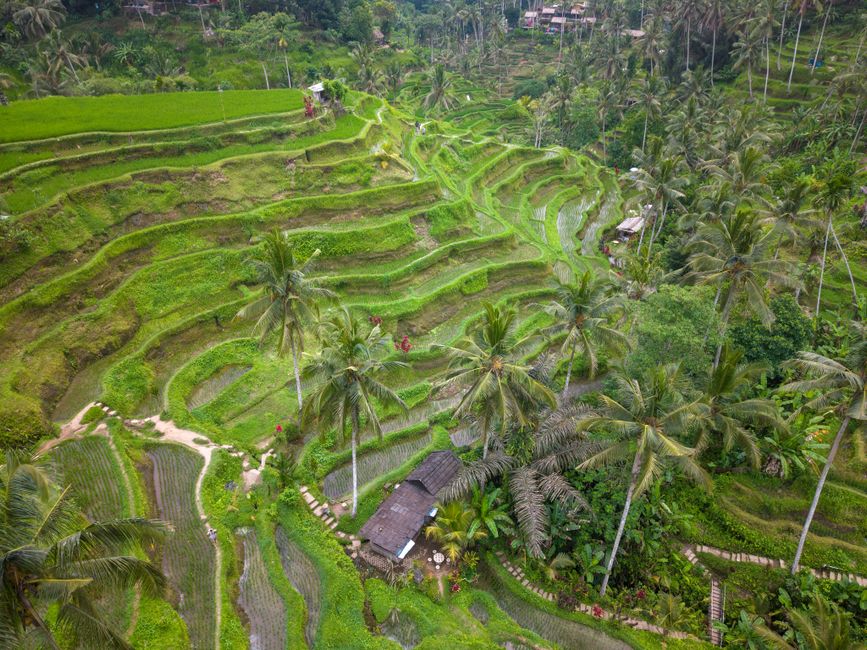
Why it is on the list: Ubud is the inland, green heart of Bali, surrounded by rice terraces, river valleys and village temples. It has long been the island’s center for traditional dance, painting and crafts, and today it is also one of the best-known yoga towns in Asia, with drop-in classes, multi-day courses and quiet guesthouses set among the paddies.
Kind of retreat: yoga, meditation and nature, with Balinese massage as an easy add-on.
Best time to go: the dry months, roughly April to October. Long-term records for Denpasar show about 2.2 inches (55 mm) of rain in July and about 1 inch (25 mm) in August, against about 13.6 inches (345 mm) in January, the wettest month.
Best things to do: start the day with a morning yoga class, then walk through the rice fields outside town or along one of the ridge paths above the river. In the evening, watch a traditional dance performance at one of the village stages.
Practical note: every foreign visitor to Bali pays the Bali Tourism Levy of IDR 150,000 per person, once per trip, through the official Love Bali website or app. If you travel in March, check the date of Nyepi, the Balinese Day of Silence: the whole island goes quiet, and Bali’s airport closes for 24 hours. See our Ubud travel guide, Bali travel guide and Indonesia travel guide.
2. Nosara, Costa Rica
Why it is on the list: Nosara, a district of Nicoya on the Pacific coast of Guanacaste, is described by Costa Rica’s tourism board as the land of “surfing, yoga and good smoothies.” Its main beach, Playa Guiones, is about 7 km (4.3 miles) of white sand with an Ecological Blue Flag for cleanliness.
Kind of retreat: yoga and surf, with plenty of nature.
Best time to go: the Pacific dry season, from December to March, according to Costa Rica’s national weather service. At Liberia, the nearest international airport, average rainfall in those months is about half an inch (12 mm) or less per month. From July to November, the Ostional Wildlife Refuge about 13 km (8 miles) north hosts mass nesting of olive ridley turtles, with the biggest arrivals in September and October.
Best things to do: take a beginner surf lesson at Guiones, where the waves suit both new and experienced surfers, and join a guided night visit to see nesting turtles at Ostional.
Practical note: roads into Nosara are gravel, and the tourism board recommends a 4×4. Access to the turtle beach at Ostional is with an accredited guide. For volcanic hot springs on the same trip, add a few days in La Fortuna. See our Costa Rica travel guide, Tamarindo travel guide and La Fortuna travel guide.
3. Chiang Mai and northern Thailand
Why it is on the list: Thailand is the home of Nuad Thai, traditional Thai massage, which UNESCO added to its list of the Intangible Cultural Heritage of Humanity in 2019. Chiang Mai, the old northern capital, pairs it with temples, mountain views and a slower pace than Bangkok or the islands, plus massage and cooking classes you can take yourself.
Kind of retreat: spa and massage, meditation and mountain nature.
Best time to go: the cool season, from November to February, which the Tourism Authority of Thailand describes as a time of crisp air that makes outdoor activities more comfortable. Avoid March and April if you can: smoke from seasonal crop and forest fires often fills the valley with haze until the rains return in May.
Best things to do: ride up to the temple on Doi Suthep, the mountain above the city, for the view at sunrise, then spend an afternoon in a traditional Thai massage. For a few quieter days, drive the winding mountain road to Pai, where the natural hot springs are about 93°F (34°C).
Practical note: dress with shoulders and knees covered for temple visits. See our Chiang Mai travel guide, Pai travel guide and Thailand travel guide.
4. Kerala, India
Why it is on the list: Kerala, on India’s southwest coast, is one of the best-known places in the world to experience Ayurveda, India’s traditional system of health care, in its home setting, with backwaters lined with coconut palms and tea-covered hills around Munnar close by.
Kind of retreat: Ayurveda, yoga and slow nature.
Best time to go: it depends on what you want. Kerala Tourism promotes the monsoon months, and especially the Malayalam month of Karkidakam (July to August), as the traditional season for Ayurveda programs. For dry weather and sightseeing, go from December to February: Kochi averages about 2.1 inches (53 mm) of rain in December and well under an inch in January and February, compared with about 23.5 inches (596 mm) in June. Days are hot all year, with highs around 91–95°F (33–35°C) in the dry months.
Best things to do: spend a night on a kettuvallam, a traditional rice barge converted into a houseboat, on the backwaters around Alappuzha, then head up to the cooler tea hills of Munnar for walks.
Practical note: Kerala’s Department of Tourism classifies Ayurveda centers under its Green Leaf and Olive Leaf schemes and lists them on keralatourism.org, which is a useful place to start when you compare options. See our Kochi travel guide, Alappuzha travel guide, Munnar travel guide and India travel guide.
5. Rishikesh, India
Why it is on the list: Incredible India, the country’s official tourism site, calls Rishikesh the “Yoga Capital of the World.” The town sits in the Himalayan foothills on the Ganges (Ganga), with ashrams and yoga schools along both banks.
Kind of retreat: yoga and meditation, with river and mountain scenery.
Best time to go: September to November and February to April, the periods Incredible India recommends. The International Yoga Festival takes place each March by the river; the 2027 edition runs from 9 to 15 March 2027, so book early if you want to go then.
Best things to do: join the evening Ganga aarti, a riverside ceremony of lamps, chants and incense on the river ghats.
Practical note: Rishikesh is a vegetarian-only and alcohol-free city, so plan your meals around that. See our Rishikesh travel guide and India travel guide.
6. Iceland
Why it is on the list: geothermal heat warms Iceland’s water, and Icelanders have turned that into a daily habit. In December 2025, UNESCO added Icelandic swimming pool culture to its list of Intangible Cultural Heritage. The Reykjavík capital area alone has 18 geothermal swimming pools. Add geothermal lagoons and wide, empty landscapes, and Iceland makes a striking place to switch off.
Kind of retreat: thermal bathing and nature.
Best time to go: any time, but September to April is northern lights season, according to Visit Iceland.
Best things to do: spend an evening in a neighborhood pool in Reykjavík the way locals do, then drive the Golden Circle to see the hot springs at Geysir and the waterfall at Gullfoss.
Practical note: pool etiquette is strict: you shower thoroughly with soap, without a swimsuit, before entering the water. A single adult entry to Reykjavík’s city pools costs ISK 1,500. See our Reykjavík travel guide, Golden Circle travel guide and Iceland travel guide.
7. Budapest and Lake Hévíz, Hungary
Why it is on the list: Budapest sits on top of thermal water. According to Budapest Spas, the city company that runs the main public baths, the city has 123 natural hot springs and drilled wells delivering about 70 million liters of thermal water a day, at temperatures from 70°F to 172°F (21–78°C). The baths range from the Turkish-era halls of Rudas and Király, about 500 years old, to the huge Széchenyi complex in City Park.
Kind of retreat: thermal baths, with an easy city break attached.
Best time to go: all year. Winter is especially atmospheric, when the outdoor pools steam in the cold air. For a quieter retreat, add Lake Hévíz in western Hungary, near Lake Balaton. Its spa describes it as the world’s largest biologically active, natural thermal lake of its kind; it covers 4.4 hectares (about 11 acres), and the water stays above 72°F (22°C) in winter and reaches 95–100°F (35–38°C) in summer, so you can swim outdoors all year.
Best things to do: spend a morning at Széchenyi’s outdoor pools, then an evening at Rudas. At Hévíz, float in the lake among the water lilies.
Practical note: the Gellért Baths closed on 1 October 2025 for renovation, with reopening expected in 2028. The Hévíz lake bath recommends sessions of 20 to 30 minutes with breaks in between. See our Budapest travel guide, Hévíz travel guide and Hungary travel guide.
8. Hakone and Beppu, Japan
Why it is on the list: Japan’s onsen (hot spring) culture is a retreat in itself: you wash, soak, rest, eat well and sleep early. Hakone, in the mountains near Mount Fuji, is about 80 minutes from Shinjuku in Tokyo on the Odakyu Romancecar. Beppu, on the island of Kyushu, has close to 3,000 hot spring sources and the largest volume of hot spring water in Japan, according to the Japan National Tourism Organization.
Kind of retreat: thermal bathing (onsen), with mountain and coastal nature.
Best time to go: autumn and winter are ideal for long soaks, and spring brings the cherry blossoms. The rainy season usually runs from early June to mid-July in both areas, according to the Japan Meteorological Agency.
Best things to do: in Hakone, stay at a traditional inn with its own baths and loop around Lake Ashi by ropeway and boat. In Beppu, try a naturally heated sand bath by the beach, then walk the “hells,” a set of boiling hot-spring pools made for looking at, not bathing; the sea-blue Umi Jigoku is 98°C (208°F).
Practical note: wash your whole body before you get in, keep the small towel out of the water, and expect most baths to be swimsuit-free. Tattoo rules vary from bath to bath, so ask ahead or book a private bath. See our Hakone travel guide, Beppu travel guide and Japan travel guide.
9. The Azores, Portugal
Why it is on the list: the Azores are volcanic islands in the middle of the Atlantic, green with pastures and dotted with crater lakes. On São Miguel, the valley of Furnas has warm iron-rich pools, steaming fumaroles and gardens, and the lakeside ground is hot enough to cook in: at Lagoa das Furnas, the local stew, cozido, is buried in pots and slow-cooked by the earth for six to seven hours.
Kind of retreat: hot springs and nature, with hiking.
Best time to go: June to September is warmest. In Ponta Delgada, average highs reach about 79°F (26°C) in August, while winter highs stay around 64°F (17.5°C), so the islands are mild year-round, just wetter and windier in winter.
Best things to do: soak in the thermal pools of Furnas and see the cozido lifted out of the ground around midday, then hike or drive up to the crater lake of Lagoa do Fogo.
Practical note: the weather changes fast, so pack a rain layer for any hike, and bring a dark swimsuit you do not mind staining, as the iron-rich water can tint light fabric. See our Furnas guide, Lagoa do Fogo guide, Azores travel guide and Portugal travel guide.
10. Rotorua, New Zealand
Why it is on the list: Rotorua, on New Zealand’s North Island, is shaped by geothermal landscapes, Māori culture, forests and lakes. Visitors have come to soak in its hot water since the mid-1800s, and today the choice runs from lakeside hot pools and mud baths to free footbaths in the city center and hot-water beaches on nearby lakes.
Kind of retreat: thermal bathing, culture and nature.
Best time to go: all year. Summer (December to February) suits lake swimming and forest walks; winter (June to August) is the coziest time for hot pools on a cold night.
Best things to do: spend an evening in a lakeside hot pool, learn about Māori culture at a cultural experience in town, and walk or bike the forest trails on the edge of the city.
Practical note: the whole town smells faintly of sulfur from the geothermal activity. See our Rotorua travel guide and New Zealand travel guide.
How to choose
- For yoga: Ubud, Nosara or Rishikesh.
- For Ayurveda: Kerala.
- For massage and spa days: Chiang Mai and northern Thailand.
- For hot springs and thermal baths: Iceland, Budapest and Hévíz, Hakone and Beppu, the Azores or Rotorua.
Plan your trip
When you have a place in mind, our free trip planner builds a day-by-day plan from our guides for your dates, travelers and budget, including rest days. Check typical weather for your dates with the Destination weather tool, and compare daily costs in Travel costs by country.
Frequently asked questions
Where is the best place for a yoga retreat?
Ubud in Bali, Nosara in Costa Rica and Rishikesh in India are three of the best-known yoga destinations. Ubud pairs yoga with rice terraces and Balinese culture, Nosara with surfing on the Pacific, and Rishikesh, which Indian tourism calls the “Yoga Capital of the World,” with ashrams on the Ganges.
Where can I go for thermal baths in Europe?
Budapest has 123 natural hot springs and drilled wells and a choice of historic public baths, and Lake Hévíz in western Hungary is a warm natural lake you can swim in all year. Iceland’s geothermal pools and the hot pools of Furnas in the Azores are other good choices.
When is the best time to go to Kerala for Ayurveda?
Kerala Tourism promotes the monsoon, especially the month of Karkidakam in July and August, as the traditional season for Ayurveda. If you prefer dry weather, go from December to February, when Kochi gets very little rain.
Can I visit Japanese onsen with tattoos?
It depends on the bath. The Japan National Tourism Organization says policies are decided case by case: many baths do not mind, small tattoos can often be covered, and private baths you book for yourself avoid the issue. Ask before you go.
Which wellness destinations are warm in winter?
Nosara in Costa Rica is in its dry season from December to March, and Kerala is dry and hot from December to February. Chiang Mai’s cool season, from November to February, brings comfortable days and fresher air.