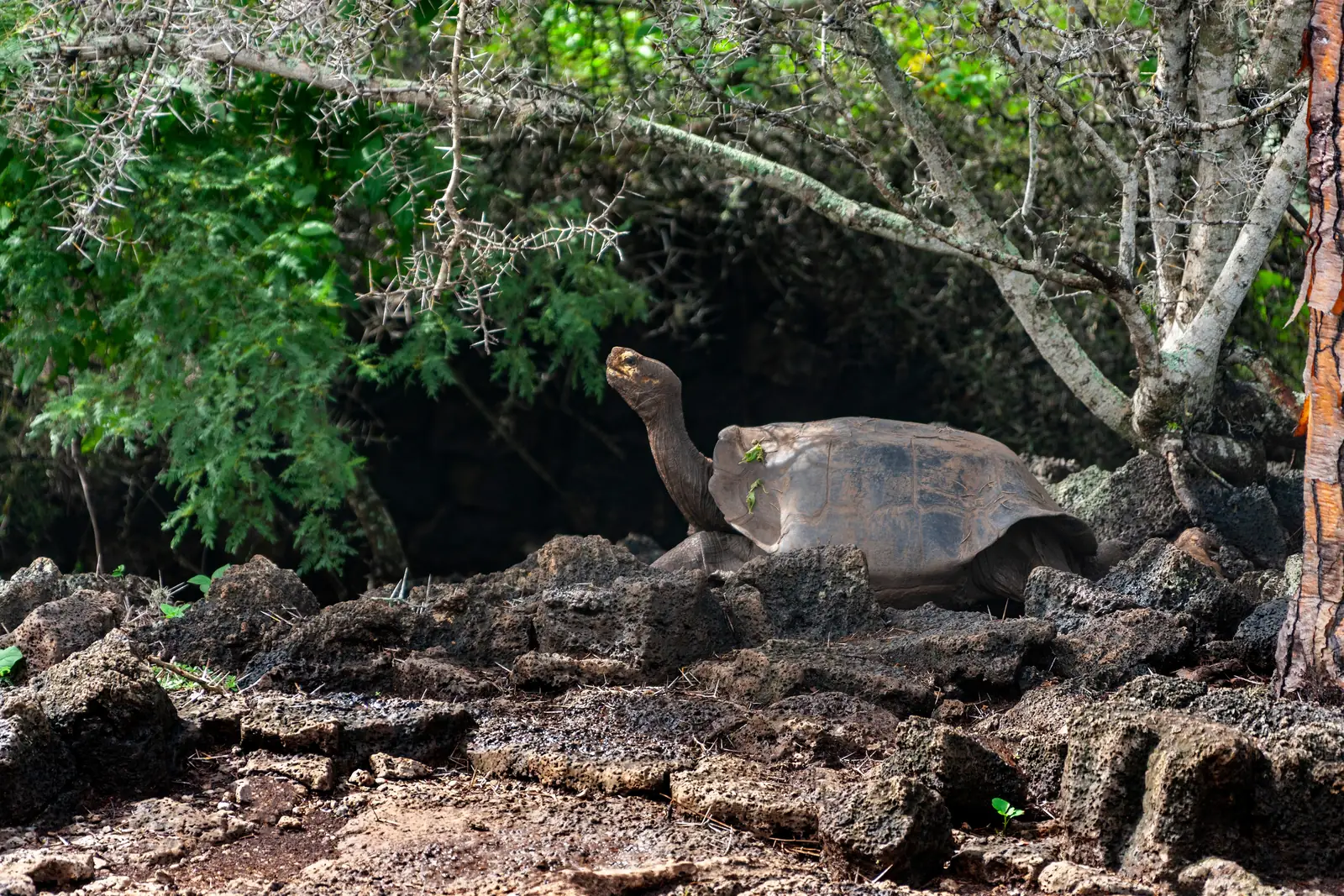
Short answer: with 7 days, spend two nights in Quito and then fly to the Galápagos for four nights on Santa Cruz and San Cristóbal, with tortoises, Tortuga Bay and a snorkel at Kicker Rock. With 10 days, add Otavalo’s market and Cotopaxi before the islands. With 14 days, either travel south down the Avenue of the Volcanoes through Quilotoa and Baños to Cuenca before the Galápagos, or swap the southern Andes for three nights in an Amazon lodge. Every route ends in the islands, and every route keeps a spare night on the mainland close to the Galápagos flight.
This guide turns the sample trips on our Ecuador travel guide into day-by-day plans, with flight and boat times, the best area to sleep and what to book ahead. June to September is the drier season in the Andes, with the clearest volcano views; the Galápagos are good all year, warm and calm from December to May and cooler, with richer marine life, from June to November. Our best time to visit Ecuador guide goes month by month, and our top 10 places to visit in Ecuador explains each stop. For a plan built around your dates and interests, use our AI trip planner. Everything here was checked as of October 2026.
The three routes at a glance
| Route | Days | Stops | Best for |
|---|---|---|---|
| Quito and the Galápagos | 7 | Quito (2 nights), Santa Cruz (2 nights), San Cristóbal (2 nights) | First trip, wildlife, a short break from the US |
| Northern Andes and the Galápagos | 10 | Quito (4 nights, with Otavalo and Cotopaxi), Santa Cruz (3 nights), San Cristóbal (2 nights) | Markets, volcanoes and islands without long road days |
| Avenue of the Volcanoes to Cuenca, then the islands | 14 | Quito (2), Quilotoa (1), Baños (2), Cuenca (3), Guayaquil (1), Santa Cruz (2), San Cristóbal (2) | Hikers, culture lovers, seeing the whole Andes |
| Andes, Amazon and the Galápagos | 14 | Quito (3), Amazon lodge (3), Quito (1), Santa Cruz (3), Isabela (2), Quito or Guayaquil (1) | Birdwatchers, families, the “four worlds” minus the coast |
All flights to the Galápagos leave from Quito or Guayaquil, so the classic shape is to fly into Quito, travel in the mountains, fly to the islands and return through Guayaquil. Booking “open-jaw” into Quito and out of Guayaquil saves a flight on the longer routes. Mainland Ecuador is on UTC−5, the same as US Eastern Standard Time in winter; the Galápagos are an hour behind.
Travel times between the main stops
These are the legs used in the plans below. Flight times to the islands come from Ecuador’s Ministry of Tourism, and the Baltra transfer from the Galápagos National Park Directorate; road and boat times are approximate and depend on traffic, weather and the sea. Mountain roads are slow, and landslides can close them in the rainy season, so travel by day and allow slack.
| Leg | How | Time | Source |
|---|---|---|---|
| Guayaquil – Baltra or San Cristóbal (Galápagos) | Flight | about 1 h 50 | Ministry of Tourism |
| Quito – Baltra or San Cristóbal | Flight, usually via Guayaquil | up to about 2 h 30 | Ministry of Tourism |
| Baltra airport – Puerto Ayora (Santa Cruz) | Free bus, channel ferry, bus | about 10 + 10 + 45 min | Galápagos National Park Directorate |
| San Cristóbal airport – Puerto Baquerizo Moreno | Bus or taxi | about 10 min | Galápagos National Park Directorate |
| Santa Cruz – San Cristóbal, Santa Cruz – Isabela | Public speedboat (lancha), usually morning and afternoon | about 2 h (approximate; open sea) | Local operators |
| Quito airport – Quito center | Taxi or transfer | about 45 min–1 h 15 (approximate) | Traffic dependent |
| Quito – Otavalo | Road | about 2 h (approximate) | Road distance |
| Quito – Cotopaxi National Park | Road | about 1 h 30 (approximate) | Road distance |
| Quito – Quilotoa | Road | about 3–4 h (approximate) | Road distance |
| Quito – Mindo | Road | about 2 h (approximate) | Road distance |
| Quito – Cuenca | Flight / bus | about 50 min / about 9–10 h (approximate) | Flight schedules, bus companies |
| Cuenca – Guayaquil | Bus or shared van through Cajas | about 3–4 h (approximate) | Bus companies |
| Cuenca – Cajas National Park / Ingapirca | Road | about 30–45 min / about 2 h (approximate) | Road distance |
Before every Galápagos flight you need three things at the Quito or Guayaquil airport: the US$20 Transit Control Card from the Galápagos Governing Council counter (pre-register online), a biosecurity check of your bags, and cash for the national park fee, US$200 for foreign visitors over 12, which you pay on landing. Allow extra time at the airport for all three.
7 days: Quito and the Galápagos
The classic first trip: a taste of the Andes, then four nights on two islands. It works in any month, though the islands feel different in each season.
- Day 1, Quito: Arrive at Mariscal Sucre airport and transfer into town. Quito sits at about 2,850 m (9,350 ft), so take an easy afternoon: the Plaza Grande, the cathedral and an early dinner. Sleep: the historic center or La Floresta.
- Day 2, Quito: The TelefériQo cable car in the clear morning, then La Compañía, San Francisco and the Basílica, and an evening on La Ronda. If you have the energy, swap the cable car for the Middle of the World monument, about 45 minutes north. Sleep: same.
- Day 3, fly to the Galápagos: Morning flight to Baltra (up to about 2 h 30 with the Guayaquil stop). Bus, channel ferry and bus to Puerto Ayora, then the giant tortoises in the Santa Cruz highlands in the afternoon. Sleep: Puerto Ayora, Santa Cruz.
- Day 4, Santa Cruz: The Charles Darwin Research Station early, then the paved path to Tortuga Bay for the beach and marine iguanas, and a swim in Las Grietas. Or book a licensed day boat to North Seymour or South Plaza. Sleep: same.
- Day 5, to San Cristóbal: Afternoon speedboat (about 2 hours), after a morning at the beach or the lava tunnels. Sunset with the sea lions on the Puerto Baquerizo Moreno waterfront. Sleep: Puerto Baquerizo Moreno.
- Day 6, Kicker Rock: A day boat to León Dormido (Kicker Rock) for snorkeling with rays, turtles and often sharks, or snorkel from shore at Cerro Tijeretas and La Lobería. Sleep: same.
- Day 7, home: San Cristóbal’s airport is about 10 minutes from town. Fly to Guayaquil or Quito for your flight home.
Swap it: prefer one base and fewer boats? Stay four nights in Puerto Ayora and use day boats to reach the other islands. Prefer a cruise? A four-night small-ship cruise replaces days 3 to 7 and reaches remote islands that day boats can’t. More on each island, the park rules and the boats is in our Galápagos Islands guide, and on the capital in our Quito guide.
10 days: the northern Andes and the Galápagos
Four nights in Quito give you time to adjust to the altitude and to see two of Ecuador’s great day trips, a market and a volcano, before five nights on the islands. Plan the Otavalo day for a Saturday, the biggest market day.
- Day 1, Quito: Arrive and rest. A short evening walk around the Plaza Grande. Sleep: the historic center, La Floresta or La Mariscal (4 nights).
- Day 2, the old town: Churches, plazas and museums of the historic center, the Mercado Central for lunch, La Ronda at night.
- Day 3, Otavalo: About 2 hours north to the Plaza de los Ponchos, which the Ministry of Tourism calls the largest Indigenous market in Latin America, then the Peguche waterfall or Lake San Pablo on the way back.
- Day 4, Cotopaxi: About 1.5 hours south to Cotopaxi National Park: a walk toward the refuge, a mountain-bike descent or horseback riding on the páramo. Go with a licensed guide or tour; clear mornings are best, especially from June to September.
- Day 5, to Santa Cruz: Fly to Baltra and transfer to Puerto Ayora; highland tortoises in the afternoon. Sleep: Puerto Ayora (3 nights).
- Day 6, Santa Cruz: Darwin Station, Tortuga Bay and Las Grietas.
- Day 7, a day boat: North Seymour for blue-footed boobies and frigatebirds, or South Plaza, or Bartolomé for the Pinnacle Rock view. Day tours last about six to seven hours.
- Day 8, to San Cristóbal: Morning speedboat (about 2 hours). Afternoon at Cerro Tijeretas. Sleep: Puerto Baquerizo Moreno (2 nights).
- Day 9, Kicker Rock: A full-day boat trip with snorkeling, or a kayak and the beaches of the north shore.
- Day 10, home: Fly from San Cristóbal to Guayaquil or Quito and on home.
Swap it: replace San Cristóbal with Isabela for penguins, flamingo lagoons, the Tintoreras islets and the Sierra Negra caldera; then return to Santa Cruz by the early boat on day 10 and fly from Baltra, which is a tight but common connection. Replace Cotopaxi with a night in the Mindo cloud forest, about two hours from Quito, if birds and orchids appeal more than volcanoes.
14 days: the Avenue of the Volcanoes, Cuenca and the islands
This route follows the Andes south, past the volcanoes the Ministry of Tourism calls the “Avenue of the Volcanoes”, to the colonial city of Cuenca, then drops to Guayaquil for the island flight. It suits June to September best, when mountain skies are clearest and Cajas is at its driest.
- Days 1–2, Quito: Arrive, then a full day in the historic center and on the TelefériQo. Sleep: the historic center or La Floresta (2 nights).
- Day 3, Cotopaxi and Quilotoa: With a driver or tour, stop at Cotopaxi National Park, then continue to the turquoise Quilotoa crater lake (about 3–4 hours from Quito in all). Sleep: Quilotoa village or Chugchilán (1 night).
- Day 4, Quilotoa to Baños: An early walk along the crater rim or down to the water, then on to Baños, a spa town below Tungurahua volcano. Sleep: Baños (2 nights).
- Day 5, Baños: The waterfall route by bike to the Pailón del Diablo, the “swing at the end of the world”, and a soak in the hot springs.
- Day 6, to Cuenca: A long road day south through the central Andes; travel in daylight and break the trip in Riobamba if you like. Sleep: Cuenca’s historic center (3 nights).
- Day 7, Cuenca: Parque Calderón and the blue domes of the New Cathedral, the flower market, a toquilla straw hat workshop, and the river walk below the Barranco.
- Day 8, Cajas or Ingapirca: Hike among the glacial lakes of Cajas National Park (about 30–45 minutes away), or visit Ingapirca, Ecuador’s most important Inca site, about 2 hours north.
- Day 9, to Guayaquil: Bus or shared van through Cajas down to the coast (about 3–4 hours). A walk on the Malecón 2000 riverfront, and an early night near the airport. Sleep: Guayaquil (1 night).
- Day 10, to Santa Cruz: Flight to Baltra (about 1 h 50), then Puerto Ayora and the highland tortoises. Sleep: Puerto Ayora (2 nights).
- Day 11, Santa Cruz: A day boat to North Seymour or South Plaza, or Tortuga Bay and Las Grietas.
- Day 12, to San Cristóbal: Morning speedboat; afternoon snorkeling at Cerro Tijeretas. Sleep: Puerto Baquerizo Moreno (2 nights).
- Day 13, Kicker Rock: The boat trip to León Dormido, or surf lessons from December to April.
- Day 14, home: Fly to Guayaquil or Quito and connect home.
Short on road time? Fly Quito–Cuenca (about 50 minutes) after day 3 and skip Baños. Details on the city and its day trips are in our Cuenca guide.
14 days: the Andes, the Amazon and the Galápagos
Ecuador’s Ministry of Tourism calls the country the land of “four worlds”. This route visits three of them: the Andes, the rainforest and the islands. The Amazon is wet all year, so any month works for the lodge stay.
- Days 1–3, Quito: The historic center, the TelefériQo, and a day trip to Otavalo (on a Saturday) or Cotopaxi. Sleep: the historic center, La Floresta or La Mariscal (3 nights).
- Day 4, into the Amazon: Most lodges on the Napo River and its tributaries meet guests in Coca (a short domestic flight) or Tena (by road over the Andes, past Papallacta’s hot springs), followed by a motorized canoe. Book the lodge with its transfers. Sleep: Amazon lodge (3 nights).
- Days 5–6, the rainforest: Dawn birdwatching from a canopy tower or a clay lick, canoe trips on blackwater creeks, night walks and a visit to a Kichwa community, all with the lodge’s guides.
- Day 7, back to Quito: Return the way you came. An easy evening in La Floresta. Sleep: Quito (1 night).
- Day 8, to Santa Cruz: Fly to Baltra. Tortoises in the highlands. Sleep: Puerto Ayora (3 nights).
- Days 9–10, Santa Cruz: The Darwin Station, Tortuga Bay, Las Grietas and a day boat to North Seymour, South Plaza or Bartolomé.
- Day 11, to Isabela: Afternoon speedboat (about 2 hours) to Puerto Villamil. Sleep: Puerto Villamil (2 nights).
- Day 12, Isabela: The Sierra Negra caldera hike in the morning, then the Tintoreras islets for penguins, marine iguanas and white-tip reef sharks.
- Day 13, back to the mainland: The early boat to Santa Cruz and a flight from Baltra to Quito or Guayaquil. Sleep: near the airport (1 night).
- Day 14, home.
The extra mainland night on day 13 protects your flight home if the boat or the island flight runs late. Families can swap Isabela for a second base on Santa Cruz to cut a boat crossing.
Where to sleep, by stop
| Stop | Best area for a short stay | Why |
|---|---|---|
| Quito | The historic center, La Floresta or La Mariscal | Restored colonial hotels next to the sights; cafés and restaurants in La Floresta; the traveler hub and tour agencies in La Mariscal. Take taxis at night |
| Quito, for an early flight | Tababela, near the airport, or Cumbayá and Tumbaco | The airport is 45 minutes to over an hour from the center |
| Quilotoa | Quilotoa village on the crater rim, or Chugchilán | Simple lodges, cold nights; many include dinner |
| Baños | The town center | Walk to the hot springs, restaurants and tour agencies |
| Cuenca | The historic center, or El Ejido across the river | Boutique hotels in colonial houses close to everything; quieter modern streets south of the Tomebamba |
| Guayaquil | Near the airport or the riverfront | A single night before the island flight |
| Santa Cruz | Puerto Ayora | The widest choice of hotels and restaurants, and the most day tours |
| San Cristóbal | Puerto Baquerizo Moreno | Sea lions on the waterfront, snorkeling from shore, 10 minutes from the airport |
| Isabela | Puerto Villamil | A quiet beachfront village |
| Amazon | A lodge on the Napo River or its tributaries | Meals, guides and canoe transfers are included |
Ecuador uses the US dollar, but bring small bills: US$50 and US$100 notes are often refused. Prices include the 15% value-added tax, and restaurants and hotels often add a 10% service charge. Cash matters most in the Galápagos, where the park fee is paid in cash and card machines are fewer.
Alternatives by interest
Wildlife lovers and divers
Give the Galápagos a whole week. A small-ship cruise of four to eight nights with a certified naturalist guide reaches remote islands such as Genovesa, Española and Fernandina, because the ship moves at night and you land somewhere new each morning. Divers who want hammerheads and whale sharks should look at the cooler months, June to November, and at liveaboards to Darwin and Wolf, which the Ministry of Tourism lists among the world’s top ten dive sites. Snorkelers who prefer warm, calm water should go from December to May. See our diving and snorkeling guides.
Hikers
Spend more time in the highlands. The Quilotoa loop is a multi-day, village-to-village walk ending at the crater lake; Cotopaxi and the TelefériQo trails above Quito climb high on the páramo; and Cajas near Cuenca has hundreds of lakes. July and August are the clearest months. Climbing glaciated summits without an accredited guide is not allowed, and Cajas asks walkers to register at the visitor center. Acclimatize in Quito for two days before going above 4,000 m (13,100 ft). Our hiking guide has gear lists.
Families
Use fewer bases and fewer boats. Quito for three nights, with the Middle of the World and the TelefériQo, then a single Galápagos base on Santa Cruz with day boats, beaches and the tortoise reserves. December to May brings the calmest sea crossings, which matters for children prone to seasickness. The Galápagos park fee is US$100 for foreign children under 12, and under-twos are exempt.
Markets, culture and food lovers
Build the trip around the Andes. Otavalo on a Saturday, a chocolate tasting in Quito, Cuenca’s markets and hat workshops, and Sunday in the craft towns of Gualaceo and Chordeleg near Cuenca. Time your visit for Inti Raymi around Otavalo in late June, the Day of the Dead on 2 November with colada morada and bread figures, or Cuenca’s Independence celebrations on 3 November. Try hornado, llapingachos and locro de papa in the highlands.
Birdwatchers
Add two nights in the Mindo cloud forest, about two hours from Quito, for hummingbirds, tanagers and orchids, and three nights in an Amazon lodge with a canopy tower. The Galápagos add more than 180 bird species, including the waved albatross on Española from about April to December and blue-footed boobies courting from May.
Tips for planning your route
- Keep a mainland night before the island flight. Flights and connections slip, and the Galápagos steps at the airport take time. Sleeping in Quito or Guayaquil the night before makes the morning calm.
- Bring cash for the park fee. US$200 for foreign visitors over 12, paid on arrival at Baltra or San Cristóbal, plus US$20 for the Transit Control Card at the mainland airport.
- Book peak weeks early. Mid-June to early September and Christmas to New Year are the busiest periods for cruises, island flights and Quito hotels.
- Respect the altitude. Quito is at about 2,850 m (9,350 ft) and Cuenca at about 2,550 m (8,370 ft). Plan an easy first day, drink water and leave the highest hikes for later in the trip.
- Plan boats around the sea. Inter-island speedboats cross open water for about two hours; they are roughest from June to November. Sit where you can reach a life jacket, and take seasickness tablets if you need them, or fly between islands on small planes.
- Drive by day, or hire a driver. Mountain roads are slow and landslides can close them in the rainy season, so travel in daylight and allow slack. A driver-guide for Cotopaxi and Quilotoa saves a lot of planning.
- Match the season to the route. June to September suits the Andes best; October to May brings afternoon showers, so plan sightseeing and hikes for the mornings. Month by month details are in our best time to visit Ecuador guide.
Ecuador itinerary FAQ
Is 7 days enough for Ecuador and the Galápagos?
Yes for Quito and four nights on the islands. You will see the highlights of Santa Cruz and San Cristóbal, but not the remote islands or the rest of the Andes. With 10 to 14 days you can add Otavalo, Cotopaxi, Cuenca or the Amazon.
How many days do I need in the Galápagos?
At least four nights, plus a night on the mainland before your island flight. Five to seven nights let you visit two or three islands or take a short cruise.
Should I start in Quito or Guayaquil?
Start in Quito if you want to see the Andes, then fly to the islands and home through Guayaquil. For a Galápagos-only trip, Guayaquil is closer: the island flight takes about 1 hour 50 minutes from there.
Is a cruise or a land-based trip better in the Galápagos?
A cruise reaches remote islands such as Genovesa and Fernandina and saves daily boat rides, but it costs more. A land-based trip from Santa Cruz, San Cristóbal and Isabela, with day boats, is cheaper and more flexible and suits travelers who get seasick at night.
Do I need a car in Ecuador?
No. Tours and private drivers cover Otavalo, Cotopaxi and Quilotoa, buses link the mainland cities, and the Galápagos towns are small, with pickup-truck taxis. Many visitors hire a driver-guide for the mountain days rather than driving themselves.
How do I get from Quito to Cuenca?
By air in about 50 minutes, or by road in about nine to ten hours through the Andes. On the 14-day route, break the road trip at Quilotoa and Baños.
What is the best month for an Ecuador and Galápagos trip?
July and August are the driest months in the Andes but the busiest in the islands. September, and April to May, are good-value compromises: mostly dry in the mountains in September, and warm, calm seas in the Galápagos in spring.
Can I add the Amazon to a short trip?
Yes, but give it three nights: the journey to most lodges takes most of a day each way, by air or road and then by canoe.
Sources
Researched and last reviewed by TravelerCenter on 8 October 2026. Galápagos flight times, the “four worlds”, the Avenue of the Volcanoes, Otavalo’s market, Darwin and Wolf, cruise lengths and day-tour lengths come from Ecuador’s Ministry of Tourism; the Baltra and San Cristóbal airport transfers, the park fee and the island descriptions from the Galápagos National Park Directorate; the Transit Control Card from the Galápagos Governing Council; seasons from the INAMHI climate normals published by the World Meteorological Organization. Road times, the Quito–Cuenca flight, inter-island speedboat times and lodge transfers come from operators and general references and are approximate. Timetables, fees and rules change, so check with the operator before you travel.
Data: Wikidata (CC0)