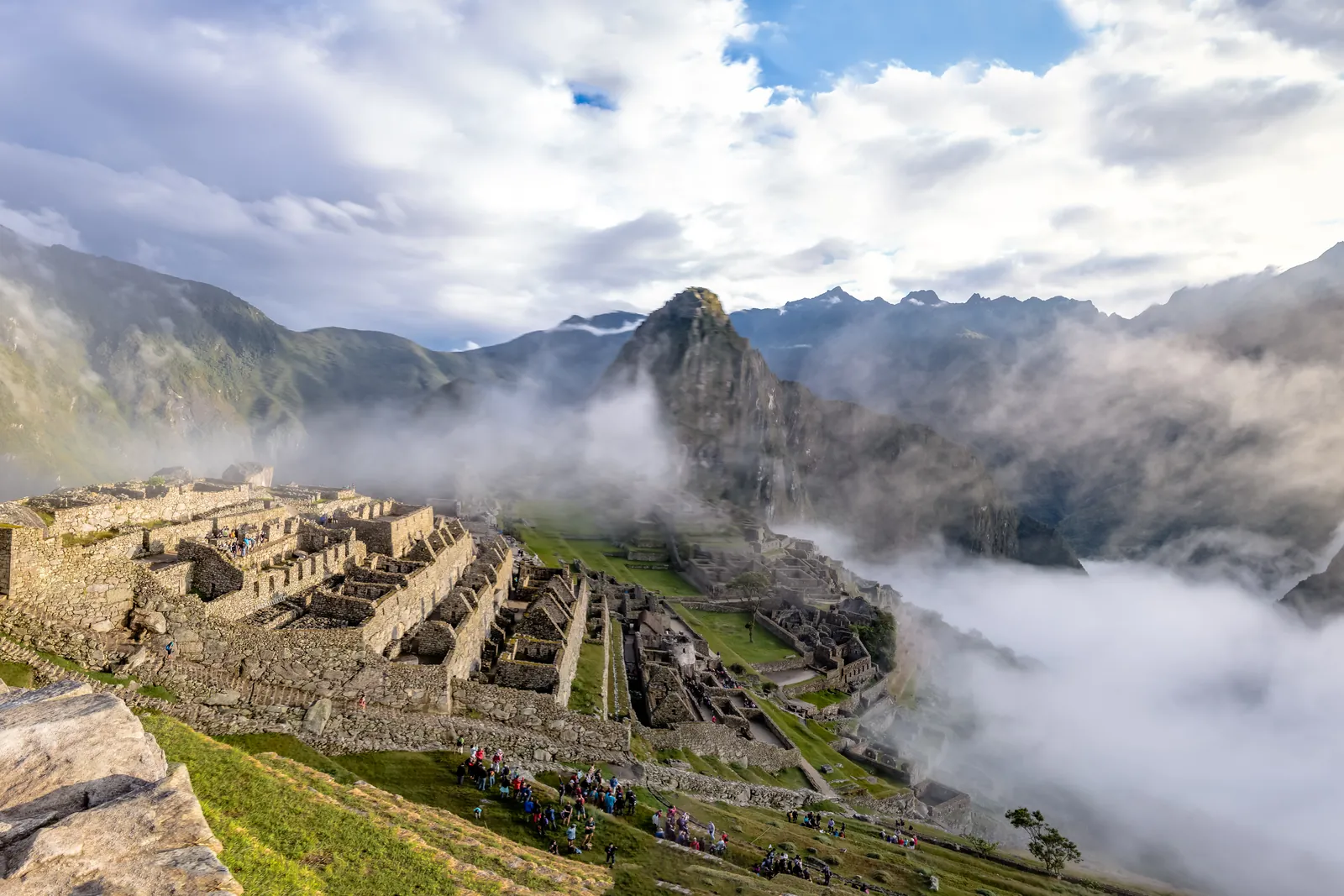
Short answer: On the ground in Peru, plan on roughly S/ 85–160 (about $25–45) per person per day on a hostel-and-set-lunch budget, S/ 315–445 (about $90–130) in a mid-range hotel shared by two, and from about S/ 480–745 (about $140–215) for four- and five-star comfort. A week therefore costs roughly $170–325, $640–905 or from $975 per person, before flights to Peru, domestic flights and the Machu Picchu day (ticket, train and bus), which can cost more than $200 on its own. For a reality check, foreign tourists spent an average of $1,232 each in Peru in 2025, over about 10 nights, according to PROMPERÚ.
Peru is good value for an adventure destination. Set lunches, local buses and many Inca sites cost little, and the sol is stable. The big costs are concentrated in one corner of the country: the trip to Machu Picchu, with its timed tickets, tourist trains and shuttle buses, plus domestic flights between Lima, Cusco, Arequipa and the Amazon. This guide breaks the costs down with official prices wherever they exist, so you can build a realistic budget for your trip to Peru. Prices in dollars are rounded and use about S/ 3.45 (soles) to the US dollar, SUNAT’s published rate on 8 October 2026; use our Money exchange tool for today’s rate.
Peru daily costs at a glance
These example days are built from the prices further down this page: one person, one city day in Cusco or Lima. They leave out flights, the Machu Picchu day, treks, Amazon lodges and shopping.
| Per person, per day | Budget | Mid-range | Comfort |
|---|---|---|---|
| Bed | Half of a simple rental at about US$36: about S/ 60 | Half of an international-brand three-star room at about US$120–130: S/ 205–225 | Half of a five-star room at about US$150–210: S/ 260–360 |
| Food | Three simple meals at S/ 7–15: S/ 21–45 | Two simple meals plus half of a S/ 70–120 dinner for two: S/ 65–120 | S/ 120–175 |
| Local transport | Buses and colectivos, one short taxi: S/ 5–20 | Taxis: S/ 15–40 | Taxis or a driver: S/ 40–80 |
| Sights | Free plazas and markets, or a share of the Boleto Turístico: S/ 0–30 | S/ 30–60 | Guided visits: S/ 60–130 |
| Total | About S/ 85–160 ($25–45) | About S/ 315–445 ($90–130) | From about S/ 480–745 ($140–215) |
Peru does not publish official hotel price statistics, so the room figures come from short-term rental data for Cusco, a hotel manager’s published average rate for a Cusco hotel, and booking-site prices for five-star hotels in Lima; meal prices are typical October 2026 Cusco and Lima prices from the crowd-sourced Numbeo index. Treat them as typical ranges, not quotes.
What visitors actually spend in Peru
PROMPERÚ, Peru’s tourism promotion board, surveys foreign tourists every year for its Perfil del Turista Extranjero (foreign tourist profile). Its 2025 study found that a foreign tourist spent an average of $1,232 in Peru, not counting international flights, and stayed 10 nights on average: roughly $123 a night, all in. The 2024 study reported an average of $1,417 over an average of 12 nights, with about a quarter of tourists spending $2,000 or more. The United States and Chile are the two biggest sources of visitors.
On our Travel costs by country scale, Peru scores 57 for travel prices (hotels, restaurants and transport) against 100 for the United States. In plain words, everyday travel costs a little over half of what it would at home, although Machu Picchu trains, tours and high-end lodges are priced for international visitors.
Accommodation costs
Cusco has the widest choice of rooms, from hostels around Plaza San Francisco to restored colonial mansions. Short-term rentals in Cusco averaged about $36 a night according to AirDNA, a cheap option when shared. At the mid-range, the general manager of Hilton’s Motto hotel in Cusco reported an average rate of about $120 a night and aimed to reach $130 in 2025. In Lima, booking-site prices for five-star hotels in San Isidro ranged from about $103 to $207 a night in early 2026, while the most exclusive hotels in Miraflores cost several times that.
One Peruvian rule can save you 18% on your room. Peru’s sales tax (IGV) is 18%, but under SUNAT’s rules hotels can treat lodging sold to non-resident foreign tourists as an export of services, without IGV, if you show your passport and your Andean Migration Card (TAM) and stay no more than 60 days. Ask whether a quoted rate includes tax, and keep your migration record on your phone. Prices peak in the dry season from May to September, especially in June and July around the Inti Raymi festival and Peru’s national holidays; see our best time to visit Peru guide.
Food and drink costs
Peru is one of the great food countries, and eating well is cheap. Numbeo’s October 2026 figures put a meal at an inexpensive restaurant at about S/ 7 in Cusco and S/ 15 in Lima (range S/ 10–30), and a three-course dinner for two at a mid-range restaurant at about S/ 70 in Cusco and S/ 120 in Lima (range S/ 70–175). A cappuccino costs about S/ 7–11, a half-liter of local beer S/ 6–9 and a fast-food combo about S/ 24 in Lima.
The set lunch, or menú del día, with soup, a main course and a drink, is the cheapest good meal in the country. Lima’s celebrated tasting-menu restaurants sit at the other end of the scale and need booking well ahead.
The Machu Picchu day: ticket, train and bus
Machu Picchu is the single biggest line in most Peru budgets, so price it separately:
- Entry ticket: sold only by timed slot and circuit on the Ministry of Culture’s official platform, tuboleto.cultura.pe, which shows the price for each route before you pay. The Ministry’s fee schedule from 2024 set the general adult rate at S/ 172 (about $50), with discounts for university students and children aged 3 to 17 and higher prices for the mountain routes. Peruvians, foreign residents and Andean Community citizens pay promotional rates in 2026, from S/ 64.
- Train: the only way to Machu Picchu Pueblo apart from walking the Inca Trail. PeruRail and Inca Rail run from Ollantaytambo and from stations near Cusco, with fares that change by service, date and departure time, so book on the operators’ sites as soon as you have your ticket.
- Bus: shuttle buses climb from Machu Picchu Pueblo to the site; a 2024 fare table published by Inca Rail lists $24 return for foreign adults ($12 one way).
- Daily limits: up to 5,600 visitors a day in high season (19 June to 2 November in 2026) and 4,500 otherwise, so tickets for June to August sell out early.
With ticket, round-trip train and bus, a day trip from Cusco or the Sacred Valley often costs more than $200 per person. Our Machu Picchu guide explains the circuits and how to choose one.
Getting around Peru
Peru is big, so most visitors combine domestic flights (Lima to Cusco, Arequipa or the Amazon) with long-distance buses for the shorter legs, such as Cusco to Puno or Lima to Paracas. Airfares and bus fares change with the date; booking early for July and August pays off. The PeruRail Titicaca train between Cusco and Puno is a scenic but premium alternative, running three times a week in each direction. In cities, a local bus ride costs about S/ 1 in Cusco and S/ 2–3 in Lima, according to Numbeo, and taxis are cheap; agree the fare first or use an app in Lima.
Sightseeing fees and free things to do
Outside Machu Picchu, sightseeing is inexpensive. Around Cusco, many Inca sites are covered not by individual tickets but by the Boleto Turístico del Cusco, sold by the regional tourism committee COSITUC: the full ticket covers 16 sites and museums over 10 days, including Sacsayhuamán, Pisac, Ollantaytambo, Chinchero, Moray, Tipón and Pikillacta. According to tour operators, it costs about S/ 130 (about $38) for foreign adults in 2026; we could not confirm the price on an official page, so check at the sales offices in Cusco. Cusco’s Cathedral, the Qorikancha and the Maras salt pans charge separately.
Free and cheap pleasures include Cusco’s and Lima’s plazas and markets, the clifftop parks of Miraflores, the white-stone streets of Arequipa, and the views over the Sacred Valley. Our top places to visit in Peru and the Peru itinerary help you plan which paid sights fit your trip.
Taxes and fees visitors pay
- IGV (sales tax): 18%, normally included in prices in shops and restaurants.
- Hotel IGV exemption: lodging for non-resident foreign tourists who show a passport and TAM and stay up to 60 days can be billed without IGV.
- Card surcharges: small businesses often add a surcharge for card payments, so carry soles.
- Overstay fines: tourists are granted up to 183 days; staying longer than the period you were given means a daily fine when you leave, so check the stay on your TAM record.
Tipping in Peru
Tipping is modest in Peru: about 10% in restaurants that do not add a service charge, S/ 5–10 a day for hotel porters and bellhops, and more for guides and drivers. On the Inca Trail and other treks, porters and cooks rely on tips, so budget for them. In Cusco, people in traditional dress with llamas expect a tip for photos; ask first. Our tip calculator works in soles.
Money-saving tips for Peru
- Ask for the rate without IGV. With your passport and TAM, the 18% sales tax should not apply to your hotel room.
- Eat the menú del día. Set lunches are the best-value meals in Peru.
- Buy the Boleto Turístico if you will visit several Inca sites around Cusco and the Sacred Valley; it covers 16 of them in 10 days.
- Book Machu Picchu early and buy the train for the same day straight away, especially for June to August.
- Travel in the shoulder months. April, May, September and October bring good Andean weather without the June–August peak.
- Carry small notes. Change for a S/ 100 or S/ 200 note can be hard to get in markets and taxis.
- Use ATMs inside banks or malls and choose to be charged in soles.
To compare Peru with other countries, see Travel costs by country.
Plan your trip: our free trip planner can build a day-by-day plan for Peru from our guides, including Lima, Cusco, the Sacred Valley, Machu Picchu and Puno. Then use the Money exchange tool to turn soles into your own currency, and the Destination weather tool to pick your dates.
Frequently asked questions
How much money do I need for a week in Peru?
Using the example days above, seven days on the ground cost roughly S/ 595–1,120 (about $170–325) per person on a tight budget, S/ 2,205–3,115 (about $640–905) mid-range, and from about S/ 3,360–5,215 (about $975–1,510) in comfort, before flights and shopping. Add the Machu Picchu day, which often costs more than $200 per person with ticket, train and bus.
Is Peru expensive?
Not for everyday travel. On our Travel costs by country scale Peru scores 57 against 100 for the United States, and set lunches start at a few soles. The expensive parts are Machu Picchu (train and ticket), domestic flights, guided treks and luxury lodges. PROMPERÚ’s 2025 survey put average spending at $1,232 per foreign tourist over about 10 nights.
Do I need cash in Peru?
Yes. Cards are accepted in hotels, restaurants, shops and for tours in tourist areas, often with a surcharge in small businesses, but markets, taxis, buses, small shops and village sites take cash only. Carry soles in small notes and use ATMs inside banks or shopping centers.
How much is the Machu Picchu ticket?
The Ministry of Culture’s 2024 fee schedule set the general adult rate at S/ 172 (about $50), with discounts for students and children and higher prices for the mountain routes. Prices are shown per circuit on the official platform, tuboleto.cultura.pe, so check the route you want there before you plan your budget.
What is the cheapest month to visit Peru?
Demand, and with it hotel and train prices, is lowest in the Andean rainy season from December to March, outside the Christmas and New Year holidays. Note that the Inca Trail closes every February for maintenance. April, May, September and October are the best balance of weather and price.