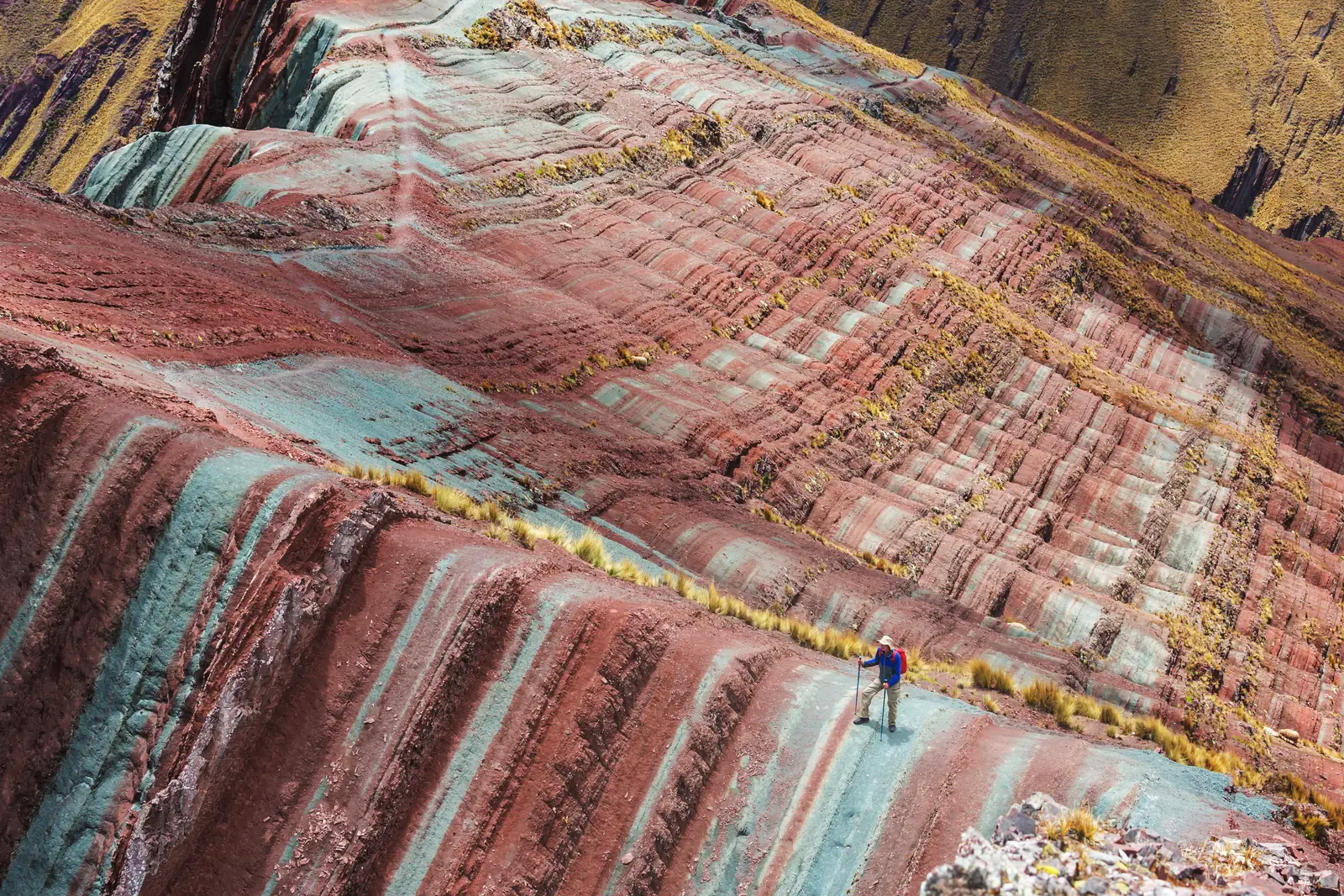
Short answer: the best time to visit Peru is May to September, the dry season in the Andes, when Machu Picchu, Cusco, the Sacred Valley and Lake Titicaca have sunny days and cold, clear nights. June to August is the busiest stretch, so April, May, September and October give the best balance of good weather and fewer crowds. On the coast the seasons are reversed: Lima and Paracas are sunny and warm from December to April, the rainy season in the mountains.
Peru’s seasons depend on where you are: the high Andes, the desert coast and the Amazon have almost opposite weather. This page goes month by month and region by region, with Machu Picchu and Inca Trail seasons, festivals such as Inti Raymi and the Candelaria, and the 2026–27 El Niño outlook, as of October 2026. For entry rules, Machu Picchu tickets and transport, see our Peru travel guide, and plan your days with our AI trip planner.
Best time to visit Peru at a glance
| Goal | Best months | Why |
|---|---|---|
| Machu Picchu and Cusco | May to September | The dry season: sunny days, almost no rain, cold nights |
| Good weather with fewer crowds | April, May, September, October | The shoulder months either side of the June–August peak |
| Inca Trail | May to September | Driest trekking weather; the trail closes for maintenance in February |
| Lake Titicaca and Puno | May to October | Dry and sunny, with freezing nights |
| Arequipa and the Colca Canyon | April to November | Sunny and dry; January to March brings some afternoon rain |
| Lima and Paracas beaches | December to April | Coastal summer: sunny and warm, with highs around 26–30 °C (79–86 °F) |
| Fewest crowds and greenest landscapes | November to March | The Andean rainy season, apart from Christmas and Holy Week |
| Festivals | February (Candelaria, Puno); June (Inti Raymi, Cusco); July (Fiestas Patrias) | Peru’s biggest celebrations |
Peru weather month by month
Weather month by month
The climate table shows average highs, lows and rain by month for Lima, at Jorge Chávez airport in Callao. Lima has no station in the World Meteorological Organization’s 1991–2020 set, so these are the older official 1961–1990 normals, from the climate table of the German Weather Service (DWD); Lima gets only about 6 mm (0.25 in) of rain a year. The Andean figures on this page are the 1991–2020 climate normals that Peru’s National Meteorology and Hydrology Service (SENAMHI) submitted to the World Meteorological Organization, for the Granja Kcayra station at 3,214 m (10,545 ft) near Cusco, which receives about 666 mm (26 in) of rain a year, almost all of it from November to March; its dry season runs from May to September. Daytime highs there barely change through the year, about 20–22 °C (68–72 °F); what changes is the rain and how cold the nights get.
Peru month by month
January
The heart of the rainy season in the Andes: Cusco gets about 146 mm (5.7 in) of rain, mostly in afternoon storms, with highs around 20 °C (68 °F) and mild nights of 7 °C (45 °F). Landslides can delay trains and roads, and Machu Picchu is often misty. On the coast it is summer: Lima is sunny and humid, and Paracas beaches are busy with Peruvian holidaymakers.
February
Still wet in the mountains, with about 126 mm (5.0 in) of rain near Cusco. The Inca Trail network closes every February for maintenance and conservation (in 2026 it was closed for the whole month and reopened on 1 March), though Machu Picchu itself stays open. Puno holds the Fiesta de la Virgen de la Candelaria, with thousands of costumed dancers, listed by UNESCO as intangible cultural heritage, and Carnival is celebrated across the Andes. Coastal summer continues.
March
The rains ease, to about 97 mm (3.8 in) near Cusco, and the valleys are at their greenest. Visitor numbers are low until Holy Week (Semana Santa), which runs from 21 to 28 March in 2027, with Holy Thursday and Good Friday (25–26 March) public holidays; processions fill Cusco and Ayacucho, and buses and hotels book up. Wine and pisco harvest festivals take place around Ica, near Paracas.
April
A shoulder month and a very good one: the rain drops to about 33 mm (1.3 in) near Cusco, the hills are still green, and the crowds of June have not arrived. Nights start to cool, to about 4 °C (40 °F). On the coast, April is the last sunny month before Lima’s gray season.
May
The dry season begins in earnest: only about 6 mm (0.2 in) of rain near Cusco, sunny days of about 21 °C (70 °F) and nights close to freezing. It is one of the best months for Machu Picchu, the Inca Trail and the Sacred Valley. Labor Day (1 May) is a public holiday, and in 2027 Corpus Christi falls on 27 May, with a celebrated procession in Cusco.
June
Dry and sunny in the Andes, with frosty nights below 0 °C (32 °F). Peak season starts: Inti Raymi, the Inca festival of the sun, is staged on 24 June at Sacsayhuamán above Cusco, and the city is packed. Machu Picchu’s high-season limit of up to 5,600 visitors a day applied from 19 June to 2 November in 2026; book tickets and trains months ahead. On the coast, the garúa, a low gray cloud with fine drizzle, settles over Lima.
July
The coldest nights of the year in the Andes, about −1 °C (30 °F) near Cusco and colder around Lake Titicaca, with clear, sunny days. It is the busiest month, with Peru’s national holidays, Fiestas Patrias, on 28 and 29 July bringing peak domestic travel. Lima is gray and cool, around 18–19 °C (64–66 °F).
August
Still dry and busy, with highs around 21.5 °C (71 °F) near Cusco and slowly warming nights. It is a good month for Arequipa and the Colca Canyon, which are sunny and dry. Coastal mornings are cool and hazy.
September
The end of the dry season and a sweet spot: still dry (about 15 mm/0.6 in of rain near Cusco), with fewer visitors than in July and August and warmer nights of about 3 °C (38 °F). The Inca Trail and treks around Cusco are excellent.
October
Mostly dry, with the first showers (about 44 mm/1.7 in near Cusco) and highs around 22 °C (71 °F). A good shoulder month for the Andes and Lake Titicaca. In Lima, the Señor de los Milagros processions fill the center with purple-robed crowds, especially on 18, 19 and 28 October.
November
The rains begin to build in the mountains (about 71 mm/2.8 in near Cusco), but mornings are often clear. Crowds thin out. All Saints’ Day (1 November) and the Day of the Dead see families at cemeteries, and Puno Week celebrates the city’s founding in early November. Lima’s summer sunshine starts to return.
December
The rainy season sets in across the Andes, with about 115 mm (4.5 in) near Cusco. Christmas and New Year are busy, but the rest of the month is quiet in the mountains. On the coast, summer begins: Lima and Paracas are sunny and warm. Public holidays fall on 8 and 9 December (Immaculate Conception and the Battle of Ayacucho) and on Christmas Day.
Best time to visit by region
Cusco
May to September for dry, sunny weather, and April, May, September and October for fewer crowds. December to March is the rainy season, with afternoon storms but greener landscapes. See our Cusco travel guide.
Machu Picchu
April, May, September and October for drier weather with fewer crowds; June to August is dry but busiest; January to March is the wettest. Machu Picchu sits lower than Cusco, at about 2,430 m (7,970 ft) on the edge of the cloud forest, so it is warmer, more humid and often misty. See our Machu Picchu guide.
Sacred Valley
May to September, the dry season; December to March is rainy. Being lower than Cusco, the valley is a little warmer, a good place to acclimatize. See our Sacred Valley guide.
Puno and Lake Titicaca
May to October for dry, sunny days, though nights are freezing. February is the month for the Candelaria festival. On the lake shore at 3,836 m (12,585 ft), highs are only about 14–16 °C (57–61 °F) all year. See our Puno travel guide.
Arequipa and the Colca Canyon
April to November, when it is sunny and dry; January to March brings some afternoon rain. See our Arequipa travel guide.
Lima
December to April for sunshine and beach weather, with highs around 26–28 °C (79–82 °F). From June to October, the city is cool, gray and damp but dry. See our Lima travel guide.
Paracas
December to April for sunny, warm beach weather; the rest of the year is cooler and often hazy in the mornings. Boat trips to the Ballestas Islands run all year, weather permitting. See our Paracas guide.
The Amazon
Hot and humid all year, and wettest from December to April, when rivers are high; the rest of the year is less wet, and trails are easier to walk.
Best time for trekking, wildlife, beaches and festivals
Trekking and the Inca Trail
May to September, when trails are dry and skies clear; book Inca Trail permits months ahead. The Inca Trail network closes in February. April and October are good alternatives with fewer people.
Wildlife
Paracas’s seabirds, sea lions and Humboldt penguins can be seen all year on the morning boat trips. Andean condors ride the morning thermals over the Colca Canyon, which is easiest to visit in the dry months from April to November.
Beaches
December to April on the central and southern coast, when Lima and Paracas are sunny.
Festivals
The Candelaria in Puno (February), Holy Week (21–28 March 2027), Corpus Christi and Inti Raymi in Cusco (late May to June), Fiestas Patrias (28–29 July) and the Señor de los Milagros in Lima (October).
Seasons to plan around
- Andean rainy season (about December to March): afternoon storms, mud on trails, and landslides that can close roads and delay trains. The Inca Trail closes in February.
- Peak season (June to August): Machu Picchu tickets, trains and Inca Trail permits sell out months ahead, and Cusco hotels fill around Inti Raymi (24 June) and Fiestas Patrias (28–29 July).
- El Niño 2026–27: Peru’s El Niño study commission, ENFEN, said on 28 September 2026 that the coastal El Niño would stay at an extraordinary magnitude until January 2027, easing toward March–May 2027. It forecast above-normal rain on the north and central coast from October to December 2026, very high coastal temperatures, and normal-to-below-normal rain in the southern highlands, including Cusco and Lake Titicaca. Heavy coastal rain can cause floods and mudslides (huaicos) that cut roads, so follow SENAMHI’s warnings and keep coastal plans flexible.
- Holiday weeks: Holy Week, Fiestas Patrias, Christmas and long weekends fill buses, flights and hotels.
- Altitude cold: nights in Cusco, Puno and the Colca Canyon drop below freezing from about May to August; pack warm layers.
How long to stay
Ten days to two weeks covers Lima, Cusco, the Sacred Valley, Machu Picchu and Lake Titicaca, with time to acclimatize; add four or five days for Arequipa and the Colca Canyon or for Paracas. See the sample itineraries in our Peru travel guide.
Best time to visit Peru: FAQ
What is the best month to visit Machu Picchu?
May or September: both are dry, with fewer visitors than June to August. April and October are good too, with a little more chance of rain.
What is the rainiest month in Peru?
In the Andes, January, with about 146 mm (5.7 in) of rain near Cusco, followed by February. Lima, by contrast, almost never rains.
Is the Inca Trail open in February?
No. The Inca Trail network closes every February for maintenance and conservation. In 2026 it reopened on 1 March. Machu Picchu itself stays open.
Is December a good time to visit Peru?
For the coast, yes: Lima and Paracas are sunny and warm. In the Andes it is the start of the rainy season, with afternoon storms, but fewer crowds and green landscapes.
When is the cheapest time to visit Peru?
November to March, outside Christmas and Holy Week, when fewer people visit the Andes. Machu Picchu entry fees don’t change by season, but hotels and tours are easier to book.
When is Inti Raymi?
On 24 June every year, with processions in Cusco and the main ceremony at Sacsayhuamán. Grandstand seats are sold in advance.
Is Peru cold in July?
In the mountains, yes at night: about −1 °C (30 °F) near Cusco and colder around Lake Titicaca, though days are sunny and around 21 °C (70 °F). Lima is cool and gray, around 18–19 °C (64–66 °F).
Sources · last reviewed 8 Oct 2026
Researched and last reviewed by TravelerCenter on 8 October 2026. Andean temperatures and rainfall are the 1991–2020 climate normals submitted by SENAMHI to the World Meteorological Organization; the El Niño outlook is from ENFEN’s statement of 28 September 2026; Machu Picchu’s 2026 capacity dates from the Ministry of Culture; the 2026 Inca Trail closure and reopening from SERNANP and the Ministry of Culture. Lima, Paracas and Amazon weather, festival dates and public holidays come from general reference and our destination guides and are flagged for checking; Holy Week and Corpus Christi 2027 dates are calculated from Easter. Check with the official sites before you travel.
Data: Wikidata (CC0)