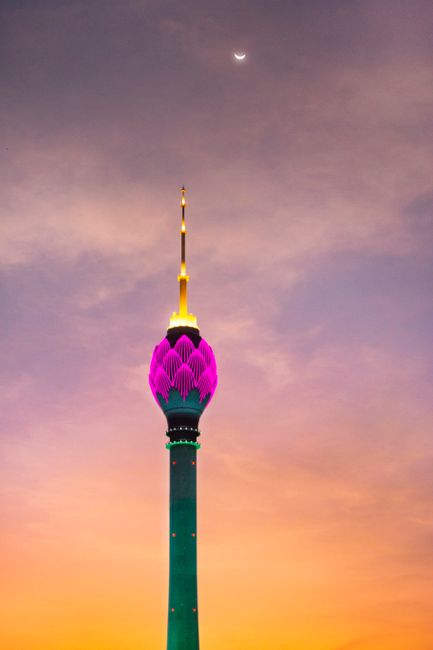
Sri Lanka is a tropical island in the Indian Ocean off the southern tip of India, about 435 km (270 miles) from north to south, yet it holds an astonishing range of things to see: palm-fringed beaches on every coast, the ruined royal cities and rock temples of the Cultural Triangle, the tea-covered hills and cool hill stations of the Central Highlands, and national parks where leopards, elephants and sloth bears roam. Eight UNESCO World Heritage Sites crowd into an area a little smaller than West Virginia, among them the rock fortress of Sigiriya, the Sacred City of Kandy and the Dutch-built fort of Galle. Distances are short, the food is spicy and generous, and the train ride through the hill country is one of the most famous in Asia. A few things need planning: every visitor needs an Electronic Travel Authorization (ETA) before arrival, though it is now free for citizens of 40 countries, including the United States, the United Kingdom, Canada and Australia; the island has two monsoons, so the best coast changes with the season; and Cyclone Ditwah, which struck in late November 2025, damaged the hill-country railway, parts of which were still being rebuilt in October 2026. Sri Lanka welcomed a record 2.36 million tourists in 2025, according to the Sri Lanka Tourism Development Authority.
Right now in Sri Lanka
- Wed 25–30°C 76–86°F 8 mm Heavy rain
- Thu 24–29°C 75–85°F 10 mm Heavy rain
- Fri 24–27°C 75–81°F 6 mm Rain
Weather: MET Norway (CC BY 4.0)
Multi-day tours of Sri Lanka
Multi-day tours from local operators. You check dates and book on Viator, our partner; we may earn a commission at no extra cost to you. How we earn money
Sri Lanka at a glance
Sri Lanka is a democratic socialist republic with a population of about 22 million. The legislative capital is Sri Jayawardenepura Kotte, a suburb on the edge of Colombo, but Colombo is the largest city, the commercial center and the home of most government offices and the main port. The country is divided into nine provinces and 25 districts. About 70% of the population is Buddhist, and there are large Hindu, Muslim and Christian communities; the main languages are Sinhala and Tamil, and English is widely spoken in tourism, business and government.
Sri Lanka uses Sri Lanka Standard Time (UTC+5:30), with no daylight saving time, half an hour behind India’s clocks and an hour and a half behind Thailand’s. Electricity is 230 V; most sockets take the British three-pin plug (type G) or the old round-pin type D, so a universal adapter is useful. The currency is the Sri Lankan rupee (LKR).
Sri Lanka’s regions
- Colombo and the west coast: the capital region, the airport at Katunayake near Negombo, and beach resorts such as Bentota and Beruwala.
- The south coast: Galle and its fort, the surf and whale-watching beaches of Hikkaduwa, Unawatuna, Weligama and Mirissa, and Tangalle’s quieter bays, with Yala and Udawalawe national parks inland.
- The Cultural Triangle: the dry plains of the north-central region, with the ancient capitals of Anuradhapura and Polonnaruwa, the Dambulla cave temple and the rock fortress of Sigiriya.
- The Hill Country: Kandy, the tea estates and hill station of Nuwara Eliya, Horton Plains, Adam’s Peak and the walking town of Ella.
- The east coast: the beaches of Trincomalee, Pasikudah and Arugam Bay, at their best from May to September.
- The north: Jaffna and the Tamil heartland, reached by train, road and a few flights.
Where to go: temples, tea country, beaches and safaris
A classic first trip loops from Colombo through the Cultural Triangle to Kandy, the tea country and Ella, then down to a south-coast beach, with a safari at Yala on the way. See our guides to each place:
- Colombo: the busy capital, with colonial Fort and Pettah’s bazaars, Gangaramaya Temple, Galle Face Green, the National Museum, excellent restaurants and the main gateway.
- Kandy: the last royal capital, home of the Temple of the Sacred Tooth Relic, a lake in the hills and the August Esala Perahera procession.
- Galle: a walled Dutch fort town on the south coast, with ramparts, cafés, boutique hotels and beaches nearby.
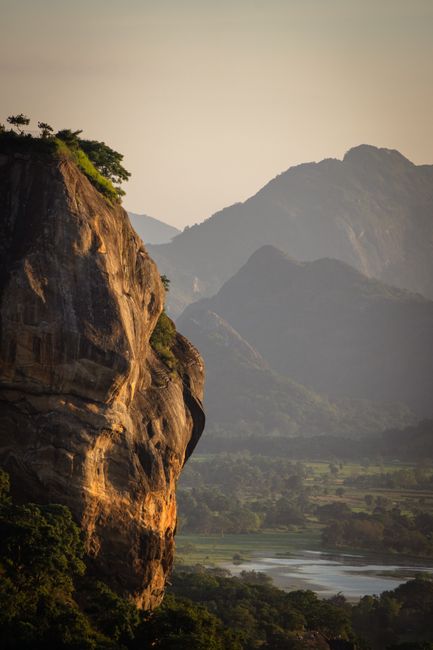
- Sigiriya: the 5th-century palace on top of Lion Rock, the best base for the Cultural Triangle, Dambulla and Minneriya’s elephants.
- Ella: a hill-country village of easy hikes, the Nine Arches Bridge and the end of the famous train ride.
- Mirissa: a crescent beach on the south coast, famous for blue-whale watching from November to April.
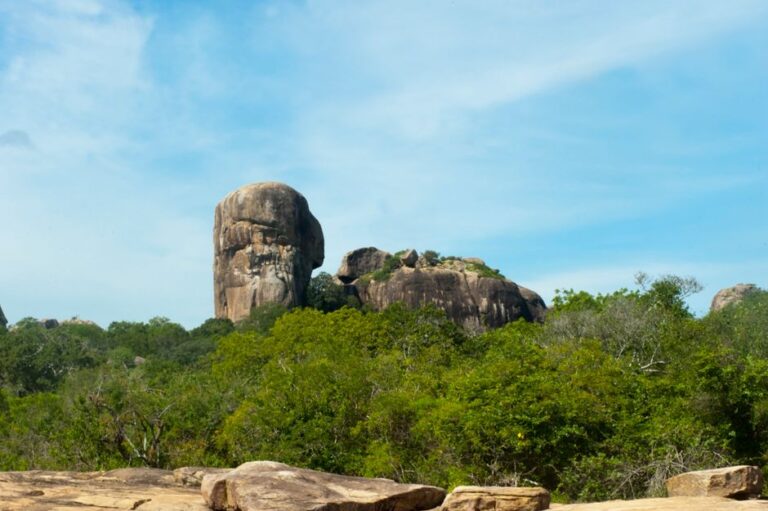
- Yala National Park: Sri Lanka’s most visited national park, known for one of the world’s densest leopard populations.
- Nuwara Eliya: the “Little England” hill station among tea estates, and the base for Horton Plains and World’s End.
Other favorites include the ancient capitals of Anuradhapura and Polonnaruwa, the Dambulla cave temple, the pilgrimage climb of Adam’s Peak (Sri Pada) from December to May, Udawalawe National Park for elephants, the Sinharaja rainforest, the surf town of Arugam Bay, Trincomalee’s beaches and whale watching in summer, and Jaffna in the far north.
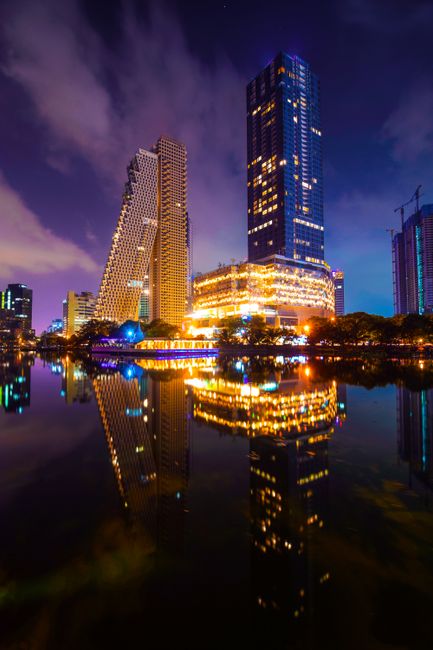
Colombo Travel Guide
Plan a trip to Colombo: Fort and Pettah, Galle Face, Cinnamon Gardens, Mount Lavinia and Negombo and where to stay, Gangaramaya Temple and Seema…
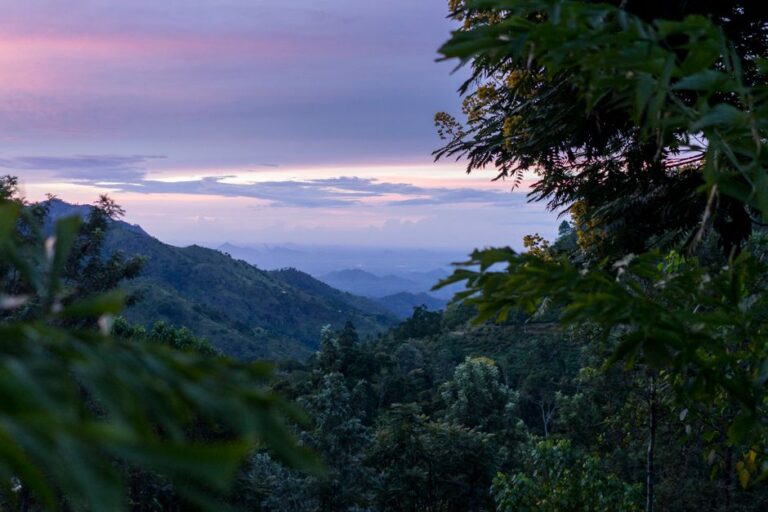
Ella Travel Guide
Plan a trip to Ella: the main street, hillsides and tea estates and where to stay, Little Adam's Peak, the Nine Arches Bridge, Ella…
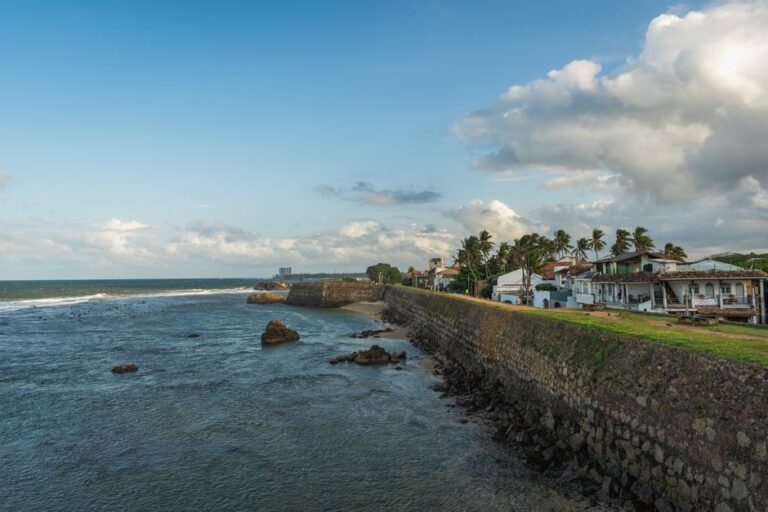
Galle Travel Guide
Plan a trip to Galle: Galle Fort, the town, Unawatuna and the coast and where to stay, the fort's story, the ramparts, lighthouse, Meeran…
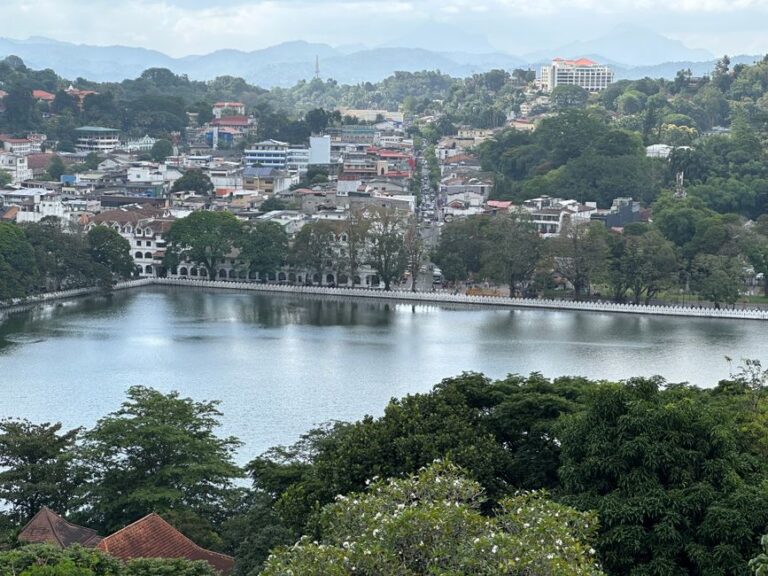
Kandy Travel Guide
Plan a trip to Kandy: the center, the lake and the hills and where to stay, the Temple of the Sacred Tooth Relic with…
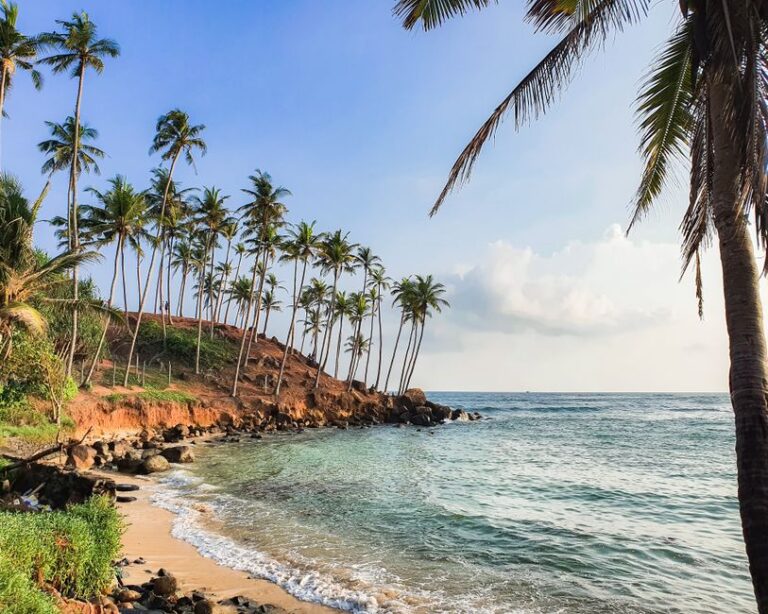
Mirissa Travel Guide
Plan a trip to Mirissa: the beach, hillsides, Weligama and Polhena and where to stay, whale watching off Dondra Head with the Navy's November–April…
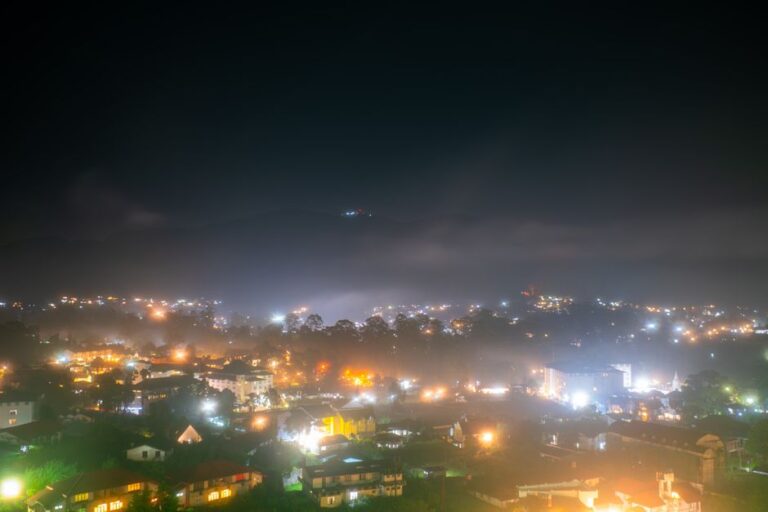
Nuwara Eliya Travel Guide
Plan a trip to Nuwara Eliya: the colonial quarter, Lake Gregory, the center and tea-estate bungalows and where to stay, tea factories, Victoria Park,…
Sigiriya Travel Guide
Plan a trip to Sigiriya: the village, forest lodges, Dambulla and Habarana and where to stay, Lion Rock with its gardens, frescoes and Mirror…
Yala National Park Travel Guide
Plan a visit to Yala National Park: DWC entry fees and online permits, gate hours, the September–October 2026 drought closure of Blocks 1 and…
Best time to visit Sri Lanka
Sri Lanka is warm all year on the coast and in the lowlands, with highs around 30–32 °C (86–90 °F), and much cooler in the hills. Its weather is ruled by two monsoons. The southwest monsoon brings rain to the west and south coasts and the western hill country from about May to September, while the east and north stay mostly dry. The northeast monsoon brings rain to the east, north and the Cultural Triangle from about November or December to February, while the west and south coasts enjoy their dry, sunny season. Between them, in April and especially October and November, inter-monsoon thunderstorms can bring heavy rain almost anywhere; the tropical cyclones that occasionally hit Sri Lanka usually come in these months, as Cyclone Ditwah did in November 2025.
In practice, December to March is the best time for the west and south coasts, Colombo, Galle, Mirissa and the hill country; May to September is the season for the east coast (Trincomalee, Pasikudah, Arugam Bay); and the Cultural Triangle is pleasant from January to September, with the driest weather from June to September. Whale watching is best off the south coast from November to April and off Trincomalee from May to October.
The table shows rounded averages from the 1991–2020 climate normals of Sri Lanka’s Department of Meteorology, as submitted to the World Meteorological Organization (WMO), for one station in each main travel area.
| Area (station) | January high / low | July high / low | Rain a year | Wettest months |
|---|---|---|---|---|
| West coast: Colombo | 31 °C (89 °F) / 23 °C (74 °F) | 30 °C (87 °F) / 26 °C (79 °F) | about 2,400 mm (94 in) | May, October and November |
| South coast: Galle | 30 °C (86 °F) / 23 °C (74 °F) | 29 °C (84 °F) / 25 °C (78 °F) | about 2,350 mm (92 in) | May, September and October |
| Hill Country: Katugastota (Kandy) | 29 °C (83 °F) / 19 °C (66 °F) | 28 °C (83 °F) / 22 °C (71 °F) | about 1,840 mm (72 in) | October and November |
| High hills: Nuwara Eliya | 20 °C (68 °F) / 10 °C (51 °F) | 19 °C (65 °F) / 14 °C (56 °F) | about 1,840 mm (72 in) | October and November |
| Cultural Triangle: Anuradhapura | 30 °C (87 °F) / 22 °C (71 °F) | 34 °C (92 °F) / 25 °C (77 °F) | about 1,400 mm (55 in) | October to December |
| East coast: Trincomalee | 29 °C (84 °F) / 24 °C (75 °F) | 35 °C (96 °F) / 26 °C (78 °F) | about 1,610 mm (63 in) | November and December |
| Dry southeast: Hambantota (for Yala) | 31 °C (88 °F) / 23 °C (74 °F) | 32 °C (89 °F) / 25 °C (77 °F) | about 1,040 mm (41 in) | November |
Sri Lanka month by month
| Month | Weather | Highlights | Crowds and prices |
|---|---|---|---|
| January | Dry and sunny in the west, south and hills; rain in the east and north | Peak beach season in the south; whale watching off Mirissa; Duruthu Perahera in Colombo | High |
| February | Mostly dry and hot across much of the island | Adam’s Peak pilgrimage season; Independence Day (February 4) | High |
| March | Hot; dry in the south and west | Good for safaris and the Cultural Triangle; whales still off the south coast | High to moderate |
| April | Very hot; inter-monsoon storms in the afternoons | Sinhala and Tamil New Year (mid-April), when many businesses close | Busy with domestic travel around New Year |
| May | Southwest monsoon starts in the west and south | Vesak full moon, with lanterns and free food stalls; east coast season begins | Lower in the south |
| June | Wet in the southwest; dry in the east and Cultural Triangle | Poson festival in Anuradhapura and Mihintale; Trincomalee and Arugam Bay | Moderate |
| July | Showery in the southwest; dry and hot in the east | Surf season at Arugam Bay; Kataragama festival | Moderate to high |
| August | Similar to July | Kandy’s Esala Perahera (August 18–28 in 2026); Minneriya’s elephant gathering | High in Kandy and on the east coast |
| September | Southwest monsoon easing; dry in the east | Elephants at Minneriya; Yala’s Blocks 1 and 2 often closed by drought | Moderate |
| October | Inter-monsoon rains island-wide | Quiet, green landscapes; lower prices | Low |
| November | Heavy inter-monsoon and northeast monsoon rains; cyclone risk | Whale season begins off the south coast | Low to moderate |
| December | Drying in the west and south; wet in the east | Christmas and New Year on the south coast; Adam’s Peak season opens | Very high around the holidays |
Monsoons, cyclones and floods
Heavy monsoon rain causes floods and landslides most years, especially in the southwest and the hill country from May to September and across the island from October to December. Cyclone Ditwah, which crossed Sri Lanka in late November 2025, caused deadly floods and landslides across much of the country, cut roads and badly damaged the railway into the hill country; Sri Lanka Railways was still restoring several sections in October 2026. Follow forecasts from the Department of Meteorology (meteo.gov.lk) and warnings from the Disaster Management Center (dmc.gov.lk), and build flexibility into a trip in the rainy months.
Festivals and holidays
- Poya days: every full moon is a public holiday, when the sale of alcohol is banned and many Buddhists visit temples dressed in white.
- Duruthu (January), Vesak (May) and Poson (June): the most important full-moon festivals; Vesak, marking the Buddha’s birth, enlightenment and death, fills towns with lanterns and roadside stalls handing out free food.
- Sinhala and Tamil New Year: April 13–14, a family holiday when transportation is crowded and many businesses close for several days.
- Kandy Esala Perahera: ten nights of torchlit processions with dancers, drummers and caparisoned elephants; in 2026 it ran from August 18 to 28, according to the Temple of the Sacred Tooth Relic.
- Deepavali, Thai Pongal, Christmas and Eid: also public holidays, reflecting the island’s mix of faiths.
How long to stay: sample itineraries
- 7 days: Colombo or Negombo (1 night), Sigiriya (2), Kandy (1), then by road to Ella (1) and down to Mirissa or Galle (2).
- 10 days: Negombo (1), Sigiriya (2), Kandy (2), Nuwara Eliya (1), Ella (2), Yala (1), and Galle (1).
- 14 days: add Anuradhapura or Polonnaruwa in the Cultural Triangle, Horton Plains from Nuwara Eliya, and three nights on the beach at Mirissa or Unawatuna.
- Three weeks: add the east coast (from May to September) or Jaffna in the north, and a few days in Colombo at the end.
Entry, money and costs
The ETA (last reviewed October 2026)
According to Sri Lanka’s Department of Immigration and Emigration, all foreign nationals must obtain an Electronic Travel Authorization (ETA) before arriving, including visitors who do not pay for it. Apply only on the official site, eta.gov.lk; many lookalike sites charge extra. A tourist ETA allows a stay of 30 days with a double entry, counted from the first arrival; you can apply for an extension after you arrive through the department’s online portal.
- Free ETA for 40 countries: since May 25, 2026, the tourist ETA has been free for citizens of Australia, Austria, Bahrain, Belarus, Belgium, Canada, China, the Czech Republic, Denmark, Finland, France, Germany, India, Indonesia, Iran, Israel, Italy, Japan, Kazakhstan, Kuwait, Malaysia, Nepal, the Netherlands, New Zealand, Norway, Oman, Pakistan, Poland, Qatar, Russia, Saudi Arabia, South Korea, Spain, Sweden, Switzerland, Thailand, Turkey, the United Arab Emirates, the United Kingdom and the United States.
- Free by agreement: Singapore and Seychelles (30 days) and the Maldives (90 days).
- Children under 12: free tourist ETA for up to 30 days, whatever their nationality.
- Everyone else: a tourist ETA costs US$50 online or at a Sri Lankan mission, or US$60 on arrival; for citizens of South Asian (SAARC) countries not on the free list, it costs US$20 online or US$25 on arrival.
Your passport should be valid for at least six months from arrival. Overstaying can lead to fines, detention and deportation.
Customs and rules to know
Declare goods that may be restricted or dutiable on arrival. Illegal drugs, including cannabis, carry very heavy penalties. Disrespecting Buddhist images is a serious offense: do not pose for photos with your back to a Buddha statue, and visible tattoos of the Buddha have led to visitors being refused entry or deported. Carry your passport or a copy as identification. Flying drones requires registration with the Civil Aviation Authority of Sri Lanka, and photography of military and security sites is not allowed.
Money and cards
The currency is the Sri Lankan rupee (LKR). On October 2, 2026, the Central Bank of Sri Lanka’s buying and selling rates were about 326 and 335 rupees to the US dollar; prices on this site use about 330. Visa and Mastercard are accepted in hotels, larger restaurants and shops, and ATMs are common in towns, though not all accept foreign cards; carry cash for tuk-tuks, small guesthouses, temple donations and park gates. Change money at banks or licensed money changers, and keep your receipts if you want to change rupees back.
Tipping
Many hotels and restaurants add a 10% service charge. Beyond that, tipping is customary for drivers, guides, safari jeep drivers and trackers, and small change is welcome for porters and temple shoe-keepers.
What a trip costs
Prices are approximate, for October 2026, converted at about 330 rupees to the US dollar.
| Item | Typical cost |
|---|---|
| Rice and curry at a local restaurant | 600–1,200 LKR (about US$1.80–3.60) |
| Dinner in a mid-range restaurant | 3,000–6,500 LKR (about US$9–20) per person |
| Bottle of Lion beer in a bar | 900–1,500 LKR (about US$2.70–4.50) |
| Tuk-tuk ride across town | 300–1,000 LKR (about US$0.90–3) |
| Reserved train seat, Colombo to Kandy | 1,000–3,000 LKR (about US$3–9) |
| Sigiriya entry, foreign adult | 11,690 LKR (US$35) |
| Temple of the Sacred Tooth Relic, foreign adult | 3,000 LKR (about US$9) |
| Half-day jeep safari at Yala, with park fees, per jeep | 30,000–50,000 LKR (about US$90–150) |
| Mid-range hotel double, per night | 15,000–35,000 LKR (about US$45–105) |
A comfortable mid-range trip costs roughly 25,000–40,000 LKR (about US$75–120) per person per day, sharing a double room, with a car and driver on top; backpackers using guesthouses, buses and trains can manage on 9,000–13,000 LKR (about US$27–40).
Getting there and getting around
Airports
Nearly all international flights land at Bandaranaike International Airport (CMB) at Katunayake, about 35 km (22 miles) north of Colombo and close to the beach town of Negombo, with direct flights from the Gulf, India, the Maldives, Southeast and East Asia, and some from Europe. SriLankan Airlines is the national carrier. Mattala Rajapaksa International Airport (HRI), in the south near Hambantota, has very few flights. From Thailand, Malaysia, Singapore and Vietnam, there are frequent direct flights; see our Thailand, Malaysia, Singapore and Vietnam guides. The expressway from the airport to Colombo takes about 30–45 minutes.
Trains and the hill-country railway
Sri Lanka Railways runs slow but scenic trains, with reserved first-class observation and air-conditioned seats, second-class seats and cheap unreserved third class. The most famous is the Main Line from Colombo through Kandy and the tea country to Ella and Badulla, and the coastal line from Colombo to Galle and Matara is also popular. Reserved seats are sold on the department’s seat-reservation website and at stations, and they sell out quickly in the high season.
Cyclone Ditwah broke the hill-country line in many places in November 2025. According to Sri Lanka Railways, trains between Badulla and Ambewela resumed on December 20, 2025, and between Badulla and Nanu Oya (the station for Nuwara Eliya), via Ella, on June 20, 2026, with four trains a day. In early October 2026, local media reported, citing Sri Lanka Railways, that trains from Colombo were again running as far as Peradeniya and Gampola, but that the Peradeniya–Kandy section and the Gampola–Nawalapitiya and Hatton–Nanu Oya sections were still being restored, so there was no through train between Kandy and Ella. Until the line reopens fully, most visitors travel from Kandy to Nuwara Eliya or Nanu Oya by road and ride the train from Nanu Oya to Ella. Check the latest timetable before you go.
Buses, cars with drivers and tuk-tuks
Government (red) and private buses link every town cheaply but are crowded and often driven fast; air-conditioned intercity buses run on the expressways. Many visitors hire a car with driver for a week or more, which is good value for small groups. Tuk-tuks are everywhere; agree on a price before you set off or use a meter or ride-hailing app such as PickMe or Uber in Colombo and other cities. Domestic flights are limited to a few seaplane and charter services.
Driving
Sri Lankans drive on the left. To drive a hired car or motorbike, you need an international driving permit under the 1949 convention and a Sri Lankan recognition permit, which the Department of Motor Traffic issues and hire companies usually help arrange. Roads are narrow and busy, and driving at night is especially risky.
National parks and World Heritage Sites
Sri Lanka has eight UNESCO World Heritage Sites:
- Sacred City of Anuradhapura and Ancient City of Polonnaruwa: the island’s great ancient capitals, with huge stupas, palaces and reservoirs.
- Ancient City of Sigiriya: the rock fortress and gardens of King Kashyapa. See our Sigiriya guide.
- Golden Temple of Dambulla: five caves filled with Buddha statues and paintings.
- Sacred City of Kandy: the Temple of the Sacred Tooth Relic and the old royal capital. See our Kandy guide.
- Old Town of Galle and its Fortifications. See our Galle guide.
- Sinharaja Forest Reserve: the island’s last large lowland rainforest.
- Central Highlands of Sri Lanka: Horton Plains, the Peak Wilderness around Adam’s Peak and the Knuckles range.
The Central Cultural Fund, which manages the main Cultural Triangle sites, sells tickets only at each site or through its eTicket website; there is no round ticket on its price list. In September 2026, foreign adults paid US$35 at Sigiriya and US$30 each at Anuradhapura and Polonnaruwa, including VAT. National parks are run by the Department of Wildlife Conservation, which sells day permits at the gates and online; the most visited are Yala, Udawalawe, Wilpattu, Minneriya and Horton Plains. See our hiking, diving, snorkeling and boat trips guides.
Culture, food and everyday etiquette
Food
Sri Lankan food is built around rice and curry: a mound of rice with half a dozen small curries of vegetables, lentils (dhal), fish or chicken, sambols and crisp papadums. Breakfast might be hoppers (bowl-shaped rice-flour pancakes, often with an egg), string hoppers (steamed rice noodles) or pol roti with coconut sambol, and kottu, chopped flatbread stir-fried with vegetables, egg or meat on a clanging griddle, is the favorite late-night dish. The coast serves superb seafood, Jaffna has its own fiery Tamil cooking, and lamprais, rice and curries baked in a banana leaf, is a Dutch Burgher legacy. Ceylon tea is everywhere, king coconut is the best thirst quencher, and the local beer is Lion; arrack, distilled from coconut sap, is the national spirit. Alcohol is not sold on poya (full-moon) days.
Tea country
Tea has shaped the hill country since British planters replaced coffee with it in the 1860s and 1870s, and “Ceylon tea” is still one of the island’s biggest exports. Estates cover the slopes around Nuwara Eliya, Hatton, Haputale and Ella, and many factories, among them Pedro near Nuwara Eliya, Damro near Labookellie and Halpewatte near Ella, run short tours that show how the leaves are withered, rolled, fermented and dried, ending with a tasting. The pluckers, mostly women from the Hill Country Tamil community, work the bushes by hand; ask before taking photos. Several old planters’ bungalows now operate as small hotels, and walking trails link estates, waterfalls and viewpoints.
Ayurveda and wellness
Ayurveda, the traditional system of medicine shared with India, is widely practiced in Sri Lanka, and many beach and hill hotels offer massages, herbal baths and multi-day treatment programs. Choose a center registered with the Sri Lanka Tourism Development Authority or the Department of Ayurveda, tell the practitioner about any medical conditions, and treat medical claims with caution. Yoga and meditation retreats are common on the south coast and in the hills.
Etiquette
Remove your shoes and hat at temples, cover shoulders and knees, and walk clockwise around stupas. Never pose with your back to a Buddha statue or touch monks; women should not sit next to a monk on buses. Use your right hand to give, receive and eat. Ask before photographing people. Public displays of affection are frowned upon away from the beach resorts, and topless sunbathing is not allowed.
Safety, health and connectivity
Sri Lanka is generally safe for visitors, and violent crime against foreigners is rare. These are the main things to know:
- Monsoon floods and landslides: most common from May to September in the southwest and hill country and from October to December across the island; follow Department of Meteorology forecasts and Disaster Management Center warnings, and expect road and rail closures after heavy rain.
- Roads: traffic is fast and chaotic, buses rarely give way, and wandering animals make night driving risky; use a professional driver and agree tuk-tuk fares in advance.
- Trains: stay inside the carriage while the train is moving; visitors leaning out of open doors on the hill-country line have been killed.
- The sea: strong currents and rip tides are common, especially on the southwest coast from May to September; swim only at calm, busy beaches and follow local flags.
- Wildlife: wild elephants cross roads near parks and in the Cultural Triangle; never approach them or feed them, and stay in your vehicle on safari.
- Petty crime and scams: bag snatching from motorbikes, touts and gem scams occur in tourist areas; buy gems only from licensed shops.
- Health: dengue fever occurs year-round, especially after the rains, so use insect repellent; drink bottled or filtered water.
- Emergencies: call 119 for police, 1990 for the free Suwa Seriya ambulance and 110 for fire; the Sri Lanka Tourism hotline is 1912.
Mobile coverage is good in towns and along main roads. Prepaid SIM cards and eSIMs from Dialog, Mobitel and other networks are sold at the airport and must be registered with your passport; Wi-Fi is standard in hotels and cafés.
Things to do: safaris, trains, temples and surf
Climb Sigiriya at sunrise, ride the hill-country train when the line reopens in full, walk among tea estates, spot leopards at Yala and elephants at Minneriya, watch blue whales off Mirissa, surf at Weligama or Arugam Bay, explore Galle’s ramparts at sunset and eat your way through a dozen curries. See our city sightseeing, beaches, surfing and cycling guides. Sri Lanka also pairs well with nearby Southeast Asia: see our Cambodia and Laos guides.
Sri Lanka travel FAQ
Do I need a visa to visit Sri Lanka?
Every foreign visitor needs an Electronic Travel Authorization (ETA) before arrival, applied for at eta.gov.lk. It allows a 30-day stay with a double entry.
Is the Sri Lanka ETA free?
Since May 25, 2026, it is free for citizens of 40 countries, including the United States, the United Kingdom, Canada, Australia, New Zealand, India, China, Japan and much of Western Europe, and for children under 12. Others pay US$50 online or US$60 on arrival.
Which countries get a free Sri Lanka visa?
The 40 countries on the Department of Immigration and Emigration’s list, from Australia to the United States, plus Singapore and Seychelles (30 days) and the Maldives (90 days) under bilateral agreements. All must still apply for the ETA.
What is the best time to visit Sri Lanka?
December to March for the west and south coasts and the hill country, May to September for the east coast, and January to September for the Cultural Triangle.
When is the monsoon in Sri Lanka?
The southwest monsoon brings rain to the west, south and hills from about May to September; the northeast monsoon wets the east and north from about November to February. October and November bring heavy inter-monsoon rain almost everywhere.
Is the Kandy to Ella train running?
Not as a through service in October 2026. Trains run between Nanu Oya and Badulla via Ella, but the line between Kandy and Nanu Oya was still being restored after Cyclone Ditwah, so most visitors travel from Kandy to Nanu Oya by road.
How do I book train tickets in Sri Lanka?
Reserved first- and second-class seats are sold on Sri Lanka Railways’ seat-reservation website and at stations; unreserved tickets are bought at the station on the day.
How much does it cost to climb Sigiriya?
US$35 (11,690 rupees) for foreign adults and US$20 for children, including VAT, according to the Central Cultural Fund’s September 2026 price list.
Is there a Cultural Triangle round ticket?
No. The Central Cultural Fund sells individual tickets at each site and through its eTicket website, such as US$30 each for Anuradhapura and Polonnaruwa.
What currency is used in Sri Lanka?
The Sri Lankan rupee (LKR), worth about 330 to the US dollar in October 2026. Cards work in hotels and larger shops; carry cash for tuk-tuks and small places.
How many days do I need in Sri Lanka?
Ten to fourteen days covers the Cultural Triangle, Kandy, the hill country, a safari and a beach; a week is enough for one or two regions.
Is Sri Lanka safe for tourists?
Yes, generally. The main risks are road traffic, strong sea currents, monsoon floods and landslides, petty theft and dengue fever.
When can I see whales in Sri Lanka?
Off the south coast, from Mirissa and Galle, from November to April, and off Trincomalee on the east coast from May to October, according to the Sri Lanka Navy’s whale-watching project.
Sources and last review
Researched and last reviewed on 4 October 2026. ETA rules, the 40-country free ETA list from May 25, 2026, bilateral free ETAs, ETA fees, child exemptions and the 30-day double entry: Sri Lanka’s Department of Immigration and Emigration (eta.gov.lk); Cultural Triangle ticket prices and ticketing rules: the Central Cultural Fund; hill-country train restorations of December 2025 and June 2026: Sri Lanka Railways; Esala Perahera 2026 dates and Temple of the Sacred Tooth Relic fees: Sri Dalada Maligawa; national parks and Yala: the Department of Wildlife Conservation; whale-watching seasons: the Sri Lanka Navy’s whale-watching project and Sri Lanka Tourism; tourist arrivals: the Sri Lanka Tourism Development Authority; exchange rate: the Central Bank of Sri Lanka; climate normals: Sri Lanka’s Department of Meteorology via the World Meteorological Organization’s 1991–2020 normals. Passport validity, the 1949 driving permit and recognition permit, the Buddha-image rules, train safety and monsoon hazards are from the UK government’s factual entry and safety pages. The October 2026 status of the Kandy–Nanu Oya line and the Peradeniya and Gampola resumptions are from local media citing Sri Lanka Railways; population, religion figures, the area comparison, airline and app names, emergency numbers and typical prices are general references or estimates, flagged for checking. Rules and prices change, so check the official sites before you go.
Plugs and power in Sri Lanka
Sri Lanka uses 230 V, 50 Hz and these plugs (left) and wall sockets (right):
All plug types and voltages by country → · Check what you need to pack →
Plan your trip
Partner links: TravelerCenter may earn a commission if you book, at no extra cost to you.
🇱🇰 Useful Sinhala phrases for Sri Lanka
All 38 Sinhala phrases: restaurant, hotel, emergencies, romance (printable) →