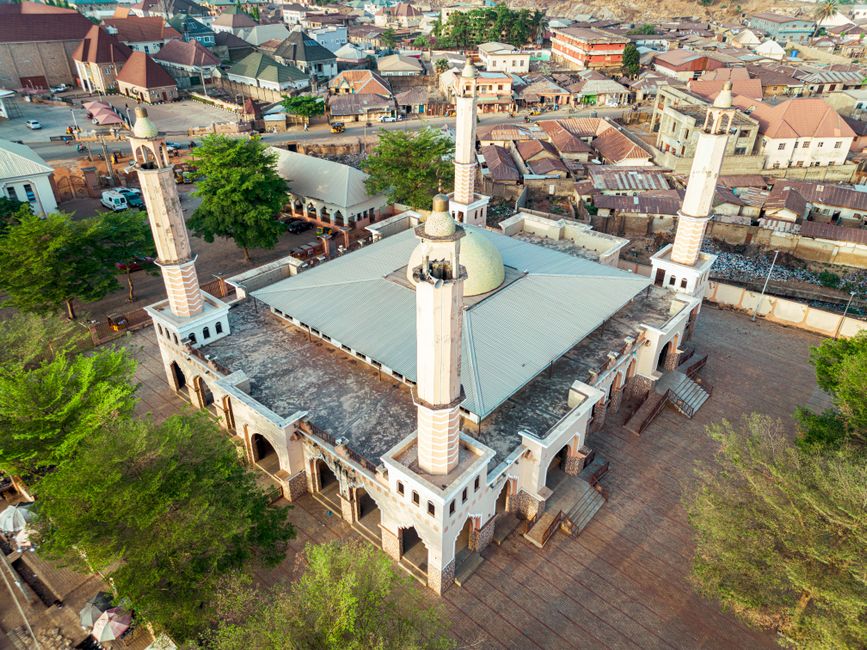
Nigeria is Africa’s most populous country and one of its great cultural powerhouses, the home of Afrobeats, Nollywood, legendary jollof rice and some of the most energetic cities on the continent. Most international visitors come for business, family or the music and festival scene, and Lagos, a fast-moving megacity on lagoons and Atlantic beaches, is where the action is, with art galleries, markets, nightclubs, beach clubs and a booming food scene, especially in the festive season known as “Detty December.” Beyond Lagos, the southwest is rich in Yoruba history and art: the UNESCO-listed Osun-Osogbo Sacred Grove, with its shrines and sculptures in the forest; Olumo Rock in Abeokuta; and the heritage town of Badagry on the coast. In the south, Benin City keeps alive the bronze-casting traditions of the old Kingdom of Benin, and Calabar, in the southeast, is known for its December carnival, colonial-era museum and nearby Obudu mountain resort. Abuja, the planned capital, sits in the center beneath the dome of Zuma Rock. Nigeria isn’t the easiest country to travel in independently: distances are long, roads are often slow and some regions are off the tourist routes. But with good planning and local contacts, it’s a fascinating and welcoming place. Before you go, apply online for an e-visa, since visas on arrival are no longer issued, carry a yellow fever certificate, and protect yourself against malaria.
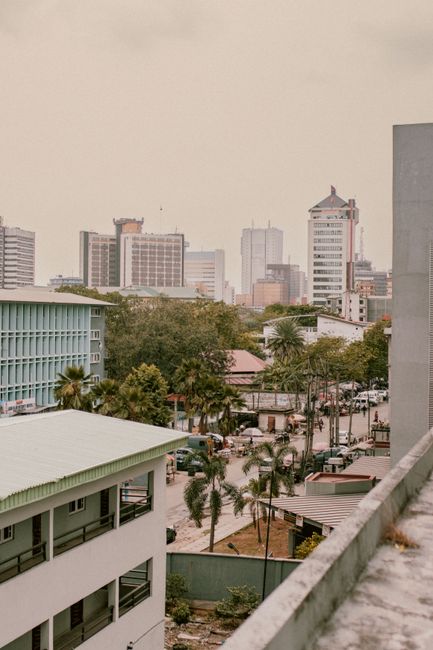
Right now in Nigeria
- Wed 21–28°C 70–82°F 7 mm Light showers
- Thu 21–28°C 70–82°F 5 mm Showers
- Fri 22–29°C 72–84°F 6 mm Cloudy
Weather: MET Norway (CC BY 4.0)
Multi-day tours of Nigeria
Multi-day tours from local operators. You check dates and book on Viator, our partner; we may earn a commission at no extra cost to you. How we earn money
Nigeria at a glance
Nigeria covers about 923,800 km² (356,700 square miles), roughly twice the size of California, stretching from the mangrove swamps and creeks of the Niger Delta and the Atlantic coast to the rainforests of the south, the central Jos Plateau and the dry savanna and Sahel of the north. The Niger and Benue rivers meet at Lokoja, near the center. Nigeria has well over 200 million people, more than any other country in Africa, and more than 250 ethnic groups. Abuja has been the capital since 1991, while Lagos, the former capital, is the largest city and commercial center. The country is a federal republic of 36 states and the Federal Capital Territory.
The official language is English, widely used in business, government and media. The largest languages are Yoruba in the southwest, Igbo in the southeast and Hausa in the north, and Nigerian Pidgin is spoken across the country. Most people in the north are Muslim and most in the south are Christian, with many who also follow traditional beliefs. Nigeria is on West Africa Time (UTC+1) all year, with no daylight saving time. Electricity is 230 V, with British-style three-pin sockets, and power cuts are common, so most hotels have generators.
A short history
Nigeria’s lands were home to ancient cultures and kingdoms, including the Nok culture known for its terracotta sculptures, the city-states of the Hausa, the Yoruba kingdoms of Ife and Oyo, whose bronze and terracotta heads are world-famous, and the Kingdom of Benin, renowned for its bronze plaques. The coast was drawn into the Atlantic slave trade, and Britain gradually took control in the 19th century, uniting the north and south as Nigeria in 1914. Nigeria became independent on October 1, 1960. Oil, discovered in the Niger Delta, became the backbone of the economy, and in recent decades Nigeria’s music, film and fashion industries have gained a global audience.
Nigeria’s regions for travelers
- Lagos and the southwest: Lagos, Badagry, Abeokuta, Ibadan, Osogbo, Ile-Ife and the Idanre Hills.
- The south: Benin City and its bronze casters, and the Ikogosi warm springs in Ekiti.
- The southeast: Calabar, the Obudu Mountain Resort, Enugu and the Cross River forests.
- Abuja and the center: the capital, Zuma Rock and the Jos Plateau.
- The north: the historic cities of the Sahel, with their old walls, emirs’ palaces and dye pits; much of this region is currently off the tourist routes.
Where to go: Lagos, Yoruba heritage, kingdoms and highlands
Most travelers base themselves in Lagos and make short trips into the southwest, or combine Lagos with Abuja and the southeast by domestic flights. See our guide to:
- Lagos: Lagos Island and Victoria Island, the Lekki Conservation Centre, Nike Art Gallery, Freedom Park, the Kalakuta Museum, beaches, markets and nightlife.
Badagry
About 60 km (37 miles) west of Lagos near the border with Benin, Badagry was a major slave-trade port. Its heritage museum, the Seriki Faremi Williams Abass slave relics museum and the walk to the “Point of No Return” on the coast tell the story of the trade, and the town also has the site of Nigeria’s first storey building, built by missionaries in the 1840s.
Abeokuta and Olumo Rock
North of Lagos, Abeokuta grew up around Olumo Rock, a granite outcrop that sheltered the Egba people in the 19th century. You can climb the rock (partly by elevator) for views over the city, and the town is known for adire, indigo tie-dyed cloth, made and sold at the Itoku market.
Osogbo and the Sacred Grove
The Osun-Osogbo Sacred Grove, on the banks of the Osun River at the edge of Osogbo, is one of the last surviving sacred forests of the Yoruba, dedicated to the river goddess Osun. Inscribed on the UNESCO World Heritage List in 2005, it’s filled with shrines, sculptures and sanctuaries, many created by the Austrian-born artist Susanne Wenger and local artists of the New Sacred Art movement. Every August, the Osun-Osogbo Festival draws thousands of worshippers and visitors. Nearby, Ile-Ife is the spiritual home of the Yoruba, with a museum of famous bronze heads.
Ibadan
Once one of Africa’s largest cities, Ibadan is a sprawling Yoruba city with the University of Ibadan, Bower’s Tower and the Cocoa House. It’s linked to Lagos by the standard-gauge railway.
Benin City
The capital of Edo State, Benin City was the seat of the Kingdom of Benin, whose Oba (king) still lives in the royal palace. On Igun Street, the bronze casters’ guild continues to cast bronze and brass using lost-wax techniques passed down for centuries. The National Museum displays royal art, and the city’s moats were once among the largest earthworks in the world.
Calabar and Obudu
In the southeast, Calabar is a relaxed, green city known for its food, its Calabar Carnival in December, the Calabar Museum in the former colonial governor’s residence, and the Slave History Museum on the waterfront. In the mountains near the Cameroon border, the Obudu Mountain Resort sits on a cool plateau at about 1,600 m (5,250 ft), with a cable car, waterfalls and hiking.
Abuja
Abuja, built as Nigeria’s capital in the 1980s, is green, orderly and spacious, with the golden-domed National Mosque, the National Christian Centre, Millennium Park and Jabi Lake. Just outside the city, the huge granite monolith of Zuma Rock rises about 300 m (1,000 ft) above the plain, and Aso Rock looms over the presidential complex.
Natural sights
Nigeria has impressive landscapes, though they’re less visited. The Idanre Hills in Ondo State have an old hilltop town reached by hundreds of steps; the Erin-Ijesha (Olumirin) Waterfalls in Osun State cascade over seven levels; and the Ikogosi Warm Springs in Ekiti, where warm and cold springs meet, have a resort and forest walks.
Heritage and homecoming trips
Many visitors are members of the Nigerian diaspora returning to see family, or travelers of African descent tracing their roots, since a large share of the people taken in the Atlantic slave trade came from the Bight of Benin and Bight of Biafra. Heritage routes combine Badagry’s slave-trade museums and Point of No Return, the Slave History Museum in Calabar, the Yoruba spiritual center of Ile-Ife and its royal palace, and the Osun-Osogbo Sacred Grove. Local guides and community elders can explain family names, traditions and festivals, and December, when many Nigerians abroad come home, is a lively time to visit, though flights and hotels fill up early.
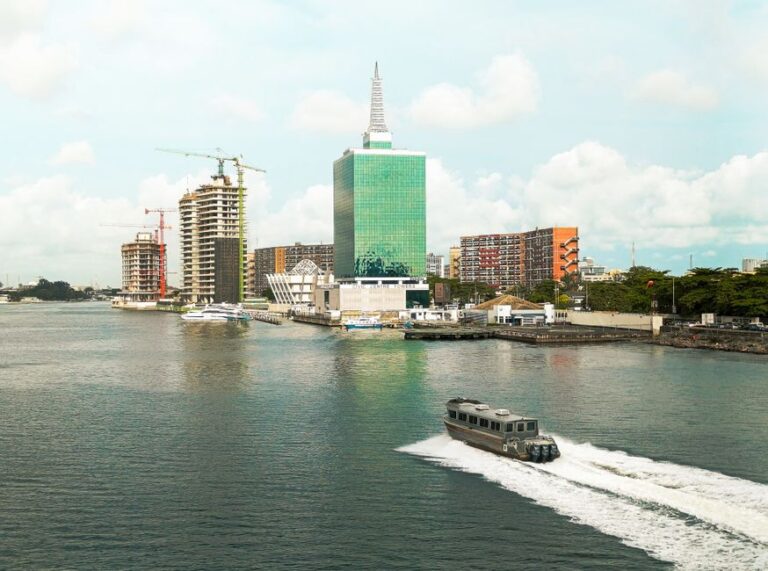
Lagos Travel Guide
Plan a trip to Lagos, Nigeria: Victoria Island, Ikoyi and Lekki, the Lekki Conservation Centre canopy walk, Nike Art Gallery, Freedom Park, the Kalakuta…
Best time to visit Nigeria
The best time to visit most of Nigeria is the dry season, from about November to March, when roads are passable, skies are clear and the big festivals take place. From about December to February, the harmattan wind blows fine Saharan dust south, bringing hazy skies, cooler nights and sometimes flight disruptions, even in Lagos. In the south, the rainy season runs from about April to October, with a short break in August known as the “little dry season” along the coast; June is usually the wettest month in Lagos, and the southeast around Calabar is one of the wettest places in West Africa. Farther north, the rains are shorter, from about May to September, and the months of March to May are very hot. Temperatures in the south stay at 28–34 °C (82–93 °F) all year, with high humidity. The table shows rounded average daily highs and lows and annual rainfall from the Nigerian Meteorological Agency (NiMet), as published by the World Meteorological Organization (WMO) in its 1991–2020 climate normals.
| Region (NiMet station) | January high / low | August high / low | Rain a year |
|---|---|---|---|
| Lagos (Ikeja) | 33 °C (92 °F) / 24 °C (74 °F) | 29 °C (84 °F) / 23 °C (73 °F) | about 1,550 mm (61 in) |
| The southwest interior (Osogbo) | 34 °C (93 °F) / 19 °C (66 °F) | 28 °C (82 °F) / 21 °C (70 °F) | about 1,380 mm (54 in) |
| The south (Benin City) | 34 °C (92 °F) / 23 °C (73 °F) | 29 °C (83 °F) / 23 °C (73 °F) | about 2,320 mm (91 in) |
| The southeast (Calabar) | 32 °C (90 °F) / 23 °C (73 °F) | 28 °C (83 °F) / 23 °C (73 °F) | about 3,020 mm (119 in) |
| Abuja and the center (Abuja) | 35 °C (95 °F) / 18 °C (65 °F) | 29 °C (84 °F) / 22 °C (71 °F) | about 1,420 mm (56 in) |
| The north (Kano) | 29 °C (85 °F) / 13 °C (56 °F) | 30 °C (87 °F) / 22 °C (71 °F) | about 1,150 mm (45 in) |
Nigeria month by month
| Month | Weather | Highlights | Crowds and prices |
|---|---|---|---|
| January | Dry; harmattan haze | New Year events; Eyo festival in Lagos in some years | Busy early in the month |
| February | Dry and hot; harmattan | Good for travel in the south and Abuja | Moderate |
| March | Hot; first storms in the south | Art and fashion events in Lagos | Moderate |
| April | Rains begin in the south; very hot in the north | Easter | Quieter |
| May | Rainy in the south | Democracy Day preparations | Low season |
| June | Wettest month in Lagos | Democracy Day (June 12) | Low season; flooding possible |
| July | Heavy rain in the south | Green landscapes | Low season |
| August | “Little dry season” on the coast | Osun-Osogbo Festival | Moderate |
| September | Rains return | Lush countryside | Low season |
| October | Rains easing in the south | Independence Day (October 1); Felabration in Lagos | Rising |
| November | Dry season begins | Lagos art and fashion weeks | Busy |
| December | Dry; harmattan begins | “Detty December” in Lagos; Calabar Carnival | Very busy; book flights and hotels early |
Festivals and public holidays
Nigeria’s festival calendar is rich. In Lagos, December is packed with concerts and parties, and Felabration, celebrating the musician Fela Kuti, takes place in October; the masquerade festival of Eyo is held on Lagos Island on special occasions. The Osun-Osogbo Festival in August and the Calabar Carnival in December are among the biggest cultural events in West Africa, and the Ojude Oba festival in Ijebu-Ode, after Eid al-Adha, features colorful horse parades. National holidays include New Year’s Day, Good Friday and Easter Monday, Workers’ Day (May 1), Democracy Day (June 12), Independence Day (October 1), Christmas and Boxing Day, plus Eid al-Fitr, Eid al-Adha and the Prophet’s Birthday, whose dates follow the Islamic calendar.
How long to stay: sample itineraries
- 4 days: Lagos, with Lagos Island, the Lekki Conservation Centre, Nike Art Gallery, a beach day and a night of live music.
- 7 days: Lagos (4 nights), a day trip to Badagry, and 2 nights in Abeokuta and Osogbo for Olumo Rock and the Sacred Grove.
- 10 days: add a flight to Benin City or Calabar for bronze casting or the Calabar Museum and Obudu.
- Festival trip: Lagos and Calabar in December, or Osogbo for the Osun festival in August.
- Combine with neighbors: Ghana is a short flight from Lagos; see our Ghana travel guide.
Entry, money and costs
The Nigeria e-visa (last reviewed October 2026)
Most visitors, including citizens of the US, Canada, the UK, the EU and Australia, need a visa to visit Nigeria. Since May 1, 2025, the Nigeria Immigration Service (NIS) has issued short-visit visas through its official online portal, evisa.immigration.gov.ng, and the old visa on arrival is no longer available: according to the UK government, all applications must be made online before travel. You apply, upload documents and pay online, and the approval is sent by email; the Ministry of Interior has said the aim is to decide applications within about 48 hours, but apply well ahead of your trip. Fees depend on your nationality and the visa type and are shown on the portal.
The NIS tourist visa is a single-entry visa for up to 30 days, for leisure only, and cannot be extended. Applicants need a valid passport, a return ticket, evidence of accommodation and a bank statement showing sufficient funds; minors also need parental consent documents. Other short-visit categories cover business, visiting family and friends (with an invitation letter from a host in Nigeria), and people born Nigerian who now hold a foreign passport, who can apply for a 30-day visit visa with evidence of their Nigerian heritage. Your passport should be valid for at least six months after arrival. Citizens of ECOWAS countries in West Africa don’t need a visa.
Landing and exit cards
Since May 2025, the NIS has required landing and exit cards for all passengers entering or leaving Nigeria. Complete them online through the NIS website before you travel, and keep the confirmation, as you may be asked for it at the airport or border.
Yellow fever and health requirements
Carry a yellow fever vaccination certificate. The UK government says a certificate is required to enter Nigeria, with exemptions for infants aged 8 months or younger and adults aged 61 or older, and the US CDC recommends the vaccine for all travelers aged 9 months and over. According to the UK government, travelers arriving from countries with Ebola transmission must complete an online health declaration before travel and may be screened on arrival. Malaria is present throughout Nigeria.
Medical care and insurance
Good private hospitals and clinics exist in Lagos and Abuja, but care elsewhere is limited, public hospitals can be crowded and short of supplies, and you’ll have to pay for treatment. Take out comprehensive travel insurance that covers medical evacuation, bring enough of any prescription medicines for your whole trip in their original packaging, and buy medicines only from reputable pharmacies, as counterfeit drugs are a problem.
Customs
Nigeria has strict import rules. According to the UK government, it’s illegal to import items including beer, mineral water, soft drinks, sparkling wine, fruit, vegetables, eggs, cereals and textile fabrics, and you need written permission to export African art, especially antiques. Declare large sums of cash.
Money, cards and transfers
The currency is the naira (NGN, written ₦). In early October 2026, the Central Bank of Nigeria’s official market rate was about ₦1,330 to the US dollar. Nigeria’s economy is increasingly cashless: most shops, restaurants and even street vendors accept bank transfers and card payments through POS terminals, and ATMs are common in cities, though they sometimes run out of cash. Card fraud is common, so keep your card in sight and use ATMs inside banks or malls. International hotels often quote in US dollars. Change money only at banks or licensed bureaus, and carry some naira cash for taxis, tips and markets.
Taxes and tipping
VAT and service charges are usually added to hotel and restaurant bills. Tipping is appreciated: about 10% in restaurants if service isn’t included, and small amounts for drivers, guides and hotel staff.
What a trip costs
Prices are approximate, for October 2026, converted at about ₦1,330 to the US dollar.
| Item | Typical cost |
|---|---|
| Jollof rice or suya from a local spot | ₦3,000–8,000 (about US$2.25–6) |
| Mid-range restaurant dinner | ₦25,000–60,000 (about US$19–45) |
| Ride-hailing trip across Lagos | ₦8,000–25,000 (about US$6–19) |
| Domestic flight, Lagos to Abuja, one way | ₦150,000–250,000 (about US$113–188) |
| Local beer in a bar | ₦1,500–3,500 (about US$1.15–2.65) |
| Mid-range hotel double, per night | ₦120,000–260,000 (about US$90–195) |
A comfortable mid-range trip costs about US$150–250 per person per day, mainly because good hotels and a private driver are expensive; Lagos is one of the costlier cities in West Africa.
Getting there and getting around
By air
The main international gateway is Murtala Muhammed International Airport (LOS) in Lagos, with direct flights from Europe, North America, the Middle East and across Africa, including London, Paris, Amsterdam, Istanbul, Dubai, Doha, Johannesburg, Nairobi, Cairo, and US cities such as New York, Atlanta, Houston and Washington, D.C.. Nnamdi Azikiwe International Airport (ABV) in Abuja also has international flights, and Port Harcourt, Enugu and Kano have a few. If someone is meeting you at the airport, make sure they identify themselves properly before you leave, as criminals have posed as greeters.
Domestic flights
Because roads are slow, many travelers fly between cities. Several Nigerian airlines link Lagos with Abuja, Benin City, Calabar, Port Harcourt, Enugu and other cities, usually in about an hour. Delays and schedule changes are common.
Trains
The standard-gauge railway between Lagos and Ibadan offers a comfortable alternative to the busy expressway, and in Lagos the Blue Line and Red Line urban railways serve the city; see our Lagos guide.
Roads and driving
Nigeria drives on the right. Road travel is the slowest and riskiest part of a trip: driving standards are low, roads are often poor and traffic jams are severe, especially in Lagos. Most visitors hire a car with an experienced local driver arranged through a hotel or trusted contact, rather than driving themselves. Limit road travel after dark outside city centers, keep doors locked and windows up in traffic, and slow down and stay calm at checkpoints. Ride-hailing apps work well in Lagos and Abuja.
Getting around the cities
In Lagos and Abuja, ride-hailing apps such as Uber and Bolt are the easiest and safest way to get around, with upfront fares. Yellow Lagos taxis and the colorful danfo minibuses and keke tricycles are cheap but crowded and confusing for visitors, and motorbike taxis are banned on many Lagos roads. In Lagos, ferries across the lagoon can be faster than the roads; use licensed operators and wear a life jacket. Allow generous time for any journey: a 20 km (12-mile) trip can take two hours at rush hour.
Culture, food and everyday etiquette
Food and drink
Nigerian food is bold, spicy and generous. Jollof rice, cooked in a rich tomato and pepper sauce, is a national pride (and the subject of a friendly rivalry with Ghana). Try suya, spicy grilled meat skewers sold at night; pounded yam or eba with egusi (melon seed) soup; amala with ewedu and gbegiri in the southwest; ofada rice with spicy stew; pepper soup with goat or fish; moi moi (steamed bean pudding); akara (bean fritters); puff-puff; and the southeast’s banga soup and afang soup. Snacks include chin chin and plantain chips. Drink zobo (hibiscus), fresh palm wine, local beers, or a Chapman, Nigeria’s fruity mocktail.
Music, film and art
Nigeria’s music scene, from Afrobeat, pioneered by Fela Kuti, to today’s global Afrobeats stars, is a major draw, and live shows, especially in December, are unforgettable. Nollywood is one of the world’s biggest film industries. Contemporary art thrives in Lagos galleries, while traditional crafts include adire cloth, Benin bronzes, Yoruba carvings and beadwork.
Crafts and shopping
Nigeria is a great place to shop for textiles and crafts. Look for adire indigo cloth from Abeokuta and Osogbo, aso-oke handwoven cloth worn at Yoruba celebrations, colorful Ankara wax prints that tailors can turn into clothes in a few days, Benin bronzes and brass casts from Igun Street (buy new pieces with a receipt, as exporting antiques needs written permission), carved wood, leatherwork, beads and contemporary paintings. In Lagos, the Lekki Arts and Crafts Market and Nike Art Gallery are good places to browse, and Balogun Market on Lagos Island is a vast fabric bazaar. Bargain politely, and agree on prices before a tailor starts work.
Etiquette
- Greetings: greet people properly before any request; in Yoruba areas, younger people may kneel or bow to elders. Use titles such as “Sir,” “Ma,” “Chief” or “Doctor.”
- Right hand: use your right hand to eat, give and receive.
- Dress: Nigerians dress smartly; cover up in the north and in religious places, and avoid very revealing clothing.
- Ramadan: in Muslim areas, don’t eat, drink or smoke in public during daylight in Ramadan.
- Photos: ask before photographing people, and never photograph government or military buildings, airports or police.
- Patience and humor: delays are common; a relaxed attitude helps.
Safety, health and connectivity
Most business and leisure visits to Lagos, Abuja and the main southern cities go smoothly when planned with local contacts, but Nigeria requires more preparation than most countries. The issues to plan for are practical: health, roads, city crime and regional travel restrictions.
- Malaria: present throughout Nigeria, all year; the US CDC recommends preventive medicine, plus repellent and nets. See a doctor at once if you develop a fever.
- Yellow fever and meningitis: carry your yellow fever certificate; a meningitis vaccine is recommended for the north in the dry season.
- Heat and harmattan: stay hydrated, and expect dust and haze from December to February.
- Sea currents: swimming off the Atlantic coast is often dangerous because of rip currents and undertows, with drownings each year. Get local advice and swim only where it’s known to be safe.
- Road safety: accidents are common; use experienced drivers, wear seatbelts and limit travel after dark.
- City precautions: in Lagos and Abuja, street crime, including muggings and phone snatching, occurs. Don’t carry large amounts of cash or wear valuable jewelry, be careful around banks and ATMs, keep car doors locked, and follow your hosts’ advice.
- Scams: be skeptical of unsolicited business, romance or job offers, and verify any request for money.
- Curfews and protests: the authorities sometimes impose curfews or movement restrictions at short notice, and protests occur in big cities; follow local news and avoid crowds.
- Areas off the tourist routes: much of the north and northeast, parts of the central states and the riverine creeks of the Niger Delta are off the tourist routes, and travel there may be restricted or need special arrangements. The places in this guide are in the southwest, the south, the southeast and Abuja. Check the situation locally before traveling outside the main cities, and avoid unofficial land border crossings.
- Emergencies: call 112 for police, ambulance or fire.
Connectivity: buy a prepaid SIM from MTN, Airtel, Glo or 9mobile with your passport (registration is required) or use an eSIM; data coverage is good in cities. Power cuts are common, so carry a power bank.
Things to do: culture, music, nature and beaches
- Culture and history: Badagry’s heritage sites, Benin City’s bronze casters, the Osun-Osogbo Sacred Grove and the Calabar Museum. See our city sightseeing guide.
- Music and nightlife: live Afrobeats and Afrobeat in Lagos, especially in December.
- Art: Lagos galleries, Nike Art Gallery and adire workshops in Abeokuta.
- Hiking: Olumo Rock, the Idanre Hills, Erin-Ijesha Waterfalls and Obudu. See our hiking guide.
- Beaches: Tarkwa Bay, Elegushi and the beaches east of Lagos. See our beaches guide.
- Boat trips: lagoon ferries and boats to Lagos beaches. See our boat trips guide.
- Festivals: Osun-Osogbo in August, Felabration in October, the Calabar Carnival in December.
What to pack for Nigeria
Light, breathable clothes plus some smart outfits (Nigerians dress up), modest clothing for religious sites and the north, a light rain jacket from April to October, comfortable shoes, a hat, sunglasses and high-factor sunscreen, insect repellent with DEET or picaridin, any antimalarials and medicines, your yellow fever certificate, printed copies of your e-visa and landing card confirmation, a power bank and flashlight for power cuts, and a UK-style type G plug adapter. See our rain jackets and travel adapters guides.
Nigeria travel FAQ
Do I need a visa to visit Nigeria?
Most non-ECOWAS visitors do. Apply online for an e-visa through the Nigeria Immigration Service portal, evisa.immigration.gov.ng, before you travel.
Can I get a visa on arrival in Nigeria?
No. Since 2025, the visa on arrival has been replaced by the online e-visa, and all applications must be made before travel.
How long does the Nigeria e-visa take?
The government has said it aims to decide applications within about 48 hours, but apply well in advance in case documents are requested.
How long can I stay on a Nigerian tourist visa?
The tourist visa is single-entry and allows up to 30 days; it can’t be extended.
What are Nigeria’s landing and exit cards?
Mandatory travel forms for all passengers entering or leaving Nigeria, completed online through the Nigeria Immigration Service website before travel.
Do I need a yellow fever vaccination for Nigeria?
Yes, carry a yellow fever certificate. The UK government says one is required for entry, with exemptions for young infants and older adults, and the CDC recommends the vaccine for all travelers aged 9 months and over.
Is there malaria in Nigeria?
Yes, throughout the country and all year. The CDC recommends preventive medicine.
What is the best time to visit Nigeria?
November to March, the dry season, with December the liveliest month in Lagos. The rainy season runs from about April to October in the south.
What currency is used in Nigeria?
The naira (₦). Bank transfers and cards are widely used, but carry some cash for taxis and small purchases.
What is Detty December?
The festive season in Lagos, when concerts, parties and beach events fill the city and many diaspora Nigerians come home.
Is Nigeria safe for tourists?
Visits to Lagos, Abuja and the main southern destinations can be rewarding with good planning and local contacts. Use trusted drivers, limit night travel, follow local advice and check before traveling outside the main cities.
How many days do I need in Nigeria?
Four or five days for Lagos and a day trip; a week or more to add Abeokuta, Osogbo, Benin City or Calabar.
Sources and last review
Researched and last reviewed on 5 October 2026. The e-visa portal, tourist visa conditions, the visa for foreign passport holders born in Nigeria and landing and exit cards: the Nigeria Immigration Service; the end of the visa on arrival, online applications, passport validity, the yellow fever certificate, Ebola health declarations, customs rules, crime precautions, airport greeters, rip currents, road travel, curfews, regional restrictions and the emergency number: the UK government’s factual entry and safety pages, used for practical facts only; yellow fever, malaria and meningitis: the US CDC; the Osun-Osogbo Sacred Grove: the UNESCO World Heritage Center; the exchange rate: the Central Bank of Nigeria; climate averages: the Nigerian Meteorological Agency via the World Meteorological Organization’s 1991–2020 normals. The 48-hour processing target, area, population, history, attractions, festivals, holidays, transport and typical prices are general references, statements reported in the press or estimates, flagged for checking. Rules and prices change, so check the official sites before you go.
Plugs and power in Nigeria
Nigeria uses 230 V, 50 Hz and these plugs (left) and wall sockets (right):
All plug types and voltages by country → · Check what you need to pack →
Plan your trip
Partner links: TravelerCenter may earn a commission if you book, at no extra cost to you.