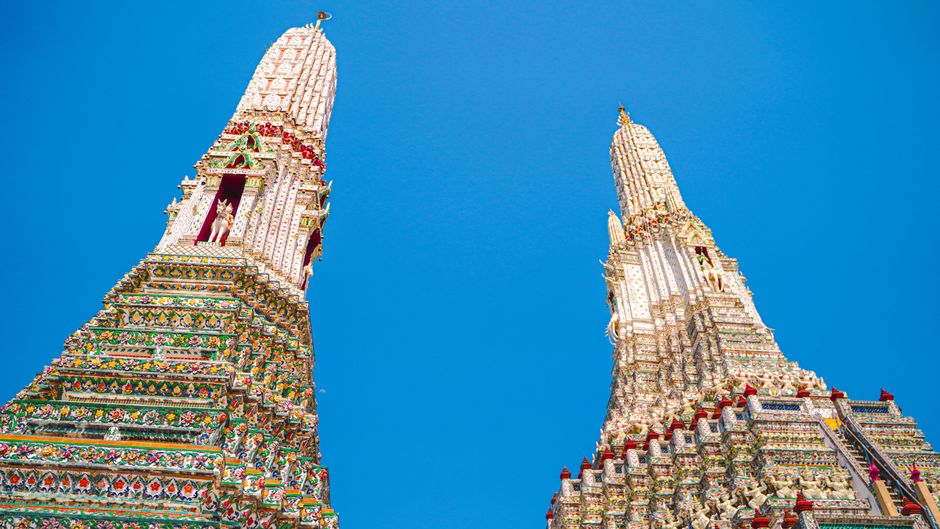
Thailand is one of the world’s great travel countries: a land of golden temples and royal palaces, tropical islands and limestone cliffs, misty northern mountains and one of the most loved cuisines on earth, all at prices that still feel generous. A first trip usually combines the energy and street food of Bangkok, the ruined capital of Ayutthaya, the temples, markets and mountains of Chiang Mai and Chiang Rai in the north, and a week on the beaches of the south: Phuket, Krabi and the Phi Phi Islands on the Andaman Sea, or Ko Samui and its neighbors in the Gulf of Thailand. Travel is easy, with good domestic flights, overnight trains, ferries and ride-hailing apps, and Thais are famously welcoming. Plan ahead for a few things, though: the visa-exemption rules changed on September 15, 2026, every foreign visitor must file a free Thailand Digital Arrival Card before arriving, and the two coasts have opposite monsoon seasons, so the best beach depends on the month. Cannabis and e-cigarette rules also catch out visitors, and some marine parks close for part of the year.
Right now in Thailand
- Wed 23–31°C 74–88°F 1 mm Light showers
- Thu 24–32°C 75–89°F 3 mm Showers
- Fri 25–31°C 77–89°F 3 mm Showers
Weather: MET Norway (CC BY 4.0) · Rates: ECB
Key facts
| Currency | Thai baht (THB, ฿); about 33 baht to the US dollar in late September 2026Source: federalreserve.gov · Last reviewed 5 Oct 2026 |
|---|---|
| Languages | Thai; English widely spoken in tourist areas, bilingual signs at airports and major sightsSource: wikidata.org · Last reviewed 5 Oct 2026 |
| Plugs and voltage | 220 V, 50 Hz; most sockets take flat (A) and round (C) two-pin plugsSource: wikidata.org · Last reviewed 5 Oct 2026 |
| Emergency number | 1155 Tourist Police (English); 191 police; 1669 ambulance; 199 fireSource: tatnews.org · Last reviewed 5 Oct 2026 |
| Driving side | On the left; International Driving Permit needed; motorcycle licence and helmet for scootersSource: wikidata.org · Last reviewed 5 Oct 2026 |
| Tap water | Not for drinking: use bottled or filtered waterSource: wwwnc.cdc.gov · Last reviewed 5 Oct 2026 |
| Tipping | Not expected; round up or leave change; 10% service charge in hotels and upscale restaurantsSource: tatnews.org · Last reviewed 5 Oct 2026 |
| Payments | Cards in hotels, malls and chains; cash for markets, street food, taxis and ferries; QR pay for visitors from 9 Asian countries; ATM fee about 220 bahtSource: tatnews.org · Last reviewed 5 Oct 2026 |
| Calling code | +66 (dial 001 for international calls)Source: wikidata.org · Last reviewed 5 Oct 2026 |
| Time zones | UTC+7 all year; no summer timeSource: data.iana.org · Last reviewed 5 Oct 2026 |
| Entry summary | Visa-free 30 days for the US, UK, EU, Australia and 56 others (since 15 Sep 2026); free TDAC online within 3 days before arrivalSource: tatnews.org · Last reviewed 5 Oct 2026 |
| SIM and eSIM | Tourist SIM at the airport (registered with your passport) or an eSIM; good 4G/5G coverageSource: tatnews.org · Last reviewed 5 Oct 2026 |
Multi-day tours of Thailand
Multi-day tours from local operators. You check dates and book on Viator, our partner; we may earn a commission at no extra cost to you. How we earn money
Thailand at a glance
Thailand is a constitutional monarchy in the heart of mainland Southeast Asia, bordered by Myanmar, Laos, Cambodia and Malaysia, with coastlines on the Gulf of Thailand and the Andaman Sea. It covers about 513,000 km² (198,000 sq miles), a little smaller than Texas, and stretches about 1,650 km (1,025 miles) from the mountains of the far north to the Malaysian border. It has about 65 million registered residents and is divided into 76 provinces plus the capital, Bangkok, a metropolis of more than 10 million people.
The language is Thai, written in its own alphabet; English is widely spoken in hotels, tourist areas and by younger people in cities, and signs at airports, stations and major sights are bilingual. Thailand uses a single time zone, Indochina Time (UTC+7), with no daylight saving time. Electricity is 220 V, and most sockets take both flat two-pin (US-style) and round two-pin (European-style) plugs. Most Thais are Buddhist, with a Muslim minority in the south; Buddhism and the monarchy are deeply respected.
Thailand’s regions
- Bangkok and the Central Plains: the capital, the old capitals of Ayutthaya and Sukhothai, the rice bowl of the Chao Phraya River, and Kanchanaburi’s River Kwai to the west.
- The North: mountains, forests and the old Lanna kingdom, with Chiang Mai, Chiang Rai, Pai, Mae Hong Son and Doi Inthanon, Thailand’s highest peak.
- The Northeast (Isan): the vast, rural Khorat Plateau along the Mekong, with Khmer temples, Khao Yai National Park and spicy Isan food; the least visited region.
- The Eastern Seaboard: Pattaya, Ko Samet and Ko Chang, an easy drive from Bangkok.
- The Gulf coast: Hua Hin and, further south, the islands of Ko Samui, Ko Pha Ngan and Ko Tao.
- The Andaman coast: Phuket, Khao Lak, Krabi and Ao Nang, the Phi Phi Islands, Ko Lanta, and the Similan, Surin and Lipe islands.
Regions
- Buriram
- Chachoengsao
- Chaiyaphum
- Chanthaburi
- Chiang Mai
- Chiang Rai
- Chon Buri
- Chumphon
- Kalasin
- Kamphaeng Phet
- Kanchanaburi
- Khon Kaen
- Krabi
- Lampang
- Loei
- Lopburi
- Maha Sarakham
- Nakhon Pathom
- Nakhon Phanom
- Nakhon Ratchasima
- Nakhon Sawan
- Nakhon Si Thammarat
- Nan
- Narathiwat
- Nong Bua Lamphu
- Nong Khai
- Nonthaburi
- Pathum Thani
- Pattani
- Phatthalung
- Phayao
- Phetchabun
- Phetchaburi
- Phichit
- Phitsanulok
- Phra Nakhon Si Ayutthaya
- Phrae
- Prachin Buri
- Prachuap Khiri Khan
- Ratchaburi
- Rayong
- Roi Et
- Sa Kaeo
- Sakon Nakhon
- Samut Prakan
- Samut Sakhon
- Saraburi
- Si Sa Ket
- Songkhla
- Sukhothai
- Suphan Buri
- Surat Thani
- Surin
- Tak
- Trang
- Ubon Ratchathani
- Udon Thani
- Uttaradit
- Yala
- Yasothon
Where to go: cities, temples, mountains and islands
A two-week first trip usually combines Bangkok, the north and one beach area; return visitors explore Isan, the far north, the quieter islands or the national parks. See our guides to each of these places:
- Bangkok: the capital, with the Grand Palace, Wat Pho and Wat Arun, river boats, street food, markets and rooftop bars.
- Ayutthaya: the ruined temples of Siam’s old capital, a UNESCO World Heritage site and an easy trip from Bangkok.
- Chiang Mai: the cultural capital of the north, with Lanna temples, Doi Suthep, night markets, cooking classes and the Yi Peng lantern festival.
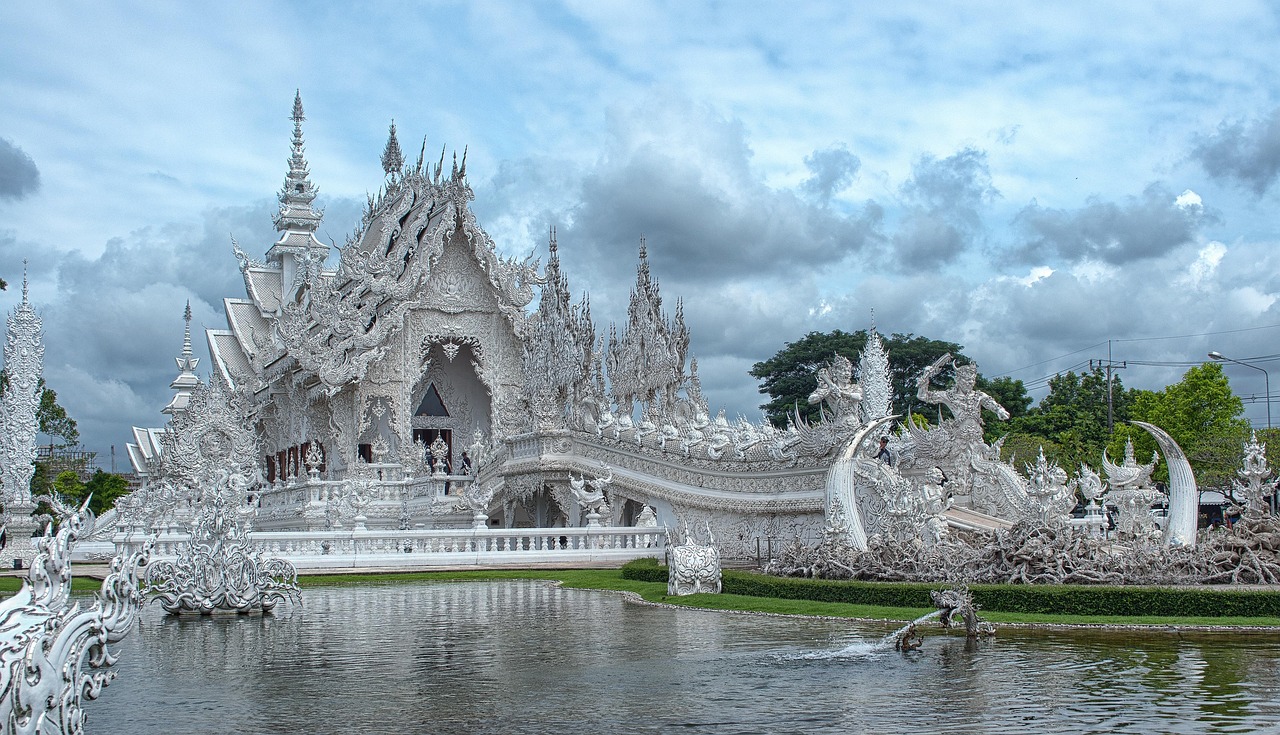
- Chiang Rai: the White Temple, the Blue Temple, the Golden Triangle and tea country in the mountains.
- Phuket: Thailand’s biggest island, with dozens of beaches, its old town, and boat trips to Phang Nga Bay and the Phi Phi Islands.
- Ao Nang: Krabi’s beach town, the base for Railay’s cliffs and the Four Islands and Hong Islands.
- Ko Phi Phi: limestone islands, Maya Bay, Pileh Lagoon, snorkeling and beach bars.
- Ko Samui: the Gulf’s resort island, with soft-sand beaches, villa resorts and Ang Thong Marine National Park.
- Pattaya: the big beach resort closest to Bangkok, with nightlife, family attractions and Ko Lan.
- Hua Hin: the royal seaside town, with a long beach, night markets, golf and a dry climate.
Other favorites include the party and yoga island of Ko Pha Ngan and the diving island of Ko Tao in the Gulf; the long beaches of Ko Lanta and Khao Lak, the gateway to the Similan Islands, on the Andaman coast; the rainforest lake of Khao Sok; the mountain town of Pai; Kanchanaburi and the Bridge on the River Kwai; the old capital of Sukhothai; Khao Yai National Park; and the islands of Ko Chang and Ko Lipe.
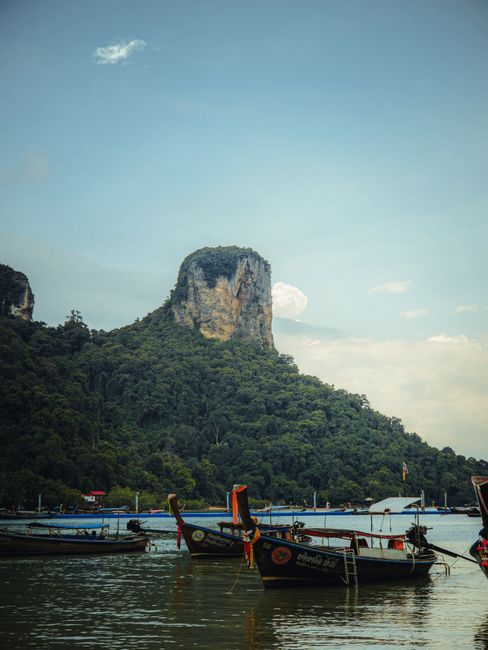
Ao Nang Travel Guide
Plan a trip to Ao Nang in Krabi: Ao Nang beach, Noppharat Thara, Railay, Klong Muang and Krabi Town and where to stay, Phra…
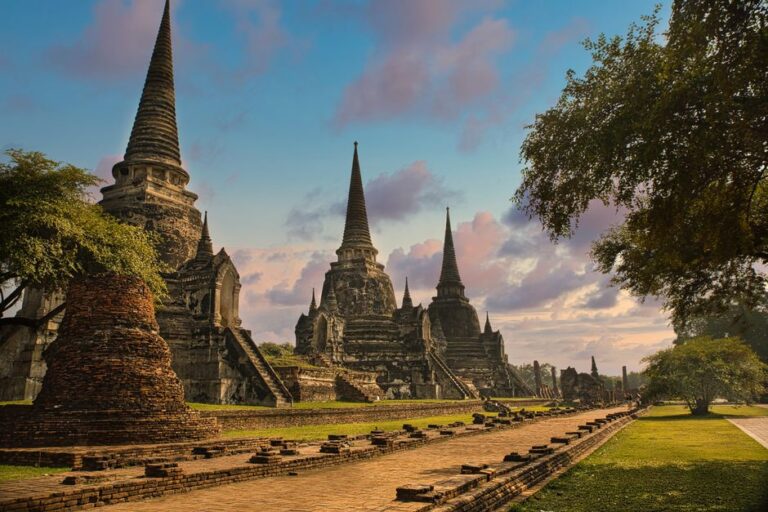
Ayutthaya Travel Guide
Plan a trip to Ayutthaya: the historical park, Naresuan Road, the riverside and where to stay, Wat Mahathat and the Buddha head in the…
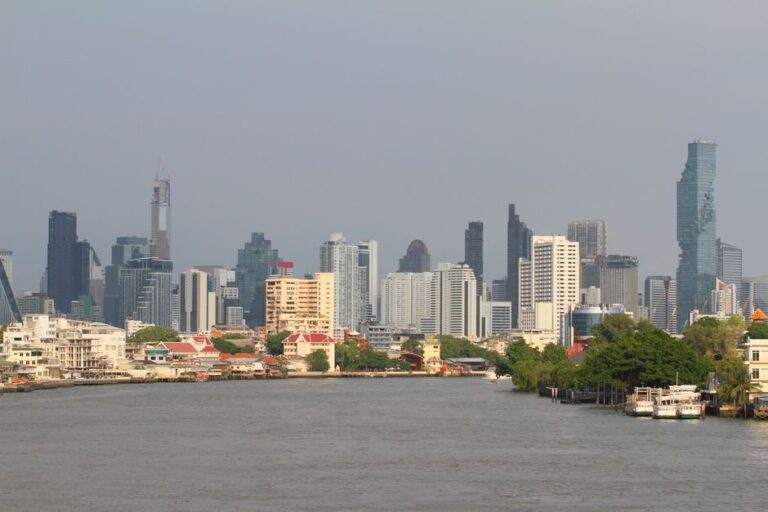
Bangkok Travel Guide
Plan a trip to Bangkok: the old town, riverside, Siam, Sukhumvit, Silom and Chinatown and where to stay, the Grand Palace and its 500-baht…
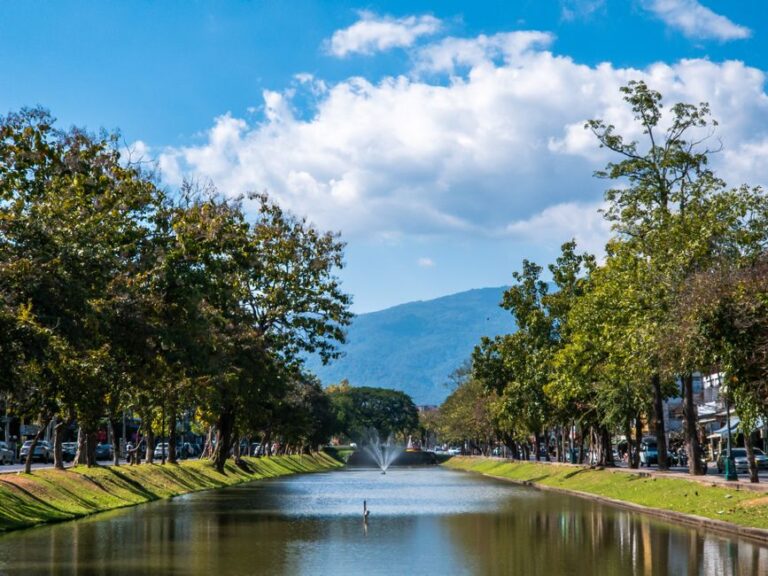
Chiang Mai Travel Guide
Plan a trip to Chiang Mai: the Old City, Nimman, the Night Bazaar and riverside and where to stay, Doi Suthep, Wat Chedi Luang…
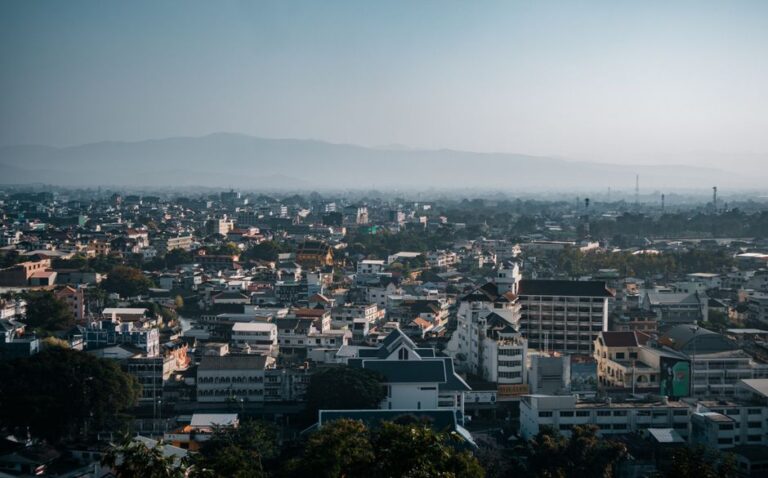
Chiang Rai Travel Guide
Plan a trip to Chiang Rai: the city center, the Kok River and the countryside and where to stay, the White Temple, the Blue…
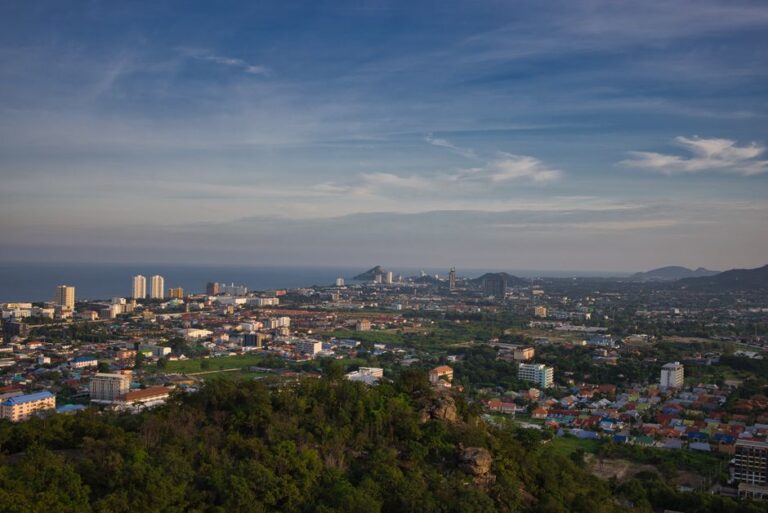
Hua Hin Travel Guide
Plan a trip to Hua Hin: the town center, Khao Takiab, Cha-am and Pran Buri and where to stay, the railway station, Maruekhathaiyawan Palace,…
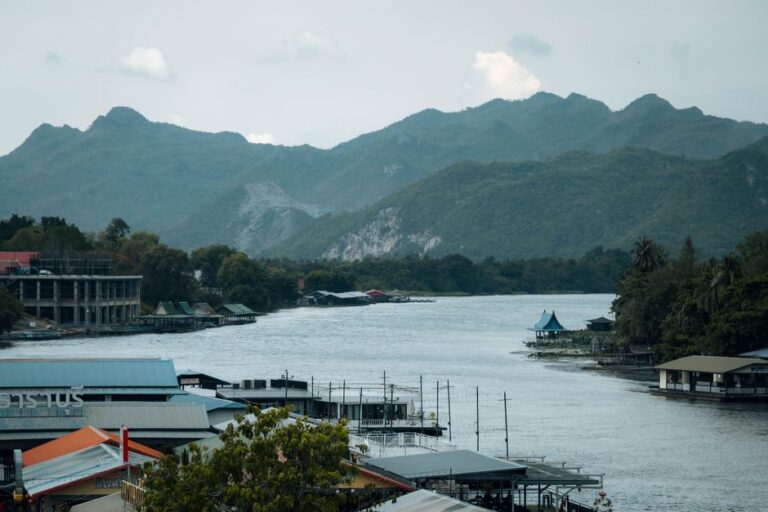
Kanchanaburi Travel Guide
Plan a trip to Kanchanaburi: the town center, the riverside strip and the bridge area and where to stay, the Bridge over the River…
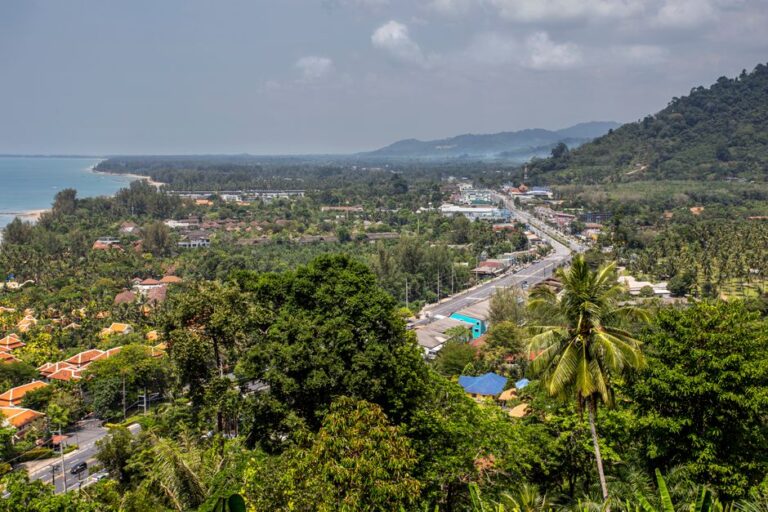
Khao Lak Travel Guide
Plan a trip to Khao Lak: Sunset Beach, Nang Thong, Bang Niang, Khuk Khak and Pakarang Cape and where to stay, the Similan Islands…
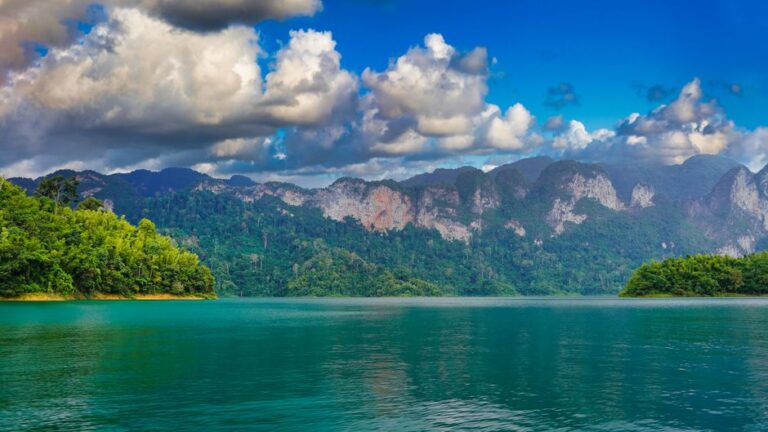
Khao Yai National Park Travel Guide
Plan a visit to Khao Yai National Park: e-tickets and the foreign entry fee, gate hours, DNP seasonal closures of Pha Diao Dai and…
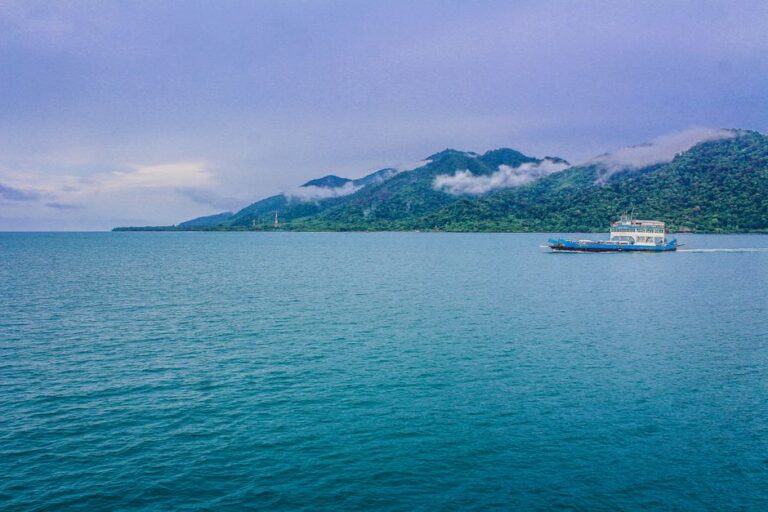
Ko Chang Travel Guide
Plan a trip to Ko Chang: White Sand Beach, Khlong Prao, Kai Bae, Lonely Beach, Bang Bao and Salak Phet and where to stay,…
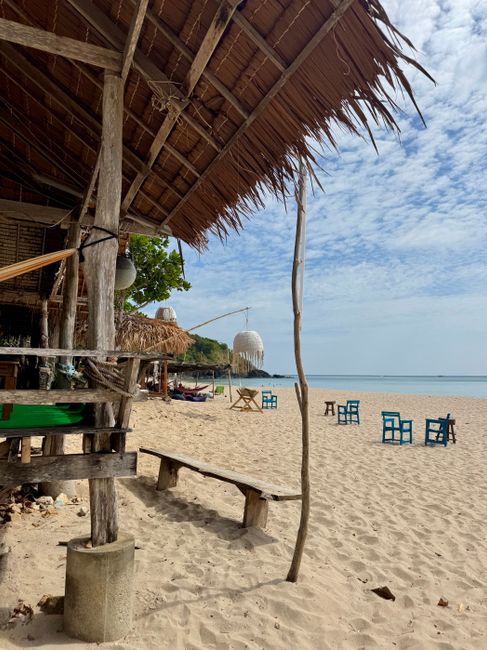
Ko Lanta Travel Guide
Plan a trip to Ko Lanta: Saladan, Khlong Dao, Long Beach, Khlong Nin, Kantiang Bay and Lanta Old Town and where to stay, Mu…
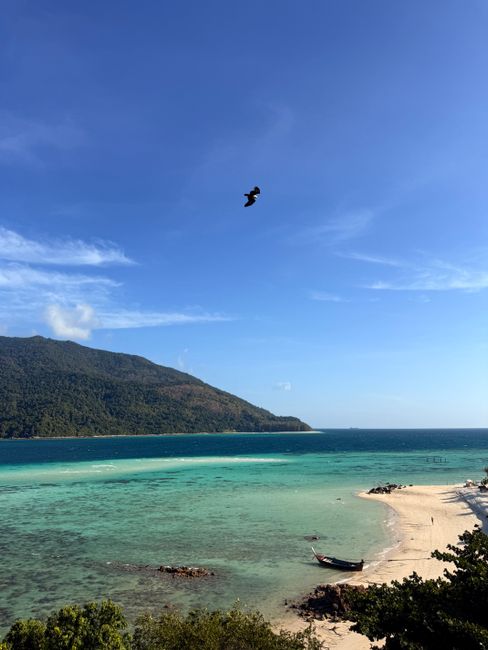
Ko Lipe Travel Guide
Plan a trip to Ko Lipe: Pattaya Beach, Sunrise Beach, Sunset Beach and the Walking Street and where to stay, snorkeling and diving around…
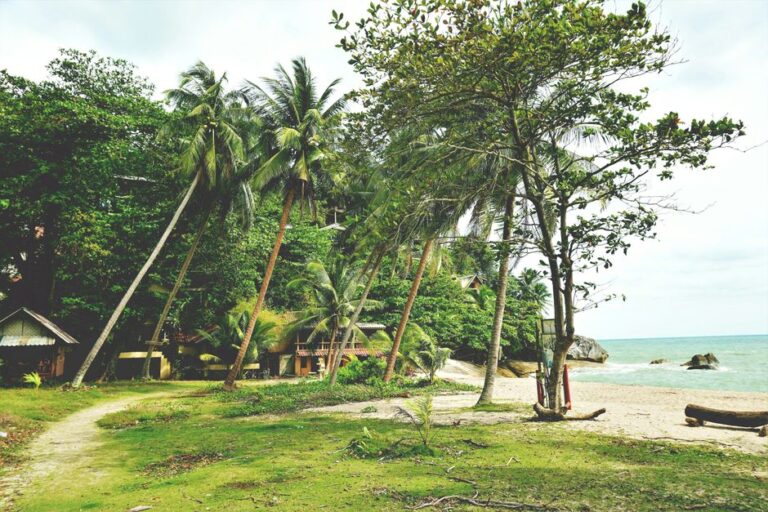
Ko Pha Ngan Travel Guide
Plan a trip to Ko Pha Ngan: Thong Sala, Haad Rin, the west coast, Chaloklum, Thong Nai Pan and Bottle Beach and where to…
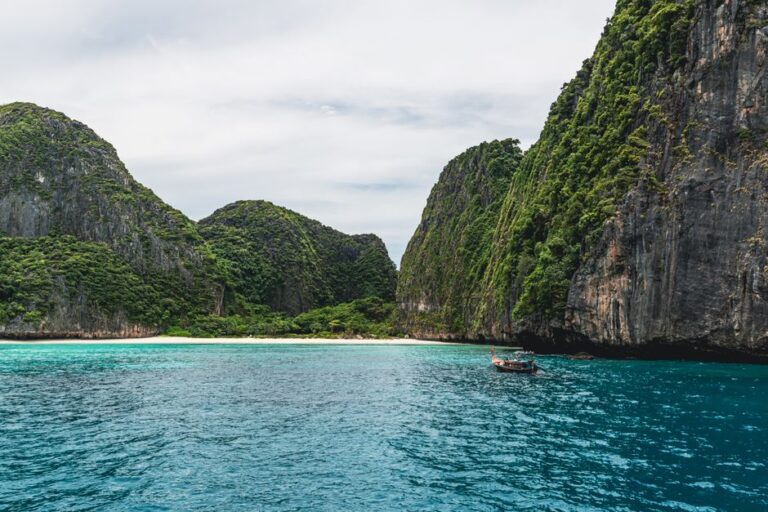
Ko Phi Phi Travel Guide
Plan a trip to the Phi Phi Islands: Tonsai Village, Loh Dalum, Long Beach and Laem Tong and where to stay, Maya Bay and…
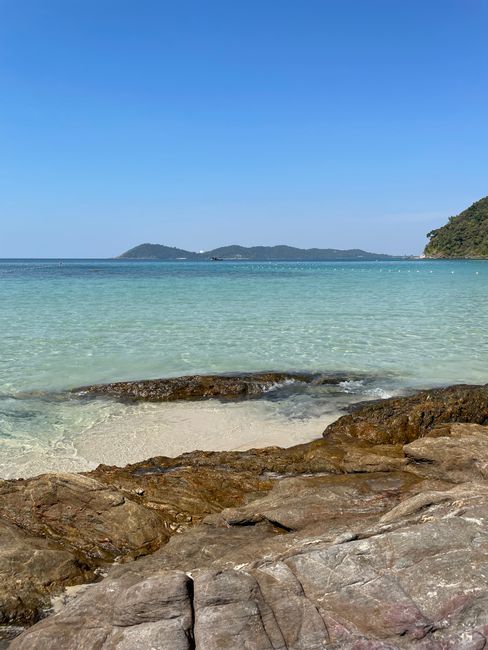
Ko Samet Travel Guide
Plan a trip to Ko Samet: Na Dan, Hat Sai Kaew, Ao Phai, Ao Tubtim, Ao Wong Duean, the southern coves and Ao Prao…
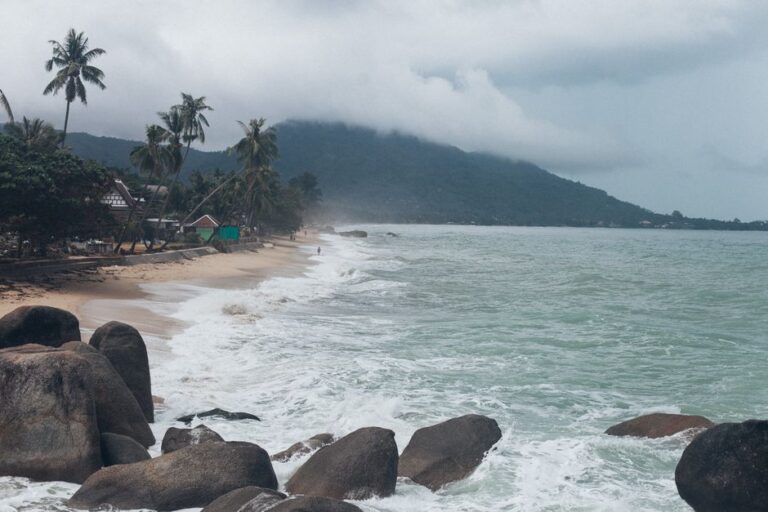
Ko Samui Travel Guide
Plan a trip to Ko Samui: Chaweng, Lamai, Bophut and Fisherman's Village, Mae Nam, Choeng Mon and the west coast and where to stay,…
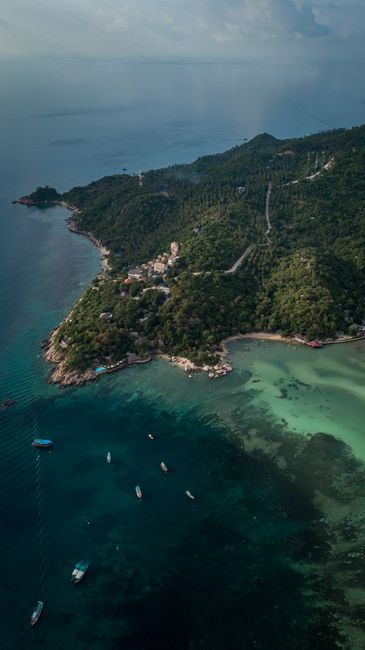
Ko Tao Travel Guide
Plan a trip to Ko Tao: Sairee, Mae Haad, Chalok Baan Kao and the east-coast bays and where to stay, Ko Nang Yuan, John-Suwan…
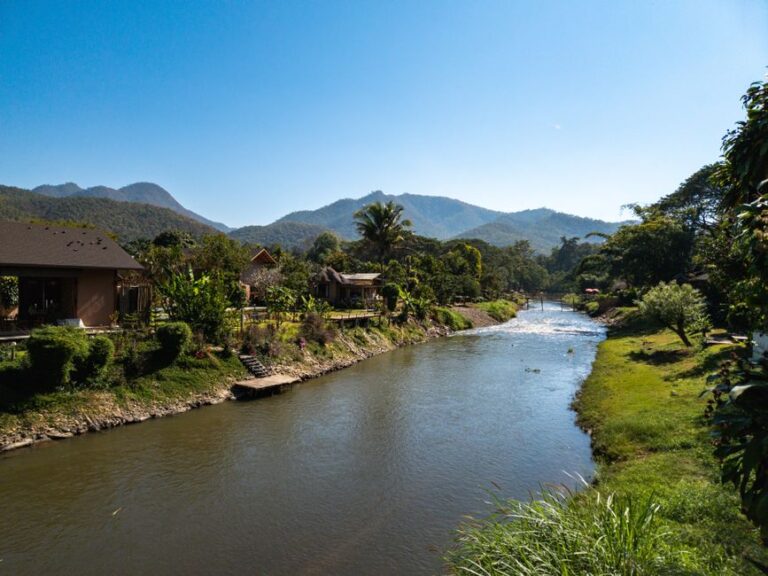
Pai Travel Guide
Plan a trip to Pai: the town center, across the river and the valley and where to stay, Pai Canyon, the White Buddha, the…
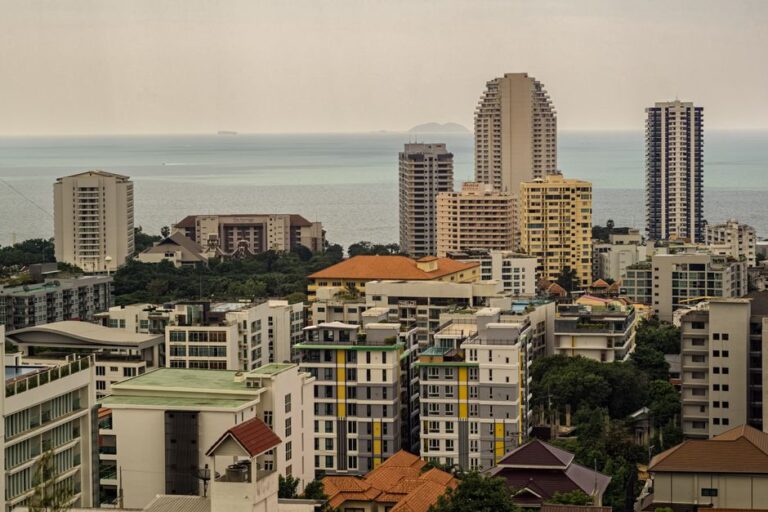
Pattaya Travel Guide
Plan a trip to Pattaya: Central and South Pattaya, Naklua and Wong Amat, Pratamnak Hill and Jomtien and where to stay, the Sanctuary of…
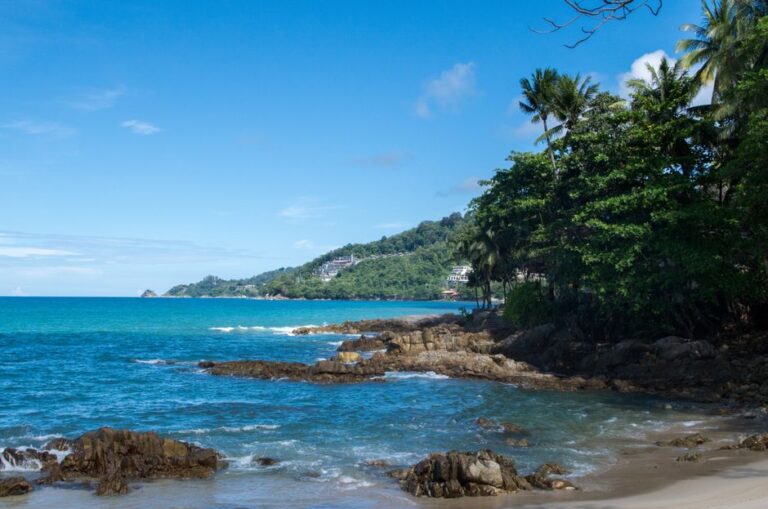
Phuket Travel Guide
Plan a trip to Phuket: Patong, Kata and Karon, Kamala to Bang Tao, Mai Khao, Rawai and Phuket Town and where to stay, the…
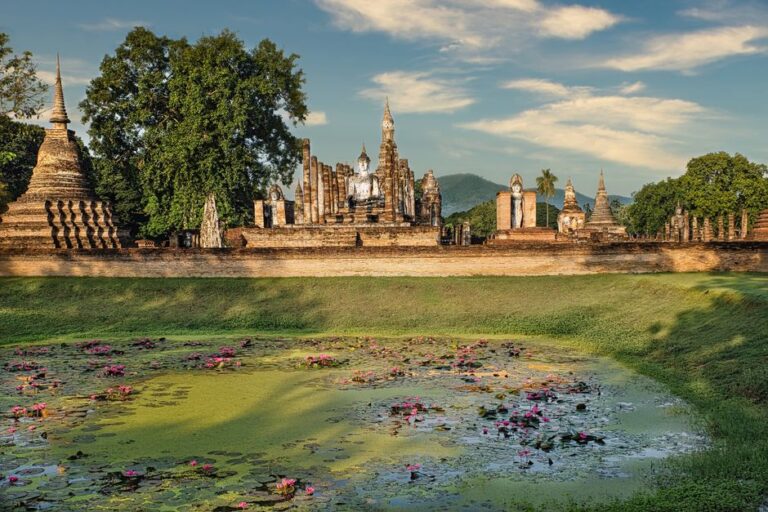
Sukhothai Travel Guide
Plan a trip to Sukhothai: New Sukhothai and the old city and where to stay, Sukhothai Historical Park's zones, fees and cycling, Wat Mahathat,…
Best time to visit Thailand
Thailand is tropical and warm all year, but it has three broad seasons. From about November to February, the cool, dry season brings sunshine and lower humidity to Bangkok, the north and the Andaman coast; this is peak season. From March to May, the hot season pushes temperatures to 35–37 °C (95–98 °F) in Bangkok and the north. The rainy season runs from about May to October across most of the country, with heavy afternoon storms rather than all-day rain, green landscapes and low prices. The exception is the southern Gulf coast, including Ko Samui, which gets its heaviest rain from October to December.
The table shows rounded averages from the 1991–2020 climate normals of the Thai Meteorological Department (TMD), as submitted to the World Meteorological Organization (WMO), for one station in each main travel area.
| Area (TMD station) | January high / low | August high / low | Rain a year | Wettest months |
|---|---|---|---|---|
| Bangkok (Bangkok Metropolis) | 33 °C (91 °F) / 23 °C (74 °F) | 33 °C (92 °F) / 26 °C (79 °F) | about 1,700 mm (67 in) | September and October |
| The North (Chiang Mai) | 30 °C (86 °F) / 16 °C (60 °F) | 32 °C (89 °F) / 24 °C (75 °F) | about 1,140 mm (45 in) | August and September |
| Andaman coast (Phuket) | 33 °C (91 °F) / 25 °C (77 °F) | 32 °C (90 °F) / 26 °C (78 °F) | about 2,270 mm (89 in) | September and October |
| Gulf islands (Ko Samui) | 29 °C (84 °F) / 24 °C (76 °F) | 32 °C (90 °F) / 25 °C (77 °F) | about 1,990 mm (79 in) | October to December |
| Eastern Seaboard (Pattaya) | 31 °C (87 °F) / 24 °C (74 °F) | 31 °C (89 °F) / 26 °C (79 °F) | about 1,110 mm (44 in) | September and October |
| Upper Gulf coast (Hua Hin) | 30 °C (86 °F) / 23 °C (73 °F) | 33 °C (91 °F) / 26 °C (78 °F) | about 940 mm (37 in) | October |
Thailand month by month
| Month | Weather | Highlights | Crowds and prices |
|---|---|---|---|
| January | Dry and sunny; cool nights in the north | Beaches at their best on both coasts except early-month showers on Ko Samui | Peak season |
| February | Dry; haze begins in the north | Chinese New Year; Chiang Mai Flower Festival; the calmest Andaman seas | Very high |
| March | Hot; smoky in the north | Diving season peaks in the Andaman; Similans open | High on the beaches |
| April | The hottest month | Songkran, the Thai New Year water festival, around April 13–15 | Very busy around Songkran |
| May | Hot, with the first monsoon storms | Andaman coast turns wet; Similan and Surin islands close on May 16 | Low season begins |
| June | Rainy on the Andaman coast and inland; fine on the Gulf islands | Green north; surf on Phuket’s west coast | Low |
| July | Showery | Buddhist Lent begins; Ko Samui at its best | Busy with summer holidays |
| August | Rainy; Ko Samui still mostly fine | Maya Bay closes from August 1; Mother’s Day on August 12 | Moderate |
| September | The wettest month in Bangkok and on the Andaman coast | Vegetarian Festival in Phuket (sometimes October); waterfalls in full flow | Low |
| October | Rain eases inland; the Gulf’s monsoon starts | Maya Bay reopens October 1; Similans reopen October 15; end of Buddhist Lent | Rising |
| November | Cool season returns; very wet on Ko Samui | Loy Krathong and Yi Peng (November 24 in 2026); Ang Thong park closed from November 1 | High |
| December | Dry and pleasant; wet early in the month on Samui | Christmas and New Year on the beaches; frost on the northern peaks | Peak season |
Weather month by month
Averages from TMD normals 1991–2020, Bangkok Metropolis · Last reviewed 5 Oct 2026
The two monsoons: Andaman coast versus Gulf coast
Thailand’s beaches have opposite seasons, so there is good beach weather somewhere almost all year. The southwest monsoon, from about May to October, brings most of the rain to Bangkok, the north and the Andaman coast (Phuket, Khao Lak, Krabi, Ko Phi Phi, Ko Lanta): at Phuket, about three quarters of the year’s rain falls in these months, the sea is rough on west-facing beaches, and some ferries and boat trips stop. The northeast monsoon, from about October to January, brings heavy rain to the southern Gulf coast (Ko Samui, Ko Pha Ngan, Ko Tao), where November is the wettest month, averaging about 445 mm (17.5 in) at Ko Samui, while the Andaman side dries out. The upper Gulf, including Hua Hin and Pattaya, is relatively dry all year. As a rule of thumb, choose the Andaman coast from November to April and the Gulf islands from January to September.
Festivals
- Songkran (April 13–15): the Thai New Year, celebrated with merit-making at temples, water poured over the hands of elders, and nationwide water fights; it is a UNESCO-listed intangible heritage. Celebrations last longer in Chiang Mai and Pattaya. In 2026, Bangkok’s events ran from April 9 to 15.
- Loy Krathong and Yi Peng: on the full moon of the 12th lunar month, which falls on November 24 in 2026, people float candle-lit baskets (krathong) on rivers and lakes; in Chiang Mai and the north the festival merges with Yi Peng, when lanterns decorate temples and streets. Sky-lantern releases are restricted to authorized events. Sukhothai and Ayutthaya hold the most beautiful traditional celebrations.
- The Royal Barge Procession (November 6, 2026): 52 royal barges, rowed by 2,200 navy oarsmen, sail down the Chao Phraya in Bangkok to Wat Arun for the Royal Kathin Ceremony, a rare event held only on special royal occasions.
- Phuket Vegetarian Festival: nine days of Taoist processions and vegetarian food in the ninth Chinese lunar month, usually late September or October.
- Buddhist holidays: Makha Bucha, Visakha Bucha and Asanha Bucha, on full moons, are public holidays when the sale of alcohol is banned nationwide and many bars close.
How long to stay: sample itineraries
- 7 days: Bangkok (3 nights) with a day trip to Ayutthaya, then fly to Chiang Mai (3 nights), or to Phuket or Krabi for the beach.
- 10 days: Bangkok (3), Chiang Mai (3) with a day trip to Chiang Rai or Doi Inthanon, and a beach (4) on Phuket, in Ao Nang or on Ko Samui, depending on the season.
- 14 days: Bangkok (3), Ayutthaya (1), Chiang Mai (3), Chiang Rai (2), then Ao Nang (2) and Ko Phi Phi (2), or Ko Samui (3) and Ko Tao (2) from June to September.
- Beach fortnight: Phuket, Ko Phi Phi, Ao Nang and Ko Lanta by ferry from November to April; or Ko Samui, Ko Pha Ngan and Ko Tao from January to September.
Entry, money and costs
Entry and visas (last reviewed October 2026)
Thailand’s visa-exemption rules changed on September 15, 2026, when the 60-day visa exemption introduced in 2024 ended. According to the Tourism Authority of Thailand (TAT), citing Ministry of Interior announcements published in the Royal Gazette on August 31, 2026, holders of passports from 60 countries and territories can now visit for tourism without a visa for up to 30 days. They include the United States, Canada, the United Kingdom, Ireland, Australia, New Zealand, most European Union countries, Switzerland, Norway, Iceland, Japan, Singapore, Malaysia, Indonesia, the Philippines, India, Israel, the United Arab Emirates, Saudi Arabia, Qatar, Türkiye, Taiwan and South Africa. Visitors from Seychelles and Mauritius get 15 days; Azerbaijan, Belarus and Serbia now qualify for a visa on arrival. Separate bilateral agreements continue to give some nationalities 90, 30 or 14 days visa-free, so check the rules for your passport. Travelers entering visa-free across a land border are generally limited to two such entries per calendar year (with exceptions for some neighboring countries). Everyone else needs a visa, usually applied for online through the Thai e-Visa system.
Your passport should be valid for at least six months. Immigration officers may ask to see a return or onward ticket, your accommodation details and proof of funds: according to TAT, the amounts set by the Ministry of Interior are 10,000 baht per person or 20,000 baht per family for visa-exempt visitors and visa on arrival, and 20,000 baht per person or 40,000 baht per family for tourist visas (children under 12 are exempt). The final decision rests with the Immigration Bureau. Overstaying is fined daily and can lead to a ban on returning.
The Thailand Digital Arrival Card (TDAC)
Since May 1, 2025, every non-Thai traveler, including children and visa-exempt visitors, must complete the Thailand Digital Arrival Card online before arriving by air, land or sea; it replaced the old paper TM.6 form. According to the Immigration Bureau, you submit it on the official website, tdac.immigration.go.th, within 3 days before your arrival (including the arrival day), with your passport details, flight, address in Thailand and a short health declaration, and you receive a QR code by email. It is free: ignore look-alike websites that charge a fee. You need a new card for every entry; families can submit up to 10 travelers at once. Passengers transiting without passing through immigration don’t need one. If you can’t file it in advance, kiosks are available at Suvarnabhumi, Don Mueang, Phuket, Chiang Mai and Hat Yai airports. The Immigration Bureau’s new THIM app (Thailand Immigration Management), launched in pilot form in 2026, can also be used to register TDAC details, but it is optional and does not replace the card.
Is there a tourist entry fee?
No, not as of October 2026. Thailand has discussed charging foreign visitors a tourism entry fee for several years, with a figure of 300 baht for air arrivals often mentioned, but no fee is being collected, and neither the Tourism Authority of Thailand nor the Immigration Bureau has announced a start date. Airport passenger charges are already included in your air ticket. Check again before a trip in 2027.
Customs, medicines, cannabis and e-cigarettes
- Cannabis: Thailand removed cannabis from its narcotics list in 2022, and shops selling it spread across the country, but recreational use was never legal. Since June 23, 2025, cannabis flower has been a controlled herb: according to TAT and the Ministry of Public Health, tourists may not buy, use, carry or transport it without a prescription issued in Thailand by a licensed practitioner, limited to a 30-day supply. Online, vending-machine and advertised sales are banned, and many shops still on display may be operating illegally. Never take cannabis across a border.
- E-cigarettes: vapes, e-cigarettes, heated-tobacco devices and their liquids are illegal in Thailand. Bringing them in or using them can lead to confiscation, fines of several times the value of the goods, arrest or jail, and the ban applies to foreigners as well as Thais.
- Medicines: bring prescription medicines in their original packaging with a copy of the prescription; some medicines, such as strong painkillers and ADHD drugs, need a permit from the Thai Food and Drug Administration.
- Other rules: large amounts of cash (over US$20,000 or equivalent) must be declared, as must goods over the duty-free allowance of 200 cigarettes and 1 liter of alcohol. Exporting Buddha images and antiques needs a permit from the Fine Arts Department.
Money and cards
The currency is the baht (THB, ฿); in late September 2026 the US Federal Reserve’s rate was about 33 baht to the US dollar. Cards are accepted in hotels, malls, chain restaurants and larger shops, but markets, street stalls, small restaurants, taxis and ferries usually want cash. Thai ATMs charge foreign cards a fee of about 220 baht per withdrawal on top of your bank’s charges, so withdraw larger amounts. Thai QR-code payments are everywhere, and under the Bank of Thailand’s “Pay Like a Local” cross-border QR scheme, visitors from China, Singapore, Malaysia, Indonesia, Vietnam, South Korea, Laos, Cambodia and Hong Kong can pay with their home banking apps. When a card machine offers to charge in your home currency, choose baht.
Prices in shops include 7% VAT. Visitors can reclaim VAT on goods bought at shops displaying the “VAT Refund for Tourists” sign, on purchases of at least 2,000 baht per shop per day and 5,000 baht in total, at the airport on departure; you must show the goods and the forms before checking in.
Tipping
Tipping is not expected but appreciated. Many hotels and upscale restaurants add a 10% service charge; elsewhere, leaving small change or rounding up is normal. Tip massage therapists 50–100 baht, and guides and drivers on tours a few hundred baht a day if you are happy.
What a trip costs
Prices are approximate, for October 2026, converted at about 33 baht to the US dollar.
| Item | Typical cost |
|---|---|
| Street food dish or bowl of noodles | 50–100 baht (about US$1.50–3) |
| Restaurant meal for one, mid-range | 300–700 baht (about US$9–21) |
| Large bottle of beer in a shop | 60–90 baht (about US$1.80–2.70) |
| BTS or MRT ride in Bangkok | about 20–65 baht (about US$0.60–2) |
| Grand Palace entry | 500 baht (about US$15) |
| One-hour Thai massage | 250–500 baht (about US$7.50–15) |
| Domestic flight, booked ahead | 1,000–3,000 baht (about US$30–90) |
| Island boat tour, including park fees | 1,000–3,500 baht (about US$30–105) |
| Mid-range hotel double, per night | 1,200–3,500 baht (about US$36–105) |
| Beach resort, high season | 4,000–12,000 baht (about US$120–360) |
A comfortable mid-range trip costs roughly 3,000–5,000 baht (about US$90–150) per person per day; backpackers can manage on about half.
Getting there and getting around
Airports
Most international flights land at Bangkok’s Suvarnabhumi Airport (BKK); low-cost airlines use Bangkok’s older Don Mueang Airport (DMK). Airports of Thailand also runs the international airports of Phuket (HKT), Chiang Mai (CNX), Mae Fah Luang–Chiang Rai (CEI) and Hat Yai (HDY), which have direct flights from across Asia and, at Phuket, from the Middle East, Europe and Australia. Krabi (KBV) and Samui (USM), the latter owned by Bangkok Airways, also have international flights. From checked baggage screened on or after October 16, 2026, the Civil Aviation Authority of Thailand allows security staff to open suspicious checked bags without the owner present, under video recording; use TSA-compatible locks and keep valuables in your hand luggage.
Domestic flights
Flying is the quickest way to cover Thailand’s long distances: Bangkok to Chiang Mai, Phuket, Krabi or Ko Samui takes about 1 to 1.5 hours. Thai Airways, Thai AirAsia, Bangkok Airways, Nok Air, Thai Lion Air and Thai Vietjet fly domestic routes; low-cost fares are cheap if booked early, but check baggage allowances.
Trains
The State Railway of Thailand (SRT) runs four main lines from Bangkok: north to Chiang Mai, northeast to Nong Khai and Ubon Ratchathani, east toward Pattaya, and south through Hua Hin and Surat Thani (for Ko Samui) to Hat Yai and the Malaysian border. Most long-distance trains now leave from Krung Thep Aphiwat Central Terminal (formerly Bang Sue) in north Bangkok, connected to the MRT and the SRT Red Line to Don Mueang Airport; some ordinary trains still use the old Hua Lamphong station. The overnight sleeper trains to Chiang Mai (about 11 to 13 hours) and Surat Thani are comfortable and popular; book berths in advance online or at stations. Check live train status on the SRT’s tracking website or by calling 1690.
Buses, minivans and ferries
Air-conditioned buses link every town, leaving Bangkok from the Mo Chit (north and northeast), Ekkamai (east) and Southern terminals. Ferries and speedboats connect the islands: from Phuket and Krabi to Ko Phi Phi and Ko Lanta, from Surat Thani and Chumphon to Ko Samui, Ko Pha Ngan and Ko Tao, and from Rayong and Trat to Ko Samet and Ko Chang. Crossings are reduced in each coast’s monsoon.
Grab, Bolt and taxis
Ride-hailing apps are the easiest way to get around towns. Grab, Southeast Asia’s main app, works in Bangkok and all major tourist areas for cars, taxis, motorcycle taxis and food delivery, with the fare shown before you book; TAT’s Amazing Thailand Grab Travel Pass, launched in April 2026, costs 30 baht and gives four weeks of discounts on rides, airport transfers and food. Bolt is often cheaper and operates in Bangkok, Pattaya, Phuket, Chiang Mai and other cities. In Bangkok, metered taxis are cheap, but insist on the meter; on islands such as Phuket and Ko Samui, taxis charge set fares. Agree tuk-tuk and songthaew prices before you ride.
Driving and scooters
Thais drive on the left. To drive, you need your national license plus an International Driving Permit; to ride a motorcycle or scooter, your license must include motorcycles. Helmets are compulsory, and police checkpoints are frequent in tourist areas. Renting a scooter is popular on the islands and in the north, but Thailand’s roads are among the most dangerous in the world for motorcyclists, and many travel insurance policies refuse claims for unlicensed riders.
Crossing borders by land
Land crossings link Thailand with Malaysia, Laos and Cambodia, and some with Myanmar. Several crossings on the Cambodian border, including the busy Ban Hat Lek checkpoint in Trat, have been closed since 2025 because of the border situation, and drone flights remain restricted in border districts of seven eastern provinces. Check the current status with the Immigration Bureau before planning an overland trip, and remember the two-entries-per-year limit on visa-free land arrivals.
National parks and marine parks
Thailand has 156 national parks, including most of its best islands, reefs and mountains. Foreign visitors pay an entry fee, higher than the fee for Thais, at each park, usually included in boat-tour prices; keep your ticket for the day. Many parks close attractions every year, and according to the Department of National Parks, Wildlife and Plant Conservation:
- Maya Bay, Loh Samah Bay and Ao Loko (Hat Noppharat Thara–Mu Ko Phi Phi National Park) close every year from August 1 to September 30; swimming in Maya Bay is not allowed, and Mosquito Island (Ko Yung) is closed indefinitely.
- The Similan Islands and the Surin Islands are closed from May 16 to October 14 every year and open from October 15; daily visitor numbers are limited, and several Similan dive sites are closed indefinitely.
- Mu Ko Ang Thong National Park, near Ko Samui, closes from November 1 to December 15.
- Ko Rok (Mu Ko Lanta) closes from June 1 to September 30, and Ko Ha and Hin Daeng from August 1 to September 30.
- Some mountain trails, such as Doi Inthanon’s Kio Mae Pan trail (June 1 to October 31), close in the rainy season, and parks may close temporarily after heavy rain, as Erawan National Park in Kanchanaburi did from September 30, 2026.
Don’t touch or stand on coral, feed fish or wildlife, or take shells or sand, and use reef-safe sunscreen. Flying a drone requires registration with the Civil Aviation Authority of Thailand, insurance and flight approval through its UAS Portal at least three days in advance. See our guides to snorkeling and diving.
Culture, food and everyday etiquette
Food
Thai food is one of the world’s great cuisines, balancing sweet, sour, salty and spicy, and it changes from region to region: pad thai, tom yum goong and green curry in Bangkok and the center; khao soi curry noodles and sai oua sausage in the north; fiery som tam (papaya salad), larb and grilled chicken with sticky rice from Isan; and rich southern curries and seafood on the coasts. Street food is safe, cheap and often the best food in town; choose busy stalls. Tap water is not for drinking; bottled and filtered water is cheap. Alcohol sales are restricted to set hours and banned on Buddhist holidays and election days.
Etiquette
- The monarchy: Thai law protects the King and the royal family, and criticism can be prosecuted; be respectful in what you say and post, and stand for the royal anthem in cinemas.
- Temples: cover shoulders and knees, take off your shoes before entering halls, don’t point your feet at Buddha images or climb on them, and never pose with your head above a Buddha’s.
- Monks: women should not touch monks or hand them things directly.
- Heads and feet: the head is sacred and the feet are low; don’t touch people’s heads, and don’t point with your feet.
- The wai: the palms-together greeting; return a wai from adults, but you needn’t wai service staff or children first.
- Dress: swimwear is for the beach; cover up in towns, and topless sunbathing is frowned upon.
Safety, health, accessibility and connectivity
Thailand is a safe country for most visitors, and violent crime against tourists is rare. The main risks are road accidents, the sea in the monsoon, scams, heat and some health hazards.
- Sea conditions and monsoon flags: strong rip currents form on the Andaman coast’s west-facing beaches from about May to October and on the Gulf’s east-facing beaches from about October to January; drownings happen every year. Swim only where lifeguards’ flags allow it, never when red flags fly, and not after drinking. Boat trips are canceled when the sea is rough; don’t press an operator to sail.
- Jellyfish: box jellyfish are occasionally reported, mainly in the rainy season, in parts of Krabi, Phuket, Ko Samui, Ko Pha Ngan, Ko Tao, Hua Hin and Cha-am, and Trat’s islands. Swim where notices are posted, carry vinegar (pour it on a sting for at least 30 seconds; don’t rub or rinse with fresh water), and call 1669.
- Road safety: Thailand has one of the highest road death rates in the world, mostly on motorcycles. Wear a helmet, don’t ride after drinking or at night on unfamiliar roads, and use Grab or a driver if in doubt; take care crossing streets, as traffic rarely stops.
- Scams: the “temple is closed today” tuk-tuk tour, gem and tailor shop scams, jet-ski damage claims, inflated bar bills and fake TDAC websites are the most common; check facts on official websites and walk away.
- Heat and air: drink plenty of water and avoid the midday sun, especially from March to May. From about February to April, smoke from fires can make the air in the north unhealthy, and Bangkok’s fine-dust (PM2.5) levels can be high from January to March.
- Floods: heavy rain from August to October can flood streets, rivers and low-lying areas, as in Bangkok in late September 2026; check transport before you travel.
- Health: dengue fever, spread by mosquitoes, is common in the rainy season, so use repellent day and night; rabies is present in dogs, monkeys and cats, so avoid touching animals and get treatment at once if bitten. Private hospitals in Bangkok, Phuket and Chiang Mai are excellent but expensive; buy travel insurance that covers medical evacuation and any scooter riding.
- Emergencies: call 1155 for the Tourist Police (24 hours, English spoken; the Tourist Police app has an SOS button), 191 for the police, 1669 for an ambulance and 199 for fire. The TAT Contact Center, 1672, answers travel questions.
Accessibility: Bangkok’s BTS and MRT stations, airports, malls and newer hotels have elevators and ramps, but sidewalks are uneven and crowded, temples have steps, and boats and islands are hard for wheelchair users. Connectivity: buy a tourist SIM at the airport (you register it with your passport) or an eSIM before you go; 4G and 5G coverage is good, and Wi-Fi is free in most hotels and cafés.
Things to do: temples, islands, diving, trekking and food
- City sightseeing: Bangkok’s palaces and temples, Chiang Mai’s old city and Ayutthaya’s ruins. See our guide to city sightseeing.
- Beaches and island-hopping: Phuket, Krabi, Ko Phi Phi, Ko Lanta and the Gulf islands. See our guides to beaches and boat trips.
- Snorkeling and diving: the Similan and Surin islands, Ko Tao, Ko Phi Phi and Ko Lanta’s Hin Daeng. See our guides to snorkeling and diving.
- Hiking and trekking: Doi Inthanon, hill-tribe treks around Chiang Mai and Chiang Rai, and the national parks of Khao Sok and Khao Yai. See our hiking guide.
- Cycling: Ayutthaya’s ruins and Chiang Mai’s countryside. See our cycling guide.
- Surfing: small waves on Phuket’s Kata and Kalim beaches and at Khao Lak from June to September. See our guide to surfing.
- Food, massage and Muay Thai: cooking classes, night markets, massage schools, spa resorts and Thai boxing.
Thailand travel FAQ
Do I need a visa to visit Thailand?
Not if you hold a passport from one of the 60 countries and territories on the visa-exemption list, including the US, Canada, the UK, Australia, New Zealand and most EU countries. Since September 15, 2026, they can stay up to 30 days for tourism.
How long can I stay in Thailand without a visa?
Up to 30 days for most Western visitors since September 15, 2026, when the 60-day exemption ended; some nationalities get 90, 30, 15 or 14 days under other agreements.
What is the Thailand Digital Arrival Card (TDAC)?
A free online arrival form that every non-Thai traveler must complete at tdac.immigration.go.th within 3 days before arriving, by air, land or sea. It replaced the paper TM.6 card on May 1, 2025.
Is there a tourist entry fee for Thailand?
No. A tourism entry fee has been discussed for years, but as of October 2026 none is collected and no start date has been announced.
Is cannabis legal in Thailand?
Not for recreational use. Since June 23, 2025, cannabis flower is a controlled herb that can only be bought and used with a Thai prescription, up to a 30-day supply.
Can I bring a vape to Thailand?
No. E-cigarettes and vaping devices are illegal in Thailand, and visitors caught with them can be fined, arrested or jailed.
What is the best time to visit Thailand?
November to February for Bangkok, the north and the Andaman coast; January to September for Ko Samui and the Gulf islands.
When is the monsoon season in Thailand?
From about May to October on the Andaman coast (Phuket, Krabi, Phi Phi), in Bangkok and the north, and from about October to January on the Gulf islands (Ko Samui, Ko Pha Ngan, Ko Tao).
When is Songkran?
Thailand’s New Year water festival is held on April 13–15 each year, with celebrations lasting longer in Chiang Mai and Pattaya.
When is Loy Krathong in 2026?
On November 24, 2026, the full moon of the 12th lunar month; Chiang Mai’s Yi Peng lantern festival is celebrated at the same time.
Can I use Grab in Thailand?
Yes. Grab works in all major cities and tourist areas, and Bolt in many; both show the fare before you book.
When is Maya Bay closed?
Every year from August 1 to September 30. The Similan and Surin islands close from May 16 to October 14.
Is Thailand safe for tourists?
Yes, for most visitors. The main risks are road accidents (especially on scooters), rip currents in the monsoon, scams and heat; the Tourist Police (1155) speak English.
Sources
- Natural Earth · Public domain · fetched 5 Oct 2026
- © OpenStreetMap contributors · ODbL · fetched 5 Oct 2026
- Wikidata · CC0 · fetched 5 Oct 2026
Sources and last review
Researched and last reviewed on 4 October 2026. Visa exemptions from September 15, 2026, proof of funds, the Thailand Digital Arrival Card and THIM app, cannabis and e-cigarette rules, Songkran 2026, the Royal Barge Procession, the Grab Travel Pass, Pay Like a Local QR payments, checked-baggage screening, drone rules, border measures, jellyfish areas, emergency and help lines, and the late-September 2026 weather: the Tourism Authority of Thailand (TAT), citing the Immigration Bureau, the Ministry of Interior, the Ministry of Public Health, the Bank of Thailand and the Civil Aviation Authority of Thailand; TDAC rules: the Immigration Bureau’s TDAC website; national park closures: the Department of National Parks, Wildlife and Plant Conservation; climate normals: the Thai Meteorological Department via the World Meteorological Organization’s 1991–2020 normals; Loy Krathong date: the 12th-month full moon from the US Naval Observatory; Grand Palace fee: the Grand Palace; exchange rate: the US Federal Reserve. Population, the status of the proposed entry fee, VAT refund thresholds, customs allowances, airport details, journey times, transport, health notes and typical prices are general references or estimates, flagged for checking. Rules and prices change, so check the official sites before you go.
Plugs and power in Thailand
Thailand uses 230 V, 50 Hz and these plugs (left) and wall sockets (right):
Most sockets take both flat (A) and round (C) pins.
All plug types and voltages by country → · Check what you need to pack →
Plan your trip
Partner links: TravelerCenter may earn a commission if you book, at no extra cost to you.
🇹🇭 Useful Thai phrases for Thailand
All 38 Thai phrases: restaurant, hotel, emergencies, romance (printable) →