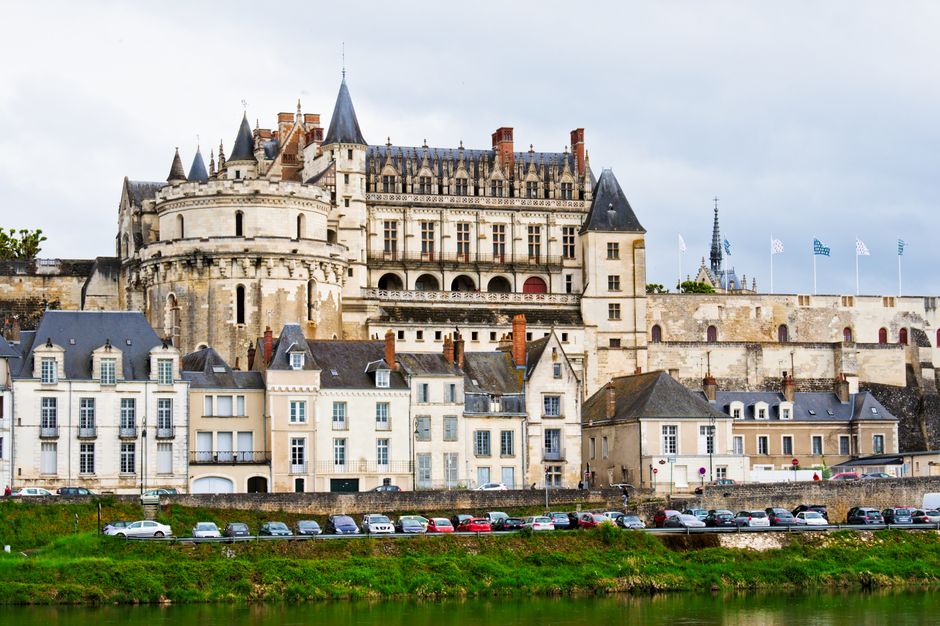
The easiest cycling across Portugal, Spain, France, Italy, Greece and the United Kingdom is on long, signed, mostly flat routes: La Loire à Vélo in France (900 km past the châteaux), the Algarve’s Ecovia do Litoral, Normandy’s Vélomaritime and the riverside paths of cities such as Valencia, Florence, Lisbon and London. Strong riders head for the mountain passes of the Dolomites, Chianti’s gravel roads, the Luberon in Provence and the Scottish Highlands. Ride in spring and autumn in the south, and from May to September in Britain and the Alps.
Below: the best routes in each country, the best months by region, the helmet and road rules that differ from country to country, bike share and bikes on trains, and what to pack. Prices and rules are as of October 2026.
Cycling in Europe at a glance
- Best for families and easy days: La Loire à Vélo (only 190 m of climbing in 900 km), Valencia’s 200-plus km of flat bike lanes, the Arno path in Florence, Lisbon’s riverside to Belém and the Ecopista greenway from Évora.
- Best for fit road riders: the Sellaronda loop over four Dolomite passes, the Eroica roads of Chianti, the Douro Valley, the 236 km loop around the Luberon and the Caledonia Way through the Great Glen.
- Best for mountain biking: Madeira’s licensed trails, Etna, Provence’s 1,060 km of marked trails and the Lake District’s bridleways.
- Helmets: compulsory for everyone in Spain outside towns (and for under-16s everywhere), and for under-12s in France; not required by law in Portugal, Italy, Greece or the UK. Wear one anyway.
- Best months: March–June and September–October in the south; May–September in the north and the mountains.
What cycling in these countries involves
There are three kinds of riding. Greenways and long-distance routes, such as the EuroVelo network, follow rivers, canals, old railways and coasts, often away from traffic: EuroVelo 1 crosses the Algarve, EuroVelo 4 runs along the Normandy coast and La Loire à Vélo is part of EuroVelo 6. Road cycling means climbing passes and quiet country roads, sharing them with cars. Mountain biking uses forest tracks and marked trails, often with lift access in summer.
Old city centres are a special case: steep hills, stone paving and tram rails in Lisbon and Porto, canals and a cycling ban in central Venice, crowds on Mont-Saint-Michel’s walkway. Waterfronts and parks are where visitors ride. Electric bikes make the hills easy and are widely available for rent and on tours.
Rules and safety basics
- Ride on the right everywhere except the UK, where you ride on the left.
- Helmets: in Spain, compulsory for under-16s and, for adults, on roads outside urban areas; in France, compulsory for children under 12; in Portugal, Italy and Greece, not compulsory on ordinary bicycles; in the UK, the Highway Code advises one but the law doesn’t require it.
- Alcohol: drink-riding rules apply to cyclists too; Spain sets the same 0.5 g/l limit for riders as for drivers.
- Passing distance: in Portugal, drivers must leave at least 1.5 metres when overtaking a cyclist. Don’t count on it on narrow mountain roads anywhere.
- Heat: July highs average over 30 °C in Évora, Provence, Tuscany, Mallorca and much of Greece. Ride early, carry two bottles and rest at midday.
- Restricted places: bikes are banned on Madeira’s classified walking trails, inside Samaria Gorge and in central Venice; on Mont-Saint-Michel’s walkway, ride on the west side and dismount in crowds.
- Emergencies: call 112 in all six countries (or 999 in the UK).
Best places to cycle, country by country
Portugal
The Ecovia do Litoral crosses the Algarve for 214 km, from Vila Real de Santo António on the Spanish border to Cape St Vincent, as part of EuroVelo 1; some sections are reserved for bikes and walkers, others share quiet roads. The Algarve railway runs along much of the coast, so you can ride one way and take the train back. Best: October to May.
In Lisbon, ride the riverside path from Cais do Sodré to Belém. The GIRA bike share has classic and electric bikes; a day pass costs €2 and includes rides of up to 45 minutes. In Porto, follow the river to Foz and the seafront north to Matosinhos. The Douro Valley‘s N222 between Peso da Régua and Pinhão is road-cycling country among the vineyard terraces, and the Ecopista greenway leaves Évora on an old railway line, with about 31 km open. In Madeira, mountain biking on forest trails needs a licence from IFCN, the island’s nature institute, requested online; the Azores publish official road and cross-country routes for each island.
Spain
Valencia is Spain’s easiest cycling city: flat, with more than 200 km of bike lanes, including the long park in the old Turia riverbed that runs to the City of Arts and Sciences. The tourist board’s rules: no riding on pavements, lock bikes only at racks, and helmets for under-16s. In San Sebastián, the dBizi bike share sells a 30-day occasional pass for €6, then charges from €0.45 for the first 30 minutes on a classic bike. Mallorca is one of Europe’s favourite road-cycling islands in spring and autumn, with climbs into the Serra de Tramuntana and flat roads across the central plain; ride the mountain roads early, before tourist traffic. Inland cities such as Seville and Madrid have bike lanes and bike share, but average July highs of 33–36 °C make summer riding hard.
France
La Loire à Vélo is the best-known easy route in Europe: 900 km of signed paths and quiet roads from Cuffy, near Nevers, to Saint-Brevin-les-Pins on the Atlantic, with only 190 m of climbing in total. It passes Chambord, Blois, Amboise, Chenonceau and Villandry, and the regional tourist board recommends spring for mild weather and fewer riders. See our Loire Valley guide.
In Provence, the Vaucluse tourism agency describes a 236 km loop around the Luberon, a 51 km “Ochres by bike” route, family greenways and 1,060 km of marked mountain-bike trails. In Normandy, La Vélomaritime (EuroVelo 4) follows the coast from Le Tréport to Mont-Saint-Michel, where bikes are allowed on the bridge-walkway day and night. Strasbourg, with more than 600 km of cycle paths, is one of France’s most bike-friendly cities. Around Bordeaux, you can reach the Dune du Pilat on foot, by bike or by bus, and some vineyard estates lie inside the city’s metropolitan area.
Italy
In the Dolomites, the Sellaronda road loop climbs the Gardena, Sella, Pordoi and Campolongo passes: 51.4 km with 1,674 m of climbing, rated moderately difficult by South Tyrol’s tourist board. One day each June the passes close to cars for Sellaronda Bike Day. The Dolomiti Supersummer lift card includes bike transport for mountain bikers. Best: June to September.
In Tuscany, L’Eroica, the vintage-bike ride on Chianti’s white gravel roads, starts from Gaiole in Chianti on the first Sunday of October, and its permanent route can be ridden all year. In Florence, the Arno cycle path runs mostly downhill from Giardini del Girone past the Ponte Vecchio and the Cascine park, good for families. Around Verona, a cycle network links every Valpolicella wine town. In Rome, the Appian Way Regional Park has bike rental, and the old road is closed to traffic on Sundays and holidays, ideal for riding past tombs, catacombs and aqueducts. Sicily offers mountain biking on Etna, and Lake Como‘s hills lead up to the Madonna del Ghisallo, the patron chapel of cyclists.
Greece
Greece is better for hiking and boat trips than for cycling, and official cycling information is limited. The City of Athens‘ official guide lists bike tours along the Athens Riviera, the coast south of the city. Kefalonia has road routes and mountain biking among olive groves, gorges and green slopes. Expect hills, strong summer winds in the Cyclades and July highs above 30 °C; spring and autumn are the times to ride.
United Kingdom
In London, Transport for London’s Santander Cycles scheme has more than 12,000 bikes, about one in six of them electric, at around 800 docking stations; hire one in the app or at a terminal. National Cycle Network Route 78, the Caledonia Way, crosses the Scottish Highlands from Campbeltown to Inverness (about 233 miles) through the Great Glen, on canal towpath, forest roads and quiet lanes by Loch Ness; a signed diversion at Loch Lochy is expected to stay until June 2029.
The Lake District National Park has lanes, cycleways and bridleways for every level, bike and e-bike hire at Hawkshead and Ullswater, and official guided e-bike tours. The Cotswolds tourism site lists circular rides from Burford and Cirencester (mainly flat, via the Cotswold Water Park), the hilly 33-mile Berkeley ride and the Cotswold Line route from Oxford to Worcester. Compact Bath can be toured by bike, too.
When to go cycling: season table by region
Average highs and rainy days are 1991–2020 climate normals from each national weather service (IPMA, AEMET, Météo-France, Aeronautica Militare, HNMS and the Met Office) at the nearest station; the Douro uses NASA POWER satellite averages and Greek rain days are 1955–2010 averages.
| Region (station) | Best months | Average high, Jan / Jul | Rainy days, Jan / Jul | Good to know |
|---|---|---|---|---|
| Algarve (Faro) | Oct–May | 16.3 / 29.4 °C | 5–7 / under 1 | Mild winter riding |
| Lisbon | Mar–Jun, Sep–Nov | 15.1 / 28.2 °C | 8–10 / under 2 | Hilly centre; ride the riverside |
| Douro Valley | Apr–Jun, Sep–Oct | 8.4 / 30.3 °C | wet winter / dry summer | Steep side roads |
| Valencia | Oct–May | 16.7 / 29.7 °C | 4 / 1 | Flat all year |
| Mallorca (Palma) | Feb–May, Sep–Oct | 15.8 / 31.6 °C | 6 / under 1 | Busy roads in summer |
| Loire Valley (Tours) | Apr–Jun, Sep | 7.7 / 25.9 °C | 11 / 7 | Book bike space on trains May–Sep |
| Provence (Avignon) | Apr–Jun, Sep–Oct | 10.7 / 31.5 °C | 6 / 3 | Hot summers, mistral wind |
| Normandy (Caen) | May–Sep | 8.3 / 22.9 °C | 12 / 8 | Wind on the coast |
| Dolomites (Dobbiaco) | Jun–Sep | 0.6 / 22.6 °C | 4 / 12 | Afternoon storms; passes cold |
| Tuscany (Arezzo) | Apr–Jun, Sep–Oct | 9.3 / 31.4 °C | 7 / 4 | Eroica first Sunday of October |
| Athens | Mar–May, Oct–Nov | 13.5 / 33.2 °C | 13 / 2 | Very hot in summer |
| London (Heathrow) | Apr–Sep | 8.4 / 23.9 °C | 12 / 8 | Rides all year |
| Lake District (Keswick) | May–Sep | 7.4 / 19.8 °C | 17 / 14 | Wet; pack waterproofs |
| Scottish Highlands (Aviemore) | May–Sep | 5.3 / 18.8 °C | 17 / 13 | Long summer days |
How to rent bikes, join tours and take bikes on trains
- Bike share: Lisbon’s GIRA (€2 day pass), San Sebastián’s dBizi (€6 for 30 days plus ride fees) and London’s Santander Cycles (day passes with unlimited 60-minute rides) all work for visitors through an app.
- Loire trains: the Train Loire à Vélo links Orléans, Blois, Amboise, Tours, Saumur, Angers and Nantes. In 2026 a bike reservation was compulsory from 1 May to 27 September, at €1 on top of the ticket; cargo bikes are not accepted.
- Portugal’s trains: CP carries bikes free on Intercidades trains (two per second-class carriage); on the Alfa Pendular a bike must be bagged as luggage.
- Guided and e-bike tours: the easiest way to ride the Douro, Chianti, the Dolomites and the Lake District without planning logistics. In Portugal, tour companies must be registered with Turismo de Portugal (check the free RNAAT search).
- Mountain bikes on lifts: in the Dolomites the Supersummer card includes bike transport; elsewhere, check each lift’s bike fee.
What to pack for cycling
What to pack
- Rain jacketsA packable shell covers showers and wind on coastal routes outside summer.
- Water bottles and hydration packsRiding in the Algarve and Alentejo heat needs more water than you expect.
Water comes first: carry two bottles in southern Europe, where refills can be far apart. Bring a helmet if your rental doesn’t include one (and always on Spanish roads outside towns), padded shorts and gloves for long days, sunglasses and sunscreen, lights for tunnels and dusk, and a light rain jacket for the Atlantic coast, the Alps and Britain. A travel adapter keeps e-bike batteries, phones and lights charged; the UK uses different sockets from the rest of these countries.
Cycling in Europe: questions and answers
What is the easiest long-distance cycle route in Europe?
La Loire à Vélo in France is one of the easiest: 900 km with only 190 m of climbing, signed all the way, with châteaux, wine towns and trains to take you back. For a shorter flat ride, try a day on the Algarve’s Ecovia do Litoral or the Arno path in Florence.
Do I have to wear a helmet when cycling in Spain?
Yes on roads outside towns, where Spanish law requires adults to wear one, and everywhere for under-16s. In towns it is recommended for adults.
Are helmets compulsory in France, Italy, Portugal, Greece and the UK?
In France only for children under 12. In Portugal, Italy, Greece and the UK, the law doesn’t require helmets on ordinary bicycles, but they are strongly advised and many tour companies insist on them.
Can I take my bike on the train?
Usually, with limits. The Loire’s bike trains needed a €1 reservation from May to September 2026, and Portugal’s Intercidades carry bikes free with two spaces per carriage. Check each operator and arrive early.
When is Sellaronda Bike Day?
One day each June, when the Gardena, Sella, Pordoi and Campolongo passes close to cars. The date changes each year, so check South Tyrol’s tourist board.
What is L’Eroica?
A vintage-bike ride on Chianti’s gravel roads that starts from Gaiole in Chianti on the first Sunday of October. Its signed permanent route can be ridden at any time of year.
Can visitors use bike share in European cities?
Yes. Lisbon’s GIRA, San Sebastián’s dBizi and London’s Santander Cycles all sell short-term passes through an app with a bank card.
Can I cycle in Venice?
Not in the historic centre, where cycling is banned. Ride on the Lido instead, or take day trips on the mainland.
When is it too hot to cycle in southern Europe?
From late June to early September inland in Portugal and Spain, in Provence, Tuscany and most of Greece, where July highs average 30–37 °C. Ride at dawn, or head for the Alps, the Atlantic coast or Britain.
More ideas for your trip: hiking, wine tasting and city sightseeing.
Sources and last review
Researched and last reviewed by TravelerCenter on 4 October 2026. Routes come from official tourist boards and route bodies: Visit Algarve, Infraestruturas de Portugal, IFCN and the Azores tourism board in Portugal; Visit Valencia and San Sebastián’s dBizi in Spain; La Loire à Vélo, the Loire Valley and Normandy tourist boards, the Vaucluse tourism agency and Visit Alsace in France; South Tyrol’s tourist board, Visit Tuscany, Feel Florence, Visit Verona and Turismo Roma in Italy; the City of Athens and the Greek National Tourism Organisation in Greece; and Transport for London, the Walk Wheel Cycle Trust, the Lake District National Park and Cotswolds tourism in the UK. Helmet and alcohol rules come from the European Commission’s Your Europe road-rules pages and the UK Highway Code; Portugal’s passing rule from its Highway Code; climate from the national weather services’ 1991–2020 normals. Prices and rules change, so check before you ride.