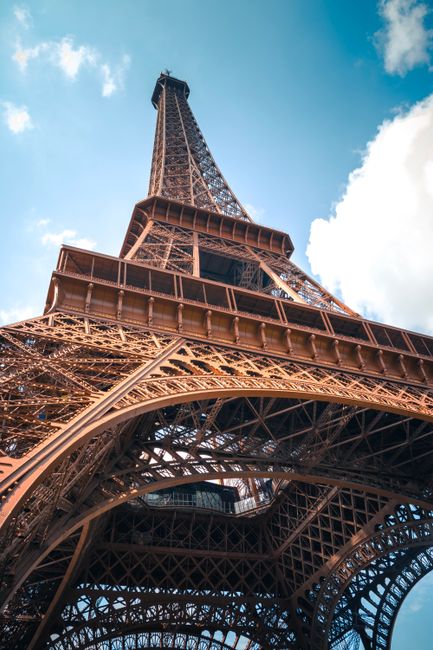
France is the most visited country in the world, and it earns that place: Paris for art, cafés and evening walks along the Seine, castles in the Loire Valley, lavender and hill villages in Provence, the blue sea of the Riviera, Alpine peaks around Mont Blanc, half-timbered wine villages in Alsace, the tides around Mont-Saint-Michel and wild beaches from Brittany to Biarritz. Fast trains tie it together, and the food is a reason to come on its own. Late spring and early autumn suit almost everywhere. Give it 10 days for a first trip, two weeks to add the south or the mountains.
Right now in France
- Wed 15–21°C 59–70°F 13 mm Heavy rain
- Thu 11–16°C 52–61°F Partly cloudy
- Fri 6–15°C 42–58°F Cloudy
Weather: MET Norway (CC BY 4.0) · Rates: ECB
Key facts
| Currency | Euro (EUR, €)Source: france.fr · Last reviewed 4 Oct 2026 |
|---|---|
| Languages | French; regional languages such as Breton, Occitan, Alsatian, Basque, Catalan and Corsican are recognised as part of France's heritage but are not officialSource: legifrance.gouv.fr · Last reviewed 4 Oct 2026 |
| Plugs and voltage | Type C and E · 230 V, 50 HzSource: france.fr · Last reviewed 4 Oct 2026 |
| Emergency number | 112 (all emergencies); 15 medical, 17 police, 18 fire; 114 by SMS for deaf or hard-of-hearing callers; 196 sea rescueSource: service-public.gouv.fr · Last reviewed 4 Oct 2026 |
| Driving side | On the rightSource: service-public.gouv.fr · Last reviewed 4 Oct 2026 |
| Tap water | Safe to drink (in 2023, 98.4% of people had tap water meeting microbiological standards all year)Source: eaufrance.fr · Last reviewed 4 Oct 2026 |
| Tipping | Not required. Restaurants: service is included in the price (service compris); leaving small change or a little extra for very good service is customary but optionalSource: france.fr · Last reviewed 4 Oct 2026 |
| Calling code | +33 (dial 00 for international calls)Source: arcep.fr · Last reviewed 4 Oct 2026 |
| Time zones | Metropolitan France and Corsica: CET (UTC+1), summer CEST (UTC+2)Source: transport.ec.europa.eu · Last reviewed 4 Oct 2026 |
| Entry summary | Schengen area · EU member. See the entry section for rules by passport.Source: home-affairs.ec.europa.eu · Last reviewed 4 Oct 2026 |
Multi-day tours of France
Multi-day tours from local operators. You check dates and book on Viator, our partner; we may earn a commission at no extra cost to you. How we earn money
France at a glance: overview and geography
Mainland France is roughly a hexagon, which is why the French often call it l’Hexagone. It has coasts on the English Channel, the Atlantic and the Mediterranean, and mountain borders in the Alps (with Italy and Switzerland), the Jura and the Pyrenees (with Spain and Andorra). Belgium, Luxembourg and Germany lie to the north-east, across the Rhine. Mont Blanc, at about 4,800 m, is the highest peak in Western Europe. Statistics France (INSEE) puts the population at about 69.1 million on 1 January 2026: 66.8 million in mainland France and 2.3 million in the overseas departments.
The country broke its own tourism record in 2025, with about 102 million international visitors, according to the French Ministry of the Economy. Most arrive in Paris, but many of the best moments happen elsewhere: a long lunch in a village square, a swim in a calanque, a hike above a glacier or a glass of wine in the cellar where it was made.
Time zone: mainland France and Corsica run on Central European Time (UTC+1, UTC+2 in summer), the same as Spain, Italy and Germany. The overseas regions have their own time zones.
The main regions
- Paris and the north: the capital and its Île-de-France region (Versailles, Fontainebleau, Giverny, Disneyland Paris), plus Champagne around Reims and Épernay, Lille and the World War I battlefields of the Somme.
- Normandy and Brittany: green farmland and dramatic coasts in the north-west: Mont-Saint-Michel, the D-Day beaches, Étretat’s white cliffs and Honfleur’s harbour in Normandy; granite coves, lighthouses, crêpes and cider in Brittany, with its own Celtic language and culture.
- The Loire Valley: the “garden of France”, a UNESCO-listed river valley lined with Renaissance châteaux such as Chambord, Chenonceau and Amboise, flat cycling paths and white wines.
- Alsace and the east: Strasbourg and the Alsace wine route, a corner of France with German-sounding names, flower-decked villages and the country’s best-known Christmas markets; Burgundy’s vineyards and Lyon’s food scene are a short train ride south.
- The Alps: Chamonix and Mont Blanc, Annecy’s lake, and huge ski areas in winter; hiking, paragliding and mountain lakes in summer.
- Provence and the Riviera: the south-east of postcards: Avignon, Arles, the Luberon’s hill villages, lavender fields, Marseille and its calanques, and the Côte d’Azur from Saint-Tropez and Cannes to Nice, Monaco and Menton.
- The south-west: Bordeaux and its wine châteaux, the Dordogne’s prehistoric caves and castles, the Atlantic surf beaches from the Landes to Biarritz and the French Basque Country, Toulouse, medieval Carcassonne and the Pyrenees.
- Corsica: a mountainous Mediterranean island with granite peaks, clear coves, the tough GR20 trail and Italian-flavoured towns such as Bonifacio, Calvi and Ajaccio.
- Overseas France: Guadeloupe and Martinique in the Caribbean, French Guiana in South America, Réunion and Mayotte in the Indian Ocean, and territories such as French Polynesia and New Caledonia in the Pacific. They use their own climate calendars and are outside the Schengen area, so entry rules differ from the mainland.
Regions
- Auvergne-Rhône-Alpes
- Bourgogne-Franche-Comté
- Brittany
- Burgundy wine region
- Centre-Val de Loire
- Dordogne
- Grand Est
- Hauts-de-France
- Loire Valley
- Normandy
- Nouvelle-Aquitaine
- Occitania
- Pays de la Loire
- Provence
- Provence-Alpes-Côte d'Azur
- Île-de-France
Where to go: cities, regions and islands
Most first trips start in Paris and add one or two regions by fast train: Provence and the Riviera in the south, the Loire or Normandy for castles and coast, or Lyon and the Alps. Then add a beach, a vineyard or a mountain.
Paris
The capital needs no introduction, but it rewards slow travel: picnics on the quays, market mornings, a different neighbourhood every day. The Eiffel Tower, the Louvre, the Musée d’Orsay and Notre-Dame, reopened in December 2024 after the 2019 fire, are the big names; Versailles and Disneyland Paris are easy day trips. Read our Paris guide for neighbourhoods, 2026 tickets, airport transfers and the tourist tax.
Lyon
France’s food capital sits where the Rhône and Saône rivers meet, two hours from Paris by TGV. Wander the Renaissance lanes and hidden passageways (traboules) of Vieux Lyon, ride the funicular up to Fourvière and eat in a traditional bouchon. In early December the Fête des Lumières fills the city with light shows. See our Lyon guide.
Strasbourg and Alsace
Strasbourg mixes a soaring Gothic cathedral, canals and the half-timbered houses of La Petite France with the European Parliament. From late November to Christmas Eve it becomes the “Capital of Christmas”. Colmar and the villages of the Alsace wine route are a short train or drive away.
Provence, Marseille and the Riviera
Provence is market towns, Roman ruins in Arles and Orange, the Popes’ Palace in Avignon and lavender in bloom from late June to July. Marseille, France’s oldest city, has a lively Old Port and boat trips to the white cliffs of the Calanques National Park. Along the Côte d’Azur, Nice is the natural base, with the Promenade des Anglais, a pebble beach in town, an Italian-feeling old quarter and trains to Antibes, Cannes, Villefranche, Èze, Monaco and Menton.
Normandy, Mont-Saint-Michel and Brittany
Normandy combines the D-Day landing beaches and memorials, Monet’s garden at Giverny, Rouen’s old town, the Bayeux Tapestry and the cliffs of Étretat. Mont-Saint-Michel, an abbey on a tidal island, sits on the border with Brittany, where Saint-Malo’s walled town, the pink granite coast and the islands of the far west are made for coastal walks and seafood.
The Loire Valley
The Loire Valley is easy from Paris: Tours is about an hour by TGV. Rent a bike or a car and visit two or three châteaux a day, Chambord, Chenonceau, Amboise, Villandry and Azay-le-Rideau among them, with wine tastings in Vouvray, Chinon or Saumur in between.
Bordeaux and the south-west
Bordeaux is a handsome 18th-century port city, about two hours from Paris by TGV, with world-famous vineyards on its doorstep in Saint-Émilion, the Médoc and Pessac-Léognan. The Atlantic coast nearby has the Dune du Pilat, oysters in Arcachon and surf from Lacanau down to Hossegor and Biarritz.
The Alps and Corsica
Chamonix is the classic Alpine resort, with the Aiguille du Midi cable car facing Mont Blanc, glacier views, hiking and skiing. Corsica, reached by ferry from Marseille, Toulon or Nice or by short flights, has some of the clearest water in the Mediterranean, beaches such as Palombaggia and Saleccia, and mountain villages a short drive inland.
A few more worth your time
Champagne cellars in Reims and Épernay; Colmar and the Alsace villages; Annecy’s lake; Burgundy’s wine villages around Beaune; the Dordogne valley and the Lascaux cave replicas; Carcassonne’s walled city; Toulouse, the “pink city”; and the Gorges du Verdon, Europe’s great canyon, between Provence and the Alps.
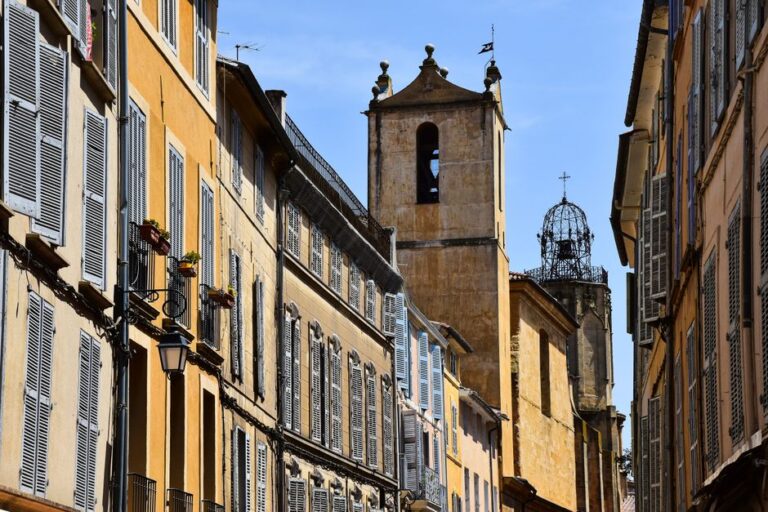
Aix-en-Provence Travel Guide
Plan a trip to Aix-en-Provence: the Cours Mirabeau and its fountains, the old town and daily markets, Cézanne's reopened studio and Jas de Bouffan…
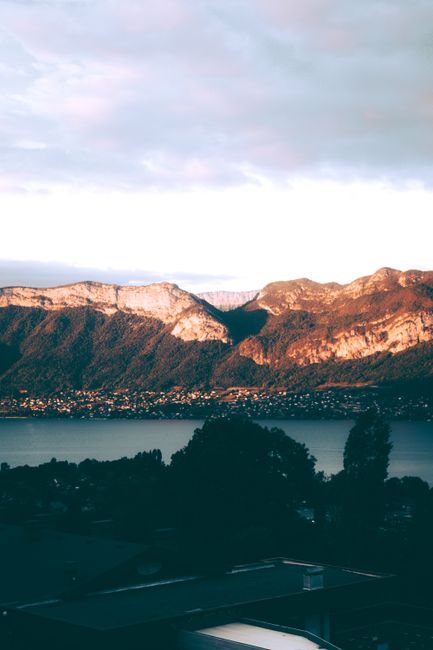
Annecy Travel Guide
Plan a trip to Annecy: the Vieille Ville canals and Palais de l'Isle, swimming and free beaches, Lake Annecy cruise prices, the lakeside cycle…
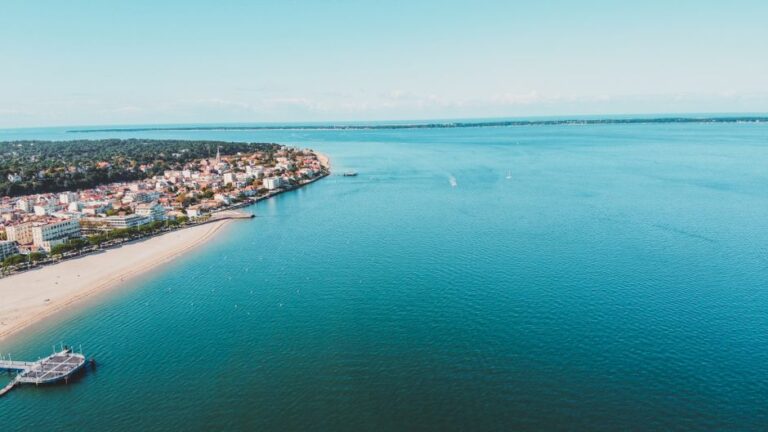
Arcachon Bay Travel Guide
Plan a trip to the Arcachon Bay: the Dune du Pilat (free, with 2026 car park prices, rules and bus access), Arcachon's Ville d'Hiver…
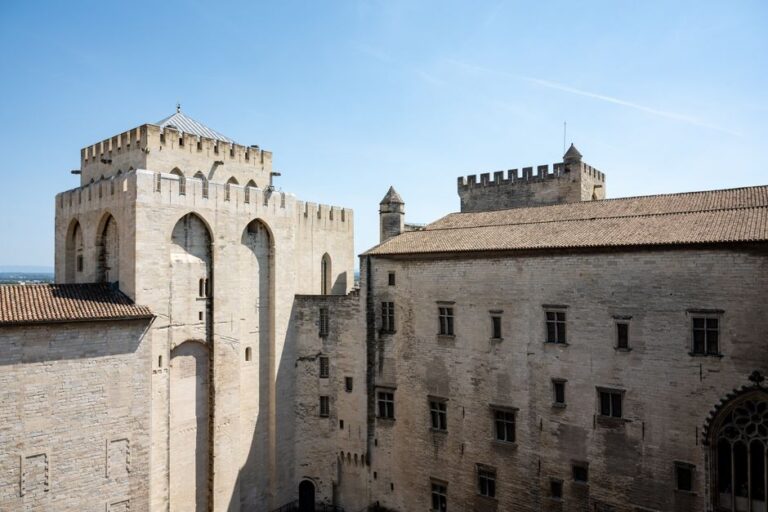
Avignon Travel Guide
Plan a trip to Avignon: the Palais des Papes and the Pont d'Avignon (2026 prices and hours), the ramparts and Rocher des Doms, the…
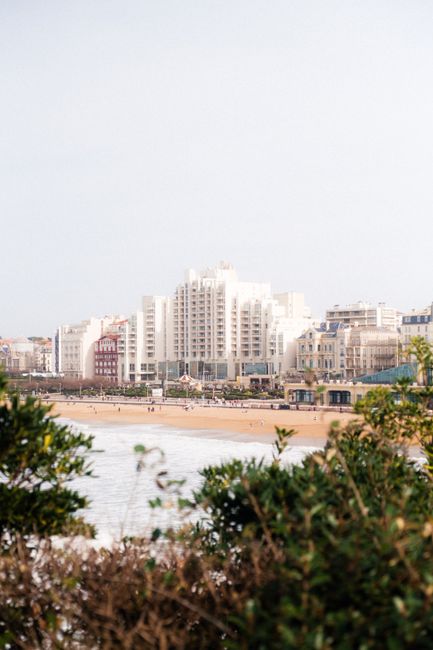
Biarritz Travel Guide
Plan a trip to Biarritz: the Grande Plage, Rocher de la Vierge, Port des Pêcheurs and Côte des Basques, surfing and rip-current safety, aquarium…
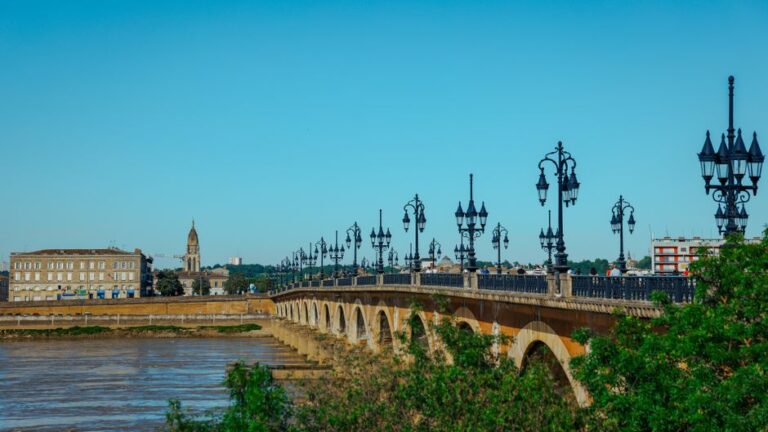
Bordeaux Travel Guide
Plan a trip to Bordeaux: the neighbourhoods, the UNESCO old town and Miroir d'eau, the Cité du Vin with 2026 prices, Saint-Émilion, the Médoc…
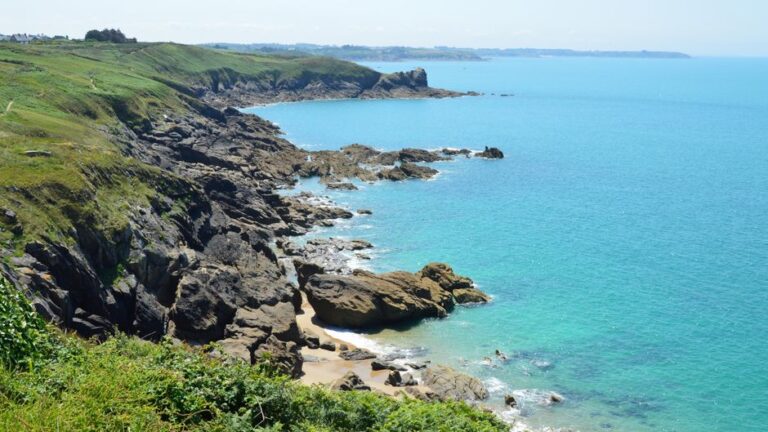
Brittany Travel Guide
Plan a trip to Brittany: Saint-Malo and the Grand Bé at low tide, Dinan, the Pink Granite Coast, Crozon and the Pointe du Raz,…
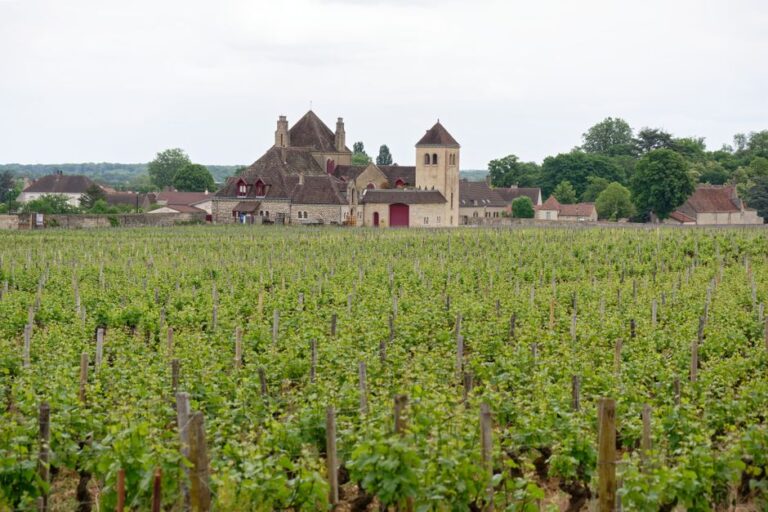
Burgundy Travel Guide
Plan a trip to the Burgundy wine region: Beaune and the Hospices de Beaune Hôtel-Dieu (2026 prices and hours), the 15 November 2026 wine…
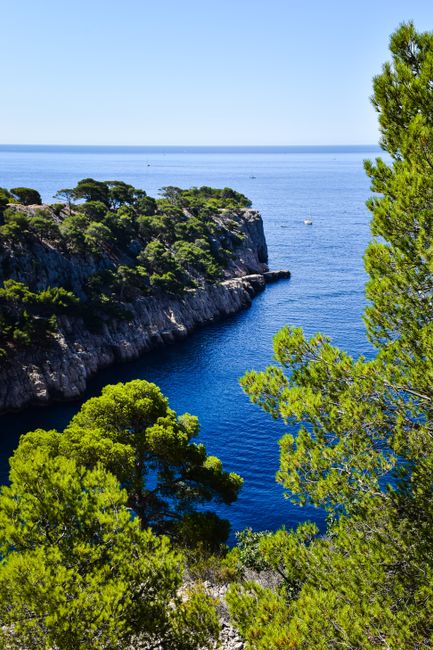
Calanques National Park Travel Guide
Plan a trip to the Calanques National Park between Marseille, Cassis and La Ciotat: free entry, the summer fire-risk map, the free Sugiton booking…
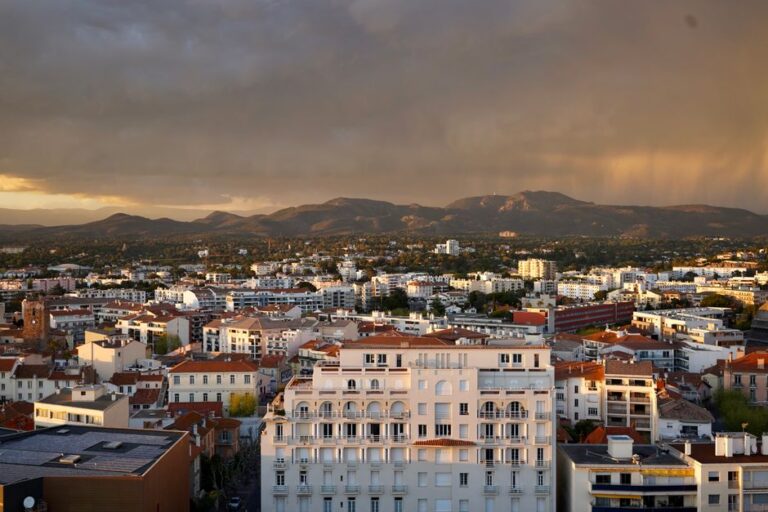
Cannes Travel Guide
Plan a trip to Cannes: the Croisette and its 2026–2028 makeover, the Palais des Festivals, Le Suquet and the Musée des Explorations du Monde,…
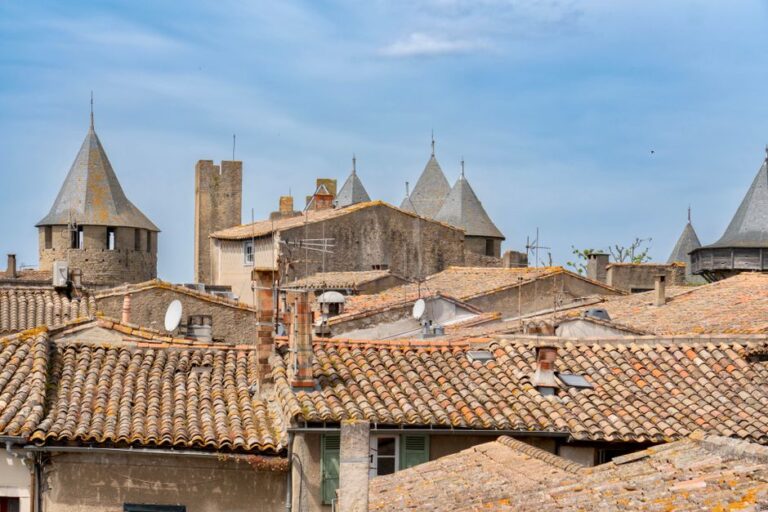
Carcassonne Travel Guide
Plan a trip to Carcassonne: the free-to-walk medieval Cité, Château comtal and ramparts tickets and hours, the Basilica of Saint-Nazaire, the Bastide and the…
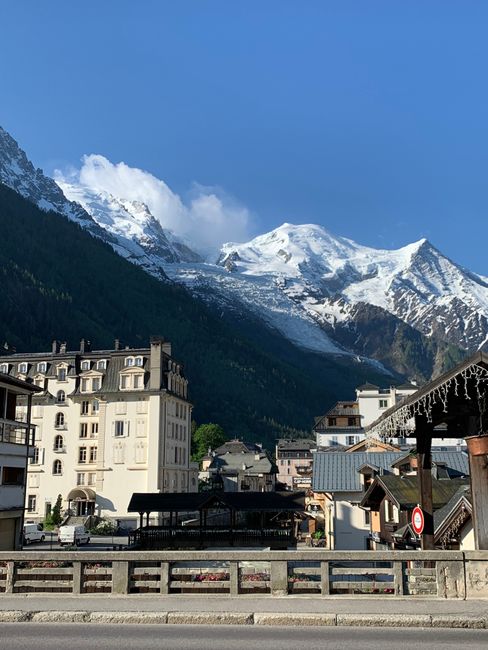
Chamonix Travel Guide
Plan a trip to Chamonix: the valley villages, the Aiguille du Midi cable car with 2026 prices, booking and altitude advice, Montenvers and the…
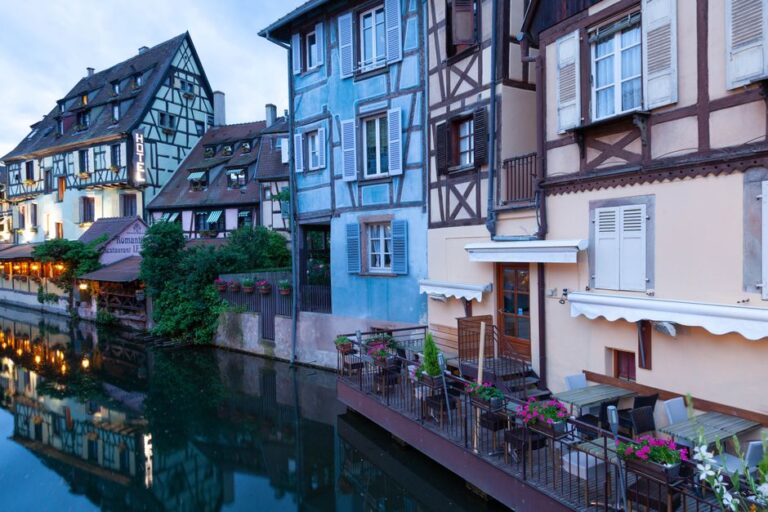
Colmar Travel Guide
Plan a trip to Colmar: Little Venice and the painted houses, the Unterlinden Museum and Isenheim Altarpiece, the 2026 Christmas markets (23 November to…
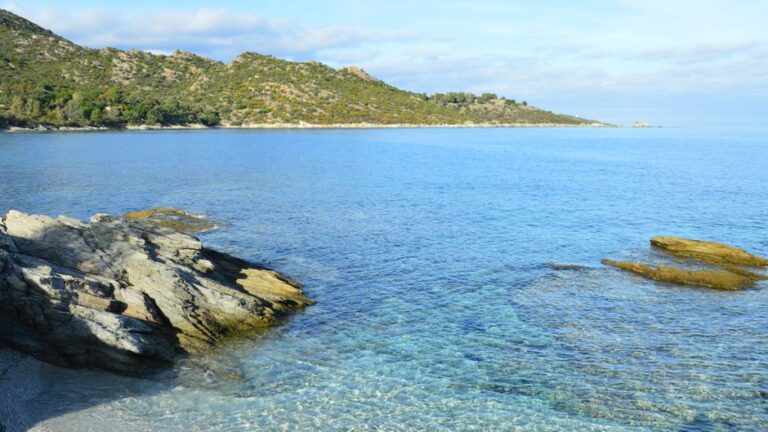
Corsica Travel Guide
Plan a trip to Corsica: Ajaccio, Bonifacio, Calvi, Corte and Cap Corse, the best beaches, Scandola by boat, the GR20 with 2026 refuge booking…
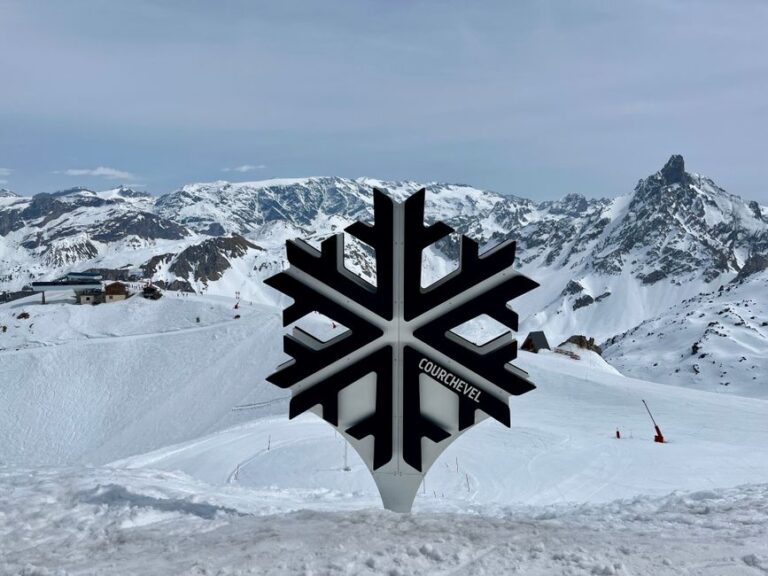
Courchevel Travel Guide
Plan a trip to Courchevel: the villages of 1850, Moriond, Village, Le Praz and La Tania, 2026/27 season dates, Courchevel and 3 Vallées lift…
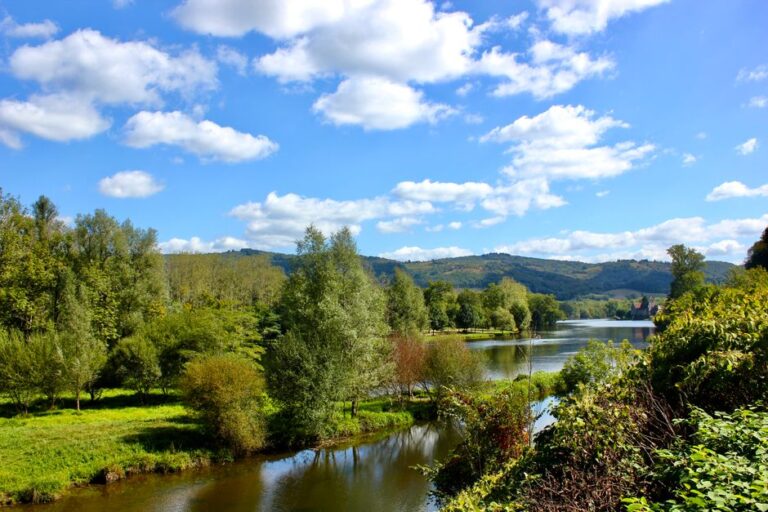
Dordogne Travel Guide
Plan a trip to the Dordogne (Périgord): Lascaux IV 2026 prices and hours, booking Font-de-Gaume, the Musée national de Préhistoire, Sarlat and its markets,…
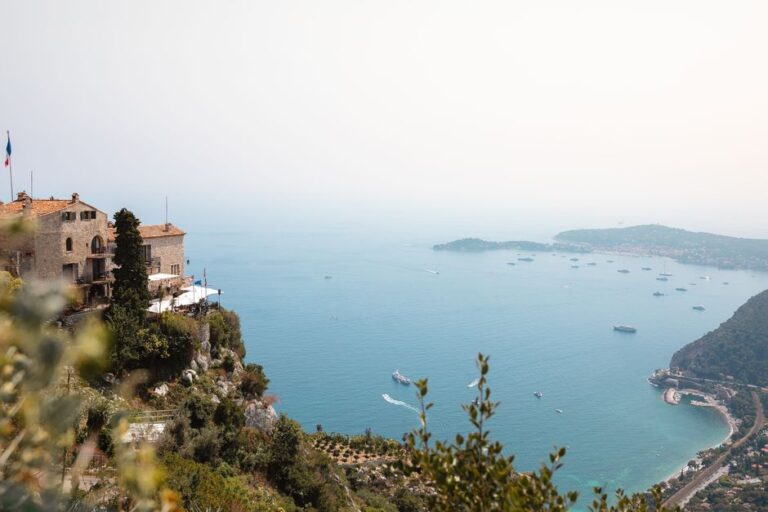
French Riviera Travel Guide
Plan a trip to the French Riviera: Nice, Monaco, Menton and the perched villages, Antibes, Cannes and the Lérins Islands, the Estérel coast, Saint-Tropez…
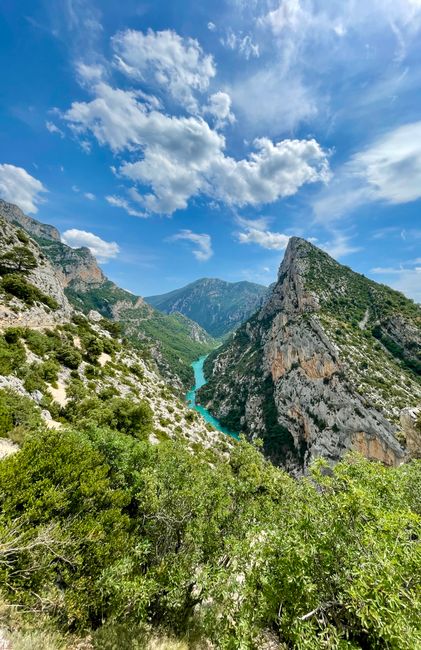
Gorges du Verdon Travel Guide
Plan a trip to the Gorges du Verdon: Moustiers-Sainte-Marie, La Palud, Castellane and Aiguines, the Route des Crêtes and its winter closure, the Point…
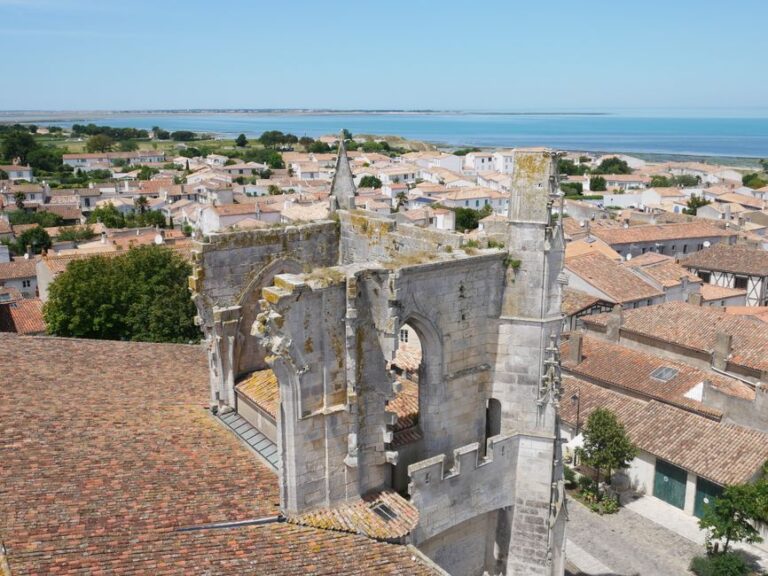
Île de Ré Travel Guide
Plan a trip to the Île de Ré: the 2026 bridge toll by season, Saint-Martin-de-Ré and its UNESCO Vauban fortifications, the Phare des Baleines,…
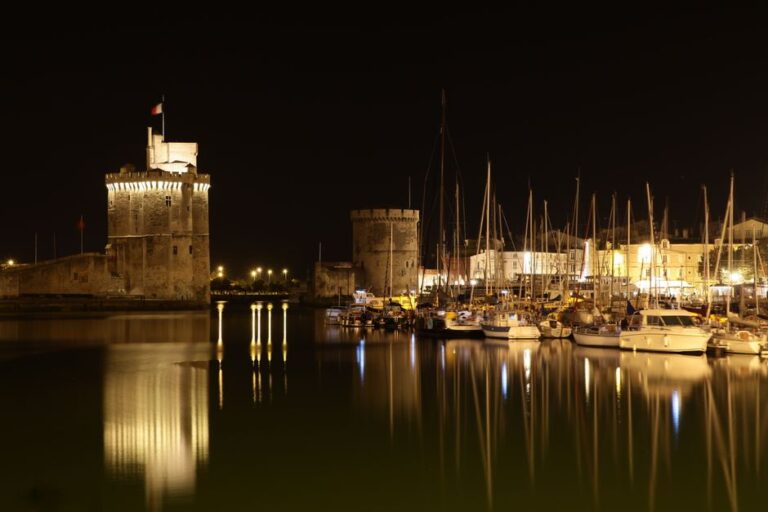
La Rochelle Travel Guide
Plan a trip to La Rochelle: the Vieux-Port and its medieval towers (2026 CMN prices and hours, Tour Saint-Nicolas closed for works), the Aquarium…
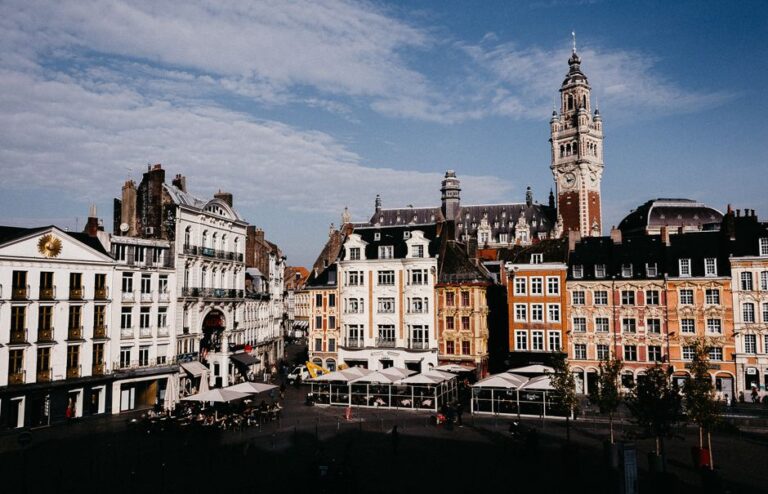
Lille Travel Guide
Plan a trip to Lille: Vieux-Lille, the Grand'Place and Vieille Bourse, the Palais des Beaux-Arts (2026 prices and hours), the Citadelle, Wazemmes market, La…
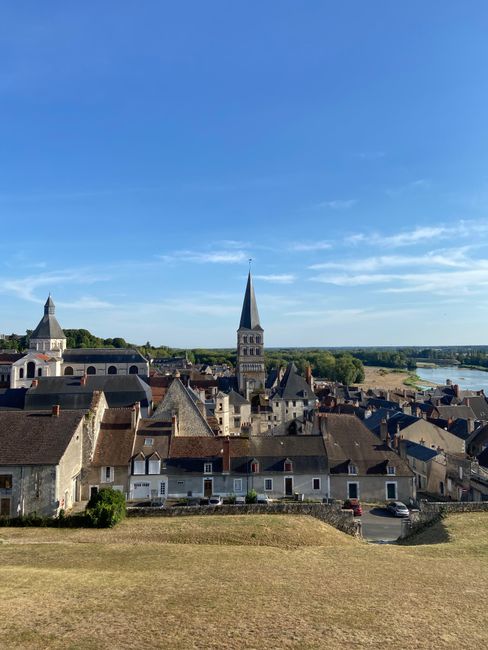
Loire Valley Travel Guide
Plan a trip to the Loire Valley: where to base yourself, Chambord's two-tier 2026 prices, Chenonceau, Amboise and Leonardo da Vinci's Clos Lucé, Villandry's…
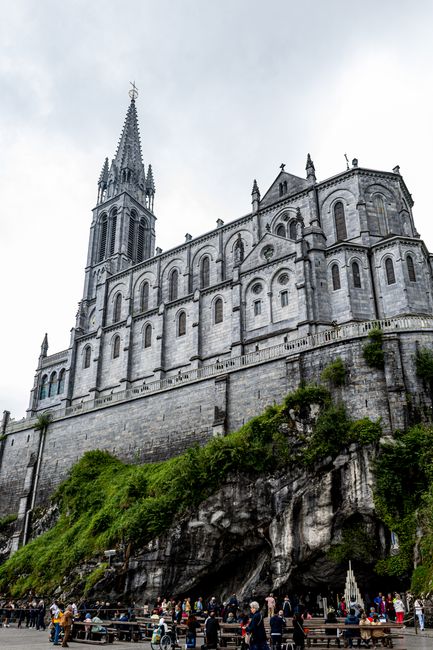
Lourdes Travel Guide
Plan a trip to Lourdes: the Sanctuary of Our Lady of Lourdes and its opening hours, the Grotto of Massabielle, the three basilicas, the…
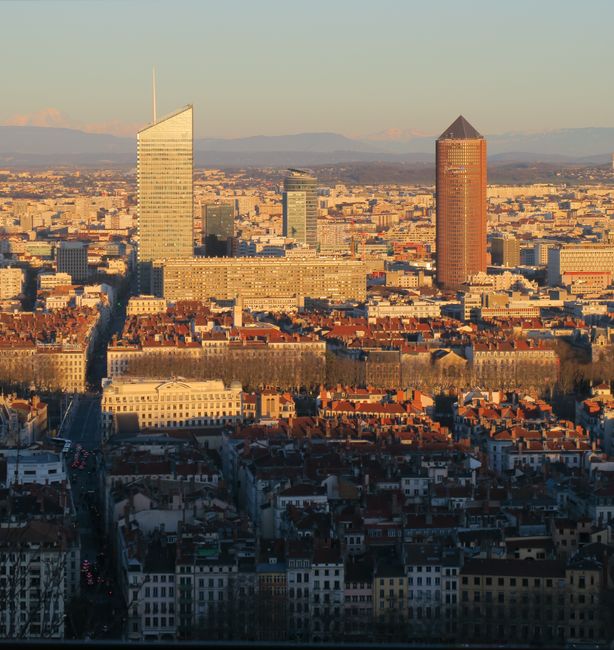
Lyon Travel Guide
Plan a trip to Lyon: Vieux Lyon and its traboules, Fourvière basilica and Roman theatres, bouchons and Les Halles Paul Bocuse, the Fête des…
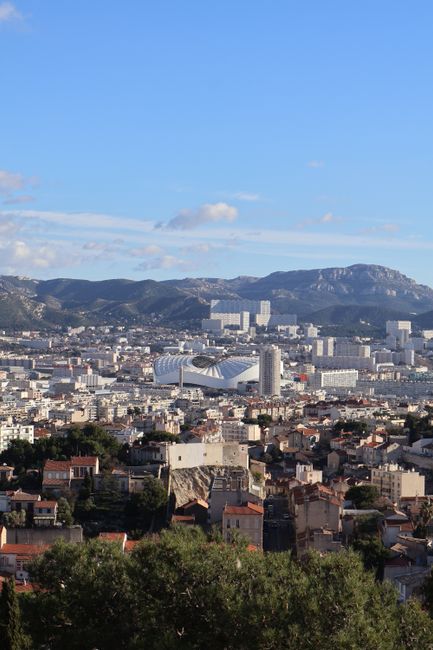
Marseille Travel Guide
Plan a trip to Marseille: the Vieux-Port, Le Panier, Notre-Dame de la Garde and the MuCEM with 2026 prices, boats to the Château d'If,…
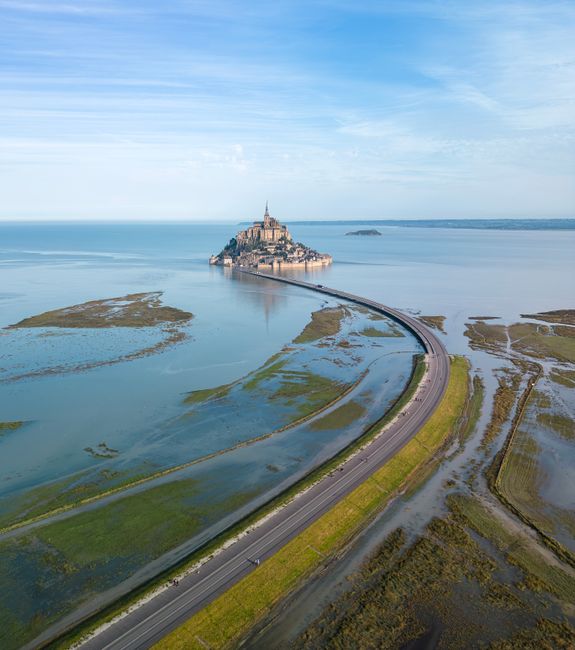
Mont-Saint-Michel Travel Guide
Plan a visit to Mont-Saint-Michel: the abbey with 2026 prices and hours, the free village and ramparts, where to find the official tide timetable…
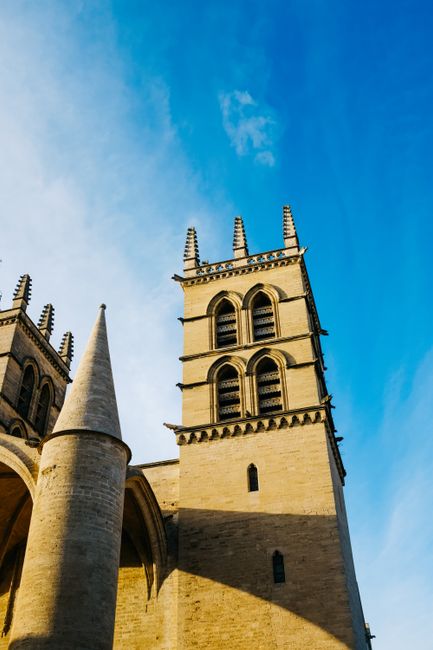
Montpellier Travel Guide
Plan a trip to Montpellier: the Écusson old town, Place de la Comédie, the Peyrou and aqueduct, Musée Fabre and MO.CO. prices, beaches by…
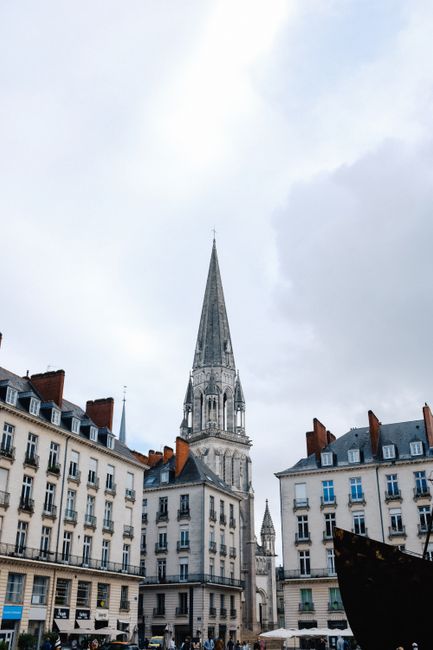
Nantes Travel Guide
Plan a trip to Nantes: the Machines de l'Île and the Grand Éléphant (2026 prices), the Château des ducs de Bretagne and history museum,…
Nice Travel Guide
Plan a trip to Nice: the Promenade des Anglais, Vieux Nice and Castle Hill, the Matisse and Chagall museums with 2026 prices and closures,…
Normandy Travel Guide
Plan a trip to Normandy: the areas and who each suits, the D-Day beaches (UNESCO since July 2026), the American Cemetery and the Mémorial…
Paris Travel Guide
Plan a trip to Paris: the best neighbourhoods, Eiffel Tower and Louvre 2026 tickets (Louvre closed Tuesdays), Notre-Dame's free visits, Orsay, Sacré-Cœur, Versailles and…
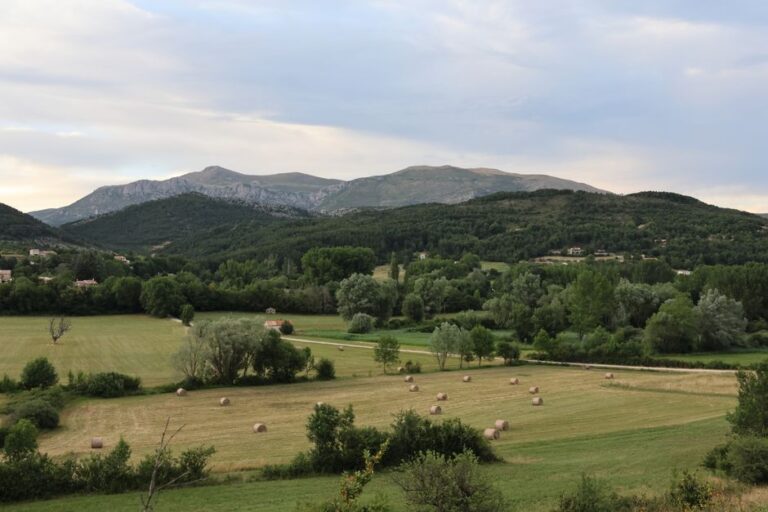
Provence Travel Guide
Plan a trip to Provence: Avignon's Palais des Papes and the July festival, Aix and Cézanne's reopened studio, the Luberon villages, lavender season dates…
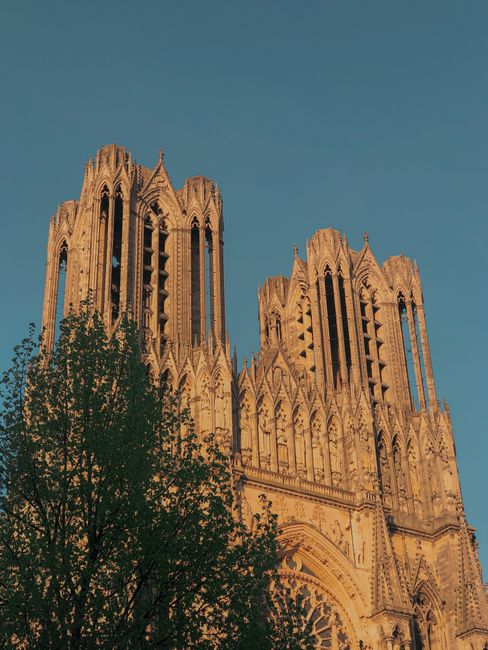
Reims Travel Guide
Plan a trip to Reims: the free Notre-Dame cathedral and its tower tours (2026 prices), the Palais du Tau closed until 2027, the Basilica…
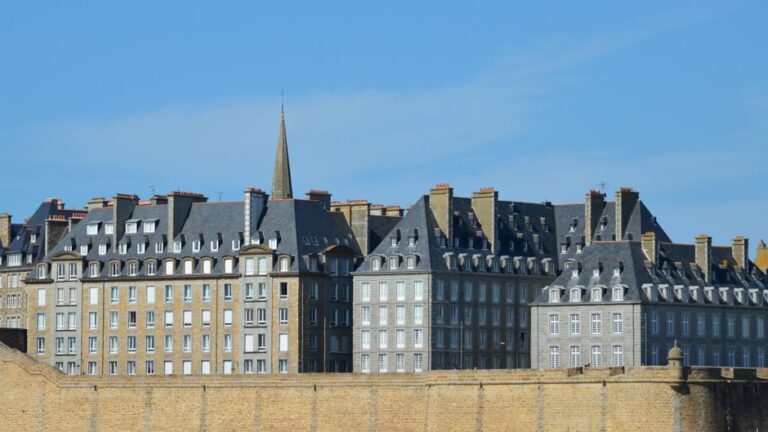
Saint-Malo Travel Guide
Plan a trip to Saint-Malo: the ramparts walk and intra-muros, crossing to the Grand Bé and the Fort National safely at low tide, the…
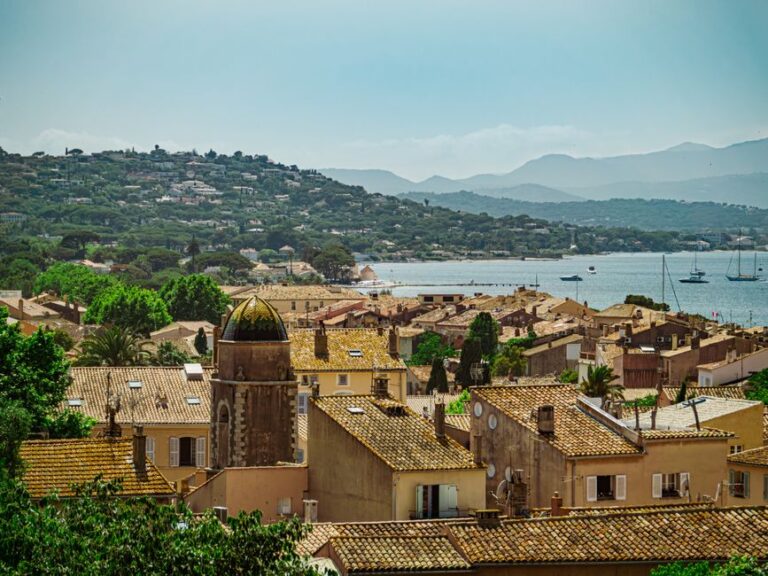
Saint-Tropez Travel Guide
Plan a trip to Saint-Tropez: the Vieux Port and La Ponche, the Citadel and maritime history museum, the Annonciade museum (2026 prices and hours),…
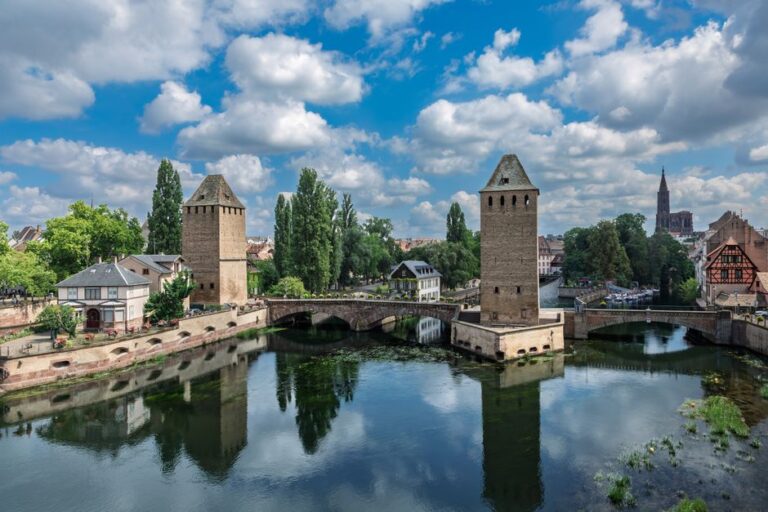
Strasbourg Travel Guide
Plan a trip to Strasbourg: the UNESCO Grande Île, the cathedral, astronomical clock and platform, La Petite France and boat trips, visiting the European…
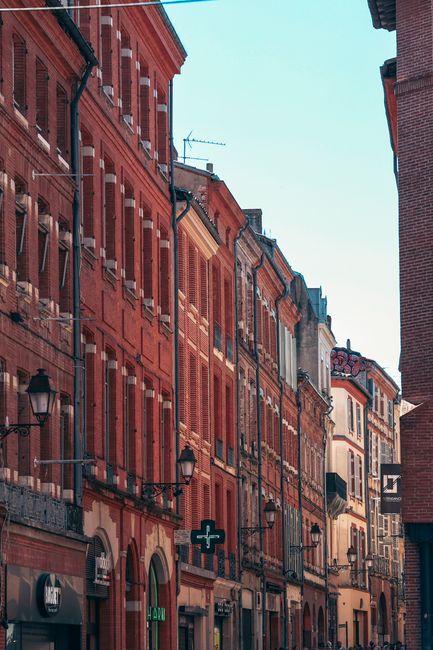
Toulouse Travel Guide
Plan a trip to Toulouse: the Capitole, Saint-Sernin, the Jacobins cloister, the Augustins reopening, Cité de l'espace and Aeroscopia prices, cassoulet and the Victor…
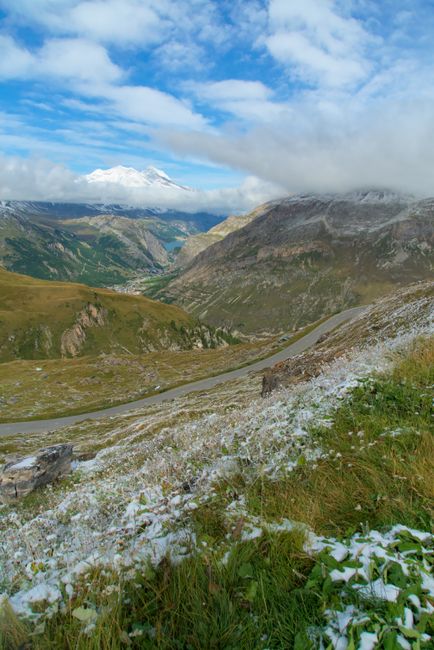
Val d’Isère Travel Guide
Plan a trip to Val d'Isère: the village, La Daille and Le Fornet, 2026/27 season dates, Tignes–Val d'Isère and Val d'Isère-only lift pass prices,…
Best time to visit France, region by region
France has three broad climates: mild and damp in the west, continental in the east (hot summers, cold winters) and Mediterranean in the south. The table uses Météo-France’s official 1991–2020 climate normals: average daily highs by season, measured at one weather station in each region.
| Region (Météo-France station) | Spring highs (Mar–May) | Summer highs (Jun–Aug) | Autumn highs (Sep–Nov) | Winter highs (Dec–Feb) | Best months |
|---|---|---|---|---|---|
| Paris (Paris-Montsouris) | 13–20 °C | 23–26 °C | 22 °C falling to 11 °C | 8–9 °C | April–June, September–October |
| Normandy (Caen-Carpiquet) | 12–17 °C | 21–23 °C | 20 °C falling to 12 °C | 8–9 °C | May–September |
| Brittany (Brest-Guipavas) | 12–17 °C | 19–21 °C | 19 °C falling to 13 °C | 10 °C | June–September |
| Loire Valley (Tours) | 13–20 °C | 23–26 °C | 22 °C falling to 11 °C | 8–9 °C | May–June, September |
| Alsace (Strasbourg-Entzheim) | 12–21 °C | 24–26 °C | 22 °C falling to 9 °C | 5–7 °C, frosty nights | May–September; December for Christmas markets |
| Lyon (Lyon-Bron) | 14–22 °C | 26–28 °C | 23 °C falling to 11 °C | 7–9 °C | May–June, September–October |
| The Alps (Chamonix, 1,042 m) | 9–18 °C | 21–24 °C | 19 °C falling to 7 °C | 3–5 °C, nights well below freezing | June–September for hiking; December–April for skiing |
| Provence (Marseille-Marignane) | 16–24 °C | 28–31 °C | 26 °C falling to 16 °C | 12–13 °C | May–June, September–October |
| Riviera (Nice) | 15–21 °C | 25–28 °C | 25 °C falling to 17 °C | 13–14 °C | May–October; mild in winter |
| South-west (Bordeaux-Mérignac) | 16–22 °C | 25–28 °C | 24 °C falling to 14 °C | 11–12 °C | May–June, September–October |
| Basque coast (Biarritz) | 15–20 °C | 23–25 °C | 23 °C falling to 15 °C | 12–13 °C | June–September |
| Corsica (Ajaccio) | 16–22 °C | 26–29 °C | 26 °C falling to 18 °C | 14–15 °C | May–June, September–early October |
Rain falls all year in the north and west, but in small amounts: Paris averages about 109 days a year with at least 1 mm, spread fairly evenly. Brittany is wetter (Brest about 160 days) and the Basque coast wetter still in volume. The Mediterranean south is dry in summer, with only one or two rainy days a month in July in Marseille, Nice and Ajaccio, but autumn can bring short, heavy storms, especially in October and November. Summer heatwaves now regularly push temperatures above 35 °C, even in Paris; Météo-France issues colour-coded heat and storm warnings.
Crowds and prices through the year
- July and August: French school holidays. Beaches, the Riviera, Provence, Brittany and the Alps are at their busiest and dearest, and motorways jam on Saturdays. Paris is a little quieter, though some small restaurants and shops close for two or three weeks in August.
- Spring (April to June): the sweet spot for Paris, the Loire, Provence and Normandy. Long weekends in May (1 and 8 May, Ascension and Whit Monday) fill hotels and trains.
- September and October: warm seas in the south, grape harvests and fewer crowds; one of the best times overall.
- November to March: quiet and good value in cities, apart from Christmas, New Year and the February school holidays, which are peak ski season in the Alps.
Festivals and events through the year
- February: the Nice Carnival with its flower battles, and the Lemon Festival in Menton.
- May: the Cannes Film Festival, and the start of the Roland-Garros tennis tournament in Paris (late May to early June).
- 21 June: the Fête de la Musique, when free concerts fill streets and squares all over the country.
- Late June to July: lavender season in Provence; the Avignon theatre festival and the Nuits de Fourvière in Lyon in July.
- 14 July: Bastille Day, the national holiday, with a military parade on the Champs-Élysées and fireworks across the country, including at the Eiffel Tower.
- July: the Tour de France cycle race, finishing in Paris.
- Third weekend of September: the European Heritage Days, when ministries, palaces and private buildings open their doors, many for free.
- September and October: grape harvests in Bordeaux, Burgundy, Champagne and Alsace.
- Third Thursday of November: the release of Beaujolais Nouveau (19 November 2026).
- December: the Fête des Lumières in Lyon (5–8 December 2026) and Christmas markets in Strasbourg, Colmar and across Alsace.
Public holidays that affect opening hours and transport in the coming months: 1 and 11 November, 25 December and 1 January; then Easter Monday (29 March 2027), 1 May, 8 May, Ascension Day (6 May 2027), Whit Monday (17 May 2027), 14 July and 15 August.
Weather month by month
Averages from Météo-France normals 1991–2020, Paris-Montsouris · Last reviewed 4 Oct 2026
How long to stay: sample itineraries
The TGV network radiates from Paris, so plan routes as spokes from the capital or as a line north to south. A car only helps in the countryside.
5 days: Paris and a day trip
Four days in Paris for the big museums, the Eiffel Tower, Montmartre and the Marais, plus a day at Versailles. With children, swap Versailles for Disneyland Paris. Or do three days in Paris and two in Normandy, with Mont-Saint-Michel.
7 days: Paris and Provence or the Riviera
Three days in Paris, then the TGV south: about 2½ hours to Avignon or 3 hours to Marseille. Spend two days exploring Provence and two on the Riviera in Nice. Fly home from Nice or Marseille.
10 days: Paris, the Loire, Lyon and the south
Three days in Paris, two in the Loire Valley (by car or bike from Tours), then two in Lyon for food and the old town, and three in Provence or on the Riviera. In winter, swap the south for Strasbourg and the Alsace Christmas markets.
14 days: the grand tour
Follow the 10-day route and add Normandy and Mont-Saint-Michel at the start, or Chamonix, Corsica or Bordeaux and the Atlantic coast at the end. France also links well with its neighbours: Paris–London by Eurostar, Strasbourg–Germany, Nice–Italy, and Bordeaux or Biarritz to San Sebastián and the rest of Spain, with direct trains between Lyon or Marseille and Barcelona.
Entry, money and costs
Entry and visas (last reviewed October 2026)
Mainland France and Corsica are in the Schengen area. Citizens of EU and EEA countries and Switzerland can enter with a national ID card or passport. Visitors from many other countries, including the United States, Canada, the UK and Australia, can stay without a visa for up to 90 days in any 180-day period, counting time in all Schengen countries. Others need a Schengen visa from a French consulate.
- Entry/Exit System (EES): the EU’s digital border system has been fully running at all Schengen borders since 10 April 2026. Non-EU visitors on short stays have their passport details, a photo and fingerprints recorded on their first entry instead of getting passport stamps; children under 12 are not fingerprinted. Registration is free, and the record lasts three years. Travellers leaving the UK on the Eurostar or at Dover and Folkestone go through French border checks before departure, so allow extra time there and at airports.
- ETIAS: the EU’s planned online travel authorisation (fee €20) is not in operation as of October 2026. In April 2026 the European Commission said it was scheduled for the last quarter of 2026, with the exact date to be announced in advance; no date has been published, and press reports point to 2027. Until the EU confirms a date, you don’t need one. Ignore websites selling “ETIAS applications” before then.
- Passports: for non-EU visitors, your passport should have been issued less than 10 years before you arrive and be valid for at least 3 months after the day you plan to leave the Schengen area. Border officers may ask for a return ticket, proof of accommodation and proof that you have enough money for your stay.
- Overseas France: Guadeloupe, Martinique, French Guiana, Réunion, Mayotte and the Pacific territories are not part of the Schengen area and have their own entry rules; check before you book.
Rules change, so check the official pages before you travel: the European Commission’s EES and ETIAS pages, the French government’s France-Visas site and your own government’s travel information.
Language
French is the official language everywhere. You will also hear regional languages and accents: Breton in Brittany, Alsatian in Alsace, Occitan in the south, Basque near Biarritz and Corsican on the island. English is widely spoken in hotels, big museums and tourist areas, less so in the countryside. Politeness matters a lot in France: always start with bonjour (or bonsoir in the evening) when you walk into a shop, café or bakery, before asking anything. Other useful words: merci (thank you), s’il vous plaît (please), excusez-moi (excuse me), au revoir (goodbye) and l’addition, s’il vous plaît (the bill, please).
Currency, payments and tipping
France uses the euro (€). Cards and phone payments are accepted almost everywhere, including for small amounts, although a few small cafés, market stalls and village shops still prefer cash or set a card minimum. When a cash machine or card terminal offers to charge you in your home currency, choose euros, which usually gives a better rate.
Tipping is easy: by law, menu prices in France already include service (service compris). Locals leave small change in cafés and round up or leave a few euros in restaurants when service was good, but it is never expected. Taxi drivers are usually just rounded up.
Tourist tax (taxe de séjour)
Almost every town in France charges a taxe de séjour, a nightly tax per adult added to your hotel, rental or campsite bill; under-18s are exempt. The amount depends on the town and the type of accommodation, usually from under €1 to a few euros a night. Paris is by far the highest: the Île-de-France region adds a 200% surcharge to fund public transport, so a night in a 4-star hotel in Paris carries €8.45 per adult in 2026 and a 5-star €11.70. Details are in our Paris guide. Online rental platforms usually collect the tax for you.
Typical travel costs
France is mid-to-high priced for Western Europe. Paris, the Riviera in summer and Alpine ski resorts are expensive; the countryside and smaller cities are much better value. These estimates, per person per day, are a planning guide as of October 2026:
| Style | Estimated cost per day | What that looks like |
|---|---|---|
| Budget | about €80–110 | Hostel bed or simple hotel outside Paris, a bakery breakfast, a lunchtime set menu, picnics, public transport, free sights and churches |
| Mid-range | about €170–250 | 3- or 4-star hotel room shared by two, café lunches and restaurant dinners, two paid sights, a TGV journey between cities |
| High-end | about €400+ | Boutique or luxury hotel, gastronomic dinners, private guides and tastings, car hire |
Add about €20–30 a day in Paris. The best-value meal is usually the lunchtime formule or menu du jour (a starter and main or main and dessert at a fixed price), much cheaper than the same restaurant at dinner. A coffee at the counter costs less than at a table on the terrace. The figures are our estimates, not official statistics.
Getting there and getting around
Arrival airports and trains from abroad
- Paris-Charles de Gaulle (CDG): the main long-haul hub and home of Air France, north-east of Paris, with a TGV station for onward trains to the regions. See our Paris guide for transfers.
- Paris-Orly (ORY): south of Paris, mostly European and domestic flights, linked to central Paris by metro line 14 since 2024.
- Nice Côte d’Azur (NCE): the gateway to the Riviera, with trams into Nice.
- Lyon-Saint-Exupéry (LYS), Marseille-Provence (MRS), Toulouse-Blagnac (TLS), Bordeaux-Mérignac (BOD) and Nantes (NTE): busy regional airports with many European flights. EuroAirport Basel-Mulhouse-Freiburg (BSL/MLH) serves southern Alsace, and Geneva airport is often the easiest way into the French Alps.
- By train: Eurostar links Paris with London, Brussels and Amsterdam; there are direct trains from Germany, Switzerland and Italy, and between Lyon, Marseille and Barcelona.
High-speed trains: TGV INOUI and OUIGO
SNCF, the national railway, runs one of Europe’s biggest high-speed networks. Most lines start in Paris, from different stations depending on direction: Gare de Lyon for Lyon, the Alps, Provence and the Riviera; Gare de l’Est for Strasbourg; Montparnasse for Bordeaux, Brittany and the Loire; Gare du Nord for Lille, London and Brussels. Typical times: Paris–Lyon about 2 hours, Paris–Strasbourg about 1 hour 50, Paris–Bordeaux about 2 hours, Paris–Marseille about 3 hours 15, Paris–Nice 5½ to 6 hours.
- TGV INOUI: SNCF’s standard high-speed service, with a bar car, more flexible fares and generous luggage: up to two large bags and one small bag per person, all labelled with your name.
- OUIGO: SNCF’s low-cost brand, often half the price or less. The ticket includes one cabin-size bag and one small bag; extra or large bags must be added when you book (from €5 each) and cost more at the station. OUIGO often uses stations outside city centres (for example Marne-la-Vallée or Massy near Paris), so check where you leave from. OUIGO Train Classique runs slower, cheap conventional trains on a few routes.
- Other operators: Italy’s Trenitalia (Frecciarossa) also runs Paris–Lyon high-speed trains, and Spain’s Renfe runs Lyon and Marseille to Barcelona.
Tips: book on the SNCF Connect app or website (or the operator’s own site); fares go up as trains fill, and bookings usually open several months ahead. Long-distance seats are reserved, so a ticket is for one specific train. Frequent travellers aged 12–27 or over 60, and adults travelling often, can save with SNCF’s Avantage discount cards.
Regional trains, buses and city transport
- TER regional trains: run by the regions, they reach most towns and many day-trip spots, such as Colmar from Strasbourg, Giverny’s station at Vernon from Paris, Antibes and Monaco from Nice. Tickets are cheaper, seats are not reserved, and many regions sell good-value day or weekend passes.
- Intercités and night trains: slower long-distance trains, including night trains from Paris to Nice, the Pyrenees and the Alps.
- Long-distance coaches: FlixBus and BlaBlaCar Bus are the cheapest way between cities, but slower than the train.
- City transport: Paris, Lyon, Marseille, Lille, Toulouse and Rennes have metros; Strasbourg, Bordeaux, Nice and many others have modern trams. In Paris, paper tickets have been phased out: load tickets onto a Navigo Easy card (€2) or your phone, or buy a Navigo weekly pass. Our city guides have the 2026 fares.
Driving, tolls and Crit’Air stickers
A car is the best way to explore the Loire châteaux, Provence’s villages, the Dordogne, Normandy’s coast, the Alsace wine route and Corsica, but skip it in Paris and the big cities. France drives on the right. Speed limits are 130 km/h on motorways (110 km/h in rain), 80 or 90 km/h on country roads depending on the department, and 50 km/h or less in towns; most of Paris is limited to 30 km/h. The drink-drive limit is 0.5 g/l of blood (0.2 g/l for new drivers). Carry a high-visibility vest and a warning triangle.
- Tolls (péages): most motorways (autoroutes) charge tolls, paid by card at the booths. Some, including the A13 and A14 between Paris and Normandy and the A79 in central France, have no booths (“flux libre”): cameras read your number plate and you pay online within 72 hours, or you get a fine.
- Crit’Air stickers and low-emission zones (ZFE): many cities, including Paris, Lyon, Strasbourg, Marseille, Toulouse and Grenoble, restrict older vehicles (Nice’s zone now covers only lorries, buses and coaches), and any car, French or foreign, needs a Crit’Air sticker to drive in them. Order it only on the official site, certificat-air.gouv.fr (€3.85 posted to a French address, slightly more abroad; avoid look-alike sites that charge much more) and allow time for delivery. The fine starts at €68. As of October 2026, Lyon fines Crit’Air 3 cars, Strasbourg bans Crit’Air 4, 5 and unclassified vehicles, and the Greater Paris zone is not yet issuing fines; rules tighten during pollution alerts.
Strikes (grèves) and how to check
Strikes are part of French life, especially on the railways, the Paris metro, at airports (often air traffic control) and during national protest days. They are usually announced days in advance, and service rarely stops completely. Before you travel, check the SNCF Connect app for your train, the RATP or Île-de-France Mobilités apps for Paris transport, your airline’s notices and local news; SNCF publishes its reduced timetable the day before a strike, and affected passengers can usually change or refund tickets for free. Large demonstrations can also close metro stations and streets around the route, so keep an eye on the news and avoid crowds.
Culture, food and opening hours
Meals matter in France, and they follow the clock. Breakfast is light: coffee and a croissant or bread with butter and jam. Lunch runs from about 12:00 to 14:00, and many restaurants stop serving at 14:00 sharp; dinner is usually from 19:30 to 21:30, a little later in Paris and the south. Between meals, kitchens close, so look for a brasserie or café with “service continu” if you are hungry at 16:00.
Every region has its specialities: oysters and crêpes in Brittany; Camembert, apple cider and calvados in Normandy; choucroute and tarte flambée in Alsace; quenelles and sausages in Lyon’s bouchons; bouillabaisse in Marseille; socca and salade niçoise in Nice; duck and foie gras in the south-west; fondue and raclette in the Alps. Bread from the local boulangerie and a picnic of cheese, ham and fruit from the market is one of the cheapest and best meals in the country. Tap water is safe, and restaurants will bring a free jug if you ask for une carafe d’eau.
Opening hours: many shops close on Sundays, and in smaller towns also on Mondays and for lunch (roughly 12:00–14:00). Bakeries usually open on Sunday mornings, and Paris and tourist areas are more flexible. National museums are usually closed one day a week, often Monday or Tuesday (the Louvre on Tuesdays, the Musée d’Orsay and Versailles on Mondays), and many sights close on 1 January, 1 May and 25 December. Markets are mostly in the morning and pack up by 13:00.
Dress is smart-casual in cities. Cover your shoulders in churches, and keep voices down in restaurants and on trains. Cheek kisses (la bise) are between friends; a handshake and bonjour are right for everyone else.
Safety, health, accessibility and connectivity
Safety
France is a safe country to travel in. The most common problem is pickpocketing and bag snatching in crowded places: the Paris metro (especially line 1 and the RER B to the airport), around the Eiffel Tower, Montmartre and the Louvre, and on the Riviera in summer. Watch for distraction tricks such as petitions, “found” gold rings and friendship bracelets. Keep phones off café tables. Like much of Europe, France has a high terrorism threat level, and you will see soldiers on patrol and bag checks at many sights and shops. Avoid demonstrations, which can turn tense. In the mountains and at sea, follow local warnings: riptides on the Atlantic coast are dangerous, so swim between the flags where lifeguards are on duty.
Emergency numbers: 112 works everywhere in the EU; in France you can also call 15 (medical), 17 (police) and 18 (fire and rescue), or text 114 if you cannot speak.
Health
Healthcare is excellent. EU travellers can use the public system with a European Health Insurance Card (EHIC), and UK travellers with a GHIC, but you usually pay first and claim back, and neither covers everything, so take travel insurance. Pharmacies (green cross) are everywhere, give good advice and take turns to stay open at night (pharmacie de garde). Tap water is safe to drink. In summer, protect yourself from the sun and heat; in the countryside and mountains, check for ticks after hiking.
Accessibility
Accessibility is improving but uneven. TGV trains, newer tram networks and big museums are generally step-free, and SNCF’s free Assist’enter service helps travellers with reduced mobility if booked ahead. The Paris metro is the hard part: most older stations have stairs only; line 14 is fully accessible, and buses and trams are a better option. Old town centres have cobbles and steps. Ask hotels about lifts before booking, as many older buildings have tiny lifts or none.
Connectivity and power
EU phone plans work in France at home prices under the EU’s “roam like at home” rules. Visitors from the UK, US and elsewhere should check roaming charges; an eSIM or a prepaid SIM from Orange, SFR, Bouygues or Free is usually cheaper for data. Free Wi-Fi is common in hotels, cafés, stations and many public parks. France uses 230 V and type E sockets (C and E plugs fit; most type F “Schuko” plugs also fit).
Things to do: beaches, hiking, cycling, wine and the sea
- City sightseeing: Paris, Lyon, Strasbourg, Bordeaux, Marseille and Nice all reward walking days, with river cruises, markets and museums.
- Beaches: Riviera coves around Nice and Villefranche, the calanques near Marseille, Corsica’s white-sand bays, the long Atlantic beaches of the Landes and Biarritz, and Brittany’s sheltered coves.
- Hiking: the Alps around Chamonix and the Tour du Mont Blanc, Corsica’s GR20, the Pyrenees, the Gorges du Verdon, the Calanques and Brittany’s coastal path (GR34).
- Cycling: the Loire à Vélo trail past the châteaux, the Alsace wine route, Provence’s lavender lanes and legendary Tour de France climbs such as Mont Ventoux and Alpe d’Huez.
- Wine tasting: Bordeaux, Burgundy, Champagne, the Alsace wine route, the Rhône and Beaujolais near Lyon, Provence’s rosés and the Loire’s whites.
- Surfing: Biarritz, Hossegor and Lacanau on the Atlantic coast, with the biggest swells in autumn.
- Boat trips, snorkeling and diving: Seine cruises in Paris, boat tours of the Calanques from Marseille or Cassis, the Port-Cros National Park off the Var coast, and the marine reserves around Corsica.
What to pack
Pack for walking and changeable weather. Comfortable shoes come first: you will cover miles on cobbles and stairs. In the north and west, bring layers and a light waterproof in any season; in summer in the south, a sun hat, sunglasses, sunscreen and a refillable bottle. Bring one smarter outfit for dinners, a scarf or cover-up for churches, and a warm coat, hat and gloves for Paris, Lyon and Strasbourg in winter. For the Alps, pack a fleece and waterproof even in July, and proper boots for hiking. A cross-body bag that zips helps in crowds. Bring a European (C/E) plug adapter if your devices use another type.
France travel FAQ
When is the best time to visit France?
May, June and September suit almost all of France: warm days, long evenings and fewer crowds than July and August. Summer is best for beaches, the Alps and Corsica; December is lovely for Christmas markets in Alsace and the lights in Lyon; and winter is ski season in the Alps.
How many days do you need in France?
A week covers Paris plus one region, such as Provence and the Riviera or Normandy. Ten days lets you add the Loire or Lyon, and two weeks gives you a relaxed loop with time for the Alps, Bordeaux or Corsica.
Do I need a visa or ETIAS to visit France?
EU citizens don’t. Americans, Canadians, Britons, Australians and many others can visit visa-free for up to 90 days in any 180. As of October 2026, ETIAS is not running yet, so you don’t need one, but non-EU visitors are registered in the EU’s Entry/Exit System (fingerprints and photo) at the border.
Is France expensive to visit?
Paris and the Riviera are expensive; the rest of the country is mid-priced for Western Europe. Plan on roughly €170–250 a day for a mid-range trip. Lunchtime set menus, bakery breakfasts, market picnics and booking trains early keep costs down.
Is France safe for tourists?
Yes. The main risk is pickpocketing in crowded places, especially in Paris and on the Riviera. Keep valuables zipped away, avoid demonstrations, swim where lifeguards are on duty and call 112 in an emergency.
What is the difference between TGV INOUI and OUIGO?
Both are SNCF high-speed trains. TGV INOUI includes more luggage, a bar car and more flexible tickets, and uses central stations. OUIGO is much cheaper but includes only a cabin bag and a small bag, charges for extra luggage and sometimes uses stations outside the city centre.
How do I find out about train or metro strikes in France?
Check the SNCF Connect app, the RATP and Île-de-France Mobilités apps in Paris, your airline and local news a few days before you travel. SNCF publishes its strike timetable the day before, and you can usually change or refund affected tickets free of charge.
Do I need a Crit’Air sticker to drive in France?
Only to drive into a low-emission zone (ZFE), which includes Paris, Lyon, Strasbourg and many other big cities. Foreign cars need one too. Order it only from certificat-air.gouv.fr (€3.85 to a French address, a little more abroad) well before your trip; rental cars from French agencies usually have one already.
How much should I tip in France?
Service is included in French prices by law, so tipping is optional. Leave small change for a coffee and a few euros or around 5% in a restaurant if the service was good.
What time do people eat in France?
Lunch is usually from 12:00 to 14:00 and dinner from 19:30 to 21:30. Many restaurants close their kitchens in between; brasseries and cafés with “service continu” serve all afternoon.
Are shops and museums open on Sundays and Mondays?
Many shops close on Sundays, and in small towns on Mondays too, though bakeries and markets open on Sunday mornings. Museums usually close one weekday: the Louvre closes on Tuesdays, the Musée d’Orsay and Versailles on Mondays.
Is there a tourist tax in France?
Yes, almost everywhere: a taxe de séjour per adult per night, added to your accommodation bill; under-18s don’t pay. It is usually small, but Paris charges much more in 2026, for example €8.45 per adult per night in a 4-star hotel.
Paris or the south of France: where should I go first?
If it’s your first trip, start with a few days in Paris and then take the TGV south for Provence and the Riviera. For beaches, sunshine and a slower pace only, skip Paris and fly straight to Nice or Marseille.
Can I combine France and Spain in one trip?
Yes, easily. Direct trains link Lyon and Marseille with Barcelona, and Biarritz is a short drive from San Sebastián. See our Spain guide, or continue to Portugal for a longer trip.
Sources
- Natural Earth · Public domain · fetched 3 Oct 2026
- © OpenStreetMap contributors · ODbL · fetched 3 Oct 2026
- Wikidata · CC0 · fetched 3 Oct 2026
Sources and last review
Researched and last reviewed on 3 October 2026. Entry rules come from the European Commission; climate figures from Météo-France’s 1991–2020 normals; population from Statistics France (INSEE); visitor numbers from the French Ministry of the Economy; tourist tax from service-public.fr and the Paris tourist office; the Crit’Air sticker and taxi rules from service-public.fr; museum days from the Louvre, the Musée d’Orsay and the Palace of Versailles; train information from SNCF. Low-emission zone enforcement and some rail details come from press reports and are flagged for checking. Daily costs are estimates. Prices, timetables and entry rules change, so check the official links before you travel.
Plugs and power in France
France uses 230 V, 50 Hz and these plugs (left) and wall sockets (right):
All plug types and voltages by country → · Check what you need to pack →
Plan your trip
Partner links: TravelerCenter may earn a commission if you book, at no extra cost to you.
🇫🇷 Useful French phrases for France
All 38 French phrases: restaurant, hotel, emergencies, romance (printable) →