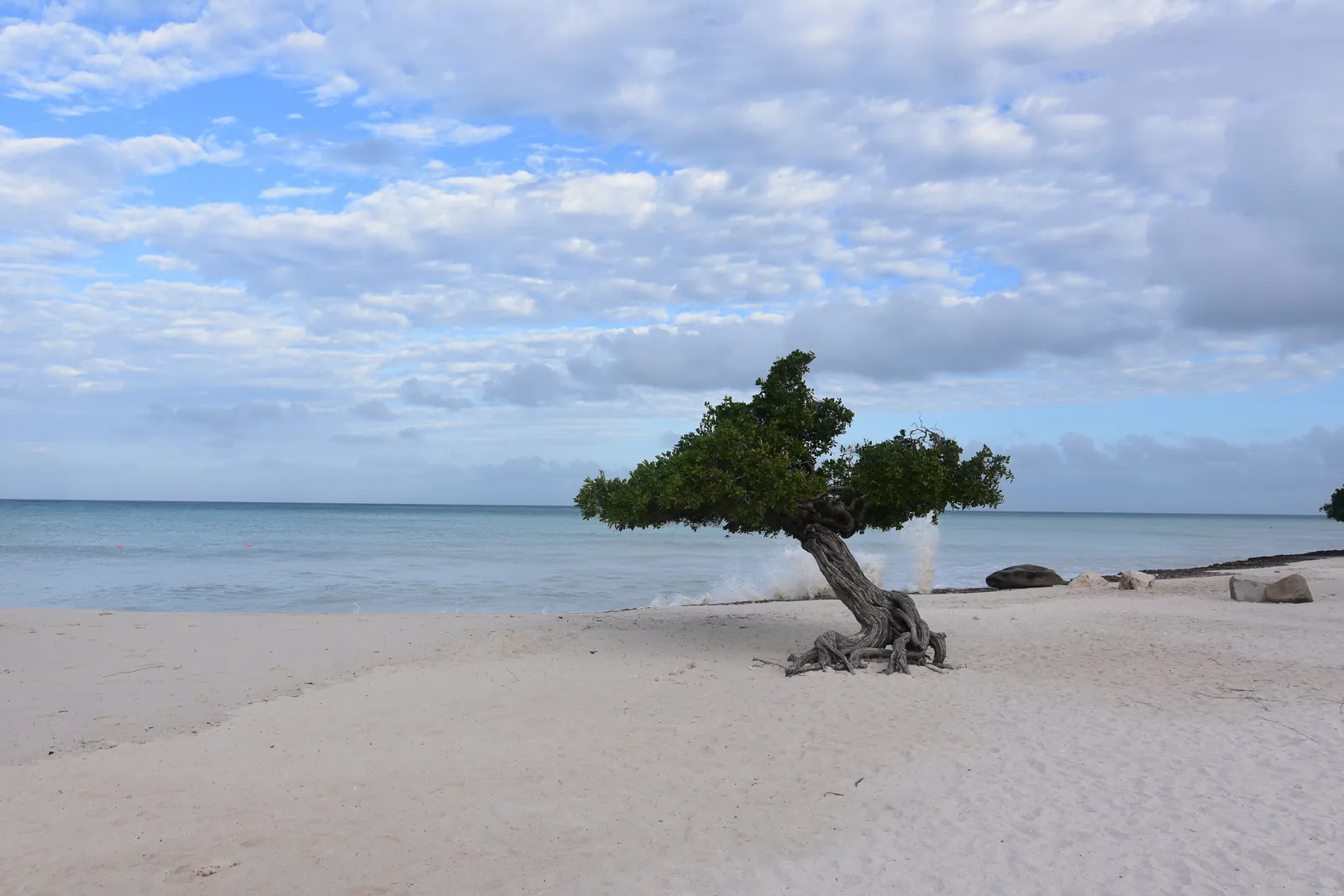
Short answer: Aruba is sunny, breezy and warm all year, so there is no bad month to go. February to May are the driest months, and from late April to mid-December you get the same weather as in winter at noticeably lower prices and with calmer beaches. Mid-December to mid-April is the peak: the most reliable escape from northern winter, but also the busiest and most expensive time.
This page explains Aruba’s weather month by month, when the wind blows hardest, how the short rainy season and the Atlantic hurricane season really affect the island, and when crowds and prices peak, as of October 2026. For beaches, entry rules, the ED card and costs, see our Aruba travel guide, and plan your days with our AI trip planner.
Best time to visit Aruba at a glance
| Goal | Best months | Why |
|---|---|---|
| Best weather | February to May | The driest months, with only about 1.5–4.5 days of rain a month and steady trade winds |
| Lowest prices | Late April to mid-December (outside July and holidays) | Hotel rates drop after Easter; the sunshine stays the same |
| Fewest crowds | May, June, September to early December | Between the winter peak and the summer school holidays; fewer cruise ships |
| Beaches and swimming | All year | Calm west-coast water; sea temperatures about 26–28 °C (79–83 °F) |
| Windsurfing and kitesurfing | About April to August | The strongest, steadiest trade winds |
| Snorkeling, diving and boat trips | September to November | The wind eases and the sea is at its calmest and warmest |
| Hiking in Arikok | December to March | Slightly cooler afternoons; go early in the morning in any month |
| Carnival | January to February | Parades build to the Grand Parade on the Sunday before Ash Wednesday |
Aruba weather month by month
Weather month by month
The climate table shows average daily high and low temperatures and rain for each month. Aruba is semi-arid: according to the Meteorological Department of Curaçao, which describes the climate of the three ABC islands, the dry season runs from February to May and the short rainy season from October to January, when most rain falls in brief showers, often at night or early in the morning. The table and the monthly figures quoted below are the 1991–2020 climate normals of the Departamento Meteorologico Aruba for Queen Beatrix International Airport; afternoon highs only move between about 30 °C (87 °F) and 33 °C (92 °F) through the year.
Aruba month by month
January
Highs around 30 °C (87 °F), lows near 25 °C (77 °F), and about 11 days with a shower, the most of the year, though most are brief and fall at night. It is peak season: book early for New Year, which ends with gaita music and fireworks. Dia di Betico, the birthday of the political leader Betico Croes, is a public holiday on 25 January, and the Carnival season gets going with the torch parade early in the month.
February
The dry season begins: rain on only about 4–5 days, highs around 31 °C (87 °F) and a fresh breeze. Carnival peaks this month in 2027. The Grand Parade in Oranjestad is held on the Sunday before Ash Wednesday, which falls on 10 February 2027, and Carnival Monday is a public holiday; San Nicolas holds its own Grand Carnival Parade (in 2026, the day before Oranjestad’s). Hotels are full and pricey, especially around Presidents’ Day weekend.
March
One of the sunniest months, with rain on about two days and highs around 31 °C (88 °F). National Anthem and Flag Day on 18 March brings flags and cultural events. US spring break keeps hotels busy and expensive, and cruise ships still call often. From about March, sea turtles start nesting on Eagle Beach; nests are marked and should be left alone.
April
The driest month on average, with highs around 32 °C (89 °F). Easter and King’s Day (27 April) are busy, but once Easter is over, hotel rates fall and the winter crowds go home. The trade winds strengthen, which is good news for windsurfers and kitesurfers at Fisherman’s Huts and Boca Grandi.
May
Hot, dry and windy: highs around 32 °C (90 °F) and rain on fewer than two days. This is one of the best-value months of the year, with low-season rates, empty palapas on Eagle Beach and plenty of sun. Labor Day on 1 May is a public holiday. Boat trips can be a little choppy when the wind blows hard.
June
Similar to May, with highs around 32.5 °C (91 °F) and a strong, steady breeze. The Atlantic hurricane season starts on 1 June, but Aruba lies on the southern edge of the hurricane region. Dera Gai, the traditional St John’s Day celebration, falls on 24 June. Late in the month, North American summer holidays begin.
July
Hot, sunny and still windy, with highs around 32.5 °C (90 °F). Families arrive for the school holidays, so July is busier and pricier than the months around it, though nothing like the winter peak. The sea is warm and the west-coast beaches stay calm.
August
One of the two hottest months, with highs around 33 °C (92 °F) and lows of 27 °C (81 °F). The breeze takes the edge off the heat, and rain falls on only about three days. Hotel rates fall again after the summer holidays. Start hikes in Arikok at sunrise and carry plenty of water.
September
Highs around 33 °C (92 °F), the warmest sea of the year at about 28 °C (83 °F), and the wind finally eases. It is one of the quietest and cheapest months, and a very good time for snorkeling the Antilla wreck, Boca Catalina and Mangel Halto. It is also the peak of the Atlantic hurricane season, but storms usually pass well to the north.
October
The “rainy” season begins: rain on about seven days, usually in short showers, and highs around 32 °C (90 °F). The hills of Arikok turn faintly green. The sea is still at its warmest and calmest, prices stay low, and crowds are thin. Through early October 2026, the season had produced no hurricanes in the Atlantic and no storm warnings for Aruba.
November
Highs around 31.5 °C (89 °F) and rain on about ten days, mostly brief showers. The wind is light, and diving and snorkeling conditions are excellent. US Thanksgiving week is busy; the rest of the month is good value. The hurricane season ends on 30 November.
December
Rain on about 11 days, but sunny spells between showers, highs around 31 °C (87 °F) and a fresh breeze returning. Until mid-December prices are still moderate; then the peak season starts, and Christmas and New Year are the most expensive and fully booked weeks of the year. Christmas brings gaita music, ponche crema and plenty of fireworks.
Best time to visit by region
Aruba is only about 32 km (20 miles) long, so the whole island shares the same weather. What changes is the coast and how much the wind matters.
Eagle Beach and Palm Beach
The calm, sheltered west coast is good all year for swimming and lazing on the sand. For space and quiet, come between late April and mid-December; in winter, arrive early to claim a shade hut on Eagle Beach. Palm Beach’s water sports and catamaran trips run all year, with the smoothest sailing from September to November.
Oranjestad
The capital is busiest on cruise-ship days, mainly in the winter season, when the shops and beaches near town fill up. Come on a non-ship day, or on a Tuesday evening for the Bon Bini Festival at Fort Zoutman. Carnival parades fill the streets in January and February.
Arikok National Park and the north coast
The park is hot and has little shade, so the slightly cooler months from December to March are most comfortable for hiking, and early mornings are best all year. The Natural Pool is safe only on calm days; the north coast’s waves are often biggest when the trade winds peak from about May to July.
San Nicolas and Baby Beach
Baby Beach’s sheltered lagoon is calm in every season. San Nicolas’s murals can be seen any time, and the town holds its own Grand Carnival Parade in February, a day before Oranjestad’s in 2026.
Best time for beaches, windsurfing, snorkeling and hiking
Beaches and swimming
Any month. The west and southwest coasts are calm and shallow all year, and sea temperatures range from about 26 °C (79 °F) in February and March to 28 °C (83 °F) in September and October, according to the Meteorological Department of Curaçao.
Windsurfing and kitesurfing
About April to August, when the trade winds are strongest and most reliable, at Hadicurari (Fisherman’s Huts) and Boca Grandi. Beginners may prefer the gentler breezes of autumn.
Snorkeling and diving
September to November, when the wind drops and visibility and sea conditions are usually at their best. Good shore snorkeling at Boca Catalina, Arashi, Mangel Halto and Baby Beach works all year on calm days.
Hiking and island tours
December to March for slightly cooler afternoons; in any month, start before 9 a.m. Jeep and UTV tours to the Natural Pool run all year, but the pool is only swimmable when waves are not breaking over the rocks.
Festivals
Carnival from January to February, with the Grand Parade on the Sunday before Ash Wednesday; Dia di Betico (25 January), Flag Day (18 March), King’s Day (27 April), Dera Gai (24 June) and the weekly Bon Bini Festival on Tuesday evenings.
Seasons to plan around
- Peak season (mid-December to mid-April): the highest hotel rates and the most visitors from North America and the Netherlands. Christmas, New Year, Carnival and US spring break are the busiest weeks; book flights and rooms months ahead.
- Rainy season (October to January): more cloud and short showers, often at night, with sunny spells most days. Rain rarely lasts long enough to spoil a beach day.
- Hurricane season (1 June to 30 November): peaks from August to October, but Aruba lies on the southern edge of the hurricane region and direct hits are rare, according to the Meteorological Department of Curaçao. Passing systems can still bring heavy rain and rough seas, as Tropical Storm Bonnie did in June 2022. Travel insurance is sensible for any trip.
- Windiest months (about May to July): great for wind sports, choppier for boat trips and the north coast.
- Public holidays: banks and many shops close on Carnival Monday, Good Friday, Easter Monday, King’s Day, Labor Day and Ascension Day, but beaches and restaurants stay open.
How long to stay
Four days covers the main beaches, a snorkel trip and a tour through Arikok; a week lets you see the whole island at an easy pace and still keep two days for the beach; ten days lets you add Curaçao or Bonaire by short flight. See the sample itineraries in our Aruba travel guide.
Best time to visit Aruba: FAQ
What is the best month to go to Aruba?
April and May are hard to beat: they are among the driest months, the sea is warm, and hotel rates fall after Easter. For guaranteed winter sun, February and March are excellent but expensive.
What is the cheapest time to go to Aruba?
Late April to mid-December, outside July and US holiday weeks. September, October and early November are usually the quietest and best-value months, and the weather is still sunny and hot.
What is the rainiest month in Aruba?
December and January have the most rainy days, about 11 a month at the airport, but showers are short and often fall at night. Aruba is one of the driest islands in the Caribbean.
When is hurricane season in Aruba?
From 1 June to 30 November, peaking from August to October. Aruba lies south of the main hurricane belt, and direct hits are rare; storms usually pass well to the north.
Is August a good time to visit Aruba?
Yes, if you like heat. August is one of the hottest months, at about 33 °C (92 °F), but the breeze helps, rain is rare and prices drop after the summer holidays.
When is Carnival in Aruba?
The season runs from early January to the Grand Parade in Oranjestad on the Sunday before Ash Wednesday, followed by the burning of King Momo. In 2027, Ash Wednesday falls on 10 February.
When is the windiest time in Aruba?
From about April to August, with the strongest trade winds around May to July. The wind eases from September to November.
Sources · last reviewed 8 Oct 2026
Researched and last reviewed by TravelerCenter on 8 October 2026. The dry and rainy seasons, sea temperatures and hurricane history come from the Meteorological Department of Curaçao; the 2026 hurricane season from the US National Hurricane Center; Carnival parades and the rule that the Grand Parade falls on the Sunday before Ash Wednesday from Aruba Tourism Authority (aruba.com). Monthly temperatures and rainy days (Queen Beatrix International Airport, 1991–2020), wind seasons, turtle nesting months and the list of public holidays come from secondary sources and are flagged for checking against Departamento Meteorologico Aruba and the government. Seasonal price patterns are general guidance, not official figures. Check event dates with the organizers before you travel.
Also: DMA normals 1991–2020, Queen Beatrix International Airport (climate)
Data: Wikidata (CC0)