Short answer: with 7 days, stay on the west coast near Eagle or Palm Beach and use day trips to see the whole island: the north tip, Arikok National Park and the Natural Pool, Oranjestad, and San Nicolas with Baby Beach. With 10 days, slow down and add a second base on the quiet south coast near Savaneta. With 14 days, either keep it all on Aruba at an easy pace or spend the last four or five nights on Curaçao or Bonaire, a short flight away. Aruba is only about 32 km (20 miles) long, so these are not road trips: they are beach days, day trips and a short island add-on.
This guide turns the sample trips on our Aruba travel guide into day-by-day plans, with the bus routes, the best area to sleep and what to book ahead. Aruba is sunny all year, with the driest months from February to May; our best time to visit Aruba guide goes month by month, and our top 10 places to visit in Aruba explains each stop. For a plan built around your dates and interests, use our AI trip planner. Everything here was checked as of October 2026.
The three routes at a glance
| Route | Days | Stops | Best for |
|---|---|---|---|
| The whole island from one base | 7 | Eagle Beach or Palm Beach (7 nights), with day trips to the north tip, Arikok, Oranjestad, San Nicolas and Baby Beach | First trip, couples, one hotel and no packing |
| West coast plus the quiet south | 10 | Eagle Beach or Palm Beach (6 nights), Savaneta or the south coast (3 nights) | Snorkelers, slow travelers, a more local feel |
| Aruba slow, two bases | 14 | Palm Beach or Eagle Beach (9 nights), Savaneta or the south (4 nights) | Families, wind sports, divers, a real rest |
| Aruba plus Curaçao (or Bonaire) | 14 | Aruba (9 nights), Willemstad on Curaçao or Kralendijk on Bonaire (4 nights) | Island hoppers, divers, color and culture |
Everyone flies into Queen Beatrix International Airport (AUA), just southeast of Oranjestad. If you add Curaçao or Bonaire, book an open-jaw ticket where you can (into Aruba, home from Curaçao or Bonaire) so you don’t have to fly back to Aruba before going home.
Travel times between the main stops
Aruba is about 32 km (20 miles) long and at most 10 km (6 miles) wide, so most drives take well under an hour. Arubus, the public bus company, publishes its routes but not journey times, so the bus column below names the route rather than a time; drive and flight times are approximate.
| Leg | How | Time | Source |
|---|---|---|---|
| Airport – Palm Beach | Taxi (fixed fare) or hire car | about 15 km (9 miles), about 20–25 min (approximate) | General reference |
| Oranjestad – Eagle Beach – Palm Beach – Arashi | Arubus line L10 (L10A to Arashi, L10B to the Marriott end of Palm Beach) | Short hops along the coast; check the timetable | Arubus |
| Oranjestad – San Nicolas | Arubus L1 or L2 (via the airport), or L3A via Santa Cruz; L11 non-stop from the hotel area | Check the timetable | Arubus |
| San Nicolas – Baby Beach | Arubus L900 | Short hop | Arubus |
| Anywhere on the island by car | Hire car | about 45 min at most (approximate) | General reference |
| Santa Cruz (Arikok entrance) – Natural Pool | 4×4, UTV, jeep tour or on foot | Very rough track; the hike there and back takes about 3–4 h | Aruba Tourism Authority |
| Aruba – Curaçao | Flight (Divi Divi Air, EZAir, Winair) | about 30–40 min (approximate) | Flight schedules |
| Aruba – Bonaire | Flight, some via Curaçao | about an hour or more with a connection (approximate) | Flight schedules |
There is no regular passenger ferry between the ABC islands, so flying is the way to hop. Buses do not go into Arikok National Park or along the wild north coast; for those days you need a car, a 4×4 tour or a taxi.
7 days: the whole island from one base
One hotel on the west coast, seven nights, and a mix of beach mornings and short trips. Hire a car for days 2, 5 and 6, or use buses and tours. All stops are covered in our Aruba guide.
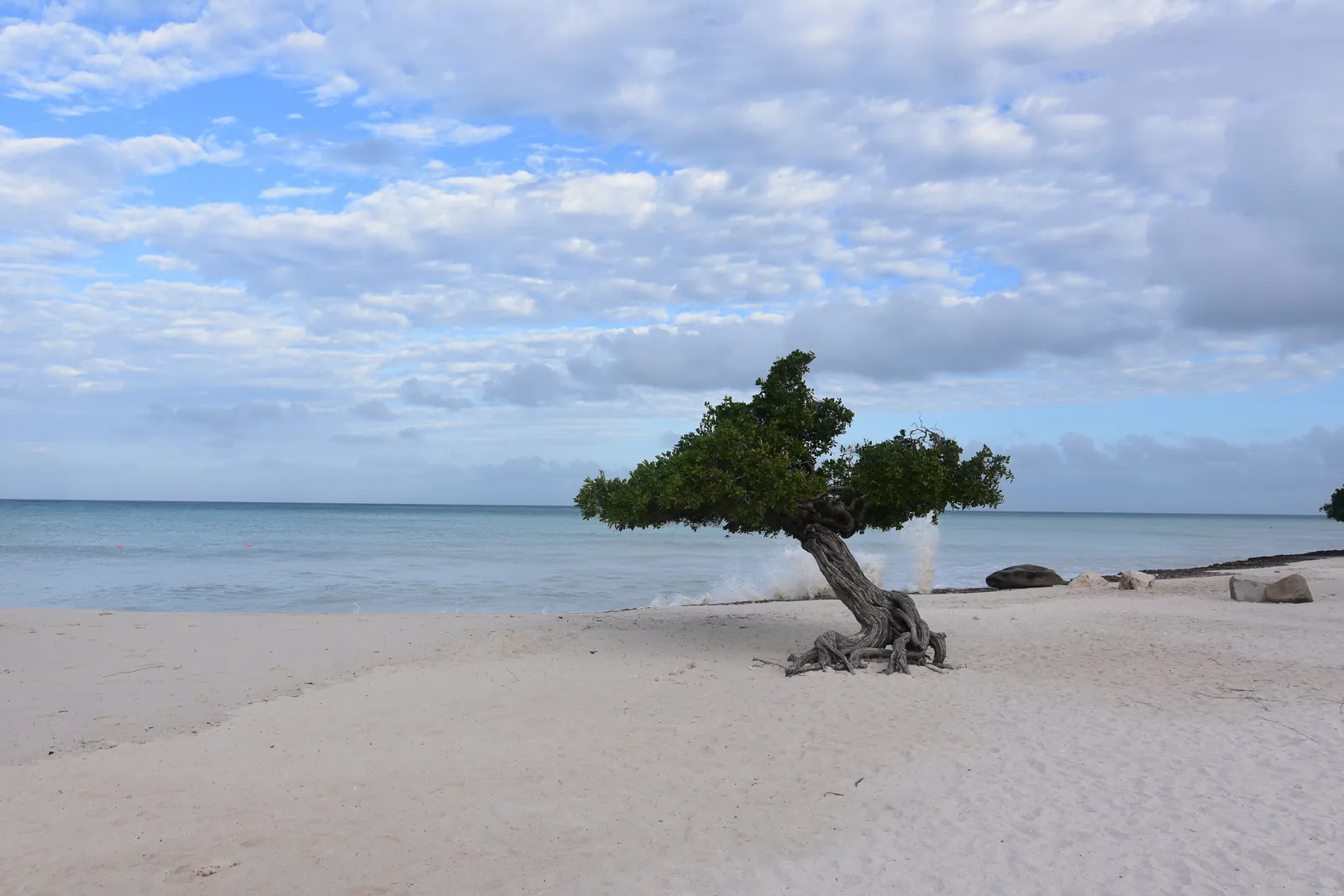
- Day 1, Eagle Beach: Land, check in and head straight for the sand. Eagle Beach is wide, public and calm, with the twisted fofoti trees at its north end; please don’t sit or climb on them. Sunset from the beach. Sleep: Eagle Beach or Palm Beach (7 nights).
- Day 2, the north tip: Early snorkel at Boca Catalina and Arashi, where the water is clear and shallow; then the California Lighthouse above the dunes before the tour buses arrive. Continue to the small yellow Alto Vista Chapel and its peace labyrinth, and end the day on the Palm Beach promenade.
- Day 3, Arikok and the Natural Pool: A full-day jeep or UTV tour through Arikok National Park to the Natural Pool (Conchi), the Quadirikiri cave with its sunlit roof openings, and the dunes at Boca Prins. Swim in the pool only when waves are not breaking over the rocks. Back to the beach by late afternoon.
- Day 4, Oranjestad and the sea: Bus L10 into town for Fort Zoutman, the island’s oldest building, the Willem III Tower and the National Archaeological Museum. If it is a Tuesday, stay for the Bon Bini Festival at the fort in the evening; otherwise book a sunset catamaran from the Palm Beach piers.
- Day 5, the south coast: Snorkel the mangrove-fringed bay at Mangel Halto in the morning, lunch on seafood in Savaneta, then the murals of San Nicolas and an afternoon in the calm lagoon at Baby Beach. Stay inside the lagoon: currents beyond its mouth are strong.
- Day 6, rocks, ruins and a wreck: The Casibari and Ayo rock formations early, before the heat, then the Bushiribana gold smelter ruins on the north coast. In the afternoon, a snorkel boat to the SS Antilla, a World War II wreck off Malmok.
- Day 7, last swim and home: A final morning on the beach, then the airport. Flying to the US? You clear US immigration and customs in Aruba before boarding, so get there about three hours before departure.
Swap it: prefer no driving at all? Book Arikok as a guided tour, take bus L10 for the north tip and Oranjestad, and use L1, L2 or L3A plus L900 for San Nicolas and Baby Beach. Want more rest? Drop day 6 and keep two full beach days.
10 days: the west coast plus the quiet south
Ten days on Aruba is plenty, so this plan splits the stay. Start on the busy west coast for the restaurants and boat trips, then move to the low-key south coast around Savaneta, the island’s oldest settlement, for calm lagoons and seafood. A hire car is handy for the second half.
- Day 1, arrive: Settle in on Eagle Beach or Palm Beach. Sleep: Eagle Beach or Palm Beach (6 nights).
- Day 2, beach day: Nothing planned but sand, a swim and a sunset walk along the coastal path.
- Day 3, the north tip: Boca Catalina and Arashi snorkeling, the California Lighthouse and Alto Vista Chapel, as in the 7-day plan.
- Day 4, Arikok and the Natural Pool: A jeep or UTV tour, or drive yourself in a 4×4 from a company that allows off-road driving.
- Day 5, Oranjestad: The fort, the archaeological museum and the harbor front; a catamaran or the Bon Bini Festival in the evening.
- Day 6, wind and water: A windsurfing or kitesurfing lesson at Hadicurari (Fisherman’s Huts), or a snorkel trip to the Antilla wreck. Pick up a hire car in the evening.
- Day 7, across the island to the south: Casibari and Ayo rocks, the Bushiribana ruins, then drive down to the south coast. Sleep: Savaneta or the south coast (3 nights).
- Day 8, Mangel Halto: Snorkel or kayak the shallow bay, lunch in Savaneta, a lazy afternoon.
- Day 9, San Nicolas and Baby Beach: The murals in the morning, then Baby Beach and quieter Rodger’s Beach next door.
- Day 10, home: The airport is close to the south coast, so you can fit in a last swim.
Swap it: rather stay in one place? Keep all nine nights on the west coast and visit the south as a day trip by car or bus. Want the Caribbean beyond Aruba? Use the last three nights for Curaçao instead of the south coast (see the 14-day plan).
14 days: Aruba slow, with two bases
Two weeks on one small island is a holiday, not a tour. Keep the 10-day structure and add one active day and one free day every couple of days.
- Days 1–6, west coast highlights: Beach days, the north tip, Arikok and the Natural Pool, Oranjestad and a catamaran, as in the 10-day plan. Sleep: Palm Beach or Eagle Beach (9 nights).
- Day 7, Arikok on foot: Start at dawn for the marked trails in Arikok, including the climb up Jamanota, at 188 m (617 feet) the island’s highest point, and the Fontein cave. Pay the entrance fee at the San Fuego entrance near Santa Cruz. Rest in the afternoon.
- Day 8, wind sports or a dive: A full day at Fisherman’s Huts, or a boat dive on the Antilla and the deliberately sunk wrecks off the west coast.
- Day 9, the interior: Casibari and Ayo, the Bushiribana ruins, the Butterfly Farm and the Donkey Sanctuary near Santa Cruz, and the aloe factory and museum in Hato.
- Day 10, move south: Drive to the south coast. Sleep: Savaneta or the south coast (4 nights).
- Days 11–13, the south: Mangel Halto, San Nicolas and its murals, Baby Beach and Rodger’s Beach, seafood in Savaneta, and a day with nothing planned.
- Day 14, home: A short drive to the airport.
14 days: Aruba plus Curaçao or Bonaire
Aruba, Bonaire and Curaçao are the “ABC islands”, and short flights link them. Curaçao suits travelers who want a colorful harbor town and quiet coves; Bonaire is one of the Caribbean’s great shore-diving islands. Both share Aruba’s dry climate, so the same seasons apply.
- Days 1–7, Aruba’s highlights: Follow the 7-day plan above. Sleep: Eagle Beach or Palm Beach (7 nights).
- Days 8–9, the south of Aruba: Move to the south coast for Mangel Halto and a slow last stretch on Aruba, close to the airport. Sleep: Savaneta or the south coast (2 nights).
- Day 10, fly to Curaçao: A flight of about 30–40 minutes. Afternoon in Willemstad, walking the colorful Handelskade waterfront and crossing the floating Queen Emma pontoon bridge. Sleep: Willemstad (4 nights).
- Days 11–13, Curaçao: The small beaches and coves of the west, such as Grote Knip, a snorkel day, and Willemstad’s old districts on either side of the harbor. Hire a car for the beaches.
- Day 14, home: Fly home from Curaçao.
Bonaire instead: divers can swap Curaçao for Bonaire, staying in or near Kralendijk and diving from the shore at the yellow-painted stones that mark the dive sites. Flights from Aruba to Bonaire are fewer, and some connect via Curaçao, so check schedules first. Each island has its own entry rules and fees, separate from Aruba’s ED card and Sustainability Fee, so check them before you book.
Where to sleep, by stop
| Area | Best for | Why |
|---|---|---|
| Palm Beach and Noord | First trip, nightlife, families who want everything close | High-rise resorts, restaurants, water sports from the piers, bus L10 to town and Arashi |
| Eagle Beach | Couples, space, a quieter base | Low-rise hotels on a very wide beach, a few minutes from Oranjestad |
| Oranjestad | Lower prices, a town feel, no car | Main bus station, museums, restaurants; beaches a short ride away |
| Malmok and Arashi | Snorkelers, wind sports | Villas and apartments near the north tip and Fisherman’s Huts |
| Savaneta and the south coast | Second base, a local and low-key stay | Calm bays such as Mangel Halto, seafood, close to the airport, San Nicolas and Baby Beach |
Room rates in Aruba rarely include everything. Hotels and vacation rentals add a 12.5% tourist levy and a US$3 environmental levy per room per night (rates from a professional tax summary, as of October 2026), and many resorts add a service charge and a daily resort fee on top, so compare total prices when you book. Our Aruba guide explains the taxes and typical costs.
Alternatives by interest
Beach lovers
Rotate between the west and south coast beaches instead of the sightseeing days: Eagle Beach for space, Palm Beach for action, Arashi and Boca Catalina for snorkeling, Surfside and Druif near Oranjestad, Mangel Halto and Baby Beach in the south. All beaches are public, even in front of resorts, though sunbeds and shade huts belong to the hotels. Keep to the calm west and south coasts: the north and east coasts face the open trade winds and are not for swimming.
Snorkelers and divers
Base yourself near Malmok or Palm Beach for the Antilla wreck, Boca Catalina and Arashi, then move south for Mangel Halto and Baby Beach. Add the Bonaire version of the 14-day plan for some of the best shore diving in the Caribbean. Wear water shoes on rocky entries, don’t touch the coral, and snorkel inside the protected lagoons unless you are with a guide.
Wind sports
Hadicurari (Fisherman’s Huts) between Palm Beach and Malmok is the island’s windsurfing and kitesurfing beach, with schools and rentals; Boca Grandi in the southeast is for experienced kitesurfers. The trade winds blow hardest from about May to July, and wind-sports conditions are best from about April to August. Stay in Malmok or Noord and plan a lesson every other day.
Hikers
Arikok National Park has marked trails, the climb up Jamanota and coastal walks to Boca Prins and Dos Playa, plus the 3–4 hour round-trip hike to the Natural Pool. Start at dawn, carry plenty of water and sun protection, and pay the entrance fee at the San Fuego entrance near Santa Cruz. December to March, after the rains, is the greenest and most pleasant time to hike.
Families
Pick a Palm Beach or Eagle Beach hotel with a gentle beach out front and keep the plan simple: one excursion a day, then the pool. Baby Beach’s shallow lagoon is ideal for small children, the Butterfly Farm and Donkey Sanctuary are easy half days, and a catamaran with a snorkel stop works for most ages. Most beaches have no lifeguards, so watch children closely.
Tips for planning your route
- Do the ED card first. Every visitor completes the free Embarkation and Disembarkation (ED) card on the official portal, edcardaruba.aw, within 7 days before arrival. Visitors aged 8 and over who arrive by air pay the US$20 Sustainability Fee with it, once per 365 days. Ignore look-alike sites that charge extra.
- Pick the season. Aruba works all year; February to May is the driest stretch, mid-December to mid-April the busiest and priciest, and late April to mid-December cheaper and calmer. Rain in October to January usually falls as short showers. See our best time to visit Aruba guide.
- Rent the right vehicle. Ordinary rental contracts usually exclude unpaved roads, so for the Natural Pool and much of Arikok take a jeep tour or rent a 4×4 or UTV from a company that allows it. Aruba drives on the right; traffic already on a roundabout has priority.
- Buy a bus day pass if you skip the car. Arubus sells single tickets for US$2.60, return cards for US$5 and a day pass for US$15 (fares as of October 2026). Buses are less frequent in the evening and on Sundays.
- Check the cruise calendar. Ships dock right in Oranjestad, mainly in the winter season; visit town and the nearby beaches on days without ships.
- Go early. The California Lighthouse, the rock formations and Arikok are best before about 10 a.m., ahead of the heat and the tour groups.
- Leave time at the airport. Flights to the US clear US immigration and customs in Aruba before departure; allow about three hours.
Aruba itinerary FAQ
Is 7 days enough for Aruba?
Yes. A week lets you see the whole island, from the California Lighthouse to Baby Beach and Arikok National Park, and still keep a couple of days just for the beach. Four days covers the highlights if you are short on time.
Is 10 or 14 days too long for Aruba?
Not if you want a relaxed beach holiday. The island is small, so longer stays are about slowing down: a second base on the south coast, wind sports, diving and free days. If you like to keep moving, spend the extra days on Curaçao or Bonaire.
Should I stay at Palm Beach or Eagle Beach?
Palm Beach for big resorts, restaurants, nightlife and water sports; Eagle Beach for a wider, quieter beach and smaller hotels. They are only a few minutes apart, and bus L10 links both with Oranjestad.
Do I need a car in Aruba?
Not for the west coast: Arubus buses run along the hotel strip to Oranjestad, Arashi and on to San Nicolas and Baby Beach. A car for two or three days makes the interior, the north coast and the south easier, and for the Natural Pool most people take a 4×4 tour.
Can I visit Curaçao or Bonaire from Aruba?
Yes, by plane: flights to Curaçao take about 30–40 minutes, and Bonaire is reached directly or via Curaçao. There is no regular ferry. A day trip is possible but rushed; three or four nights is better.
How do I get to the Natural Pool?
It lies on the north coast inside Arikok National Park at the end of a very rough track. Go on a jeep or UTV tour, in a 4×4 whose rental contract allows off-road driving, or on foot (about 3–4 hours there and back). Don’t swim when waves are breaking over the rocks.
What is the best month for an Aruba trip?
Any month works. February to May are the driest; late April to mid-December is cheaper and less crowded; September to November has the calmest wind. Aruba lies on the southern edge of the hurricane region, and direct hits are rare.
Sources
Researched and last reviewed by TravelerCenter on 8 October 2026. Bus routes and fares come from Arubus; the ED card, the Sustainability Fee and entry rules from Aruba Tourism Authority; sights, the Natural Pool hike and beach details from Aruba Tourism Authority; seasons from the Meteorological Department of Curaçao and our best-time guide. Room taxes come from a professional tax summary, and drive times, island size and Aruba–Curaçao and Aruba–Bonaire flight times come from general references and flight-schedule sites; these are approximate. Schedules, fares and rules change, so check with the operator before you travel.
Data: Wikidata (CC0)