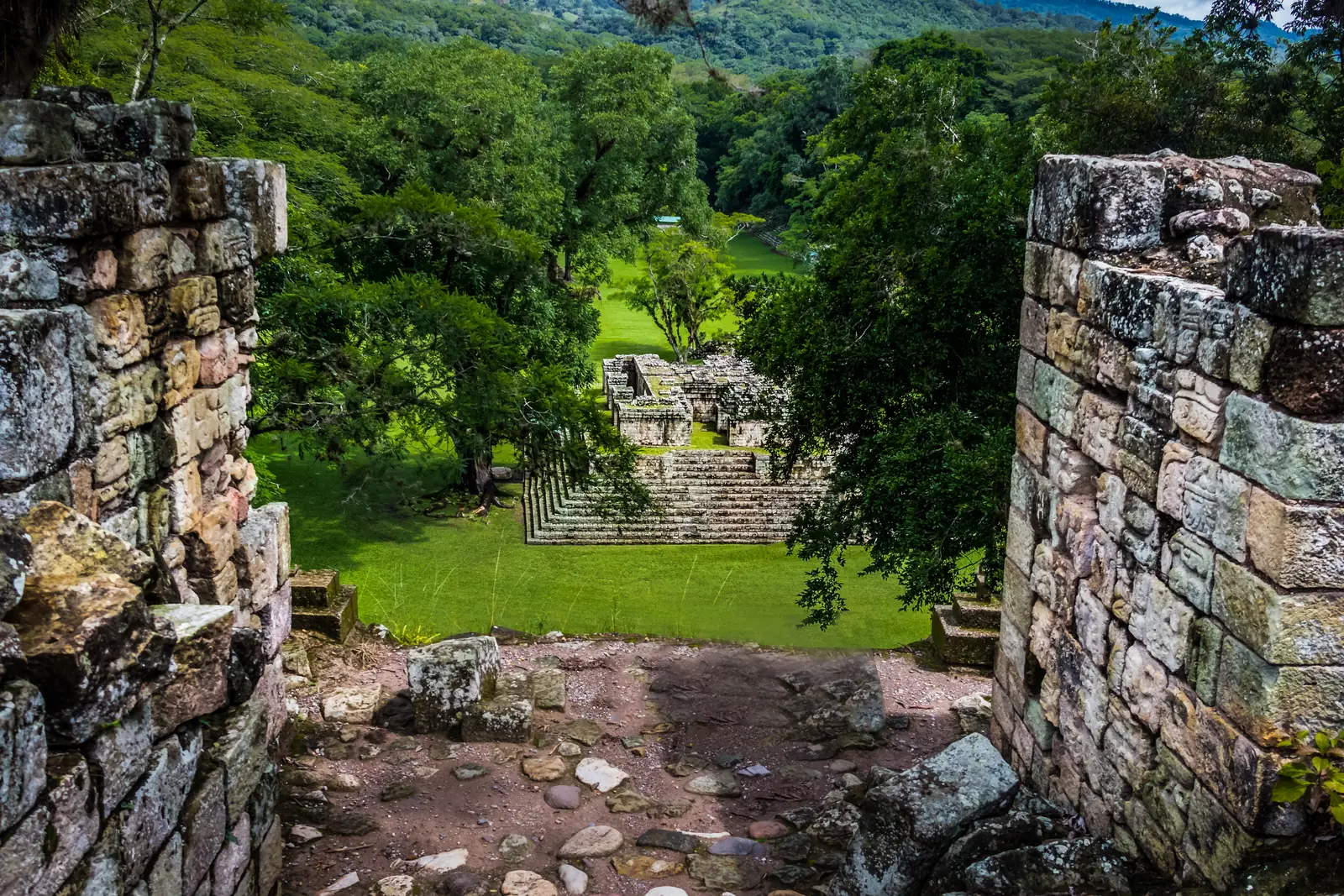
Short answer: the best time to visit Honduras depends on where you go. For Copán and the mainland, November to April is the dry season, with almost no rain from December to March; for Roatán, Utila and the Bay Islands, February to August has the calmest seas and least rain. February to April suits both, which makes it the best time for a trip that combines the ruins and the reef. The trade-off is that Holy Week and Christmas are the busiest, priciest weeks, while September and October bring the heaviest rain on the mainland and the peak of the storm season.
Honduras is warm all year, about 25 °C (77 °F) on average according to the Honduran Institute of Tourism, but it has two weather calendars: a Pacific-style rainy season from May to October on most of the mainland, and a Caribbean pattern on the north coast and islands, where the rainiest months run from about October to January. This page goes through both, month by month, as of October 2026. For entry rules, money and getting around, see our Honduras travel guide, and plan your days with our AI trip planner.
Best time to visit Honduras at a glance
| Goal | Best months | Why |
|---|---|---|
| Copán and the mainland | November–April | Dry season; December to March is almost rainless in the highlands |
| Roatán and the Bay Islands | February–August | Calmest seas, best visibility and least rain on the islands |
| Islands and ruins in one trip | February–April | Dry on the mainland and calm on the reef |
| Diving and snorkeling | March–August | Flat water and clear visibility on the Mesoamerican Reef |
| Whale sharks off Utila | March–April, around September | The months they are most often seen |
| Lowest prices, fewest crowds | May–June, September–October | Outside the holiday peaks; rainy season on the mainland |
| Festivals | Holy Week, May, September 15 | Comayagua’s processions, the Carnival of La Ceiba, Independence Day |
Honduras weather month by month
Weather month by month
The table shows average daily highs and lows and monthly rain for La Ceiba on the Caribbean coast, the ferry port for Roatán and Utila (official 1970–1990 normals). The figures below are the official climate normals for Tegucigalpa, in the central highlands, from Honduras’s national weather service (the Centro de Estudios Atmosféricos, Oceanográficos y Sísmicos, part of COPECO), published by the World Meteorological Organization for 1961–1990. From December to March, Tegucigalpa gets only about 5–10 mm (0.2–0.4 in) of rain a month, with rain on one or two days, and highs climb from about 25 °C (78 °F) in December to 30 °C (86 °F) in April and May, the hottest months. The rains arrive in May (about 144 mm, 5.7 in) and peak in September, about 177 mm (7 in) on 13 days, with a drier spell in July and August, the “canícula”. Nights are cool in the highlands, about 14–15 °C (57–59 °F) in January. Copán follows the same mainland calendar; the islands and north coast do not, and are wettest from about October to January.
Honduras month by month
January
Dry and pleasant on the mainland, with cool nights in the highlands and only about 5 mm (0.2 in) of rain in Tegucigalpa: a good month for Copán. On the islands, it is still the rainy season, with cold fronts bringing wind, showers and rough ferry crossings between sunny spells. Busy in the first week after New Year.
February
The driest month in Tegucigalpa, about 5 mm (0.2 in). On the islands, the cold fronts fade and the calm season begins, so February starts the best stretch for a combined trip. A popular month with visitors from North America.
March
Hot and dry inland, with highs near 30 °C (85 °F); visit the ruins early in the morning. Island seas are calm and clear, and whale sharks are often seen off Utila from March. Holy Week falls in late March in 2027: Holy Thursday to Holy Saturday are holidays on 25–27 March, Comayagua fills with processions and sawdust carpets, and Hondurans head to the beaches and islands, so book early.
April
The end of the dry season and one of the hottest months, about 30 °C (86 °F) in Tegucigalpa, with the first showers late in the month. Dry and sunny on Roatán, where Punta Gorda celebrates the Garifuna arrival on 12 April. The Day of the Americas holiday is 14 April 2027.
May
The mainland rains begin, about 144 mm (5.7 in) in Tegucigalpa, mostly as afternoon storms, and the countryside turns green. The islands are hot and calm, and prices fall after Easter. The Carnival of La Ceiba (Feria de San Isidro), one of the biggest parties in Central America, takes over the north coast in the second half of May. Labor Day is 1 May.
June
Rainy afternoons on the mainland, about 159 mm (6.2 in) in Tegucigalpa, while the islands are mostly calm, with some showers: a good month for diving at lower prices. The Atlantic hurricane season begins on 1 June.
July
The canícula, a drier spell in the middle of the rainy season, roughly halves the rain in Tegucigalpa, to about 82 mm (3.2 in). Coffee farms around Copán are green, and visitor numbers are moderate. The islands are hot and calm, with good diving; summer holidays bring some families.
August
Still in the canícula inland, about 89 mm (3.5 in) of rain. The last of the calm season on the islands, with some showers, and the start of the hurricane peak; according to NOAA’s National Hurricane Center, most Atlantic hurricanes form from mid-August to mid-October.
September
The wettest month in Tegucigalpa, about 177 mm (7 in) on 13 days, with flash floods possible in the mountains. Whale sharks may be seen off Utila again. Independence Day on 15 September (a Wednesday in 2027) brings school parades nationwide. Quiet and cheap.
October
Still rainy inland, about 109 mm (4.3 in), and within the storm peak, and the start of the islands’ rainy season. “Morazán Week” groups the October holidays into a long break, with dates set each year, when Hondurans travel and beaches and buses fill up.
November
The mainland dry season starts, with rain falling to about 40 mm (1.6 in) in Tegucigalpa: a good, quiet month for Copán. On the islands and the north coast, it is one of the rainiest months, with cold fronts bringing wind and rough seas. The hurricane season ends on 30 November.
December
Dry and the coolest month inland, highs of about 25 °C (78 °F) in Tegucigalpa. Rainy spells continue on the islands, but between cold fronts there are plenty of sunny days. Christmas and New Year are busy and expensive on Roatán, which is also a regular cruise stop in winter.
Best time to visit by region
Roatán and the Bay Islands
Roatán is best from February to August, with the calmest seas and best visibility; days are about 27–31 °C (81–88 °F) all year and the sea about 27–29 °C (81–84 °F). October to January is the rainiest period, with cold fronts and rough crossings on the La Ceiba ferry. Easter and Christmas are the busiest weeks, and West Bay is crowded on cruise-ship days.
Copán and the western highlands
Copán Ruinas is best from November to April, the dry season, with pleasant days and cool nights from November to February; March to May is hot, so visit the ruins when the park opens. June to October brings rainy afternoons, a green valley and fewer visitors. Copán combines well with Antigua Guatemala, which has the same dry season.
The north coast
La Ceiba, Tela and Pico Bonito National Park follow the Caribbean pattern: best from about March to August, rainiest from October to January. Rafting on the Cangrejal River is best when the river is up but not in flood. Plan for May if you want the Carnival of La Ceiba.
Tegucigalpa and the center
Mild days and cool nights, best from November to April. Comayagua, with its colonial cathedral, is at its liveliest in Holy Week, when its streets are covered with sawdust carpets.
Best time for diving, whale sharks, ruins and festivals
Diving and snorkeling
March to August, for the calmest water and best visibility on the Mesoamerican Reef off Roatán and Utila. Diving goes on all year, but winter cold fronts can cancel boat trips on the north side. See our diving guide.
Whale sharks
Off Utila, most often from March to April and again around September, though sightings are never guaranteed. Utila’s dive shops run trips when the sharks are around.
Maya ruins
November to February for dry paths and comfortable temperatures at Copán; arrive at opening time all year for cooler air, fewer groups and the scarlet macaws.
Festivals
Holy Week in Comayagua (late March in 2027), Garifuna Settlement Day on Roatán (12 April), the Carnival of La Ceiba (second half of May) and Independence Day (15 September).
Seasons to plan around
- Hurricane season: the Atlantic season runs from 1 June to 30 November and the eastern Pacific season from 15 May to 30 November, according to NOAA’s National Hurricane Center; the UK government notes the Honduran season normally runs from May to November. The north coast and islands are most exposed. Hurricanes Eta and Iota caused severe flooding in November 2020. If a storm approaches, follow COPECO, the civil protection agency, and buy insurance that covers weather.
- Mainland rainy season, May to October: afternoon storms, wettest in June and September, with a drier spell in July and August; flash floods and landslides can affect mountain roads.
- Island rainy season, about October to January: cold fronts bring wind and rough seas that can delay ferries and dive boats.
- El Niño in 2026–27: NOAA’s Climate Prediction Center said on 8 October 2026 that a strong to very strong El Niño is likely through January–March 2027. In Central America, El Niño years often bring a drier, hotter dry season, with more risk of drought and forest fires.
- Holidays: Holy Week (25–27 March 2027), Morazán Week in October and Christmas fill beaches, islands and buses.
How long to stay
Five nights on Roatán is enough for beaches, snorkeling or a dive course; seven to ten days lets you add two nights in Copán Ruinas, with a flight or the ferry via La Ceiba in between. Our Honduras travel guide has sample itineraries for both.
Best time to visit Honduras: FAQ
What is the best month to visit Honduras?
March or April for a trip that combines Copán and the islands: dry inland, calm on the reef, with whale sharks off Utila. Avoid Holy Week if you want lower prices.
When is the best time to visit Roatán?
February to August, for the calmest seas and least rain. October to January is the rainiest period, with cold fronts and rough crossings.
What is the rainiest month in Honduras?
On the mainland, September, with about 177 mm (7 in) in Tegucigalpa, closely followed by June. On the islands and north coast, the rainiest months are October to January.
When is hurricane season in Honduras?
From 1 June to 30 November on the Caribbean side, and from 15 May on the Pacific side, with most storms from August to October.
What is the cheapest time to go to Honduras?
May and June, and September to early October, outside the holiday peaks. On the islands, May to August combines lower prices with good weather.
Is December a good time to visit Honduras?
Yes for Copán and the mainland, which are dry and pleasant. On Roatán, expect rainy spells and windy days between cold fronts, and holiday prices at Christmas.
Sources · last reviewed 9 Oct 2026
Researched and last reviewed by TravelerCenter on 8 October 2026. Tegucigalpa’s temperatures, rain and rainy days come from the 1961–1990 climate normals of Honduras’s national weather service (CENAOS/COPECO), published by the WMO’s World Weather Information Service; the average temperature and the mainland dry and rainy seasons from the Honduran Institute of Tourism; hurricane seasons from NOAA’s National Hurricane Center and the UK government; the El Niño outlook from NOAA’s Climate Prediction Center. The Bay Islands’ seasons, sea temperatures, whale sharks, the Carnival of La Ceiba, Garifuna Settlement Day and holiday dates come from our Honduras and Roatán guides and general references, flagged for checking. Check official sites before you travel.
Data: Wikidata (CC0)