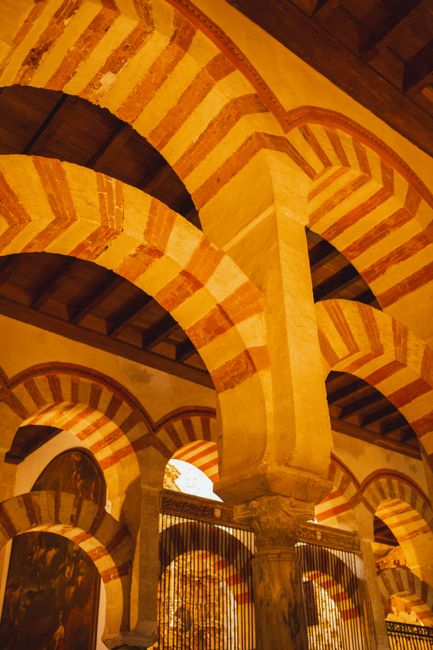
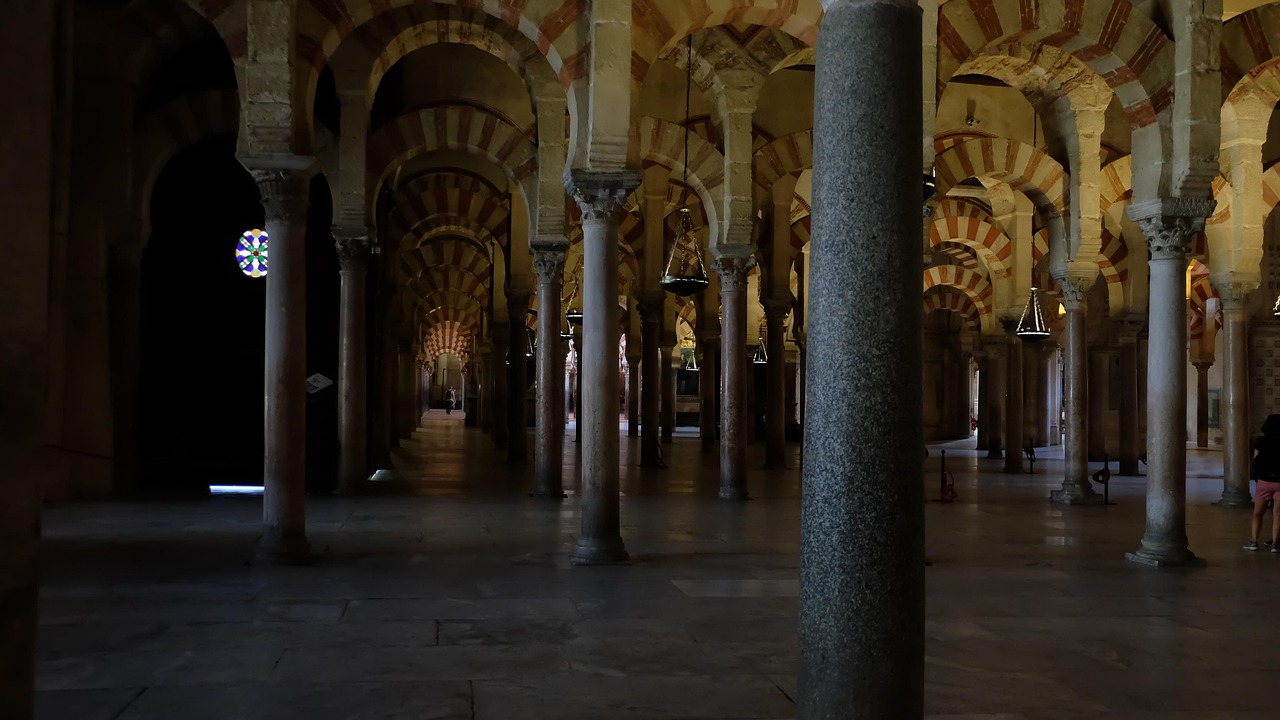
The Mezquita of Córdoba, officially the Mosque-Cathedral, is the great mosque of the Umayyad capital of Al-Andalus: a forest of more than 800 columns topped by red-and-white double arches, with a Renaissance cathedral built in the middle. A general ticket costs €15 (as of October 2026), and individual visitors can enter free, in silence, from 8:30 to 9:30, Monday to Saturday. Allow 1–1.5 hours, and add the bell tower if you like views.
Right now in Mosque-Cathedral of Córdoba
- Wed17–27°C62–80°F1 mm rain
- Thu14–27°C58–81°FClear
- Fri14–24°C57–76°FClear
- Mon 12 Oct National Day of Spain (Fiesta Nacional de España)
Tickets and tours for Mosque-Cathedral of Córdoba
See all tours for Mosque-Cathedral of Córdoba →
From local operators, with prices and reviews; you check availability and book on Viator, our partner. We may earn a commission at no extra cost to you. How we earn money
Why the Mezquita matters
A Visigothic basilica, dedicated to Saint Vincent, stood here in the 6th century. After the Umayyad prince Abd al-Rahman I made Córdoba his capital, he began a great mosque on the site in 785. As the city grew into one of the largest in Europe, his successors enlarged it three times: Abd al-Rahman II added eight aisles to the south (833–848), al-Hakam II extended it again and built the new mihrab and maqsura (962–966), and Almanzor widened it to the east, towards the river (991–994).
When Ferdinand III took Córdoba, the building was consecrated as a cathedral in 1236, and chapels were fitted into the prayer hall. In 1523 Bishop Alonso Manrique began a much bigger change: master builder Hernán Ruiz I started a Renaissance transept and choir in the centre of the mosque. From 1593 the old minaret was wrapped inside today’s bell tower. The building became a national monument in 1882 and a UNESCO World Heritage Site in 1984, extended to Córdoba’s historic centre in 1994.
What you’ll see
- The prayer hall: row after row of columns of marble, jasper and granite, many reused from Roman and Visigothic buildings, carrying two tiers of horseshoe and round arches in alternating red brick and white stone. Walk from the oldest part, near the entrance, towards the south to see the style grow richer with each enlargement.
- The mihrab and maqsura of al-Hakam II: the prayer niche and the area in front of it, covered with gold and coloured glass mosaics made with the help of Byzantine craftsmen, under intricately ribbed domes. This is the artistic high point of the building.
- The cathedral: the Renaissance transept and main chapel rise out of the middle of the mosque, with carved mahogany choir stalls and a high altarpiece.
- The Patio de los Naranjos: the orange-tree courtyard, the mosque’s old ablutions court, which is free to walk through.
- The bell tower: a short climb for views over the courtyard, the roofs of the Judería and the Guadalquivir, by timed slot.
Tickets and how to visit
From the Mezquita-Catedral’s official website, as of October 2026:
- General ticket: €15 (it rose from €13 on 1 April 2026). Reduced: €12 for over-65s, students aged 15–26 and Youth Card holders; €8 for children aged 10–14, visitors with a disability below 64% and large families. Free: under-10s, residents and natives of the diocese, and visitors with a disability above 64% plus a companion.
- Free hour: Monday to Saturday 8:30–9:30, for individual visitors only (no groups), in silence, except on days of special celebrations.
- Hours: they vary by day because of worship, so check the official date-by-date calendar. On Sundays and holidays it opens 8:30–11:30 and 15:00–19:00. Weekday visiting is roughly 10:00–19:00 from March to October and 10:00–18:00 from November to February. Ticket sales end 30 minutes before closing.
- Bell tower: €4, in half-hour slots from 9:30 to 18:30.
- Night visit “El Alma de Córdoba”: €25, reduced €18 (under-7s free), with a sound-and-light tour on selected nights; dates vary, so check the calendar.
- Where to buy: online on the official ticket site, or at the visitor reception centre in the Patio de San Eulogio, Calle Cardenal Herrero 1. The general ticket also gives free entry to the Fernandine Churches Route, normally €6.
How long to allow and when to go
Plan 1–1.5 hours inside, plus 30 minutes for the bell tower. The free hour at 8:30 gives the quietest, most atmospheric visit, but you must keep silent and there is no tower access before 9:30. With a paid ticket, late afternoon is calmer once the tour groups leave. In July and August, visit in the morning and save the afternoon heat for a siesta. Some areas may close during Mass.
Dress, photos and accessibility
It is an active cathedral: cover shoulders and knees, remove hats and keep your voice down. Photos without flash are allowed for personal use. According to Andalusia’s official tourism site, the main entrance on Calle Torrijos and a second entrance are wheelchair accessible, and the prayer hall’s level floor means almost the whole building is easy to move around; the Patio de los Naranjos, with its uneven surface, is the hardest part. The bell tower is too narrow for wheelchair users or visitors with reduced mobility. Visitors with a disability above 64% and one companion enter free.
Getting there
The Mezquita stands in the Judería, just above the Roman Bridge. From Córdoba station it’s about 2 km, a 25-minute walk through the Jardines de la Victoria, or a few minutes by taxi; AUCORSA city buses cost €1.30 a ride (as of October 2026). High-speed trains reach Córdoba in about 45 minutes from Seville and about an hour from Málaga, so it works as a day trip. Don’t drive into the old town: it’s a camera-controlled low-emission zone.
Combine it with
Walk the Judería and the flower-hung Calleja de las Flores, which frames the bell tower, then cross the Roman Bridge at sunset. The Alcázar de los Reyes Cristianos and the medieval Synagogue are a few minutes away. See our Córdoba travel guide for the patios, Medina Azahara and where to stay. The story continues in the Alhambra in Granada and at Seville Cathedral, built where another great mosque stood.
Mezquita of Córdoba FAQ
How much does it cost to visit the Mezquita?
€15 for adults as of October 2026, €12 for over-65s and students aged 15–26, and €8 for children aged 10–14. Under-10s go free. The bell tower is €4 extra.
Can you visit the Mezquita for free?
Yes. From Monday to Saturday, 8:30 to 9:30, individual visitors can enter free, in silence. Groups are not allowed, and the free hour is cancelled on days of special celebrations.
Do I need to book the Mezquita in advance?
Not usually for the general visit, which you can buy online or on the day. Book ahead for the bell tower slots and the night visit, which have limited places.
Is it a mosque or a cathedral?
It has been a Catholic cathedral since 1236 and is run by the cathedral chapter, but most of the building is the original great mosque, which is why it is called the Mosque-Cathedral.
Is the Mezquita accessible for wheelchair users?
Mostly. The entrances on Calle Torrijos are accessible and the prayer hall floor is level. The orange-tree courtyard is uneven, and the bell tower is not accessible.
What should I wear to the Mezquita?
Cover your shoulders and knees, take off your hat inside and keep your voice low, as Mass is celebrated in the building.